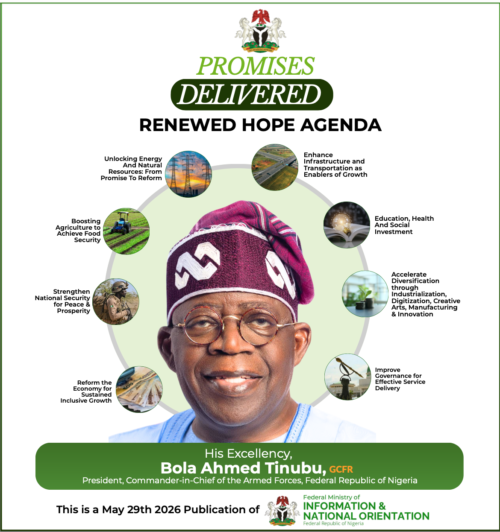
Following the directive by the Auditor General of Kogi State, Alhaji Yusuf Okala, Zenith Bank has agreed to open for business on Saturday, July 17th to attend to Kogi state workers, who started getting three more months’ backlog of their salaries from the government today.
According to the Auditor General, who explained the circumstances behind the just concluded staff screening in Government House, Lokoja, workers who are getting three months now had already been paid one month two weeks ago.
He said that the currently delays experienced was due to the desired to completely clean the Kogi State pay roll of ghost workers, fraudsters and other leakages.
He further explained that a total of over 5, 550 names have been cleared for payment and have begun receiving three months’ pay since Monday, July 11th.
“We had a meeting with the Zenith Bank officials and they have agreed to work between 9am and 5pm this Saturday, just to attend to Kogi workers.
“They have agreed to bring in more hands from all over the state to enable them attend to everyone coming this weekend. As I speak to you, we paid 1, 851 people additional three months’ salaries last Monday. Right now, 3, 706 more people will get theirs today.
“So, if you need to do any documentation at the bank, just go to Zenith Bank and give your details and you will be promptly attended to.”
Okala said that all found to have defrauded the state via salaries will be prosecuted. He said the cumulative list of all staff, both cleared and uncleared, will be made public as soon as Governor Yahaya Bello gives his approval.
Meanwhile, reports reaching us indicated that Zenith Bank has only been operating in Lokoja and that alert is not received in its branches around the state. The teachers, especially secondary schools teachers are already complaining that they have not received a kobo till now. [myad]
Turkey is about five hours away from Nigeria by air, about 2, 634 miles from here, but the night there was a coup attempt in Turkey, July 15, with soldiers shutting down parts of Ankara and Istanbul, you’d think Ankara is a city somewhere in Nigeria and Istanbul is an extension of our country. Commentaries kept flying up and down on Nigeria’s social media space, with the coup attempt in Turkey becoming a trending topic. And yet the strongest connection between Nigeria and Turkey is probably trade, tourism, socio-cultural affinities, and the fact that many Nigerian travellers now find it easier and cheaper to travel through Turkey to other European capitals, with Turkish Airlines making all the profit and no Nigerian airline on that route! Still, if Turkey finds itself in a bad shape, as it has, that is not likely to affect the already sorry fortunes of the Naira or the forbidding cost of food items in Nigerian markets. On Friday, many Nigerians stayed awake and projected their own worst fears unto the Turkish situation.
By way of summary, there was among the Nigerian commentators an all-round condemnation of any attempt to upturn the Constitutional order either in Turkey or anywhere else in the world. When it was reported that a former Turkish President had remarked that the coup will not stand, because “Turkey is not Africa”, (former President Abdullah Gul actually said Latin America), there was also a feeling of outrage. How dare he made such a racist comment in the midst of such a serious situation?
When President Recep Tayyip Erdogan took to Facetime on his mobile phone to get himself onto television, and he pleaded with the Turkish population to take to the streets to resist the coup makers, and his call was heeded, not a few commentators at this end wondered if Nigerians would have answered such a summon to patriotism and whether or not religious and ethnic sentiments or the fear of being shot to death would not have kept the people indoors. Concerns were also expressed about the fate of Nigerians living in Turkey in the event of a blowout at the crossroads of Europe. By Saturday morning, the coup had failed. Erdogan was significantly back in control. About 200 persons had died, and over 2,000 persons were recorded as injured. As I monitored the situation in Turkey and the reactions in Nigeria, I was struck by how so much can be learnt from the strong interest that the failed coup attempt has generated among educated Nigerians.
Nigerians know what it means to have a constitutional order derailed by military intervention. Between 1960 and 1999, Nigeria moved from one form of military rule to another, characterized by obstinacy, and absolutism, experiencing only short spells of civilian rule. Similarly, the military in Turkey have since 1960 intervened directly at least four times (1970, 1971, 1980, 1997). And in all instances, the Turkish coup plotters always claimed that their role was to restore order and stabilize the country. This is a rhetoric that is quite familiar to Nigerians. Every military coup is justified on messianic grounds. In the latest onslaught in Turkey, the plotters claim they want to establish a “Peace Council.”
Between 1993 and 1999, Nigerians fought the military to a standstill, insisting on a definite return to civilian rule and the institutionalization of democracy. Seventeen years later, the democratic spirit is well established among the people, if not the Nigerian leadership elite. The people have seen what a demonstration of people power can achieve: they used it to get the military out of power, they relied on it to insist that the Constitution be respected and obeyed when a President died in office and certain forces did not want his successor to get into office, and again, they have seen people-power at work in removing a sitting government from power. Right now in Nigeria, to toy with this power of the people in any form is to sow the seeds of organized mass rebellion.
Not surprisingly, in the past few years, every display of the people’s supremacy in other parts of the world has attracted either interest or a copy-cat instinct among Nigerians. First, there was the Arab Spring, which resulted in calls for the Nigerian Spring, which later found expression in the politically motivated Occupy Nigeria protests of January 2012. And now from Turkey, the major point of interest for Nigeria has been in my estimation, how the people took to the streets to confront soldiers. The coup failed in Turkey because it lacked popular support. Turkey has for long been considered an embarrassment in Europe. A successful coup in 2016 would have put the country in a worse shape and done further damage to the country’s reputation. The people stood up for their country, not President Recep Tayyip Erdogan. They stood up for an idea: The idea of democracy. The three major political parties disowned the coup. Mosques called on the people to go to the streets and fight for democracy. Even Erdogan’s critics, including the Kemalists and the Gulenists, denounced the coup plotters. The images that came across were images of the police confronting the soldiers and disarming them (This was intriguing- can anyone ever imagine the Nigeria police protecting democracy: they would have since collected bribe from the coup plotters, there is massive corruption in Turkey too but their police fought for the nation). Ordinary citizens lay down in front of the coup plotters’ tanks and asked to be crushed; brave citizens disarmed the soldiers and took over the city squares.
It is this kind of bravery that Nigerians find surreal. The coup attempt in Turkey comes at a time when the civil society in Nigeria is beginning to lose the spirit to stand in front of tanks and guns: the people have been battered to a point where their strongest protection is their power of the ballot and so the average Nigerian endures suffering, convinced that when again it is time to vote, no one can rob him or her of his power to choose. But the situation in Turkey reminds us of the kind of danger that any democracy, with troubled foundations can face, hence Nigerians ask if they too can be as courageous as the Turkish have been, with both Turks and the much abused Kurds, and other divided groups, uniting, momentarily, on one issue.
Not that Mr. Recep Tayyip Erdogan deserves the victory over the coup plotters, though. Outsiders, including Nigerians, consider him a bad guy; and even if he is still popular and blindly followed by the majority of his people, his 13-year record in office falls far short of standards. He came to office on the wave-crest of popular appeal. In Istanbul where he was a city mayor at a time, he remains immensely popular, and he is also probably the most popular leader, not in Europe, but the Arab world. Thrice, he and his party, the AKP, won nationally organized elections. But success soon got into Erdogan’s head, as he descended into the lower depths of arrogance and dictatorship. He started having issues with neighbours and allies.
He became undemocratic, shamelessly alienating civil society, the press and the judiciary. He is so temperamental and intolerant of criticism and alternative views, he is now surrounded mainly by sycophants and relatives. In his attempt to dominate everything and everyone, he became known as the “buyuk usta”, that is “the big master”, and of course, he now lives in a $615 million Presidential palace with 1, 150 rooms! In addition, he wants to acquire US-style executive Presidential powers and he isbusy battlingreal and imaginary enemies.
He may have been saved by the people’s rejection of the coup attempt, but perhaps Erdogan has been saved more by his own cleverness. The coup attempt against his government was an amateur, unorganized effort. It lacked the support of the military command, which Erdogan had cleverly subjected to civilian control, and among whom hehad built centres of personal loyalty. Over the years, he weakened the military and strengthened the police and the intelligence services. The coup plotters over-estimated their capacity and misread the people’s mood.
Their failure may embolden Erdogan and even make him more authoritarian: he is already sounding off about being in charge and dealing with the coup plotters(over 2,000 of whom have already been rounded up and arrested, even judges have been fired). But Turkey is in a very bad shape, politically. Resentments run deep. There are deep fears about threats to the country’s secularism, and attempts to Islamicise the country. A paranoid Erdogan could worsen the situation. Both the United States and the European Union should take a keen interest in what happens in Turkey after the coup attempt, to ensure that rather than dig deeper into authoritarianism, Erdogan would see the need to run a more open, inclusive and democratic government.
The coup may have failed, and democracy may have won, but whatever issues led to a group of ill-prepared soldiers taking the law into their hands cannot be wished away. To tell the truth, Recep Erdogan acts very much, in all respects, like an African leader in Europe – that probably explains the keen Nigerian interest. The key lesson, all told, is that the importance and survival of democracy relates to the importance of civic virtue, this is why leaders must rely not just on the people’s commitment to an idea, but must seek to make democracy work for all the people. [myad]
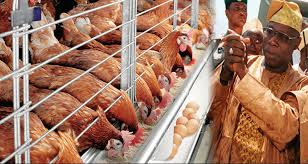
Former President Olusegun Obasanjo has revealed that he started his farming business as an apprentice after retiring as the Head of State in 1979. Obasanjo, who spoke at a lecture in the University of Ibadan on Saturday on the topic: “Agribusiness: Time to act,” said that he enrolled at the Institute of Agricultural Research and Training (IAR&T), Ibadan to learn the art of farming as an apprentice for three months shortly after he left office. He recalled that his teachers at the institute initially had problem treating him as a student or apprentice but that he insisted that he should be addressed and treated as a student and an apprentice because that was the only way to enjoy the teaching-learning process. ” I cleaned chicken house. I fed chicken. That is how to be a farmer. Anything less won’t do. You can’t be a successful farmer without being an apprentice.” The former president explained that no matter how learned or how many degrees one has, it requires learning as an apprentice, deep interest and passion to go into farming and succeed. “There must be interest and passion for people to go into agriculture and succeed in it. We must get it right. We have to glamourize and incetivize farming to keep people that are interested in agriculture in the business.” The former president said no plan to take people into agriculture will work except the people have passion for farming and are willing to learn the art of farming first. Obasanjo expressed his willingness to mentor young farmers where possible. [myad]
Nigeria’s Vice President, Professor Yemi Osinbajo has said that Nigeria has sought assistance of the World Bank and the Bill Gates Foundation to map the really poor people in Nigeria for the federal government’s social protection programme. Osinbajo admitted at a side event of the African Union Summit, hosted on Saturday by the President of Ghana, Mr. John Mahama, holding in Kigali, Rwanda that in determining who the poorest is, “we had problems on that.” “We had to get inside the communities looking for the poorest of the poor with the small sum of money which is about N5,000 (which is roughly about $25 dollars or there about) which is a sum of money that would be given to the poorest every month, which may enable them feed themselves and find something that they may do and on the condition that they send their children to school and participate in immunization.” Osinbajo, who is leading the Nigerian delegation to the continent meeting, told the breakfast event attended by a number of presidents and several heads of delegations to the AU meeting that the whole idea of the Sustainable Development Goals (SDGs) “is really about addressing inequality and poverty.” He called on African nations to rise up to the urgent need to address the problems of poverty and inequality even as the global community focuses on its new SDGs. Professor Osinbajo observed that the problems of poverty and inequality are so obvious that “however we described the programme, we really must do something and something urgently.” He narrated how the Nigeria’s current budget cycle has provision for largest social protection programme. “It’s a N500 billion programme-(worth over $2.5B as at the time budget was signed.) “Basically, we are looking at lifting many out of poverty, of course many are familiar with the size of the Nigerian state and we have close to hundred and ten million people who are poor and about two-tenth are in extreme poverty. “So it is a very huge problem and part of what we are trying to do is to look at how not just to empower people but also to ensure that what they are given is sustainable. “For the women, we are doing a programme, micro-credit programme for a million market women and artisans. “All would be given facilities, training facilities as well to enable them to be able to do some work for themselves and to continue to be able to live. “And we think that giving this micro-credit loan to women is to make sure that they handle money better and do a much better work on the whole. “So l think that with what we ve’ done already, we have seen that they are certainly going to work. “In the case of Conditional Cash Transfer, again we are handing these to women. We are giving (this to) another million, to the poorest of the poor. “So we are really excited about some of the works we are trying to do around the SDGs and we are hopeful that we’ll be able to get the Social Protection Programme working.” [myad]
Minister of education, Malam Adamu Adamu, has said that the government ban on Post-Unified Tertiary Matriculation Examination and the general admission procedures does not in any way affect the statutory role of the Senate of any University or the academic boards of any tertiary institution conducting its admissions examinations. A statement on Saturday by the Deputy Director (Press and Public Relations) in the Ministry of Education, Mr. Ben. Bem-Goong quoted the minister as saying that the clarification of the position of government on the issue became necessary “following conflicting reports in the media over the roles of universities and the Joint Admissions and Matriculation Board in admission under the new dispensation.” He said that the role of JAMB is to conduct the UTME, compile the list of candidates whose scores meet the cut-off marks (180 and above) and send same to the Universities. The Universities, he said, will shortlist the candidates using the agreed guidelines and thereafter return the shortlisted candidates to JAMB for verification of compliance to guidelines and subsequent issuance of JAMB admission letters. “For the avoidance of doubt, any screening charges shall apply only to successful candidates who have been issued admission by the universities of their choice. All Universities and JAMB should adhere to this directive,” Adamu Adamu said. [myad]
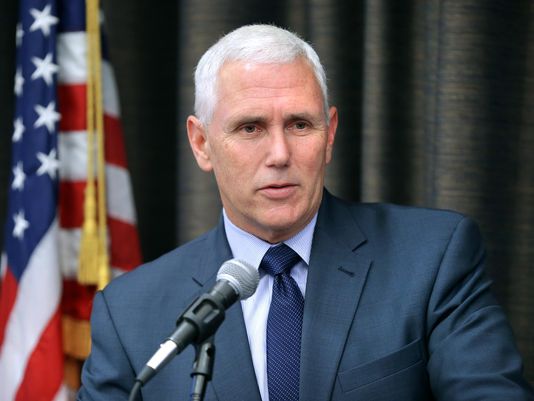
The presidential candidate of the Republican in the United States of American election later in the year, Mr. Donald Trump has finally presented Indiana Governor, Mike Pence, as his running mate. Pence has been described in American political circle as the man who can unify a fractured Republican party and help him bridge the gap created by the candidate’s outsider status.
In a wide-ranging speech in which he touted his own “landslide” victory in the Republican primaries, Trump cast Pence as a perfect complement for the White House: a veteran of government, a man with a Midwestern sensibility and strong Republican credentials as a job creator and budget balancer.
“Indiana Governor, Mike Pence was my first choice, I’ve admired the work he’s done, especially in the state of Indiana,” Trump said at an event in New York City.
“And one of the reasons is party unity, so many people have said, party unity. Because I’m an outsider,” he added in explaining his decision.
Trump and Pence made their debut just two days before the beginning of the Republican National Convention in Cleveland, where delegates from around the country will convene to officially nominate the pair as their party’s ticket for the Nov. 8 election.
Frequently straying from the notes on the lectern, Trump talked about himself and likely Democratic rival Hillary Clinton, often detouring from the purpose of the event: to introduce a little-known politician to the broader public.
“Back to Mike Pence,” Trump said, interrupting himself during a lengthy explanation about why evangelical voters support his candidacy. He then read a series of statistics highlighting the job growth in Indiana.
“He looks very good,” added the New York real estate mogul, who is known to comment openly on people’s appearances.
Trump had a bit of a winding path to settle on Pence, a devout Christian and conservative. He postponed his planned Friday announcement after the deadly attack in Nice, France and saying he had not made his “final, final decision,” Trump privately had second thoughts on who to pick in late-night conversations on Thursday, said a Republican source familiar with the situation.
Trump had been annoyed that the element of surprise had been taken away by the leaking of Pence’s name, the source added. Trump ended up announcing Pence as his running mate on Twitter on Friday.
Saturday’s event in a New York City hotel ballroom had few of the traditional hallmarks of what is arguably one of the most important decisions for a presidential candidate. Before it started, supporters listened to the Rolling Stones song “You Can’t Always Get What You Want,” a tune in regular rotation at Trump events.
There were no “Trump Pence” signs distributed to the crowd or adorning the room. The two appeared together on stage only briefly – each standing out of view while the other one spoke.
On stage, they made scant eye contact and shook hands rather than raising arms together in the classic pose of running mates. Neither offered anecdotal stories about their private time together.
Come together
Pence, in sharp contrast to Trump, delivered a prepared speech, discussing the love of his wife and country and his adoration for Ronald Reagan. He gave a full-throated call to fellow Republicans to back Trump.
“Let’s come together as a party, as a people, as a movement, to make America great again and that day begins when Donald Trump becomes the 45th president of the United States of America,” Pence said.
Trump has struggled to bridge the gap between himself and the establishment and conservative wings of the party. The drastically different styles highlighted Pence’s ability to provide a complementing tone to the presidential ticket.
It’s unclear when the two will appear together again. Pence heads back to Indiana for a solo event on Saturday night, and the Trump campaign hasn’t released a schedule for the convention that would include a joint appearance.
The pair recorded an interview with CBS’s “60 Minutes” that is scheduled to air on Sunday night.
One of their big challenges will be to brook their policy differences in public. Pence gave a nod to that by saying “strong Republican leadership can bring about real change.”
Trump has made renegotiating trade deals a central theme of his campaign, while Pence has spoken in favor of trade agreements. In an appearance on Friday night on Fox News, Pence offered a moderated take on trade, saying he agrees with Trump that deals should be renegotiated.
He also softened his vocal opposition to Trump’s call to temporarily ban Muslims from entering the United States.
“I am very supportive of Donald Trump’s call to temporarily suspend immigration from countries where terrorist influence and impact represents a threat to the United States,” Pence told conservative Fox News commentator Sean Hannity.
Pence added that he supports Trump’s call for building a wall along the U.S. border with Mexico. [myad]
The American University of Nigeria (AUN) has announced the holding of scholarship examinations for new students joining the university for the 2016/2017 academic session on Saturday, July 30, this year. This is even as the university announced the increase in new student scholarship awards to 67 and that 36 Scholarships will be awarded to candidates with the highest scores in the 2015 Joint Admissions and Matriculation (JAMB) examination from all the 36 states. A statement by the Director, Communications and Public Relations of the university, Mr. Daniel Okereke said that one scholarship will be awarded to the candidate with the highest scores in JAMB UME nationally. He said that another 30 scholarships will be awarded to five candidates from each of the six geo-political regions of the country under the university’s regional scholarships program. Okereke hinted that winners of the JAMB based scholarships will be selected based on results of the 2015 UME, while the regional scholarships winners will be selected primarily based on their performance on the 2015 national scholarship examinations. He said that all the 2015 UME candidates newly accepted into the university for the Fall 2016 Semester are eligible and are invited to sit for the regional scholarships examinations. “Candidates transferring from local and foreign universities as well as Direct Entry candidates are ineligible to write the scholarship examinations. “The centres where the examinations will be held and their contact information are as follows: “Intels Integrated Logistics Services, Km 16 Aba Expressway, Port Harcourt, (contact: 08075493243); “Federal Government College, Isi-Uzo Street, Independence Layout, Enugu, (contact: 08056200091); “Mauve 21 Event Centre, MKO Abiola Way, Iyana Adeoyo, Ring Road, Ibadan, (contact: 08077400585); “Shehu Musa Yar’Adua Centre, 1 Memorial Drive, Abuja, (contact: 08052266302); “Arewa House, 1 Rabah Road, Kaduna, (contact: 052266398), and “Robert Pastor E-Library, AUN, Lamido Zubairu Way, Yola, (contact: 08055026923). “All eligible candidates must bring with them their Acceptance Letter into AUN and either an International passport, National ID Card, or Voters Registration Card containing their photograph. Candidates freshly seeking admission and those who have applied, but are yet to be notified of their admission into AUN, and their guardians can phone the test centers to receive permission to take the special scholarship examinations. Those freshly seeking admission into AUN will need to complete an AUN admission application form at the venue of the examination before being allowed into the testing hall. “There is NO fee attached to this scholarship examination.” [myad]
The Police Service Commission has promoted 18 Commissioners of Police to the rank of Assistant Inspectors General of Police (AIGs) and approved their postings, along with four old AIGs. The AIGs of Police and their postings are as follows: 1. AIG Ibrahim Adamu – Zone 1 2. AIG Abdulmajid Ali – Zone 2 3. AIG Usman Tilli – Zone 3 4. AIG Agboola Oshodi Glover – Zone 4 5. AIG A. K. Shodipo – Zone 5 6. AIG Abubakar Marafa – Zone 6 7. AIG Usman Alkali Baba – Zone 7 8. AIG Tijjani Baba – Zone 8 9. AIG Karma H. Hassan – Zone 9 10. AIG Usman Yakubu – Zone 10 11. AIG Dan Bature – UI ZONE 11 12. AIG Jibrin O. Yakubu – Zone 12 13. AIG Salisu A. Fagge – Operations 14. AIG Isaac C. Eke – Taraba 15. AIG Aminchi Sama’ila Baraya – POLAC 16. AIG Umar U. Shehu – INFO-TECH 17. AIG Lawal Shehu – DLS 18. AIG John B. Opadokun – CTU 19. AIG Dorathy A. Gimba – Force Head Quarters 20. AIG Mohammed K. Mohammed – SPU 21. AIG Mohammed Musa – NIPSS 22. AIG Paul E. Okafor – MARITIME There are also 37 new Command Commissioners of Police that have been posted as follows: 1. CP Frederick Taiwo Lakanu – Imo State 2. CP Rashed O. Akintunde – Edo State 3. CP Ahmed Iliyasu – Ogun State 4. CP Rabi’u Yusuf – Kano State 5. CP Sanusi Lemu – Kaduna State 6. CP Abdullahi Ibrahim Chafe – Kogi State 7. CP Adeleye O. Oyebade – Oyo State 8. CP Muazu Zubair Halilu – Niger State 9. CP Gabriel Adejo Adaji – Zamfara State 10. CP Henry A. Fadairo – Jigawa State 11. CP Basen D. Gwana – Abia State 12. CP Zanna M. Ibrahim – Delta State 13. CP Emmanuel C. S. Ojukwu – Enugu State 14. CP Yunana Y. Babas – Taraba State 15. CP Austine I. Iwar – Gombe State 16. CP Adekunle J. Oladunjoye – Plateau State 17. CP Olufemi O. Oyeleye – Osun State 18. CP Murtala U. Mani – Akwa Ibom State 19. CP Ajani F. Owoseni – Lagos State 20. CP Usman Ali Abdullahi – Katsina State 21. CP Etop J. James – Ekiti State 22. CP Ghazzali Mohammed – Adamawa State 23. CP Peace E. Abdallah – Ebonyi State 24. CP Mohammed A. Mustapha – FCT 25. CP Sam A. Okaula – Anambra State 26. CP Jimoh Omeiza O. Cross – River State 27. CP Olusola E. Amore – Kwara State 28. CP Adeyemi Ogunjemilusi – Bayelsa State 29. DCP Abdulkadir Mohammed – Sokoto State 30. DCP Sunmomonu A. Abdulmaliki – Yobe State 31. DCP Bashir Makama – Benue State 32. DCP Ibrahim M. Kabiru – Kebbi State 33. DCP Damian Agba Chukwu – Borno State 34. DCP Bello A. Sadiq – Nasarawa State 35. DCP Gwandu Haliru Abukar – Bauchi State 36. DCP Francis M. Odesanya – Rivers State 37. DCP Douglas Agbonleni – Ondo State. [myad]
A new group, Network for the Sustainable Development and Empowerment in Borno South (NSDE) has emerged, with a determination to champion four Rs: Rehabilitation, Reconstruction, Reintegration and Resettlement in an attempt to bring reconciliation in Southern Borno that has been ravaged by the Boko Haram insurgency.
A statement by its coordinator, retired Brigadier General DB Shaljaba, the new group is non-partisan, non-religious, non ethnic and not profit making but has been set up by the sons and daughters of Southern Borno, consisting of the Nine Local Government Areas that made up the Southern Borno Senatorial District. They are Askira/Uba, Bayo, Biu, Chibok, Damboa, Gwoza, Hawul, KwayaKusar and Shani.
Part of the statement said: “the key areas the group will be focusing on include: Security, Education Intervention, Healthcare Support/Intervention; Water Supply and Food and Shelter as well as Empowerment, Humanitarian and other developmental service to improve the quality of life of the people of the area.”
According to the coordinator, time has come to for the people in the area to pay attention to some core issues which will shape the post insurgency era.
In a recent letter to the elders and stakeholders from Southern Borno, the group observed some of the issues as follows:
First, the group noted “in all the post insurgency development plans and mapping of master plan for Rehabilitation, Rebuilding, Resettlement, Reintegration (RRR) and reconciliation (R) (which are in any case given less attention as at present), our entire region has not been given the due consideration it deserves. Worst still, many of our areas have not been captured in the four (reports) authorised by Multinational development partners which has now been submitted to the presidency and which will serve as the basis for the Buhari plan for the North East (BPNE)
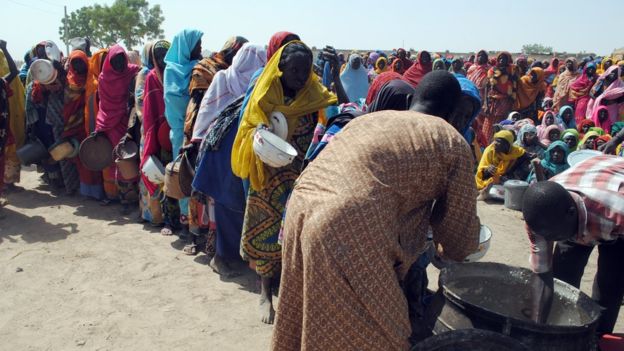
Secondly, “Most of the Humanitarian assistance coming into Borno are not reaching the affected areas of Southern Borno, especially the IDPs
in Biu, Gombe, Damboa, Chibok, and AskiraUba and other several informal (host community camps), as we all know that majority of our people are not in IDPs camp administered by government. Aside a few camps hosting Gwoza and Damboa IDPs, the Camp in Biu is almost unknown to many as far as humanitarian relief is concerned.
Thirdly , the group noted that “Over 35 settlements across the nation profiled to be hosting Gwoza IDPs, very little attention had been given by the state of the FG to the entire camps outside Maiduguri town.
Fourthly, NSDE noted that despite the numerous NGOs, CSOs, CBOs, FBOs, and multinationals operating within the State, efforts made so far to assist affected people of Borno South have not been anything to write home about. The statement said all interventions so far end up in Maiduguri while the Borno South People live in squalor and trauma of theinsurgency. Worthy of note, is the effort played by ICRC in Damboa, who evacuated about 53 persons for treatment to Gombe state for malnutrition related sicknesses after losing about 60 people due to the same complications of malnutrition. The Network, appreciate such effort and call on similar organisations to partner and assist in mitigating such catastrophic humanitarian challenges. It is this evident neglect of Boko Haram insurgency victims in Southern Born that the group seeks to address. It noted that majority of the people are trying to rebuild their lives with no assistance from any organisation, government or from concerned citizens in the Diaspora. This sorry situation, NSDE said, makes the clarion call imperative for independent reassessment and action to correct such anomalies.
Stating the background to the emergence of the group, General Shaljaba said “We therefore called for meetings where we deliberated amongst all the Southern Borno people present and came up with the idea to have an NGO registered and network of concerned citizens under this platform. This is to trigger the much needed advocacy for our region and our people to key into the post conflict rebuilding programmes and also benefit from the current humanitarian supports ongoing.
We have so far recorded the following successes: Identified our critical political stakeholders to support and be part of the movement and to key into our demand and leave up their duty as political leaders from the zone.
Development and Empowerments in Borno South (NSDE Borno South) as an NGO.
Formed committees to champion various areas of interest
Activated a media and advocacy to make our needs known and call for action from our members and solicit partnership with NGOs and development partners to assist our people.
We have designed and now host on our website (nsdebornosouth.org and www.nesdebs.com to keep the public informed of our activities.
We have documented all the damages to lives and properties in the nine (9) local government areas that make up the region. Such Data is obtained to ease the process of the required intervention.
Provision of humanitarian assistance outreach to few Local Government Areas based on what was available to assist, especially widows and aged ones in the zone.
The group vowed that it is now set to scale up the engagements to trigger and deliver on its aims and objectives, “thus the call for all of us to support this organisation to succeed with what we have mapped out to support our distraught and traumatized people.
“We want to embark on self help programmes targeting education, health care services, security and empowerment to showcase what we can do before we secure grants and other partnerships needed for humanitarian assistance.”
Addressing stakeholders from the zone, General Shaljaba said: “with this letter we therefore notify you that soon, your attention will be called upon for donations, in cash and kind for our next outreach to our region.”
He appealed to the people to “consider this to be a duty call for all sons and daughters of the Southern Borno to make this organization succeed in its stride to make life once more meaningful and worth living to all our citizens that have survived and wish to go back home.” [myad]
Former Senior Special Assistant to ex-President Goodluck Jonathan on Public Affairs, Dr. Doyin Okupe, has been fingered as allegedly receiving the sum of N76 Million from Chanchaga local government council in Niger State for dubious contracts.
This fact came out on Friday when he faced the Economic and Financial Crime Commission (EFCC) over the sum of N85 million he also allegedly received from embattled former National Security Adviser (NSA), Colonel Sambo Dasuki (rtd), which is domiciled at the Central Bank of Nigeria.
According to the EFCC operatives, Okupe was first invited on June 22, 2016 over fresh allegations bordering on illicit payments received from the account of the Office of the National Security Adviser, A source at the EFCC said: “Okupe was quizzed over N50 million which he collected in cash from the former NSA, without record or accountability. Another company that is linked to Okupe, Abraham Telecoms Limited, allegedly received N35.5 million from the NSA through the CBN. “We also got evidence that a company owned by him, Romic Soil Fix International Limited, received N63 million from Chanchaga Local Government council of Niger State and another N13.5 million from the same council, for reasons that are not stated. “We were told that the payments from Chanchaga Local Government to Romic were made on November 21, 2014 during the Peoples Democratic Party’s primary election and February 13, 2015, just before the general elections. “He has not been able to explain the receipts and has been asked to be reporting at intervals. The reason he is not detained is because he claimed to have a heart condition and presented a medical report to back up the claim.” It will be recalled that Okupe had openly confessed on his official Twitter handle on May 7 that he received money from Dasuki on several occasions for the running of his office. Okupe, who served under Jonathan from 2012 to 2015, however, said he had nothing to do with the arms scam, which reportedly cost the country over $15 billion in stolen funds. Okupe said: “I was not paid arms deal money. The NSA paid for the running of my office monthly from August 2012. Dasukigate was in 2014. I did not take part in the campaign.” It had been reported in January that Okupe got money from Dasuki in three shady cyber security contracts. One of the contracts had instructions to hunt down unfriendly media websites with Distributed Denial of Service attacks. It was believed to be a project conceived to shut down online media platforms perceived as friendly towards Muhammadu Buhari, the then presidential candidate of the All Progressives Congress (APC), ahead of the 2015 election. The other contract was to intercept all optic fibre cables landing in Nigeria. The third was a passive mass and target GSM interception that had the ability to decrypt ciphers and operate undetected. Source: The Punch. [myad]
We use cookies on our website to give you the most relevant experience by remembering your preferences and repeat visits. By clicking “Accept”, you consent to the use of ALL the cookies.
This website uses cookies to improve your experience while you navigate through the website. Out of these, the cookies that are categorized as necessary are stored on your browser as they are essential for the working of basic functionalities of the website. We also use third-party cookies that help us analyze and understand how you use this website. These cookies will be stored in your browser only with your consent. You also have the option to opt-out of these cookies. But opting out of some of these cookies may affect your browsing experience.
Necessary cookies are absolutely essential for the website to function properly. This category only includes cookies that ensures basic functionalities and security features of the website. These cookies do not store any personal information.
Any cookies that may not be particularly necessary for the website to function and is used specifically to collect user personal data via analytics, ads, other embedded contents are termed as non-necessary cookies. It is mandatory to procure user consent prior to running these cookies on your website.


 Following the directive by the Auditor General of Kogi State, Alhaji Yusuf Okala, Zenith Bank has agreed to open for business on Saturday, July 17th to attend to Kogi state workers, who started getting three more months’ backlog of their salaries from the government today.