Less than 12 hours after crippling operations at Chevron’s Escravo’s oil terminal, the new terror group, Niger Delta Avengers have militants struck again, blowing up a large gas and crude pipeline operated by Nigerian National Petroleum Company (NNPC).
The attack was carried out near Warri, the commercial capital of Delta state.
The attackers taunted government that their sabotage was carried out despite the presence of Nigerian soldiers.
They declared on its Twitter feed: “At 11:45pm on Thursday @NDAvengers blew up other #NNPC Gas and Crude trunkline close to Warri,” [myad]
The Rivers State Police Command has declared five policemen missing after an ambush by unknown gunmen at Okujagu waterways in Okrika Local Government Area. The missing policemen were said to be part of a team that were on a routine police inquiry in the state.
The command however, announced the arrest of 53 suspects in connection with the missing policemen.
State Police Public Relations Officer, Ahmad Muhammad, in a statement said that the policemen were attacked before they could disembark from the boat conveying them.
Muhammad explained that six policemen, comprising two inspectors and four other officers were initially missing while Inspector Aferuan Imoukhuede was rescued a day after.
“The Rivers State Police Command has announced the missing of five policemen who along with other colleagues were ambushed in the early hours of Wednesday 25/05/2016 at the Okujagu community, Okrika Local Government Area.
“The policemen went to Okujagu community on a routine police inquiry when they were ambushed by unknown gunmen before they could disembark from the boat that ferried them, they were bombarded with a barrage of heavy gunfire which forced them to scamper for cover.
“By the time the firing ended, six policemen comprising two inspectors and four other rank and file could not be accounted for but a day after Inspector Aferuan Imoukhuede, who was among the missing policemen, was rescued.
“Sting operations by the command are still on the top gear to rescue the remaining five missing policemen. Fifty-three suspects have been arrested in connection with the incident and are currently undergoing interrogation,” he added.
Muhammad, however, disclosed that the Rivers State Commissioner of Police, Mr. Musa Kimo, had set up a “high-powered” investigative panel headed by the Deputy Commissioner of Police, Investigation Department, to unravel the circumstances surrounding the entire incident. [myad]
The Ogun State governor, Senator Ibikunle Amosun has described the federalism being practised in Nigeria as fraudulent.
Amosun argued that the resources allocated to the centre when compared to the one allocated to the states is quite disproportionate, given the fact that states have more responsibilities than the centre.
The governor who spoke in Abeokuta on Thursday in a commemorative lecture for the 2016 Democracy Day, with the theme: ‘Democracy in Nigeria, the pains, the gains: Ogun example,” stressed: “the federalism enshrined in our Constitution is an important area of our democracy. But do we have a good federalism in Nigeria?
At the lecture which was put together by the Nigeria Union of Journalists (NUJ), Ogun State chapter, as part of activities to mark Democracy Day on Sunday, the governor insisted that what Nigeria has is nothing but fraudulent federalism, adding t5hat this is because a federalism that put all the power, all the levy and all the money at the centre but put all the responsibility at the state is not a good federalism.
“Today in Nigeria the federal government takes 74 percent of wealth of the Nation, the 36 states and Abuja share 26 percent.democracy
“But the states are given all the bureau agencies. So there is pain. For example, Ogun state as an example has 70 bureau agencies, most of these agencies require the state to support their activities financially.”
Amosun who was represented at the event by the Secretary to the State Government, Taiwo Adeoluwa, noted that the past 16 years of democratic rule in the country have had its pains and gains, both at all levels of governance.
But he was optimistic that as the country progressed, the fledgling democracy in the country would continue to be refined.
“Whether it is perfect or imperfect, let us continue to refine it and refine it until it gets to an acceptable level.”
He commended the immediate past President Goodluck Jonathan for conceding defeat even before the elections results were announced, without recourse to to violence or the intrigues of election tribunal. On the present economic hardship confronting Nigerians, the governor appealed to them to endure as their pains would soon be over.
“As the saying of the elders that when our mothers are going into the labour room, they are usually in so much pain but after the baby is born, they will smile. By God’s grace that will be the story of Nigeria at the end of the day.”
Amosun said that his administration had tried within the limited resources at its disposal to bring dividends of democracy to the people of the state.
“I am not saying we have scored 100 per cent but within the limit of resources available to us, we have done our bit by bringing the dividends of democracy to the doorsteps of our people. “When people see the gains of democracy, it is easy for them to buy-in into what we are doing.” [myad]
Head Coach of the Nigeria U-23 team, Samson Siasia has selected 20 players made up of 12 home -based and eight overseas –based professionals for next month’s Suwon Invitational Tournament in Korea Republic.
The list is dominated by players who featured against the Brazil U-23 in a friendly in that country two months ago, which Nigeria won 1-0. Two new faces; Emiloju Julius and Abdulrahman Taiwo break into the team, even as winger Saviour, Godwin also makes a return to the team after a long absence.
Addressing the players after its friendly game at the practice pitch of the National Stadium, Abuja, Coach Siasia charged those selected for the trip to see it as an honour. “That you were selected does not mean that those not selected are not good. We simply want to give everyone enough opportunity to justify why they should be part of the team to the Rio Olympics.”
To those who were dropped, Coach Siasia told them not to see themselves as not being part of the plans of the technical crew, but a clarion call to work even harder, as the team will be going to the United States of America for its final camping exercise where the best will be selected for the Olympics.
The delegation of 20 players and 10 officials will be led by NFF Executive Committee member and Chairman of the NFF Media and Publicity Committee, Hon. Suleiman Yahaya-Kwande. The group is expected to depart Nigeria for Korea Republic on Monday, 30th May aboard an Ethiopian Airline flight, and arrive in Seoul on Tuesday.
20 PLAYERS FOR SUWON TOURNAMENT
Emmanuel Daniel 2. Yusuf Mohammed 3. Emmanson Daniel 4. Sincere Seth
Ndifreke Effiong 6. Segun Oduduwa 7. Stanley Amuzie
One of the major news items in circulation has been the scarcity of tomato. Incidentally, Nigeria is (was) the 14th largest producer of tomato in the world and the second largest producer in Africa, after Egypt, but our country hardly produces enough to meet the local demand of about 2.3 million tonnes, and lacks the capacity to ensure an effective storage or value chain processing of what is produced. Out of the 1.8 million tonnes that the country produces annually, 900, 000 tonnes are left to rot and waste. Meanwhile, tomato-processing companies in the country operate below capacity and many of them have had to shut down.
The CEO of Erisco Foods, Lagos, Eric Umeofia laments that tomato processing companies lack access to foreign exchange to enable them buy heat-resistant seedlings and other tools that would help ensure the country’s sufficiency in local production of tomato paste. Similarly, Dangote Tomato Factory recently suspended operations due to the scarcity of tomatoes and the assault on its tomato farms by a tomato leaves destroying moth, known as “tuta absoluta” – a South American native, also known as the Tomato Ebola, because of its Ebola-like characteristics.
Other reasons have been advanced for the scarcity of tomatoes in our markets: the fuel crisis which has driven up costs making it difficult and expensive for Northern tomato farmers to bring tomatoes to the South, insurgency in the North East which has resulted in the closure of many tomato farms in that region, thus cutting off national output, the recent ethnic crisis in Mile 2, during which Hausa Fulani traders and other marketers engaged in a murderous brawl, climate-change induced drought and heat wave in the Northern-tomato producing states of Kaduna, Katsina, Kano, Jigawa, Plateau, Kano and Gombe. In the best of seasons, Nigeria spends $1.5 billion annually on the importation of tomato products. The cost in this regard, seems certain to rise.
Already, the effect of this tomato blight is being felt in households. Whereas a few months ago, a basket of tomato was about N5, 000, it is now about N40, 000 per basket. Housewives are protesting bitterly about how a piece of tomato vegetable has jumped up by about 650%, such that three pieces now go for as much as N500. Tomato in Nigeria today is thus more expensive than a litre of petrol! I have it on good authority, that in those face-me-I-face you quarters where the poor live, it has in fact become risky to leave a tin of tomato paste carelessly or fresh tomatoes lying around: they would most certainly be stolen, and there have been reports of soup pots suddenly vanishing should the owner take a minute from the communal kitchen to use the loo. Many are resorting to desperate measures to sort out a growing epidemic of empty stomachs and empty pockets. Unless this matter is addressed seriously and urgently, the social crisis may be far too costly in both the short and the long run: hungry people could become sick and angry, hungry citizens could become thieves and a nuisance, they could also become angry voters and a rebellious populace.
However, the most brilliant explanation that we have received so far from the Federal Ministry of Agriculture and Rural Development is that there is tomato scarcity because of “tuta absoluta”. According to the Minister of Agriculture, Audu Ogbeh, a group of experts will be immediately commissioned to advise the government of Nigeria on the way forward. The mandate of these experts is to “appraise the situation”, and then give us “a figure on cost of treatment…so we will source funds to tackle it.” Is that what this is all about? I am not in the mood at this moment, to spoil anyone’s day, with straight-to-the-nose-the-mouth-and-the-groin punches but I think that the response from the Federal Ministry of Agriculture is far from adequate, if not stupid. Please, where is that bow-tie wearing Akinwumi Adesina, the former Minister of Agriculture, now on loan to the African Development Bank?
What we are dealing with is a national food security crisis. Before the commissioned outsiders begin to “appraise and cost”, the resident experts in the Ministry, should know that it is not only tomato that has become a scarce and expensive item in Nigerian kitchens, virtually every food item has become unaffordable and there are many homes that can no longer feed properly. The scarcity of tomato is only a metaphor for the spread of staggering inflation and the hunger that ravages the land. A bag of rice that was once N7, 000 is now N19, 000 per bag, a congo of garri has jumped from N170 to N300, bread from N200 per loaf to N300, and same is the case with virtually every food item. More than this, tomato scarcity is a metaphor for the lack of continuity in governance processes (What happened to all that revolution in the agriculture sector under Akinwumi Adesina as Minister?) and of course, for the failure since independence, to take agriculture seriously as a major vehicle of national security and development. If the response to this query is that nothing concrete actually took place under previous administrations, then what is the present Minister’s blueprint? What is his comprehensive agenda for ensuring food sufficiency?
It is indeed absurd that in 2016, we cannot produce enough tomatoes to feed ourselves – the short of it is that that single narrative about “tomato ebola” calls for more rigorous thinking. It is not enough to deal episodically with tomato scarcity, or the scarcity of any other food item; this must be done within the context of a plan of action. The job of government officials is to give the people hope and not to deepen their agony. A committee of experts looking into the scarcity of tomato, and how to throw money at the problem (!) is a round-about excuse for doing nothing. The knowledge that is required is within easy reach and much of the issues at stake, those within the province of the Ministry and those located in the larger context, are out there in the public domain, and perhaps, also in those accumulated files and old reports that most officials hardly ever read. The Ministry also spoke up rather too tardily.
For weeks, there have been all kinds of ethnic and political insinuations about how tomato became scarce, some of which, allowed to fester for too long, could have resulted in other crises. And we can only hope that the connection between food and health will not be lost on the experts. The health benefits of tomato alone are so many; to have a population no longer eating tomatoes, because of its cost could have long-term health implications. And while we expect the Federal Government to take the lead in terms of visioning, we should remember to ask: what are the state governments also doing? What are the states doing to promote agriculture and ensure food security? Apart from Kaduna state, other state governments have been criminally silent about the food crisis or they really don’t know since they probably get supplies of fresh tomatoes from neighboring countries for their own kitchens. All the big men eating imported fresh tomatoes when we, the people, can’t get tomatoes to eat, just “continuu eh” but don’t forget that a hungry and angry voter is an enemy of politicians.
There is another side to this whole tomato thing that is noteworthy. Special notice must be taken of the reference to the insurgency in the North East as a threat to agriculture. It is also interesting that most of the tomatoes produced in the country are from the North, and the Middle Belt. Check the list of major tomato producing states in Nigeria: Kaduna, Katsina, Kano, Jigawa, Gombe, Plateau. Also check the list of the states where people are complaining most about the cost of tomato: they are all in the South! We should ask: so Southern Nigerians are grumbling about tomato being expensive and scarce, why are they so dependent on Northern farmers? They want tomatoes from the North, but are these not the same people who don’t want to see Northern cattle herdsmen in the South? Are these not the same people campaigning on social media that Southerners should stop buying beef in order to spoil market for Northern herdsmen? They are now begging for tomatoes from Northern farms?
In Ekiti, the state Governor has already given local hunters an executive order to shoot any AK-47 wielding herdsmen sighted anywhere in the state. It may not have occurred to the Governor that an AK-47 is far more versatile than a “shakabula” that is made by local blacksmiths and that he may actually be sending his local hunters on a suicide mission, but I doubt if the same Governor will stop lorry loads of fresh and healthy tomato baskets coming from Gombe to Ekiti markets! Thus, whereas cattle-grazing is causing ethnic division, tomato is generating so much hypocritical love for the Northern farmer: “Please, send us tomato, stop selling tomato to the tomato paste producers!”. This country is truly far more integrated and its various units so interdependent, in more ways than the politics of hate and division would ever allow the people to see. It is tomato today, should onions, millet and kolanuts also become very scarce, Southerners may start begging Northern farmers to please bring their produce to the South. This is the truth of our interdependence but we need to get our politics right and those who exploit ethnic divisions must allow the country to grow.
One final point: The scarcity of tomato and the threat of a national food crisis should remind policy makers at all levels, of the importance of agriculture. A nation that can feed itself is a safe and secure nation. A hungry nation can only have sad people. Tomato is incidentally, a versatile vegetable, very easy to grow, usually ready for harvest between 60 – 85 days. Those who are screaming “give us tomatoes”, and playing politics with it, may also do well to embark on subsistence farming: create a small garden in the backyard, turn that uncultivated plot of land into a small farm, plant a variety of food plants, remove that your white collar, stop waiting on the Northern tomato farmer, get on with the food revolution we need…while hoping that some day, Nigerian leaders will stop waiting for oil money and rediscover agriculture as Nigeria’s true gold. [myad]
It is one year since President Muhammadu Buhari took office and all you mostly hear is the now usual call for patience from his political associates and court jesters as well as corridor managers. At the receiving end is the Nigerian, bartered and bruised by successive governments, his enduring shocks absorbers and capacity to accept and tolerate delays, excuses and disappointments at their wits ends. Still, he trudges on without getting upset, holding on to the eternal hope “e go better one day.” He is tossed round and about by politicians and their cheerleaders who hang on high chairs, vilifying critics and political opponents alike, forgetting Nigeria is here for the long haul and not the four-year, or eight if he’s fortunate, term of the administration. The Nigerian has been the ultimate victim of misgovernance, arrogantly disregarded and treated with impunity. He is only courted in the run up to elections with unending promises after which he is discarded to the background where the politicians and their appointees feel he belongs. That has been our story for 55 years of nationhood. And that’s assuming what we operate is a true nation. The administration of President Olusegun Obasanjo told all the tales of decayed infrastructures, moribund refineries and even undertook turnaround maintenance services for a period of eight years. Yet, the refineries never worked and were sold off. There were promises of `uhuru’ with several plans and roadmaps that couldn’t find their ways out of summit meetings and workshops in the Obasanjo days. In pretending to provide power infrastructure, he undermined the people, especially those of the Niger delta, citing power plants out of the region but proposed to run pipelines out of it to service the plants inlands. Now, the power stations are unable to operate because of gas pipeline vandalism. The reason for our perennial daily blackouts. There were unresolved issues in education and other sectors because to the ruling class, the average Nigerian’s patience seems inelastic. Less could be said of the President Umaru Yar’Adua’s administration yet he achieved so much in his few months of stay in the Aso Rock Villa. He was not a preacher and within the short period before his health failed him, he took care of the problem that could have messed up his administration; the militancy in the Niger delta. Without a bullet fired into the air he resolved the agitation of the militants, initiating the amnesty programme, a legacy that has not been challenged in the six years since his death. He was known for fewer promises and only approved contracts that the budget guaranteed cash backings. He joked a lot about the weekly federal executive council meetings approval on contracts. He will tell his cabinet ministers that while the council members sit to determine, access and approve work, it is only the president that is called to task when they fail. He was never comfortable with the principle of collective responsibility but of no collective blame. Nigerians were patient with him when he became bedridden and incapacitated to do the job that he was elected for. We all prayed for him. After him came the bride of the Niger deltans, a man who ascended the presidency under circumstances that are now known as doctrine of necessity. President Goodluck Jonathan’s days were turbulent so he called for patience. He was taken as a political underdog because he is not from one of the big three ethnic groups, his reign was undermined from many quarters. He was haunted and taunted by all, politicians, party and polity alike. His troubles started when nature bestowed on him an opportunity to serve his people as president. He saw it all but felt there was always time to accomplish his dreams that looked his; alone. The rest is history. Some now liken his reign to the days of President Shehu Shagari when politicians were jailed for corruption. His reign though with a fine face had been enmeshed in the current ‘single upload’ of this administration; corruption. Every success of the regime has been drowned in the background, covered with the thick blackness of the corruption tar. Alas, it is been a year since the peoples government, the supposedly most accepted change administration came to power. Not much of the old song of patience but a rude and overbearing reference to our past and our tempered growth is heard everywhere. Shirking responsibility for anything but pointing accusing fingers at all that has been bad and not those that could be fixed. Alas we are patient. In the last 12 months inflation has climbed to 13.7 percent, a six-year high. Still, we remain calm about it. Our children have been indirectly stopped from schooling abroad over strict policies of the government on foreign exchange, we are patient. Several Nigerians have been pushed out of jobs, we are not complaining. There has been incessant power outage despite promises of quick fixes. We have kept mute. Electricity tariffs have been increased by about 50 percent in the past one year with the blackouts even far worse now. Our mouths have remained sealed. Petrol price has increased by over 60 percent, still, we are unruffled. We can’t even buy tomato, yet we are uncomplaining. Patience has become a compulsive option so we are not marked out as `wailing wailers’ or worse, picked up by our dark goggled friends known as secret police by the United States. But there are other people that are no longer that patient for the total disregards for their people. They have been ignored for decades, cheated, deprived with their people vilified till this day. These are the people of the delta. A former president and general woke up about 13 years ago and killed the people of Odi on the same circumstances that seem to be playing out today. For the sins of the Niger Delta Avenger, every Ijaw man is treated with disdain and as a suspect. His privileges and rights are denied and even looked down on in the society he calls his own, even when he exhibits a higher level of patriotism than his contemporaries. He is presumed to be a rebel despite sharing oil well from his backyard amongst people who now brag about the wealth acquired through those allocations on Forbes without complaining. He reads of how people become rich in millions of dollars because they had oil allocation while he paddles canoe into the same village where the black gold is drilled. Others donate whole blocks to universities in America with the proceeds from oil blocks to further scorn the Niger deltan living in squalor. There is no greater corruption than maintaining the regime of oil block allocation to a few individuals to the detriment of the livelihood of the Niger deltan and the generality of Nigerians for one more year and feel all can be well in a change situation. It is not well down here in the Niger delta especially with the influx of ‘okobo kobos’ manhandling our men and women in the past one year of change administration to gag the people while the mainstay of the nation’s economy is exploited without any social responsibility programmes for the people of the region.
Miss Ese Oruru, the teenager who was allegedly abducted and impregnated by Yunusa Dahiru, a Kano indigene, has given birth to a baby girl in Yenagoa, Bayelsa State.
The 14-year old youngster, it was gathered, was delivered of the baby on Thursday about 10.15 in the morning at the State Government House Clinic in the state capital.
Her father, Charles Oruru, obviously elated by the news, confirmed yesterday that the young girl who was in Junior Secondary School at the time she was taken away, was in a good state after going through the early morning labour stress.
Ese was allegedly abducted in Bayelsa State last August and taken to Kano where she was converted to lslam and married off without the consent of her parents. Since she returned to Yenagoa following outcry by members of the public and pressure mounted by the media, she has lived at the Police Officers’ mess in Yenagoa in custody of the police authorities in the state.
Oruru, Ese’s father said that the family was excited about the latest addition to the family, despite the circumstances surrounding her pregnancy. He added that the baby and the mother were doing well, adding that the young girl gave birth without much trouble.
‘’Yes, my daughter gave birth in the morning around a quarter past 10. The mother and the child are well. She gave birth to herself (a baby girl). We are very happy that she gave birth safely’’, Oruru said.
Ese’s abduction case is currently before federal high Court in Yenagoa, Bayelsa state, where her alleged kidnapper, Dahiru is facing a five-count charge, including kidnapping, unlawful carnal knowledge and sexual exploitation of a minor.
Dahiru has been in prison custody unable to fulfil the bail conditions slammed by the court headed by Justice Ajiya Nganjiwa.
A retired colonel in the Nigeria armed forces, Eugene Okpala has been jailed for seven years by a Federal High Court Judge, sitting in Enugu, Justice F. N Yunusa, having been found guilty of duping Dominion City Church, of the sum of N34.5 Million in 2010.
He was charged by the Economic and Financial Crimes Commission (EFCC) with conspiracy, and obtaining money under false pretences to the tune of N34.5m.
Efcc, in a statement by its spokesman, Wilson Uwujaren, said that the 62-year-old convict was earlier slated for trial on Wednesday but the case took a different turn when the retired colonel decided to change his plea from “not guilty” to “guilty”.
Okpala was said to have in 2008, approached one lawyer, Vincent Obetta, of Igwurube Chambers and a member of Dominion City Church under the pretext of having large portion of land for sale at N40m.
The complainant, Dominion City Church, in need of a landed property to build their school, negotiated and eventually bought the land for N34.5m. The church also paid additional five percent of the sum, which is, N1.75m as agency fee to Igbwurube Chambers.
Consequently, in September 2010, the church started developing the land, but another lawyer came up to tell them that the land belonged to one Chief Philip C. Asiodu.
The statement read in part, “Investigation was launched into the matter and the convict was found culpable and was arraigned. During trial, counsel for the EFCC, I. I. Mbachie tendered 13 exhibits which were admitted in evidence and marked as exhibit C1-13.
“Having changed his plea, the defence counsel, E. O. Isinu, prayed the court to temper justice with mercy saying, his client was a first time offender.
“Justice Yunusa consequently sentenced Okpala to seven years imprisonment on each count preferred against him. The sentences are to run concurrently.” [myad]
The United Nations Children’s Fund (UNICEF) has called on the Federal Government to take actions and renew efforts towards ending all forms of violence against children.
The call came as UNICEF records showed that more than 1.2 million children have been displaced in the North-East of the country.
In a statement to mark the Children’s Day on Friday with the theme: “Protect the rights of the child in the face of violence and insecurity: End child marriage,” UNICEF Nigeria, Jean Gough, noted that the theme of the day helps to shed a much needed light on the unprecedented levels of violence against children in Nigeria in the recent past and present.
“In the North East, we have witnessed, and continue to witness grave violations of children’s rights – killings, abductions, sexual violence and use in suicide bombings by Boko Haram.” Noting that out of the 1.2 million children more than half of them were below the age of 5, Gough added that children living away from the crisis in the North East are also at risk of violence.
The UNICEF Representative noted that the Nigeria Violence Against Children Survey carried out by the National Population Commission, with the support of UNICEF and US Centres for Disease Control and Prevention and launched by Government of Nigeria in 2015, highlighted the prevalence of sexual, physical, and emotional violence suffered by children in Nigeria. [myad]
President Muhammadu Buhari has asked Nigeria’s children to imbibe and exhibit in greater measure, the virtues of hard work, diligence, discipline, honesty, prudence, selflessness and patriotism which are essential for the actualisation of the vision of a truly great nation.
“The world now looks up to our dear nation, Nigeria as an exemplary model of democratic ideals after the smooth transition that brought our Administration to power.”
In his Children’s Day Message to the nation, President Buhari reminded the children that they have a very significant role to play in ensuring that the nation’s democratic institutions of governance are continuously nurtured, improved and strengthened to underpin national development and prosperity.
Buhari assured them that under his leadership, the Federal Government will continue to do its best to prepare and equip the children and youths to show the world that with its brilliant, resourceful and resilient people, Nigeria is a country of incredible potential and opportunity.
The full text of the President message goes thus:
I heartily greet and felicitate with all Nigerian children on the occasion of this year’s Children’s Day celebration.
I seize the opportunity of this year’s celebration which comes just two days before the first anniversary of the present Administration, to reassure our children and youth that we remain fully committed to fulfilling our promise of a better Nigeria for all of our people.
On this happy occasion for our children, I reaffirm my belief that it is the right of every Nigerian child to have access to quality and affordable education, as well as healthcare and other basic necessities for a good life, in a peaceful and secure environment.
The good health and well-being of Nigerian children remain a top priority on our agenda for national development and we have demonstrated our strong commitment in this regard with the allocation of N12.6 billion in the 2016 budget for vaccines and programmes to prevent childhood killer diseases such as polio, measles and yellow fever.
Other measures in the 2016 budget, such as the school feeding programme for children at a cost of N93.1 billion, will ensure that more children go to school and enjoy the fun of learning and growing together with their peers.
Despite the current economic and funding challenges facing our dear nation, my administration will continue to do all within its powers to achieve better living conditions and greater access to quality healthcare and education for all our youth.
It is a thing of joy that on this year’s Children’s Day, we can also celebrate the safe return of one of the Chibok girls, Amina Ali Nkeki and many other abducted women and children who have been freed from the clutches of Boko Haram by our gallant troops.
I assure all Nigerians and friends of the country, once again, that my administration will not rest on its oars until the ungodly terrorist sect is totally eliminated from our country.
As peace gradually returns to the insurgency-ravaged North-Eastern States, the Federal Government will continue to work diligently to ensure the rapid and full reintegration and rehabilitation of all internally displaced persons, including orphaned children in the region.
We will also sustain and strengthen ongoing actions to protect children more effectively from violence, child-labour, child-trafficking, forced marriages and other related offences.
In return, I urge you all to imbibe and exhibit in greater measure, the virtues of hard work, diligence, discipline, honesty, prudence, selflessness and patriotism which are essential for the actualisation of our vision of a truly great nation.
The world now looks up to our dear nation, Nigeria as an exemplary model of democratic ideals after the smooth transition that brought our Administration to power.
You, our children and youth have a very significant role to play in ensuring that our democratic institutions of governance are continuously nurtured, improved and strengthened to underpin national development and prosperity.
Remain assured that under my leadership, the Federal Government will continue to do its best to prepare and equip you to show the world that with its brilliant, resourceful and resilient people, Nigeria is a country of incredible potential and opportunity.
I wish you all a Happy Children’s Day celebration.
We use cookies on our website to give you the most relevant experience by remembering your preferences and repeat visits. By clicking “Accept”, you consent to the use of ALL the cookies.
This website uses cookies to improve your experience while you navigate through the website. Out of these, the cookies that are categorized as necessary are stored on your browser as they are essential for the working of basic functionalities of the website. We also use third-party cookies that help us analyze and understand how you use this website. These cookies will be stored in your browser only with your consent. You also have the option to opt-out of these cookies. But opting out of some of these cookies may affect your browsing experience.
Necessary cookies are absolutely essential for the website to function properly. This category only includes cookies that ensures basic functionalities and security features of the website. These cookies do not store any personal information.
Any cookies that may not be particularly necessary for the website to function and is used specifically to collect user personal data via analytics, ads, other embedded contents are termed as non-necessary cookies. It is mandatory to procure user consent prior to running these cookies on your website.



 Less than 12 hours after crippling operations at Chevron’s Escravo’s oil terminal, the new terror group, Niger Delta Avengers have militants struck again, blowing up a large gas and crude pipeline operated by Nigerian National Petroleum Company (NNPC).


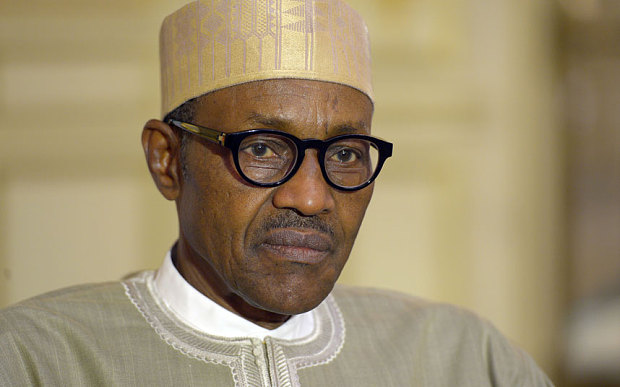


The Patient Nigerian, By Moses Okpogode
The Nigerian has been the ultimate victim of misgovernance, arrogantly disregarded and treated with impunity. He is only courted in the run up to elections with unending promises after which he is discarded to the background where the politicians and their appointees feel he belongs. That has been our story for 55 years of nationhood. And that’s assuming what we operate is a true nation. The administration of President Olusegun Obasanjo told all the tales of decayed infrastructures, moribund refineries and even undertook turnaround maintenance services for a period of eight years. Yet, the refineries never worked and were sold off. There were promises of `uhuru’ with several plans and roadmaps that couldn’t find their ways out of summit meetings and workshops in the Obasanjo days. In pretending to provide power infrastructure, he undermined the people, especially those of the Niger delta, citing power plants out of the region but proposed to run pipelines out of it to service the plants inlands. Now, the power stations are unable to operate because of gas pipeline vandalism. The reason for our perennial daily blackouts. There were unresolved issues in education and other sectors because to the ruling class, the average Nigerian’s patience seems inelastic.
Less could be said of the President Umaru Yar’Adua’s administration yet he achieved so much in his few months of stay in the Aso Rock Villa. He was not a preacher and within the short period before his health failed him, he took care of the problem that could have messed up his administration; the militancy in the Niger delta. Without a bullet fired into the air he resolved the agitation of the militants, initiating the amnesty programme, a legacy that has not been challenged in the six years since his death. He was known for fewer promises and only approved contracts that the budget guaranteed cash backings. He joked a lot about the weekly federal executive council meetings approval on contracts. He will tell his cabinet ministers that while the council members sit to determine, access and approve work, it is only the president that is called to task when they fail. He was never comfortable with the principle of collective responsibility but of no collective blame. Nigerians were patient with him when he became bedridden and incapacitated to do the job that he was elected for. We all prayed for him.
After him came the bride of the Niger deltans, a man who ascended the presidency under circumstances that are now known as doctrine of necessity. President Goodluck Jonathan’s days were turbulent so he called for patience. He was taken as a political underdog because he is not from one of the big three ethnic groups, his reign was undermined from many quarters. He was haunted and taunted by all, politicians, party and polity alike. His troubles started when nature bestowed on him an opportunity to serve his people as president. He saw it all but felt there was always time to accomplish his dreams that looked his; alone. The rest is history. Some now liken his reign to the days of President Shehu Shagari when politicians were jailed for corruption. His reign though with a fine face had been enmeshed in the current ‘single upload’ of this administration; corruption. Every success of the regime has been drowned in the background, covered with the thick blackness of the corruption tar.
Alas, it is been a year since the peoples government, the supposedly most accepted change administration came to power. Not much of the old song of patience but a rude and overbearing reference to our past and our tempered growth is heard everywhere. Shirking responsibility for anything but pointing accusing fingers at all that has been bad and not those that could be fixed. Alas we are patient. In the last 12 months inflation has climbed to 13.7 percent, a six-year high. Still, we remain calm about it. Our children have been indirectly stopped from schooling abroad over strict policies of the government on foreign exchange, we are patient. Several Nigerians have been pushed out of jobs, we are not complaining. There has been incessant power outage despite promises of quick fixes. We have kept mute. Electricity tariffs have been increased by about 50 percent in the past one year with the blackouts even far worse now. Our mouths have remained sealed. Petrol price has increased by over 60 percent, still, we are unruffled. We can’t even buy tomato, yet we are uncomplaining. Patience has become a compulsive option so we are not marked out as `wailing wailers’ or worse, picked up by our dark goggled friends known as secret police by the United States.
But there are other people that are no longer that patient for the total disregards for their people. They have been ignored for decades, cheated, deprived with their people vilified till this day. These are the people of the delta. A former president and general woke up about 13 years ago and killed the people of Odi on the same circumstances that seem to be playing out today. For the sins of the Niger Delta Avenger, every Ijaw man is treated with disdain and as a suspect. His privileges and rights are denied and even looked down on in the society he calls his own, even when he exhibits a higher level of patriotism than his contemporaries. He is presumed to be a rebel despite sharing oil well from his backyard amongst people who now brag about the wealth acquired through those allocations on Forbes without complaining. He reads of how people become rich in millions of dollars because they had oil allocation while he paddles canoe into the same village where the black gold is drilled. Others donate whole blocks to universities in America with the proceeds from oil blocks to further scorn the Niger deltan living in squalor.
There is no greater corruption than maintaining the regime of oil block allocation to a few individuals to the detriment of the livelihood of the Niger deltan and the generality of Nigerians for one more year and feel all can be well in a change situation. It is not well down here in the Niger delta especially with the influx of ‘okobo kobos’ manhandling our men and women in the past one year of change administration to gag the people while the mainstay of the nation’s economy is exploited without any social responsibility programmes for the people of the region.
Twitter: @MOkpogode. [myad]