

Please Help Us Beg National Assembly To Speed Up Electoral Amendment Bill – INEC
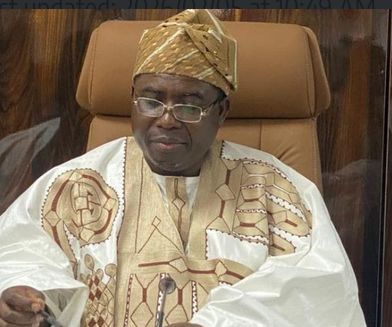
The Independent National Electoral Commission (INEC) has appealed to stakeholders to ask the National Assembly to speed up the passing of the Electoral Amendment Bill before it.
Chairman of the Commission, Professor Joash Amupitan, at a meeting with representatives of political parties today, February 5, in Abuja, said: “we reiterate our call to all stakeholders to urge the National Assembly to expedite the ongoing amendment to ensure a stable legal environment well ahead of the (2027) elections.”
He said that the Commission is mindful of the growing public interest and anticipation surrounding the release of the timetable for the 2027 General Election.
“This is also in accordance with Section 28 (1) of the Electoral Act 2022, which mandates the Commission to issue a Notice of Election at least 360 days before the poll.
” While the National Assembly is currently working on amendments to the Electoral Act, the Commission has made its submission as required.
“The Commission has also finalised the Timetable and Schedule of Activities for the 2027 General Election in full compliance with the Constitution of the Federal Republic of Nigeria, 1999 (as amended), and the Electoral Act, 2022. The Senate on Wednesday passed the Electoral Act Amendment Bill and also set a Conference Committee to look at the bill.
Professor Amupitan acknowledged that credible register of voters remains the bedrock of free, fair and transparent elections, adding that no electoral process can command public confidence without trust in the integrity of its voters’ register. “First compiled ahead of the 2011 General Election, the current voter register has undergone regular updating and deployed in the 2011, 2015, 2019 and 2023 General Elections, as well as in several off-cycle governorship and bye-elections.
“As of the 2023 General Election, the register stood at 93,469,008 voters. “However, persistent challenges —including duplicate registrations, registration by non-citizens, deceased voters and incomplete or inaccurate records— continue to generate legitimate stakeholders’ concerns.
“Such anomalies undermine public confidence in the electoral process. In response, the Commission will embark on a thorough clean-up with a view to further sanitising and strengthening the integrity of the register.
“Accordingly, the Commission will soon embark on a nationwide Voter Revalidation Exercise ahead of the 2027 General Election.”
INEC boss expressed worry over the dwindling voter turnout, which he said is linked to the integrity of the voter register.
He said that “the equally pressing challenge of a progressive decline in voter turnout,” has become a serious concern for the nation’s democracy.”
He said that presidential election data showed a sobering trend, from 53.7% in 2011 to 43.6% in 2015, 34.7% in 2019, and most recently, 26.7% in 2023.
“While the introduction of the Smart Card Reader (SCR) and the Bimodal Voter Accreditation System (BVAS) has successfully eliminated ballot stuffing and ‘ghost’ votes, we must acknowledge that technology alone cannot solve voter apathy.
“Citizens’ trust is often eroded by a perceived lack of democratic dividends or the fear that their voices do not matter. “We must change this narrative together. INEC is committed to providing a seamless, pleasant voting experience by removing barriers to the ballot.
“However, the Commission cannot do it alone. I call on Political Parties to partner with us by ‘upping the ante’ in voter education and mobilization. Beyond seeking votes, your role in rebuilding public trust and inspiring citizens to exercise their franchise is critical to the health of our democracy.”
He said that in the first phase of the ongoing Continuous Voter Registration exercise conducted from 18th August to 10th December 2025, the Commission registered a total of 2,782,587 eligible voters.
He said that the second phase commenced on 5th January 2026 and will run until 17th April 2026, saying that the entire z exercise is scheduled to span one year and will be concluded on 30th August 2026. ” “We are encouraged by the strong public response to the exercise, which affirms the continuing belief of Nigerians in the democratic process and in the efforts of the Commission to ensure that every eligible citizen is afforded the opportunity to register and vote. “However, double is a violation of the law; our technology is fully equipped to detect such. INEC will not hesitate to remove offenders from the voters’ register.”

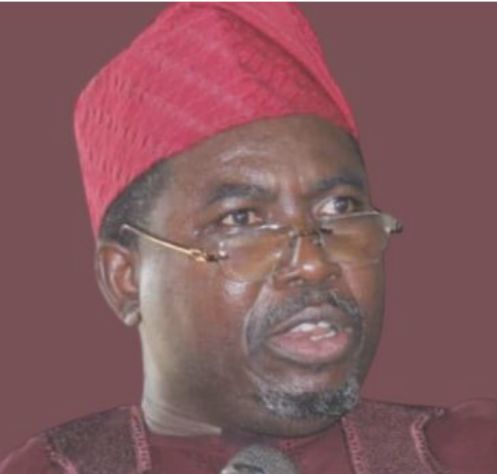 The Independent National Electoral Commission (INEC) has lamented the damage being done to the electoral process and democracy through “increasingly frequent leadership squabbles within various political parties” across the country.
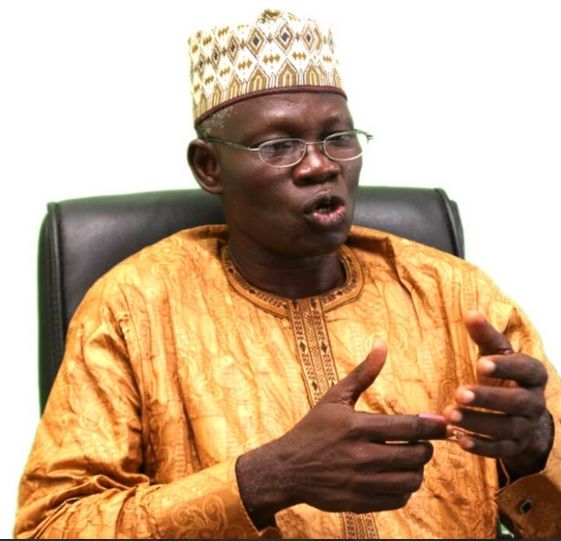
 The Nigerian National Petroleum Company Limited (NNPC Ltd) has officially unveiled its Gas Master Plan (GMP) 2026, tagged NGMP 2026.The unveiling, at the NNPC Towers in Abuja today, January 30, according to a statement by the Chief Corporate Communications Officer of the company, Andy Odeh, marks a strategic inflection point in Nigeria’s energy transition journey, and underscores government’s resolve to translate the nation’s vast gas endowment into tangible economic value, infrastructure expansion, and global competitiveness, in alignment with its long-term development aspirations.The statement quoted the Group Chief Executive Officer of the NNPC Ltd, Engineer Bashir Bayo Ojulari, as having described the NNPC Gas Master Plan 2026 as a bold, effective execution-anchored roadmap designed to unlock Nigeria’s immense gas potential and elevate the country into a globally competitive gas hub.Ojulari said that with about 210 trillion cubic feet (Tcf) of proven gas reserves and an upside potential of up to 600 Tcf, Nigeria possesses one of the most consequential hydrocarbon basins in the world; one reinforced by the Petroleum Industry Act (PIA) and the Federal Government’s gas-centric energy transition agenda.“The Plan is structured not just to deliver, but to exceed the Presidential mandate of increasing national gas production to 10 billion cubic feet per day by 2027 and 12 billion cubic feet per day by 2030, while catalysing over 60 billion dollars in new investments across the oil and gas value chain by 2030.”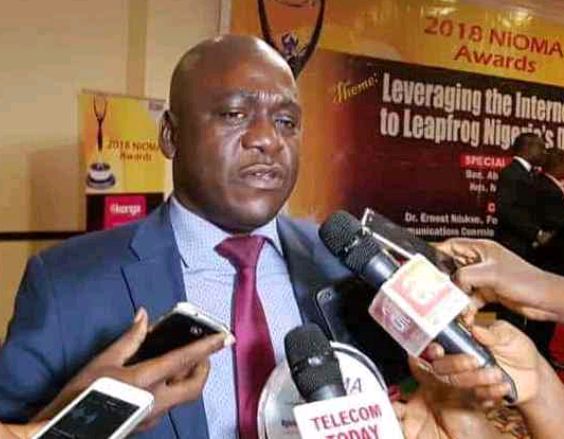


Politics Of Selective Forgiveness In Tinubu’s Nigeria, By Abdulkarim Abdulmalik
Politics is not a realm of permanent enemies; permanent interests is a cliché that refuses to go away.
In Nigeria’s fragile democratic space, the way power forgives – or refuses to forgive – often reveals more about the State than official speeches ever could. Recent developments under President Bola Ahmed Tinubu reignited this debate, particularly the appointment of Daniel Bwala as Special Adviser on Media and Public Communications in November 2024 and the recent nomination of Reno Omokri – once one of the President’s fiercest critics – to an ambassadorial position. Both men had, at different times, publicly attacked Tinubu in strong and personal terms. Bwala was widely known for relentless media criticisms during the election season, while Omokri had previously accused Tinubu on national television of grave criminal conduct. Today, both are either within or closely aligned to the power structure they once condemned. This raises an unavoidable question: is forgiveness now a political virtue or merely a privilege reserved for the powerful and connected?
In attempting to provide answer to the question, it is necessary to look at the issue as a two-sided coin: Political Reconciliation or Political Convenience. Defenders of these appointments argue that democracy thrives on reconciliation. They point to global precedents where former critics are absorbed into government to foster unity, reduce polarization and harness diverse talents. Against this backdrop, they believe that Tinubu’s actions demonstrate magnanimity and political maturity; a proof that campaigns have ended and governance has begun.
However, critics argue that credibility of forgiveness in politics must be anchored on principle and moral ethics. When reconciliation appears selective, it risks being interpreted not as statesmanship but as expediency.
The Nigerian public is left wondering whether repentance, apology or accountability played any role in these political rehabilitations or whether proximity to power alone was sufficient absolution. More troubling is the implicit message: harsh attacks on a candidate may carry no consequences if the attacker later aligns with the victor, but severe punishment may await those who remain defiant.This tension becomes sharper when viewed alongside the case of Omoyele Sowore. The activist who is also the publisher of Sahara Reporters has faced repeated arrests and is currently standing trial over allegations, including disparaging the President. Sowore’s rhetoric, while often provocative and confrontational, falls within the tradition of radical dissent that democracies are expected to tolerate; especially when it does not translate into violence.
If Bwala and Omokri could be politically forgiven for past verbal assaults – some arguably more personal and damaging – why is Sowore’s continued dissent treated as a criminal matter rather than a democratic nuisance?
The inconsistency fuels the perception that loyalty to power, not the severity of speech, determines who is forgiven and who is prosecuted.
Democracy does not merely protect praise; it protects offense, criticism, and even discomfort. When forgiveness is extended only to those who submit, dissent ceases to be a right. It becomes a liability.
An even more complex dimension is introduced by the reported detention of alleged coup plotters awaiting military court-martial or trial. Unlike verbal critics, coup allegations strike at the heart of state security. No responsible government can trivialize such claims. This explains the limits of mercy. However, the principle of fairness remains essential. Thus, if political forgiveness is now a governing philosophy, the question arises: what are its boundaries? Is forgiveness reserved for media critics who cross over to the ruling camp, or can it extend—after due process—to others accused of threatening the state?
The issue is not whether alleged coup plotters should be automatically forgiven; they should not. The issue is whether the rule of law is applied consistently and transparently, or whether punishment and pardon are politically calibrated tools. Selective mercy weakens deterrence, while selective punishment undermines legitimacy.When a government forgives yesterday’s abusers but criminalizes today’s critics, it creates a moral hazard. Political actors learn that insults are tolerable, even profitable, so long as they eventually defect to power. Meanwhile, principled opposition becomes dangerous. This dynamic corrodes public trust. Citizens begin to see political morality not as a matter of truth or justice, but of timing and allegiance. Forgiveness becomes transactional, not ethical. This is the moral hazard embedded in selective forgiveness.In religious terms – particularly within Islam and Christianity, both influential in Nigeria – forgiveness is tied to repentance, justice and reconciliation. It is neither blind nor is it cynical. Translating forgiveness into governance without these anchors turns it into hypocrisy.
Bearing in mind that the State is above personal grievances, the presidency is an institution, not a personal project. Insults against a candidate during campaigns should not automatically translate into crimes against the State once elections are over. In the same vein, accepting former critics into government should not erase legitimate questions about credibility, consistency and accountability.
If Bwala and Omokri are forgiven, the process should be explicit and principled. If Sowore is prosecuted, the legal basis must be clear, proportionate and insulated from political vendetta. If coup suspects are detained, their rights must be protected and their trials swift and transparent. Anything less creates the impression of a government that forgives friends, punishes “supposed” enemies and confuses loyalty with patriotism.
To this end, forgiveness must be proportional, else it becomes oppression. The truth, however, is that Nigeria stands at a crossroads where democratic endurance depends not on how power rewards loyalty, but on how it treats dissent. Forgiveness, when unevenly applied, ceases to be a virtue. It becomes a weapon.The critical question therefore, is not whether Bwala and Omokri should be forgiven. They could. The question is whether all Nigerians are equally entitled to justice, mercy and due process, regardless of their political usefulness to those in power. So, until forgiveness is guided by principle rather than proximity, Nigeria’s democracy will remain fragile: ruled not by law, but by convenience.
Abdulkarim Abdulmalik, wrote in from Abuja and can be reached on nowmalik@gmail.com