Boko Haram: Hope Rises For Displaced People In North East, By Laolu Akande
Hope is rising for the return of millions of internally displaced Nigerians to their homes and communities as the planning for the rebuilding of the North-Eastern states affected by insurgency has advanced significantly.
Last week, the pre-financing assessment jointly carried out by the federal and states governments alongside the global partners: the United Nations, World Bank and the European Union was completed at a workshop in Abuja.
The global partners who had signed a tripartite agreement to facilitate the assessment are now expected to support the federal government in the financing of the North East reconstruction, including an offer by the World Bank to make available $800 million towards the rebuilding.
There are also clear indications from the global partners to do more in terms putting in place an institutional framework to rebuild, arranging financing even from other development agencies and additional sources.
The assessment and validation exercises completed in Nigeria’s North-East region have revealed the quantum of damage and the requirements to address the post- conflict recovery. For instance, while the extent of damage was put at about $9B, the assessment revealed that over $6B would be needed for immediate and near term stabilization and recovery of the region.
During the final aspects of the assessment late last week in Abuja, international development partners and donors reiterated their commitments towards ensuring that key findings of the assessments are implemented.
This re-assurance was secured after the completion of the 2-day validation and consensus building workshop at the Transcorp Hilton Hotel in Abuja, convened by the Federal Government, World Bank, the European Union and the United Nations in conjunction with representatives of the six affected states to review findings and chart way forward.
Specifically the joint efforts of the federal and state governments with the global partners would now be directed to prioritizing the needed interventions and projects, arranging their sequence and coming up with an action plan.
For instance, the Sector Manager, Urban Development and Disaster Risk Management at the World Bank Headquarters in Washington, Mr. Idrissa Dia said the physical participation of the Bank at the validation workshop last week in Abuja is an affirmation that the global financial institution is encouraged by the initial feedbacks on the findings of the recovery and assessment.
He then reaffirmed the Bank’s commitments and support towards the overall success of the planned interventions. Mr. Dia said the World Bank is set to mobilize other bodies in the World Bank Group and partners that might be interested beyond the existing donors on the project. According to the World Bank representative at the event, “In line with the magnitude of the needs we are confronted with, we would like to also mobilize beyond the set of donors here,” he said adding that there are other big players that would be able to come into play in support of the forthcoming interventions.
On his part, the European Union’s Acting Head of Cooperation, Mr Juan Casla expressed satisfaction with the findings of the assessment saying with the leadership displayed in the process by the Federal Government, the different states and the international donor agencies, the EU is now ready to discuss the pledges it made and move forward with implementation in collaboration with other partners and the Government of Nigeria, both at the Federal and State levels.
“These findings provide shared understanding between the Government of Nigeria and its humanitarian and development partners on a set of priotized, sequenced interventions and the EU as a member of the International partnership involved in this assessment is ever- committed towards ensuring the implementation of these findings,” Casla stated.
Mr. Casla said from his experience in this type of interventions, he has seen that the team led by the Senior Special Assistant to the President on IDPs, Dr. Marian Masha has been able to put in place a thorough assessment in a complex and challenging situation in the North East.
According to the UN representative at the event, Mrs. Jean Gough, the United Nations is pleased with the successes of the assessment, harping on the readiness of the World body to provide technical and other humanitarian support towards achieving the goals of the post-assessment phase of the planning.
The RPBA findings have estimated that a sum of about $9 Billion Dollars will be required for the rehabilitation and reconstruction of damaged infrastructures in the in the six North-East States of Adamawa, Bauchi, Borno, Gombe, Taraba and Yobe.
The findings also revealed that the six states would need $6.4 billion to undertake recovery efforts to cushion the devastation inflicted on the North-East Region between 2011 and 2015.
The assessments were carried out under the three main components of Infrastructure and Social Services, Peace Building, Stability & Social Cohesion, and Economic Recovery with focus on cross-cutting issues such as governance and accountability, citizen engagement, institutional capacity for implementation, gender, youth, human rights and de-mining.
Dr Mariam Masha had disclosed that Borno state was worse hit by the crisis with a loss of $6 billion. According to her, the region suffered damages worth $3 billion in housing alone while it also suffered damages in terms of livestock which brought about the need to restore agriculture in the region.
According to her “what this process brings home is that it helps to create a platform to harmonise resources, to coordinate better, support and planning at the federal and state levels, and support also from international donors and partners.”
The RPBA findings also revealed that Yobe and Adamawa states were next in devastation, adding that the destruction in other parts of the region is enormous but with less gravity.
Dr. Masha added that no fewer than 20,000 lives were lost while 1.8 million people were displaced by the Boko Haram insurgency and the planned interventions are to be implemented over time, in view of resources that are available for its implementation.
“Crisis recovery in the North-East is a priority of the Nigerian Government and this has been demonstrated by the ownership and leadership of the recovery assessment process, it has helped in securing the continued support of the partners, donors and other critical stakeholders. The plan and implementation strategy are critical to the success of the recovery efforts. It is not so much about the amount of financial resources that are available, but how we are able to utilize the resources and the capacity to put them to use”, Dr. Masha remarked.
The Three–volume report of the Nigeria Recovery and Peace Building Assessment (RPBA) recommended a 2-phase strategic plan of two years for stabilization and a recovery phase of 2 years to restore the North-East to progress and development. The two phases of stabilization and recovery are fluid and will run concurrently, covering such areas as agriculture, housing, transportation and education over the period.
The Nigeria Recovery and Peace Building Assessment (RPBA) is the process that assesses the physical, social and economic impacts of the crisis in the North-East, resulting in a report to guide the process of stabilization in the region through a variety of recovery strategies.
These strategies will help reduce suffering in affected communities, restore a sense of normalcy and regain the trust of people in the region.
It would be recalled that the Federal Government had in January unveiled this assessment programme which is a joint, high-level collaboration between the Government of Nigeria and three global development partners – the World Bank, EU and the UN – aimed at supporting Government in its short and medium term efforts towards peace building and sustainable recovery in the North-East region of the country.
Akande is Senior Special Assistant to Vice President Yemi Osinbajo. [myad]


Nigeria Budget 2016 – The Devil Is In The Details! By Wole Olaoye
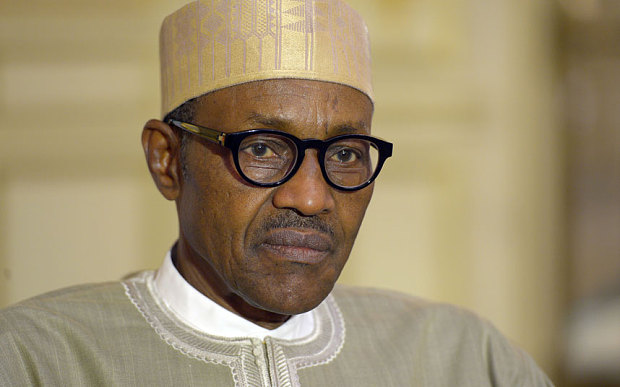
This time, they more than met their match in Buhari who obviously had his ears to the ground. If there is no intent to defraud, how would legislators announce to the nation that they had finished work on the
budget and submitted same to the president, only to now plead to be given two weeks to present the details?
How did they arrive at the total figures earlier presented? If there was no fraudulent intent, wouldn’t it just be a matter of opening one drawer and bringing out the details upon which their totals were arrived at? The National Assembly passed the 2016 budget of N6.06trillion, down from the N6.077billion proposed by the executive on March 23.
Wasn’t the approved N6.06 trillion based on easily retrievable figures?
The ugly truth staring us in the face is that there were a lot of questionable allocations which the Appropriation Committees of the Senate and the House of Representatives cannot defend. Now, they need time to tidy up the mess and come up with a set of figures they think can stand public scrutiny.
I am not impressed by all the excuses given by the Senator Ndume (Senate Chair) and Jibrin Abdulmumin (Reps Chair), both of whom have been accused by even their colleagues of hoarding information regarding the full details of the budget. It is now known that most of the
legislators did not have access to the full details of the budget they passed and are embarrassed that they have been made to look silly before the public.
Senator Ndume himself has confessed that he was merely following the PDP template. In his words: “During the PDP regime, the budget would be passed and sent to the president for assent without the details. The details of the budget would then be transmitted to the president later.
This time around, the president is saying that he cannot sign the budget without the details. It is not a big deal; the details of the budget will be transmitted to the president shortly.
The budget is about 1800 pages in three volumes. The chairmen of the Appropriation Committee of the two chambers will go through the details page by page and sign them. Some time you have to print out the copies for them to sign.” Hogwash!
Interpretation: Sign first, details later. It is difficult to imagine something more opaque. Anyone with half a brain knows that as far as corruption goes, the devil is in the details. And the fact that the Appropriation
Committees of both the Senate and the House of Reps tried to pull a fast one on us speaks volumes about the quality of individuals at the head of strategic committees in the National Assembly.
I think Ndume and his colleagues have only succeeded in exposing the soft underbelly of the National Assembly when it comes to issues of probity. If they can get away with it, they will attempt to pull wool over our eyes.
Some legislators allege that Senate President Saraki and House Speaker Dogara are complicit with the Appropriation Committee. They are miffed that the Budget matter was handled as if it was some secret cult. Some privileged members had access to the details. The plebeians among the legislators didn’t.
Out of ignorance, or possibly out of mischief, some people have been calling on President Buhari to sign the budget as presented without details and let the bazar begin. But a budget without details is like a ‘one chance’ kabukabu. How do we hold the government accountable if, from the onset, we don’t know the specific details of the appropriation?
Remember, this same budget had suffered ‘padding’ shortly after the president presented it to the National Assembly.
There was so much heat generated by that discovery. Now, the budget has been passed with undisclosed details. Gladly, the conspirators have met their match in Buhari who recently declared: “I have to look at the bill that has been passed by the National Assembly, ministry by ministry; to be sure that what has been brought back for me to sign is in line with our original submission.”
Buhari’s position on this matter is right. And he deserves the support of all and sundry. He should go over the details presented to him with a fine tooth comb and satisfy himself that there are no ghost items before appending his signature. Once Buhari signs the document, it becomes law and he has to stand by it.
We want to hold this administration accountable. We shall monitor the implementation of the budget every step of the way and criticize the government when adjudged necessary.
But first, let’s straighten out the small matter of the details on which the figures of the Budget are based. Is that asking for too much? [myad]