 A house wife with three children, Kemi Dayo Kamorudeen has narrated how an Islamic spiritualist, known as Alfa hypnotized her and turned her into sex slave for many years now without the knowledge of her husband.
Kemi told newsmen that while she and her husband were living at Akute, a border town between Ogun and Lagos states, she had a dream one day and that since her husband was away at work at the time, she had to turn to Alfa Shehu Lukman for help.
“The dream was frightening. I narrated the dream to him and he told me that a spirit husband was behind my problem. He said the problem required an urgent solution so that the spirit husband would not be able to kill me.
“He told me that after I had taken my bath the following day, I should call him and he would come with the medicine. The following morning, I took my bath and called him.
“When he came, he brought out a razor and some medicine he had prepared and said he would need to make an incision on my private part. I asked why he couldn’t just explain how it would be done so that my husband could do it for me when he came back from work but he said that it was a taboo for husbands to handle such medicine.
“He told me that to ward off the spirit husband, the incision was just the preliminary treatment. He said the medicine would be rubbed on the incision after it had been made.
“I agreed to it and he was making the incision when he suddenly grabbed my neck and forced himself on me. He raped me on the three-seater couch in our sitting room.”
Kemi explained that after Lukman had had his way with her, he brought out some drugs and a Qur’an and told her that if she dared to disclose what he did to anybody, her husband and children would die while she would run mad.
She said as she was visibly shaking in fright, he made her swear to secrecy with the Qur’an.
The 45-year-old artisan said, “He told me not to worry and that the spirit husband would leave me alone so far as I heeded his instructions. I asked why he would do such a terrible thing to me when he knew my children and husband.
“He said what was done was done. He said he used a medicine on me while raping me and that he would leave me to my problem if I decided to make a scene. He said I would simply run mad.
“He said another condition that would make me to retain my sanity was that anytime he needed sex and he called me, I must always heed his call wherever I was and that I must not tell anyone.”
“I have been his sex slave for the past two years because of this. He calls me anytime he wants sex. Sometimes he sleeps with me in our house when my husband is away, sometimes he demands that I should come to his house in Akute.”
Asked if Lukman’s wife and children were not usually around when he slept with her, she said he has a dedicated room where he slept with her.
Asked how she did not summon the courage to tell her husband in the last two years, she said she was just too afraid that Lukman might make good his threat.
Kemi said she was also afraid that Lukman could reverse a spiritual help he rendered to her youngest child, who is now 22 years old.
“There was a time my daughter woke up and was complaining of some problems. I took her to the Alfa and he said she needed a spiritual bath. That was before he first forced himself on me. He took her for the spiritual bath and she became well,” she said.
Asked if she followed the spiritualist and her daughter to the spot where the spiritual bath took place, she said Lukman forbade her from following.
Kemi’s husband said he simply could not believe that his wife was going through such a thing without telling anyone.
“I told her that she must not go that day and that if he was indeed as powerful as he claimed to be, he should kill me before the next day,” Kamorudeen said.
Kamorudeen said one of their children, a university undergraduate, was travelling to school and had accident that affected her legs few years ago.
“My last born, who introduced the Alfa (Lukman) to us, was undergoing Qur’anic studies under him at the time. While we were in Ife for her elder sister’s treatment, she was alone at home.
“She said she was sleeping in the sitting room one afternoon when the Alfa came visiting to sympathise with us on the accident. She said when she told him that we were not around, he suddenly grabbed her neck and attempted to molest her but she quickly raised the alarm.
“Our landlady at the time came out when she heard the noise but the Alfa quickly told the woman that he was just trying to continue the Qur’anic studies and she was proving stubborn. He used that opportunity to escape that day. My daughter too could not tell the woman what actually happened.”
Kamorudeen said he could recall that since they left Akute two years ago, his wife had visited the place more than 30 times.
When contacted at Otun Abule, few kilometres from Akute area in Ogun State where he carries out his spiritual consultations, Alfa Lukman, said he is 52 years old and an indigene of Abeokuta, Ogun State expressed shock about everything the woman had said against him.
“There is no quarrel between us, so I don’t know where all these rape allegations are coming from. I am really shocked but truly, they consult with me regularly on spiritual issues.
“I am a spiritual doctor to the woman and her children. It is true that I made incisions on her, but it was not on her private part. It was just beside her private part, on the inner part of her thighs.
“I have been a spiritualist for more than 30 years and I do not lie. It is true that I also did a treatment for her daughter which required a spiritual bath. There is nothing strange in that. There is a stream not far from here where she had the bath.
“I knew the girl first when she was my pupil. She then introduced me to her parents. Her mother consults me all the time and so do the children. But I never slept with or raped the woman before. I also never attempted To Molest her daughter.”
Asked if he ever called Kemi in recent times, he said he only called her about two weeks ago to find out if she was visiting the area.
“She had told me before that she was attending an event around here. So, I called two weeks ago to know about the event.”
Likman insisted that he was fund of checking on her welfare, saying:“before that last call, I had not even spoken with her for about four months.”
The husband of the woman, 50-year taxi driver, Kamorudeen, who reached out to activist, Esther Ogwu, of the Esther Child Rights Foundation, for help, said he wants justice but does not know the appropriate step to take.
The case has yet to be reported to the police, but Ogwu said the authorities would be notified when necessary.
“People should be careful the kind of people they turn to for help. At this point, I can only advise people who may be in a similar situation to always confide in a third party.
“I believe Kemi. He probably simply preyed on her fears. It is also possible that this Alfa might be doing the same thing to other people in that community. They should seek help because whatever he is feeding them is just lies to keep them enslaved.”
Culled From Punch. [myad]



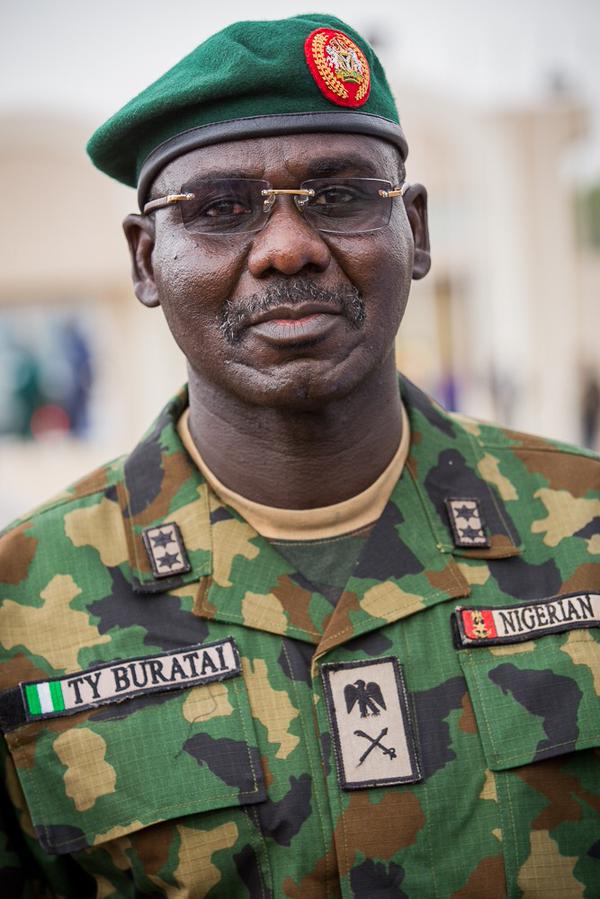 Suspected kidnappers, today, abducted a senior military officer serving with the Nigerian Army School of Infantry, Jaji, near Kaduna, Colonel Samaila Inusa in Kaduna.







Welcoming The Media Imagination In Nigerian Foreign Policy, By Chido Onumah
In what appears to be a veiled reference to attacks on Nigerians in South Africa he noted, “I would like to remind especially the youth in our two countries, of the role that Nigeria played in the struggle for liberation in South Africa. Nigeria was very instrumental in establishing, in the 1960s and the chairing, for 25 years, the United Nations Special Committee Against Apartheid, and further hosted a UN anti-apartheid conference in 1977. From the mid-70s, Nigeria and its people also hosted some of the exiled freedom fighters from South Africa, with numbers increasing after the Soweto Student Uprising in 1976.”
It appears, however, that beyond these formal platforms and speeches eulogizing Nigeria, the image of the country as a “powerhouse” deserving of respect, particularly in Africa, is simply lacking. We must again refer to the repeated xenophobic attacks against Nigerians in South Africa and, of course, the way Nigerians are perceived and treated in other African countries.
This brings us to the other side of the debate: whether Nigeria has asserted herself enough to be taken seriously in Africa much less the world. This is what a new book, The Media Imagination in Nigerian Foreign Policy seeks to address. Written by Adagbo Onoja, a former media aide to Sule Lamido, Nigeria’s foreign affairs minister between 1999 and 2003, the author weaves three aspects of his persona into this book – journalist, academic, and participant-observer in Nigeria’s foreign policy – to highlight what Nigeria has still not explored: the postmodern media.
Described on the blurb by one of the academic assessors as “empirically rich, pugnacious here and there”, it would be interesting to see how the myriad of its potential readers react to this book. And they would range from newsrooms across the world assessed on their coverage of Nigerian foreign policy to the civil society that has a whole chapter in the work and then to African statesmen, the great powers, former ministers of foreign affairs and other key actors in Nigerian foreign policy as well as those called “intellectuals of statecraft”.
It would be interesting to see too what readers also make of sharp assertions as the one by Professor Sam Egwu of the University of Jos (UNIJOS) who remarked in the Foreword that “The critical role of the media in the projection of great nations historically provides a warning that the media imagination matters and that the foreign policy elite ignore the media imagination as a power resource only at the perils of the country.”
In many respect, this book is a welcome development not just in media discourse but in framing a comprehensive and workable foreign policy for the country. When it comes to Nigeria, the expectations are really high – both within and outside the country: “The Giant of Africa”, “the most populous country in Africa”, “the largest concentration of Black people in the world”. Unfortunately, the country and its leaders have not come anywhere close to fulfilling the potentials of the country.
Divided into three parts with seven chapters, the book focuses on two main issues: “what the media does to Nigeria’s image and how Nigeria might derive strategic advantage from the media imagination”. Contrary to the generalized belief that Nigeria’s media image is all negative, this work shows that there is also the idea of Nigeria as “the pivot on which Africa and much of the world turn”, a discourse with tremendous constitutive implications which Nigeria has not explored.
Subsequently, the image of a looted and mismanaged country afflicted by a litany of woes: corruption, high degree of poverty, HIV/AIDS infection, a dysfunctional society, authoritarian democracy, criminality, and scams, has overwritten the positive possibilities. Essentially, the author is saying that our foreign policy has underachieved partly because Nigeria has left the discursive articulation of herself unattended by way of her engagement with the media as a power resource. While Nigeria does not seek to dominate other countries, as the author noted, its “asymmetrical diplomacy” or the articulation of foreign policy objectives on the terms of externally framed meaning of the world has left gaps between foreign policy and domestic interests or needs.
For me, this focus by the author on the media imagination in Nigerian foreign policy is the kernel of the book; that is, the strength of the book is the understanding and application of the power of the media in pushing a narrative of Nigeria within which other foreign policy interests can be realized. This is a refreshing perspective that the framers of Nigeria’s foreign policy may do well to listen to. Very few writers and academics in Nigeria have bothered to explore this angle in foreign policy discourse. The work is equally authoritative. As Comrade John Odah, one of those who needled the author to complete the book, was reported in the acknowledgement, very few people with critical orientation have had the opportunity to ply the Nigerian foreign pitch at the level of a close political rather than career aide of the ministers of foreign affairs.
The question emanating from Onoja’s critical ability and close contact with the implementers of Nigeria’s foreign is: how systematically has Nigeria seized the media imagination as a power resource? In answering this question, the author argues that the media as a power resource in Nigeria’s foreign policy can at best be described as work in progress. He concludes by noting that the Nigerian State has not deployed the media the way it deploys the military, diplomacy, intelligence and similar instruments of state power.
The solutions: deliberate development of media infrastructure “with capacity to tell the Nigerian story on a global scale”, taking advantage of the advances in media and information technology, and building a crop of media practitioners with an “Afrocentric appreciation of history”. I think these are brilliant interventions. The shortcoming, if any, of this book is how to put some of these ideas into practice or better still why have these ideas not started taking roots after more than two decades since the postmodern media became a reality? How, for example, can Nigeria build a crop of media practitioners with an “Afrocentric appreciation of history” when history is not taught in Nigerian schools, much less an Afrocentric sense of it?
But beyond our disdain for history is a more fundamental question of the character of the Nigerian nation or state which the author ignores. The author’s lack of attention, considering his pedigree as a progressive scholar and activist, to the fact that Nigeria is an “unformed entity” and that this has a direct bearing of its foreign policy is difficult to fathom. It is not just for nothing that Nigeria has no coherent and workable foreign policy. I think there is a way in which the geo-politics of Nigeria has impacted the way Nigeria projects itself or responds to international issues. There can’t be any genuine understanding of what ails Nigeria, including its foreign policy woes, without a focus or an understanding of the nature of our federation.
In all, this is a provocative book and if we want to understand why Nigeria remains an African paper tiger, then we must turn to the 228-page The Media Imagination in Nigerian Foreign Policy, just published by the Centre for Information Technology and Development (CITAD).
This book will stir interest and debates and I think it should. As Dr. Chijioke Uwasomba of the Dept. of English, Obafemi Awolowo University notes on the blurb, it provides “students of international politics, foreign policy analysts, diplomacy, media practitioners and the sensitive general reader a critical entry point into the media in foreign policy formulation and implementation in a post-colonial state like Nigeria”.
*Onumah is Coordinator of the African Centre for Media & Information Literacy (AFRICMIL), Abuja, Nigeria. He is the author of Time to Reclaim Nigeria (2011) and Nigeria is Negotiable (2013). He can be reached at conumah@hotmail.com; Twitter: @conumah. [myad]