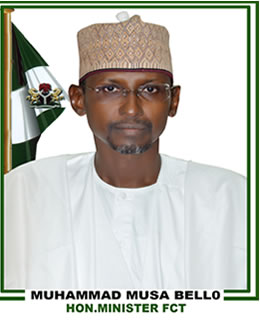
The Minister of the Federal Capital Territory (FCT), Malam Muhammad Musa Bello, today, launched the Abuja City Watch Patrol bikes with a warning the residents to obey the new system or face the music The patrol bikes are to ensure that motorists adhere strictly to the traffic rules and regulations. The 10 new high capacity speed bikes provided by the Inspector General of Police, Mr. Solomon Arase are to also provide effective security surveillance in the Abuja metropolis. Commissioning the bikes, the Minister appreciated the proactive action of the Nigeria Police Force and promised to procure additional bikes to cover more areas in the Federal capital city. “I will like to thank the Inspector General of Police for providing us with these high quality speed motorbikes for the management of the traffic challenges we face here in Abuja. As you all know, traffic management is something we hold dearly because Abuja is our capital where we host the World and therefore we must operate at international standards. “I assure you that the maintenance of these equipment, the fuelling and also the welfare support to the team will be solely done by the FCT Administration because we require the services more than the Nigerian Police Force.”
The Minister said that traffic offenders in Abuja are in for a tough time because the speed bikes would be strategically stationed to monitor and arrest those that derive pleasure in beating traffic lights. “On traffic offences initially, we are going to do a lot of advocacy through the press for people to understand what we do and for you to appreciate why we do it. Thus, soon the team is going to be very firm as offenders will be arrested and prosecuted.” He added that the City Watch Patrol speed bikes would also monitor and observe whatever is going on around the city and nip in the bud any criminal activity. “There is no way we will pride ourselves and say we are in Abuja, one of the planned cities in Africa, the joy of Nigeria, something we are all proud of and then we operate as if we are in a jungle. That will be totally unacceptable.” The FCT Police Commissioner, Mr. Wilson Inalegwu explained that the 10 speed bikes would be stationed at the Old CBN, CEDI Plaza, Power House Junction (Asokoro District), BANEX Junction, Transcorp Hilton, Federal Secretariat, Area 1, (Garki), NITEL Junction, Diamond Bank Junction (Wuse II District) and the City Gate. The Police Commissioner said that the BMW motor bikes provided are to man FCT roads and their mandate is to stop impunity by drivers who deliberately violate traffic rules; who drive carelessly and other petty crimes that occur at those junctions like handbag snatching, phone snatching and even to watch out for one-chance and other crimes. He reiterated that the bikes would also engage in high-speed chase, in case report is received in the control room of either a vehicle has been snatched or crime has occurred adding: “they will go there and quickly connect with other teams where they will be located, there will be other patrol teams not too far from them to give them backup. “What the Inspector General has done is to select very senior officers – 8 ASPs and 2 Inspectors because we expect high level of discipline from them to curb impunity and work in disciplined, efficient and effective manner.” [myad]
The Abuja Electricity Distribution Company (AEDC) has assured its customers in the Federal Capital Territory (FCT), Kogi, Nasarawa and Niger states that its offices will be opened to respond to faults, customers’ complaints and also distribute the electricity allocated to it by the System Operator (TCN) during the Easter Public Holidays. Similarly, the Company said all its cash offices and vending points across the franchise area will be opened for business to enable customers settle their electricity bills and also buy electricity tokens. The company said in a statement that it has been working relentlessly to ensure that all its customers in the franchise area get sufficient power supply to enhance their comfort and joyous moments during Easter. The AEDC further reiterated its commitment to improved service delivery to all classes of its customers, saying that with the renewed vigour by the present administration to grow the Nigerian Electricity Supply Industry (NESI), its customers should expect the very best at all times. The Company, however, appealed to all its customers to ensure safe use of electricity while also urging them to always settle their electricity bills on time to avoid disconnection. The statement said that AEDC wished all its customers happy Easter celebrations. [myad]
Senators elected on the platform of the Peoples Democratic Party (PDP) have collectively endorsed the National Chairman of the party, senator Ali Sheriff, who they said had got the party back on track. The senators who met with the Chairman at the residence of the minority leader of the senate, Senator Godswill Akpabio, collectively agreed that Sheriff emergence as the national Chairman of the PDP has brought back life into the party and therefore commended and encouraged him. A motion moved by Senator Mrs. Biodun Olujimi, from Ekiti state and seconded by Senator Mao Ohabunwa, to the effect that the National Chairman has lived up to his promise to work towards reuniting all interests in the party, deserves the support of all stakeholders , was unanimously carried and adopted as the position of the forum. Speaking one after the other at the meeting, which was part of senator Sheriff’s consultative meetings with stakeholders of the PDP, the senators were of the view that, having identified the factors that led to its dismal outing during the last elections, the Chairman’s efforts are already yielding results. While pledging to put aside their individual differences and shun impunity, which was one of the factors that worked against the party in the 2015 general elections, they agreed to work towards the repositioning of the party, by allowing the grassroots, who are rightful owners of the PDP to determine its new direction. Senator Sheriff who commended the Senators for the enthusiastic response to his invitation, and the encomiums poured on him by various speakers, promised to redouble his efforts in rebranding the PDP, and moving the parety backj into reckoning by the next round of elections. He said with over 50 senators and over 100 members of the House of representatives, in addition to twelve state Governors and numerous members of the houses of Assembly, the PDP is still better p[ositioned to stage a come back and upturn the APC leadership. Sheriff had earlier met with former state Governors at the Wadata House, where a similar position was taken, to the effect that, the Chairman derserves all the support, given his already demonstrative capabilities.
A trader, Azubuike Ebi, has told an Ikeja High Court how his younger brother, Ejay Ebi, ran away from Boko Haram attacks in the North, but was murdered in Lagos by a 30- year-old Ifa priest, Adeshina Musiliu. Ebi, who was led in evidence by the prosecuting counsel, Akin George, said: “I am the older brother of the deceased, Ejay Ebi. “He used to live in Jos and I asked him to come to Lagos to live in Ikorodu with me to avoid being killed by insurgents. “On November 6, 2014, my brother, who is also a trader, woke up early at 4am to go to Yaba to buy some goods. “At 6am, one of our brothers, Mr. Matthew Amadi, called my mobile phone to tell me that my brother was lying dead at Kokoro Abu Roundabout in Ikorodu.” The trader told the court that he immediately went to alert some vigilantes about what happened to his brother. He said: “I ran to the Onyeabo vigilante post to report but they said they did not want to be involved in issues of human corpse. “When I left the vigilante post, I was weeping and heading to the Kokoro Abu Roundabout to take my brother’s corpse. “I received another phone call telling me that the culprit who murdered my brother had been caught and taken to the police station.” Ebi said he immediately went to the police station where he met the defendant and a vigilante, one Matthew Olanrewaju. He said: “Olanrewaju told me that he went to the crime scene and Musiliu ran to him, shouting that he is in trouble that he had killed a man and pointed to the corpse. “According to Olanrewaju, he asked the defendant that why he would do such a thing and the defendant responded that an unknown spirit entered him, leading him to kill the deceased.” The trader, however, said autopsy revealed that his brother was beaten to death with a stick. He said: “My brother was beaten to death on the head with a stick and Musiliu confessed to the crime at the Igbobo Police Station and the State Criminal Investigations Department, Panti. “Unfortunately, Mr. Olanrewaju, the vigilante to whom Musiliu made the confession, passed away a few months after the murder and I have with me a copy of the obituary.” Olanrewaju’s obituary was tendered in the court as evidence by the prosecution. Justice Oluwatoyin Ipaye adjourned the case to April 21 and 27 for continuation of trial. [myad]
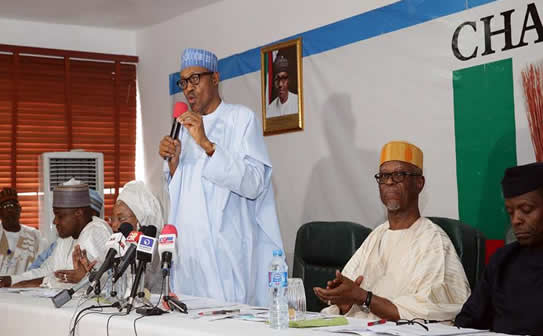
President Muhammad Buhari addressing the APC council members
“What I want Nigerians to remember me for, even if I have to leave the Presidency tomorrow is that I respect them.” President Muhammadu Buhari made this remark today at the All Progressives Congress (APC) National Executive Committee (NEC) meeting held at the APC National Secretariat in Abuja, Buhari, who spoke specifically about the Independent National Electoral Commission (INEC), the elections it has conducted and will conduct as well as the security agents said: “I want all Nigerians to believe and hold their PVC as personal entitlement as Nigerians and use it the way they like, and vote for whoever they like at which ever election. If they voluntarily sold it, it is part of their right and so, let them sell it and remain at home and not participate in any election. But let the law enforcement agencies give them the confidence that nobody will come out who has money to hire thugs, give them drugs and stop them from exercising their fundamental right. The President appealed to the leadership of the military, security agents and INEC to respect every law abiding Nigerian because their respect for the citizens would eventually reflect the way he and his government is judged. The full text of his speech is reproduced here: PROTOCOL We are members of the legacy party, plus APGA and DPP. We realized since 2005 that to remove the PDP from power, we must sink our differences, come together and form a party. God willing, that eventually happened and that is why we are where we are today, coming together inspite of our differences, both personal and ideological. We must not forget that. Having identified that as members of the legacy party, we again identified three fundamental things facing us. First, security, second, economy and unemployment and thirdly, corruption. We campaigned throughout the country on these three fundamental issues and nobody successfully challenged us and these issues remained relevant. On security, we have made progress. It was a very courageous decision that the party took and executed by the Executive by removing most of the military hierarchy and appointing those to take over from them, acquiring some new hard and soft ware and raising the morale of the military to go secure the rest of the country which was then 14 out of 774 local government. I have said it often that as far as I know and the service Chiefs who are on ground, they are not holding any local government. But they still have some capability especially on soft targets by using technology. For Niger Delta, the militants are sending some conflicting messages. Some have said they are ready to drop their arms and join the rest of the nation to build it. But part of them are still sabotaging installations which is making investments in that lucrative area of Nigeria difficult because nobody will submit his riches to financial institutions, get money only to suffer huge loss. So, the environment for investment is being sabotaged by our own selves, Nigerians. We are doing our best with the military by trying to persuade them to join the rest of the country because in unity lies our strength. Of course the leadership of INEC has been changed, but I appeal to the leadership of the military, security agents and INEC that what I want Nigerians to remember me for, even if I have to leave the Presidency tomorrow is that I respect them. I want all Nigerians to believe and hold their PVC as personal entitlement as Nigerians and use it the way the like, and vote for whoever they like at which ever election. If they voluntarily sold it, it is part of their right and so, let them sell it and remain at home and not participate in any election. But let the law enforcement agencies give them the confidence that nobody will come out who has money to hire thugs, give them drugs and stop them from exercising their fundamental right. I am afraid I did not succeed in the election in Kogi, Bayelsa, Rivers. I think that more Nigerians are killed or killed themselves in Rivers than in any particular state. At this stage of our political development, to remain brutal is shameful and as a government, I promise we will do something by the next general election. On the economy, the fall of oil prices after Nigeria has made itself a mono economy is a disaster. I wonder why people could not believe that in Nigeria, about 27 out of 36 states have difficulty in paying basic salaries of their workers. If from 1999 to at least 2003, oil is above 100 dollars per barrel and an export of about 2 million barrel per day, how come Nigeria failed to make some arrangement to cushion the effect of a probably volatile oil market? Again, it show failure of the last administration. But we are now to pick the pieces as an APC government and so, there is no need complaining, but let us concentrate and see how much we can do with whatever remains of the economy. We realized that agriculture and solid minerals are two areas that can quickly come to help us to recover economically, at least in terms of employment and feeding ourselves and more importantly, saving the hard currency to make sure that what is left our industries remain open, employing Nigerians and producing goods and services which is very important. The policy we are trying to implement is TSA. When we insist that we have to know what comes in and what goes out for us to make a comprehensive amendment to the economy. If you go and see the Central Bank Governor, he will tell you that in the TSA, we have more than N3 trillion. Where would this money have been if TSA was not in vogue? I was made to understand that vouchers would have quickly been raised towards the end of the financial year and checks made. Whether they are going into projects or private pockets, nobody can prove it to you. But that money is there, it is identified, if is quantified and when the budget comes back eventually, the Ministry of finance will see how to allocate it to the rest of the country. We have tried to make sure that NNPC is reorganized, so that we know how much of our crude is taken, how much it is sold and to which account the money is going. But I tell you that up to the time we came, if anybody told you that he knows how much of crude exchanges hands either on the high sea or reaching their destination and the accounts the money goes into, that person is not telling you the truth. We are getting the cooperation of countries that has received this crude. But we have to be sure of the facts in our hands before we start prosecution so that Nigerians will believe what we have been telling them. Again, I have to repeat myself here for you to appreciate what I am going through because you are closer to the people than myself. I was telling a British team that came to supervise the training team they sent, that when I was in uniform, you took the perceived corrupt ones and put them in safe custody and quietly told them they were guilty until they can prove themselves innocent. But now under multi-party democratic system, I see some of them ride Rolls Royce, some of them have built estates here, but they are innocent until we can prove them guilty. This situation is true and you don’t need to stress your imagination to find out. If you can find out, you discover that a level eight officer has five houses, while you, as a Permanent Secretary or Commissioner is still living in a rented house. We have to get credible evidence to carry out successful prosecution and get judgement from the Judiciary. But effort is being made to give a list of recoveries in whatever currencies so far so that Nigerians will know that it is not all about long stories. For the party, I will like you to continue to make sacrifice. I know you are being harassed since the election that they haven’t seen anything on the ground. Well, if you have any explanation that could be accepted, is that you have three more years to go. When we came in after 16 years of PDP, each government had 42 ministries. We reduced them to 24, removed 21 Permanent Secretaries. We sat down and reflected seriously. We were all in the process of taking over at a time of national budget. So, imagine the volume of work and with what happened in the National Assembly, the padding, it would appear that below the Permanent Secretaries, there are still a lot of bureaucracies that are still with them. So, you have to appreciate the position we are in. Having cut 42 to 24, correspondingly, the parastatals will be cut down to some size and realigned and the boards reconstituted. We gave a blanket order which we had to rescind when we said all boards are suspended or dissolved. We had to go back and lick our vomit in terms of university boards because we found out that according to their laws, they cannot choose Vice Chancellors unless the Boards seat down, interview prospective candidates who wants to be VCs. So, there is nothing wrong in saying sorry and going back on your decision. So, we said sorry and allow all the universities to continue with their boards. But for the rest, eventually, we will make it. So, please, try to bear with us as we reflect on where we found ourselves. For globetrotting, sometimes, you need to present your case on personal basis to your economic colleagues and neighbors. Nothing is better than personal touch and I believe that we are learning a lot and eventually, the nation will realize so, I don’t envy you on the harassment you are going through from your constituencies. Take it with a lot of determination and we will be all right, God willing.[myad]
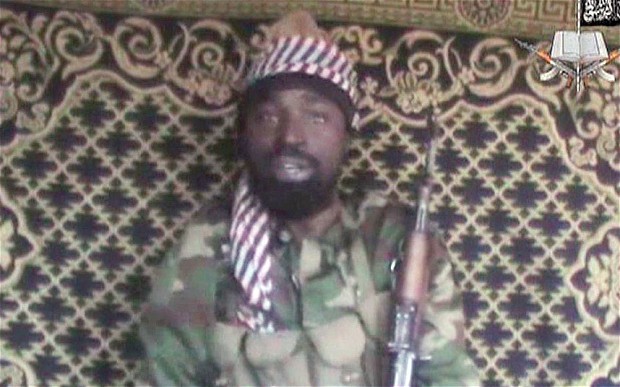
There are indications that Boko Haram leader Abubakar Shekau, has surrenders, as he said in a new video that the end (of his terrorism activities) has come.
In a video devoid of his usual confidence talk and defiant bluster, the terror group leader rejected the rumours of his death but signalled that his time as chief of Boko Haram has come to an end.
“For me, the end has come. This is a message of greeting and joy for you to see my face.
“This is my desire: that whoever sees this will hear nothing but greetings between me and you. Only Allah knows the rest, as you believed (and) as you submitted. For me the end has come. “This is only the message I want to send to you for you to understand that this is certainly I. This is why I did this.
“May Allah protect us so that no hypocrite stands between us. May Allah protect us from the devil so that he doesn’t achieve his evil among us.
“May Allah protect us and may we stand firm on the path of Allah. I thank my creator.”
Shekau, who in March 2015 pledged allegiance to the Islamic State (IS) group in an audio message, spoke in a new video that lacked the usual taunts and denunciation of political leaders of previous videos and is interpreted as an admission of defeat.
The Boko Haram looked dejected in the video that was poorly shot, a far cry from the previous recordings that were slickly edited and closely resembled those of the Islamic State group..
The new video was posted on YouTube rather than via Twitter accounts linked to IS supporters and websites linked to fellow jihadist groups, which had become the group’s preferred medium of communication.
The bearded Shekau, who looked thin, delivered the message to his followers in front of a lime green background, with the Boko Haram black flag superimposed in crude graphics. There was no indication of when or where the video was shot.
Shekau also referred in the past tense to the Borno state town of Gwoza, which Boko Haram overran in mid-2014 and declared a caliphate. The town was later retaken in a military counter-offensive that has seen Boko Haram-controlled towns, villages and territory seized back over the last year.
Boko Haram supply lines are said to have been squeezed, preventing them for sourcing fuel for hit-and-run attacks and conventional fighting, although suicide bombings persist.
There have also been reports of fighters surrendering for lack of food. Shekau himself is said to be in hiding in the Sambisa Forest area of Borno state, currently targeted by the military.
Nigeria has claimed Shekau has been killed several times since the start of the deadly insurgency that has claimed at least 17,000 lives since 2009, only for him to reappear in video messages.
The military believes several lookalikes have since stood in for him.
Meanwhile, the military authority has said that it is studying the content of the new video.
A top military officer said shortly after the release of Shekau’s video said: “we are aware of the video but we are subjecting it to thorough forensic investigation.
“We won’t take any action that can stop the ongoing offensives against the terrorists in all fronts. “Every terrorist is free to surrender.”[myad]
The meeting of the All Progressives Congress (APC) might have provided a point from where the APC dominated Senate, today, rushed to pass the controversial 2016 federal budget. Information reaching us showed that the Presidency and some top leaders of the party, including Bola Ahmed Tinubu made it clear to the Senate President, embattled Bukola Saraki the urgent need to pass the budget. This, they argued, was in view of the fact that the first quarter of the year, 2016, is almost gone, and the fact that the government was almost grounded as a result of lack of funds to run it. What was not clear was whether the party leaders were able to convince President Muhammadu Buhari to intervene in the ongoing trial of the Senate President on corruption charges at the Code of Conduct Tribunal, as part of the bargain for the passage of the budget.
The Police Service Commission (PSC) has commenced the process of recruiting 10,000 Nigerians into the force as promised by President Muhammadu Buhari last year. The process include opening of portal through which candidates would apply via online. The chairman of the Commission, Mike Okiro, who formally unveiled the portal for the recruitment exercise in Abuja today warned that there would be no short-cut into the Force in the recruitment of the 10,000 Nigerians. A statement by the Head of Press and Public Relations of the commission, Ikechukwu Ani, quoted Okiro as saying that the portal would be opened to the public on April 1. “The process leading to the recruitment of 10,000 Policemen as directed by President Muhammadu Buhari at the National Security Summit in Abuja last year has commenced.” Okiro said that the unveiling of the portal is in actualisation of the presidential directive on the recruitment of the 10,000 Policemen. According to him, the exercise would be another turning point for the police as there had not been recruitment into the Force for more than five years. He explained that thousands of policemen who died in the course of service, dismissed or retired had not been replaced since the last five years. Okiro said that the recruitment would strengthen and re-energise the force to tackle the security challenges facing the country. He explained that the exercise could not begin last year because the funding was not captured in the 2015 budget even as he advised applicants to access the portal through the commission’s website: www.psc.gov.ng or that of the Nigeria Police Force: www.npf.gov.ng. He made it clear that there is no fee charged for the processing of the forms, which would be filled online. “We are not charging money. It is free, absolutely free,” he emphasised, adding that the the exercise would be in three entry points of Constable, Cadet Inspector and Cadet ASP, while there would also be recruitment into the Specialist cadre. He said that applicants for Police Constables are expected to posses five credits, including Mathematics and English Language at Senior School Certificate Examination in not more than two sittings. He added that for Cadet Inspectors, in addition to having the requirements of Police Constables, candidates would be expected to have an Ordinary National Diploma (OND), Advanced Level, National Certificate in Education or their equivalents. Okiro said that candidates for Cadet ASP must possess a University degree or a Higher National Diploma. It would be recalled that President Muhammadu Buhari had in 2015, approved the recruitment of 10,000 policemen at the National Security Summit in Abuja. [myad]
The Minister of the Environment, Hajiya Amina Mohammed has commended the partnerships between Shell Nigeria Closed Pension Fund Administrator (SNCPFA) and Imani and Sons Nigeria Limited. The partnership has resulted in the construction of an estate consisting 28-unit luxury residential apartments, complementing the existing 51 units in the phase one of the estate. At the inauguration of the Imani-Shell Estate Phase 2, located in Maitama District of Abuja in the Federal Capital Territory (FCT), the minister said: “as I came into the estate, I saw workers everywhere. This tells me that the partnership that has delivered not just the estate but also employment opportunities to Nigerian youths is worthy of commendation and emulation.” She added that the government is willing to promote and support any such partnership that would drive the government’s efforts at providing jobs and meeting the housing needs of Nigerians. Chairman of SNCPFA and Country Chairman, Shell Companies in Nigeria, Mr. Osagie Okunbor said that the estate was delivered without any injury. Osagie, who was represented by a Director, SNCPFA, Mr. Guy Janssens, said: “as a pension fund administrator, we are always thinking beyond the present. The new apartments are designed to be efficient in energy consumption and will rank as one of the early green-rated residential accommodations in the Federal Capital Territory. Thus, together with our partner, we are able to meet today’s needs without losing sight of the future.” In his remarks, the Managing Director of SNCPFA, Mr. Akeeb Akinola described the project as “a product of vision, commitment, hardwork and collaborations.” He thanked the leadership of the Federal Capital Development Authority and the National Pension Commission (PenCom) for their support in making the project a reality. Also present at the event were the Minister of State for Environment, Ibrahim Jibrin; former Minister of State for the FCT, Senator Solomon Ewuga; Chairman, Imani and Sons Limited, Alhaji Bello Abubakar; President, Real Estate Developers Association of Nigeria, Rev. Ugo Chume and SNCPFA’s External Directors, Mrs. Funke Osibodu and Mallam Balamu Manu. [myad]
Over the last few weeks, Nigerians all over the country have been faced with the question; Whatisthe737? From billboards to hash tags and radio hypes.
The Guaranty Trust Bank plc has introduced what it called Bank 737 which it said is more than just well rhyming numbers. “It is a simple, smart and safe way to bank anytime, anywhere and on any device.” The bank said that imagine of opening an account is as simple as dialing a number from mobile phone and that transferring funds is as easy as sending a text message. It added that paying bills could be done at any time of the day, even long after banking hours. “Imagine if you need to make an urgent transfer online and your data just ran out and you don’t have your hardware token to complete the transaction. Truth is, at some point or the other, we have all experienced those moments when we wished banking could be as simple as ABC’s and 123’s. Al these, it said, have been made simple by GTBank through 737. It recalled that in recent years, mobile phones have made life easier, adding that it is easy now to shop online, watch movies, surf the internet, play games, chat with loved ones, share and download information with the simple push of a button. “While mobile penetration has witnessed an impressive growth in Nigeria, Internet proliferation hasn’t experienced similar success, owing largely to the cost of data. Built on a USSD interface, GTBank’s 737 banking is phone agnostic and works on any type of mobile phone and does not require internet access or registration protocols. With GTBank’s Bank 737, your mobile phone is now a service channel for all your banking needs. “Users simply have to dial the short USSD *737# code on any mobile device to experience a new world of simple banking. “With Bank 737, GTBank customers can perform banking functions such as transfers to all Banks in Nigeria, check account balance, open a GTBank account, buy airtime, pay bills, BVN linking, token code generation, card less withdrawals and lots more from their mobile phones.”
Commenting on the launch of the product, Segun Agbaje, the Managing Director and Chief Executive Officer of Guaranty Trust Bank plc said; “The launch of this product marks another milestone in our quest to make banking truly simple for our customers. We remain firm on our objective to deliver banking products and services tailored to meet the diverse needs of our ever-growing customer base by leveraging technology to make banking faster, safer and more accessible for all our customers.”
GTBank is regarded by industry watchers as one of the best run financial institutions in Nigeria and across its subsidiary countries. The bank is renowned for its innovative financial solutions, superior financial performance, world class corporate governance standards and excellent service delivery. The bank’s latest E-payment service, known as the 737 banking, is considered a veritable alternative to in-branch banking as it offers a faster, safer and more convenient way to perform financial transactions.
We use cookies on our website to give you the most relevant experience by remembering your preferences and repeat visits. By clicking “Accept”, you consent to the use of ALL the cookies.
This website uses cookies to improve your experience while you navigate through the website. Out of these, the cookies that are categorized as necessary are stored on your browser as they are essential for the working of basic functionalities of the website. We also use third-party cookies that help us analyze and understand how you use this website. These cookies will be stored in your browser only with your consent. You also have the option to opt-out of these cookies. But opting out of some of these cookies may affect your browsing experience.
Necessary cookies are absolutely essential for the website to function properly. This category only includes cookies that ensures basic functionalities and security features of the website. These cookies do not store any personal information.
Any cookies that may not be particularly necessary for the website to function and is used specifically to collect user personal data via analytics, ads, other embedded contents are termed as non-necessary cookies. It is mandatory to procure user consent prior to running these cookies on your website.