


No Airline Can Survive In Nigeria. By Capt Evarest Nnaji
 I have debated this matter with economists and business developers over the years, but I believe it’s now time to put it out to the public, if not for anything, at least so that we all know where we stand. Aviation has proven to be a without-which-not in the global and borderless world economy; where companies are headquartered and controlled in one city while its activities can be alive and across the length and breadth of the world. But the decision makers of those organizations are often required to appear physically in those countries where their businesses are scattered, for various negotiations and big decisions. Air travel hence becomes a dependable ally to accomplish such trips saving time and achieving more results within the shortest possible time. In our country, big time business people as well as government officials will continue to rely on air travel to meet up with their travel needs to remain on top of their games.
But nothing in the Nigeria historical development has challenged the nation like the inadequacy of reliable air travel platform. The nation’s government has experimented with National airlines and consequently ran out of gas as things hit the dead ends, leaving commentators with the expression “defunct Nigerian Airways” etc. High net worth individual investors, even those with commendable successes in other business endeavors, have had theirs fingers burnt investing in aviation in Nigeria. We have had nice, but failed, attempts that can frightens even the most redoubtable investor when he or she examines the credential of any good Nigerian pilot or engineer who can boast of over 30 years experience in the Nigeria aviation industry. Such airman credentials would impress you to know that he or she had worked for airlines such as Okada Air; Oriental Air; Kabo Air, ADC Airlines; EAS Airlines as well as Albarka Air. Others are Nicon Airways; Nigeria Airways; Air Nigeria; Sosoliso and the rest of them. Realistically and essentially, such reminding raises a red flag as it leaves you wondering what the jinx that not even one of those nice airlines is still flying.
A critical examination of the goings in the Nigeria financial institutions will also reveal that no commercial bank in Nigeria granted facility to any airline investor in Nigeria over the past five years; and nothing shows they will anytime soon.
Somebody would at this point be asking me “then why are you professional aviators still there and not find somethings else to do with your lives”. The answer is “passion.” The truth is that the mind boggling gloom in our industry rests squarely in just one place “ticket pricing”
To understand this, one has to critically examine the pricing of other products and services adhering strictly to international standards while at the same time doing well in Nigeria. A deep look at those products and services imported from developed countries into our society which sustains international standards, and then compare the pricing attached to them by percentage difference, in comparison to pricing attached to air ticket in Nigeria, you will then begin to appreciate the challenges and predicament of Nigeria scheduled passenger aviation.
For instance, to survive in Nigeria, international hotel brands adhering strictly to standards price between 150% to 200% costs of their home country room rate. If you ever require insurance cover in which an international insurance organization is needed to share risk of cover in Nigeria, the premium is always up above 150% of values paid in the developed countries. Again, cost of financing, when you able to find international lending interest rate as low as 3%, by the time you get through with local guaranteeing applications, goes up above 9%, just to be modest, because the interest rate could nudge up into double digits. That is above 300% increase for Nigeria application on international finance. This is just to mention but a few, I can go on and on.
Let’s not forget that aviation is still more a challenging endeavor than those few sampled above. Aviation is one feild of endeavor where you can never be able to domestic anything beyond hiring crew members that will eventually and inevitably be traveling overseas to carry out their proficiency and recurrent trainings nonetheless. Therefore, any attempt at pricing aviation services like agricultural products will remain counterproductive.
Furthermore, when you compare ticket pricing with the rest of the world, it floods to our minds why things are gloomy in the industry here in our society. In Europe, for instance, it costs €240, on the average, to fly from Munich to Hamburg which is the equivalent flight time from Lagos to Calabar or Kaduna which costs about N28,000, one-way economy-class ticket. In the U.S, it costs average of $300 to fly the same equivalent flight time from Houston to Oklahoma.
Moving forward, in Europe, it costs average of €200 to fly from Stuttgart to Hamburg, the equivalent flight time of Lagos to Abuja which costs average of N25,000, while a corresponding U.S route flight time of New Orleans to Houston will cost you an average of $220. When you compare many other routes around the world and do the maths, it appears that Nigeria airlines ticket fare has stayed around 50% of their contemporaries elsewhere in the world.
Some of my colleagues have argued that some smaller airlines in some smaller countries have done well, but priced slightly lower than the developed world. My take on that is to look carefully at the ease-of-doing-business and aviation policy thrust and stability which may be acting as mitigating factors in such smaller countries.
At this point, I must state clearly that my point here is not to opine that Nigerian traveling public can afford to pay over N60,000 to fly an economy-class from Lagos to Calabar or Kaduna, or N45,000 for Lagos to Abuja or Port Harcourt. Because if that happens, the few Nigerians that can afford to pay for a room at Hilton Transcorp Abuja are just about the multitude that will be able to fly our airlines. Mine is to call it as I see it, to bring home the truth. Remember, the above two routes sample costs are just converting the exact route price at central bank rate and at their 100% value. If we drive them up to 150% “Doing Business in Nigeria” factor, you will have N90,000 and N67,000 respectively for the two group sample routes economy-class costs.
Again, somebody would be saying at this point, “if that is the case, why can’t you guys speak up?” Great! Those with audible voices erroneously continue to think they will gain market advantage if others fall off the cliff, and thereby maintain selfish posture of “those who cannot stand the heat should get out of the kitchen”, but in the end they too get out of the kitchen.
I believe that someday, not long from now, government and stakeholders will seat and look things straight in the face to fashion a way forward which will guarantee that our society remains relevant in the global world economy, of which aviation in one of the main basic fundamentals.
Capt. Evarest Nnaji, Managing Director/CEO of OAS Helicopters wrote in from
Maryland Heliport, Lagos. [myad]






Important Takeaways From President Buhari’s Trip To Equatorial Guinea, By Garba Shehu
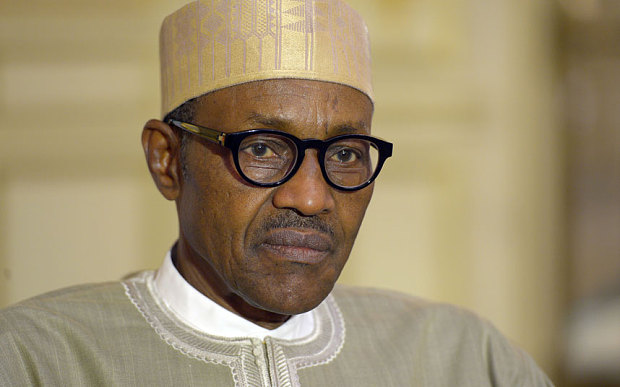
In fulfillment of his promise to tackle Boko Haram terrorism, then turn his attention to crude oil thefts and the sabotage of oil installations in the Delta region of the country, President Muhammadu Buhari went on a two-day state visit to the Equatorial Guinea.
When he took power, the President made a classic statement to the effect that “you have to secure the country to efficiently manage it.” To this day, security remains a key priority of his administration.
As disclosed in an earlier statement, the latest visit focused heavily on the planned joint efforts to police the Gulf of Guinea against pirates, saboteurs and crude oil thieves.
The major takeaway of the Presidential visit is the signing of an agreement allowing both countries to put in place a ” robust mechanism for the effective coordination and management of security issues between the two countries to enable them eradicate maritime crimes and encourage peace and security in the region.”
President Buhari was accompanied on the trip by the Minister of Defence, retired Brig.Gen. Mansur Dan Ali, the Minister of State, Foreign Affairs Khadijah Abba Ibrahim, the National Security Adviser, Maj.Gen. Babagana Munguno and the Permanent Secretary Ministry of Industries, Trade and Investment Aliyu Bisallah.
The national security establishment, especially the Navy was adequately represented.
What is this agreement about?
The agreement is for the establishment of a combined policing and security patrol committee to oversee, manage, coordinate,plan and direct the execution of combined policing and security operations along the defined common maritime border of both countries.
In drawing up this agreement, a contentious issue, especially for the Equatorial Guineans was whether a patrol team of one country can cross the territorial boundary of the other.
Equatorial Guinea is a very small country whose area covers only 28,000 square kilometers. Its total population is about 1,2000,000.
Being the only Spanish-speaking sovereign African country, this tiny country had lived with the fear of its invasion by powerful neighbors especially Gabon, Cameroon and Nigeria.
It was hard convincing them that a foray into their territory by Nigerians, or the other way round, where necessitated by a hot pursuit of criminals is in the best interest of the two countries.
Nigerian officials calmed down their fears with assurances that a peaceful and stable Equatorial Guinea is in the best interest of Nigeria; that you don’t reward good neighborliness with aggression.
Equatorial Guinea has always been our good neighbor.
When we fought our unfortunate civil war, they refused to let any part of their territory be used either by Spain or France which were pro-Biafra.
They also refused to yield to apartheid South-African pressure for an inch of space to use for launching hostile acts against Nigeria.
The signed agreement represents the shared concern about the escalation of maritime crimes such as piracy,illegal fishing,poaching,attacks by armed groups,illegal oil bunkering,smuggling of goods,drugs, human and arms trafficking,sabotage and vandalization of oil rigs and installations,banditry, harassment of crew members and sabotage and the vandalization of ocean-going vessels.
A recent escalation of pipeline vandalism has seen gas supplies to Nigerian power plants plummet by about 50 percent and crude oil exports reduced by between 250,000-400,000 barrels a day.
Generally,then, the idea is to eradicate maritime crimes and encourage the consolidation of peace and security along our common maritime border for the common good of our peoples and the stability of the region.
The composition of the committee is to comprise members in equal representation drawn from the armed forces,intelligence agencies,police, customs, immigration, gendarmerie and their ministries of foreign affairs.
It is to be chaired by Defence ministers who will rotate its leadership every four months. Meetings will hold every four months between Abuja and Malabo.
The agreement provides for combined air and maritime operations along the defined common maritime border of the two states.
Arising from this, there will be set up a Combined Air Patrol Squad (CAPS) and a Combined Maritime Patrol Squad (CMPS).
As to be expected, these combined patrol squads are to be jointly funded and equipped. They will coordinate their activities with existing national security agencies of both states. They will also cash in on available international support.
They are empowered to “track down, intercept, inspect, search and arrest suspected persons, vehicles, vessels and goods, including goods in transit, along the defined maritime border corridor of the parties (to this agreement).”
It is equally in the agreement that the patrols may hand over any persons or vessels suspected of either committing or aiding or abetting the commission of any crime to the appropriate authorities in either country for investigation and possible prosecution.
The agreement is valid for five years, subject to renewal upon agreement by the two states.
When he met a representation of the Nigerian community in Malabo, the President delivered his toughest rhetoric so far against corruption.
He announced that his administration will be “relentless and ruthless against those who abuse public trust.
“In Kaduna state in Nigeria,” he told his audience in an effort to demonstrate the depth corruption, the Governor informed him that a whole primary school existed on paper, nothing on the ground. Every month, salaries are calculated along with overheads and paid into the pockets of officials.
He then warned that “I will not spare anybody found to be corrupt. My warning fell on deaf ears in the National Assembly. Last time I spoke about the issue, I said that I heard about padding the budget for the first time following what happened with our 2016 draft. The bureaucrats removed what we wrote, after reading the budget and bowing before the National Assembly.
“The Minister of health exposed what they did. They showed him his budget and he said I can’t defend what I didn’t write. He walked out. They removed what we wrote. They are going to regret what they did. They steal to build houses in Abuja. We will put them in prison, seize the houses, sell them and put the money in the treasury. Those who think they can challenge us (in this anti-corruption war), we will see who wins in the end.”
The President also sent two important messages to the population at home through the Nigerian community in Malabo.
One, he would rather spend money taking care of fellow citizens displaced by war than embarking on grandiose projects such as a national airline.
“My first priority is the two million Internally Displaced Persons, IDPs. I’am not thinking of a national carrier. I would rather clear poverty (in the country), build infrastructure such as roads, rail, power and agriculture so that able-bodied Nigerians will get jobs.”
The second important message is on ongoing violence in states such as Rivers, where “more people are being killed than anywhere.”
Violence before and during election is, in his view, a bigger threat to the aspiration of Nigeria’s diaspora to vote in future elections.
“I am still not satisfied with our elections, given what I saw happen in Kogi and Bayelsa states. I didn’t run for this office four times for nothing. One thing I have learnt is to be patriotic and to respect Nigerians. I will show respect to them by allowing their right to choose who will lead them.”
But he said at the same time that he will not allow anyone, “because they have money or social status to beat people or steal ballot boxes.”
Against the backdrop of the signed agreement, the President optimistically said that crude oil thieves and saboteurs of oil installations in the Gulf of Guinea, from Senegal to Angola are ” on their last lap.”
By undertaking this two day visit, President Buhari has turned his attention to an important neighbor. The President seemed clearly determined to give Malabo the strategic priority the country deserves.
With a stronger partnership between Nigeria and Equatorial Guinea, the two countries are equally set to reenact trade. Bilateral trade between them has collapsed. From about USD 300 million in 2009, trade was down to about USD 73 million last year. When they meet in May under the auspices of the Joint Commission, the two states are expected to finalize their positions on a trade agreement and another one on cooperation on oil and gas.
After many wasted years, the altered security and the politico-economic reality of the Gulf of Guinea appear to necessitate a strong partnership between Nigeria and Equatorial Guinea. Hopefully, this will be to the benefit of both states.
Garba Shehu is Senior Special Assistant on media and publicity to President Muhammadu Buhari. [myad]