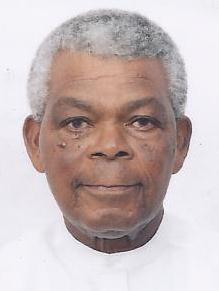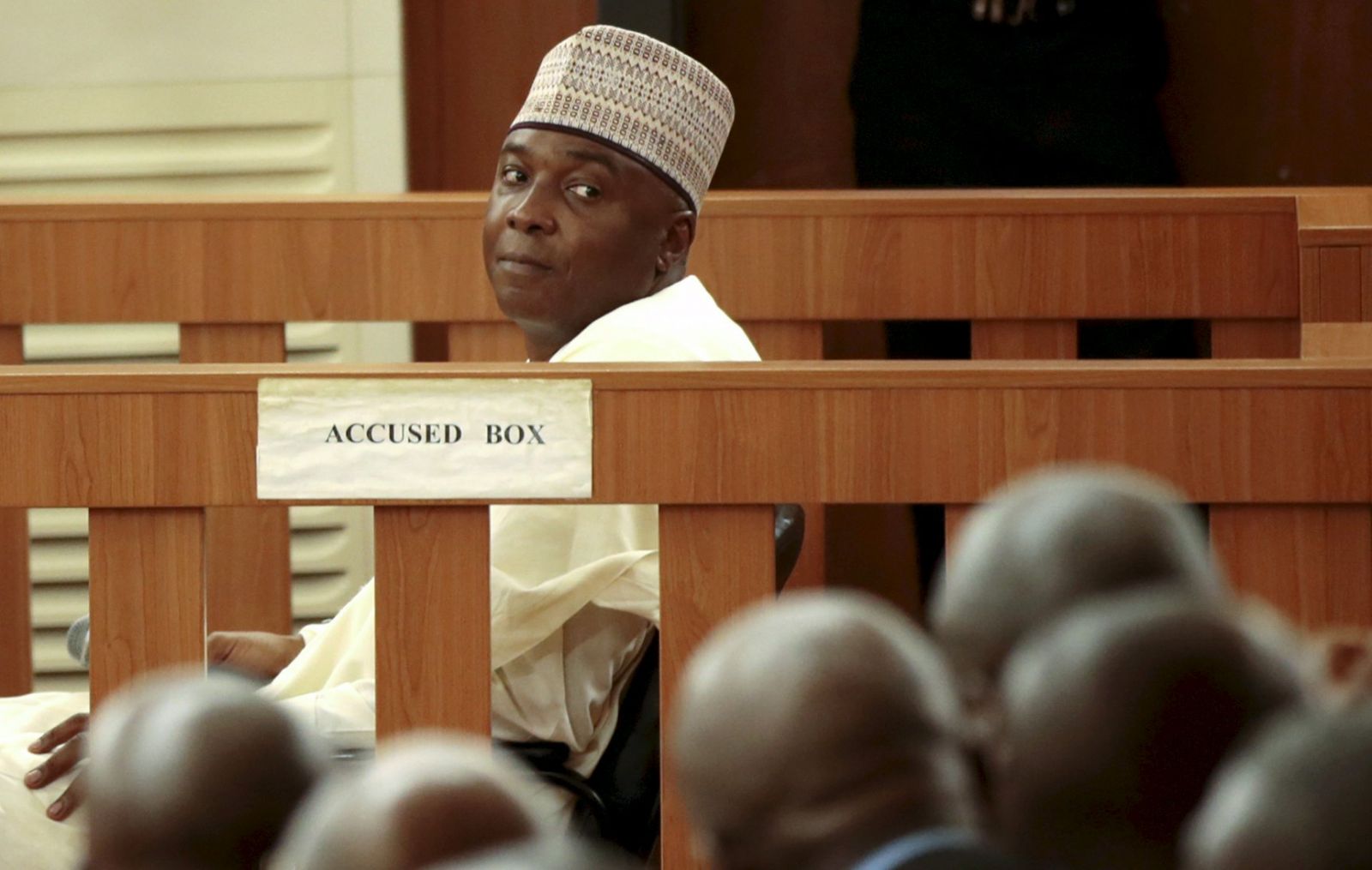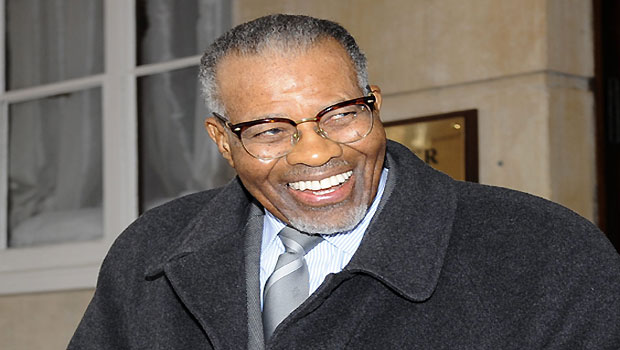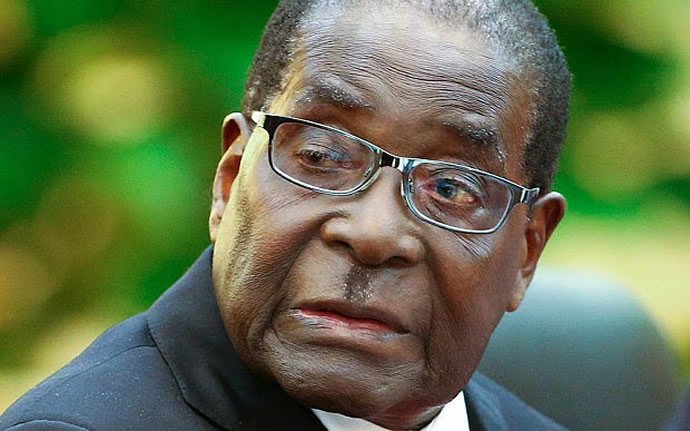
President Muhammadu Buhari has described the General Overseer of the Redeemed Christian Church of God, Pastor Enoch Adejare Adeboye, as an epitome of honesty, peace, patience, contentment, humility and diligence, which he said are the trademarks of a good believer. Pastor Adeboye turns 74 years tomorrow, March 2. In a statement by special adviser to the President on media and publicity, Femi Adesina, quoted Buhari as believing that the revered Christian leader, who paid him a courtesy call at the Presidential Villa on February 16 this year and whom he had interacted with many times before, “epitomizes the virtues of honesty, peace, patience, contentment, humility and diligence, which are the trademarks of a good believer. “As a Christian leader, the President commends the relentless efforts, sacrifices and the grace of God upon the life of the General Overseer, who has over the years propagated the gospel around the world, organized large gathering of Christian worshipers and consistently counselled leaders and their citizens on living right before God. “Besides preaching the gospel, President Buhari salutes the social and humanitarian interventions of the RCCG leader in providing health and educational services to complement the efforts of governments. “The President prays that the Almighty God will grant Pastor Adeboye long life and more strength to carry on the good work.” [myad]
Former Nigeria Chief of Defence Staff, Air Chief Marshal Alex Badeh (rtd), who has been in the custody of the Economic and Financial Crimes Commission (EFCC) since February 8, has begged the Federal High Court in Abuja to grant him bail on the ground that he had just recently undergone surgery and yet to fully recover.
Badeh who is still being held in the custody of the EFCC in Lagos on ongoing investigation into his roles in an alleged fraud in transactions involving the Nigerian Maritime Administration and Safety Agency (NIMASA).
Justice James Tsoho fixed March 4 for ruling on the bail application after entertaining argument by Badeh’s lawyer and the objection by the EFCC on Monday.
Bade’s lawyer, Mr. Samuel Zibiri (SAN), who filed the bail application dated February 15, said though the EFCC had granted his client bail, the ex-CDS could not meet it because of the “onerous conditions” attached to it.
He said his client was recovering from a recent surgery and also had a history of kidney stone.
He predicated the application on Section 35(4) and Section 36(5) of the 1999 Constitution and sections 158, 162 and 165(1) (2) of the Administration of Criminal Justice Act, 2015.
Zibiri urged the court to grant bail to his client on self recognition, or on such favourable and liberal terms as the court might deem fit to make. [myad]
The embattled national chairman of the Peoples Democratic Party (PDP, Ali Modu Sheriff has described himself as a an of character and integrity who would not renege on his word.
Sheriff who said that he would soon relinquish the office as he plans the national convention of the party to pick its national officers, including chairman, blabbed: “I, Ali Modu Sheriff, a man of character and integrity, one who would live up to expectation and his promises, hereby announce to the world that under no circumstances would I stay in office beyond the period prescribed by the Constitution of our party, the PDP.” The PDP chairman who spoke at the party’s national headquarters in Abuja, the Federal Capital Territory when he received the Chairman of Benue state chapter of the party, Dr. Emmanuel Agbo, said that he would soon announce the dates of the party’s convention. “In the light of the above, therefore, I will announce the Convention Congress Planning Committee after due consultation with all organs of the party within few days from today and I assure all faithful members of the party that I would do everything within my powers to ensure that I complete the processes of congress before the expiration of my time in office.” Modu Sheriff made it clear that PDP will not be run by impunity, adding: “the party will be returned its owners.” [myad]
The Nigerian government has concluded plans to return all Nigerians who are refugees in different camps in Cameroon back to Nigeria as civil authorities gradually return to various locations occupied by members of the dreaded Boko Haram
Minister of Interior, General Abdurahaman Dambazau, gave the assurance when he visited over 60,000 Nigerian refugees in the Minawao camp, Maruoa in far North region of Cameron as parts of his three days official visit to the country.
A statement by the Chief Press Secretary to the Minister of Interior, Osaigbovo Ehisienmen, said the minister also donated food and other essential items to the displaced Nigerians in the country on behalf of the Nigerian government.
“Minister of Interior jointly signed a communiqué at the end of a bilateral meeting with officials of Cameroon Interior Ministry on issues related to exchange of information on the organization and duties of Interior Ministry of both Countries, arrangement towards gradual return of Nigerian Refugees back home which would involve a tripartite agreement between Nigeria, Cameroon and United Nations Commission on Human Rights, Maritime Piracy, as well Memorandum of Understanding on the establishment of regular consultation mechanisms between authorities of the Cameroonian Regions, and States in Nigeria located along the common border.”
Dambazau was accompanied on the trip by the Inspector General of Police Mr. Solomon Arase, the CG Immigration Service Mr. Martins Abeshi, Director General of the National Emergency Management Agency (NEMA), the Solicitor General of the Federation, Representative of National Refugee Commission and other government officials. [myad]
Benue state government’s white paper on the report of a commission of inquiry into government finances has asked the former governor of the state, Gabriel Suswan, to refund a total sum of three billion naira which he allegedly obtained fraudulently.
The white paper, which covered the eight-year government of the former governor and it conveys an acceptance of the recommendations of the commission.
The whitepaper, titled: Government Views and Decisions On Report Of the Judicial Panel Of Inquiry Into Funds Accruing/Received And TheUtilization Of Benue State Funds/Assets, 2015, catalogues financial opacity, outright theft, mismanagement and inefficiency among other indices of misgovernance under Suswam.
Aside from Suswan, the whitepaper recommends that that ex governor Suswam’s Finance Commissioner, Mr. Omadachi Oklobia, and Permanent Secretary, Ministry of Finance, Mrs. Ruth Ijir, be barred from holding public office. It also recommended that Ijir be compulsorily retired from the civil service.
Others recommended for sanction include Emmanuel O. Atini, Asen Sambe, Andy Uwoukwu, Joseph Kpaakpa and Terfa Ihindan. The listed public officials were the biggest actors under Suswam’s administration in the state, which the commission’s report and government whitepaper presented as resembling an ethical free-trade zone.
The six-member commission, headed by Justice E.N Kpojime was constituted by Suswam’s successor, Governor Samuel Ortom last July to examine the report of the transition committee, which presented a depressing picture of the economic and financial position of the state.
The transition committee had observed that the handing over notes submitted by the Suswam administration showed unclear revenue streams for the state, gross financial indiscipline within the agencies and among officials of government, zero balances in government treasury, huge debt burden and uncertain level of control in the ownership of government-owned enterprises and stocks, gargantuan corruption and waste in the business of governance. It also observed widespread decrepitude in physical infrastructure, abandonment of many government projects were abandoned as well as a protracted closure of schools in the state on account of non-payment of salaries and allowances to teachers and other civil servants, yielding a very low morale.
The Judicial Commission was, thus, mandated to identify all revenue sources and determine the aggregate of revenue that accrued to the state between June 2007 and May 2015 by specifically determining how much was received from these sources.
While carrying out its work, the commission identified 27 sources of revenue to the state during the period. Notably, they included statutory allocations from the Federation Account, statutory allocations from the Federation Account to the Local Government Councils (LGCs), Internally Generated Revenue (IGR), bonds, loans from commercial banks, micro, small and medium-scale enterprise (MSMEs) Loans from Central Bank of Nigeria (CBN). Also found as revenue streams were received funds from Bank of Industry, Excess Crude Receipts, Ecological Funds, Value- Added Tax (VAT), state component of Sure-P funds, local government councils component of Sure-P funds, Millennium Development Goals (MDGs) Funds, Proceeds from Sale of Shares, Proceeds from Sale of Government-owned Enterprises, Lease of Government Assets and Properties, Budget Augmentation Funds from the Federation Account, London Club debt refunds, Nigeria National Petroleum Corporation (NNPC) Refunds, Exchange Rate Gains and Additional Funds from Accountant-General of the Federation. Others were Universal Basic Education Commission (UBEC) Funds, Tertiary Education Trust (TET) Funds, National Economic Empowerment, and Development Strategy (NEEDS) Assessment Funds, United Nations Development Programme (UNDP) Funds and Board of Trustees (BOT) Grants to Tertiary Institutions.
Similarly, it was mandated to ascertain the quantum of stocks owned by the state in Dangote Cement Company Plc, Julius Berger Plc, Benue Breweries Ltd. and other companies or enterprises as well as uncover the circumstances that led to the sale of such shares / stocks and their worth or value, investors who bought the stocks/shares, determine whether the transaction conformed with due process and ascertained the where the proceeds of sale went among other things.
In the same vein, it was also directed determine if the funds realized from the sale of such were appropriated, ascertain how they were applied and utilized, establish misappropriation (where applicable) and identify those involved and prescribe an appropriate course of action to the government. The commission had within six months to work.
It commenced its public sittings last September but suffered a 21-day interruption on account on an interim order obtained by Suswam, who challenged its legality. The order was subsequently vacated on November 9, with the commission resuming its work two days later.
The aggregate of revenue which accrued to the state from all the listed sources during the period investigated, its report showed, was N1.02 trillion. A total amount of allocations from Federation Account (statutory allocations only) was N282.1 billion. Total receipts from VAT amounted to N56.2billion while N35.8billion came from the Excess Crude Account. From Ecological Funds, the state got a total of N2.5billion and N5.3billion from MDGs. The total amount of Sure-P Funds was N14.2billion while SMEs Funds amounted to N3.5billion. IGR accounted for N78.07billion while bonds and loans amounted to N69.843billion.
From Local Government Funds, the state realized N348.2billion. From Universal Basic Education Funds, it took N92.9billion. From other sources, it earned N23.2billion. The commission observed that revenue opportunities from development partners were treated with indifference, the result of which “was little or no revenue from those areas especially those that required counterpart funding and special institutional structures to attract.”
The commission also observed that on account of inefficient revenue collection machinery and administration, IGR was low relative to the opportunities available in the state.
“Some agencies of the state such as Radio Benue, Secondary Schools and Tertiary Institutions failed to disclose their IGR.
“The Local Government Councils (LGCs) recorded zero level IGR within the period under review,” said the report.
While examining the appointment of the former chairman of Benue Inland Revenue Service (BIRS), Mr. Andrew Ayabam, the commission discovered that the terms of his appointment were unrealistic. Ayabam, for example, was given a bonus of 10% of the excess of the target set for him, a percentage not based on the revenue actually collected, as it covered all revenues, including the PAYE of civil servants, deducted at source from the Office of the Accountant-General and the revenue generated by other agencies.
Thus, the amount collected monthly was determined Ayabam, who was simultaneously chairman and consultant to the service, rather than the Accountant-General, whose responsibility it was to report revenues accruing to the government. This gave rise to the declaration huge, but phony figures.
Equally grim disclosures emerged from the commission’s investigation into government-owned stocks in many companies. The commission found government-owned shares were sold on the directive of Suswam, who according to the Benue Investment and Property Company (BIPC), which managed the shares, summoned its Managing Director Mrs. Brigid Shiedu and the former Finance Commissioner Omadachi Oklobia to the Government House and informed them that government wanted to complete some development projects but had run out of funds. “Consequently, he directed the sale of part of the portfolio of shares held by the government through BIPC since it was the most viable option for raising funds internally,” the report said.
This turned out to be nothing but a pretext for theft. According to the commission’s findings, which have been accepted in the whitepaper by the government, some of the projects for which funding was sought through the sale of the shares were the basis for the earlier floatation of two bonds worth N18billion were documented as having been completed in the administration’s “First Term Report: 2007 – 2011”. Yet, these projects were consistently funded from the 2008 to 2015 budgets. Among these was the construction of Greater Makurdi Water Works, construction of the Otukpo Township Water Supply Scheme, construction of Otobi Water Works, construction of Katsina – Ala Water Works and construction of Benue State University Teaching Hospital, Makurdi.
Also, observed was a discrepancy in the figures given as the amount of proceeds realized from the sale of shares. While BIPC told the commission that N8.3billion was realized, Elixir Securities Ltd. said N9.4billion was realized. The 15 % discount was considered suspiciously high.
The sale of shares gave rise to a series of patently dubious transactions. In one of such, the sum of N1billion from the N9.4billion proceeds of shares sold by BIPC was directly paid into a GTBank Account No. 0027866325, with the beneficiary being BIPC. The sum of N5.3billion was paid into the Zenith Account No. 1013852648, which is operated by Benue State Ministry of Finance while Fanfash Resources received N3.1billion via its Zenith Bank Account No. 1013677218, which was presented as a project account of the Finance Ministry by Suswam’s Finance Commissioner. However, the commission found that it is privately-run by Fanfash Resources, owned by a Bureau de change operator named Abubakar Umar. The amount was subsequently withdrawn, converted into foreign exchange and given to Suswam.
Similarly grotesque financial conduct was discovered with the sale of state-owned corporations such as Benue Breweries and Agro Millers, and lease proceeds of Taraku Mills and other enterprises. The sums realized, the commission reported, were paid into accounts of the respective reporting ministries and spent immediately, with most withdrawals being made in cash. and Agro Millers were sold, and the proceeds paid into the EcoBank and Skye Bank accounts of the Ministry of Commerce and Industries, headed by Ihindan. The entire amount spent without appropriation. Other sale and lease proceeds were similarly misapplied.
Equally depressing were discoveries by the commission that Dangote Cement, Julius Berger and other stocks being managed by BIPC were sold through Elixir Securities Ltd and bought by investors through various stockbrokers. Elixir Securities Ltd and BIPC, however, refused to divulge the identities of the buyers to the commission.
Benue Breweries Ltd, for instance, was sold at a giveaway price of N400million to M/S Consolidated Breweries Ltd. Agro Millers Ltd was sold for the same amount to to M/S Masco Agro Allied Industries Ltd, while Yuteco Foods Ltd was sold for an unspecified amount under receivership circumstances. The sale process was conducted with flagrant indifference to due process, as no pre-sale valuation was done to ascertain the true value of Benue Breweries Ltd. and Agro Millers before the sale, and neither were the sales consistent with the Benue State Privatization Law.
The refusal by BIPC and Elixir Securities Ltd to disclose the identities of the new investors was considered an attempt to shield those who had bought state-owned enterprises at rock-bottom prices from sanctions, particularly given the heavy discount that attended the transaction.
A clear indication that Suswam and officials of his administration treated state funds like a buffet on which they gorged is supplied by the difference between total revenues that accrued to the state and total approved estimates within the period under investigation.
With a total of N1.02 trillion received during the period, total approved estimates turned out to be N802.04billion. This implies that expenditures totaling N219.8billion were made without appropriation. In specific terms, over N10.9billion, the entire amount realized from sale and lease proceeds of government enterprises, was spent without appropriation. Similarly, the entire SURE-P fund proceeds of over N14.2billion was expended without appropriation.
Expenditure arising from the entire bond proceeds of N18billion realized in 2011 and 2014 were not appropriated for. The same way, the sum of N35.02billion expended on “logistic funds for Security Surveillance” was not appropriated just as the spending of N5.89billion presented as “Cost of Running Government,” a phrase alien to public sector budgeting, did not appear in any Appropriation Act during the period under review.
The commission noted that the floatation and utilization of the two bonds lacked transparency and described the amount expended on security as too high.
Despite Suswam’s long and loud claim that he was developing the state, evidence provided by application and utilization of funds declines to support him. Of the total revenue of N1.02trillion from various sources in eight years, 85% went on recurrent expenditure, while about 15% was spent on capital projects, the obvious reason for the decrepit condition of physical infrastructure in the state.
The administration of capital expenditure was marked by absence of due diligence in contract billing, which resulted in contract padding and inflation; lack of due diligence in contract award, use of substandard materials, poor quality of jobs executed, abandonment of projects after collecting payments, payment for jobs not executed and multiple payments for the same contracts. These factors yielded a massive capital expenditure profile, which did not correspond with physical development.
In a similar vein, the huge recurrent expenditure profile was found to have been occasioned by verbal contract awards and cash payments. Such contracts, usually without timelines were used as instruments to siphon government funds as they were endlessly paid for. Salaries and wages were also found to have increased astronomically, with the total amount spent on salaries for civil servants and political appointees (excluding local government staff and primary school teachers) amounting to N253.7 billion. The big jump in wages was provoked by salary adjustments and dodgy payroll management. The latter manifested in the abuse of the manual payroll system, which was not completely curtailed with the introduction of e-payment and biometric payroll system.
Another feature of the Suswam administration was the release of overhead allocations to MDAs. This was exploited by commissioners and their permanent secretaries to violate financial regulations to run their offices, a system some witnesses referred to as “doctrine of necessity”. “These violations ranged from the illegal placement of government funds in fixed deposits accounts with banks and withdrawal of monthly accrued interests, diversion of funds meant for specialized purposes, corruption in contract administration and outright cash withdrawals and disbursements from accounts of MDAs without approvals,” the report said.
Also found to be rife was the practice of huge cash transactions, which with its lack of documentation, made embezzlement easier. About 80% of transactions by the Bureau of Local Government and Chieftaincy Affairs, for example, were done in cash. From its FBN account 2017241513 which commenced operation in June 2011, the Bureau made withdrawals of N9.2billion in 2011, N12.2billion in 2012, N10.5billion in 2013, N8.5billion in 2014 and N2.5billion by May 2015.
Staff of the Bureau, on the instruction of Suswam and his Special Adviser on Local Government and Chieftaincy Affairs, Solomon Wombo, withdrew over N500million in cash per transaction.
Even the Ministry of Finance was involved, with the commissioner, permanent secretary, staff as well as bankers dealing in high- volume cash transactions.
The concept of security vote provided an endless invitation to abuse, as there was no security vote appropriated for in the budgets. Officials of the Ministry of Finance and the Bureau of Internal Affairs and Special Services simply took cash to the governor on demand. This was dressed up as “logistics funds for security surveillance,” a monthly expenditure that ranged from N100million to over N1.2billion in some months.
There was also the not exactly small matter of the Central Bank of Nigeria Commercial Agricultural Credit Scheme (CACS) loan of N1billion.
This was accessed from CBN in 2012 to finance small-scale farmers to boost agricultural production. However, it was found to have been mishandled. Of the amount, the sum of N806, 6million was given as loans mostly to politically exposed persons, friends and relations of Suswam, using non-existent businesses.
As a result, little repayment has been recorded since 2012. The sum of N193, 700,700.00 was entirely diverted to MDAs without any record of repayment as yet. The Ministry of Finance got N163.4million, Government House N5.3million, Bureau of Internal Affairs and Special Services N25million.
Remarkably, various sums were withdrawn from the MDAs’ accounts in cash on the approval of Oklobia, Ijir and other associates of Suswam, who were the biggest names on the list of those said to have participated in the biggest financial malfeasance in the history of the state. [myad]
The minister of Interior in ex President Goodluck Jonathan’s government, Abba Moro, has been remanded in Kuje Prison by Justice Anwuli Chikere of the Federal High Court in Abuja over his alleged complicity in the N676 million immigration recruitment scam.
Also remanded in prison custody was a Deputy Director in the ministry, Mr. F. O Alayebami.
The ex-Minister and the two others were arrested by EFCC over 2014 immigration recruitment scam,
Operatives of EFCC had last year questioned the immediate past Minister of Interior over alleged complicity in the March 2014 recruitment exercise for the Nigerian Immigration Service (NIS).
Abba Moro was made to answer questions on his alleged involvement in the recruitment exercise which eventually turned tragic.
Reports revealed that there were only 4,000 vacancies that were to be filled in NIS, while the Ministry of Interior approved the sale of application scratch cards to over 520,000 citizens, through a consulting firm.
Yet the ministry failed to provide adequate provision for the conduct of standard recruitment aptitude test. About 18 job seekers died and many injured in March 2014 during a nationwide recruitment test.
The over 500,000 applicants who indicated interest in the job had paid a compulsory fee of N1,000 as application fee.
At least, nine job seekers died on March 15, 2014 at the Abuja National Stadium while scrambling to secure seats for a recruitment test into the Nigerian Immigration Service.
The stampede ensued after the over 200,000 job seekers scrambled through a poorly organized barricade at the stadium.
In Port Harcourt, Rivers State, four applicants died from the stampede while 12 others sustained injuries and were rushed to Rivers government-owned Braithwaite Memorial Hospital.
Also arrested by the anti-graft agency were former Permanent Secretary in the ministry, Anaesthesia Nwaobia, and a deputy director who allegedly facilitated the scam. [myad]
Members of the senior executives of Qatar Chamber of Commerce and some private businessmen in Doha, Qatar, have assured President Muhammadu Buhari that they would be coming to invest in various type of businesses in Nigeria.
Speaking when President Buhari addressed them yesterday in Doha, Muhammed Bin Ahmed Bin Towar Al Kuwari, Vice Chairman of Qatar Chamber of Commerce and Industry said they would be interested in the finance, oil and gas, telecommunications, tourism, agriculture and food processing sectors, among others.
“All eyes are on Africa in the next decade. Africa is the next place for growth, the rest of the world is looking towards the continent, and Nigeria is an important part of that continent.”
This was even as President Buhari assured them that he would remove any impediment that can hinder investment in the country, adding that security is essential to prosperity and development.
“Nobody invests without first knowing how secure a country is. That is why we have placed high premium on securing the country, because you cannot effectively manage a country you have not secured. My party campaigned on three main planks: security, employment generation and anti-corruption.
“We campaigned on zero corruption, promising that we would run an accountable government and we are keeping our promises.”
Referring to the crash in the international crude oil prices and its effect on the Nigerian economy, President Buhari informed his hosts that Nigeria is blessed with vast arable land for agriculture, and rich deposit of solid minerals, which the businessmen can invest in, and reap rich returns in a short while.
“Agriculture and solid minerals will mobilize youths for gainful employment. We have the capacity not to need to import food at all. But we need to also tackle infrastructure deficit in power, transportation, rail, road, and in other areas. We will put together an articulated plan, which would be discussed with you shortly, so that you can make investment decisions.
“All impediments like delayed processing of permits, multiple taxation, and corrupt practices, would be removed.” [myad]
A female trader, Moses Sarah had narrated a story of how a self-acclaimed Alfa, Alhaji Ibrahim Ahamido, allegedly tricked her into parting with the sum of N350, 000 which he promised to turn into N5 Million.
The woman said that sometime in December, 2015, she was introduced to Ahamido in a restaurant in Lekki and Ahamido who boasted that he had special powers that could make him multiply money after prayers.
Narrating the story to police who arrested his and being detained at the Maroko Police Division in the Lekki area of Lagos State, Sarah said that the 47-year-old Alfa on February 22, 2016, collected N350, 000 from her and promised to boost her business by turning the money to N5m. He, however, absconded with the money, after allegedly giving his girlfriend, Musa Hawa, part of the money (N100, 000), The Punch reports.
The woman said that she did not initially him but that he promised to help her bring out her child, who at the time was arrested by the police for an offence he committed.
The Alfa was said to have prepared some concoction for her, and just like that, the woman’s son was released.
“I immediately convinced and she trusted him,” the source disclosed, adding that she later asked him for help concerning her business, which was not doing well.”
The suspect reportedly asked her to give him the N350, 000 so he could turn it to N5m.
Sarah said she believed him and gave him the money.
“I told him I would be travelling to Ghana in December 2015, and I would return in January 2016. He gave me something to put under my pillow. He said when I return from my trip, I should check the pillow and the N5m would be there.
“When I returned, I checked under the pillow, but I did not see any money. I called him to inform him, and he said it was my fault because I did not come back on time.
“He said the money came out from the container he gave me, but when I did not pack it on time, it went back. He then asked me to pay another N9, 000 so that he could make another charm to repair the damage.
“It was after I gave him the money and he disappeared that I knew I was dealing with a fraudster.”
She, however, reported the case to the police, and after a manhunt, Ahamido was arrested.
On his part, the suspect said he did not mean to dupe the trader, adding that he tried to multiply the money, but the charm failed.
“I did not collect up to N350, 000 from her. She even gave me the money in bits. The total is N150, 000.”
Ahamido who said that he gave his girlfriend, Hawa, N100, 000 to renew their love, added: “I will refund the money since her blood was not compatible with the prayers.”
Meanwhile, Hawa denied collecting N100, 000 from him.
She said: “I came to Lagos about 15 years ago. It was about three months ago that Alhaji came to me and said he wanted to date me.
“Three days later, he bought a wrapper for me. I did not know where he got it from. When he continued buying me more wrappers, I suspected something was wrong and I started keeping them so that if a police case arose, I would be able to defend myself.
“He bought me only four wrappers. He never gave me any N100, 000.”
The police, at the weekend, arraigned the duo before an Igbosere Magistrate’s Court on two counts of obtaining under false pretences.
The police prosecutor, Sergeant Cyriacus Osuji, said the offences were punishable under sections 409 and 312 of the Criminal Law of Lagos State, Nigeria, 2011.
The charge read in part, “That you, Ibrahim Ahamido, and Musa Hawa, on February 22, 2016, at Marwa Waterside, Lekki, Lagos, in the Eti-osa Local Government Area, in the Lagos Magisterial District, did obtain by false pretences the sum of N350, 000 from one Moses Sarah, with the pretence of making more money for her.”
Ahamido pleaded guilty to the charge, whereas his girlfriend, Hawa, said she was not guilty.
In her ruling, the magistrate, Mrs. J.O.A. Adepoju, admitted her to bail in the sum of N100, 000 with two sureties in like sum.
Adepoju adjourned the matter to tomorrow, March 2 for further hearing. [myad]
The first thing that comes to mind when the mention is made about the renewed but pipe-dream fight for the actualization of dead Republic of Biafra, is that it is for all the Igbo people in the South East, and perhaps, their appendages from the minority South South, with Alhaji Asari Dokubo as the chief minority leader. But, with the dreamer-in-chief (Director of Radio Biafra), Nnamdi Kanu and his group implying recently that the umbrella body of the Igbo people, the Ohanaeze Ndi Igbo is being cut off from the senseless struggle, one begins to wonder what is Kanu and his fellow travelers are trying to achieve and for who. Nnamdi Kanu was quoted as saying by members of his deranged Indigenous People of Biafra, (IPOB) that he will rather die in jail than the Ohanaeze Ndigbo to claim the glory of his release and that he has no business with the Igbo Socio cultural Organization. ”I will rather die in jail than for Ohanaeze Ndigbo to claim the glory of my release,” he said. In a statement, the IPOB’s United Kingdom spokesmen, Dr. Clifford Iroanya and Emma Mmezu, said: “Our march to freedom is unstoppable; this is something Buhari ought to know. We have come to die for Biafra if that is what it will take to be free. Our resolve should not be underestimated. As our leader will always say, “Nigeria will kill us, we will kill them but in the end we will win.” At the other extreme end are the reasonable members of the Igbo nation, made up of Ohanaeze with elders and leaders-of-thought as members as well as the youth wing of the same Ohanaeze Ndi Igbo. These other groups are said to be trying to establish contact with federal government for the release of Kanu who has been standing trial for felony and other offences. They alleged that members of the Ohanaeze Ndigbo and Ohanaeze Youth met with some Americans, at Nike Lake Resort Hotel between 6pm and 7pm Saturday evening.
The American Nigerian yankee leaders of IPOB made it clear by saying: “If any country or group is coming to Nigeria to discuss anything concerning IPOB and the release or freedom for our incarcerated leader and Director of Radio Biafra, Mr. Nnandi Kanu, it is no Ohanaeze Ndigbo or their youth wing that will speak for us, because they are not our members and so cannot represent or speak for us. We urged the Americans who came for the meeting that the alleged representatives of IPOB did not represent or have our support. Nobody speaks or represent IPOB except its principal and designated officers.” And what is in contention here, and what is in contention even in the whole brouhaha about Biafran Republic? The IPOB, in the statement, betrayed the real intention by saying, as an after-thought, that those who attended the controversial meeting were impostors who are not members of IPOB and that they are the usual Ohanaeze contractors who will always condemn IPOB, but will be first to hijack anything good that is coming to South East states through IPOB. “it is only All Progressive Congress (APC) government of President Muhammadu Buhari of Nigeria, whom they have been working for against IPOB that recognize them. We never asked anybody called Ohanaeze Youth leader to represent IPOB. He is not our member and cannot speak for us in anything or meeting.” It is quite clear that after all, the fight for the Republic of Biafran by a handful of day-dreamers: the fight which late Ikemba Emeka Odumegwu Ojikwu waged in a more unifying way and based on some kind of sensible reasons, is all about seeking for attention and, above all, the material gains that accrue to such attention. It is a fight by some emigrants who find no job to do in the countries to which they ran. Indeed, if, as obviously is, members of IPOB are speaking in diametrically opposition to the respected and nationally recognized Igbo unifying body such as Ohanaeze Ndi Igbo, which Biafran Republic they are talking about and for who? It is looking pretty that even the Biafran Republic is already dead on arrival, for the simple fact that should it be actualized, in the wildest nightmare of its proponents, the larger and more respected segment of the Igbo community would be excluded or forced to live in perpetual conflicts with the IPOB members. It is becoming clearer that members of IPOB regard you as an Igbo man or woman only if you are its member, and by implication, that it is only members of the IPOB that are Igbos who will be the citizens of the proposed Republic of Biafra. Which brought us to a reasonable conclusion that IPOB is another None Governmental Organization (NGO), formed to negotiate for the plum, buttered side of the bread for its members only. That you have to register as members to be an Igbo person and therefore partake in the goodies that Biafran Republic would ooze out! In other words, even if you are an Igbo King and you have not registered to be bonafide member of IPOB, you better don’t go near the organization, because you would not benefit any share from the spoils… when they start falling in, if they would. [myad]
Nigeria’s Ministry of Finance has announced the discovery of 23,846 non-existent workers in the federal civil service, following an audit which showed that the ghosts have been receiving the sum of N2.29 Billion as monthly salaries from multiple sources.
The ministry said that the removal of the ghosts from the government payroll was effected through biometric data and a bank verification number (BVN) to identify holders of bank accounts into which salaries were being paid. This showed the names of some civil servants receiving a salary not correspond to the names linked to the bank accounts. In some cases individuals were also receiving salaries from multiple sources.
Special adviser to Kemi Adeosun, the Finance minister, Festus Akanbi who took office in November and soon after set up an efficiency unit to cut waste declared in a statement: “the federal government has removed 23,846 non-existent workers from its payroll. Consequently, the salary bill for February 2016 has reduced by 2.293bn naira when compared to December 2015 when the BVN audit process commenced.”
He said the finance ministry would now undertake “periodic checks and utilize computer-assisted audit techniques” and also introduce tougher monitoring of new entrants to the civil service to avert further abuse of the system.
“The ongoing exercise, which is part of the cost-saving and anti-corruption agenda of President Muhammadu Buhari’s administration, is key to funding the deficit in the 2016 budget,” said Akanbi.
The ministry, which said personnel costs represent more than 40% of total government expenditure, said it had so far checked the details of about 312,000 civil servants.
Akanbi said the ministry is working with the financial crimes agency and the National Pension Commission to identify irregularities and recover salaries and pension contributions related to the deleted workers. [myad]
We use cookies on our website to give you the most relevant experience by remembering your preferences and repeat visits. By clicking “Accept”, you consent to the use of ALL the cookies.
This website uses cookies to improve your experience while you navigate through the website. Out of these, the cookies that are categorized as necessary are stored on your browser as they are essential for the working of basic functionalities of the website. We also use third-party cookies that help us analyze and understand how you use this website. These cookies will be stored in your browser only with your consent. You also have the option to opt-out of these cookies. But opting out of some of these cookies may affect your browsing experience.
Necessary cookies are absolutely essential for the website to function properly. This category only includes cookies that ensures basic functionalities and security features of the website. These cookies do not store any personal information.
Any cookies that may not be particularly necessary for the website to function and is used specifically to collect user personal data via analytics, ads, other embedded contents are termed as non-necessary cookies. It is mandatory to procure user consent prior to running these cookies on your website.