President Muhammadu Buhari has appealed to Nigerians, especially the religious leaders in the country to pray for him and for his government to attain the culture of good governance in the country.
The President, who spoke today at the annual convention of the Jam’atul Izalatul Bid’ah Wa;ikamatul Sunnah (JIBWIS) in Abuja, insisted that religious leaders owed it a duty to support the government to sustain the achievement which the government as recorded so far.
Represented by the FCT Minister, Malam Muhammad Musa Bello, President Buhari commended the Islamic group for uniting the Muslim community through the preaching of Islamic tenets which stress the importance of obedience to constituted authority, good morals and the need for harmonious co-existence.
He noted that their efforts have greatly enhanced the unity and socio-economic development of the nation.
“I urge you to continue to support this administration through prayers so that we can continue to have peace and security and above all pray for Allah’s blessings so that we can have prosperity and good governance.”
The occasion which featured the official launching of the appeal fund for the building of an Islamic Centre by the group in the Guzape District of Abuja, had prominent personalities including former Governors and Ministers in attendance. [myad]
The Nigerian Communications Commission (NCC) has fined MTN Nigeria and Globacom Limited a total of N34 million for breach of the Mobile Number Portability business rules and regulations. The regulatory body made this known in its “2015 Q4 Compliance Monitoring and Enforcement Reports” obtained by the News Agency of Nigeria (NAN) today. In the report, NCC said that of the N34 million sanction for number porting breach, Globacom was fined N22 million, while MTN was fined N12 million. It woul be recalled that in the “2015 Q3 Compliance Monitoring and Enforcement Reports,” NCC had resolved to monitor and sanction violations with MNP process time obligations said “to address the increasing cases of port request rejections”. The commission said that series of compliance checks were carried out regarding timer violations by Donor operators with respect to “validation and deactivation responses” which had timelines of two hours and one hour respectively. According to the Q3 report, there is a timer deactivation violation by MTN regarding a Corporate Port request of over 109 lines belonging to Nigerian Breweries Plc. It said: “The company had initiated a corporate port out request from MTN to Glo via lead Mobile Station International Subscriber Directory Number (MSISDN): 07036735494 on August 11, 2015 at 1.20pm but was partially completed as at 11.22am on August 14, 2015. “As a result, these subscribers were not able to receive calls from MTN subscribers. “In the same vein, a timer validation violation by MTN regarding four individual Port requests from MSISDNs: 08139382308, 08143810152, 08135485305 and 08162108093. “MTN breached the allowable two hours for validation of four port requests from the NPC, as stated in the MNP Business Rules.” The 2015 Q3 report also showed that there was a timer validation violation by Glo regarding 11 individual and one corporate port requests. It said Glo had breached the two hours allowable for validation of six port requests from the NPC as stated in the MNP Business Rules. Glo validated one of these port requests over nine hours after receipt from the MNP administrator. The report also said Glo breached the allowable one hour for the Donor to deactivate 147 Ported out lines belonging to Reckitt Limited, consistent with provisions of the MNP Business Rules. It, however, said all the above timer violations were undergoing enforcement actions. After investigations by the regulatory body, MTN and Globacom were found wanting, hence, sanctioned to the tune of N34 million in the Q4 2015. The telecoms umpire, in its “2015 Q4 Compliance Monitoring and Enforcement Reports” said the two telecoms companies had paid the fine. According to the commission, its activities are consistent with Section 89 of the Nigerian Communications Act 2003. The section mandated NCC to “monitor all significant matters relating to the performance of all licensed telecoms service providers and publish annual reports at the end of each financial year.” NCC explained that it had developed Compliance Monitoring and Enforcement strategies to ensure fair competition, ethical market conduct and optimal quality service in the telecom industry. [myad]
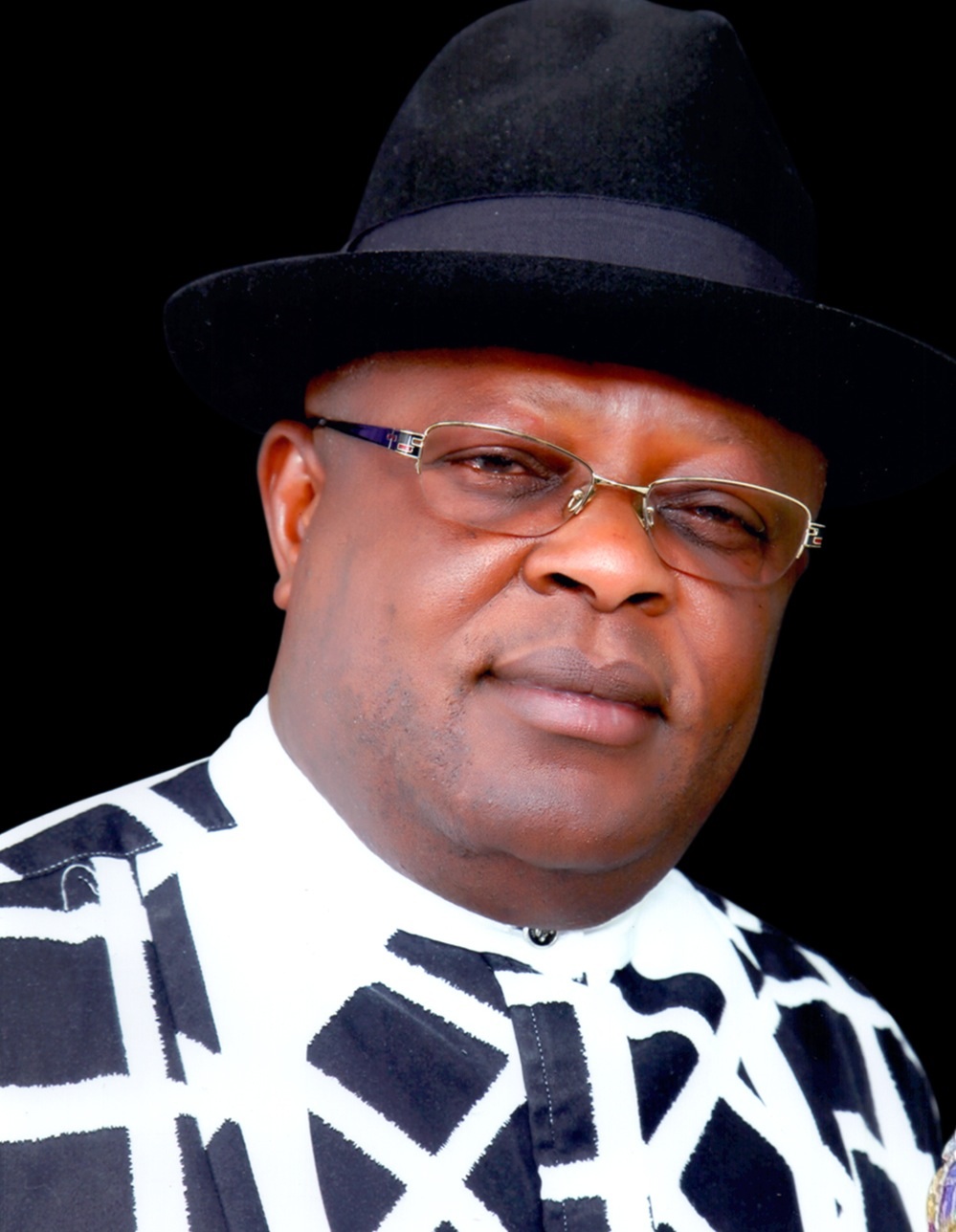
Ebonyi State Governor, Engr. David Umahi, of the Peoples Democratic Party (PDP) has said that he supports President Muhammadu Buhari but that such support should not be mistaken to mean that he supports the All Progressives Congress (APC) on which plat for he rose to power.
“So, my relationship with the President should not be mistaken for support for another party. And I will continue to support Mr President because he is my only boss. The governor who addressed supporters at the Government College, Afikpo during a grand reception organized in his honor by the Old Afikpo Union, insisted that PDP remains the political party to beat in spite of the challenges facing it . Governor Umahi advised PDP members in the country not to lose faith in the party, assuring them that the leaders are committed to repositioning the once biggest political umbrella in Africa.
“Let me ask all PDP people not to shake at all. PDP remains the only party in Nigeria; PDP remains our party;PDP remains the party to beat. “We Know what we are passing through as governors and I want to tell you that Mr. President is doing his best to reposition this country. What we are witnessing is global economic meltdown; it is not peculiar to Nigeria and so, I ask Nigerians to join hands with Mr. President so that we can lift up this nation.
“The fate of our nation is in our hands and I believe strongly that if we prefer Nigeria made goods and if we sit with one another, Nigeria is going to be great again.”
Governor Umahi thanked President Buhari for doing so much for Ebonyi State and urged the people to remain grateful and supportive to him.
“I want to thank Mr. President; he has done quite a number of things for Ebonyi people and I don’t want to mention it here so that other states will not start envying us but before my people, I say, we are grateful to Mr President for his grace and support to our state,” he added.
Umahi lauded the president for granting the state’s request to reconstruct and put a toll gate on the Abakaliki/Afikpo road, saying, “this is the first of its kind in the whole Nigerian. No other governor across the federation has gotten this favor from Mr President”.
Umahi thanked the Old Afikpo Union(OAU) for also honouring the people of Ekumenyi from Abakaliki block who stood for equity, fairness and justice during the battle that saw him emerging as the PDP governorship from Ebonyi South.
The governor vowed to remain committed to the vision and mission of the founding fathers of Ebonyi State by ensuring equity,unity peace and progress of the state.
The governor promised to make Abakaliki one of the best capital cities in the country, even as he paid glowing tributes to the PDP leadership in the state.
The governor, who was conferred with chieftaincy title of Dikedioranma 1 of Ebonyi South, promised to give adequate attention to the construction of all roads in the state, especially in the state capital. [myad]
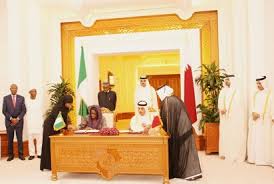
Nigeria, today signed Bilateral Air Services Agreement (BASA) with the State of Qatar in Doha. The pact will pave way for direct flights between major cities of both countries. Both countries also signed an agreement to avoid double taxation and tax evasion on the sideline of President Muhammadu Buhari’s state visit to Qatar. A statement by the special adviser to President Muhammadu Buhair on media and publicity, Femi Adesina said that the minister of State for Aviation, Senator Hadi Sirika, representing President Muhammadu Buhari, signed the air services agreement on behalf of the country while Qatar’s Minister of Transportation and Communications, Jassim Bin Saif Alsulaiti, signed on behalf the Emir of Qatar, Sheikh Tamim Bin Hammad Al-Thani. The statement said that the agreement was signed in the presence of both leaders and is expected to operate on the principle of reciprocity by the designated airlines on behalf of the countries. It said that Minister of Finance, Mrs. Kemi Adeosun signed the agreement for the avoidance of double taxation and the prevention of fiscal evasion with respect to taxes income with her Qatari counterpart, Ali Shareef Al Emadi. “It is also expected that the agreement on bilateral air service will promote trade, commerce and tourism between the two countries just as Nigeria has also commenced discussions on partnerships towards establishing a national airline for Nigeria. The agreement on the avoidance of double taxation which had been negotiated since February 2015 will no doubt bring in more investments and businesses between Qatar and Nigeria.” [myad]
Lawyers to former chief of Defense Staff (CDS), Air Chief Marshall Alex Badeh have written a petition against the Economic and Financial Crime Commission (EFCC) to the Minister of Justice and Attorney General of the Federation over the ordeals their client has been going through. The lawyers complained that the health of the former Defence Staff is deteriorating due to his continued detention by the EFCC. They also faulted the too stringent bail conditions being sought to ensure his freedom. The lawyers alleged that the EFCC might have been acting out a script by placing obstacles in the former CDS’ path to freedom, even when he has cooperated with the commission since the commencement of his interaction with them over alleged corrupt practices under his watch. The lawyers implied in the petition that the EFCC was out to humiliate the former Chief of Defence Staff for yet unclear reasons. According to the lawyers, the EFCC is aware of the fragile health condition of Badeh which has been worsened by his long detention. The lawyers expressed surprise at the sudden change story by EFCC chairman, Ibrahim Magu, who had earlier given his words that Chief Badeh will be released immediately. They faulted the application for the extension of his detention at a Magistrate Court in Lagos, where he was whisked to, immediately the EFCC refused to allow him to be coming from his house to attend sessions with them’ Sources in the EFCC confirmed that there are further plans to move Alex Badeh from Lagos to Portharcourt, even as there seems no immediate plans to release him. Members of his family are also said to be apprehensive, as their bread winner may not have been getting the deserved medical attention while in detention,calling on the EFCC to consider the man’ s contributions to the country and allow him to return home and face charges against him if any. [myad]
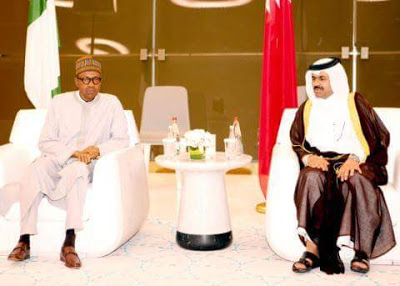
President Muhammadu Buhari has stressed the need for member states of Organisation of Petroleum Exporting Countries (OPEC) and non-OPEC members to cooperate towards finding a common ground to stabilise crude oil prices. Speaking today in Doha at a bilateral meeting with the Sheikh Tamim Bin Hammad Al-Thani, the Emir of the State of Qatar, President Buhari described the current market situation in the industry as “totally unacceptable.” The prices have plummet by 70 per cent since mid-2014, “As members of OPEC and Gas Exporting Countries Forum (GECF), our relations in the areas of oil and gas, which our two nations heavily rely on, need to be enhanced and coordinated for the benefit of our people. “The current market situation in the oil industry is unsustainable and totally unacceptable. We must cooperate both within and outside our respective organisations to find a common ground to stabilize the market, which will be beneficial to our nations.” The President, on the second day of his state visit to Qatar, commended the existing cordial bilateral relations between both countries and invited prospective Qatari investors to take advantage of the abundant opportunities in Nigeria by investing in the key areas of energy, agriculture, real estate development, banking and finance. He assured prospective investors of government protection of their persons and investment, saying that in the course of his visit, the delegations from Nigeria and Qatar would formalise at least two bilateral agreements to boost economic cooperation between both countries. President Buhari considered the situation in the Middle East and commended the role Qatar is playing in resolving the present Syrian crisis, the Palestinian cause and efforts in reconstructing Gaza. “The conflicts in Yemen and Syria with their attendant humanitarian crisis need genuine international effort to solve. Nigeria as a peace loving country identifies with the State of Qatar in all her peace efforts in the world to end terrorist activities. “Nigeria is a victim of terrorism. It is with heavy heart that I stand before you and say activities of Boko Haram have led to loss of many lives and displacement of innocent people in our dear nation. “We, however, take pride to inform you that since our coming to power, Boko Haram has been systematically decimated and are in no position to cause serious threat to our development programs. “I wish to reiterate that Nigeria rejects violence and extremism in all their ramifications, and assure your Highness that we are with the State of Qatar in your efforts to fight terrorism and injustice in your region and in the world at large.” President Buhari also called for a lasting solution to the Israeli – Palestinian conflict, saying: “we in Nigeria, like the State of Qatar, favour a ‘Two State’ solution, with the State of Palestine living side by side with the State of Israel.
“I want to assure you that we will stand side by side with you, until our brothers and sisters in Palestine achieve their desired objectives. “Our support for various Security Council resolutions restoring and respecting 1967 boundaries with Jerusalem as capital of Palestine is firm and unshaken,” [myad]
In the case of the State and Rev. Chukwuemeka Kingsley Ezeugo, the Supreme Court a few days ago, upheld the rulings of the lower courts and ruled that the bearded, self-styled “little god”, “Jesus Christ of our time”, and founder of the Lagos-based Christian Praying Assembly (CPA), deserves to be hanged, for enacting a form of horror movie which resulted in the death in 2006 of Ms Ann Uzoh. The simple import of that ruling is that no man is a king before the law, and that the law is no respecter of persons including those who describe themselves as anointed men of God, and who on that account use religion to commit atrocities. But the most bizarre development since that ruling last Friday has been the intervention of a group called the Ndigbo Cultural Society of Nigeria (NCSN). The group says Nigeria has nothing to gain by shedding Rev. King’s blood and that President Muhammadu Buhari should grant the convicted murderer state pardon because “he is still a spiritual leader to many Nigerians.” The Ndigbo Society is indirectly saying that Rev King’s life should be spared because he is Igbo, and a religious leader. This is nothing but arrant nonsense. It makes us wonder what happens to people’s heads once they are in the grips of the disease of ethnicism. Has anyone told the Ndigbo Cultural Society that Rev. King’s victim, Ann Uzoh, was also Igbo? Or is Emeka Ezeugo’s Igbo life more important than that of Ann Uzoh? Or the lives of the others: Jessica Nwene, Kosiso Ezenwankwo, Chiejina Olisa, Chizoba Onuora, Vivian and Uche? We keep encountering this kind of absurdity. Crime is excused on the grounds of ethnic affiliation. My-brother-can-do-no-wrong-once-we-are-from-the-same-village: and it is this that has created a web of conspiracy whenever and wherever the ethnic game is at play, and that conspiracy is against the state and decent values of national togetherness. But we thank God for the courts of law, which in this case have brought the Rev. King saga to a closure. And please note that if the victim in this case had been of non-Igbo extraction, perhaps the Ndigbo Cultural Society would have been more strident with their appeal. They’d do well to keep quiet and not further insult the memory of the dead. They are right on one score though: that Rev King is still a religious leader to many Nigerians. It is one of those funny things about the scope and spread of superstition and religious fanaticism in Nigeria that there are indeed persons who worship their fellow human beings and turn them into their gods. It is precisely this same form of delusion that led to the crime that is taking Rev. King to the gallows in the first place. It is why he still has followers who believe that the Supreme Court ruling is a joke and that “Rev. King is superhuman, he can’t be killed by mere mortals”. Members of the Christian Praying Assembly are still reportedly awaiting the return of the man they call “His Holiness”. One Sunny, acting as their spokesman, says: “His Holiness cannot be killed. He is more than a mere human being and cannot be killed by any mortal…He will come back home at the appointed time and by then, the people behind this whole thing will bury their heads in shame…” These characters imagine that the people who will bury their heads in shame include the Justices of the Supreme Court? Apart from ethnicity, religion is another major source of crisis in Nigeria. It turns people’s heads, turns them into zombies and forces them, in many cases to worship man instead of God. Across the country, every day, there are millions who have turned religious leaders including herbalists into “Little gods.” Among Christians and Muslims, widespread confusion over the interpretation of the doctrine has created such complexity that continues to lead people astray. Poverty and the scarcity of opportunities continue to drive people to places of imagined salvation. The pastors promise miracles: they not only preach the gospel, they claim all kinds of powers including the power to make the blind see, to make the lame walk, and to help the unmarried find husbands and wives. Some of the pastors add a touch of the melodramatic to it: they give out clothes, cars, houses, and free food. But it is the people’s money being recycled and given back as token. The lifestyle of many of the religious leaders would make the Pope cringe. They preach salvation and divine protection, for example, but they live as if they are afraid of their own shadows. The poor members of the congregation relate with the anointed man of God from a distance because they are not rich enough to get close to him, but from the pittance that they manage to make, they contribute tithes unfailingly, to make the man of God and his family live it up and boast that their “Lord is Good!” The more stylish a religious leader is, the more popular. And some have even gone from being stylish to being practically unusual. There are churches where the Pastors slap, beat, and kick members. In some other places of worship, the Pastors are reportedly romantically involved with female members of the congregation, including married women. There is freedom of religion and freedom of worship and association and so, anyone can call himself a Reverend, a Prophet, a Spiritualist or God’s Deputy, erect a tent and turn himself into some people’s God. Rev King actually lived like that, like a mini-God. He built a large cult-like followership and exercised near-absolute powers over his besotted followers. Ann Uzoh was one of his victims. Sometime, in 2006, he had set her and six other members of the church ablaze for allegedly committing fornication, witchcraft and other offences. He sat in judgment in his own court and issued a death sentence. Ann and other ladies in church were Rev. King’s sex slaves, and according to one account it was the rivalry between Ann and another sex slave that led to the dousing of Ann and others with petrol, their being set ablaze, and Ann’s death. Ann Uzoh is better remembered as one of those promising young Nigerians whose life was derailed by religious hypnotism. Young ladies who are still today selling themselves to churches and pastors should be reminded of her story and there is no better person to offer a reminder than the father of Ann Uzoh, Mr. Raphael Uzoh. In 2006, the Nigerian Tribune (August 9, 2006) interviewed him and reported, in part, as follows: “The decision of Miss Uzoh, a Higher National Diploma graduate in Accountancy from the Institute of Management and Technology, Enugu State, to pack out of her parents’ house at the period without telling anybody, was said to have shocked everyone. According to the father of the deceased, during a chat with Mid-week Tribune, when he could no longer withstand the pressure being mounted on him by his daughters suitors who had sought her hands in marriage, shortly before she eloped with Rev King, he began the search for her until he was informed by some concerned family members that she had been sighted at the Christian Prayer Assembly belonging to the suspect. “To my surprise, when I got there, based on the instruction of Rev. King to my daughter, I was told by some insiders that my daughter had changed her name to Ann King. And she told me that I was not her father, that she had started bearing Ann King, said Mr. Raphael Uzoh. He stated that despite this strange behaviour by his daughter and her unusual and sudden rudeness to him, he did not relent in trying to re-assure her that she was still welcome at home if she could still change her mind and come to her senses. Rather, he expressed regrets that his late daughter who was his first child remained adamant and unrepentant. “However, the bereaved father, in tears, noted that sometime on Saturday, July 22, 2006 at the church’s premises, the accused person was said to have called the deceased and some other five members of the church into his residence and leveled some accusations against the worshippers who saw him as a little god. Mr Uzoh, now left with two children, said he learnt that once anyone was summoned by the pastor, that person, out of fear, must kneel down before the pastor, no matter how old he or she might be. There and then, the suspect was said to have passed death sentence on the girls for perceived fornication and witchcraft. He ordered for fuel and it was brought to him by one Kelechi because the first gallon of fuel brought by the accused person to sprinkle on the unfortunate worshippers was not enough, he recalled.” That is not the end of the story. Mr. Raphael Uzoh, while trying to rescue his daughter, was ordered to join Rev. King’s church. He did and was given the assignment of lacing Rev. King’s shoes (!). Rev. King definitely lived like a king, and here are some of his followers still insisting that the hangman cannot kill him, even after the Supreme Court had spoken. It won’t be long before they start claiming that he will resurrect! But what on earth could have turned a graduate of Accountancy into a willing sex slave in a church? Unemployment? We need to worry seriously and do something about the growing hordes of young men and women who have turned themselves into slaves of churches, other religious groups, pastors and clerics. Nigeria is losing too much talent and national productivity time to places of religious worship. It is sad that political leaders also patronize these haunts and their managers. Nigeria has become one big theatre of religious ritual. The name of God is the most abused name in Nigeria today. The resultant tragedy and hypocrisy are astonishing. For now, we can only hope, that all the religious leaders who use religion as a vehicle of abuse will learn the appropriate lessons from the saga of Rev. Chukwuemeka Kingsley Ezeugo a.k.a. Rev. King. And I am not in any way saying all clerics are bad; but that the likes of Rev. King bring the calling to disrepute and sadly, their population seems to be increasing. Rev King has had his day in court. The law has taken its course. Now, let justice be done according to the existing law, even if the heavens fall, quake or wail.
“I have hope in the youths because I see inventors, problem solvers and leaders that will one day make Nigeria greater than my government will make it.” These were the words of President Muhammadu Buhari when he spoke today at the 25th convocation ceremony of the Federal University of Technology, Minna, Niger State.
In a speech read by the Director of Science and Technology of the Federal Ministry of Education, Sunday Gandy Chega, President Buhari said: “No doubt, this gathering signifies hope and promise because our youth – vibrant, energetic and creative citizens – are the greatest resources and pillar of this country. Today may be rough and tough, but tomorrow will be better.” The President enjoined the youths to look beyond the certificates they have acquired, adding: “students should get the grades they deserve when they earn it, and students should not get the grades they do not deserve when they have not earned it.” He said that changing the country is not a magic wand for him alone as President, but for all Nigerians, saying “we all have to work for the desired change. “As you all know, our administration came to power on the promise of change. Changing our society from the path of corruption in high and low places is a task we all must be committed to. “It is not a magic wand that a single leader alone can use; we all have to believe in it and we have to work for it. Indeed, inculcating the virtues of honour, integrity and discipline are essentially the duty of the family and educational institutions.” [myad]
The President of the Senate, Dr. Abubakar Bukola Saraki has complained that he inherited what he called rickety cars from his predecessor, giving rise to the purchase of more vehicles for his office.
In a statement by his Media Adviser, Yusuf Olaniyonu, drew attention to the fact that the official and spare cars that the Senate President inherited and has been using are old and have been malfunctioning.
According to the statement, there were instances like the day Dr. Saraki visited Keffi for the marriage of the daughter of Senator Abdullahi Adamu and another day at the Presidential wing of the Nnamdi Azikiwe International Airport that the spare vehicle broke down.
“In both instances, the spare vehicle did not return home with the convoy. The same vehicle had malfunctioned at the Presidential Villa and National Mosque on different occasions. It is for this reason that the Senate President approved that instead of providing two vehicles for him as he is entitled, only one should be bought to replace the official vehicle while the old official car should be converted to spare car. “Also, if the National Assembly management chose to provide operational vehicles for Security Agencies, should that be presented as if they are personal or official vehicles meant for the use of Dr. Saraki? These are vehicles that cannot be used for other purposes and by other people. The Senate President also have no control over the security vehicles. “It is also surprising that despite the fact that the online media in the same story reported that the order for the vehicle was made in December, it chose to calculate the value of the vehicles based on current exchange rate of the Naira to the dollar. This is obviously a mischief aimed at making the figure look huge and justify the screaming headline.” [myad]
The World Health Organization (WHO) Offices for Africa and the Eastern Mediterranean in conjunction with the African Union Commission, has hosted a landmark Ministerial Conference on Immunization in Africa in Addis Ababa, Ethiopia, where participants lamented the high rate of child death in Africa as a result of lack of immunization.
The conference which was attended by ministers of health and other line minister’s countries committed, themselves to keep immunization at the forefront of efforts to reduce child mortality, morbidity and disability even as they signed a declaration to promote the use of vaccines to protect people of all ages against vaccine-preventable diseases and to close the immunization gap by 2020. It was the first-ever ministerial-level gathering with a singular focus on ensuring that children across the continent can get access to life-saving vaccines. Minister of Health for Ethiopia, Dr. Kesetebirhan Admasu said at the conference: “our children are our most precious resource, yet one in five fail to receive all the immunizations they need to survive and thrive, leaving millions vulnerable to preventable disease.
“This is not acceptable. African children’s lives matter. We must work together to ensure the commitments we make in Addis Ababa translate into results.” A new report issued at the conference paints a mixed picture on vaccine access, delivery systems and immunization equity in Africa. Routine immunization coverage has increased considerably across Africa since 2000, measles deaths declined by 86 per cent between 2000 and 2014, and the introduction of new vaccines has been a major success. However, one in five children still do not receive all of the most basic vaccines they need, three critical diseases — measles, rubella and neonatal tetanus — remain endemic, and many countries have fragile health systems that leave immunization programs vulnerable to shocks. In June 2016, Hailemariam Desalegn, the Prime Minister of Ethiopia, the host country for the conference, will present the Addis Ababa Declaration on Immunization to the African Heads of States at the 26th Summit of the African Union. Support from heads of state will further empower countries to increase efforts to mobilize resources for national immunization programs. The declaration commits countries to increasing domestic financial investments in order to deliver routine immunizations and roll out new vaccines. The economic benefits of immunization are proven to greatly outweigh the costs, with recent research showing the benefits of preventing illness and lost productivity to be 16 times greater than the required investment in vaccines. “We all agree that vaccines are one of the most cost-effective solutions in global health. Investing in immunization programs will enable African countries to see an outstanding economic benefit,” said Dr. Ngozi Okonjo-Iweala, Chair of the Gavi Board and former Finance Minister of Nigeria.
“If we can ensure that all African children can access life-saving vaccines, no matter where they are born, we will have a golden opportunity to create a more prosperous future for communities across our continent.” The Ministerial Conference convened hundreds of political leaders, technical experts and advocates from across Africa and globally. The conference offered African policymakers and advocates a platform to celebrate progress toward expanding immunization coverage; discuss strategies for tackling the biggest challenges facing vaccine efforts; foster country ownership for sustainable financing for immunization; and advocate for greater engagement with all stakeholders to ensure sustainable demand for immunization. “The Ministerial Conference achieved its goal of uniting leaders from across Africa behind the single goal of reaching every child with the vaccines they need,” said Dr. Matshidiso Moeti, WHO Regional Director for Africa. “Now, we will carry this momentum forward from Addis Ababa, stay accountable to our commitments and close the immunization gap once and for all.” “With the right mix of political will, financial resources and technical acumen, Africa is positioned to make an incredible leap in immunization coverage,” said Dr. Ala Alwan, WHO Regional Director for the Eastern Mediterranean. “Today is a first step in a journey that will take us to the last mile to reach every child with the vaccines they need.” [myad]
We use cookies on our website to give you the most relevant experience by remembering your preferences and repeat visits. By clicking “Accept”, you consent to the use of ALL the cookies.
This website uses cookies to improve your experience while you navigate through the website. Out of these, the cookies that are categorized as necessary are stored on your browser as they are essential for the working of basic functionalities of the website. We also use third-party cookies that help us analyze and understand how you use this website. These cookies will be stored in your browser only with your consent. You also have the option to opt-out of these cookies. But opting out of some of these cookies may affect your browsing experience.
Necessary cookies are absolutely essential for the website to function properly. This category only includes cookies that ensures basic functionalities and security features of the website. These cookies do not store any personal information.
Any cookies that may not be particularly necessary for the website to function and is used specifically to collect user personal data via analytics, ads, other embedded contents are termed as non-necessary cookies. It is mandatory to procure user consent prior to running these cookies on your website.



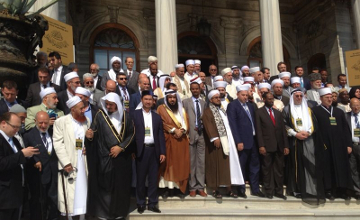 President Muhammadu Buhari has appealed to Nigerians, especially the religious leaders in the country to pray for him and for his government to attain the culture of good governance in the country.






Rev. King, The Law And King’s Supporters, By Reuben Abati
But the most bizarre development since that ruling last Friday has been the intervention of a group called the Ndigbo Cultural Society of Nigeria (NCSN). The group says Nigeria has nothing to gain by shedding Rev. King’s blood and that President Muhammadu Buhari should grant the convicted murderer state pardon because “he is still a spiritual leader to many Nigerians.” The Ndigbo Society is indirectly saying that Rev King’s life should be spared because he is Igbo, and a religious leader. This is nothing but arrant nonsense. It makes us wonder what happens to people’s heads once they are in the grips of the disease of ethnicism. Has anyone told the Ndigbo Cultural Society that Rev. King’s victim, Ann Uzoh, was also Igbo? Or is Emeka Ezeugo’s Igbo life more important than that of Ann Uzoh? Or the lives of the others: Jessica Nwene, Kosiso Ezenwankwo, Chiejina Olisa, Chizoba Onuora, Vivian and Uche?
We keep encountering this kind of absurdity. Crime is excused on the grounds of ethnic affiliation. My-brother-can-do-no-wrong-once-we-are-from-the-same-village: and it is this that has created a web of conspiracy whenever and wherever the ethnic game is at play, and that conspiracy is against the state and decent values of national togetherness. But we thank God for the courts of law, which in this case have brought the Rev. King saga to a closure. And please note that if the victim in this case had been of non-Igbo extraction, perhaps the Ndigbo Cultural Society would have been more strident with their appeal. They’d do well to keep quiet and not further insult the memory of the dead.
They are right on one score though: that Rev King is still a religious leader to many Nigerians. It is one of those funny things about the scope and spread of superstition and religious fanaticism in Nigeria that there are indeed persons who worship their fellow human beings and turn them into their gods. It is precisely this same form of delusion that led to the crime that is taking Rev. King to the gallows in the first place.
It is why he still has followers who believe that the Supreme Court ruling is a joke and that “Rev. King is superhuman, he can’t be killed by mere mortals”. Members of the Christian Praying Assembly are still reportedly awaiting the return of the man they call “His Holiness”.
One Sunny, acting as their spokesman, says: “His Holiness cannot be killed. He is more than a mere human being and cannot be killed by any mortal…He will come back home at the appointed time and by then, the people behind this whole thing will bury their heads in shame…”
These characters imagine that the people who will bury their heads in shame include the Justices of the Supreme Court?
Apart from ethnicity, religion is another major source of crisis in Nigeria. It turns people’s heads, turns them into zombies and forces them, in many cases to worship man instead of God. Across the country, every day, there are millions who have turned religious leaders including herbalists into “Little gods.”
Among Christians and Muslims, widespread confusion over the interpretation of the doctrine has created such complexity that continues to lead people astray. Poverty and the scarcity of opportunities continue to drive people to places of imagined salvation. The pastors promise miracles: they not only preach the gospel, they claim all kinds of powers including the power to make the blind see, to make the lame walk, and to help the unmarried find husbands and wives. Some of the pastors add a touch of the melodramatic to it: they give out clothes, cars, houses, and free food.
But it is the people’s money being recycled and given back as token. The lifestyle of many of the religious leaders would make the Pope cringe. They preach salvation and divine protection, for example, but they live as if they are afraid of their own shadows. The poor members of the congregation relate with the anointed man of God from a distance because they are not rich enough to get close to him, but from the pittance that they manage to make, they contribute tithes unfailingly, to make the man of God and his family live it up and boast that their “Lord is Good!”
The more stylish a religious leader is, the more popular. And some have even gone from being stylish to being practically unusual. There are churches where the Pastors slap, beat, and kick members. In some other places of worship, the Pastors are reportedly romantically involved with female members of the congregation, including married women. There is freedom of religion and freedom of worship and association and so, anyone can call himself a Reverend, a Prophet, a Spiritualist or God’s Deputy, erect a tent and turn himself into some people’s God. Rev King actually lived like that, like a mini-God. He built a large cult-like followership and exercised near-absolute powers over his besotted followers. Ann Uzoh was one of his victims. Sometime, in 2006, he had set her and six other members of the church ablaze for allegedly committing fornication, witchcraft and other offences. He sat in judgment in his own court and issued a death sentence. Ann and other ladies in church were Rev. King’s sex slaves, and according to one account it was the rivalry between Ann and another sex slave that led to the dousing of Ann and others with petrol, their being set ablaze, and Ann’s death.
Ann Uzoh is better remembered as one of those promising young Nigerians whose life was derailed by religious hypnotism. Young ladies who are still today selling themselves to churches and pastors should be reminded of her story and there is no better person to offer a reminder than the father of Ann Uzoh, Mr. Raphael Uzoh. In 2006, the Nigerian Tribune (August 9, 2006) interviewed him and reported, in part, as follows:
“The decision of Miss Uzoh, a Higher National Diploma graduate in Accountancy from the Institute of Management and Technology, Enugu State, to pack out of her parents’ house at the period without telling anybody, was said to have shocked everyone. According to the father of the deceased, during a chat with Mid-week Tribune, when he could no longer withstand the pressure being mounted on him by his daughters suitors who had sought her hands in marriage, shortly before she eloped with Rev King, he began the search for her until he was informed by some concerned family members that she had been sighted at the Christian Prayer Assembly belonging to the suspect.
“To my surprise, when I got there, based on the instruction of Rev. King to my daughter, I was told by some insiders that my daughter had changed her name to Ann King. And she told me that I was not her father, that she had started bearing Ann King, said Mr. Raphael Uzoh. He stated that despite this strange behaviour by his daughter and her unusual and sudden rudeness to him, he did not relent in trying to re-assure her that she was still welcome at home if she could still change her mind and come to her senses. Rather, he expressed regrets that his late daughter who was his first child remained adamant and unrepentant.
“However, the bereaved father, in tears, noted that sometime on Saturday, July 22, 2006 at the church’s premises, the accused person was said to have called the deceased and some other five members of the church into his residence and leveled some accusations against the worshippers who saw him as a little god. Mr Uzoh, now left with two children, said he learnt that once anyone was summoned by the pastor, that person, out of fear, must kneel down before the pastor, no matter how old he or she might be. There and then, the suspect was said to have passed death sentence on the girls for perceived fornication and witchcraft. He ordered for fuel and it was brought to him by one Kelechi because the first gallon of fuel brought by the accused person to sprinkle on the unfortunate worshippers was not enough, he recalled.”
That is not the end of the story. Mr. Raphael Uzoh, while trying to rescue his daughter, was ordered to join Rev. King’s church. He did and was given the assignment of lacing Rev. King’s shoes (!). Rev. King definitely lived like a king, and here are some of his followers still insisting that the hangman cannot kill him, even after the Supreme Court had spoken. It won’t be long before they start claiming that he will resurrect! But what on earth could have turned a graduate of Accountancy into a willing sex slave in a church? Unemployment? We need to worry seriously and do something about the growing hordes of young men and women who have turned themselves into slaves of churches, other religious groups, pastors and clerics. Nigeria is losing too much talent and national productivity time to places of religious worship. It is sad that political leaders also patronize these haunts and their managers. Nigeria has become one big theatre of religious ritual. The name of God is the most abused name in Nigeria today. The resultant tragedy and hypocrisy are astonishing.
For now, we can only hope, that all the religious leaders who use religion as a vehicle of abuse will learn the appropriate lessons from the saga of Rev. Chukwuemeka Kingsley Ezeugo a.k.a. Rev. King. And I am not in any way saying all clerics are bad; but that the likes of Rev. King bring the calling to disrepute and sadly, their population seems to be increasing. Rev King has had his day in court. The law has taken its course. Now, let justice be done according to the existing law, even if the heavens fall, quake or wail.