Anita Sullivan, a 36-year old woman from Michigan has made a crashing entrance into the Guinness Book of World Records at the Harper University Hospital, by giving birth to her 14th child, all born from different fathers.
According to the internationally recognized authority on the cataloging and verification of world records, Anita Sullivan has just become the first woman in recorded history to conceive children with more than thirteen different men.
Acknowledging her feat, the woman said: “I’m extremely proud to have broken a World Record. My mother always told me that I was lazy and worthless, and that I would never accomplish anything in my life.
“Now, I’ve shown everyone that she was wrong, and that I can even be the best in the world when I put my mind to something. In fact, I’ve just accomplished something that no one had done before!”
Anita Sullivan says she’s been unlucky with relationships in the past, but she believes that this time she may have found the man of her life.
She said: “I’m good at having babies, but I’m really awful when it comes to picking the fathers of my children. This time, however, I think I’ve learned from my past mistakes. Ramón isn’t like all the jerks I’ve dated before. We’ve been together for almost a year and a half, and I really believe it could work between us.”
After their meeting with Ms. Sullivan, the representatives of Guinness opened a second investigation concerning the record for the number of child support pensions received by one person.
The Detroit native is already the beneficiary of pensions paid by 11 different men, and is implicated in two other custody cases, which should proceed before the family court over the next two months.
The investigation should be over by the month of March 2016, and Guinness will then be able to tell if Ms. Sullivan holds a second World Record or not. [myad]
Fourteen members of the Kogi State House of Assembly loyal to the embattled Speaker, Honourable Momoh Jimoh Lawal have issued an impeachment notice to the state deputy governor, Mr. Simon Achuba who was sworn-in barely two weeks ago. The 14 members who conducted the House plenary sitting in Abuja on Friday, accused the deputy governor of causing disharmony and security threat in the state. Achuba was given 14 days to respond to the notice in accordance with Section 188 of 1999 Constitution as amended. At the plenary presided over by Speaker Lawal, the House accused the deputy governor of causing chaos among the lawmakers in the state and setting the legislature against the executive arm of government, barely a week after being confirmed and sworn in. The notice, entitled: “Impeachable Offences Committed By His Excellency, the Deputy Governor of Kogi State, Hon Simeon Achuba,” was signed by all the members that were present at the plenary in Abuja. The embattled deputy governor was accused of “undue” interference in the affairs of the state House of Assembly thereby causing friction between the executive and the legislative arms of government in the state. They also alleged that the deputy governor was instigating members of the assembly to “forcefully and unlawfully” change the leadership of the House without recourse to the rules of the House. The notice accused the deputy governor of instigating five members of the House to sit despite the proclamation by the Speaker of the Kogi State House of Assembly adjourning to a later date. They insisted that the deputy governor was performing legislative function by swearing in the “purported Speaker of the Kogi State House of Assembly in his office, “contrary to the extant provisions of the House Rules and in flagrant abuse of the tenets of democracy and separation of powers as enshrined in the 1999 Constitution.” The deputy governor was accused of generally causing disaffection by inciting certain sections of the state against another, thereby causing disharmony and security threat in the state. [myad]
Arik Air has confirmed the death of a 39-year old pregnant woman on board its flight from Port Harcourt to Lagos.
The deceased, identified as Mrs. Ijeoma Nwokedi, was confirmed dead today on arrival by the medical personnel at the Murtala Muhammed Airport Domestic Terminal One, Lagos.
In a statement by its Communications Manager, Mr. Ola Adebanji, Arik Air said: “a female passenger on board Arik Air’s Port Harcourt-Lagos flight was confirmed dead by medical personnel on arrival this morning at the Murtala Muhammed Airport Domestic Terminal One, Lagos.
“The lady boarded the flight from Port Harcourt in company of her husband and cousin. The cause of death is yet to be ascertained”, the statement said.
It would be recalled that on February 17, another unidentified female passenger died in one of the toilets of the Murtala Mohammed International Airport. [myad]
A nephew of former President Goodluck Jonathan, Mr. Samuel Oki was today found dead in a creek in Otuoke community of Ogbia Local Government Area of Bayelsa State.
The 35-year-old was reportedly kidnapped on Wednesday alongside the 72-year-old foster father of Jonathan, Chief Inengite Nitabai.
It was learnt that some fishermen from the former President’s community in Otuoke, discovered Oki’s decomposing body floating on Otuoke River while fishing, two days after the abduction.
Some indigenes of the community said though many were not aware of Oki’s whereabouts during the abduction of Nitabai, the discovery of his body in the creek has, however, heightened their fears of Nitabai’s safety.
Some community members claimed that the sound of gunshot heard during the abduction of the septuagenarian might have been targeted at the deceased.
A community source, who spoke on the condition of anonymity, said: “We are worried about the safety of our uncle, Chief Inengite Nitabai. The men that abducted them have killed Oki and we pray they don’t touch our uncle.”
The deceased, community sources said, was always seen in the company of Nitabai.
The villagers, who were reportedly seen discussing the sad incident, alleged that the young man (Oki) tried to resist the kidnappers.
According to them, divers and local fishermen had recovered the body and anchored it by the riverside to prevent the body from being washed away.
This is the second time Nitabai is being kidnapped. He was first kidnapped On February 28, 2014 and later freed by security forces on March 10, 2014. [myad]
Senior Special Assistant on media and publicity to former President Goodluck Jonathan, Dr. Doyin Okupe has listed impunity, presumptive reasoning, restrictive consultative process as the ‘diseases’ killing the Peoples Democratic Party (PDP). Reacting to the emergence of Senator Ali Modu Sheriff as national chairman of the party, Dr. Okupe said that with the crisis rocking the PDP, the emergence of Sheriff might deplete the membership base of the opposition party. Writing on his Facebook page, the former Presidential spokesman said that with the emergence of Modu Sheriff as the national chairman of the PDP, the opposition party risked total disintegration. He described Modu Sheriff as his long-standing political associate, but that the former governor lacked the capability to hold the party together. Dr. Okupe said that it is unfortunate that the PDP is in the habit of making grave errors in its choice of leadership. He said with the emergence of Sheriff as the national chairman of the PDP, the opposition party risked total disintegration, adding however that he would not leave the party as he would want to see how it would all end. “Some of us have vowed not to leave the party (PDP). We still will not leave the party. We will continue to engage all who care to listen and seek help from everyone ready to revive this severely challenged sickened giant. “For a morose political party, thanks to the overwhelming and effective propaganda machinery of the party in power, this may yet be the mortal wound that may cause the eventual depletion of its long perplexed following. “But if it is the divine will of God that our present masters must kill the PDP, then by the grace of God, we shall yet tarry at the graveside to bid it farewell. “The capability of our party, the PDP, and its leadership to make grave errors in judgment is legendary. What is intriguing is that even when the party is out of power, that tendency seems not to reduce. “Alhaji Sheriff is a long-standing political associate of mine and a very astute politician of, perhaps, a sublime class. But for the post of the national chairman of the PDP, he is a wrong candidate and (he is) also coming in at a wrong time.” Dr. Okupe noted that the PDP leaders who supported the emergence of Sheriff hinged their argument on the fact that, being a wealthy politician, he (Sheriff) would be favourably disposed to fund the activities of the party but that other leaders within the party felt that Sheriff would compound the problems of the party and bring ‘a crushing weight of burden capable of fatally destroying the few strands of moral fibres in the party. [myad]
Leo Stan Ekeh, Icon of Hope is 60! And for his family, friends and associates; words cannot express their love, respect and admiration for Nigeria’s quintessential businessman.
He is an inspirational motto, lesson as well as a reminder to all that leadership is not the rare gift reserved to a chosen few and charismatic unique individuals, but a potential that lies within all and that we are all called to awaken by finding our passion and living a purposeful life.
A firm believer in his goal, Leo Stan has pushed himself and those around him beyond what might be considered comfort zone and rational.
Born to Late Chief and Mrs. Ebenezer Ekeh on February 22, 1956, in Ubomiri, Mbaitoli LGA, Imo State; Leo Stan optimises the “can-do-attitude” which has enabled him excite and conquer all the industries he bestrides.
Armed with first class education from some of the world’s leading institutions, Leo Stan is living a life of many firsts.
He started as a very small entrepreneur but today, the Zinox group is the largest ICT group in sub-Saharan Africa.
The group is into ICT products manufacturing, distribution, upscale core technology solutions and support and more.
But let’s start from the first company: Task System.
It all started when he came back to Nigeria and had to create a bit of disruption in the system because the economy was an IBM-driven economy.
So Leo Stan, came with Apple Macintosh.
He launched Apple in the country about 24 years ago and computerised all the media and multi-media houses in the country, including the book publishing houses nationwide.
After this first disruptive move, he moved to offer solutions to the oil and gas sector of the economy and it was at this point that Steve Job enhanced the Graphics interface of Apple with User interface which limited it initially from being used in the corporate sector as an alternative to IBM, and that gave Leo Stan the impetus to expand into the rare corporate sector.
His first company, Task System delivered solution to the first 20 largest multinationals in the country in the 80s, 90s and till today.
That is in the oil, banking and manufacturing sector. It’s a highly integrated solution company.
And in order to segment the market, he launched the first ICT distribution company in West Africa – Technology Distributions, which today is the largest ICT distributor in sub-Saharan Africa and controls 70 per cent of the Nigerian ICT distribution market.
The icing on the cake was the launch of Zinox in 2001 to create digital identity for Nigeria.
It was the he first ever internationally certified branded computers OEM in West Africa, the first computer company in the world to incorporate the Naira sign on its keyboard and the first metropolitan Wimax solution in Nigeria.
But within Zinox, there are digital Internet hub called Zinox Telecom which is streaming online content using the group’s robust broadband infrastructure to about 226 tertiary schools and over 1,000 secondary institutions and other strategic corporate organisations in the country.
He also caused the biometric digital revolution in Nigeria with INEC voter’s registration in 2006 when foreign contractors could not deliver after months of promises.
Again he supervised the largest single ICT digital rollout in Africa with INEC in 2010 through his company Zinox Technologies that won the over N27b contract.
A true inspiration for many to follow and a devout Christian and family man; Leo Stan is married to Chioma and they have five beautiful children.
He is also a philanthropist of repute who gives out nearly half of his earnings yearly for the betterment of mankind and in line with his covenant with his God.
He encouraged Apple Computers, Hewlett Packard, Compaq, Microsoft, Lenovo etc. come into Nigeria to establish offices because of his crusade for Digital emancipation of Africans.
Leo Stan has served the Federal government in several strategic Presidential Committees including the most strategic seven-man Committee under President Obasanjo administration – “The Nigeria Thinkers”.
This was the strategy and tact committee headed by the President that visualized the Nigeria global road map and possible dominance in select sectors in Africa and the world
Leo Stan over a hundred awards including; Icon of Hope Award by President Olusegun Obasanjo on the 1st of October 2002 for his exemplary Digital vision and as a Model for modern Nigeria.
He was awarded Order of the Federal Republic (OFR) for his incisive digital Entrepreneurship; and pioneer ICT Personality of the year by Nigeria Computer Society – the Umbrella body of all Computer Associations in Nigeria.
A fellow of the Nigeria Computer Society and distinguished Fellow of the Nigeria Law School, Leo Stan has over six Doctor of Science Degrees (Honoris causa) from FUTO, UNIJOS, FUAM, IMSU etc.
A most sought after personality in both local and international ICT events, Leo Stan is Microsoft Inc. Global Adviser and mentor to several start-ups in Nigeria.
Not resting on his achievements, Leo Stan has an ambition to build the first and largest 360 degrees ICT conglomerate in Africa and with his Group investment in Xputer, a 21st century Software company.
Today, he can claim to be there having taken leadership in ICT Solutions (Task Systems Ltd.), ICT Distribution (Technology Distributions), Digital Hardware manufacturing and Hybrid ICT solutions, Retail (Yudala by relationship), Enterprise Digital Internet Hub (Zinox Telecoms Ltd, Nigeria and Ashour Corporation, Dubai) just to mention a few.
As he marks his birthday, we pray God to continue to grant him good health, wisdom and many more years so that mankind will continue to draw from his wealth of experience, forthrightness and exceptional leadership. [myad]
Ahead of the Saturday March 19, FCT Area Council Elections, the Independent National Electoral Commission (INEC), has published and issued a list of thirty candidates jostling for the available six Chairmanship seats. According to a document signed by the Secretary to the Commission, Mrs. Augusta C. Ogakwu, thirteen Political Parties will field candidates to contest the Chairmanship seats in: Abaji; Abuja Municipal Area Council (AMAC); Bwari; Gwagwalada; Kuje; and Kwali Area Councils. The list of contestants and their parties are as follows:
ABAJI Contestant Party ·Abdulrahaman Ajiya – APC ·Yahaya Garba – PDP (AMAC) ·Yusuf Abdulkarim S. – A ·Vernimbe Gloria – AA ·Augustine Nnaemeka Ezechukwu – ACD ·Abdullahi Adamu – APC ·Joseph Mekwunye – APGA ·Francis Udoka Okpor – CPP ·Comfort B. Effiom – DPC ·Gold Aimuamwenrha – DPP ·Iber Stephen Shimakaha – MPPP ·Kura Bitrus Tanko – PDP ·Uzeh Taiye Sarah Odion – PPA ·Barry Avotu Johnson – SDP ·Nwosu Ozoemelom Kenneth – UPP Bwari ·Wada Abdul – AA ·Musa Dikko – APC ·Keneth Igbekele Olabamiji – CPP ·Andrew Samuel Gwani Igu – PDP Gwagwalada ·Abubakar Jibrin Giri – APC ·Danze Mustapha Adams – APGA ·Sarwuan Fater Ephraim – DPC · Abdullahi Yunusa Umar – PDP Kuje ·Abdullahi D. Galadima – APC ·Haruna Etsu Iliya – APGA ·Oyekan Abdulazeez – DPC ·Ishaku Tete Shaban – PDP Kwali ·Sani Amako Yewuli – A ·Hon. Joseph K. Shazin – APC ·Daniel Ibrahim – PDP Meanwhile, the Independent National Electoral Commission (INEC) will tomorrow, Saturday, 20th February conduct twenty two (22) of the Appeal Court-ordered re-run elections across eight (8) states of the federation. This will mark the climax of the eighty court-ordered elections which the Commission is to conduct from January to March 2016. With preparations at top gear to ensure hitch-free mini general elections, INEC will conduct Senatorial, Federal Constituency and State Constituency elections across eight states, namely: Benue, Kaduna, Plateau, Niger, Nasarawa, Kogi, Taraba and Imo. A breakdown of these elections shows that the Commission will conduct four (4) Senatorial elections; Three (3) Federal Constituency elections; and Fifteen (15) State Constituency elections. The Senatorial elections will be conducted in Benue South Senatorial District; Imo North Senatorial District; Kogi Central Senatorial District and Kogi East Senatorial District. In a similar vein, the Federal Constituency elections will hold in Okene/Ogori Magongo Federal Constituency of Kogi State; Lafia/Obi Federal Constituency of Nasarawa State; and Kurmi/Sardauna Federal Constituency of Taraba state. The fifteen State Constituency elections will be conducted across Imo, Kaduna, Kogi, Plateau, Niger and Taraba states. They are: · Imo: Isiala Mbano, Oru East, and Owerri West; · Kaduna: Lere West; · Kogi: Ofu Sc, Ankpa 1, Idah, Dekina 1 and Dekina II (Okura); · Niger: Suleja; · Plateau: Langtang South, Pankshin South and Pankshin North; · Taraba: Ardo Kola and Mbamga. This is even as INEC in Federal Capital Territory (FCT) office is to present the Register of Voters to contestants and political parties fielding candidates for the Chairmanship and Councillorship elections tomorrow, Thursday, 18th February 2016. The Resident Electoral Commission (REC) for the FCT, Professor Jacob Jatau, who disclosed this yesterday to the Daily Bulletin said the presentation which would take place at 9.30 a.m. at the INEC FCT Conference Hall was in accordance with the Electoral Act 2010 (as amended). [myad]
On the 16th of February 2016, the leadership of the Peoples Democratic Party (PDP) adopted Senator Ali Modu Sheriff (aka SAS), a two-time ANPP Governor of Borno state, a former ANPP senator, the former Chairman of the All Peoples Congress (APC) Board of Trustees and the indisputable founder of Boko Haram as its Acting National Chairman. Modu-Sheriff is also the erstwhile godfather and sponsor of Governor Shettima Ali, the present APC Governor of Borno state (until they fell out), he is a man that has a very deep and profound relationship and association with Idris Deby, the President of Chad and he is a man whose son is married to the daughter of President Muhammadu Buhari. Many have argued that his allegiance is more to the Republic of Chad than it is to Nigeria, that he is an agent of the Chadian intelligence agencies and that he is a Chadian citizen who often flaunts his Chadian passport. I cannot confirm the veracity of these assertions but one thing that I know is that most of Modu Sheriff’s funding and stupendous wealth emanates primarily from the Republic of Chad and that that country is as much a home to him as is Nigeria. Yet it is not his connection with Chad that give me cause for concern. Rather it is his role in the establishment of Boko Haram. The truth is that appointing him as our Acting National Chairman is like appointing Jack the Ripper as the leader of the Conservative party in Victorian England. Kudos must go to the elders in the PDP Board of Trustees, a number of State Party Chairmen and a number of key individuals in the PDP Ministers Forum for taking a courageous and noble stand by rejecting and resisting the imposition of this abominable monstrosity. What Ali Modu Sheriff stands for and represents is utterly repugnant to every fiber of my being. Yet I have no objection to his being a member of the PDP simply because politics is a game of numbers. It is a game in which everyone, no matter how big or small, counts. If you want your party to grow and make progress you must accept the good, the bad and the ugly. To this end when he left the APC and joined the PDP sometime back, I was one of those that gladly welcomed him into our ranks and defended him in the public realm. This was at a time when others criticized the party for accepting him. There is however a world of difference between accepting him as one of the many leaders of the PDP and appointing him as the Acting National Chairman. Others may seek to justify such a course of action but I cannot, in good conscience, do so. To me it is a matter of principle. If we accept this then on what moral grounds did we condemn or oppose the APC or the APC-led Federal Government during the course of the last Presidential election? If we are comfortable with the likes of Ali Modu Sheriff leading us then on what basis did we criticize and oppose President Muhammadu Buhari for appearing to support Boko Haram when he said ”an attack on Boko Haram is an attack on the north”? If we insist on Ali Modu Sheriff being our National Chairman then we may as well go and apologize to the APC for all our past criticisms and condemnations and join them. On what basis can we accept as our National Chairman a man who established, encouraged, supported and nurtured an organisation that later metamorphosised into Boko Haram? This is a terrorist organisation whose ultimate objective is to turn Nigeria into an Islamic fundamentalist state by the use of terror and the force of arms? On what basis can we accept a man to lead us whose Commissioner of Religious Affairs when he was Governor of Borno state, one Alhaji Buji Foi, was the de facto operational commander of Boko Haram. The man was later murdered by those closest to him after investigations into who and how Boko Haram was founded commenced. On what basis can we accept as our National Chairman a man who helped to create an organisation that wishes to establish sharia as the norm in our country, repeal all our criminal and civil laws, ban all our civil liberties and human rights, proscribe the teaching of western education in our schools, turn our women into 6th century sex slaves and abrogate the secularity of our state. On what basis can we accept as our leader a man who supported a group that wishes to suspend our constitution, wipe out the Christian faith and the practice of moderate Islam in our country and create an evil ISIL-type empire in our nation? I really do wonder whether those that made this decision have lost all sense of rationality? I wonder whether they have lost their ability to see reason properly and to exercise their discretion in a logical, responsible and lucid manner? I wonder whether they have lost their fear of God? I wonder whether they have forgotten the evil that was visited on our people, and is still being visited on them, over the last seven years by Boko Haram? I wonder whether they know at whose instance it was that Mohammed Yusuf, the erstwhile leader of Boko Haram, was killed by our security forces whilst in police custody in 2009 just so that he wouldn’t live to tell the whole world who gave him the funds to set up his murderous cult? I wonder whether they have forgotten the terrible havoc that Boko Haram unleashed on our citizens? I wonder whether they have forgotten the tears, wailing and suffering of the bereaved. I wonder whether they have forgotten the slaughter of the innocents. I wonder whether they have forgotten those that were beheaded, those that were chopped to pieces and thrown down wells like dog meat and those that were burnt alive? I wonder whether they have forgotten the savage and bestial rape, murder and abduction of the Chibok girls and all the other little girls that suffered a similar fate in recent times? I wonder whether they have forgotten that our nation is still at war with the bloodthirsty barbarians that committed these atrocities? Since when did we, as a political party, lose our memories and jettison our moral compass in this way? Since when did we become so callous, shameless and insensitive? Since when did greed and the lust for power and money determine and motivate our every course of action? Since when did we throw away caution, decency and principle? Since when did we become so barbarous and uncivilized? Since when did so few make a decision that will affect the lives and fortunes of so many in a profoundly negative way? Have we forgotten about the priests and servants of the Living God that were crucified by Boko Haram at their own church alters? Have we forgotten those that had their homes, schools, churches, mosques and properties pillaged, robbed and burnt to the ground by this group of godless Phillistines? Have we forgotten that the international community, through the International Terror Index, has rightly described Boko Haram as the ”most deadly terrorist organization in the world”? Have we forgotten those gallant young military officers that were killed at the war front whilst fighting this evil plague, all in their quest to keep us safe, to secure our borders and to protect our property and people? Does all that count for nothing? Is this the way to pay them back for their great sacrifice and their noble courage? Are we prepared to throw away all decency and morality just to seek favor with a handful of misguided mortals and in a futile attempt to win political power? Simply put has the leadership of the PDP gone completely mad or are they working for elements outside the PDP? Are they suggesting that you need a godless Haramite to run the affairs of the party before we can ever win power at the center again? Where is the patience and fortitude that is required from true leaders? Where is their faith in God? Where is their sincerity of purpose? Does the leadership of the PDP really believe that it has kept faith with the founding fathers of the party, those that trusted them with power and those that bestowed them with leadership? There were so many other people that they could have chosen to lead our party from the north-east. There were people like Mohammed Wakil, Nuhu Ribadu, Bala Mohammed, Wilberforce Juta, Aliyu Modibbo, Ahmed Gulak and so many others that could have been appointed. These are all committed people with impeccable records of public service, high moral standing and good character. Instead of doing so the leadership of the party chose to impose the most controversial, intellectually-challenged, morally-depraved and despicable character that they possibly could to lead us and when asked why they did so we were told that it was because ”he has plenty of money to spend on the party” and no less than ”5 private jets” to lend out to those who needed a free plane ride. Evidently we have sold our birthright and heritage, not just for a mess of pottage like Esau, but rather for a free ride on a private jet. This is what a party that was once led by successive groups of seasoned and formidable intellectuals and great men of power, vision, courage and good character has been reduced to. This is what the party that was founded and once led by giants like President Olusegun Obasanjo, Chief Tony Anenih, General Ibrahim Babangida, General Aliyu Gusau, Alhaji Adamu Ciroma, General T.Y. Danjuma, Vice President Abubakar Atiku, President Umaru Yarâadua, President Goodluck Jonathan, Chief Bode George, Col. Ahmadu Alli, Chief E.K. Clark, Professor Jerry Gana, Dr. Chuba Okadigbo, Chief Ken Nnamani and so many others has degenerated to? What a pity! What a monumental tragedy! This is a party that once boasted of having in its ranks many promising and dynamic bright young stars that were collectively capable of shaking the very foundation of the civilized world and creating new frontiers and greater hope for the future of our people and our beleaguered nation. How are the mighty fallen. What on earth has happened to us? As the Book of Galatians in the Holy Bible asks, ”who has bewitched us”? Over the the course of the last 17 years, in terms of the quality of party leadership, the PDP has gradually descended into the unceremonious cesspit of mediocrity. Worst still, with the recent appointment of Ali Modu Sheriff as our Acting National Chairman, we have chosen to spit in the wind, sleep with the dogs, dance on the graves of our fallen heroes, piss on the blood and bones of the slaughtered innocents and wallow in the filthy pool of compromise, deceit, doublespeak and shame. As a consequence of this calamitous decision we have, literally overnight, become a shell, nay a shadow, of what we used to be. Unfolding events will prove my assertion true. I have no doubt that time will eventually prove me right and vindicate me. The bitter truth is that this arrangement is an affront against the Living God and it cannot stand. Yet if it does stand the party will pay a heavy price for it because it will inevitably lead to the end of the PDP as we know it. Imposing Ali Modu-Sheriff is an insult to all those that have fought for, led, served, defended, supported and risked everything for the party, at every level, over the last 17 years. Only the deeply malevolent can be comfortable with such an arrangement. It is evil. It is godless. It is indefensible. It is shameful and as long as it stands the PDP does not have the moral standing or authority to criticize or condemn others. Those that made this decision behind closed doors and without proper or wide consultations have murdered sleep. They have not only betrayed the confidence that the rest of us bestowed upon them but they have also prepared the coffin for our great party and dug its grave. It is a tragedy of monumental proportions and I have little doubt that God will judge them for what they have done. Ali Modu-Sheriffs long-term plan to high jack the leadership of the party for as long as possible, remain as National Chairman indefinitely and emerge as the Party’s presidential candidate in 2019 will fail because it does not have the blessing of God. Time will prove me right. [myad]
There has been renewed talk lately about the need for Nigerians to patronize locally made goods, (someone should have added… and services!). Championed by Senator Ben Murray Bruce, and supported by the Senate President Bukola Saraki, the Minister of State for Industry, Trade and Investment, Hajia Aisha Abubakar and a large crowd of online campaigners, so much ink, saliva, and emotions have been invested in this old, and perhaps boring story.
Senator Bruce, who goes by the moniker “the Commonsense Senator” even introduced a hashtag #BuyNaijaToGrowtheNaira. He hasn’t quite explained the connection, but with the exchange rate melting down and the Naira yo-yoing, everyone including our neighbourhood electrician, and his friend, the battery charger, have both become experts on the fortunes of the national currency. Senator Saraki has promised that the Public Procurement Act will be amended by the 8th National Assembly to make it mandatory for the government to patronize locally made goods. Minister Aisha Abubakar has proposed a “Patronise Naija Products Campaign.”
It all sounds so familiar but what has triggered this latest effusion of patriotism was a Made in Aba Trade Fair in Abuja, where locally made products including shoes were displayed and purchased by the snobby class now acting as great promoters of Nigerian identity and entrepreneurship. Senator Bruce and the National Assembly have also purchased made in Nigeria vehicles from Innoson Motors, a local vehicle manufacturing company. The interest that this has generated is good publicity for Innoson Motors, and it will probably provide good justification for the National assembly purchasing more vehicles. It is also an excellent advertisement for local entrepreneurship. There was a time in this country when the phrase Aba-made was meant to be denigrating, but today, corporate suits and other items made in Aba have made it to the status of a Trade Fair.
We must be reminded nonetheless, that this buy Nigeria campaign, or proudly Nigerian, as it was once called, has been promoted in one form or the other for more than 30 years. At a time, Federal Ministers chose to wear Ankara fabrics, which is supposed to be locally made, and at another time, the Federal Government only patronized Peugeot Motors, which then had a thriving car manufacturing company in Kaduna. Virtually every government has tried to promote Nigerian goods. And there is certainly no doubt that there is a lot of entrepreneurial talent out there in Nigeria, a gift for innovation and a capacity to aspire.
Given the right, enabling environment, Nigerians are willing to help government promote the objectives of diversification, backward integration, and non-oil exports which are at the root of all this talk about made in Nigeria. The YouWin exhibitions held between 2014 and 2015, showed great potential, especially in the agriculture and food sector, and the need for government to encourage entrepreneurship and manufacturing. But lessons were also learnt, and it is the same lessons that should guide the current patriotic excitement over locally made goods. In the end, Senator Bruce, patriotism is not enough, lest it turns us all as someone warned into “scoundrels”, seeking economic restoration without the right strategy and attitude.
The first lesson is that we need to truly encourage the transformation of Nigeria into a primary, productive market, and not a secondary market for the dumping of goods. We may be celebrating the fact that some Nigerians are making the effort to produce goods locally, but really how much of that local production is local? I can bet that the leather that is used for the shoes we are being encouraged to buy is not produced in Nigeria. Our local entrepreneurs import leather, manage to produce something labeled Nigerian, when in fact the entire value chain could have been truly local? Innoson Motors is well known in government circles, but have we measured how much of those Innoson vehicles is actually local? 30%?
Before Innoson, we had Omatek and Zinnox computers, advertised as made in Nigeria goods. But where in this country do we have young technicians producing computer chips and other components? We need to take a second look at the concept: made in Nigeria, and be sure that we are actually talking about the same thing. What is the answer? I think government must in the long run insist that those who seek to sell in the Nigerian market, must set up their factories here, and produce for the Nigerian market inside Nigeria. We have all the raw materials that may be needed, and we have the market, the biggest in Africa.
People come here, take our raw materials to other factories in other parts of the world, send back the products and then make profit iat our expense. We end up creating jobs in other parts of the world, and receive finish products that could have been produced here. No. If Toyota and Nissan want to sell cars in Nigeria, then they must produce the cars inside Nigeria and source their materials and labour majorly from here, and brand the vehicles Made in Nigeria and export them to other parts of the world. In recent years, there was such discussion with Hyundai and Volkswagen. Minister Aisha Abubakar should look at the records. Innoson can then compete with Toyota Nigeria, Nissan Nigeria, Hyundai Nigeria and Volkswagen Nigeria. The same argument goes for every other product in need of direct investment. The point is not about being local; it is about developing the capacity to turn Nigeria into a world-class production and economic centre.
The second lesson has to do with quality and standards. The recent debate has been about indigenous patronage as a test of patriotism. I don’t think that is the right focus. People like quality. In a capitalist system, they will make their own decisions and choices with the capital at their disposal. And we shouldn’t be talking as if Nigerians should produce made in Nigeria goods to be consumed only by Nigerians, whether good or bad. The vision, consistent with the ambition of the authors of the country’s various development plans, is to produce world-class products inside Nigeria. What we have seen is that locally made goods often fall short of international standards. They lack the competitive edge.
It is good to buy Aba-made, but our ladies who are used to Hermes and Louis Vuitton are not likely to trade their designer bags for Nnamdi bags, except the latter can compete and become a global brand. It has been reported that many Nigerian goods sent for export are often rejected overseas, for such simple reasons as packaging or basic standards. No amount of patriotism can by-pass that. We have a Standards Organisation of Nigeria and an Export Promotion Council: what is the synergy between them and the various SMEs striving to break into the export market?
The third lesson is that government must just make up its mind about this whole thing about the diversification of the Nigerian economy. It is not the responsibility of one government or administration; it is a process that should move Nigeria from being a democracy observing electoral commission rituals, into a developmental state. We were almost there under the military quite ironically, but then the military also lost it due to bad attitudes.
Once upon a time in this country, there was regular electricity, manufacturing companies, both local and foreign thrived, salaries and pensions were paid as at when due, potable water was available, the leaders sounded as if the Nigerian people and their welfare were important and there was a suffocating vision of Nigeria being the “giant of Africa”.
When students graduated from universities, teacher training colleges, and nursing schools, they were sure of immediate employment, which brought them life-long fulfilment. Brilliant students got special scholarships; every student got a bursary, our schools attracted students and teachers from every part of the world. And now, here we are wondering why? What happened? This collapse of the Nigerian standard is the worst thing to have ever happened. Younger ones may not even believe that indeed Chinua Achebe was right when he wrote that “there was once a country.”
The challenge can start with re-discovering that lost country and moving forward from that point. I mentioned services in addition to goods earlier. And I ask: how many Nigerians are satisfied with Nigerian services? Many families won’t even employ a Nigerian nanny or driver. They would rather look for people from Asia and West Africa. Builders won’t recruit Nigerian masons: they ‘d rather use artisans from Ghana or Togo. When foreign companies set up businesses in Nigeria, they bring staff from their own country, and violate the expatriate quota in collusion with our own people; they even import cement and other equipment from elsewhere and our officials look the other way. We don’t even respect ourselves as a nation. But we love slogans.
So, the matter is not as simple as just buying Nigerian goods. It is not about trending hashtags, slogans or propaganda, but a decision to move this country beyond the on-going knee-jerk, desperate elite war of position within the political spectrum, and see what can work for the people’s benefit. We want to buy made in Nigeria goods, and yet every start up business in this country is facing serious challenges; the more established manufacturing outfits are groaning. Every election season, the private sector pretends to support the political process, but once its chieftains are not allowed access, control or influence, they become closet saboteurs.
I consider that to be a subject in the heart of the future. What needs to be done is before our very eyes, but its starting point must include the education system. Very few parents these days still buy the services provided by Nigerian schools, the private ones that receive better patronage train the children to end up in foreign schools including schools in Ghana and Benin Republic. Nobody is training quality artisans either, because all the Government Technical Colleges of old have been shut down and many of our young men are more interested in kidnapping and riding okada. So, where are the critical young men and women and institutions to drive the renewal we seek? The matter is so complex; it is the reason I don’t envy anyone who is President of Nigeria. [myad]
Vice President, Professor Yemi Osinbajo has called on traditional rulers in the country to speak out in strong term on the endemic corruption that had wrestled the nation’s economy to the ground. “Traditional rulers in the country should raise a strong voice of condemnation against those who have stolen public funds and engaged in corruption that has crippled the country.” Osinbajo who had a meeting with a group of traditional rulers and leaders from Remo-Land in Ogun State, at the Aso Rock said: “as leaders, we must condemn corruption in the strongest terms. “I think it’s right that we condemn corruption in strong terms, more so that traditional rulers do not belong to any political party. The kind of corruption we experienced in the recent past is the kind that in any other part of the world, it would be considered as a crime against humanity.” According to the Vice President, the kind of corruption that has been observed in the country is one for which people should be ashamed even as he lamented that some people had the guts to steal the money that was meant to provide the weapons for soldiers fighting Boko Haram insurgents in the North East. “What the leaders did in the past few years is very shameful. Corruption is such a terrible thing and I don’t think it is a matter of politics. I think it’s one thing everybody should be ashamed of, if you consider what the leaders of this country had done.” Vice President Osinbajo told the delegation led by Akarigbo of Remo-Land , Oba Michael Adeniyi Sonariwo, that the Buhari administration is fully committed to the anti-corruption crusade and “going forward, the determination of this government is to ensure that people know that corruption has consequences. “We will not only hold those who have served to account, but also hold ourselves to account.” He said that this is the only way the nation can avoid the Hobbesian state of nature where life is “poor, nasty, brutish and short.” Osinbajo said that the anti-corruption fight is hinged on transparency and that the government is trying to put in place a system that ensures that there is consequence if the people do wrong and so that no one is treated like animals. “I think that one of the major problems that we have faced is just that the level of corruption is high. The fact is that when you look at what has happened, the truth is stranger than fiction. When you look at the facts and figures, it doesn’t make sense.” Earlier, the Akarigbo of Remoland, Oba Michael Sonariwo had commended the government of President MuhammaduBuhari for its anti-corruption policies. Also, the Vice President met a delegation from the Nigerian Association for Energy Economics (NAEE) where he called on the experts in the energy, oil and gas sectors to contribute their expertise in the sector so as for it to overcome all its challenges. Professor Osinbajo said that it is strategic for professionals as well as members of the Energy Economics to always join in the energy debate and render their expert advice to government. He added that President Buhari’s administration is transparent, open and accountable. Earlier, leader of the Nigerian Association for Energy Economics, Professor Wumi Iledare, who is also a Professor of Petroleum Economics at the Emerald Energy Institute, University of Port Harcourt, said he was in the State House to invite the Vice President as Special Guest to the 9th NAEE/IAEE International Conference, “Energizing Emerging Economics: The Role of Natural Gas and Renewable Energy” coming up in April. [myad]
We use cookies on our website to give you the most relevant experience by remembering your preferences and repeat visits. By clicking “Accept”, you consent to the use of ALL the cookies.
This website uses cookies to improve your experience while you navigate through the website. Out of these, the cookies that are categorized as necessary are stored on your browser as they are essential for the working of basic functionalities of the website. We also use third-party cookies that help us analyze and understand how you use this website. These cookies will be stored in your browser only with your consent. You also have the option to opt-out of these cookies. But opting out of some of these cookies may affect your browsing experience.
Necessary cookies are absolutely essential for the website to function properly. This category only includes cookies that ensures basic functionalities and security features of the website. These cookies do not store any personal information.
Any cookies that may not be particularly necessary for the website to function and is used specifically to collect user personal data via analytics, ads, other embedded contents are termed as non-necessary cookies. It is mandatory to procure user consent prior to running these cookies on your website.



 Anita Sullivan, a 36-year old woman from Michigan has made a crashing entrance into the Guinness Book of World Records at the Harper University Hospital, by giving birth to her 14th child, all born from different fathers.

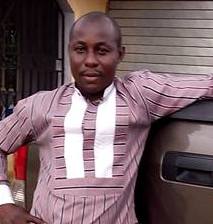

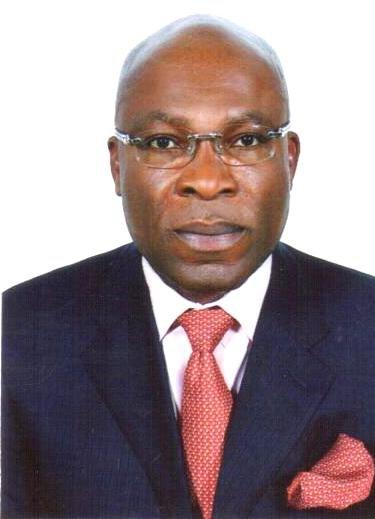





Ali Modu Sheriff: Who Has Bewitched The PDP? Femi Fani Kayode
Modu-Sheriff is also the erstwhile godfather and sponsor of Governor Shettima Ali, the present APC Governor of Borno state (until they fell out), he is a man that has a very deep and profound relationship and association with Idris Deby, the President of Chad and he is a man whose son is married to the daughter of President Muhammadu Buhari.
Many have argued that his allegiance is more to the Republic of Chad than it is to Nigeria, that he is an agent of the Chadian intelligence agencies and that he is a Chadian citizen who often flaunts his Chadian passport. I cannot confirm the veracity of these assertions but one thing that I know is that most of Modu Sheriff’s funding and stupendous wealth emanates primarily from the Republic of Chad and that that country is as much a home to him as is Nigeria.
Yet it is not his connection with Chad that give me cause for concern. Rather it is his role in the establishment of Boko Haram. The truth is that appointing him as our Acting National Chairman is like appointing Jack the Ripper as the leader of the Conservative party in Victorian England.
Kudos must go to the elders in the PDP Board of Trustees, a number of State Party Chairmen and a number of key individuals in the PDP Ministers Forum for taking a courageous and noble stand by rejecting and resisting the imposition of this abominable monstrosity.
What Ali Modu Sheriff stands for and represents is utterly repugnant to every fiber of my being. Yet I have no objection to his being a member of the PDP simply because politics is a game of numbers. It is a game in which everyone, no matter how big or small, counts. If you want your party to grow and make progress you must accept the good, the bad and the ugly.
To this end when he left the APC and joined the PDP sometime back, I was one of those that gladly welcomed him into our ranks and defended him in the public realm. This was at a time when others criticized the party for accepting him.
There is however a world of difference between accepting him as one of the many leaders of the PDP and appointing him as the Acting National Chairman. Others may seek to justify such a course of action but I cannot, in good conscience, do so. To me it is a matter of principle. If we accept this then on what moral grounds did we condemn or oppose the APC or the APC-led Federal Government during the course of the last Presidential election?
If we are comfortable with the likes of Ali Modu Sheriff leading us then on what basis did we criticize and oppose President Muhammadu Buhari for appearing to support Boko Haram when he said ”an attack on Boko Haram is an attack on the north”? If we insist on Ali Modu Sheriff being our National Chairman then we may as well go and apologize to the APC for all our past criticisms and condemnations and join them.
On what basis can we accept as our National Chairman a man who established, encouraged, supported and nurtured an organisation that later metamorphosised into Boko Haram? This is a terrorist organisation whose ultimate objective is to turn Nigeria into an Islamic fundamentalist state by the use of terror and the force of arms?
On what basis can we accept a man to lead us whose Commissioner of Religious Affairs when he was Governor of Borno state, one Alhaji Buji Foi, was the de facto operational commander of Boko Haram. The man was later murdered by those closest to him after investigations into who and how Boko Haram was founded commenced.
On what basis can we accept as our National Chairman a man who helped to create an organisation that wishes to establish sharia as the norm in our country, repeal all our criminal and civil laws, ban all our civil liberties and human rights, proscribe the teaching of western education in our schools, turn our women into 6th century sex slaves and abrogate the secularity of our state.
On what basis can we accept as our leader a man who supported a group that wishes to suspend our constitution, wipe out the Christian faith and the practice of moderate Islam in our country and create an evil ISIL-type empire in our nation?
I really do wonder whether those that made this decision have lost all sense of rationality? I wonder whether they have lost their ability to see reason properly and to exercise their discretion in a logical, responsible and lucid manner?
I wonder whether they have lost their fear of God? I wonder whether they have forgotten the evil that was visited on our people, and is still being visited on them, over the last seven years by Boko Haram? I wonder whether they know at whose instance it was that Mohammed Yusuf, the erstwhile leader of Boko Haram, was killed by our security forces whilst in police custody in 2009 just so that he wouldn’t live to tell the whole world who gave him the funds to set up his murderous cult?
I wonder whether they have forgotten the terrible havoc that Boko Haram unleashed on our citizens? I wonder whether they have forgotten the tears, wailing and suffering of the bereaved. I wonder whether they have forgotten the slaughter of the innocents. I wonder whether they have forgotten those that were beheaded, those that were chopped to pieces and thrown down wells like dog meat and those that were burnt alive?
I wonder whether they have forgotten the savage and bestial rape, murder and abduction of the Chibok girls and all the other little girls that suffered a similar fate in recent times? I wonder whether they have forgotten that our nation is still at war with the bloodthirsty barbarians that committed these atrocities?
Since when did we, as a political party, lose our memories and jettison our moral compass in this way? Since when did we become so callous, shameless and insensitive? Since when did greed and the lust for power and money determine and motivate our every course of action? Since when did we throw away caution, decency and principle? Since when did we become so barbarous and uncivilized?
Since when did so few make a decision that will affect the lives and fortunes of so many in a profoundly negative way? Have we forgotten about the priests and servants of the Living God that were crucified by Boko Haram at their own church alters? Have we forgotten those that had their homes, schools, churches, mosques and properties pillaged, robbed and burnt to the ground by this group of godless Phillistines? Have we forgotten that the international community, through the International Terror Index, has rightly described Boko Haram as the ”most deadly terrorist organization in the world”?
Have we forgotten those gallant young military officers that were killed at the war front whilst fighting this evil plague, all in their quest to keep us safe, to secure our borders and to protect our property and people? Does all that count for nothing? Is this the way to pay them back for their great sacrifice and their noble courage? Are we prepared to throw away all decency and morality just to seek favor with a handful of misguided mortals and in a futile attempt to win political power?
Simply put has the leadership of the PDP gone completely mad or are they working for elements outside the PDP? Are they suggesting that you need a godless Haramite to run the affairs of the party before we can ever win power at the center again? Where is the patience and fortitude that is required from true leaders? Where is their faith in God? Where is their sincerity of purpose? Does the leadership of the PDP really believe that it has kept faith with the founding fathers of the party, those that trusted them with power and those that bestowed them with leadership?
There were so many other people that they could have chosen to lead our party from the north-east. There were people like Mohammed Wakil, Nuhu Ribadu, Bala Mohammed, Wilberforce Juta, Aliyu Modibbo, Ahmed Gulak and so many others that could have been appointed. These are all committed people with impeccable records of public service, high moral standing and good character.
Instead of doing so the leadership of the party chose to impose the most controversial, intellectually-challenged, morally-depraved and despicable character that they possibly could to lead us and when asked why they did so we were told that it was because ”he has plenty of money to spend on the party” and no less than ”5 private jets” to lend out to those who needed a free plane ride. Evidently we have sold our birthright and heritage, not just for a mess of pottage like Esau, but rather for a free ride on a private jet.
This is what a party that was once led by successive groups of seasoned and formidable intellectuals and great men of power, vision, courage and good character has been reduced to. This is what the party that was founded and once led by giants like President Olusegun Obasanjo, Chief Tony Anenih, General Ibrahim Babangida, General Aliyu Gusau, Alhaji Adamu Ciroma, General T.Y. Danjuma, Vice President Abubakar Atiku, President Umaru Yarâadua, President Goodluck Jonathan, Chief Bode George, Col. Ahmadu Alli, Chief E.K. Clark, Professor Jerry Gana, Dr. Chuba Okadigbo, Chief Ken Nnamani and so many others has degenerated to? What a pity! What a monumental tragedy!
This is a party that once boasted of having in its ranks many promising and dynamic bright young stars that were collectively capable of shaking the very foundation of the civilized world and creating new frontiers and greater hope for the future of our people and our beleaguered nation. How are the mighty fallen.
What on earth has happened to us? As the Book of Galatians in the Holy Bible asks, ”who has bewitched us”? Over the the course of the last 17 years, in terms of the quality of party leadership, the PDP has gradually descended into the unceremonious cesspit of mediocrity. Worst still, with the recent appointment of Ali Modu Sheriff as our Acting National Chairman, we have chosen to spit in the wind, sleep with the dogs, dance on the graves of our fallen heroes, piss on the blood and bones of the slaughtered innocents and wallow in the filthy pool of compromise, deceit, doublespeak and shame.
As a consequence of this calamitous decision we have, literally overnight, become a shell, nay a shadow, of what we used to be. Unfolding events will prove my assertion true. I have no doubt that time will eventually prove me right and vindicate me.
The bitter truth is that this arrangement is an affront against the Living God and it cannot stand. Yet if it does stand the party will pay a heavy price for it because it will inevitably lead to the end of the PDP as we know it.
Imposing Ali Modu-Sheriff is an insult to all those that have fought for, led, served, defended, supported and risked everything for the party, at every level, over the last 17 years. Only the deeply malevolent can be comfortable with such an arrangement.
It is evil. It is godless. It is indefensible. It is shameful and as long as it stands the PDP does not have the moral standing or authority to criticize or condemn others. Those that made this decision behind closed doors and without proper or wide consultations have murdered sleep.
They have not only betrayed the confidence that the rest of us bestowed upon them but they have also prepared the coffin for our great party and dug its grave. It is a tragedy of monumental proportions and I have little doubt that God will judge them for what they have done.
Ali Modu-Sheriffs long-term plan to high jack the leadership of the party for as long as possible, remain as National Chairman indefinitely and emerge as the Party’s presidential candidate in 2019 will fail because it does not have the blessing of God. Time will prove me right. [myad]