Lagos state government has vowed to rejuvenate the abandoned Traditional Rulers’ role in maintaining peace, stability and harmonious co-existence among residents in their various communities.
Commissioner for Local Government and Community Affairs, Hon Muslim Folami who made this known at a One-Day workshop organized by the State Government for the Traditional rulers in Lagos with the theme: “Roles of Traditional Rulers As Community Developers and Managing Communal and Intra Communal Conflicts,” charged all Traditional Rulers in the State to ensure that they educate rural people on government projects, policies and programmes.
He asked them to coordinate all activities on developmental projects in their respective domains to get better results.
The facilitator, Mrs. Olutoyin Falade, said that community development is a way of strengthening civil society by prioritizing the actions of communities and their perspectives in the development of social, economic and environmental policy.
“Community Development is a skilled process and part of its approach is the belief that communities cannot be helped unless they themselves agree to this process. Community Development has to look both ways, not only at how the Community is working at the grassroots, but also at how responsive key institutions are to the needs of local communities.”
She urged traditional rulers o be conscious of their roles in ensuring even development in their various communities through the promotion and maintenance of peace, security, economic, cultural values and heritage.
While imploring them to embrace effective communications, friendly and harmonious relationship among their people, Falade noted that their initiative and desire to promote stability in their community will lead to sustained development and improved standard of living of the people. [myad]
President Muhammadu Buhari has promised that 500,000 unemployed graduates and NCE holders would soon be recruited and deployed across the country to teach in the nation’s schools.
The President, who presented the 2016 federal government budget to the joint session of the National Assembly today, said that the recruitment of teachers for the schools is an emergency measure, to address the chronic shortage of teachers in public schools across the country.
“We also will partner with State and Local Governments to recruit, train and deploy 500,000 unemployed graduates and NCE holders. These graduate teachers will be deployed to primary schools, thereby, enhancing the provision of basic education especially in our rural areas.”
He said that as the government focuses on inclusive growth, it would be conscious of the current rate of unemployment and underemployment, saying that this is a challenge he is determined to meet.
The budget, the first since he took over the leadership of the country in May this year, is the platform for putting more Nigerians to work.
“I can assure you that this administration will have a job creation focus in every aspect of the execution of this budget. Nigeria’s job creation drive will be private sector led. We will encourage this by a reduction in tax rates for smaller businesses as well as subsidized funding for priority sectors such as agriculture and solid minerals.”
President Buhari said tha the 2016 budget, as outlined, is designed to ensure that the government revived the nation’s economy, deliver inclusive growth to Nigerians and create a significant number of jobs.
He acknowledged that the state of the nation’s economy has been a source of concern for many and that the situation has been further worsened by the unbridled corruption and security challenges which the nation has been facing in the last few years.
“From those who have lost their jobs, to those young people who have never had a job, to the people in the North East whose families and businesses were destroyed by insurgents, this has been a difficult period in our nation’s history, lessons that we must not forget or ignore, as we plan for the future.”
Looking at the 2015 Goodluck Jonathan’s budget as the nation’s President then, Buhari said that as at June 2014, oil prices averaged $112 per barrel but that as at today, the price is under $39 per barrel.
This huge decline, he stressed, is having a painful effect on the nation’s economy with consumption declining at all levels.
“In both the private and public sectors, employers have struggled to meet their salary and other employee related obligations. The small business owners and traders have been particularly hard hit by this state of affairs.
With such unpleasant economic climate, Buhari concurred, the confidence of many might be shaken, assuring however: “I stand before you today promising that we will secure our country, rebuild our economy, and make the Federal Republic of Nigeria stronger than it has ever been.
“The answers to our problems are not beyond us. They exist on our farmlands; our corporations; in the universities in the hearts and minds of our entrepreneurs; through the gallantry of our Armed Forces; and the resolute spirit of Nigerians, especially the youth, who have refused to give up despite all the obstacles confronting them.
“This Budget proposal, the first by our Government, seeks to stimulate the economy, making it more competitive by focusing on infrastructural development; delivering inclusive growth; and prioritizing the welfare of Nigerians. We believe that this budget, while helping industry, commerce and investment to pick up, will as a matter of urgency, address the immediate problems of youth unemployment and the terrible living conditions of the extremely poor and vulnerable Nigerians.” [myad]
The Federal Government of Nigeria has for the first time in many years, given capital expenditure the biggest share of N1.8 Trillion out of the total 2016 budget of 6.08 Trillions, representing 30 percent of the budget.
President Muhammadu Buhari who announced this when he presented the 2016 budget proposal to the joint session of the National Assembly today in Abuja, said that the capital expenditure portion of the budget for last year was N557 billion. The budget has a total revenue projection of N3.86 trillion with a deficit of N2.22 trillion against the background of 2015 budget.
“Distinguished and honourable members of the National Assembly, for the first time in many years, capital expenditure will represent 30% of our total budget. In future years we intend to raise the percentage allocation for capital expenditure.”
President Buhari said that this is a fulfillment of the government’s promise to align expenditure to the long-term objectives, and a sign of government’s commitment to sustainable development. According to him, this increased capital expenditure, commits significant resources to critical sectors such as Works, Power and Housing – N433.4 billion; Transport – N202.0 billion; Special Intervention Programs – N200.0 billion; Defence – N134.6 billion; and Interior – N53.1 billion. “These investments in infrastructure and security are meant to support our reforms in the Agriculture, Solid Minerals and other core job creating sectors of our economy.
Buhari who made it clear that his government would invest to safeguard lives and property, adding: “We will invest in equipping our farmers with the right tools, technology and techniques.
“We will invest in empowering and enabling our miners to operate in a safe, secure and humane environment.
“We will invest in training our youths, through the revival of our technical and vocational institutions, to ensure they are competent enough to seize the opportunities that will arise from this economic revival.
“Indeed, the future looks bright. And I ask that we all work together to make this vision a reality. The 223% year on year growth in capital expenditure demonstrates our desire to make Nigeria more competitive, and start the journey to deliver sustainable development in our country.”
The President said that in fulfillment of his promise to run a lean government, he has proposed a 9 percent reduction in non-debt recurrent expenditure, from N2.59 trillion in the 2015 Budget to N2.35 trillion in 2016.
He said that N300 billion has been budgeted for Special Intervention Programs, which takes the total amount for non-debt recurrent expenditure to N2.65 trillion.
“As I mentioned earlier, the Efficiency Unit set up by this Administration together with effective implementation of GIFMIS and IPPIS will drive a reduction of overheads by at least 7%, personnel costs by 8% and other service wide votes by 19%. Distinguished and honourable members, this budget will be executed to provide optimum value by ensuring every naira spent by this Government, counts.
“We will devote a significant portion of our recurrent expenditure to institutions that provide critical government services. We will spend N369.6 billion in Education; N294.5 billion in Defence; N221.7 billion in Health and N145.3 billion in the Ministry of Interior. This will ensure our teachers, armed forces personnel, doctors, nurses, police men, fire fighters, prison service officers and many more critical service providers are paid competitively and on time.”
President Buhari said that the 2016 borrowings will be principally directed to fund the capital projects even as he said that sum of N113 billion will be set aside for a Sinking Fund towards the retirement of maturing loans; while N1.36 trillion has been provided for foreign and domestic debt service. This calls for prudent management on our part, both of the debt portfolio and the deployment of our hard earned foreign exchange earnings.
“I am aware of the problems many Nigerians currently have in accessing foreign exchange for their various purposes – from our traders and business operators who rely on imported inputs; to manufacturers needing to import sophisticated equipment and spare parts; to our airlines operators who need foreign exchange to meet their international regulatory obligations; to the financial services sector and capital markets who are key actors in the global arena.
“These are clearly due to the current inadequacies in the supply of foreign exchange to Nigerians who need it. I am however assured by the Governor of Central Bank that the Bank is currently fine-tuning its foreign exchange management to introduce some flexibility and encourage additional inflow of foreign currency to help ease the pressure.’
The President said that the deficit in the 2015 budget, which is equivalent to 2.16 percent of Nigeria’s GDP, will take the nation’s overall debt profile to 14 percent of our GDP.
“This remains well within acceptable fiscal limits. Our deficit will be financed by a combination of domestic borrowing of N984 billion, and foreign borrowing of N900 billion totaling N1.84 trillion. Over the medium term, we expect to increase revenues and reduce overheads, to bring the fiscal deficit down to 1.3% of GDP by 2018.”
According to him, in 2016, oil related revenues are expected to contribute N820 billion even as non-oil revenues, comprising Company Income Tax (CIT), Value Added Tax (VAT), Customs and Excise duties, and Federation Account levies, will contribute N1.45 trillion. Finally, by enforcing strict compliance with the Fiscal Responsibility Act, 2007 and public expenditure reforms in all MDAs, we have projected up to N1.51 trillion from independent revenues.
“Although we are working to diversify our economy, we will not lose sight of the need to restructure the oil and gas sector which has been marred by corruption and plagued with inefficiencies. Accordingly, I have directed the Petroleum Products Pricing Regulatory Agency (PPPRA) to adjust its pricing template to reflect competitive and market driven components. We believe this can lower input costs and attain efficiency savings that will enable PPPRA to keep the selling price for all marketers of petrol at N87 per liter for now.
“The current fuel scarcity with long queues at petrol stations all over the country causing social dislocation is very unfortunate. Government profoundly apologizes to Nigerians for this prolonged hardship and misery. It is as a result of market speculators and resistance to change by some stakeholders. Government is working very hard to end these shortages and bring fuel to the pumps all over the country.
“I have also directed the NNPC to explore alternate funding models that will enable us to honour our obligations in Joint Ventures (JVs) and deep offshore fields. We are confident that these measures can be achieved and will lower the burden that the traditional cash calls have imposed on our budget and cash flows as well as contribute towards shoring up our national reserves.” [myad]
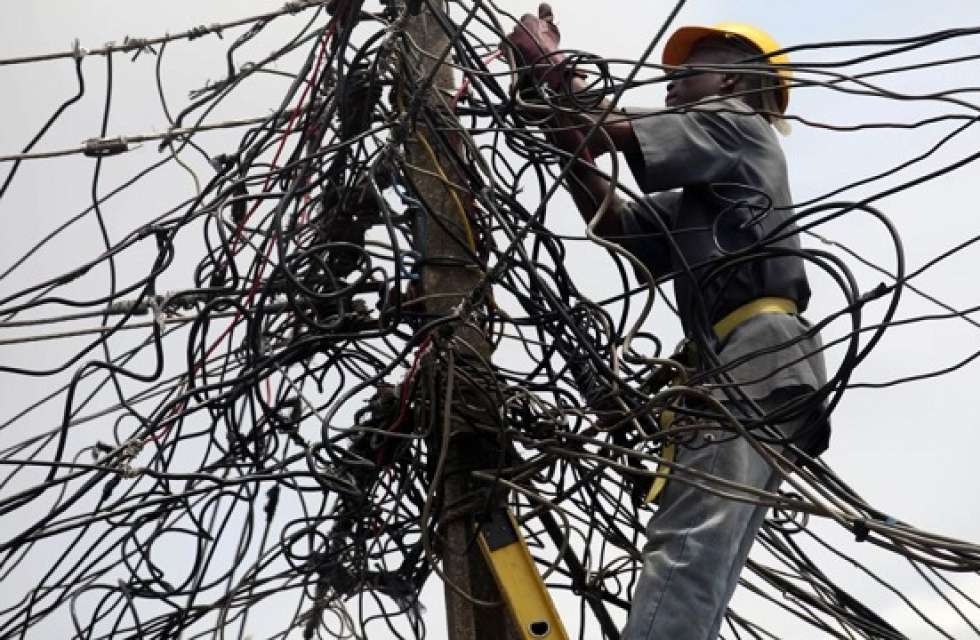
The Nigerian Electricity Regulatory Commission (NERC) has abolished uniform tariffs for all the electric consumers across the country. This is contained in the new power tariff regime, in which the regulatory body outlined the various rates of increase in energy charges for consumers.
About two weeks ago, the Minister of Power, Works and Housing, Babatunde Fashola, revealed that electricity tariffs would increase and asked consumers to comply by paying their bills, as he promised that the sector would record considerable improvement thereafter.
Confirming the tariffs increase today, NERC said that henceforth, from the next billing period, power distribution companies would no longer charge their customers monthly fixed charges.
Fixed charge is that component of the tariff that commits electricity consumers to paying an approved amount of money not minding whether electricity is consumed during the billing period.
Outlining the rates of increase in tariffs for various customer classes in selected locations across the country, NERC said, “For instance, residential customer classification (R2) in Abuja Electricity Distribution Company will no longer pay N702 fixed charge every month. Their energy charge will increase by N9.60.
“Also, residential customers (R2 customers) in Eko and Ikeja electricity distribution areas will no longer pay N750 fixed charges. They will be getting N10 and N8 increase respectively in their energy charges. Similarly, the burden of N800 and N750 fixed charges would be lifted off the shoulders of Kaduna and Benin electricity consumers. These consumers will see an increase of N11.05 and N9.26 respectively in their energy charges.”
This comes less than a week after the House of Representatives asked NERC to stop plans to increase electricity tariffs. [myad]
The Ebonyi State Governor, Chief David Nweze Umahi, has directed the Secretary to the State Government, Professor Bernard Odoh, to probe the circumstances that led to the death of the 10 Ebonyi youths in a motor accident at Ezzangbo on their way to the Court of Appeal in Enugu. Governor Umahi who spoke at a thanksgiving service of the Government House Chapel in Abakaliki said: “Yesterday, I saw a situation that made me to almost shed tears. I saw youths were crying about the loss of 10 of our brothers and a sister. I felt so bad. “Some of these are things we could avoid because this is a new dispensation where there is love, where there is unity, togetherness and orderliness in the land of Ebonyi. “I want to assure the youth that I have directed the SSG to probe the death of those 10 young people and whoever that pushed them into that will have to pay for that.” The governor, who attributed the success of his government to fervent prayers and the cordial relationship among the three tiers of government in the state, noted that the economic recession in the country could be overcome through prayers and trust in God. He promised that despite the poor economic situation in the country, his administration was poised to fully implement the 2016 Budget estimate of the state. Governor Umahi maintained that from henceforth, the government would embark on aggressive revenue generation to augment the poor federal allocation to the state. Stressing that the state government may reconsider giving overhead to the ministries, Umahi said he would approve the usage of a certain percentage of the Internally Generated Revenue of each ministry as its overhead. He said in view of the harsh economic situation facing the state, the fees of tertiary institutions in the state had not been reduced. Students of the state university, according to him, were expected to continue to pay their tuition fees as at when due until the state’s economy improved. Governor Umahi mandated the Commissioner for Works to, as a matter of urgency, take steps to reconstruct the three failed bridges in Izzi, Ivo and Afikpo South. He restated the government’s policy on agriculture and appealed to the people of the state to release their lands for the programme. Earlier in her sermon, the Chaplain of the Government House Chapel, Pastor Eunice Oyeyemi, said the people and the state government needed to be grateful to God for His mercy. Oyeyemi said the transformation being noticed in the state under the leadership of Umahi was prayed for during the electioneering period. Pastor Oyeyemi also enjoined all Ebonyians to see themselves as ambassadors of the state by always speaking good about the state. [myad]
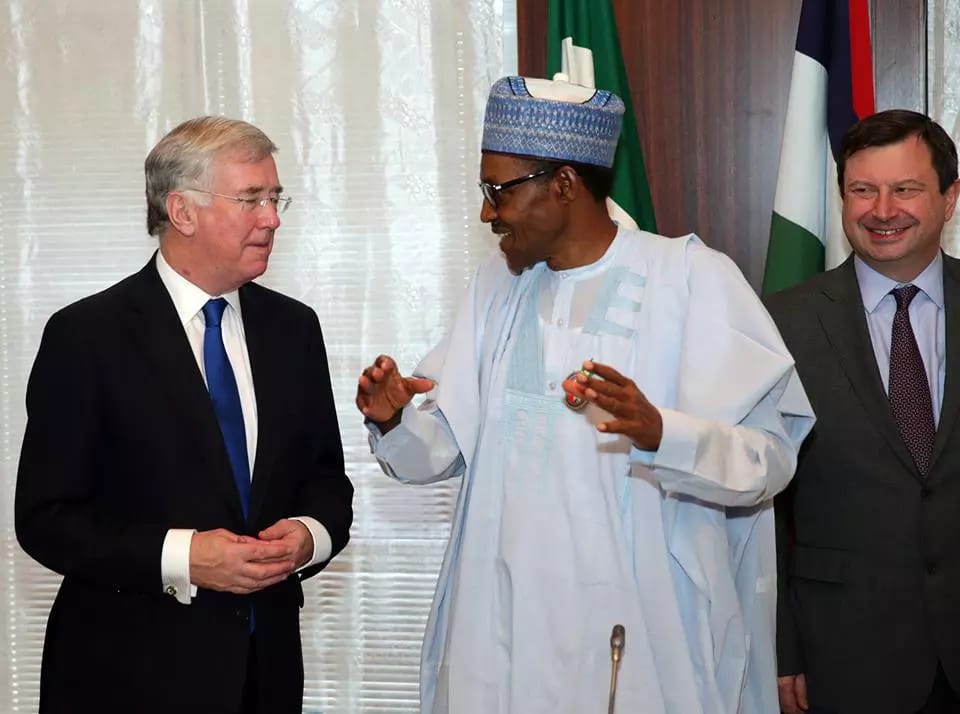
President Muhammadu Buhari has expressed regret that the procurement of equipment for Nigeria’s Armed Forces which followed due process in the past had become open to corruption and shady deals under the last administration.
President Buhari, who received inaudience today at the Presidential Villa, Abuja, the British Secretary of State for Defence, Mr. Michael Fallon, said: “They (the past government officials) just put foreign exchange in a briefcase and traveled to procure equipment for the military. That is why we have found ourselves in the crisis we are now facing,”
He vowed that his administration would restore order, due process and probity to the procurement processes of the nation’s Armed Forces even as he expressed appreciation for the offer by the British Government to assist Nigeria in defence procurements, intelligence gathering and training.
President Buhari restated his conviction that the international community must collaborate more and work with greater unity of purpose to overcome global terrorism.
“Terrorism has become very sophisticated now. If developed nations can be attacked, and hundreds of lives lost, how much more developing countries?
“In the West African sub-region, Nigeria is the main battleground of the Boko Haram insurgency. We have made a lot of progress against the terrorists, but we will welcome more assistance from our friends and the international community,” the President told Mr. Fallon.
Mr. Fallon said he was in the country to see what more Britain could do to support Nigeria in battling terrorism and violent extremism.
“Groups like Boko Haram don’t believe in democracy and freedom of choice, so it’s a common fight for us all.” [myad]
Governor Nasir Ahmad El-Rufai of Kaduna state has recounted the various atrocities which members of the Shiite, led by Sheikh El-Zakzaky have committed against the government and group before their bloody clash with security entourage of the Chief of Army Staff, General Tukur Buratai on December 11 in Zaria.
In a broadcast to the people of the state, governor El-Rufai said that the avoidable weekend tragedy in Zaria has a background which was based on information available to the Kaduna State Government. he said that based on reports from government organs and security agencies, the state government had learnt that there had been tension in parts of Zaria since Thursday, 10 December 2015, when members of the Islamic Movement of Nigeria were alleged to have attacked Gabari, a community on the outskirts of Zaria, in continuation of a dispute over a mosque.
“Like the previous attack, this second assault on Gabari also took three lives. The alleged bone of contention was that the El-Zakzaky movement wanted to take over a mosque they did not build in Gabari. The mosque had been sealed by the authorities following the collapse of the arrangements that had enabled various sects to amicably share its usage. “In the last two weeks, the Islamic Movement of Nigeria has also illegally occupied federal roads. Over a period of four days, they took over one side of the federal expressway between Kaduna and Zaria, and the roads to Kano and Katsina. They entered schools along these routes, using them as rest and recreation points without notice or permission or any concern about the disruption of academic activities. “The Husainiyah building, the headquarters of the Islamic Movement of Nigeria, was put up without statutory title to the land, and in outright defiance of a stop-work notice issued by KASUPDA in 2010. When KASUPDA followed up with a demolition notice in the same year, the then authorities chose to look the other way, and allowed the sect to complete a building that had neither title nor planning approval, and which the appropriate agency had determined was in violation of planning and development regulations. governor El-Rufai explained that the successful completion of this illegal building on a major road subsequently led to a pattern of inconveniences being inflicted on members of the general public, saying that there were various reports and complaints that the sect was harassing members of the public, and inflicting hardship on commuters.
He said that at their headquarters and in other areas where Zakzaky’s movement had structures, they had tried to forcibly acquire the property of their neighbours which was apart from subjecting residents to an illegal curfew. “Government also received reports that the Islamic Movement of Nigeria acted like a parallel state, with total disdain for the formal structures of the Nigerian government and little regard for the rights of non-members. Whenever community, traditional or political leaders invite the sect to dispute resolution meetings, they often declined the invitations. In addition, members of the movement are alleged to openly carry and use offensive weapons. “Following the Zaria incident, Shiite members of the Islamic Movement of Nigeria have tried to upset the peace in parts of Kaduna. The security forces have responded firmly to the situation in the Tudun Wada area of Kaduna Metropolis. Violent actions by sect members on Tuesday, 15 December 2016, included the use of Molotov cocktails and petrol bombs against the security forces. Judicial Commission of Inquiry to be established.”
The full text of governor El-Rufai’s broadcast is reproduced here:
Dear People of Kaduna State, We have witnessed sad events in Zaria and a part of Kaduna metropolis over the last few days. As your Governor, it is my duty to address you on the incidents, and explain the events that preceded the tragedy of last weekend. We shall also outline how we intend to prevent a recurrence. As you are aware, military operations have taken place in Zaria between Saturday, 12 December and Monday, 14 December 2015. There have been tragic consequences and needless loss of lives, and we extend our condolences to the families that have been affected. In this sombre moment, we have also directed that steps be taken to address the humanitarian fallouts of the operations. The State Government is carrying out after action review of the theatre of operations with a view to compensating those whose vehicles, real property and other assets were damaged as a result. The Kaduna State Government has been informed that on Saturday, 12 December 2015, the convoy of the Chief of Army Staff, Lt. General Tukur Buratai, reported an ambush and attempted assassination at a roadblock mounted by members of Sheikh Ibrahim El-Zakzaky’s Islamic Movement of Nigeria. Clashes broke out as soldiers mounted operations to repel the attack, remove the obstruction to a major public highway, and to contain and arrest the perpetrators. When the security agencies sent reports of the clash to me a little after 3pm on that day, I initiated steps that I thought could calm the situation. I called Sheikh Ibrahim El-Zakzaky on the phone to get his side of the story, and thereafter visited Zaria for on-the-spot briefing and assessment and visited the Chief of Army Staff. The army and the police have since addressed the press on the security operations and the aftermath. We have also seen video clips aired on national television and online to show the extent to which the Nigerian Army tried to reason with the persons that were intent on obstructing a public highway without any justification. The avoidable weekend tragedy in Zaria has a background based on information available to the Kaduna State Government. What the Kaduna State Government has learnt Based on reports from government organs and security agencies, we have learnt the following: • There had been tension in parts of Zaria since Thursday, 10 December 2015, when members of the Islamic Movement of Nigeria were alleged to have attacked Gabari, a community on the outskirts of Zaria, in continuation of a dispute over a mosque. Like the previous attack, this second assault on Gabari also took three lives. The alleged bone of contention was that the El-Zakzaky movement wanted to take over a mosque they did not build in Gabari. The mosque had been sealed by the authorities following the collapse of the arrangements that had enabled various sects to amicably share its usage. • In the last two weeks, the Islamic Movement of Nigeria has also illegally occupied federal roads. Over a period of four days, they took over one side of the federal expressway between Kaduna and Zaria, and the roads to Kano and Katsina. They entered schools along these routes, using them as rest and recreation points without notice or permission or any concern about the disruption of academic activities. • The Husainiyah building, the headquarters of the Islamic Movement of Nigeria, was put up without statutory title to the land, and in outright defiance of a stop-work notice issued by KASUPDA in 2010. When KASUPDA followed up with a demolition notice in the same year, the then authorities chose to look the other way, and allowed the sect to complete a building that had neither title nor planning approval, and which the appropriate agency had determined was in violation of planning and development regulations. • The successful completion of this illegal building on a major road subsequently led to a pattern of inconveniences being inflicted on members of the general public. There were various reports and complaints that the sect was harassing members of the public, and inflicting hardship on commuters. At their headquarters and in other areas where Zakzaky’s movement had structures, they had tried to forcibly acquire the property of their neighbours; this is apart from subjecting residents to an illegal curfew. • Government also received reports that the Islamic Movement of Nigeria acted like a parallel state, with total disdain for the formal structures of the Nigerian government and little regard for the rights of non-members. Whenever community, traditional or political leaders invite the sect to dispute resolution meetings, they often declined the invitations. In addition, members of the movement are alleged to openly carry and use offensive weapons. • Following the Zaria incident, Shiite members of the Islamic Movement of Nigeria have tried to upset the peace in parts of Kaduna. The security forces have responded firmly to the situation in the Tudun Wada area of Kaduna Metropolis. Violent actions by sect members on Tuesday, 15 December 2016, included the use of Molotov cocktails and petrol bombs against the security forces. Judicial Commission of Inquiry to be established. As the security operations in Zaria are wound-down, the Kaduna State Government is persuaded that it is vital, for reasons of accountability and transparency, that a factual and authoritative account of the events be painstakingly assembled. The Kaduna State Government has therefore decided that under the powers conferred on me by the Tribunals of Inquiry Act, a Judicial Commission of Inquiry will be established to examine the remote and immediate causes of the Zaria incident. This inquiry will be open and will enable all allegations and claims to be tested with judicial rigour. The government will act promptly on the conclusions of the inquiry, and forward recommendations requiring action by the Federal Government to Mr. President. Details of the composition and terms of reference of the judicial commission of inquiry would be made public within the next two weeks. Commitment to security and constitutional rights In the meantime, Government reiterates that it cannot permit an escalation of lawlessness. Therefore, civil security patrols, supported by the military when necessary, will continue to enable the state to maintain order, reassure residents and keep the peace. Our government continues to invest heavily in security as a foundation for the successful execution of our economic and social agenda to develop Kaduna State. Fellow citizens, Kaduna State has witnessed too many upheavals in its recent history. These tragedies have taken too many lives, maimed people, destroyed communities and hurt development. We all should jointly say no to actions that divide people, reject conduct that ignores or violates the legal and constitutional rights of others and oppose practices that contest the prerogatives of state institutions to safeguard and protect every citizen. Everyone has a fundamental right to their faiths and beliefs, but no one has any right to practise their faith in ways that diminish, distress or inconvenience others. And no one can be allowed to justify unlawful and anti-social behaviour on the grounds of religion. Only conduct that conforms to the Constitution and the laws of the country is valid, and it is the duty of the state to vigorously enforce that. No responsible leader or institution should teach their followers differently. Henceforth, no person or group, under any guise will be allowed to block any road, obstruct public highways, occupy public facilities or inconvenience citizens in Kaduna State. Anybody that needs to march may do so, but they cannot take over public facilities or disrupt social services and commercial activities in Kaduna State, and any march or procession can be undertaken only with the prior knowledge of, and protection of the police to prevent the breakdown of law and order. The Government wishes to assure every resident of Kaduna State that it is committed to fostering harmony, maintaining law and order and keeping the peace. Our Constitution rightly protects the freedom of worship, as well as the right to liberty, security and the pursuit of happiness. Everyone is entitled to these rights equally. We swore to uphold the Constitution, and our commitment to these values is unwavering. We will similarly protect these rights evenly. We urge all citizens to be vigilant as they go about their normal activities, and to report any suspicions or concerns to the appropriate authorities. Let us all redouble our commitment to sustaining the peace, and to uphold each other in our God-given humanity. While the crisis raged, the Kaduna State Government visited Zaria, and issued appeals for calm and peace. We have taken our time to make this formal broadcast due to the imperative to gather as much information as possible amidst the welter of conflicting claims, the urgency of restoring peace and the need to consult with the federal authorities. God bless Kaduna State God bless the Federal Republic of Nigeria May the souls of the departed find peace May the Almighty God Restore and Preserve Peace throughout our state and country, Amen. [myad]
Nigeria’s Information Minister, Alhaji Lai Mohammed has disclosed that the Nigeria National Petroleum Company (NNPC) has now cut off oil marketers by directly importing fuel as a way of finding solution to fuel scarcity in the country.
Lai Mohammed Sais: The first thing we have done now is to make sure that unlike before when the marketers used to import the major percentage of the fuel. NNPC has been involved in importation, because some of the marketers had stopped importing for a couple of months.”
The minister who briefed news men today in the Presidential villa, Abuja, along with Minister of Budget and Planning, Udoma Udo – Udoma, added: “If you see any fuel anywhere today, it is imported by the NNPC. We also inherited the vandalisation of the pipelines which has made it impossible for us to even transport the fuel. In tanks today we have 14 days reserve and off tank we have 10 days reserve.
“The issue is not non-availability of the product it is the distribution, because of pipelines that have been vandalised and the gridlock in Lagos. It takes about five days for anybody to take fuel with tanker in Lagos.
“As at two days ago this matter has been resolved. The Mosinmi pipeline has been secured and it has lead to the improvement in the distribution.“ [myad]
The Kogi state deputy governor-elect, James Faleke, who was running mate to late Abubakar Audu of All Progressives Congress (APC) in November 21 governorship poll in Kogi, has challenged the election in a petition he filed at the State Governorship Election Petitions Tribunal.
Faleke, accompanied by Mohammed Audu, son of Abubakar Audu, and lawyers, submitted the petition to the clerk of the tribunal in Lokoja today. The Secretary of the tribunal, Akanji Akinlabi, who received the petition, said the contents were yet to become public.
Faleke is challenging the Independent National Electoral Commission’s (INEC) decision which declared the election inconclusive.
Faleke told newsmen that he was confident that justice would be done in the matter and that he did not join his party, the APC as a respondent in the suit.
He said he challenged INEC’s decision in declaring the election inconclusive when the result showed that by all standards, the election was concluded and won by the APC ticket of Audu and Faleke.
Audu’s son, Mohammed also told newsmen that his support for Faleke’s decision to challenge INEC’S decision was in line with the decision of elders and family of his late father.[myad]
Nigeria’s Information Minister, Alhaji Lai Mohammed has disclosed that the Nigeria National Petroleum Company (NNPC) has now cut off oil marketers by directly importing fuel as a way of finding solution to fuel scarcity in the country.
Lai Mohammed Sais: The first thing we have done now is to make sure that unlike before when the marketers used to import the major percentage of the fuel. NNPC has been involved in importation, because some of the marketers had stopped importing for a couple of months.”
The minister who briefed news men today in the Presidential villa, Abuja, along with Minister of Budget and Planning, Udoma Udo – Udoma, added: “If you see any fuel anywhere today, it is imported by the NNPC. We also inherited the vandalisation of the pipelines which has made it impossible for us to even transport the fuel. In tanks today we have 14 days reserve and off tank we have 10 days reserve.
“The issue is not non-availability of the product it is the distribution, because of pipelines that have been vandalised and the gridlock in Lagos. It takes about five days for anybody to take fuel with tanker in Lagos.
“As at two days ago this matter has been resolved. The Mosinmi pipeline has been secured and it has lead to the improvement in the distribution.“[myad]
We use cookies on our website to give you the most relevant experience by remembering your preferences and repeat visits. By clicking “Accept”, you consent to the use of ALL the cookies.
This website uses cookies to improve your experience while you navigate through the website. Out of these, the cookies that are categorized as necessary are stored on your browser as they are essential for the working of basic functionalities of the website. We also use third-party cookies that help us analyze and understand how you use this website. These cookies will be stored in your browser only with your consent. You also have the option to opt-out of these cookies. But opting out of some of these cookies may affect your browsing experience.
Necessary cookies are absolutely essential for the website to function properly. This category only includes cookies that ensures basic functionalities and security features of the website. These cookies do not store any personal information.
Any cookies that may not be particularly necessary for the website to function and is used specifically to collect user personal data via analytics, ads, other embedded contents are termed as non-necessary cookies. It is mandatory to procure user consent prior to running these cookies on your website.



 Lagos state government has vowed to rejuvenate the abandoned Traditional Rulers’ role in maintaining peace, stability and harmonious co-existence among residents in their various communities.