The Vice President, Professor Yemi Osinbajo has given state governors an opportunity to nominate new Board members for the Niger Delta Power Holding Company (NDPHC). The new members in the board that is being reconstituted are expected to be based on the six geo-political zones of the country and should be made by the governors after consultations. This was one of the decisions reached today at the meeting of the National Economic Council (NEC), presided over at the Presidential Villa, Abuja, by Vice President Osinbajo. The meeting stressed the need need for sensitization and public enlightenment to create awareness on the relevant laws, regulations and policies that govern the movement of money across the nation borders. The National Economic Council directed the Central Bank of Nigeria to embark on sensitization and public enlightenment on the Forex Policy, relevant laws and regulations as necessary guide to traders, some of who are encountering challenges regarding the movement of foreign exchange across Nigeria borders, especially through some of the local airports. While sympathizing with the traders, NEC decided that awareness on the relevant laws should be created. Other deliberations of the Council include the following: A. Nigeria Sovereign Investment Authority Council received status update and presentation of 2014 Annual Report as the Governing Council on Nigeria Sovereign Investment Authority (NSIA). It was presented by the Managing Director of the (NSIA). Council then resolved that 250million USD from the $400million LNG dividend be invested in the NSIA. · Council also directed the Hon. Minister of Finance to constitute an Executive Nomination Committee and work in consultation with NEC to find appropriate persons to take over as board members of the NSIA when the current board is dissolved. · Council resolved that USD 150 million balance of the $400m LNG fund be shared among the States. B. Excess Crude Proceeds: Accountant General of the Federation (AGF) reported that the balance of the ECA stood at USD 2.257 billion and that not much has changed from the last report. Update on the Report on FGN Agencies Revenue collection in Foreign currencies but remitting Naira equivalent into the Federation Account: · The Council mandated the Ministry of Finance to investigate and report on the allegation that some revenue generating MDAs received money in foreign currencies and converted to local currencies before remitting into the FGN Account. C. Briefing by the DG, PENCOM · The DG, Pension Commission briefed the Council on the Contributory Pension Scheme and the status of implementation by States. · Highlights of the briefing was on the sustainability of the pension arrangement, scorecard of the States in the implementation of the Contributory Pension Scheme (CPS), the challenges, opportunities and also the steps towards full implementation by the States. · The briefing also highlighted the need for States to provide legal framework such as; enactment of State pension laws, establishment of State pension agencies, consistent remittance of both the employee and employer contributions and also full compliance of all the provisions of the pension scheme. D. Workshop on Treasury Single Account (TSA) for the State Governors · IMF Senior Resident Representative and Mission Chief presented a paper on the Treasury Single Account (TSA) to the Council. · Presentations were made on the under listed sub-topics by other speakers: i) Implementation of TSA in the States: Lessons and Experience ii) Cash Management and TSA Reforms: an overview of international practice iii) Budgeting Reforms. [myad]
The United Nations Children Fund (UNICEF) has said that the world is still deeply unfair to the poorest and most disadvantaged children, despite major advances since the adoption of the Convention on the Rights of the Child in 1989. The UNICEF report released today to mark the Universal Children’s Day tomorrow titled: ‘For every child, a fair chance: The promise of equity,’ presents a statistical picture of how the world’s most marginalized children have fared against basic human development indicators. It points out that: Children from the poorest households are nearly twice as likely as those from the richest households to die before age five, and five times more likely to be out of school. It said that girls from the poorest families are four times more likely as those from the richest families to be married before 18. The report notes that more than 2.4 billion people still do not have adequate toilets – 40 per cent of them in South Asia; and more than 660 million still lack access to safe drinking water – nearly half of them in sub-Saharan Africa. It said that about half of the 159 million children suffering from stunting live in South Asia and one-third in Africa. “Such vast inequities fuel a vicious intergenerational cycle of poverty and disadvantaged. “But it doesn’t have to be this way. We know how to slow, stop, and reverse it into a virtuous cycle of intergenerational progress. It is up to us to decide to do so through more commitment and resources. We must make this moral, pragmatic, strategic…and fair…choice.” The report said that for every child, a fair chance makes the case for closing persistent gaps in equity, arguing that investing in children, particularly the most vulnerable, is right in principle and right in practice – and that such investment brings multiple benefits not only to children but also to their families, communities and economies. “In just over a generation, the world has cut child death rates by half, put over 90 per cent of children in primary school, and increased by 2.6 billion the number of people with access to safe water,” said UNICEF Executive Director Anthony Lake. “Yet children make up almost half of the world’s poor, nearly 250 million children live in conflict-torn countries, and over 200,000 have risked their lives this year seeking refuge in Europe.” Meanwhile, an impressive team of UNICEF Ambassadors are raising their voices or activating their social media networks to help spur action for the world’s most vulnerable children as part of UNICEF’s “Fight Unfair” campaign. “It is shocking to think that one in nine children lives in a country affected by armed conflict, witnessing horrific violence and having their rights to survival, health and education destroyed,” said British actor and UNICEF Goodwill Ambassador Orlando Bloom. “I travelled with UNICEF to the former Yugoslav Republic of Macedonia and Serbia to see the how war is driving children and their families from their homes. The world is facing the biggest refugee crisis since World War II. Every country that can, should be supporting the children and the families who have been affected.”
Universal Children’s Day, marked on November 20 each year, is the anniversary of the adoption of the CRC. This year, in Nigeria, following the launch of the Year of Action to End Violence Against Children, launched by President Buhari on September 15, UNICEF is also highlighting the need to address the high rates of violence that millions of children in Nigeria are suffering. [myad]
Nigeria’s leading Information Communication and Technology (ICT) company, MTN, has shown concern and fighting breast cancer through sponsoring of the 2015 edition of the African Patrons Cup Tournament.
The tournament, which had a special focus on creating awareness for breast cancer saw female polo players from Nigeria, South Africa and the US participating in the two-day tourney.
Speaking at the event, Dr. Amina Abubakar Bello, the First Lady of Niger State and Ambassador of the Pink Polo Day, commended the ICT Company for its sustained efforts in the fight against Breast Cancer.
“Breast Cancer, as we all know is one of the most common cancers. On behalf of the Nigerian women I would like to commend MTN for being a strong advocate against the breast cancer scourge.”
Also speaking on the tourney, Hajia Hadiza Nasir El-Rufai, Chief Host of the event and First Lady of Kaduna state expressed optimism that the Pink Polo Day would draw awareness to the devastating effects of breast cancer in the country. She also called on other corporate bodies to emulate MTN’s commitment towards fighting breast cancer in the country. [myad]
The AUN-Adamawa Peace Initiative, a nongovernmental organization composed of religious and community leaders, has denounced the suicide bombing on Tuesday night in a local market in Yola, the Adamawa State capital.
“This senseless violence can never be condoned and we sympathize with the families of those who lost loved ones as well as those injured. Our peace and development work will not only continue but will expand in response to such terrorist acts,” the AUN-API said in a statement in Yola by its Chairman, President Margee Ensign of the American University of Nigeria.
The Margee thanked the security agencies, hospitals, government, media, other nongovernmental organizations (NGOs), and all the good people of Adamawa State for their contributions to safety and security, and for their assistance to the wounded ones.
The second bombing in Yola in less than a month, on October 29, on the heels of a similar blast in a school mosque at the Jambutu area of Yola, AUN-API members, led by Dr. Ensign, paid a compassionate visit to the blast survivors at the Federal Medical Center, Yola, and the Adamawa State Specialist Hospital, Jimeta, as well as at the blast site.
The group donated relief items while promising that API would return and work towards further assisting them.
Similarly, the group had responded with medical supplies in June when another blast in the marketplace caused mayhem leading to deaths and the hospitalization of many.
At an emergency meeting called in response to the October bombing, the Adamawa Peace makers resolved to initiate counter-insurgency awareness training for local vigilantes, in conjunction with the government security agencies. AUN-API maintains that the masterminds of bomb blasts are “motivated by an evil ideology focused solely on destruction.” [myad]
Governors of the 36 states of Nigeria have grumbled over the N18,000 minimum wage for the workers, which they said was imposed on them at the time the nation was enjoying good financial portfolio. The governors were unanimous at the end of a meeting last night on the platform of Nigeria Governors’ Forum (NGF), that they could no longer bear the N18,000 minimum wage that was imposed on them when oil sold for $126 as against its present cost of $41. The meeting was held at the Banquet Hall of the Presidential Villa, Abuja. Speaking to newsmen shortly after the meeting, the NGF chairman and governor of Zamfara state, Abdulaziz Yari said that the governors would soon meet with President Muhammadu Buhari to fashion a way out of the quagmire. “The situation is no longer the same when we were asked to pay N18,000 minimum wage, when oil price was $126 (per barrel) and continued paying N18,000 minimum wage when the oil is $41 and the source of government expenditure is from oil, and we have not seen prospects in the oil industry in the near future. “We resolved that we must look at ways to enhance revenue generation and at the same time look at ways to cut our overhead costs, especially the political office holders’ salaries and other overhead expenses. “We will diversify our economy in the area of agriculture and mining. But at the same time, we should understand our situation where some of us (states) today are taking N100 million take home (monthly allocation) and having salaries in particular of over N2 billion to pay. “We therefore agreed here to take this suggestion to NEC (National Economic Council) in our meeting tomorrow (Thursday) so that we can be able to find ways to tackle this problem. “And we are looking at coming together to discussing with Mr. President and his team, with governors, technocrats and experts in the economy to see how we can tackle our troubled situation. We are working harder to deal with it.” On the MTN fine, Yari said that NGF’s supported the Nigerian Communications Commission (NCC) over the N1.4 trillion fine, adding that the service provider must pay up in full. He said that the governors took the stand after the Acting Executive Chairman/Chief Executive Officer of NCC, Professor Umar Dambata had brief them. He said that the forum congratulated Dambata for his appointment even as it also commended the regulatory agency for its strict compliance and enforcement of the law with regards to the fine issued to MTN. It advised the Federal Government to ensure prompt and full payment of the fine. “Hence the MTN has accepted that they committed the offense and has apologized, and they are looking for leniency, we the governors forum decided to support the NCC to abide by the laws of the land and the laws of our land do not give leniency to deliberate offense to our nation.” Yari said that the forum also received a presentation from the National Agency for Science and Engineering Infrastructure (NASENI) and resolved to fully cooperate with agency to help boost mechanization in the agricultural sector, promote small and medium scale enterprises and alternative energy generation across rural areas. [myad]
An Egyptian start-up company, Bassita, has won emerged first in the 2015 Orange African Social Venture Prize in South Africa. The company was said to have developed the idea of “click funding” that allows businesses to host their social, cultural or environmental projects and receive donations depending on whether the project reaches its objectives in terms of number of clicks or times shared on social networks. The award which was given during the AfricaCom Awards ceremony in Cape Town last night, also saw a socially-responsible start-up company, upOwa, from Cameroon, clinching the second prize. The company was said to have developed an intelligent solar-powered solution that aims to provide electricity to rural areas of Western and Central Africa that have not yet been connected to the national electricity grids. The third prize was won by the Malian company myAgro / N’Ga Sene that has developed a mobile application which enables farmers to buy high-quality seeds and fertilizer, and to benefit from a range of training programs. myAgro is set to play a role in improving agricultural productivity in Africa and facilitating working conditions. Information from the award centre said that a “favourite project” was also selected by web users on the StarAfrica portal, adding that over 22,000 visitors voted for the Moroccan project Kezakoo, which is an e-learning platform that publishes free online educational material (school documents and videos) by allowing members to share their own content with the community For the fifth year in a row, the Orange Group has recognized and awards prizes to projects that are set to stimulate development in Africa. The prizes are aimed to encourage entrepreneurs as they launch initiatives using technology to meet the needs of people living in Africa. It was said that more than 600 candidates responded to the call for projects, which ran from May to September 2015, reflecting the potential of the telecommunications sector to support development in Africa in fields as diverse as healthcare, agriculture, education and energy. Eleven projects were selected by a panel of judges, consisting of Orange specialists, the media and institutions that promote development. The shortlisted projects were presented on Orange’s pan-African web portal, www.starafrica.com. The three prize-winners received grants of 10,000, 15,000 and 25,000 euros, along with six months of support from Orange experts. The first prize will also be offered a patent registration. [myad]
Federal Government is continuing with the privatisation and commercialisation policy of its companies, but with a difference. The government is now to give much emphasis to the technical and managerial competence of prospective buyers of government-owned companies. President Muhammadu Buhari dropped this hint today when he granted audience, at the Presidential Villa Abuja, to the Executive Vice President of Peugeot in Africa and the Middle-East, Mr. Jean-Christophe Quemard. President Buhari emphasised that his own kind of privatisation would give greater consideration to the technical and managerial competence of prospective buyers of government-owned companies. According to him, a higher premium will also be placed on the financial clout of bidders in future privatisation exercises to avoid the running aground of privatized companies by ill-equipped and incapable investors. President Buhari who spoke after being briefed on plans by Peugeot to stage a comeback to Nigeria after the collapse of the privatization of Peugeot Automobiles Nigeria Limited, noted that privatization could only succeed and yield desired benefits if buyers of government-owned companies possess essential skills and resources. Mr. Quemard had assured President Buhari that Peugeot was ready to reinvest in vehicle assembly in Nigeria, provided that the right indigenous partners are found. The Peugeot Chief Executive for Africa and the Middle-East briefed the President on the company’s three-phased plan to resume vehicle assembly in Nigeria with 4,000 cars next year, rising up to 10,000 cars by 2021. He said that the plan, which he pleaded with the Federal Government to support with appropriate policies and actions, will entail higher local content in the assembly of Peugeot cars in Nigeria and the exportation of locally assembled Peugeot cars from Nigeria to neighbouring African countries. Peugeot Automobiles Nigeria Limited which was privatized some years ago, has technically reverted to government ownership with up to 85 per cent of its shares now held by the Federal Government and the Assets Management Corporation of Nigeria (AMCON). [myad]
Lagos State government has taken custody of two girls who were allegedly raped by their father’s friends and co-workers recently. According to the state commissioner for Women Affairs and Poverty Alleviation, Lola Akande has said, the children, ages five and three, have been rescued from the abusive environment and taken to one of the Children Homes for proper psychotherapy and guardianship. She said that the Ministry will henceforth be responsible for their upkeep and educational pursuit. Akande added that the Ministry is working with the Nigeria Security and Civil Defence Corp to ensure that the perpetrators of such crime do not go free and are prosecuted according to the Law of the State. She commended the NGO that brought the children’s plight to public domain and urged the citizens of the State to be vigilant and report any case of child abuse or domestic violence noticed in their vicinity to the Ministry by calling any of the dedicated help lines for child abuse or domestic violence on numbers: 08102678443, 08085754226 and 08085594141. The Commissioner said that the Ministry would also assist the parents whose circumstances gave way for the molestation of their children, but enjoined parents to create time for their children/wards and monitor them and their activities at home and in schools. She promised that the present administration will assist the victims’ father to be gainfully employed by enrolling him in one of the Ministry’s Skill Acquisition Centres to learn a vocation after which he would be empowered to practice the trade on completion of his training. It would be recalled that the Nigeria Security and Civil Defence Corps paraded four suspects last week for allegedly sexually abusing the sisters. [myad]
Although, Nigeria has over 120 public and private conventional universities, but it is unarguable that they are far from meeting the educational needs of the country’s teeming population. The illiteracy level in Nigeria remains very high.
Several reasons account for this development. Tight schedules at workplace and the financial wherewithal to foot conventional studies among others have deprived most Nigerians who desire higher education to achieve this feat. Efforts to bridge this gap compelled the government of former President Shehu Shagari to launch the idea of a National Open University of Nigeria (NOUN) on July 22nd 1983.
Over the decades, NOUN has not only experienced turbulent times, in a competitive market, but more interesting, it has survived it, as evident in its manifest visibility on the national scene today. Analysts’ contend that never in its history has the vision and mission of NOUN articulated and vigorously pursued by its Chief Administrators than obtained at the moment under its current leadership led by Professor Vincent Ado Tenebe, an agronomist of repute.
He encapsulates his vision for the varsity as; “NOUN is more concerned about the entire Nigerians and especially those in the rural areas, those boys and girls on the streets, who have necessary academic qualifications for university admission.”
Upon appointment as Vice Chancellor, Tenebe met a promising institution like NOUN at the verge of extinction. The portrait of the varsity was smeared to the extent that aside the stigmatization imposed on it by conventional universities in the country, lack of accreditation of courses, the non-inclusion of graduates of NOUN in the Law School and NYSC scheme were some of the multiple bruises suffered by the university. Public interest waned and students’ enrolment into NOUN was on its record low.
But when Tenebe ambled on the stage as the varsity’s chief administrator, he confronted these challenges and unchained the hidden treasures of the varsity instantly. And the gains have kept appreciating, as exemplified in increased students enrolment, accreditation of courses, expansion in academic programmes and the uncommon interest of even elder statesmen and high academics in acquiring NOUN’s Open and distance learning education.
Professor Tenebe and his team at NOUN have ensured that its graduates no longer suffer any stigma arising from improper packaging of the varsities’ policies and programmes. Tenebe has set out the modalities for NOUN graduates to now participate in the mandatory one-year NYSC scheme. To concretize the deal, the varsity leadership has sealed an agreement with the Joint Admission and Matriculation Board (JAMB), to henceforth issue admission letters to every graduate eligible for the NYSC scheme after the payment of prescribed fees by NOUN. By implication, with effect from the next academic session, NOUN graduates below the age of 30 will be proud participants in the NYSC programme.
Another striking aspect of Tenebe’s innovative leadership of NOUN is his conviction that the varsity is the mother of all varsities in Nigeria; hence its limitless capacity to admit interested and qualified candidates. He believes that NOUN can effectively accommodate five million to 10 million students without hitches. And he has not relented on his oars to maximally exploit this opportunity for the benefit of all Nigerians, to replicate what NOUN counterparts in other parts of the world have also achieved.
Therefore, from the initial 15,000 students enrolment figure Prof. Tenebe met on assumption of office about five years ago, NOUN has multiply doubled the figure currently. NOUN students population under Tenebe’s watch has hit 400, 000, with active students in the range of 180, 000.
But feels it is just a tip of the iceberg, as the target is primed to hit half a million enrolment figure in the nearest future, without compromising standards, an ambition that would undoubtedly materialize in the next two academic sessions. He also, plans to erect NOUN study centers in each of the 774 councils in Nigeria, as he targets the 1.5 million enrolment figure. From the initial 36 NOUN study centers he inherited, the number has surged to 55 across the country and he is still counting.
His philosophy for this Open University is unbeatable. In dogged pursuance of the mission of the varsity, Tenebe has created special study centers for the National Union of Road Transport Workers (NURTW). Military and para-military are also beneficiaries of Tenebe’s foresight for NOUN. Study centres have been established for the Nigeria Air force, the Immigration, the Police, Navy and the Nigeria Prisons. And plans are in top gear to extend similar gestures to the army and other such establishments in the determination to accord Nigerians affordable education.
It is Prof. Tenebe’s overhauling of NOUN that has gingered enrolment into the varsity by both the young and the old. Even serving Vice Chancellors of other Universities; traditional rulers and other highly placed Nigerians desirous of knowledge are now its students. And the bait has been his strictest application of standards in NOUN, as obtainable in conventional universities in the country.
To broaden the scope of learning, Tenebe has ensured that the 10 schools/faculties spelt out in the varsity’s academic development master plan or blue print are operational currently. And NOUN now trains students in Arts, Social Sciences as well as courses in engineering and the core sciences.
NOUN has also surmounted the barrier created by the National Council on Legal Education which hitherto rejected the inclusion of law graduates of NOUN in the Law School in order to be called to the Bar for legal practice. The School of Law in NOUN is duly approved and accredited by the National Universities Commission (NUC) like applicable in conventional universities.
Apart from this leverage, Law students have a direct interface with their lecturers from time to time, as Tenebe admits NOUN uses, “State of the act technology inclusive of the print media, electronic media and other integrated and strategic forms of communications to tutor students.”
But in spite of everything, Tenebe’s ovations sound louder in public domain for his zero tolerance against corruption and the mindless exploitation of students through dubious levies which cumulatively pep-up tuition fees. To keep fees at its lowest ebb, Tenebe, introduced revenue initiatives for the varsity. The establishment of the National Open University of Nigeria consults and investment limited (NOUNCIL), is a direct response to the financial needs of the university. The company offers consultancy services and Extra-Moral studies. But it is also into hospitality business, transport, catering services, agriculture, bottled and sachets water production among others.
Professor Tenebe’s abhorrence to corruption is legendry and he lamented the effects of this cankerworm in a recent public book presentation by saying;
“Corruption is dangerous and inimical to the systemic existence of any polity.The future of this country lies in the hands of the younger people undergoing educational training in the universities and other colleges of higher studies, so for this initiative to be sponsored by the academia, it shows clearly the acceptability by the generality of the people to eliminate or eradicate corruption in the society.”
Based on his towering accomplishments in the running of NOUN, Nigerian students, under the auspices of National Association of Nigerian Universities Students (NANUS), recently raised the ovation louder for Tenebe by conferring on him the award of the most Innovative and Transformative Vice Chancellor and University in the country.
National President of NANUS, Comrade Peter Bassey, captured the essence of the award in these “Having done a thorough assessment of the private universities, public universities, conventional and non-conventional universities, a fact, which stood out remained the innovative and product-driven learning approach adopted by the NOUN under the leadership of Prof. Vincent Ado Tenebe as the Vice Chancellor. For a university that had less than 15,000 students enrolled prior to the Tenebe administration, the students’ population has risen to over 300, 000, thereby bringing mass literacy to the hitherto un-reached and making NOUN the largest university in Africa and one of the world’s largest open universities.”
Therefore, with Prof. Tenebe on the saddle at NOUN, students under his tutelage would also imbibe his leadership qualities. It is believed that they would leave NOUN with a positive perception about their country. They would know that corruption is a plaque to avoid, hence Tenebe, their Vice Chancellor, never exploited their innocence in exchange for the university degree they desired. It is quite germane that a university administrator with such leadership drive and qualities be allowed more time to impact on his generation, especially as NOUN is a special university, outside of the conventional universities bond by a five-year single term.
Targema, a public affairs commentator, wrote from Federal University Dutsinma, Katsina State.[myad]
One of the numerous reasons why African nations in general and Nigeria in particular are still under developed could be located within the ambit of less emphasis being given to the culture of dignity of labour. It is with the dignity of labour that makes all types of jobs to be respected, presupposing that no occupation is superior. It is to be noted that one of the major contributions of the Protestant faith to the world is the culture of dignity of labor. At the time Martin Luther, John Calvin and other leaders of the protestant reformation started their works of reformation in Europe, Europe was as backward and as underdeveloped as most countries in Africa today. Some of the countries we now respect in Europe, like Germany and England, were so backward and underdeveloped that Germans were known as lazy drunks who despised any form of hard work. In England, things were so bad that the streets of London had homeless people everywhere dying of poverty, prostitution, alcoholism without any hope of things ever getting better. “Hard work spotlights the character of people: some turn up their sleeves, some turn up their noses, and some don’t turn up at all.” -John Carmack When the protestant preachers began delivering their extremely fiery messages in the churches and in the streets of Europe, one of their main focus was called the dignity of labor. Which entailed the following facts; Everybody must get a job. All jobs must be respected, because they are being done unto God. By working we become co-workers with God. Work is a form of service to God. No occupation is considered superior since everyone is doing his best where he is. You need to work even if it is a menial or dirty job, because every job is participating in the process of creation. Everybody must work even if you are not working for money. You must work to actualize yourself. “He who has a slack hand becomes poor, but the hand of the diligent makes rich.” Ancient Proverb What this very commendable efforts of preachers did to Europe is that: It took people off the street. People were taught that they were created by God and they themselves must become creators like God. There came a respect and dignity for work. People began to understand that wealth and success is not a matter of luck. Superstition regarding work and wealth was broken. Everybody now knew that wealth comes only from hard work, not from some superstitious beliefs. The society was taught to respect all workers. Each worker no matter the level, knows he is participating in the process of creation with God hence the dignity. Every worker knows that by working, he is releasing the nature of God in him. He is becoming creative just like God is creative. In the process, factories, industries began to spring up all over the place. It led to industrial revolution with 75 percent of inventions and discoveries being credited to Protestants who were taught in the culture of dignity of labor. I believe that for Nigeria and other third world countries to truly become developed, we must change the culture and attitude of our people towards work. I see that the culture that is prevalent right now in Nigeria and indeed Africa is the culture of Get Rich Quick. “The dictionary is the only place that success comes before work. Work is the key to success, and hard work can help you accomplish anything.” ― Vince Lombardi What the culture of get rich quick does to our people is: Young men only wish to do prestigious work. Our young people look for quick answers and solutions. People want to get something for nothing. They look down at people who are engaged in manual labor. Fraudulent money schemes are prevalent in the society Armed robbery, theft becomes the order of the day. People don’t believe that hard work is worth it. People begin to think that there is no natural process to success, hence the fraudulent novel rich (swindlers, drug pushers, 419 scammers etc.) begin to become respected in the society People forget that they have to create their wealth in their nation. They rather think they must be given. The escapist mentality becomes prevalent, giving birth to the syndrome of economic refugees. What the new government of Nigeria and other African governments must do, is to start a massive reorientation campaign in the culture of the dignity of labor. We must bring back dignity to hard work. Our people must once again realize that it is only hard work and excellence that leads to wealth creation. Wealth gotten from dishonest means will reduce and a diligent worker will enjoy increase It must once again become a common knowledge to our people that it is only the wealth that we create that we can share. From our primary schools to secondary schools, to tertiary institutions, there must be a mass campaign to educate our people in the value of labor. Every major outward change must first begin in the mind. So for us to expect development in our nations, we must first bring development to the minds and understandings of our people. The change we quest for outwardly must first be attained inwardly. One destructive mindset that must be altered in our society is the thought that work is a curse. Some people advocate that if you are truly blessed you don’t need to work hard. Because as they say the “race is not to the swift,” I even heard statements like “a day of favor is better than a thousand years of labor.” To make things worse, this type of teachings are actually coming from our pulpits. We call ourselves Protestants, but we have totally departed from the teachings of the early Protestants. Martin Luther, John Wesley and John Calvin would turn in their graves, if they hear the kind of teachings we are now feeding the people of God with. While they, the early Protestants focused on forming the nature of God in people, the Protestants of today are focused on gratifying the needs of the people. As a result of their teachings, the early Protestants created a new society that we now refer to as developed and advanced countries. It is the descendants of these early European protestants that later scattered throughout the surface of the earth. Everywhere they went, they took the same message and culture of dignity of labor with them. As a result, these Protestants that moved to Australia, brought about a quick and accelerated growth and development. When they went to America with the same work ethic and culture of dignity of labor. America quickly became a developed and advanced nation. The descendants of these early Protestants took this same culture to South Africa, New Zealand, and everywhere they went, they were able to replicate the same work ethic that resulted in growth and development. Even today in modern Europe, it is a known fact that the most developed countries are the countries with the Protestant tradition while the dominantly Catholic nations like Spain, Italy, and Portugal are less developed. What I am trying to say is, we must change the minds of our people towards positively relating to work, labor, etc. Our government, media houses, schools, must focus on creating a new culture in our society. A culture of work. A culture of labor. A culture of diligence. A culture of hard work. A culture of perseverance. A culture of persistence. A culture of DIGNITY OF LABOR.
Adelaja is a Pastor and lives in Kieve, Ukraine. [myad]
We use cookies on our website to give you the most relevant experience by remembering your preferences and repeat visits. By clicking “Accept”, you consent to the use of ALL the cookies.
This website uses cookies to improve your experience while you navigate through the website. Out of these, the cookies that are categorized as necessary are stored on your browser as they are essential for the working of basic functionalities of the website. We also use third-party cookies that help us analyze and understand how you use this website. These cookies will be stored in your browser only with your consent. You also have the option to opt-out of these cookies. But opting out of some of these cookies may affect your browsing experience.
Necessary cookies are absolutely essential for the website to function properly. This category only includes cookies that ensures basic functionalities and security features of the website. These cookies do not store any personal information.
Any cookies that may not be particularly necessary for the website to function and is used specifically to collect user personal data via analytics, ads, other embedded contents are termed as non-necessary cookies. It is mandatory to procure user consent prior to running these cookies on your website.



 The Vice President, Professor Yemi Osinbajo has given state governors an opportunity to nominate new Board members for the Niger Delta Power Holding Company (NDPHC).

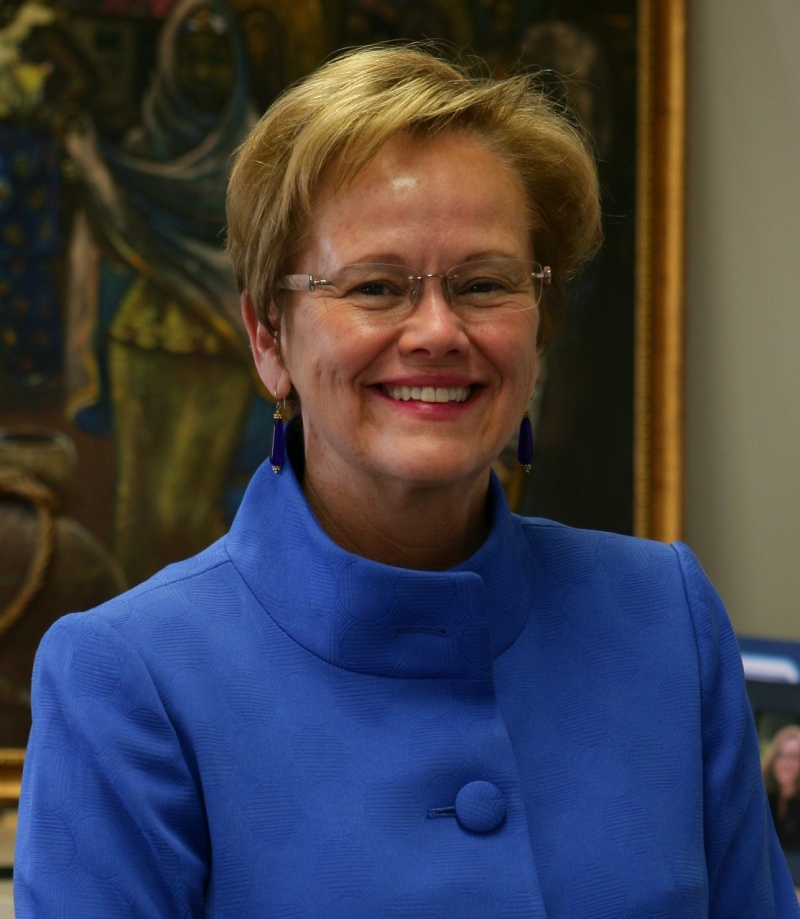






Role Of Dignity Of Labour In Nation Building, By Sunday Adelaja.
One of the numerous reasons why African nations in general and Nigeria in particular are still under developed could be located within the ambit of less emphasis being given to the culture of dignity of labour.
It is with the dignity of labour that makes all types of jobs to be respected, presupposing that no occupation is superior.
It is to be noted that one of the major contributions of the Protestant faith to the world is the culture of dignity of labor. At the time Martin Luther, John Calvin and other leaders of the protestant reformation started their works of reformation in Europe, Europe was as backward and as underdeveloped as most countries in Africa today.
Some of the countries we now respect in Europe, like Germany and England, were so backward and underdeveloped that Germans were known as lazy drunks who despised any form of hard work. In England, things were so bad that the streets of London had homeless people everywhere dying of poverty, prostitution, alcoholism without any hope of things ever getting better.
“Hard work spotlights the character of people: some turn up their sleeves, some turn up their noses, and some don’t turn up at all.” -John Carmack
When the protestant preachers began delivering their extremely fiery messages in the churches and in the streets of Europe, one of their main focus was called the dignity of labor. Which entailed the following facts;
Everybody must get a job.
All jobs must be respected, because they are being done unto God.
By working we become co-workers with God.
Work is a form of service to God.
No occupation is considered superior since everyone is doing his best where he is.
You need to work even if it is a menial or dirty job, because every job is participating in the process of creation.
Everybody must work even if you are not working for money. You must work to actualize yourself.
“He who has a slack hand becomes poor, but the hand of the diligent makes rich.” Ancient Proverb
What this very commendable efforts of preachers did to Europe is that:
It took people off the street.
People were taught that they were created by God and they themselves must become creators like God.
There came a respect and dignity for work.
People began to understand that wealth and success is not a matter of luck.
Superstition regarding work and wealth was broken. Everybody now knew that wealth comes only from hard work, not from some superstitious beliefs.
The society was taught to respect all workers.
Each worker no matter the level, knows he is participating in the process of creation with God hence the dignity.
Every worker knows that by working, he is releasing the nature of God in him. He is becoming creative just like God is creative.
In the process, factories, industries began to spring up all over the place.
It led to industrial revolution with 75 percent of inventions and discoveries being credited to Protestants who were taught in the culture of dignity of labor.
I believe that for Nigeria and other third world countries to truly become developed, we must change the culture and attitude of our people towards work. I see that the culture that is prevalent right now in Nigeria and indeed Africa is the culture of Get Rich Quick.
“The dictionary is the only place that success comes before work. Work is the key to success, and hard work can help you accomplish anything.” ― Vince Lombardi
What the culture of get rich quick does to our people is:
Young men only wish to do prestigious work.
Our young people look for quick answers and solutions.
People want to get something for nothing.
They look down at people who are engaged in manual labor.
Fraudulent money schemes are prevalent in the society
Armed robbery, theft becomes the order of the day.
People don’t believe that hard work is worth it.
People begin to think that there is no natural process to success, hence the fraudulent novel rich (swindlers, drug pushers, 419 scammers etc.) begin to become respected in the society
People forget that they have to create their wealth in their nation. They rather think they must be given.
The escapist mentality becomes prevalent, giving birth to the syndrome of economic refugees.
What the new government of Nigeria and other African governments must do, is to start a massive reorientation campaign in the culture of the dignity of labor. We must bring back dignity to hard work. Our people must once again realize that it is only hard work and excellence that leads to wealth creation.
Wealth gotten from dishonest means will reduce and a diligent worker will enjoy increase
It must once again become a common knowledge to our people that it is only the wealth that we create that we can share. From our primary schools to secondary schools, to tertiary institutions, there must be a mass campaign to educate our people in the value of labor.
Every major outward change must first begin in the mind. So for us to expect development in our nations, we must first bring development to the minds and understandings of our people. The change we quest for outwardly must first be attained inwardly.
One destructive mindset that must be altered in our society is the thought that work is a curse. Some people advocate that if you are truly blessed you don’t need to work hard. Because as they say the “race is not to the swift,” I even heard statements like “a day of favor is better than a thousand years of labor.” To make things worse, this type of teachings are actually coming from our pulpits. We call ourselves Protestants, but we have totally departed from the teachings of the early Protestants. Martin Luther, John Wesley and John Calvin would turn in their graves, if they hear the kind of teachings we are now feeding the people of God with.
While they, the early Protestants focused on forming the nature of God in people, the Protestants of today are focused on gratifying the needs of the people. As a result of their teachings, the early Protestants created a new society that we now refer to as developed and advanced countries. It is the descendants of these early European protestants that later scattered throughout the surface of the earth. Everywhere they went, they took the same message and culture of dignity of labor with them.
As a result, these Protestants that moved to Australia, brought about a quick and accelerated growth and development. When they went to America with the same work ethic and culture of dignity of labor. America quickly became a developed and advanced nation.
The descendants of these early Protestants took this same culture to South Africa, New Zealand, and everywhere they went, they were able to replicate the same work ethic that resulted in growth and development.
Even today in modern Europe, it is a known fact that the most developed countries are the countries with the Protestant tradition while the dominantly Catholic nations like Spain, Italy, and Portugal are less developed.
What I am trying to say is, we must change the minds of our people towards positively relating to work, labor, etc. Our government, media houses, schools, must focus on creating a new culture in our society. A culture of work. A culture of labor. A culture of diligence. A culture of hard work. A culture of perseverance. A culture of persistence. A culture of DIGNITY OF LABOR.
Adelaja is a Pastor and lives in Kieve, Ukraine. [myad]