Nigeria’s Super Eagles have sent their Cameroonian counterparts back to their country with two unreplied goals this evening, January 27 and qualified for the quarterfinals of the ongoing Africa Cup of Nations. They beat their eternal rivals in Abidjan, the capital of Cote d’Ivoire. The two goals from the encounter for the Super Eagles against the Indomitable Lions were scored by Ademola Lookman. Meanwhile, Angola, which had earlier defeated Namibia, will be the quarterfinals opponent of the Super Eagles. The Angolan team defeated Namibia 3-0 also today, January 27.
Ahmed Usman Ododo has been sworn-in today, January 27 as the 5th Governor of Kogi State, taking over from Yahaya Bello, who ruled the state for two terms of eight years. The new governor, who rode to power on the platform of the All Progressives Congress (APC) in November 11, 2023 election, quickly went on to nominate 16 members of his cabinet and made some other vital appointments. It was learnt that majority of the commissioner nominees have served as commissioners in the administration of the immediate past governor, Yahaya Bello, and are to be sent to the State House of Assembly for screening. The appointees are: Mrs. Folashade Ayodele Arike, Secretary to the State Government Ali Bello, Chief of Staff to the Governor Hilary Ojoma, Deputy Chief of Staff Elijah Evinemi, Head of Service. The commissioner nominees are: Farouk Danlami, Salami Ozigi-Deedat, Basiru Abubakar, Adams Abdulaziz, Joseph Oluwaseun, Muzi Yinusa Abdullahi, Wemi Jonze, Rabiatu Okute, Fanwo Kingsley, Fatima Momoh, Mohammed Yusuf, Timothy Ojoma, Sunday Faleke, Abanika Taye, Asiwaju Idris Asiru, and Mohammed Adbulmutalib Other aides include: Jerry Omodara, State Security Adviser Isah Ismail, Special Adviser on Media Sulaiman Ibrahim, Director-General, Protocol Oladele John Niyi, Chief Press Secretary Shaibu Orisa, Director-General, Government House Femi Adegboyega, State Legal Adviser Shortly after taking the oath of office in Lokoja, the capital of Kogi State, Ododo expressed his intention to present the names of the nominees to the House for confirmation as members of his cabinet. Seeking to maintain continuity and build upon previous successes, the governor hoped that the Assembly would give the list swift consideration. It was gathered that governor’s appointments reflect a combination of experienced individuals from the previous administration, highlighting his commitment to blending continuity with the injection of fresh hands for the progress and prosperity of Kogi State.
A twin, Abdulrahim Muhammed Suleiman graduated today, January 27 with a First Class Degree in Metallurgical and Material Engineering, at the Ahmadu Bello University (ABU), Zaria in Kaduna.
His twin brother, Abdulrahman Muhammed Suleiman had earlier graduated from the same university in 2020 with bright Biochemistry Degree.
Their sister, Hafsat Muhammed Suleiman also graduated today from the same university, with a Biological Science Degree. They are Ebira from Okene in Kogi State.
Congratulations from us at Greenbarge Reporters online newspaper and hardcopy magazine.
Chairman of the Kuje Area Council in the Federal Capital Territory (FCT), Alhaji Abdullahi Suleiman Sabo has lamented the security havoc being caused through the activities of miners, especially in his Council. He also identified inadequate roads as another contributory factor to the escalation of kidnapping and other forms of insecurity in the Council. Abdullahi Sabo spoke today, January 27, when the ministry of the FCT, Nyeson Wike, held a town hall meeting with stakeholders in the Area Council, the same way he had done to the other five Area Councils. The chairman sought the intervention of the minister towards addressing the grey areas, pleading for the Minister’s intervention in the construction and dualization of critical road projects in the Area Council. According to him, it is becoming more difficult for motorists and other road users to move around “and this is contributing to insecurity. “Mining activities in the council is also connected to the security challenges and I plead for proper regulation of the activities of miners.”
Abdullahi Sabo confirmed that the Council is still experiencing kidnapping incidents but added however, that the security agencies have been responding to the situation, in spite of the difficulties. He said that the Minister’s visit has boosted the morale of the people, including the community leaders and the security agencies, even as he commended the Minister’s intervention on road constructions across the six Area Councils. Responding, the Minister pledged continuous interactions with the six Area Councils to ensure security and development of the FCT. Wike acknowledged that his visits to the Councils has increased his knowledge of issues that are of great importance to the people. He assured that the dialogue would continue to foster the development of the FCT, saying: “apart from the fact that we are faced with security challenges now, we have decided that FCT is not just Abuja and therefore we have to be interacting with other areas that make up the FCT. “If you don’t interact with them, you won’t know their peculiar problems. We can’t be sitting in the city without coming to you, finding out what your problems are, your immediate problems, so that we will be able to tackle them.” Wike reiterated that security is one of the key priorities of the government of President Bola Ahmed Tinubu, stressing that the Administration has made the necessary procurements to ensure that the security agencies get needed logistics over the next few weeks to secure the territory. “We have purchased vehicles, motorbikes, communication gadgets, name them. So, it will no longer be logistics problems, we are ready for it.” The Minister who expressed shock that the Kuje Area Council with close proximity to the city centre, did not have good motorable roads, in spite of its very massive land mass, said that he has signed the contract for the construction of the road from Rubochi to Kuje. The Minister said that he was surprised that the contract for the roads leading to the resettlement areas in Kuje Area Councils are abandoned, promising that his government will take over the construction of the roads and complete them to improve the security of the area. “Today, let me tell you, I will go back and take those projects and complete them for you…It’s not that we are doing you any good. You are entitled to it. It is our responsibility to provide the infrastructure to make life easy for you. “So, we are not doing anything extra ordinary. It’s our job and under this administration, and promises made by Mr. President and me as your Minister, by the grace of God, you will see changes in this FCT.” The Minister called for the support of the people and the traditional institutions, urging them to provide useful information to the security agencies to enable them address the security challenges. He again, warned criminals and their collaborators in the capital city to give up and repent or be made to face the full wrath of the law. He also called on the Council Chairman to work with the security agencies to ensure that the local vigilantes are profiled and empowered, in addition to also holding regular security meetings in the Council, at least once a month. The Minister equally urged the Council Chairmen to stay in their domains and do what they have been elected to do, rather than going to stay in the city centre. “You can’t run away from your responsibility. Make sure you stay here and know the problems of your people and you will be able to relate it to us, then we will be able to know how we can support you.”
To be sure, hijab is a head covering worn by Muslim women in observance of the Islamic religion. It is a scarf that covers the hair and neck and is a symbol of modesty. The contemporary understanding of the hijab dates back to Hadith when the “verse of the hijab” descended upon the community in 627 CE. It is documented in the Holy Qur’an, Sura (verse) 33:53, stating: “And when you ask (his wives) for something, ask them from behind a partition. That is purer for your hearts and their hearts.” As a matter of fact, the primary intention of the Hijab is to protect women from evil eyes. And referring to this, Allah says: “O Prophet, tell your wives and your daughters and the women of the believers to bring down over themselves of their outer garments. That is more suitable that they will be known and not be abused.” Now, the general essence of the hijab is to make women and girls in Islam as special breed in many ramifications: dressing, attitudinal displays, inter-relationships with others and in the society and so on. It encompasses morals and good upbringing of the female gender, in consonance with ideals expected of pious women in Islam. Hijab had recently became a trend in some communities across the world, in which the longer the veil (hijab) the more pious and morally right the wearers are regarded. And, the recent developments in Nigeria as regard the issues of corruption and the fight against it have left sore taste in the mouth, against the hijab sisters. The controversies about fraud and misappropriation of funds at the Federal Ministry of Humanitarian affairs in recent time casted a shadow over what an ideal “hijab sister” should be. What have been trending are issues of the former minister in charge of the said Ministry, Hajiya Sadiyya Umar Farouq, a hijab sister; former Head of the National Social Investment Programme, Halima Shehu, another hijab sister and Dr. Betti Edu, who until her suspension over alleged financial mishaps, also a “hijab” sister” (as she used to sometimes wear hijab, all run against the essence of the hijab concept. Though Dr. Edu is Christian, she has often conformed with the Islamic ways of dressing, using hijab whenever she is on assignment to areas predominantly Muslims. The dressing styles of these women and the conduct in public reflected the true essence and practice of Islam, and truly caught the admiration of many of us who are Muslims. But the matter concerning them that are however, still under investigations, have left many of their admirers worrying. The worries are not just about the other sides of them, true or false, that are emerging, but also about the new public perception of where they belong and what they claim to represent in the religious realm. This write up, of course, is not about whether certain money is missing or not , nor whether one person is indicted or not, rather, it is about the “morals” attached to the wearing of hijabs with which they have been identified vis a vis the new image that is threatening to obliterate the morals they have built, which also directly or indirectly link to the much talk about gender equality or the call for 30% affirmative action for women in government circle.
Rashidat Yusuf writes from Abuja. Yusufrashidat12@gmail.com
Chairman of the Lagos State Peoples Democratic Party (PDP) Philip Aivoji has been kidnapped on Lagos-Ibadan expressway. The Lagos State PDP Publicity Secretary, Alhaji Hakeem Amode said in statement today, January 26, that Aivoji was abducted by unknown kidnappers yesterday, January 25. “Aivoji was abducted on Thursday, Jan. 25 at about 6.00 p.m. on the Lagos-Ibadan expressway while returning from a stakeholders meeting in Oyo State convened by Gov. Seyi Makinde and Gov. Ademola Adeleke of Osun. “It is disheartening that kidnapping has become a prevalent issue in our country, and the government’s inability to address this menace is deeply concerning. “The abduction of Aivoji underscores the pressing need for decisive actions from the government and stakeholders to eradicate this menace. “Aivoji’s abduction was a violent incident, and his current whereabouts or any communication from the abductors remain unknown. “We implore the governments of Oyo State, Ogun, and Lagos State alongside security agencies, to expedite efforts and secure his safe return to his family and well-wishers.” The PDP spokesman said that with increased efforts from security agencies, Aivoji would be rescued from these criminals. “We call on the public to support initiatives aimed at ending this threat to innocent lives.” This is even as the PDP 2023 governorship candidate, Dr Abdul-Azeez Olajide Adediran, expressed shock over the news of kidnapping of the party chairman. He demanded urgent action against insecurity. Adediran, in a statement by his spokesman, Gbenga Ogunleye, recounted that Aivoji and some other members of the party were kidnapped while on their way from a party function in Ibadan on Thursday. He described the incident as unfortunate and a disturbing dimension to the growing insecurity in the country, especially in the south western part of the country. He advised the government to intensify efforts in the area of security to end putting the lives of the citizens in grave danger. “We demand urgent action from the security agencies to facilitate immediate release of the abducted party chairman. “We also advise that the regional local security outfit, Amotekun, should collaborate with the police in this rescue mission.” Adediran prayed for divine intervention as he enjoined the party faithful not to despair but to keep praying for the speedy release of the kidnapped chairman and others. Source: NAN.
Residents of Kogi state and well-wishers would tomorrow, Saturday, January 27, converge on the Muhammadu Buhari Square to witness the transition of power from Governor Yahaya Bello to the Governor-elect and his erstwhile Auditor General for Local Governments, Alhaji Ododo Ahmed Usman “OAU.” The atmosphere in the state is carnival-like. An attempt by this reporter to book an hotel in Lokoja, the state capital, two weeks before the D-Day was unsuccessful as every available hotel room in the ancient city had been booked ahead by people from all walks of life who want to be witnesses to history. Perhaps, an evidence of the popularity of the mandate freely given to Alhaji Ododo on November 11, 2023. Like bees to a nectar, so is the name, Ododo, which literally means flower in his native Ebira language. Both the governor and the governor-elect have been reaching out to people, preaching the ‘One Kogi’ gospel even before and after the election. Only few days ago, Gov. Yahaya Bello received in his Abuja home, his immediate predecessor, Capt. Idris Wada who is of the opposition Peoples Democratic Party PDP. Wada commended Bello for his sterling performance in the last eight years and promised to also support the incoming administration of Ododo. Thereafter, the Governorship Candidate of the African Democratic Congress ADC and a member of the House of Representatives, Hon. Leke Abejide also visited Gov. Bello in a move that upset conventional expectations and shocked political analysts who had thought that the outcome of the governorship election had created a gulf between the duo. Curiously however, Hon. Abejide expressed his unalloyed commitment to the Kogi Project under Alhaji Ododo. “Your Excellency, let me congratulate my brother, Ahmed Usman Ododo, the governor-elect of our dear state once again. We all ran a good race and we also believe that at the end of it, only one candidate will emerge and we have Ododo as that candidate today. My participation in politics is about the people and once elections are over, all issues around it must be put behind to forge a progressive administration. “The interest of our people supercedes that of individuals. I will support Ahmed Usman Ododo to succeed in the interest of our people,” Abejide had told Governor Bello. As Ododo takes over, a former coordinator of Kogi Peoples Movement, Aliyu Ismaila has however called on the Governorship candidates of the Social Democratic Party SDP, Alhaji Murtala Yakubu Ajaka and that of the Peoples Democratic Party PDP, Senator Dino Melaye to bury the hatchet and join hands with the new administration in the interest of peace and development. He said: “Those who seek to exercise political power must be able to discern when to keep fighting and when to stop. Now’s the time to stop and queue behind the incoming administration. “Elections would always come and elections would always be won by an individual. Both Ajaka and Dino used to be in the same camp with Yahaya Bello. So what changed? Why the sudden animosity against the governor?” Indeed, Dino was so close to Bello that eight years ago, during the inauguration of the Gov. Bello, the then Kogi West Senator, had told the audience that “Kogi people voted for Audu, but God voted for Yahaya Bello.” While residents are upbeat about tomorrow’s event, Gov. Bello has himself been carrying a long the Governor-elect, meeting with relevant stakeholders and the business community. At a time when some governors would wish they had more days in office, Bello seem eager to leave, having prepared a worthy successor to continue with the state’s 32-year development plan. Apart from delegating some responsibilities like projects commissioning to the incoming governor, Bello on Wednesday in Lokoja, freely handed over his red pen to Ododo – a symbolic transfer of power, even days before his tenure would elapse. The red pen is not often used in writing, yet it is perhaps the most powerful in our world. Some of the words associated with it are; “Approved”, “Treat”, “Deal” and “Proceed”. It had in some cases precipitated conflicts between predecessors and their successors. However, in Kogi, Gov. Bello may have set an example for his peers by willingly relinquishing his red pen even days before the official handover. Unlike in some states where past officials have to be chased around to hand over some government property or documents in their possession, Gov. Bello had since concluded the handing over processes in some Ministries, Departments and Agencies MDAs, and only retained few officials who he also directed to conclude their handing over processes on the eve of Ododo’s inauguration.
When Malam Jalal Ahmad Arabi assumed office as the Chairman of the National Hajj Commission of Nigerian (NAHCON) on the 18″ of October, 2023, he made a solemn pledge to pursue the acronym mantra of T.S.A (Trust, Sacrifice and Allah sees everything) in the administration of Hajj. He made it clear that he had not come to overturn everything achieved by the former Board of the Commission but to tinker with areas that needed improvement and build on the achievement in other aspects of the exercise. Now, four months down the line, Malam Jalal Arabi – a tested bureaucrat who retired as a Permanent Secretary in the Federal Civil Service has made some delve moves which has struck the heart of Hajj administration process, In fact by navigating uncharted territory where the fearless make history, he has demonstrated that with dedication, commitment, and support of Stakeholders, Hajj operation can be made a wonderful experience. Let me take you on the highlight of the journey so far. The new era began with the de-briefing by the various operational committees to appraise the challenges and the overall performance and problems encountered during the 2023 Hajj and, to examine the strategic work plan on how to attain a sustainable development in the 2024 exercise. It is a common knowledge that the signing of Memorandum of Understanding (M. O. U) usually mark the curtain raiser and the commencement of Hajj activities and preparation. The steps taken so far in the first Pre- Hajj Visit have been quite inspiring with the bottom line being the strategy to beat down the cost of Hajj. It is a famous saying that the longest journey begins with a single step, In this connection, the Commission’s helmsman began a high stakes meeting with the Service providers starting with the Muttawi-the company responsible for the provision of services in,Muna, Arafat and Muzdalifa (Mashair) With light pleasantries, he sets a more upbeat tone for talks full of prickly topics, With fiexibility and adaptablity, he told them that if they indeed wanted to receive a large Contingent of pilgrims, they must bring down the cost of service. According to him, “the adverse economic problem in the country has led to low turn-out of pilgrims and therefore the high cost will adversely affect you too. So we need to bring down the price, so that you can also provide service. We have to look deep in order to reduce the price. If we don’t make it easier for the pilgrims, we may not have the pilgrim. Therefore, whatever concession you can reduce for the sake of pilgrims, so that could be able to pay.” Having achieved a deal with the Mutawiff, the Chairman shifted attention to the accommodation and catering providers for concession. After the staggered meeting with most of the accommodation providers which turned joyous as they also agreed to reduce the cost. The NAHCON helmsman gave little away as he shifted attention and put into gear another negotiation meeting with the catering service providers. It is an axiom that “no matter how much one tried to reach or teach perfection, it is a distance goal that cannot be reached “. It is in light of the above, no agreement has yet been reached with the catering providers to bring down their charges, but there is a ray of hope in this direction too. This year’s Hajj could propel the Nation forward to bigger and better things in the near future or it could be a bucket of cold water. We however hope for the former and that brighter days are ahead especially, with the heartwarming news from the Islamic Development Bank (IsDB) who had pledged to look into the request of the Commission to explore the Hajj as not only a spiritual experience but also it’s business end to guarantee the economic development where the Country can export its abundant human and economic resources to the Holy land. While presenting his position during his visit to the IsDB headquarters in Jeddah, Malam Arabi had emphasized the need for the Islamic Bank to assist the Country through employment of high-grade professionals as well as importations of livestock from Nigeria as one of the biggest partners in the West African Sub-Region. Although, no deal was reached on this, however the delegation was able to extract a promissory notes from the Bank to continue to assist the commission in training sponsorship, capacity building of the staff engagement of Nigerian veterinary professionals in the seasonal activity of slaughtering of rams etc. As we sprint towards the 2024 Hajj, there is a chance of a happy ending with the Commission already laying the ground work for the success of the exercise. It is therefore, imperative that for the attainment of any sustainable development, unity is important – meaning everyone must be irrevocably committed as an indivisible Hajj family. “We must all come together to propagate a new and positive narrative that Nigeria is ready to harness her own resources to become a global player in the Hajj Industry.”
Ubandawaki is Deputy Director, Information and Publication, NAHCON, Abuja.
A private jet, carrying 10 people, including some Very Important Persons (VIPs), has ran into a bush at the Ibadan airport runway in the Oyo State capital. A source said that the incident happened today, January 26, at about 11 am at the Samuel Ladoke Akintola Airport. The jet, with registration number, N580KR, missed the runway and skidded into the nearby bush. Firefighters and rescue officials from the Federal Airports Authority of Nigeria (FAAN) were immediately deployed to the scene. But there was no death or casualty recorded. Spokesperson for the Nigerian Civil Aviation Authority (NCAA), Carol Adekotujo, confirmed the accident. She said: “It was a private plane from Abuja. “It landed safely but overshot the runway. There was no casualty.” Also, spokesman for the Nigerian Safety Investigation Bureau (NSIB), Tunji Oketunmbi, confirmed the incident but said a team has been dispatched to the site for a probe. Just in November last year, the Minister of Power, Adebayo Adelabu, escaped death when a plane he was flying in, crash-landed at the same airport.
Former Nigeria’s Vice President, Atiku Abubakar, has raised a lot of questions over what he called “the NNPC $3.3bn emergency loan. In a statement today, January 25, which he personally issued, Atiku recalled that in what appeared to be a landmark economic decision of the President Bola Tinubu-led administration, the Federal Government, on August 16, 2023 through the Nigeria National Petroleum Company (NNPC) secured a $3.3 billion emergency crude repayment loan. He recalled that the NNPC said that the loan would help give support to the Naira and stabilize the Foreign Exchange market. “The curious thing about this transaction is that up till now, the Federal Government continues to keep mum about it, and the only information available to the public on the mega deal is coming only through unofficial sources from the NNPC. “The deal is supposed to be a crude-for-cash loan arranged by the African Export-Import Bank. “According to information available, a Special Purpose Vehicle called Project Gazelle Funding Limited is driving the deal, and it was incorporated in the Bahamas. “The SPV is the borrower while the NNPC is the sponsor, with an agreement to pay with crude oil to the SPV in order to liquidate the loan at an interest rate that is a little over 12 per cent. “What is even more confounding about this deal is why the Federal Government would register a company in the Bahamas, knowing full well the recent scandal of the Paradise Papers that involved that country. “Curiously also, Nigeria’s current Barrels Produced Daily (BPD) is 1.38 million, and according to the Project Gazelle deal, Nigeria is to supply 90,000 Barrels of its daily production, starting from 2024 till it is up to 164.25 million barrels for the repayment of the loan. “Now, this is where the details get disturbing because Nigeria’s benchmark for the sale of crude per barrel in 2024 is $77.96. A simple multiplication of that figure by 164.25 will give us a whooping $12bn.” Atiku, who was the Presidential candidate of the main opposition People’s Democratic Party (PDP) in the 2023 election, called on the Federal Government to speak up “on this shady deal.” He said that it is inconceivable that the Federal Government will lead the country to take a loan of $3.3b with an interest rate that is not more than 12 per cent, but with estimated repayment amounting to $12 billion. “That is a humongous differential of about $7b between what is in the details of the deal on paper and what indeed is the reality.” “We therefore demand, on behalf of the ordinary people of Nigeria, that the Federal Government provides answers to the following questions. 1. Has the Federal Government accessed the loan? 2. Is the loan in the government’s borrowing plan as approved by the National Assembly? 3. Who are the parties to the loan, and what specific roles are they expected to play? 4. What are the conditions to the loan, including tenor, repayment terms, the collateral, and the interest rate? 5. And, lastly, why register an SPV in the Bahamas knowing the recent scandal of the country’s notoriety for warehousing unclean assets?”
We use cookies on our website to give you the most relevant experience by remembering your preferences and repeat visits. By clicking “Accept”, you consent to the use of ALL the cookies.
This website uses cookies to improve your experience while you navigate through the website. Out of these, the cookies that are categorized as necessary are stored on your browser as they are essential for the working of basic functionalities of the website. We also use third-party cookies that help us analyze and understand how you use this website. These cookies will be stored in your browser only with your consent. You also have the option to opt-out of these cookies. But opting out of some of these cookies may affect your browsing experience.
Necessary cookies are absolutely essential for the website to function properly. This category only includes cookies that ensures basic functionalities and security features of the website. These cookies do not store any personal information.
Any cookies that may not be particularly necessary for the website to function and is used specifically to collect user personal data via analytics, ads, other embedded contents are termed as non-necessary cookies. It is mandatory to procure user consent prior to running these cookies on your website.







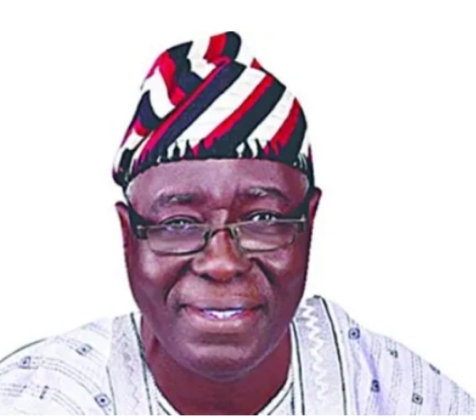
 Chairman of the Kuje Area Council in the Federal Capital Territory (FCT), Alhaji Abdullahi Suleiman Sabo has lamented the security havoc being caused through the activities of miners, especially in his Council.
 Abdullahi Sabo confirmed that the Council is still experiencing kidnapping incidents but added however, that the security agencies have been responding to the situation, in spite of the difficulties.





Kogi Bubbles As Ododo Takes Over From Gov Yahaya Bello, By Omeiza Ajayi
Residents of Kogi state and well-wishers would tomorrow, Saturday, January 27, converge on the Muhammadu Buhari Square to witness the transition of power from Governor Yahaya Bello to the Governor-elect and his erstwhile Auditor General for Local Governments, Alhaji Ododo Ahmed Usman “OAU.”
The atmosphere in the state is carnival-like. An attempt by this reporter to book an hotel in Lokoja, the state capital, two weeks before the D-Day was unsuccessful as every available hotel room in the ancient city had been booked ahead by people from all walks of life who want to be witnesses to history. Perhaps, an evidence of the popularity of the mandate freely given to Alhaji Ododo on November 11, 2023. Like bees to a nectar, so is the name, Ododo, which literally means flower in his native Ebira language.
Both the governor and the governor-elect have been reaching out to people, preaching the ‘One Kogi’ gospel even before and after the election. Only few days ago, Gov. Yahaya Bello received in his Abuja home, his immediate predecessor, Capt. Idris Wada who is of the opposition Peoples Democratic Party PDP.
Wada commended Bello for his sterling performance in the last eight years and promised to also support the incoming administration of Ododo.
Thereafter, the Governorship Candidate of the African Democratic Congress ADC and a member of the House of Representatives, Hon. Leke Abejide also visited Gov. Bello in a move that upset conventional expectations and shocked political analysts who had thought that the outcome of the governorship election had created a gulf between the duo.
Curiously however, Hon. Abejide expressed his unalloyed commitment to the Kogi Project under Alhaji Ododo.
“Your Excellency, let me congratulate my brother, Ahmed Usman Ododo, the governor-elect of our dear state once again. We all ran a good race and we also believe that at the end of it, only one candidate will emerge and we have Ododo as that candidate today. My participation in politics is about the people and once elections are over, all issues around it must be put behind to forge a progressive administration.
“The interest of our people supercedes that of individuals. I will support Ahmed Usman Ododo to succeed in the interest of our people,” Abejide had told Governor Bello.
As Ododo takes over, a former coordinator of Kogi Peoples Movement, Aliyu Ismaila has however called on the Governorship candidates of the Social Democratic Party SDP, Alhaji Murtala Yakubu Ajaka and that of the Peoples Democratic Party PDP, Senator Dino Melaye to bury the hatchet and join hands with the new administration in the interest of peace and development.
He said: “Those who seek to exercise political power must be able to discern when to keep fighting and when to stop. Now’s the time to stop and queue behind the incoming administration.
“Elections would always come and elections would always be won by an individual. Both Ajaka and Dino used to be in the same camp with Yahaya Bello. So what changed? Why the sudden animosity against the governor?”
Indeed, Dino was so close to Bello that eight years ago, during the inauguration of the Gov. Bello, the then Kogi West Senator, had told the audience that “Kogi people voted for Audu, but God voted for Yahaya Bello.”
While residents are upbeat about tomorrow’s event, Gov. Bello has himself been carrying a long the Governor-elect, meeting with relevant stakeholders and the business community.
At a time when some governors would wish they had more days in office, Bello seem eager to leave, having prepared a worthy successor to continue with the state’s 32-year development plan.
Apart from delegating some responsibilities like projects commissioning to the incoming governor, Bello on Wednesday in Lokoja, freely handed over his red pen to Ododo – a symbolic transfer of power, even days before his tenure would elapse.
The red pen is not often used in writing, yet it is perhaps the most powerful in our world. Some of the words associated with it are; “Approved”, “Treat”, “Deal” and “Proceed”.
It had in some cases precipitated conflicts between predecessors and their successors. However, in Kogi, Gov. Bello may have set an example for his peers by willingly relinquishing his red pen even days before the official handover. Unlike in some states where past officials have to be chased around to hand over some government property or documents in their possession, Gov. Bello had since concluded the handing over processes in some Ministries, Departments and Agencies MDAs, and only retained few officials who he also directed to conclude their handing over processes on the eve of Ododo’s inauguration.