President Muhammadu Buhari, yesterday, spoke to the wife of the late Nigerian Ambassador to the United States, Professor Ade Adefuye, describing him as a great and remarkable patriot whose contributions to the development of Nigeria were immeasurable. According to the special senior assistant to the President on media and publicity, Mallam Garba Shehu in a statement, President Buhari told the wife of the late Professor that he was profoundly shocked by the sudden death of the distinguished top diplomat and historian. President Buhari told the wife of the late envoy, who is still in the United States, that her late husband had contributed immensely to making his official engagement in the United States of America fruitful and successful. President Buhari recalled that late Professor Adefuye attended all his engagements during the July official visit to the White House and other places in the United States of America, stressing that he is proud to encounter such a patriotic diplomat, who put higher national interest above partisan loyalty. Buhari wanted such fine virtues of the late envoy to be emulated by other Nigerian leaders, even as he prayed to God to grant the deceased eternal rest in peace, and to give his family the fortitude to bear the loss of this great Nigerian senior diplomat. [myad]
Dr Fatima Atiku, daughter of former Vice President Atiku Abubakar and newly appointed Adamawa Commissioner of Health has forfeited her salary and allowances for use in revitalizing the health sector in the state.
Fielding questions from newsmen in Yola on Friday after being sworn -in along with 21 other commissioners, Fatima, a Consultant, said she was making the sacrifice because of the numerous challenges in the health sector.
“I am very grateful to the governor for appointing me to head the Health Ministry. The ministry is the most challenging because of the insurgency problem that had caused some damage to the health system in the state.
“For this reason, I shall be donating my salary and allowances for use in enhancing the delivery of healthcare service in the state,” Fatima said.”
Speaking earlier while administering the oath of office on the Commissioners, Governor Bindow Jubrilla said that their appointment was based on merit.
He advised them to join hands with him in bringing the desired change in the state, adding that their loyalty should be to the people, and not him.
“Your loyalty is to the people of Adamawa, whom you represent, and not to me”, Jibrilla said.
Responding on behalf of the commissioners, the Commissioner for Education, Mrs. Kaletapwa Farauta, thanked the governor for the appointment, assuring that they would not betray the confidence reposed in them. [myad]
A weekly magazine publisher, simply identified as Solomon, has committed suicide over poor sales of his publication. The incident happened on Friday in Asaba, Delta State.
According to reports, the publisher, who resided in Achalla Layout area of Asaba, left a suicide note which reads: “I cannot stay alive suffering when nobody is helping me. Even my wife and children abandoned me and sales in my newspaper business have been very poor.”
His wife, Rosemary, however, denied the allegation, describing the claim as untrue, while insisting that her husband took his life when it became obvious that he was lazy and was criticised by his friends and relations.
The Delta State Commissioner of Police, Baba Usman, said the police had interrogated the wife and daughter of the deceased, adding that the body of the publisher was found dangling from a tree branch behind his house.
The late publisher’s son, Frank, while speaking to reporters, said: “I knew my mum and my sister contributed to what my father did, and that was what I told the police. And anytime my father tried to complain, my mum and sister would shut him up after they had allegedly lavished the N300,000 he took from a cooperative society as loan.” [myad]
No fewer than 38 virgins have been killed in an auto crash on their way to the festival where Swaziland King chooses wives.
It is gathered that a long time tradition in Swaziland (Swazi) permits the King, Mswati to choose a new bride every year, in August, in the Swazi Reed Dance Festival where the King parades and tests half-naked under aged virgin girls publicly to ascertain that their virginity was still intact.
The Sherburne-educated king is known to pick his wives from the girls who perform for him at the traditional dance, a tribute to the queen mother. The King had chosen a 19-year-old virgin from the dancing maidens last year August, who became his 14th wife.
Times of Swaziland reports that dozens of girls and young women were killed during the weekend, as they travelled to the traditional festival where the King of Swaziland was to pick a new bride from thousands of topless, dancing virgins.
“When the open-topped truck collided with another vehicle, before being hit by a second truck as it travelled along a motorway between the Swazi cities of Mbabane and Manzini earlier this weekend, at least 38 girls who were to partake in the annual event, lost their lives,” according to the report, “and about 20 survivors were being treated.”
As the story goes, the authorities in Swaziland are being accused of trying to cover up the accident from human rights group.
The Swaziland Solidarity Network (SSN) claimed the police attempted to discourage media report on the deaths.
Photographers were however, restricted from the scene according to Swazi journalist, for security reasons, but reports on the tragedy, described the scene as chaoic, as parents began to arrive at the Raleigh Fitkin Memorial Hospital, in Manzini.
One of the survivors, Siphelele Sigudla, 18, told newsmen: “We were about 50 on board the first truck that smashed into the Toyota van.”
The SSN has called on the royal family to reconsider going ahead with the festival, which sees about 40,000 participating in the eight-day ceremony.
“We hope that the families of the deceased girls will hold the royal family accountable for the deaths of their children,” the SSN group said in a statement, as it alleged a similar incident had been covered up previously.
“The least that the royal family can do at this moment is to cancel this year’s reed dance.”
The King in his condolence statement, said: “We all have heard about the dark cloud that has befallen the ‘imbali,” he said, using the Swati language word for flower, used to refer to the groups of women dancers.
Speaking at the opening of an international trade fair in Swaziland’s economic center Manzini, he promised that the affected families would be compensated; adding that investigation into the accident was ongoing. [myad]
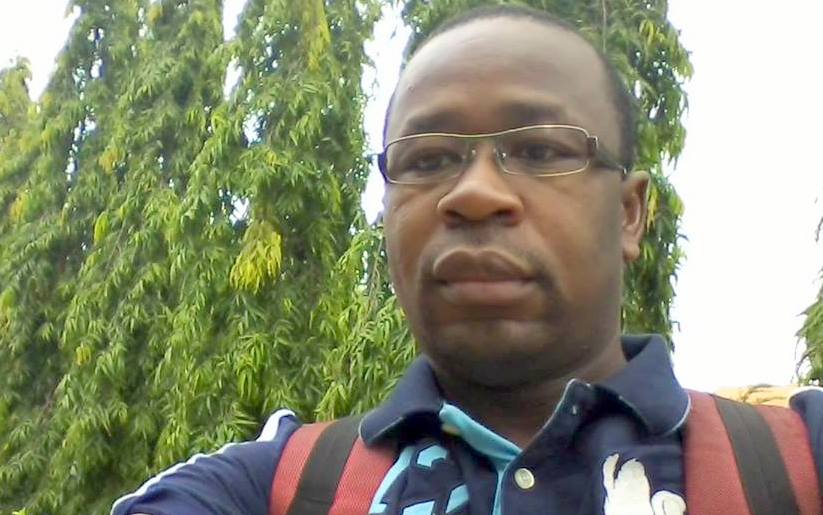
A Nigerian-based Cameroonian journalist, Simon Ateba has been arrested and is being detained by the Cameroonian military authorities on charges of espionage. He has been accused of spying for the Boko Haram insurgency group which is waging a Jihadist war in north east Nigeria.
Mr. Ateba, a Cameroonian wo has worked as a journalist in Nigeria for over a decade, was arrested on Friday afternoon at the Minawao refugee camp and taken to Makolo in the far north of Cameroon and has spent two nights in detention.
Meanwhile, the President of the Cameroon Union of Journalists (CUJ), Charles Ndi Chia, and the Committee for the Protection of Journalists (CPJ), have condemned the journalist’s arrest and demanded that he be immediately released.
Nkwebo described Ateba’s arrest as high handed, observing that the journalist had not committed any offence by going to report on activities there.
“He is a Cameroonian even if he is working in Nigeria and he has not committed any offence by going to report the refugee situation at the camp. We condemn his arrest as he was arrested in the course of doing his legitimate journalistic work and demand his release,” Mr. Nkwebo stated.
According to the Cameroon journalists’ union president, there is no law in the country which forbids any journalist from reporting the refugee camps.
Nkwebo added that the military authorities even had no right to arrest anybody for going into the refugee camps since the facility is controlled and run by the United Nations High Commission for Refugees, UNHCR, and not the government.
“I have gone there to report events there at the camp many times and even taken photographs and nobody stopped me,” he observed.
He lamented that even local journalists suffer repression in the hands of the military authorities, noting that journalists in Cameroon had been dragged to military tribunals before for possessing information that the authorities think they should have shared with the government.
“Freedom of expression is under attack in Cameroon and journalists in this country will continue to resist all attempts to supress the Press,” Mr. Nkwebo asserted.
Chia is also reported to have condemned Ateba’s arrest and promised to do everything possible to effect his release. According to Bisong Etabohen, a Cameroonian journalist and publisher, who spoke to our reporter on Saturday, Mr. Chia, expressed dismay at the arrest and promised to ensure that he is released as soon as possible.
In its own reaction, the CPJ, in a brief statement issued Saturday by its West African representative, Peter Nkanga, said the journalist’s arrest and continued detention was uncalled for as he was doing legitimate business of reporting an issue of public interest.
“Authorities should release Simon Ateba immediately and allow journalists access to the camp, and the people within, to report those stories of public interest which have remained shrouded in secrecy and underreported for too long,” mr. Nkanga stated.
Ateba was arrested at the Minawao refugee camp in the far north of the country at about noon on Friday and taken to Mokolo, some twelve kilometres away, where he was detained.
He was in Cameroon to report on the conditions of refugees in the camp when he was arrested and accused of spying for the dreaded Boko Haram insurgency group.
He said he has been told that he would be taken to Yaoundé, the Cameroonian capital, and handed over to the secret police to be tried for espionage.
Dayo Aiyetan, executive director of the International Centre for Investigative Reporting, ICIR, which awarded a grant to Mr. Ateba to conduct the investigation, expressed worry that the journalist’s whereabouts are no longer known as nobody has been able to reach him since Saturday afternoon.
“I was in contact with him even as he was detained but since about 4.00 pm or so I have not been able to reach him,” Mr. Aiyetan stated Saturday evening.
He added that Mr. Ateba complained that he had not been given food or water for over 24 hours and had not been allowed to buy drugs to treat a feverish condition that developed after he was beaten by rain.
When contacted over the matter, the Cameroon minister of information, Issa Tchiroma Bakary, said he was not aware of the journalist’s arrest. Although the minister was told that he had not been fed or given access to medication to treat a fever, he said that there was nothing he could do until Monday or Tuesday. [myad]
Former governor of Kogi state, Prince Abubakar Audu has defeated 26 other All Progressives Congress (APC) governorship aspirants, including, Yaya Bello, to clinch the party’s ticket for the governorship contest, scheduled for November 26.
Audu won the majority of the 3,044 votes in the party primary election that ended around 4:00 am Nigerian time earlier today.
Audu was governor of Kogi state until 2003 after which he was arraigned by the Economic and Financial Crimes Commission (EFCC) for money laundering and theft of Kogi state funds.
His trial is ongoing as at the time he was declared winner of the APC primary election today.
Declaring the results in the early hours of today, Sunday, the Chief Returning Officer for the primaries, Governor Nasir El-Rufai of Kaduna State announced that Prince Abubakar Audu polled the highest number of votes to defeat his closest rival, Alh. Yahaya Bello.
The Governor appealed to other contestants in the race to accept the result, saying the Electoral Panel did all within its powers to ensure a free and fair primary election.
“What we have seen here today is a reflection of the change we represent. We have ensured the conduct of a free and fair primary election which has reflected the true wishes of our party in the state. I urge you all to embrace the outcome and work for the success of our party in the next governorship election,” he said.
Also speaking after the primaries, one of the aspirants, Dr. Hameed Yaqeen hailed the process as free, fair and transparent. Prior to the primaries, many believe that the contest will be tight. But the stepping down of one of the frontrunners, Barr. Tunde Irukera changed the contest.
It was said that an alliance was formed between the main forces in the election.
Sanusi Abubakar Gamji, billionaire businessman became a forerunner with the alleged support of the three Senators in the state.
However, the forces working for the emergence of Prince Audu changed the game with last minute horse trading. [myad]
No fewer than 19,000 Muslims from different parts of the country have already been airlifted to Saudi Arabia for the 2015 pilgrimage. The National Hajj Commission of Nigeria (NAHCON) has enlisted 76,000 Muslims for the hajj rites this year.
The Director, Public Affairs of the commission, Uba Mana, said in Abuja that the airlift had been hitch free since it began on August 23.
According to Mana, the commission has so far recorded 49 flights of pilgrims mostly from Kaduna, Lagos, Sokoto, Katsina, Oyo, Lagos, Zamfara and Kogi.
The media chief said that most of the pilgrims were airlifted direct to Medina, where they were expected to spend seven days before proceeding to Mecca, while others were transported to Jedda.
“Buses are readily available at Jedda International Airport to transport pilgrims to Medina. Those airlifted to medina on August 23, will move to Mecca on August 29.”
Mana said that the airlift would be concluded on September 15 and that no pilgrim will be left behind. [myad]
Muhammadu Buhari’s Presidency has asked the leadership of Peoples Democratic Party (PDP) to shut up their mouths, describing the achievements in economy which they attributed to former President Goodluck Jonathan under the party as deceptive and fake. The presidency further advised the PDP to stop what it called the “pathetic efforts to play down President Buhari’s achievements in his first 100 days in office and (that PDP should) bury its head in shame for subjecting Nigeria to the worst economic plunder through corruption in its recent history.”
The PDP’s National Publicity Secretary, Olisa Metuh had, during the week, issued a statement, saying that the nation’s economy is going down under the APC administration, but the Senior Special Assistant to the President on Media and Publicity, Malam Garba Shehu, said that the economy of Nigeria was gasping for breath under the corrupt PDP administration before APC came in on a rescue mission. According to Garba Shehu, the country was witnessing an acceleration of poverty, a situation, he said, led to Nigerians uniting to vote for APC to effect the needed change. Garba Shehu said that the excruciating hardships experienced by Nigerians under the PDP misrule was unprecedented and that it is ridiculous for any sane government to artificially rebase the economy and claim to transform Nigeria into the largest economy in Africa as the PDP administration did. He said that the defeated former ruling party was artificially manipulating statistics to create the illusion of impressive economic performance record. The Presidential media aide made it clear that one falsehood built on another cannot stand, adding that if the PDP claim of economic successes in terms of GDP, employment generation, poverty alleviation and others were genuine, Nigerians would not have voted the party out of power. Garba Shehu wondered why Nigerians, who PDP said were contented, voted it out of office if its President and other leaders were performing. He said that the PDP’s assumed performance was nothing more than window dressing and a detachment from reality, adding that no economy can grow with corruption, in which the PDP administration demonstrated more competence. He made it clear that criticism for its own sake is not the Hallmark of credible opposition, even as he said that Nigerians no longer face exploitation at filling stations as the Buhari’s government is taking punitive measures against marketers that punish poor Nigerians. Queues, Garba Shehu added, have disappeared at the filling stations as the naira is also enjoying favourable exchange rate. The Media aide said that the Buhari administration has successfully blocked leakages and other avenues for corruption which he said the previous PDP administration lacked the will or the desire to stop. As a result of the measures to block leakages, he said, the Buhari administration has frustrated the efforts by corrupt elements to divert public funds to private pockets. Garba Shehu promised that once the trial for corruption begins formally, “the PDP might no longer have the moral legs to stand on, let alone talk down on Nigerians with fake claims of economic miracles under its most incompetent and grossly purposeless and sleazy administration.” [myad]
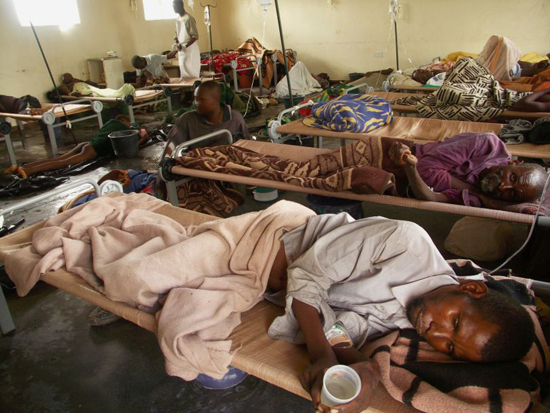
Authorities in Bauchi state have reported cholera outbreak in parts of the state, resulting in the death of 20 people and hospitalization of 200 others.
The outbreak is reported in Bakul, Dunmagari and Gallari and many other communities in Shira Local Government Area of the State.
A statement today by the Information Officer of the local government, Malam Danlami Baza, said that the Acting Chairman of the council, Alhaji Usman Mashema, advised the residents to come out for treatment as soon as they noticed any sign of cholera.
He appealed to the Federal and State Governments as well as donor agencies to come to the aid of those affected. [myad]
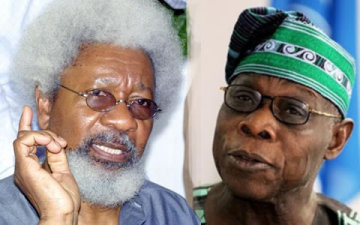
Former Nigeria President Olusegun Obasanjo and the Nobel laureate, Professor Wole Soyinka have literarily gone into the market square, fighting each other, calling each other liars, illiterates and other invectives.
It was Chief Obasanjo who started it in his book titled: ‘My Watch’, in which he said that Soyinka is good at hunting and wines but a political illiterate.’
But responding to Obasanjo’s insult on Friday night when he was answering questions during a programme tagged: ‘An evening with Wole Soyinka’, organised by Globacom, Soyinka said that he was hardly bothered because he believed that Obasanjo is a liar.
“Obasanjo is entitled to his opinion. But the question is: Who respects the opinion of a liar? I can spend the whole night proving that he is a liar. Obasanjo was once described by an economist, the late Prof Ojetunji Aboyade, as an economic illiterate. They nearly ‘went into blow’ that night. It was Prof. Mabogunje who separated them.
“So, if an economic illiterate calls somebody a political illiterate, no problem at all.
“In ‘My Watch’, Obasanjo told the first lie when he said he deplored lies. Anybody who said he never plotted to have an unconstitutional third term in office, even as a writer, I need a word to describe him.”
The former President and the Nobel laureate have been in a running battle taking swipes at each other over a lingering issue between them. Obasanjo had once stated that Soyinka once vowed that the differences between the two of them would not be resolved on earth.
Obasanjo had also in his book, My Watch, and at public events described Soyinka as an expert in wine matters than in political analysis.
He had said: “For Wole, no one can be good, nor can anything be spot-on politically except that which emanates from him or is ordained by him. His friends and loved ones will always be right and correct, no matter what they do or fail to do. He is surely a better wine connoisseur and a more successful aparo (guinea fowl) hunter than a political critic.
“Wole Soyinka is a gifted man. I have always acknowledged that but he is a bad politician and I have also always said that. That is my own point of view. He may agree with it, he may not agree with it. For instance, I know that if I want somebody to give me the best wine, one of the people I will go to is Wole Soyinka and I know he has a taste for good wine and I said that in the book.”
However, last year December, shortly after the book went public, Soyinka had, in a piece titled, ‘Watch and Pray, Watch and Prey’, vehemently protested such a description (of him), calling Obasanjo ‘’an expert liar, who lies to boost his ego.’’
But in an interview granted a private television station, Channels, on a programme tagged, ‘Book Club’, Obasanjo, while holding on to his words, said what he wrote about Soyinka was purely his view, adding that Soyinka did not have to agree with him. [myad]
We use cookies on our website to give you the most relevant experience by remembering your preferences and repeat visits. By clicking “Accept”, you consent to the use of ALL the cookies.
This website uses cookies to improve your experience while you navigate through the website. Out of these, the cookies that are categorized as necessary are stored on your browser as they are essential for the working of basic functionalities of the website. We also use third-party cookies that help us analyze and understand how you use this website. These cookies will be stored in your browser only with your consent. You also have the option to opt-out of these cookies. But opting out of some of these cookies may affect your browsing experience.
Necessary cookies are absolutely essential for the website to function properly. This category only includes cookies that ensures basic functionalities and security features of the website. These cookies do not store any personal information.
Any cookies that may not be particularly necessary for the website to function and is used specifically to collect user personal data via analytics, ads, other embedded contents are termed as non-necessary cookies. It is mandatory to procure user consent prior to running these cookies on your website.





 No fewer than 38 virgins have been killed in an auto crash on their way to the festival where Swaziland King chooses wives.