

PDP’s Long Walk To Ignominy, By Felix Ofou

There is something wrong with the average Nigerian politician. He never learns from his mistakes. Every contest is treated as a game of chance (try your luck) and he expects to be declared winner in the end. It does not matter if there are more than a dozen political parties or if the contestants are more than half a dozen. Each party would boast of winning and expects to win, despite the odds. That is the lot of most politicians. Often living a lie or living in self denial.
For Nigeria’s Peoples Democratic Party, the walk towards ignominy began from its first national convention in Jos where former Vice President, Dr. Alex Ekwueme, clearly the favourites of the delegates was mysteriously “manipulated” to pave way for General Olusegun Obasanjo who was drafted by the military oligarchy to emerge as the presidential candidate of the party.
Even though Obasanjo was drafted to atone for the annulment of the June 12, 1993 presidential election considered a robbery of the South West, the resolve by the cabal to shove Ekwueme aside dealt a terrible blow on the bludgeoning democratic process that was unfolding at the advent of the civilian rule in 1999.
With the compromise of the internal democracy in the PDP came other challenges which helped to weaken the party. Money politics or the inducement of delegates, godfatherism, thuggery and threat or persecution of perceived political opponents were introduced in quick succession. And slowly but surely the death knell of the PDP became an unavoidable reality.
It is also important to recall that President Obasanjo after taking over from General Abdulsalami Abubakar on May 29, 1999 soon arm twisted the National Executive Committee of the PDP to become the leader of the party, a position which gave him powers to play God literally. So powerful was the then Nigerian President that he determined who became a counsellor, local government chairmen and in some ridiculous instances, the ward chairman.
Sadly, successive rulers who took over from Obasanjo, including late President Umaru Musa Yar’Adua and President Goodluck Ebele Jonathan did not see anything wrong in what Obasanjo did nor the potential threat to the survival and existence of the party by that singular decision. Instead, they exploited whatever perceived advantages to ensure that their cronies occupied key positions in the party as well as other top government positions in the country.
But it is a negative commentary on leaders of the party who failed to stand up to the evident forceful take over initiated by Obasanjo, and copied by Yar’Adua and Jonathan. The only exceptions were former Vice President Atiku Abubakar and Chief Audu Ogbeh, one time national chairman of the PDP. However, their opposition was not effective leading to their ouster from the party. Today, the duo are among the leading lights in the rival All Progressives Congress on which platform President Muhammadu Buhari won election on March 28, 2015.
Yet the leaders of the PDP had the first, second and aborted third republics to learn how party politics is played and nurtured even if they did not want to bother with what is obtainable in neighbouring Ghana, or in the United Kingdom, the United States of America or South Africa where the leader of the party can ask the President to quit as was the case when Thabo Mbeki was forced to step down.
Take the first republic for instance, the late Sardauna of Sokoto, Sir Ahmadu Bello, opted to stay behind in the North as Premier and leader of the defunct Nigeria Peoples Congress (NPC) when the opportunity presented itself for him to go to the centre. Instead, he put forward Tafawa Balewa who later became Prime Minister of Nigeria at Independence in 1960.
The late sage, Chief Obafemi Awolowo was Leader of the defunct Action Group as Premier of the Western Region and he had no qualms putting forward the late Chief Ladoke Akintola although the latter somewhat betrayed Awolowo in the end. Being Leader of the party was definitely more important and no shrewd politician was willing to trade it for another position except in addition to that he already had.
Nigerians of course would recall the glamour and opulence associated with the late Chief Adisa Akinloye, national chairman of the defunct National Party of Nigeria (NPN) whose home in Ibadan became a Mecca for power mongers and others seeking to peddle influence. So powerful was Akinloye that a champagne party was going on in his house when the military struck in 1983. And it was no surprise that the NPN chairman was targeted more than President Shehu Shagari who was in power at that time.
Unfortunately none of the PDP leaders, including Jonathan and his kitchen cabinet anticipated the imminent downfall of the party. Neither did they expect that from a projected 60 years, the party would rule Nigeria for only 16. Not to talk of the fact that it would be downgraded from being the largest in Africa to an opposition party.
President Buhari’s victory at the polls shook the PDP like a tsunami. Nobody anticipated the party’s loss more so when it was spending money, including American dollars to buy support for the PDP candidate, President Jonathan. The APC easily crushed the PDP to become the ruling party and confined the latter to the opposition .
Was PDP’s loss a surprise to any discerning student of politics and contemporary history? I don’t think so. The signs were clearly visible and only a blind man could have attempted to take a walk into an alley that leads to a burning furnace as Jonathan and his co-travelers in the PDP did.
With the 2015 elections approaching, President Jonathan against his wish was forced to jettison Alhaji Bamanga Tukur and accepted former Governor Adamu Mu’azu as National Chairman of the PDP. Then came a string of victories in Ekiti and Ondo governorship elections and the party was fooled into believing that as had been the case in the past 16 years the PDP would have an easy win over the APC. Little did they realise that nemesis was lurking around the corner.
Analysts believe that the greatest mistake made by President Jonathan and the PDP was in allowing the five governors to walk out of the Eagle Square in Abuja. They are wrong. The very first misstep took place when the No 1 citizen picked a quarrel with former Rivers State Governor Rotimi Amaechi. For that action stoked the fire that eventually consumed the PDP, Jonathan and the blithering hope of the South South to have a President who served for two terms.
Whether Goodluck Jonathan picked a proxy fight with Amaechi because of his wife, Dame Patience Jonathan or as a result of famed obstinacy on the part of the ex-governor, the resulting clash saw the PDP kissing the dust in the 2015 polls.
Until the former Rivers State helmsman joined forces with then General Muhammadu Buhari, Senator Bola Ahmed Tinubu and other gladiators in the budding APC, the party was regarded more as a northern arrangement with a few sympathisers in the South West. But it was Amaechi’s arrival that gave the party a national outlook.
Of course, it was the bid to stop Amaechi’s rising profile that caused the Presidency under Goodluck to polarise the Nigeria Governors Forum, another grave mistake which led to the birth of a rival faction led by former Plateau State Governor, Jonah Jang.
The walk out of the five governors therefore became the icing on a cake fresh from oven of crisis, but fuelled by distrust, conspiracy and bigoted pride. First, they announced the formation of nPDP and following the courts invalidation of the process berthed finally in the APC. Even though two of them, Governor Babangida Aliyu of Niger State and his Jigawa State counterpart, Sule Lamido later retraced their steps and remained in the PDP, it was a huge surprise for me that they almost fooled everyone about being “born again”.
If the self styled former servant Leader, Aliyu and his Jigawa State ally were not Janus faced how come they eventually “crumbled” under the rampaging menace of the APC in their states? Is it a coincidence that PDP lost in Niger and Jigawa. Apparently the rain started raining long before those who should know found out too late.
Signs that all was not well with the PDP became apparent when the National Working Committee (NWC) and the Presidential Campaign Council adopted separate modus operandi on how best to prosecute the 2015 polls. Failure to observe internal democracy in choosing the party’s candidates, imposition and outright substitution of candidates without due process, and collection of money from unpopular candidates, combined to see the downfall of the so called largest party in Africa.
But the resolve by Jonathan and his kitchen cabinet to side step Adamu Mu’azu during the campaigns heralded the descent to ignominy. Notwithstanding his overriding powers, Mu’azu became a distant face as the Campaign progressed as a result of the plot. In his place, Chief Uche Secondus was propped up and backed with money and Presidential powers.
Mu’azus exit from the leadership of the party was therefore an anticlimax as his departure had been foretold much earlier. Likewise the exit of Chief Tony Anenih, chairman of the Board of Trustees(BOT). Both men were expected to pilot the PDP to victory, but had been sidelined. They were however forced to swallow the bitter pill of defeat and bear the brunt of the attendant failure that came with it. A case of giving a dog a bad name.
. Felix Ofou, a journalist, writes from Lagos. [myad]






Chief Tony Anenih At 82 And The Longing For More Odysseys, By Sufuyan Ojeifo
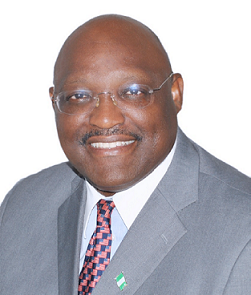
Once again, I take the liberty offered by the opportune occasion of the 82nd birthday of Chief Anthony Akhakon Anenih, former Chairman of the Board of Trustees of the Peoples Democratic Party (PDP) and former Chairman of the Board of the Nigerian Ports Authority (NPA), which comes up on Tuesday, August 4, to paint his portrait in the hope that I will be able to remark the “warts and all” as I see him, but not necessarily for a recompense.
It is apposite to remark that the Iyasele (Prime Minister) of Esanland has not come to the terminus of his odysseys yet, even with his graceful exit from the Chair of the Conscience Department of the PDP in the aftermath of the party’s loss to the All Progressives Congress (APC) in this year’s presidential election. He is still making himself available for resolution of critical issues in the party, albeit behind the scene.
Consider his reported advisory role in the negotiation of the PDP into the senate leadership with Ike Ekweremadu emerging as Deputy Senate President. That explicates his longing for more actions in his political odyssey that has spanned well over three decades. Anenih’s longing fits in well into the architecture on which he has built a life and time of robust politics and politicking. Thus, his belonging in the political circles is quite understandable.
Regardless of his panache and accomplishments in politics, one must not fail to trace his trajectory in life, especially his starting point, which was hitherto not highlighted until his 80th birthday in 2013 when, through publications in the print media, Nigerians were apprised of his grass-to-grace narrative, the nitty-gritty of which touched the sensibilities of readers and provided a new perspective of his individuality. It was chronicled that after his successful sojourn at Government School, Uromi, he could not proceed to Saint Thomas’ Teacher Training College, Ibusa, subsequent to passing the qualifying examination due to the inability of his parents to afford the six pounds required for scholarship; and, he had to, among other things, take to rubber tapping to raise fund for his education.
That narrative had shattered the mindset in some quarters that Anenih came from an aristocratic background. Truth is, he had endured the vicissitudes of life: he headed for Benin City to stay with and serve, for one year, Lance Corporal Omeben, the father of retired Deputy Inspector General of Police, Christopher Omeben, who was then in Edo College. It was the late older Omeben who advised and encouraged Anenih to enlist in the Nigeria Police Force in 1951 (from where he voluntarily retired in 1976 as Commissioner of Police to venture into private business, which he later combined with politics.)
The occasion of Anenih’s birthday always affords him obligatory introspection on the journey of life and the vagaries of socio-economic and political tempers that he had to deal with. The consequences of this annual introspection must have informed his devotion to the service of God and humanity, which adverts attention to the silent chapter of his life: his philanthropy that is hardly celebrated. Among countless individuals and institutions, both academic and religious that have benefitted from his eleemosynary are: Ambrose Alli University, Ekpoma; the University of Benin; Igbinedion University, Okada; and Federal University of Agriculture, Abeokuta. In 2012, he endowed a multi-million naira Geriatric Centre at the University College Hospital (UCH), Ibadan, the first in Africa, to support the care of the aged and senior citizens.
I will like to recap part of what I wrote last year concerning Anenih: “Without doubt, it is all about Anenih’s humanity: here is a leader with a heart to help; a principal who is always touched by the feelings of the infirmity of his associates and followers; and, tries as much as it is possible to provide them succor. Yet, this inimitable benefactor does not make noise about his good deeds whether in the political or private lives of the beneficiaries…. It is curious that in a society where politicians clamour for recognition, and advantageously position themselves in the media to gain mileages, Anenih would rather restrain himself and choose, instead, to dance to the quiet rhythm of his soul. This is a disposition that has helped to define his persona as a taciturn and decorous politician, whose maturity, experience and fidelity cannot be faulted.
Anenih is a purposeful and quintessential politician, a politician who has earned his place in the nation’s politics as a Leader of his people and his numerous followers within and outside his political sphere of influence. But his tenacity of purpose and legerdemain had actually crystallized in the defunct Second Republic when, as Chairman of the National Party of Nigeria (NPN) in the old Bendel State, he plotted and led the political/electoral onslaught that saw his party’s candidate, Dr. Samuel Ogbemudia, defeat the then sitting governor, the late Professor Ambrose Alli of the Unity Party of Nigeria (UPN).
The strategist had replicated similar feat in the ill-fated Third Republic as Chairman of the Social Democratic Party (SDP) and in the current Fourth Republic when, during Obasanjo’s re-election gambit in 2002/2003, he had taken charge of the machinery that fashioned out strategies that ensured the defeat of opposition to Obasanjo within and outside the Peoples Democratic Party (PDP). In 2007 and 2011 general elections, he played a frontline strategic role in the electoral success of the PDP.
Anenih’s ability to consistently, at every turn, resolve knotty political puzzles would later earn him the sobriquet- “Mr. Fix It”, which the opposition elements had tried to twist negatively to demonise him. The deprecating aura that the ‘Mr Fix It’ tag exudes in the nation’s political arena does not aptly convey the essential content of the Anenih persona. Yet, the other camps have always played it up in their deliberate schema to demonize him within and outside the cosmos of political affairs where he hit the limelight. It is, indeed, paradoxical that politics, which brought him fame, has also earned him scorn in the camps of the opposition elements.
But then, he has chosen to bear the cross philosophically: politics is in his blood and he plays it with the passion and devotion of a religious aficionado. He accepts the compliments that come with it as well as the bashings. He relishes the victories, the accomplishments and the bravura performances of his party and candidates during electoral contests. He has also learned to live with the pains of defeat whenever he suffers any….”
He is presently living with the defeat of the PDP by the APC in the 2015 presidential election. He is not hysterical about the development. He had congratulated General Muhammadu Buhari, the winner of the election, on his victory. His April 6 2015 press statement on the Buhari victory was clear: “I congratulate the President-Elect, General Muhammadu Buhari, GCFR, on his victory. Nigerians are expecting great things from him; it is my hope that he will take this great country to greater heights in the journey towards our manifest destiny.”
To be sure, the Iyasele of Esanland is taking a well-deserved rest having survived the dangerous intrigues, tempest and ballyhoo that characterised the dark alleys of our cloak and dagger politics. This is not a declaration that he has opted out of politics. Politics is in his blood. He is quietly pondering ways to assist the PDP regain its lost prize. He would calmly admonish his associates and loyalists to remain steadfast and not to despair as there would be dispensations and eras. This is his inspirational disposition to politics, which is far flung from the myth of invincibility that has been created around him by his traducers who have tried to create the erroneous impression in the minds of those who do not know him (Anenih) that he behaves as a god in human flesh as far as politics and electoral contestations are concerned.
Permit me to surmise in much bolder but apt reliefs the correct portrait of Anenih: a grand and archetypal politician who is consistently and persistently loyal to his leadership and followership; an ardent mobiliser of human resources; a political strategist with the can-do spirit, who believes in positive thinking as well as the force of great and reasonable expectations. All these represent the sum of his inspirational life as he longs for more political odysseys (of course, with restrained intensity due to age factor) at 82.
“Mr Lely, I desire you would use all your skill to paint my picture truly like me, and not flatter me at all; but remark all these roughnesses, pimples, warts and everything as you see me, otherwise I will never pay a farthing for it.” Oliver Cromwell, Lord Protector of England, to his Portrait Painter, Sir Peter Lely.