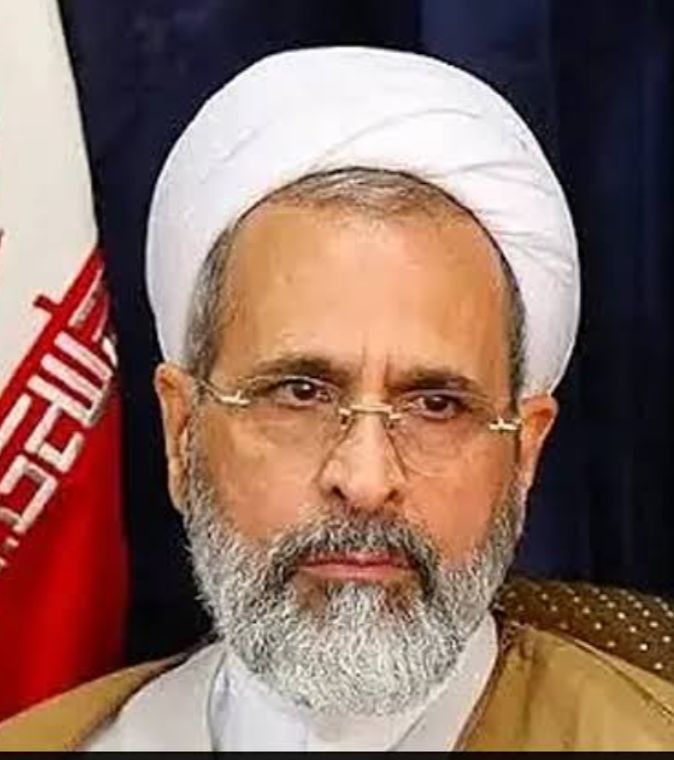
The new Supreme leader of the Islamic Revolution of Iran, Alireza Arafi has made it clear to the United States and Israel that by Launching the ongoing war, they have simply signed their death warrant. In his first address to the nation today, March 4, Alireza Arafi said: “by launching this war, they have signed their own death warrant: they don’t know when or how the axe will fall, but we hold the reins “The time for negotiations is over. The United States has chosen to cross the red line, the line of irreparable harm. “They brandish the nuclear specter like a scarecrow, blinded by their arrogance. They have no idea of the true extent of our power or what we are prepared to unleash. “As for Israel, its fate is sealed. Every strike, every crime, every act of suffering they have inflicted will come back to haunt them. “They will remain in our sights, exposed, vulnerable, hunted. ” “We walk in the shadow of the Leader, and every step is a lightning bolt. Iran does not bend. Iran wins. Always.”
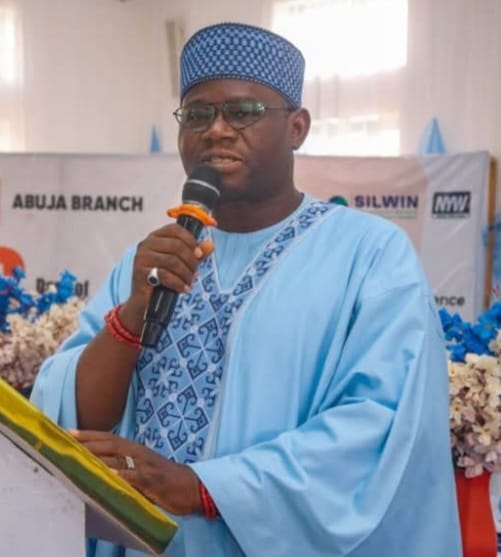
In Nigeria’s elite circles, it is common to meet accomplished Muslims who live carefully structured lives. They plan their finances, children’s education, retirement, household expenses, and pilgrimage months ahead. They save deliberately, invest in various enterprises, and diversify their earnings over time. They also give generously; to family members, people back home, mosque projects, the payment of third-party school fees, medical bills, and emergency needs. Yet, among this same group, the obligation of giving Zakat,one of the fundamental pillars of Islam remains persistently misunderstood and often unmet. My interest in this matter did not arise from abstraction or moral inquisition. It grew from my direct involvement as a council member of the NASFAT Agency for Zakat and Sadaqat (NAZAS), an organisation that has collected and distributed close to ₦1 billion through structured Zakat and Sadaqat administration in Nigeria since 2014. In my interactions with the elites who made this possible, a sobering reality has emerged—confusion about eligibility, uncertainty over who should pay Zakat, and ignorance of how to calculate. In a country with a sizeable Muslim population of middle and upper class comprising accomplished individuals, the pool of compliant contributors remains remarkably thin. In Nigeria, where about 56% of the population is identified as Muslim (Pew Research Center), Zakat collection remains modest. For example, in 2024, the five leading Zakat agencies in Nigeria disbursed roughly ₦736 million to just over 4,200 beneficiaries—a modest figure when placed against the size and potential of the Muslim population. Globally, the picture is similar. Studies indicate that while 85%–95% of Muslims fast during Ramadan and 70%–85% observe daily prayers, only 20%–40% of eligible Muslims actually pay Zakat. By any objective measure, it is the least observed of Islam’s five pillars. Part of this weak performance is a deeper problem of a knowledge gap among eligible( Zakatable) Muslims. As earlier noted, Nigerian Muslims are instinctively generous. However sincere, the intention may be, that is not a substitute for the obligation of Zakat. This is when generosity is not enough. Confusing them undermines the deliberate injunction of Allah that places Zakat as the third pillar of Islam, alongside faith( Iman), prayer (Salat), fasting during Ramadan, and pilgrimage (Hajj). More importantly, the purpose of Zakat goes far beyond charity. It is a moral, social, and economic system designed to purify wealth, uplift society, and strengthen faith. The obligation of Zakat requires the payment of a fixed rate of 2.5% of ones net wealth once it reaches the threshold of nisab and has been held for one lunar year. Using the gold benchmark prescribed by the Prophet Muhammad (SAW), the nisab is measured at 87.5 grams of gold, which today is approximately ₦19.1 million, using the current exchange rate. This means that anyone whose combined eligible assets, held for a lunar year, meet or exceed this figure is obligated to pay Zakat. The calculation itself must be properly understood. It is not about having this amount sitting idle in a single bank account. Rather, it involves adding up one’s working assets and subtracting immediate liabilities. It is therefore imperative to understand the calculation. Firstly , identify what counts as zakatable wealth Zakatable wealth includes what you own today that represents stored or growing value. These typically fall into the following categories: (i) Cash and Cash Equivalents Cash at home; money in bank accounts; mobile wallets; digital balances; and foreign currencies (converted to naira). (ii) Business Assets Goods or stock meant for sale; money owed to you that is likely to be paid (trade receivables). This does not include fixed assets such as buildings, machinery, or office furniture. (iii) Gold and Silver Gold or silver held as savings or investment. Many women hold jewellery partly for this purpose. While scholarly opinions differ on jewellery kept purely for personal adornment, many choose to include it to be safe. Zakat applies to its current market value. (iv) Shares and Investments This is where most modern confusion arises. Shares represent ownership in companies, whether listed on the Nigerian Exchange or held abroad. Investments include equities, mutual funds, Sukuk, bonds, treasury bills, cooperative schemes, and even digital assets such as cryptocurrencies. Secondly , deduct immediate liabilities you are owing. Deduct short-term obligations like rent due, utility bills, school fees due, salaries due, supplier payments, and loan instalments currently due. (Long-term debts not immediately payable are generally not deducted). Thirdly, apply the rate of 2.5% to the resulting net amount (or simply divide by 40). This is the same rate applied during the time of Prophet Muhammad (SAW). Once the net amount reaches the nisab ( N19.1m),then you must pay Zakat. Among Muslim elites the question is rarely poverty. It is the way we handle it with levity. Many assume they are below nisab because they glance at a bank balance and stop there. But Zakat is assessed on accumulated wealth; cash savings, shares, business capital, receivables, retained profits etc. The nisab today of roughly ₦19.1 million sounds imposing until one begins to aggregate properly. ₦8 million in savings, ₦5 million in investments, ₦4 million tied up in business asset, ₦3 million in receivables and one has quietly crossed the threshold. What disguises eligibility is fragmentation. Wealth sitting in different compartments and not assembled in one place feels smaller than it is. For many reaching nisab is not extraordinary. The challenge is not capacity but the discipline to calculate what is held personally or within a business. Zakat is orderly, predictable, and capable of quietly redistributing opportunity in a society where too much wealth often circulates within too few. Perhaps the time has come for Muslim elites to apply the same rigour to Zakat that they apply to other pillars of Islam. May Allah grant us clarity, sincerity, and the courage to fulfil this obligation properly. May He accept our obedience and purify our wealth. Ameen.
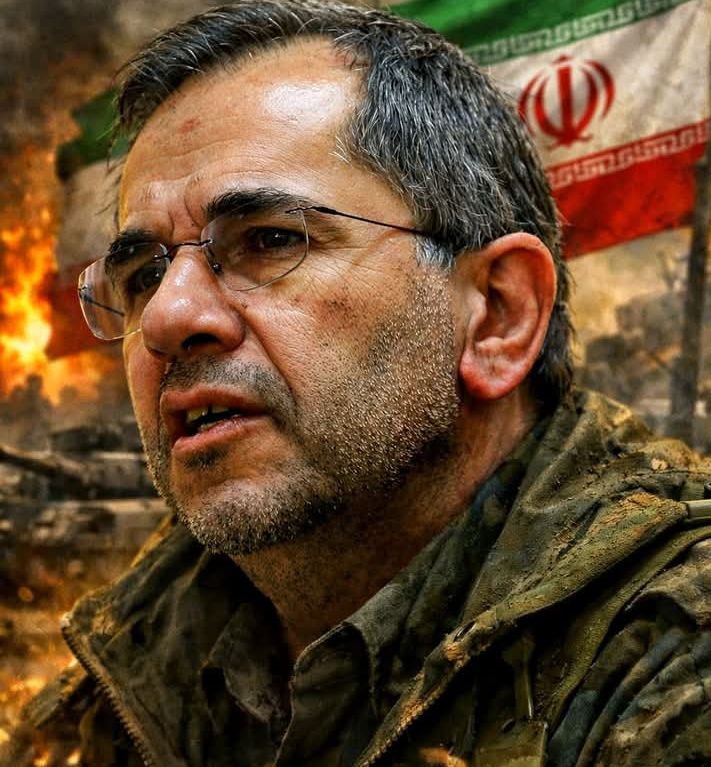
The General Command of the Armed Forces of the Islamic Republic of Iran has denied what it called “the cheap propaganda claiming that our missiles struck the oil facilities and wells of Saudi Arabia.” In a statement trending in social media today, March 2, the Iranian military command said: “this is a cowardly false-flag operation orchestrated by the defeated Zionist enemy and the Great Satan (the United States). ” They intentionally bombed the Saudi oil infrastructure, hiding their own missiles within tonight’s ongoing clashes, with the sole purpose of shifting the blame onto Iran and turning the regional nations against us. “Our advanced missiles possess one hundred percent precision on their military targets; they do not stray! If we decided to target Saudi Arabia, we would do so openly; we have no need to hide it. The enemy is desperately trying to use Arab nations as a shield to hide from our punishment, but this cheap conspiracy will not hold us back a single step.”
It’s no longer a news that the Supreme Leader of Iran was killed in a major military attack carried out by Israel together with the United States on February 28, 2026. It needs to be explained why this is happening in very simple English, so that anyone who knows nothing about politics can understand. As you may know, Israel and Iran are both in the Middle East. The Middle East is a group of countries in Western Asia. These countries include: Iran, Israel, Palestine, Saudi Arabia, Iraq, Turkey (a part of Turkey is in Europe), Jordan, Syria, Lebanon, Kuwait, Qatar, Oman, United Arab Emirates, Yemen and Bahrain. The Middle East has a lot of oil. Oil brings money, but it also brings problems. Powerful countries from outside the Middle East want control and influence there because of oil. America has been involved in Iran since the 1940s, sometimes as a friend and sometimes as an enemy.
Inside the Middle East, countries also compete with each other for regional power, politically, economically and religiously. The religion side is often overlooked. For example people often forget that Saudi Arabia and Iran fight for religious dominance in the Middle East. This is because the religion of Islam has two main denominations namely Shia and Sunni. Iran is mostly Shia and Saudi Arabia is mostly Sunni. But ofcourse, the biggest rivalry in the Middle East is actually between Israel and Iran. Israel depends on its strong army and support from the United States. It sees Iran as a serious threat. Iran has threatened to destroy Israel. These threats were made as early as 1979 by Iran’s first Supreme Leader. At the center of the Israel–Iran conflict is the belief among hardline leaders in Iran that Israel should not exist as a country. There is a big question about how morden state of Israel was created and why it is at war with Palestine. In Palestine, Israel has killed many civilians, bombed homes, hospitals and schools, stopped food and aid from getting in. Iran supports Palestine. It calls Israel’s actions crimes and even genocide, and helps groups that fight Israel by giving them money, weapons and training. The other cause of this war is Iran’s nuclear program. Israel wants to stop Iran from getting nuclear weapons because Iran has threatened to destroy Israel before. But Iran says its nuclear program has nothing to do with nuclear bombs. However Israel doesn’t believe this. It is worth mentioning that nuclear weapons give countries an extra layer of security. For example, North Korea built nuclear weapons to protect itself from outside threats. Because North Korea has nuclear weapons, attacking it would be very dangerous. That makes Western countries think twice. It is therefore not unthinkable that Iran wants the same level of protection. But Israel says no. America also says no. Some people think America ONLY attacks other countries because of oil. That is not always true. America acts based on its own interests. Those interests are not always about money or oil. Sometimes they are political or strategic. For example, Afghanistan does not have large oil reserves but America still sent its military there. Some people believe that if a country has no oil, then it does not matter to America. That is not true. Korea does not have major oil resources yet during the Korean War, America fought to defend South Korea. This shows that oil is not the only reason America gets involved in other countries. Sometimes the reasons are political, military or strategic. In June 2019, Donald Trump even visited North Korea. He became the first sitting U.S. president to step onto North Korean soil when he crossed the DMZ to meet Kim Jong Un. Clearly, oil is not the only factor in American foreign policy. So the claim that America does not attack North Korea simply because it has no oil is false. Now let us look at U.S-Iran relations After the Second World War, America became more involved in the Middle East to stop the Soviet Union from spreading its influence. Oil had become very important to global power. America strengthened its relationship with Iran because of Iran’s oil. In 1951, a new Iranian leader named Mohammad Mossadegh came to power. He took control of Iran’s oil and said it should belong to Iran. He nationalized the oil industry. This was during the Cold War era when America and the Soviet Union were competing against each other for power and influence around the world. In 1953, America sponsored a coup in Iran as a response to the nationalization of oil. This coup led to the rise of Mohammad Reza Pahlavi, commonly known as the Shah. This man went on to rule Iran for 26 years. The Shah was a harsh ruler, but he was friendly to America. The United States ignored his human rights abuses because he supported American interests. During this time, Iran was a close ally of America and also had good relations with Israel. However, many Iranians hated the Shah. One of his strongest critics was a religious leader named Ruhollah Khomeini, an Ayatollah. Remember an Ayatollah is a very senior Muslim leader in Iran. Ayatollah Ruhollah Khomeini strongly criticized the Shah. He also criticized Western influence, and America’s role in Iran. Because of this, he was forced into exile in the 1960s. Even while in exile, Khomeini sent recorded messages back to Iran, telling people to oppose the Shah. Public anger grew. In 1979, the Shah was removed from power in a revolution. That is how Ayatollah Ruhollah Khomeini became Supreme Leader and how Iran became an Islamic Republic. The new Iranian government was strongly against America because many Iranians believed America had interfered in their democracy in 1953 and had supported a dictator for many years. Later in 1979, Iranian students took over the U.S. Embassy in Tehran. American diplomats were held hostage for 444 days. From that moment, Iran and America became enemies. As Israel became closer to America, Iran’s new leaders saw Israel as a Western creation in the Middle East that was harming Muslims. This belief shaped Iran’s long-term policy toward Israel. This supreme leader who was recently killed was known as Ayatollah Ali Khamenei. He had been in power since 1989, having taken over after the death of Ayatollah Ruhollah Khomeini. So why did they kill him? Well, if you want to destabilize a regime in a time of war, you eliminate its leader. Not every country can survive a sudden leadership crisis in a time of war.
Letter-writing Olusegun Obasanjo, who served as Nigerian Military Head of State from 1976 to 1979 and as the country’s civilian President from 1999 to 2007, in what is believed to be his final letter to Nigerians declared, inter-alia: “the real tragedy of life is not death; it is the dreams we kill while we are alive.” Read the full letter: My fellow Countrymen, People tell you that life is very long. “Live easily,” they say. “There’s still plenty of time.” I am ninety-four years old as I write these lines, and I say with complete certainty: that is not true. Life is not long; it is as brief as the blink of an eye. Now that I am about to le@ve this world, my heart wishes to entrust a few truths to you. I earned wealth, saw respect, built a name—but tonight all of it feels like dust lying in the corner of my room. If I stretch out my hand, nothing will go with me. The things I held close to my chest all my life now feel like sand slipping through my fingers. Before I go, I want to lighten my heart. Some things have remained buried inside me for seventy years. I do not want you to lie on a bed one day, remembering your past life, and feel a sting in your heart with every memory. The first truth: Stop living in the waiting room. A large part of my life passed in waiting. In school, I thought life would begin once I got my certificate. When I got a job in the army, I waited for the weekend. After marriage, I waited for my children to grow up. When they grew up, I waited for retirement. I treated every present moment as just a phase, as if real life was waiting somewhere ahead. I kept staring at the distant horizon and never felt the ground beneath my feet. Today I understand there is no final destination. The journey itself is life—and instead of living it, I merely passed through it. I still remember a rainy Tuesday. I was thirty years old, sitting in my office, staring at the clock. Rain was pouring outside, and inside my heart was restless. I wanted time to pass quickly. I wanted to escape that day. Today, if someone asked me, I would give all my earnings to relive just that one day—the chair, the silence, the sound of rain against the glass, and the strength in my legs. Perhaps you are doing the same. You say, “I’ll be happy when I get promoted. I’ll feel peace when I have more money. My life will be complete when I find the right person.” You are selling today in exchange for tomorrow—and that tomorrow may never come. Do not waste your days like this. One day you will realize those ordinary days were the most precious. The second truth: Gold cannot be eaten. I spent fifty years building an empire. Long hours of work. Missed my children’s birthdays. Even during festivals, my mind was stuck at the office. I saw the waiting in my wife’s eyes and comforted myself by saying, “I’m doing this for them.” I bought a big house, an expensive car, fine clothes. I believed these things increased my worth, made me appear bigger in the eyes of others. Now that my departure is near, I realize none of it will go with me. The house will belong to someone else. The walls will be painted according to someone else’s taste. The car will end up in a junkyard. The money will remain just a number. Tonight it cannot hold my hand or tell me not to be afraid. I remember a day when my daughter called me into the garden. She had found a tiny insect and wanted me to sit with her and watch it. There was joy in her eyes. I said, “Not now, I’m busy. I’m earning money.” She quietly turned away. The sadness in her eyes still burns my heart. I lost a precious moment with my daughter in exchange for a few paper notes. If you are exhausting yourself only for a paycheck, pause. Your workplace will replace you quickly—but your home will never forget you. Gather wealth of memories, not possessions. The third truth: Tear down the walls around your heart. When I was young, I thought I was strong. I never apologized first. I hesitated to speak what was in my heart. I believed that if a man softened, people would see him as weak. I rarely expressed love—perhaps afraid my image of toughness would break. I had a brother. We grew up together. Played in the same courtyard. Sat at the same table. Shared joys and sorrows. One day, we became upset over something trivial. Today, honestly, I do not even remember what it was. Maybe money. Maybe an argument. But at that time I was certain I was right. I decided he would come first. Days passed, then months, then years. On every festival my heart wanted to pick up the phone—but ego stood in the way. I kept telling myself there was still time. One day the phone rang—but it wasn’t him. The news came that he had suffered a sudden stroke and passed away. I stood before his cold face, and my insistence on being right felt meaningless. I was right—but I was alone. Ten years of laughter, ten years of conversations, ten years of festivals—I had laid them all at the feet of ego. That day I understood: some relationships are saved not by logic, but by love. If you love someone, say it today. If you are wrong, apologize today. There is no promise of tomorrow. The fourth truth: Fear is a false shadow. At twenty-two, I wanted to become a writer. I had a notebook filled with ideas, dreams, stories. But I never wrote a book about those dreams and stories. I was afraid people would laugh, that I would fail, that I would not be taken seriously. I chose the safe path and spent my life fulfilling other people’s dreams. Today my hands tremble. Even if I want to, I cannot hold a pen properly. My eyes have grown dim. That book is still inside me—and perhaps it will be buried in silence with me. Instead of it, I wrote “My Command”, and “Under My Watch”. The real tragedy of life is not death; it is the dreams we kill while we are alive. Perhaps the cemetery is the richest place in the world—because buried there are all the unwritten novels, unsung songs, and unstarted dreams. Do not add to that silent treasure. Do not keep postponing the desire in your heart. Take a step. Even if you stumble, at least you will be able to say, “I tried.” Better to step into the river once than to stand on the shore forever thinking about it. “If only” is the most painful phrase. In old age, it wakes a person in the silence of the night. The ticking of my clock now sounds clearer. I have laid down the stones of worry, ego, and fear. I am now just a helpless human being—just as I was on the day I was born—empty-handed. You are still alive. You have another day. Do not waste it. Look at your hands. Move your fingers. Feel your breath. It is all a miracle. Do not wait until you are ninety-four to realize how beautiful life is. Feel it now. I am about to close my eyes. I hope my words find a place in your heart like a seed. Live—not for me, but for truth. Live from the heart. Live fully for yourself. Live for your loved ones. Live now. Goodbye… Summary: Life is not long; it is as brief as a blink. Stop living in the waiting room. Gold cannot be eaten, and relationships sacrificed at the feet of ego never return. Do not bury your dreams in the graveyards of fear—live today.
Iran’s elite military force, the Islamic Revolutionary Guard Corps (IRGC), has warned the United States and Israel that it is fully ready to face them against the background of the recent U.S. and Israeli strikes. A senior IRGC General declared that Tehran will soon unveil weapons “you have never seen before.” According to him, Iran is prepared to confront Washington “for years.” In a statement today, February 28, the IRGC’s General Ebrahim Jabbari, a high-ranking commander within Iran’s armed forces said that Iran’s defense capabilities have been significantly strengthened over recent years and that new systems will soon be revealed that have not been seen by “any adversary.” He did not disclose specific details of the weaponry but emphasized Iran’s growing ability to defend its territory and strategic interests against prolonged conflict. Jabbari’s comments were issued against the backdrop of ongoing U.S.–Israeli military pressure after President Donald Trump announced “major combat operations” in Iran, citing what he described as imminent threats from Tehran’s missile and nuclear programs. Trump vowed to dismantle Iran’s missile infrastructure and prevent Tehran from acquiring nuclear weapons, while urging Iranian security forces to surrender to avoid further bloodshed. The Iranian General also warned that Tehran’s armed forces remain ready for a prolonged confrontation, saying that the nation’s fighters are equipped to endure extended conflict and inflict significant damage on any aggressor.
Dangote Cement Plc (DCP), a subsidiary of Dangote Industries Limited, in partnership with Sinoma International Engineering is extending its projects to Zambia, Zimbabwe, Tanzania, Sierra Leone and Cameroun. This is even as Sinoma is expected to handle different projects in Itori, Apapa, Lekki, Port Harcourt and Onne. The new projects is expected to be executed by the two partners include a new integrated line in Northern Nigeria with satellite grinding unit, new line in Ethiopia and other projects in Zambia, Zimbabwe, Tanzania, Sierra Leone and Cameroun. Under the Strategic Framework Agreement, Sinoma International Engineering will collaborate with Dangote Cement on the delivery of new plants, brownfield expansions, and modernization initiatives aimed at strengthening operational performance across key markets. The partnership was sealed at the weekend in Lagos in what is described as “a landmark agreement” between the two, with Sinoma International Engineering for the construction of 12 new projects and expansion of others across Africa. The agreement involves an estimated investment of over $1 billion. Founder and President of Dangote Group, Aliko Dangote, was quoted as saying that the new projects is part of carefully designed critical enablers of his cement project ambition to achieve 80 million tonnes per annum production capacity by 2030 Dangote supporting the Group’s overarching target of generating $100 billion in revenue within the same period. He said that the projects will strengthen Dangote Cement’s domestic market dominance, drive its export activities, optimize existing operational assets as well as enhancing production efficiency and capacity expansion. Chairman, Board of Directors of the Dangote Cement Plc, Emmanuel Ikazoboh, explained that the new projects would enable the company to play a critical role in actualizing Dangote Group’s Vision 2030. The new projects, when completed, will increase Dangote Cement’s capacity, and dominant position in Africa’s cement industry. For the Group Managing Director of Dangote Cement, Arvind Pathak, the agreement reflects the company’s determination to grow its investments across African markets to close supply gaps and support the continent’s infrastructural ambitions. According to him, Dangote Cement is committed to making Africa fully self‑sufficient in cement production, create more values and linkages leading to increased economic activities and reduction in unemployment. It should be noted that Dangote Cement recently scaled up its Gas Sales and Purchase Agreements (GSPA) with subsidiaries of the Nigerian National Petroleum Company Limited (NNPC Ltd): Nigerian Gas Marketing Limited and NNPC Gas Infrastructure Company Limited (NGIC).The agreement signing serves as an enabler of DCP’s strategic objectives. The agreement guarantees the gas required to support the drive towards CNG adoption as Autogas and to meet the increasing gas demand as production capacities in Nigeria are expanded. It also promotes the adoption of cleaner fuel for both Autogas through CNG and gas to support increased production output. Dangote Cement currently operates in multiple African countries, with integrated plants, grinding facilities, and distribution hubs strategically located to serve diverse markets. The company’s ongoing projects include plant upgrades, capacity expansions, and the introduction of advanced energy‑efficient technologies designed to reduce operational costs and carbon footprint.
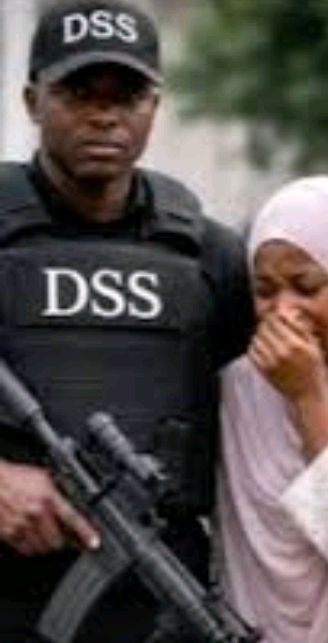
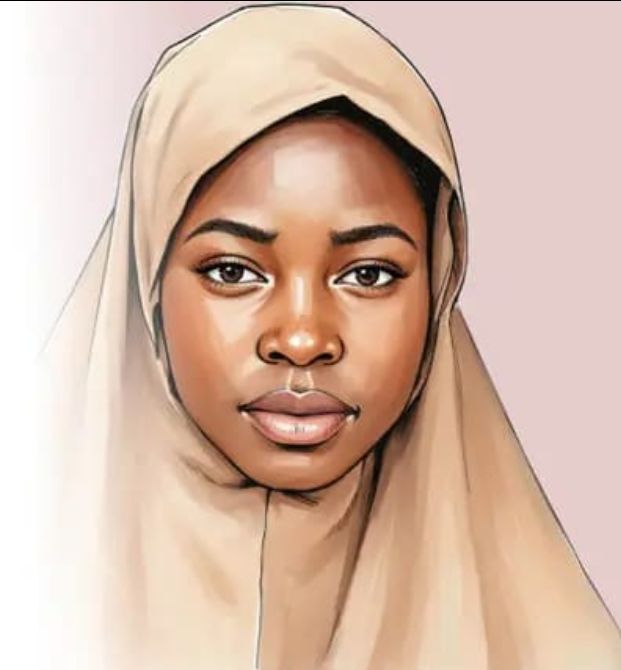
The Department of State Services (DSS) Headquarters has finally handed over the 16-year old Miss Walida Abdulhadi Ibrahim to Jigawa State Governor, Malam Umar Namadi after series of protests by various Non-Governmental Organizations and individuals over her abduction and sexual assault by the officer of the Service. The handover took place in Abuja yesterday night, February 25, in response to intense pressure from civil society coalitions and the Jigawa State government. The Chief Press Secretary to the Governor, Hamisu Mohammed Gumel, confirmed in a telephone chat today, February 26, that all necessary documentation have been concluded, with final arrangements underway to complete her formal transfer to the state government. “I can authoritatively confirm that the Jigawa State Government, under the leadership of Governor Umar Namadi, took custody of Walida Abdulhadi Ibrahim last night. Other necessary arrangements will be finalised today to ensure her full transfer into government care.” Gumel explained that the state government has made arrangements to admit Walida to a hospital for a comprehensive medical evaluation to ascertain her physical and psychological condition. According to him, the government will also facilitate her return to school and assume full responsibility for her educational needs up to the tertiary level to ensure her successful reintegration into society. “Arrangements are being made to admit her into a hospital and take full responsibility for her healthcare and mental well-being. The government will also ensure she resumes her education and completes it successfully.” Gumel said that the state government would pursue justice to its logical conclusion, adding: “the government will not rest on its oars until those responsible for her abduction and subsequent (sexual) assault are brought to justice. The Nigeria Police Force is also expected to take over the process of identifying and prosecuting the culprits to ensure justice is served.” It can be recalled that Miss Walida was abducted in 2023 from Hadejia Local Government Area of Jigawa State and later found in the custody of a DSS operative, named Ifeanyi Onyewuenyi. Allegations contained in petitions filed by her family said that she was unlawfully detained, forced to change her religion and subjected to sexual exploitation during her captivity. After repeated efforts by her relatives to secure her release proved unsuccessful, a petition was submitted to the DSS headquarters in Abuja. The family subsequently approached a court in Jigawa State, which ordered her release to her parents but the DSS filed a counter-motion, saying that it was investigating the matter. The case drew sustained pressure from civil society and faith-based organisations, accusing the DSS of defying a valid court order by continuing to hold the teenager. A coalition operating under the banner “Concerned Coalition for Walida Abdulhadi” addressed newsmen, describing the situation as a serious test of institutional accountability and respect for the rule of law. The coalition called for strict compliance with judicial directives and demanded an independent investigation into the allegations against the DSS operative. It was gathered that lawyers from Gamji Lawchain, acting on behalf of Walida’s father, had filed a detailed petition alleging abduction, unlawful detention, sexual exploitation and forced religious conversion without parental consent. The petition said that Walida gave birth while in custody of Ifeanyi of the DSS. Walida’s father alleged that her mother died during the period of her disappearance and attributed her death to prolonged emotional trauma, arising from uncertainty about her daughter’s fate. Earlier in the week, organisations, including the Abuja chapter of the Muslim Rights Concern (MURIC), the Federation of Muslim Women’s Associations in Nigeria (FOMWAN), the Muslim Students’ Organisation of Nigeria (MSON), and Women in Da’awa held a joint press conference in Abuja, calling for her transfer to a neutral authority and a transparent investigation. Speaking on behalf of the coalition, Ustaz Yunus Salahudeen said that the matter transcends religious considerations and underscores broader issues of justice, constitutional order, and human rights. The case has continued to generate widespread public reaction, drawing comparisons with the earlier case involving one Miss Ese Oruru of Bayelsa State, which similarly sparked national debate over abduction, sexual assault, religious conversion and the rule of law. Source: PRNigeria.
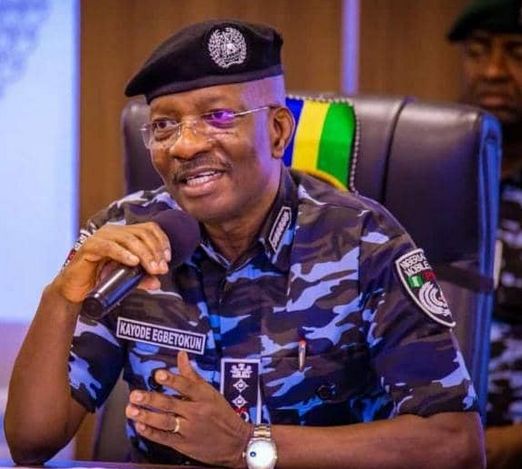
Kayode Egbetokun has formally resigned as Nigeria’s Inspector-General of Police (IGP). Some news media have recently floated a narration that Egbetokun was sacked by President Bola Tinubu. In a statement today, February 24, the presidency said that Egbetokun resigned “to attend to pressing family matters.” In the statement, Special Adviser to the President on Information and Strategy, Bayo Onanuga, said that the ex-IGP tendered his resignation in a letter to President Tinubu. “The IGP resigned in a letter today, citing family issues which require his undivided attention.” Egbetokun was appointed IGP on June 19, 2023, shortly after President Tinubu assumed office. Before his appointment as IGP, Egbetokun served as Deputy Inspector-General of Police in charge of the Force Criminal Investigations Department. He succeeded Usman Alkali Baba, whose tenure ended in September 2023 following an extension granted by former President Muhammadu Buhari.
Among the current crop of Nigeria’s security chiefs, perhaps none is as widely respected for his professional record as the Director General of the Department of State Services (DSS), Adeola Oluwatosin Ajayi. Since his assumption of office, he has been celebrated as a quintessential officer who is neither a religious bigot nor an ethnocentric partisan. His track record in states like Bauchi and Kaduna reflects a man who understands the delicate fabric of our diverse society and has often supported Muslim communal activities with the same zeal he applies to national security. It is precisely because of this high regard that I find myself profoundly bewildered. Why is it that this same leadership, credited with a commitment to due process, appears to be wavering in the face of a clear court order? I am referring to the case of Walida Abdulhadi Ibrahim, a young Muslim girl from Jigawa State, and the stalled prosecution of a DSS operative, Ifeanyi Onyewuenyi, accused of her abduction, sexual exploitation and forced conversion to Christianity. This disturbing saga echoes the Ese Oruru case. The nation vividly remembers how a teenage girl from Bayelsa was taken to Kano by Yunusa Dahiru (popularly known as Yellow), where she was allegedly converted to Islam and impregnated. The public outcry at the time was overwhelming. The media, civil society and the international community demanded swift justice. The Bayelsa State Government under Governor Seriake Dickson intervened decisively providing medical care, insisting on a thorough investigation and ensuring prosecution. Yunusa Dahiru was eventually convicted and jailed. Ese Oruru received rehabilitation and later graduated from the University of Ilorin in flying colour In my recent essay, From Ese Oruru to Walida: Unmasking Selective Outrage, I asked a rhetorical question that now feels prophetic: Would Walidas case attract the same moral panic? Or would it be quietly buried because it doesn’t fit a convenient narrative of religious persecution? My fears are being validated by the day. A coalition of civil society and faith-based organisations recently raised the alarm in Abuja, accusing the DSS of violating a subsisting court order directing the release of 16-year-old Walida to her family. They specifically named DSS officer, Ifeanyi Onyewuenyi as central to the allegations and called for his prosecution should any culpability be established. A petition filed by Gamji Lawchain paints a disturbing picture: a minor allegedly abducted two years ago, held in unlawful custody and denied access to her parents. Her father maintains that the trauma of this ordeal contributed directly to the untimely death of Walida’s mother. At the heart of the controversy is the DSS acting simultaneously as custodian and investigator, a clear conflict of interest. Compounding this is a suspicious dispute over her age. While the family insists she is 16, there are attempts to portray her as a 22-year-old adult. An independent, document-based verification of her age is essential. Anything less would undermine the integrity of our child protection laws. Strangely, a group known as the Arewa Youth Assembly (AYA) has issued a counter message, claiming that she left home in 2023 and was taken by a woman called Maryam later identified as Chinaza who allegedly converted her to Christianity. The AYA leader, Salihu Danlami, further asserted that Walida underwent a mental evaluation and is stable and happy with her captor. Such claims overlook the well documented psychological phenomenon known as Stockholm Syndrome. We have seen this before in the North-East; rescued Chibok and Dapchi girls have, at times, expressed a desire to return to their abusers after rescue from ISWAP/Boko Haram, exhibiting emotional bonds with their captors as a survival-driven coping mechanism. A girl who has been serially abused and impregnated outside of matrimony cannot be declared “mentally stable” by a youth group in a press conference. She requires clinical rehabilitation, not media interviews.
…Ese Oruru The DSS must comply fully with judicial directives concerning Walidas custody and potential reunification with her family. A neutral, independent inquiry into the allegations against the DSS operative should be conducted. If found guilty, he must face the full weight of the lawjust as Yunusa Dahiru did in the Ese Oruru case. There must also be transparent verification of Walidas age through credible documentation and independent scrutiny. NAPTIP should assume a leading role, given the child-protection and trafficking dimensions. Equally, the Jigawa State Government under Governor Umar Namadi must not remain on the sidelines. A decade ago, Governor Seriake Dickson of Bayelsa did not treat Ese Oruru’s case as someone else’s burden. He intervened decisively and stood by the victim. Jigawa should do no less for Walida. The media and the public must resist the urge to frame this matter in inflammatory religious terms. During the Ese Oruru case, northern traditional rulers and religious leaders were hastily accused of complicity. We must not repeat that mistake or allow this situation to be cast as a religious confrontation. Just as many argued in 2016 that Yunusa’s actions did not represent Islam, we must also acknowledge that the alleged actions of Onyewuenyi do not represent Christianity or the DSS. We cannot afford another cycle of collective suspicion. Responsible communication not sensationalism must guide public discourse. This is not a religious contest. It is a child rights issue. Justice must never depend on religious identity. If Nigeria is to remain a nation governed by law rather than sentiment, then institutions, especially the DSS must uphold due process, transparency and accountability. This case must follow the same standard of judicial openness and constitutional procedure that defined the high profile Ese Oruru investigation, which the police handled with commendable neutrality. I therefore respectfully appeal to the Director General of the DSS to act swiftly, transparently and in full fidelity to the rule of law. As a man of established integrity, he must ensure that justice is neither delayed nor distorted. Let it never be said that under his leadership, the law became a respecter of persons or uniforms. In cases involving alleged child exploitation or forced conversion, justice delayed is justice questioned. Institutional integrity is measured not by rhetoric but by response. What was good for Ese Oruru must, in the interest of fairness and equity, also be good for Walida. Yushau A. Shuaib is the author of “An Encounter with the Spymaster” and can be reached via yashuaib@yashuaib.com.
We use cookies on our website to give you the most relevant experience by remembering your preferences and repeat visits. By clicking “Accept”, you consent to the use of ALL the cookies.
This website uses cookies to improve your experience while you navigate through the website. Out of these, the cookies that are categorized as necessary are stored on your browser as they are essential for the working of basic functionalities of the website. We also use third-party cookies that help us analyze and understand how you use this website. These cookies will be stored in your browser only with your consent. You also have the option to opt-out of these cookies. But opting out of some of these cookies may affect your browsing experience.
Necessary cookies are absolutely essential for the website to function properly. This category only includes cookies that ensures basic functionalities and security features of the website. These cookies do not store any personal information.
Any cookies that may not be particularly necessary for the website to function and is used specifically to collect user personal data via analytics, ads, other embedded contents are termed as non-necessary cookies. It is mandatory to procure user consent prior to running these cookies on your website.






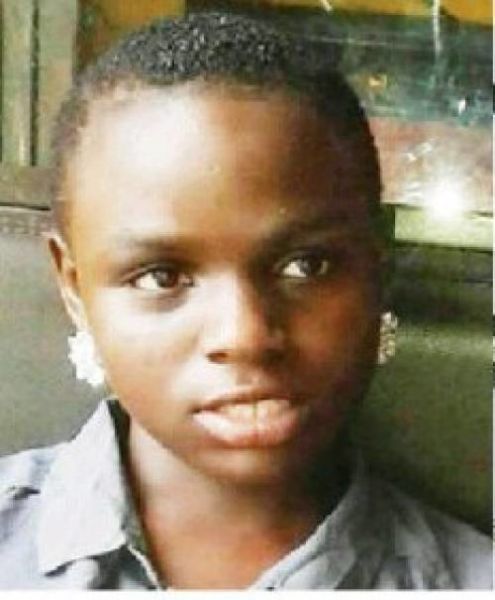 …Ese Oruru


Iran, US/Israeli Face-Off, A Long Walk From The Past
It’s no longer a news that the Supreme Leader of Iran was killed in a major military attack carried out by Israel together with the United States on February 28, 2026. ce the 1940s, sometimes as a friend and sometimes as an enemy.
It needs to be explained why this is happening in very simple English, so that anyone who knows nothing about politics can understand.
As you may know, Israel and Iran are both in the Middle East. The Middle East is a group of countries in Western Asia. These countries include:
Iran, Israel, Palestine, Saudi Arabia, Iraq, Turkey (a part of Turkey is in Europe), Jordan, Syria, Lebanon, Kuwait, Qatar, Oman, United Arab Emirates, Yemen and Bahrain.
The Middle East has a lot of oil. Oil brings money, but it also brings problems. Powerful countries from outside the Middle East want control and influence there because of oil. America has been involved in Iran sin
Inside the Middle East, countries also compete with each other for regional power, politically, economically and religiously. The religion side is often overlooked. For example people often forget that Saudi Arabia and Iran fight for religious dominance in the Middle East. This is because the religion of Islam has two main denominations namely Shia and Sunni. Iran is mostly Shia and Saudi Arabia is mostly Sunni.
But ofcourse, the biggest rivalry in the Middle East is actually between Israel and Iran. Israel depends on its strong army and support from the United States. It sees Iran as a serious threat. Iran has threatened to destroy Israel. These threats were made as early as 1979 by Iran’s first Supreme Leader.
At the center of the Israel–Iran conflict is the belief among hardline leaders in Iran that Israel should not exist as a country. There is a big question about how morden state of Israel was created and why it is at war with Palestine.
In Palestine, Israel has killed many civilians, bombed homes, hospitals and schools, stopped food and aid from getting in.
Iran supports Palestine. It calls Israel’s actions crimes and even genocide, and helps groups that fight Israel by giving them money, weapons and training.
The other cause of this war is Iran’s nuclear program.
Israel wants to stop Iran from getting nuclear weapons because Iran has threatened to destroy Israel before. But Iran says its nuclear program has nothing to do with nuclear bombs. However Israel doesn’t believe this.
It is worth mentioning that nuclear weapons give countries an extra layer of security. For example, North Korea built nuclear weapons to protect itself from outside threats. Because North Korea has nuclear weapons, attacking it would be very dangerous. That makes Western countries think twice. It is therefore not unthinkable that Iran wants the same level of protection. But Israel says no. America also says no.
Some people think America ONLY attacks other countries because of oil. That is not always true. America acts based on its own interests. Those interests are not always about money or oil. Sometimes they are political or strategic. For example, Afghanistan does not have large oil reserves but America still sent its military there.
Some people believe that if a country has no oil, then it does not matter to America. That is not true. Korea does not have major oil resources yet during the Korean War, America fought to defend South Korea. This shows that oil is not the only reason America gets involved in other countries. Sometimes the reasons are political, military or strategic.
In June 2019, Donald Trump even visited North Korea. He became the first sitting U.S. president to step onto North Korean soil when he crossed the DMZ to meet Kim Jong Un.
Clearly, oil is not the only factor in American foreign policy. So the claim that America does not attack North Korea simply because it has no oil is false.
Now let us look at U.S-Iran relations
After the Second World War, America became more involved in the Middle East to stop the Soviet Union from spreading its influence. Oil had become very important to global power. America strengthened its relationship with Iran because of Iran’s oil.
In 1951, a new Iranian leader named Mohammad Mossadegh came to
power. He took control of Iran’s oil and said it should belong to Iran. He nationalized the oil industry. This was during the Cold War era when America and the Soviet Union were competing against each other for power and influence around the world.
In 1953, America sponsored a coup in Iran as a response to the nationalization of oil. This coup led to the rise of Mohammad Reza Pahlavi, commonly known as the Shah. This man went on to rule Iran for 26 years.
The Shah was a harsh ruler, but he was friendly to America. The United States ignored his human rights abuses because he supported American interests. During this time, Iran was a close ally of America and also had good relations with Israel.
However, many Iranians hated the Shah. One of his strongest critics was a religious leader named Ruhollah Khomeini, an Ayatollah. Remember an Ayatollah is a very senior Muslim leader in Iran. Ayatollah Ruhollah Khomeini strongly criticized the Shah. He also criticized Western influence, and America’s role in Iran. Because of this, he was forced into exile in the 1960s. Even while in exile, Khomeini sent recorded messages back to Iran, telling people to oppose the Shah.
Public anger grew. In 1979, the Shah was removed from power in a revolution. That is how Ayatollah Ruhollah Khomeini became Supreme Leader and how Iran became an Islamic Republic.
The new Iranian government was strongly against America because many Iranians believed America had interfered in their democracy in 1953 and had supported a dictator for many years.
Later in 1979, Iranian students took over the U.S. Embassy in Tehran. American diplomats were held hostage for 444 days. From that moment, Iran and America became enemies. As Israel became closer to America, Iran’s new leaders saw Israel as a Western creation in the Middle East that was harming Muslims. This belief shaped Iran’s long-term policy toward Israel.
This supreme leader who was recently killed was known as Ayatollah Ali Khamenei. He had been in power since 1989, having taken over after the death of Ayatollah Ruhollah Khomeini.
So why did they kill him?
Well, if you want to destabilize a regime in a time of war, you eliminate its leader. Not every country can survive a sudden leadership crisis in a time of war.