National Chairman of All Progressives Congress (APC), Chief John Oyegun and APC presidential aspirants; Major General Muhammadu Buhari (rtd.) and Atiku Abubakar at the 7th anniversary celebration of Governor Rotimi Amaechi of Rivers State in Port Harcourt on Saturday.
Presidential aspirants of All Progressives Congress (APC), Atiku Abubakar and Major General Muhammadu Buhari (rtd.) in a tet-a-tet at the 7th anniversary celebration of Governor Rotimi Amaechi, of Rivers State in Port Harcourt.
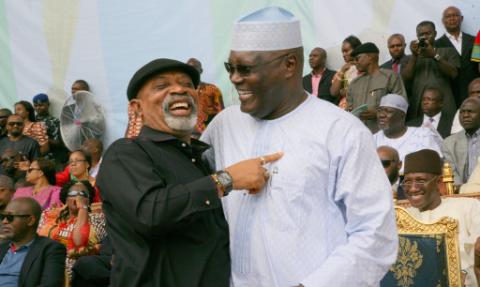
Former Vice President and presidential aspirant of All Progressives Congress (APC), Atiku Abubakar cracks joke with Senator Chris Ngige at the 7th anniversary celebration of Governor Rotimi Amaechi of Rivers State.
Nigeria’s Minister of Power, Professor Chinedu Nebo has identified the contract awarded for the Zungeru Hydro Electricity Power Plant which has been on the drawing board in the last 30 years as one of the 15 landmark achievements of his ministry under the power sector roadmap. The minister spoke on the topic: Nigeria’s Power Sector Transformation Story– Federal Government Commitment to Address Post-Privatization Challenges at the 4th Worldstage National Electricity Power Conference, through his Special Assistant on Investment and Finance, Olajuywon Olaleye in Lagos. Professor Nebo said that Nigerians that have been following the developments in the power sector would know that the ministry has made great strides and recorded major successes in the reform journey. Some of these achievements, he said, include the re-constitution of the Board of National Electricity Regulatory Commission (NERC), thus enabling the regulator to become more responsive to the demands of the emerging market; the reconstituted NERC successfully launched the Multi-Year Tariff Order 2 (MYTO2) and this became operational on 01 June 2012. “In line with the power reform roadmap, the Nigeria Bulk Electricity Trading Company plc (Bulk Trader) and Nigeria Electricity Liability Management Company Ltd (NELMCO) were incorporated and are now fully operational.” Acording to Professor Nebo, other achievements are as follows: A management contract is in place for the Transmission Company of Nigeria (TCN) to bring global best practices in revamping and expanding the national grid. The TCN Board was inaugurated and the Schedule of Delegated Authority (SODA) was issued to Manitoba Hydro of Canada. Establishment of the Electricity Management Service PL (EMS) to take over the responsibilities of some non-core operational and subsidiary assets of the defunct PHCN and provide some ancillary service. Establishment of National Power Training Institute (NAPTIN) to serve as the premiere training institute for the power sector. It is noteworthy that for over ten years, no formal training was provided to the engineering or technical cadre in the defunct institution. The preferred bidders for ten (10) GenCos and five (5) DisCo have successfully concluded the purchase of the assets and have taken over full operations. The official handover ceremony was held on November 1, 2013 Preferred bidders have been chosen for the 10 NIPP plants through a competitive bid process and the 25% initial payments have been made. The NIPP plants are expected to contribute an additional 4000 MWs to the grid. The contract for the Zungeru Hydro Electricity Power Plant was awarded after staying some 30 years on the drawing board. The Ministry has repositioned itself towards providing effective overall leadership for the sector and facilitating investments with special attention to National Grid, green-field IPPs, renewable and rural access to electricity. Fifty-five (55) IPPs have applied to NBET for PPAs. Including three (3) renewable energy IPPs, one coal generating IPP, and the rest gas fuelled IPPs The market Operator inaugurated an automated Power Collect Command Centre meant to ensure transparent revenue collection and payment in the electricity value chain. An Emergency Gas Plan was created to provide relief, in the short term, to the challenges of delivering enough gas to the power plants. The recently announced increase in the price of gas to power has provided a key impetus for the medium to long solution of the problems of gas supply shortfalls. A CBN Intervention fund has been approved to pay off the legacy gas debt owed to some of the IOC’s The draft Renewable Energy Efficiency Policy is due for review at the Federal Executive Council in the near future for adoption. The minister said that the privatization of the Nigerian power sector has been internationally acclaimed as one of the most ambitious reform programs ever of any public utility embarked by any nation. He admitted, however, that it has not always been a bed of roses, saying that the reform has had its challenges along the way and slippages due to the size and scope of the reforms. “We are now marching towards the declaration of the Transitional Electricity Market (TEM) when the power sector will fully function as a market with full contractual obligations for all market participants. The protocols for market initiation are being finalized in readiness for the TEM and most conditions-precedent have been met.”
President Goodluck Jonathan has demonstrated on a number of occasions that he has imbibed good lessons about Nigerian politics from his faltering beginning, especially as a leader. He has demonstrated the art of patience; of waiting to size up the opinions of the citizens, especially on major national issues, though, history has shown that not all majority opinions are right. President Jonathan demonstrated his understanding of the rope, during the removal of subsidy on fuel which led to national uprising. And or he was taught a lesson by it. Since the calls have been coming from various quarters, on him to contest the next year’s Presidential election for another term of four years in office, he has maintained a dignified aloofness and some measure of silence. We in Greenbarge Reporters were particularly impressed by a statement he personally made recently, to the effect that he would consider certain factors before he declares his position publicly. He had said: “in deciding on an appropriate response to such calls (on him to run for the Presidency in 2015), I will place the greater interests of national harmony, cohesion, unity, security, political stability, progress, equity, justice and fairness above any personal ambition or sectional agenda.” The President, never the less, thanked “the many individuals, stakeholders, groups, associations, non-governmental organizations, unions and political leaders from across the country who have, in recognition and appreciation of our efforts and commitment to repositioning our dear nation for more rapid growth and development, urged me to seek a second term in office.” Jonathan did not only talk about himself and his love for the unity of and peace in the country, but also called on all political leaders to place the overriding interest of the well-being and progress of the fatherland above all other considerations in the coming campaigns and elections, even as he asked them to rise above unedifying, unpatriotic and selfish personal interests and divisive sectional agenda. “Let us also commit ourselves more to the sustenance of democracy and political stability which are essential prerequisites for the advancement of good governance, inclusive economic growth and rapid development.” These thoughtful, well-articulated Presidential statements dazzled a lot of citizens who believed that the President would factor himself into it in the face of the deluge of calls on him to run. It is on record that such calls have in the past never been in short supply, particularly on sitting leaders. Remember the deafening calls all over the country, on the late Head of State, General Sani Abacha to run for the Presidency and succeed himself in office. Bizarre as such calls looked, General Abacha was enjoying all of them and obviously preparing to honour them. The lure of power has always made leaders to kowtow and pander to such calls, most of which are promoted and oiled by the beneficiaries or would-be beneficiaries of the sitting leaders. A few of them are even engineered by the leaders themselves. However, if President Jonathan would match word with action, he would also listen to the tiny and seemingly unpopular voice that has been saying otherwise about his right to run in 2015. This has been the voice that has been dwarfed by the din. This is where he would be able to make a balanced decision on November 11 when, as his declaration committee chairman, Dr. Haliru Bello said, he will speak to the nation on this matter. Of course, it would not be a surprise if on November 11, Jonathan announces his acceptance of the calls “by the good people” of this country for him to run. On the other hand, he may come out as a living legend for a long time to come if he declines the calls, which will also, confirms his policy, in the earlier days of his government “of doing things differently.” Anybody that wants to judge the matter with objective mind would give it to President Jonathan that he has done a lot of good and progressive things to the socio-economic and political structure of this country. However, the fact remains that if Jonathan remains in office as President for the next 20 years, there is no way he would be able to complete all such good things he has started on Nigeria. That means that there would still be the necessity for him to continue, possibly ad infinitum. That is why we in Greenbarge Reporters believe in him and volunteer an honest, unbiased advice to him to honestly and sincerely apply this statement he made, to himself now before November 11: “in deciding on an appropriate response to such calls (on him to run for the Presidency in 2015), I will place the greater interests of national harmony, cohesion, unity, security, political stability, progress, equity, justice and fairness above any personal ambition or sectional agenda.”
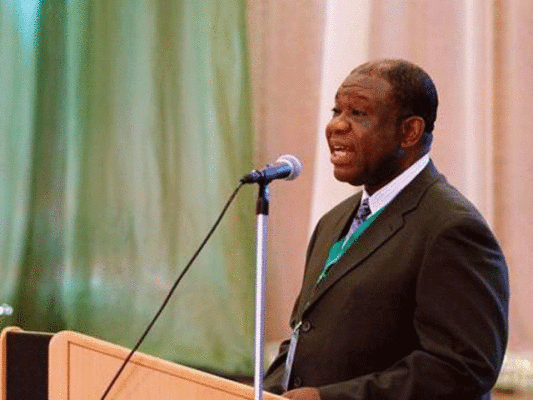
A mob today stormed a police station in Taraba state where a lecturer at the Taraba College of Education, Zing, Alhaji Kassimu Umar had ran to, after knocking down and killing five primary school pupils with a vehicle he was driving. The mob burnt the lecturer to death instantly in the station. The Police Public Relations officer in the Taraba state Police Command Joseph Kwaji, confirmed the incident and said that the mob forcefully removed Umar from the Pupule Police Outpost, where he went to report the incident, and burnt him to death. “In the early hours of today, Friday, one Kassimu Umar, who is believed to be a lecturer with COE, Zing, had knocked down five primary school pupils who all died on the spot. “After he reported the incident to the Pupule Police station, irate youths in their hundreds, stormed the station, dragged him out and lynched him. “Our investigation revealed that the lecturer was trying to dodge a trailer, when he ran over the pupils whose ages ranged between eight and 11 years.” Kwaji said that the matter is under investigation, adding that no arrest had so far been made.
A Mexican governor, Angel Aguirre, 58, has resigned following increasingly violent protests over the fate of 43 students who vanished in his state after being allegedly abducted by police last month.
Angel Aguirre, governor of Guerrero state, said he requested an indefinite leave of absence—the usual way that governors in Mexico resign—to facilitate the search for the missing students.
“I am convinced this is the most responsible decision,” said Mr. Aguirre..
The governor has been under pressure since police in the Guerrero city of Iguala killed six people and detained 43 college students last month before allegedly delivering them to a local drug cartel, prosecutors say. The missing students are widely believed to be dead.
Mr. Aguirre, a member of the leftist Party of the Democratic Revolution, is the second Mexican governor driven from office recently by public fury against gangland violence and the alleged connivance of local and state officials with gangsters.
In June, the governor of next-door Michoacán state also stepped down, following 16 months of armed insurrection by so-called self-defense groups fighting to oust the Knights Templar cartel.
Both are signs that while Mexico’s government has pushed through ambitious economic and political overhauls, it hasn’t been equally successful in tackling the country’s deep-seated security problems.
Mr. Aguirre is a political ally of Iguala’s fugitive Mayor José Luis Abarca, whom federal officials say ordered city police to detain the students. Officials also accuse the mayor’s wife of belonging to the local drug cartel, called the Guerreros Unidos, or United Warriors.
Mexico’s ruling Institutional Revolutionary Party and conservative National Action Party had both called on the governor to step down, a call echoed by many members of his own party.
Protesters demanding Mr. Aguirre’s resignation and the safe return of the missing students set fire Wednesday to the city hall in Iguala, Guerrero’s third largest city. Last week, protesters gutted government offices at Guerrero’s state capital of Chilpancingo. Tens of thousands protested peacefully across Mexico on Wednesday, including an estimated 50,000 who marched in Mexico City, for the students’ safe return and Mr. Aguirre’s resignation.
Mexican officials have blamed the Iguala shootings and abductions on Mr. Abarca, the fugitive mayor, and his wife. Attorney General Jesús Murillo Karam this week said Mr. Abarca ordered the police to detain the students who he believed were on the way to disrupt an outdoor event hosted by his wife, who townspeople say was running to replace him as Iguala’s mayor in elections set for July.
Mr. Murillo Karam said the mayor and his wife were in the pay of Guerreros Unidos, a local criminal gang which paid them up to $230,000 a month, and the Iguala police department another $50,000. He said Mr. Abarca’s wife had close family ties to the Guerreros Unidos.
Mr. Aguirre had spent most of this political career with Mr. Peña Nieto’s Institutional Revolutionary Party, or PRI, which ruled Mexico for most of the 20th century and returned to national power in 2012 after a 12-year hiatus.
He was named interim governor of Guerrero in 1996, when the massacre by state police of 17 protesting farmers forced his predecessor from office. Two years later, with Mr. Aguirre in the statehouse, Mexican soldiers killed 11 community activists meeting in a schoolhouse in a Guerrero mountain village.
Mr. Aguirre changed parties in 2010 after failing to win the PRI’s gubernatorial nomination and won the governorship the next year.
“When he split from the PRI he took a whole bunch of local operatives with him to the PRD,” said Dwight Dyer, senior Latin America analyst for Control Risks, the London based security consultancy, referring to the leftist party by its initials. Should they change party loyalties again, those operatives and the voters they influence could return the state to PRI control in July’s election, Mr. Dyer said. [myad]
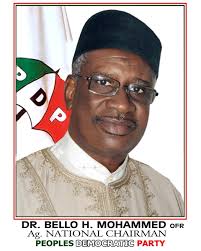
Chairman of the Presidential Declaration Committee, Dr. Haliru Bello has made it clear that the setting up the committee yesterday by President Goodluck Jonathan did not automatically translate into his formal declaration to run for the Presidency for another term in 2015.
Dr. Bello, who spoke with State House correspondents at the end of the committee’s inaugural meeting at the Banquet Hall of the Presidential Villa today said: “President has not said anything yet but it is like all Nigerians have called on him. It is our honest hope that he will come out and say yes to the demand of multitude of Nigerians.” According to the chairman, the President gave the committee the task to organise the modality of creating a platform for him to meet Nigerians and announce his response to the various calls for him to come out and declare his interest in the presidential election. “We expect he will say yes but we cannot say yes for him. We will wait for him to speak. “The date that is fixed is Tuesday, November 11. On that day, there will be a forum for the President to meet Nigerians to announce his decision. The venue is yet to be decided. That will be decided at our next meeting. “When we come out on November 11, the President will face the people of Nigeria and say yes to their demand. “If he says yes, it will be yes. If he says no, then it is negative. But you are aware that our party, the PDP, in all its organs, from the caucus to the Board of Trustees, NWC had decided that President Jonathan should be given the first option of refusal with the PDP ticket. “If he is going to contest, the PDP will give him preference. As the President, he has performed and we are satisfied with what he has done. “It is only when he declines that we can look at any other contestant.” [myad]
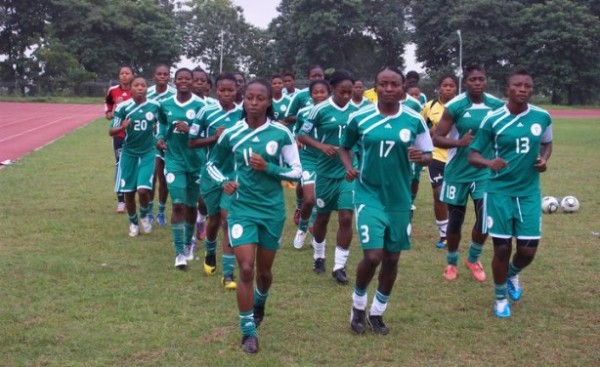
Preesident Goodluck Jonathan has given marching order to the hard-fighting Nigeria’s female national team, the Falcons, to beat their Cameroonian counterparts in tomorrow’s final of the 2014 African Women’s Football Championship in Windhoek, Namibia. He also urged them to go tough on and win the next year’s FIFA Women’s World Cup in Canada. In a congratulatory message today to the Falcons on their qualification for the finals of the tournament,President Jonathan urged them to go all out to continue their glorious domination of African Women’s football with another victory, having won eight of the ten previous championships. He noted that the Falcon’s scintillating performance in this year’s AWC tournament has made them to be the bookmakers’ favourites to win the final match. President Jonathan however warned them not to take victory against Cameroon for granted, but to prepare very well and put their acclaimed soccer skills and strength to the best possible use on Saturday to achieve victory. The President assured the Falcons and their handlers of the full support and best wishes of the federal government and all soccer-loving Nigerians as they strive to add another international sporting laurel to the glory of their fatherland. He joined other Nigerians to pray for the team’s victory even as he expressed desire of receiving them warmly in Abuja with the Championship trophy.
Speaker of the Nigeria House of Representatives, Aminu Tambuwal has successfully been playing a political game that shows him out as neither in the ruling Peoples Democratic Party (PDP) on which platform he rose to his position nor in the opposition All Progressive Congress (APC). That is at best. And at worse, he has been presenting a picture of being in the two major political parties at the same time. These all add up to symbolise the popular magical postulation of ‘the more you look the less you understand.’ While he has been dinning and winning with the leadership of APC, Speaker Tambual has insisted consistently that he is still a member of PDP. This is even when it is clear that he hardly attends PDP public functions lately. One is actually at a loss as to where to place this kind of political game: is it a case of testing the waters in APC before he takes a final plunge into it or is he afraid that if he announces his defection to APC now, he could be removed from the position of speaker or even as a member of House of Representatives through some kind of subterfuge? Or is it just a wise political calculation? Not to worry, very soon, the fog will clear and everybody’s position, like the position of President Goodluck Jonathan concerning his running for the 2015 Presidential election, will be in the public domain.
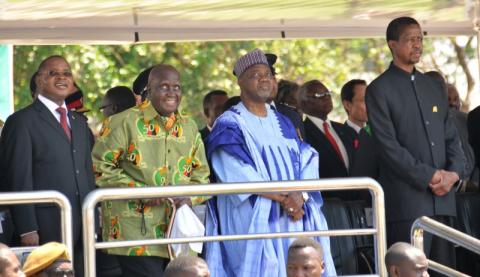
L – R: The Mozambican Prime Minister, Alberto Vaquina; First President of the Independent Zambia, Dr. Kenneth David Kaunda; Nigeria’s Vice President Mohammed Namadi Sambo; Acting President of the Republic of Zambia, Hon. Edger Lungu and his wife during the Zambia’s 50th Independence anniversary celebration in Lusaka, Zambia today, October 24
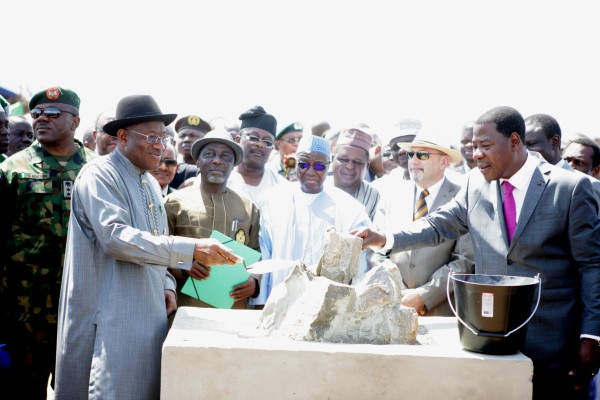
President Goodluck Jonathan has insisted that leaders in African have no choice, as neighbours and brothers, but to work together, in unity and determination, to deal decisively with many threats that are dogging the security and stability of most of the countries today. Such threats, he said, has been impeding the continent’s development potential. President Jonathan spoke today at the ground-breaking and re-launching ceremony of the construction of the Seme-Krake Joint Border Post. The project is one of seven such posts earmarked for construction in the coming years throughout the sub-region. Seme-Krake is located on the Lagos-Abidjan transportation corridor, which forms a vital part of the Trans-African Highway network. President Jonathan, in the company of his Benin Republic counterpart, President Boni Yayi listed the challenges and threats facing some countries today to include the new wave of terrorism and insurgent activities, trans-border crimes as human and drug trafficking, proliferation of small arms and light weapons, among others. He said that the increased cooperation and coordination of controls, the exchange of data and intelligence which will result from the implementation of the Joint Border Posts would help the affected countries, individually and collectively, to successfully confront some of these challenges. He expressed appreciation to President Yayi and the Government of Benin Republic for the what he called ‘invaluable partnership with Nigeria.’ “Today’s ceremony is another robust demonstration of our strong socio-cultural and economic cooperation that pre-dates the colonial era. “Together, we built the Oyo and Borgou Empires, and today, we are still building modern socio-economic infrastructure, progressively and constructively, for the benefit and development of our people.” President Jonathan also thanked the development partners such as the World Bank, USAID, AfDB, whose support and solidarity he said, have made the project possible. “We commend also, the ECOWAS Commission which has also worked assiduously on this project.”
We use cookies on our website to give you the most relevant experience by remembering your preferences and repeat visits. By clicking “Accept”, you consent to the use of ALL the cookies.
This website uses cookies to improve your experience while you navigate through the website. Out of these, the cookies that are categorized as necessary are stored on your browser as they are essential for the working of basic functionalities of the website. We also use third-party cookies that help us analyze and understand how you use this website. These cookies will be stored in your browser only with your consent. You also have the option to opt-out of these cookies. But opting out of some of these cookies may affect your browsing experience.
Necessary cookies are absolutely essential for the website to function properly. This category only includes cookies that ensures basic functionalities and security features of the website. These cookies do not store any personal information.
Any cookies that may not be particularly necessary for the website to function and is used specifically to collect user personal data via analytics, ads, other embedded contents are termed as non-necessary cookies. It is mandatory to procure user consent prior to running these cookies on your website.



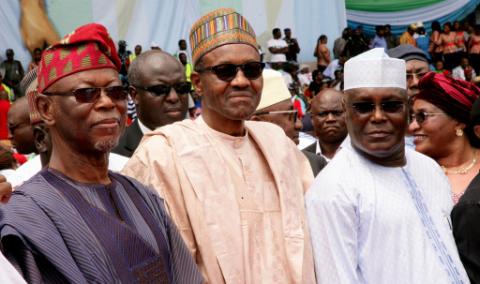 National Chairman of All Progressives Congress (APC), Chief John Oyegun and APC presidential aspirants; Major General Muhammadu Buhari (rtd.) and Atiku Abubakar at the 7th anniversary celebration of Governor Rotimi Amaechi of Rivers State in Port Harcourt on Saturday.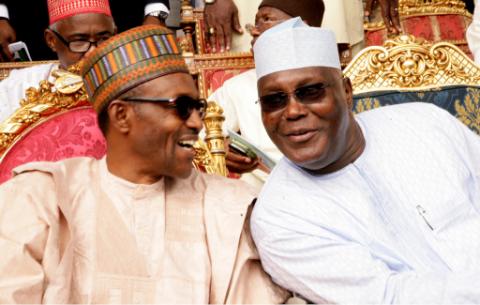

 A mob today stormed a police station in Taraba state where a lecturer at the Taraba College of Education, Zing, Alhaji Kassimu Umar had ran to, after knocking down and killing five primary school pupils with a vehicle he was driving. The mob burnt the lecturer to death instantly in the station.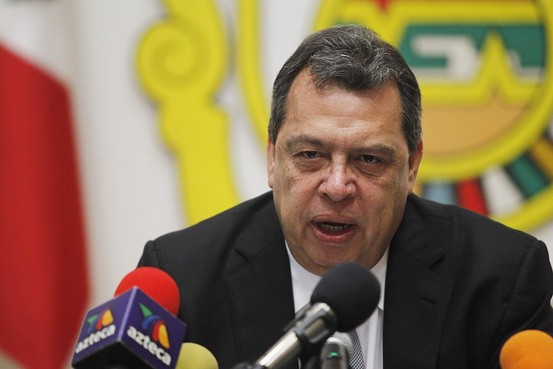
 Preesident Goodluck Jonathan has given marching order to the hard-fighting Nigeria’s female national team, the Falcons, to beat their Cameroonian counterparts in
 L – R: The Mozambican Prime Minister, Alberto Vaquina; First President of the Independent Zambia, Dr. Kenneth David Kaunda; Nigeria’s Vice President Mohammed Namadi Sambo; Acting President of the Republic of Zambia, Hon. Edger Lungu and his wife during the Zambia’s 50th Independence anniversary celebration in Lusaka, Zambia today, October 24