Nigerian government has confirmed that the Friday night devastating airstrikes on religious terrorists in Sokoto, Northwest of the country by the United States military were consistent with international law. A statement by the Ministry of Foreign Affairs in the early hours today, December 26, signed by the spokesman of the Ministry, Kimiebi Imomotimi Ebienfa, said: “in line with established international practice and bilateral understandings, this cooperation (for the US airstrikes) includes the exchange of intelligence, strategic coordination, and other forms of support consistent with international law, mutual respect for sovereignty, and shared commitments to regional and global security. “Nigeria reiterates that all counter-terrorism efforts are guided by the primacy of protecting civilian lives, safeguarding national unity, and upholding the rights and dignity of all citizens, irrespective of faith or ethnicity. Terrorist violence in any form whether directed at Christians, Muslims, or other communities remains an affront to Nigeria’s values and to international peace and security. “The Federal Government continues to work closely with its partners through established diplomatic and security channels to weaken terrorist networks, disrupt their financing and logistics, and prevent cross-border threats, while strengthening Nigeria’s own security institutions and intelligence capabilities. “The Ministry of Foreign Affairs will continue to engage relevant partners and keep the public informed through appropriate official channels. “Nigeria reiterates that all counter-terrorism efforts are guided by the primacy of protecting civilian lives, safeguarding national unity, and upholding the rights and dignity of all citizens, irrespective of faith or ethnicity.” The US Africa Command said in a post on its X yesterday, December 25: “At the direction of the President of the United States and the Secretary of War, and in coordination with Nigerian authorities, U.S. Africa Command conducted strikes against ISIS terrorists in Nigeria on December 25, 2025, in Sokoto State.” The airstrikes on terrorist targets in Sokoto were said to involve intelligence sharing, strategic coordination, and other forms of support in line with international law, respect for Nigeria’s sovereignty, and shared security commitments.
Photo by: The week
President Donald Trump had earlier announced on his social media: “Truth,” saying: “Tonight, at my direction as Commander in Chief, the United States launched a powerful and deadly strike against ISIS Terrorist Scum in Northwest Nigeria, who have been targeting and viciously killing, primarily, innocent Christians, at levels not seen for many years, and even Centuries! “I have previously warned these Terrorists that if they did not stop the slaughtering of Christians, there would be hell to pay, and tonight, there was. “The Department of War executed numerous perfect strikes, as only the United States is capable of doing. “Under my leadership, our Country will not allow Radical Islamic Terrorism to prosper. “May God Bless our Military, and MERRY CHRISTMAS to all, including the dead Terrorists, of which there will be many more if their slaughter of Christians continues.”
Until recently, not many people in Ebiraland, in Kogi Central Senatorial District of Nigeria knew that the first Chief Imam of the land, Sheikh Imam Yahaya Aliyu Tajudeen was an original indigene of Kwara State. As a matter of fact, the late Islamic cleric so integrated himself in Ebiraland that one would swear that he had no connection with Ilorin, Kwara State. Sheikh Yahaya Tajudeen, to be sure, was and still is respected as a founding figure of Islam in Ebiraland. He is often described as the “founder” or “father” of Islam in Ebiraland due to his pioneering roles. As a matter of fact, his mission in Ebiraland, spanning over 40 years, from about 1915 to 1956, laid foundations for structured Islamic life, scholarship and leadership among Ebira people. He worked alongside early Muslim leaders and rulers such as His Royal Highness, the second Paramount ruler of Ebiraland, Alhaji Ibrahim Atta, helping Islam to take deeper root in the community. He influenced future imams and scholars, including Sheikh Musa Galadima, who later became Chief Imam of Ebiraland.
Therefore, in a nutshell, it came as a surprise to many, especially the younger generation that late cleric was among 25 respected and accomplished personalities that were inducted into the prestigious “Ilorin Emirate Hall Of Fame” by the Ilorin Emirate Descendants Progressive Union (IEDPU) on December 24, 2025, about 70 years after his death. To have merited such prestigious honour, he was acknowledged as having contributed immensely to the peace and progress of the community. His life was described as being characterized by integrity, exemplary services, honesty and fascinating dispositions. “The union believes that he is worthy of being categorized and celebrated among the most exceptional indigenes of Ilorin Emirate who deserve to be specially honoured for the present and future generations to emulate.” The posthumous honour was received by one of the grandsons of the late Islamic cleric who is a veteran broadcaster, Mallam Nurudeen Imam AbdulRahman.
…abu Imam… Onizeyiza of Ebiraland It is no doubt in recognition of the gargantuan roles Sheikh Yahaya Tajudeen played in the manifestation of Ebiraland into largely an Islamic society that the fourth Paramount ruler of the land, late Alhaji Dr. Ado ibrahim honoured his grandson, abu Imam with traditional title of Onizeyiza obanyi (Dan Amana) of Ebiraland. Onizeyiza simply means trustworthiness. It also means being reliable. That could be the only way to appreciate the great impact Sheikh Yahaya Tajudeen had on Ebiraland, in addition to the fact that even the grandson, abu Imam, was treading on the same footsteps of integrity, sincerity, honesty and commitment to human development like his grandfather. Sheikh Imam Yahaya Tajudeen was born in 1875 in the “Ile Adafila” compound in Ilorin, Kwara State, into the family of Aliyu Badamasy and Princess Zainab. His mother was a princess from Irun town in Ondo State. He was of Yoruba/Nupe descent and connected with the Ilorin scholarly community before his work in Ebiraland. He first learned Qur’anic education from his father and pursued further Islamic knowledge under various scholars. He later studied under Sheikh Tajul-Adabi, one of the prominent Muslim scholars in Kwara State. Sheikh Tajudeen is widely acknowledged as the first Chief Imam and pioneer Islamic teacher in Ebiraland, especially in Okene and environs. He was known as a scholar, astute administrator, pious leader, treasurer and advisor, serving not just in religious capacities but also assisting in community affairs. He reportedly served in the British colonial Native Authority as treasurer before dedicating himself fully to Islamic propagation. After resigning from colonial service in 1924, he committed to spreading Islam among the Ebira, Okun, Akoko and Nupe communities, establishing structured Islamic teaching and community growth. Sheikh Tajudeen is remembered for propagating Islam peacefully through reasoned persuasion, patience and understanding of local traditions.
His leadership approach emphasized tolerance, humility, hard work, self-confidence, charity and sincerity. His model of community engagement, teaching and leadership remains part of local Islamic history and collective memory.
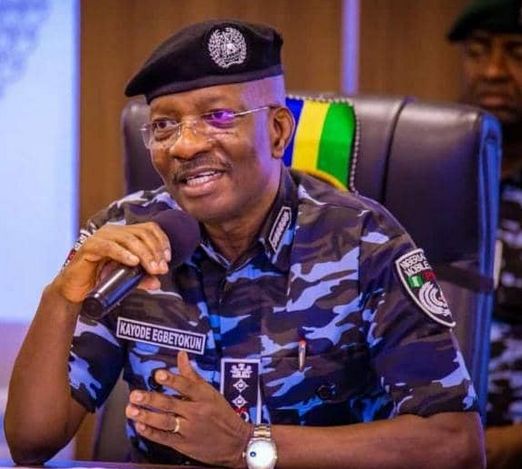
“The IGP (Inspector General of Police) was particularly angry that this came up at a time when the Police had pledged and are taking tangible steps to ensure press freedom. He equally ordered that the head of that unit be sanctioned for his conduct. “IGP Egbetokun does not want and would not condone any setback to our support for press freedom.” These were the exact words of the Police Force spokesperson, Benjamin Hundeyin when he was reacting to the trending news of the arrest of Sodeeq Atanda, a senior reporter with the Foundation for Investigative Journalism (FIJ). Atanda’s wife and nine-month-old child were earlier detained for hours as bait to lure him. The incident occurred on Monday when officers from the IGP Monitoring Unit reportedly detained Atanda’s wife, Adenike and their infant at a location in Ikorodu, Lagos. The police spokesperson, on his X page today, December 24, said that the IGP, Kayode Egbetokun, has ordered the immediate sanction of the head of a police unit implicated in the controversial arrest and detention of the journalist and his family members. Benjamin Hundeyin said that IGP Egbetokun was “miffed” upon learning of the arrest of Atanda through the International Press Institute (IPI). “In as much as you might want your depiction of the IGP to be true, it isn’t. I was with him last night when Mojeed Musikilu of the International Press Institute (IPI) reached out to me about the arrest. I promptly informed the IGP and he was miffed. You might choose to believe I am making this up, but it is the truth. “He (IGP) directed that the head of the unit be contacted to release the journalist immediately. I updated Mojeed accordingly.” He emphasised that the IGP ordered the journalist’s immediate release and sanctioned the unit head. FIJ had said that the journalist was arrested because of a story on how Adeyemi Awoyinfa, the chief executive officer (CEO) of Legend Adex Immigration Consult, refused to refund £15,000 he collected in November 2023 from a UK-based Nigerian who wanted two certificates of sponsorship (CoS) for two of his family friends, after failing to deliver. The IPI Nigeria, through its President, Mojid Musikilu had asked for immediate release of the journalist.
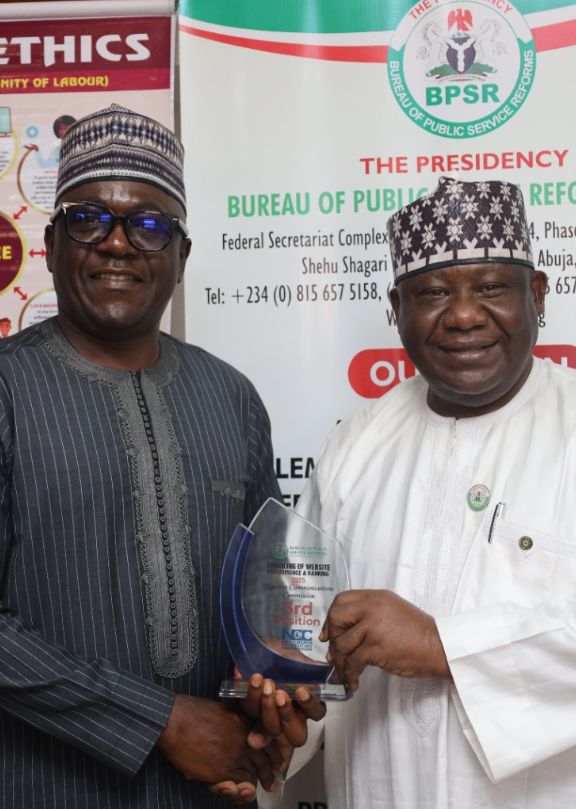
The Nigerian Communications Commission (NCC) has emerged the top three Ministries, Departments and Agencies (MDAs) of the Federal Government with the Best Ranking in Website Performance for 2025. The ranking which was conducted by the Bureau of Public Service Reforms (BPSR) came today, December 23, barely three weeks after the telecom regulator was recognized as one of the top five best-performing Federal Government agencies for 2025 by the Presidential Enabling Business Environment Council (PEBEC) – a testament to the Commission’s consistency in investment in technology for ensuring efficient service delivery. In the BPSR 2024/2025 scorecard ranking of agencies’ websites, the NCC came second in the ranking, trailing behind Galaxy Backbone Limited, which came first while the Nigeria Export Promotion Council (NEPC) clinched the third position, from a pool of 235 MDAs, whose website were evaluated. Facts available showed that BPSR deployed 14 evaluation criteria in include MDA’s website compliance with .gov.ng domain name, appearance and aesthetics (look and feel) of the website, content, relevance to MDAs mandate/government policy and the website’ structure. Others include website’s responsiveness (device compatibility), security, load time, usability/ease of navigation, availability/uptime, functionality, interactivity, accessibility and capacity building. The recognition was announced at the official release of Federal Government 2024/2025 Scorecard Ranking for MDAs’ Website held at the Federal Ministry of Finance Auditorium in Abuja while the award presentation took place at BPSR’s Office on today, December 23. The award, which is an important index metric of the National e-Government Masterplan for determining the Nigeria e-Government Status, was received by the Commission in recognition of its commitment to maintaining a world-class website that enhances service delivery to the citizens. Receiving the award on behalf of the Executive Vice Chairman of the NCC, Dr. Aminu Maida, the NCC’s Executive Commissioner, Technical Services, Abraham Oshadami, appreciated the BPSR for the recognition, describing the award as “another encouragement for the Commission to be a better public service institution leveraging digital platforms such as our web presence to enhance public service delivery to our various stakeholders, thereby implementing the Federal Government’s Ease of Doing Business policy direction.” Presenting the award to the NCC, alongside other two agencies, BPSR’s Director-General, Dasuki Arabi commended the top three for their proactive decisions in maintaining world-class websites, which are compliant with the Federal Government’s policy direction in effective and efficient service delivery to the citizens. According to the DG, the 2024/2025 MDA’s websites’ ranking represents a collective effort of federal public institutions in Nigeria to be transparent, accountable and open in governance, as well as a confirmation to align with global best practices in service delivery to the citizens. Developed about six years ago, Arabi said as a result of the annual ranking, more public institutions have indicated readiness to embrace reforms, and align with the policy direction of the current administration’s Renewed Hope agenda on improve governance for effective service delivery, as introduced by President Bola Ahmed Tinubu. “The ideals of harnessing and deploying technological tools for service delivery has become imperative following the COVID pandemic, and distortions of socio-economic system of nations, culminating in the evolution of competitiveness, cost effectiveness, and agile governance. “As engine room of governance, it behoves on us in the public service to perform our statutory duties and we must put in place technological innovations and standardized websites to operate services as well as deliver service needs to citizens.” The Scorecard exercise, he said, is part of the BPSR reform broader function of conducting research on reform implementation efforts and presenting ‘best practice’ models to the entire Public Service, and to among others, improve access to government information, facilitate seamless financial transaction, eliminate corruption and cyber theft, as well as facilitate access to government services. Speaking on the rigorous nature of the exercise that produced the top three winners, the DG said: “in the past few weeks members of the Scorecard Jury drawn from inter-Ministerial Agencies, had worked tirelessly to mill websites of selected MDAs through a rigorous process of enduring criteria for the ranking and the outcome had also passed through a quality assurance mechanism to validate the outcome.”
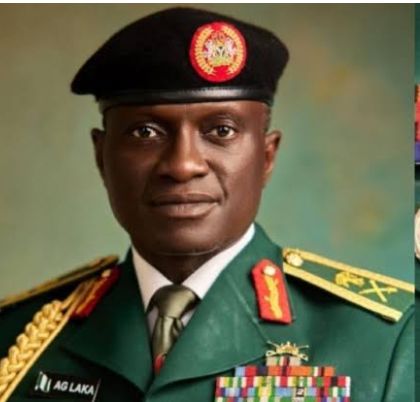
The Director-General of the National Counter Terrorism Centre, Major General Adamu Garba Laka, has said that it has been difficult to track ransom money paid to terrorists, including kidnappers because they make use of the operators of Point-Of-Sale (POS). Speaking today, December 23, at an end-of-year briefing in Abuja, General Adamu Laka admitted that ransom payments are the major source of terror financing. He said that ransom payments are often transferred into accounts belonging to POS operators, who then release the cash to kidnappers, making financial tracking more difficult. “You see a transfer made by terrorists, and when you investigate the account, it belongs to a POS operator. The kidnappers give out the POS operator’s number, the money is transferred, and they go to collect it.” The counter-terrorism boss said that security agencies have intensified efforts to trace ransom payments, arrest those involved and dismantle terror financing networks. He said for security reasons, the specific operational details could not be disclosed, even as he said that several arrests and prosecutions have been made in connection with ransom payments and terrorism financing. He said that there have been asset recoveries and seizures, contributing to Nigeria’s compliance with international anti-money laundering and counter-terrorism financing standards. He said that security agencies are collaborating with major social media companies to track and remove accounts used by terrorist and criminal groups to promote their activities and raise funds. He said that platforms such as TikTok, Facebook, Instagram, Snapchat and X have been exploited by terrorist groups to publicise their operations, display looted items and communicate with supporters. According to General Adamu Laka, security agencies have held multiple engagements with social media companies to address posts and accounts considered threats to national security. “The issue of social media platforms used by terrorist groups if you knew how many accounts we took down. We have had several meetings with these social media platforms like: TikTok, Instagram, Snapchat, Facebook and X. “They are businesses looking to grow their subscribers, but we engage them, explain the effects of certain posts on national security, and we take them down. “There was a time when bandits would go on TikTok showing their loot. We took those accounts down you don’t see that again. At some point, they were even doing live streams and holding conversations, but we’ve been able to handle all that.” He explained that terrorist groups continue to change their methods, including operating under aliases and unverified accounts, stressing that security agencies are constantly adjusting their strategies to counter these developments. He said that Nigeria’s recent progress in meeting the requirements of the Financial Action Task Force was partly achieved through coordinated investigations by a joint committee involving security agencies, financial intelligence units and the judiciary. He acknowledged the challenges posed by evolving terrorist tactics and porous borders within the Sahel region, but assured Nigerians that security agencies would continue to strengthen both physical and digital counter-terrorism measures. “Towards the end of 2023, the security situation in Nigeria was improving. But after the coups in some Sahel countries, the situation worsened because these terrorist groups have connections across the region. “So Nigeria has to play a leadership role in West Africa and the Sahel to address these threats. As long as those countries continue to face these challenges, Nigeria will also face them. We are doing our best, and we will not relent. In 2026, we are going to up our game.”
The recent revelations by retired Major General Babagana Monguno, former National Security Adviser (NSA) to President Muhammadu Buhari, in the biography: “From Soldier to Statesman,” demand rigorous scrutiny. While Monguno portrays himself as a victim of a predatory “cabal,” his eight-year tenure and the specifics of his account raise profound questions about his own competence, accountability and motives. The following forty questions, flowing serially, interrogate the contradictions and omissions in his narrative, challenging the foundation of his professed victimhood and effectiveness. The 40 Questions go thus: 1. If the cabal was so powerful and your office was starved of funds, why did you remain in the office of NSA for eight full years instead of resigning on principle? 2. Does your lengthy tenure not suggest a level of complicity or acceptance of the dysfunctional system you now condemn? 3. How do you define your own competence as NSA when you admit the country’s security architecture was “effectively blinded” under your watch? 4. Is blaming a “cabal” for eight years a substitute for personal accountability and strategic ingenuity? 5. What tangible, successful security operations can you directly credit to your leadership as NSA, independent of the cabal’s interference? 6. You claim your office was starved of funds, yet the prestigious Counter-Terrorism Centre was built. With which specific funds was this project executed? 7. Can you provide a detailed accounting of the budget for the Counter-Terrorism Centre and the contractors involved? 8. If the Finance Minister withheld your funds, as claimed, what special arrangement or pressure secured funding for this capital project? 9. Did you raise the illegal withholding of approved funds in any Federal Executive Council meeting or through other official, public channels? 10. What precise role did you play in the infamous midnight siege on the National Assembly and the removal of DG SSS, Lawal Daura, in 2018? 11. Were your professional recommendations as NSA solely responsible for their removal, or were there other political forces at play? 12. How did these removals improve the intelligence coordination you lament was sabotaged by the villa? 13. Did you ever oppose the method of their removal, given the constitutional and institutional crises it provoked? 14. Can you explain the source of wealth for your then Director of Finance and Administration (DFA), Brig. Gen. Jafaru Mohammed, who was reported to own lavish mansions in Abuja, Kano, Lagos, and Kaduna? 15. As the NSA, what disciplinary action did you take regarding these allegations about your DFA? 16. Is it true that you own properties in the United Kingdom and the United States? If so, can you declare them and explain the legitimate source of funds for their purchase? 17. Did you ever submit yourself to the Code of Conduct Bureau to verify the legitimacy of your assets, both domestic and foreign? 18. How can you reconcile allegations of a cabal enriching itself with unanswered public questions about the wealth of your own close aide? 19. You describe a single incident about aircraft fuel as revealing the cabal. Does this not reduce grand corruption and security sabotage to a petty contractual dispute? 20. Why did you not formalize your repeated “face-to-face pleas” to President Buhari into written, minuted reports that would create an undeniable paper trail? 21. You sent “30 reminders” that were ignored. At what point does persistence become futility, and why not make a public stand? 22. You claim the Special Services Office was sidelined. Why did it take until Boss Mustapha became SGF to forcefully insist on its inclusion? 23. Operating without a permanent secretary for 20 months is a major administrative failure. Why was your office unable to overcome this “political calculus”? 24. You say Buhari and Nigerians were “victims.” As NSA, are you not a member of that same victimized leadership class that failed the nation? 25. Is publishing these accusations in a biography after leaving office, not the very definition of closing the stable door after the horse has bolted? 26. If the national security infrastructure was crumbling due to lapsed subscriptions, what interim, low-cost intelligence strategies did you develop? 27. You blame petty sabotage repeated often. As NSA, what was your “petty persistence” to counter it, beyond memos that went unanswered? 28. The book reveals you were made “persona non grata” by Mamman Daura. Does this not admit that you were effectively outmanoeuvred and sidelined by non-officials? 29. Why did you never consider a public resignation with a detailed statement to expose the cabal while in office when it could have pressured the system? 30. How do you reconcile your powerful constitutional role with the image of an NSA who needed permission to fund villa surveillance? 31. Is this biography not a carefully timed attempt to salvage your legacy by shifting all blame to a cabal and a deceased president? 32. What is your response to critics who say you were a convenient, quiet NSA for a system you now condemn, and your silence was purchased with your tenure? 33. Did you ever directly tell President Buhari that his Chief of Staff and relatives were undermining national security? 34. You quote Buhari as saying “Leave the file” or “I’ve sent it to Malam Abba.” Why did you accept this circular delegation of authority over critical security funds? 35. What is more damaging: a powerful cabal or a security adviser who documents his own powerlessness for eight years without a decisive action? 36. Can you name the specific members of this “cabal” beyond the late Abba Kyari and Mamman Daura? 37. Did this cabal have any positive influence on any security or government policy, or was it solely a destructive force? 38. How did this cabal manage to control the presidency so completely without, according to you, the president’s conscious consent? 39. Is it not a failure of intelligence that the NSA could not compile a definitive, actionable report on the cabal’s activities for the president? 40. Finally, having watched insecurity worsen from 2015 to 2023, do you believe your tenure as NSA made Nigeria safer, and if not, why should history judge the cabal more harshly than you? The portrait that emerges from these questions is not of a shrewd security strategist but of a bureaucrat who clung to title for eight years while documenting his own irrelevance. He presents himself as a meticulous note-taker of his powerlessness, a chronicler of his own failure to influence, lead, or resign. His narrative reduces the monumental security failures of an era to petty villa squabbles over fuel contracts and blocked memos, while he remained the dignified, well-dressed face of a security apparatus he admits was “blinded.” He now seeks to shape history by revealing secrets in a book, a final, safe act of defiance that required no courage when it mattered.
The ultimate indictment is not just of a cabal he describes, but of a man who watched the house burn for eight years, meticulously recorded who blocked the water, but never once shouted “fire!” loud enough for the public to hear—until everyone had safely left the scene.
Dr. Mohammed Kachallah Gulmari wrote in from Gombe
The Guild of Interfaith Media Practitioners Nigeria (GIMP-Nigeria) has offered advice to the government on the best way to end the lingering insecurity in the country. In a message to mark the 2025 Christmas which is due on Thursday, December 25, the group stressed that insecurity caused by Boko Haram insurgence, Banditry and other criminal activities can be defeated only with deliberate and sustained interfaith collaboration amongst all the stakeholders. The Guild, which condemned the continued killings, kidnappings, banditry, terrorism, communal clashes and manipulation of religious identities, described the negative security indices as grave threats to national unity, economic stability and social trust. GIMP-Nigeria regretted that places of worship, highways, farms and communities have since become unsafe, leaving citizens traumatised and deeply divided. The group noted that military responses alone have proven insufficient due to the fact that the insecurity is being fueled not only by weapons but through attitudinal mistrust, misinformation, exclusion and the abuse of religion. In the message signed by the Chairman of GIMP-Nigeria, Abdulkarim Abdulmalik, the group said: “Nigeria’s insecurity is not only a security failure; it is a trust failure.” The statement said: “interfaith collaboration is not symbolic. It is a frontline security strategy that government can no longer afford to ignore”. GIMP-Nigeria stressed that structured interfaith synergy between the leadership of Muslims and Christians, media professionals and government institutions can significantly reduce violence by countering extremist narratives, promote early-warning intelligence at the grassroots, mediate communal tensions and discourage hate speech. The Guild called on the Federal, State and Local Governments to institutionalise engagement with credible interfaith bodies, support interfaith peacebuilding and counter-narrative initiatives and integrate faith-sensitive approaches into national security planning. “A government that sidelines faith actors in a deeply diverse religious society like Nigeria weakens its own security architecture,” the Guild warned. GIMP-Nigeria called on media practitioners to act responsibly by avoiding sensationalism, religious profiling and conflict-driven reporting, especially during religious seasons like this Christmas period. The Guild asked media practitioners to count themselves as forces for de-escalation and engage in accurate reporting to evolve national cohesion. The group challenged faith leaders to speak with one voice against violence, join hands with government to discipline inflammatory preaching even as it affirmed that no religion justifies the killing of innocent people. The interfaith media group expressed hope and confidence that as Nigeria and the world set to mark the season that is associated with peace, compassion and goodwill, and to witness another New Year, peace would be achieved only if the leadership is courageous and inclusive. “Nigeria’s diversity is not a curse but a strength. The New Year must mark a shift from symbolic interfaith meetings to practical, result-driven partnership with government for a safer and and more united nation.”
Many things happened in Nigeria last week that will trend for a time. Among them were two weighty revelations, one of which led to two ‘juicy’ resignations. There was the revelation by Aisha Buhari, the late President Muhammadu Buhari’s wife, that the former president began locking his door to keep her out of his room. Reason? That he heard Villa rumours that she wanted to kill him. An old General fearing the woman who has been married to him for over 30 years! The other was by Aliko Dangote, the richest Black man on Earth. He revealed that Farouk Ahmed, the Chief Executive Officer of the Nigerian Midstream and Downstream Petroleum Regulatory Authority (NMDPRA), has spent $5 million over six years on his four children’s education at Swiss secondary schools. Well, most likely, Nigerians might not have heard the Dangote allegation had Farouk not stepped on his toes, one way or the other. But then he once told us about the refineries in Malta, so it may not be because someone threatened to take the ice cream out of his mouth. Again, someone else might have used the information for “trade by barter,” so sleeping dogs will continue to lie. This revelation could have been the reason Farouk resigned. Whatever the case, may the elite continue to regale Nigerians with more revelations against one another. And beyond those revelations is the ‘inconceivable’ and ‘impossible’ feat achieved by Yobe State a little earlier than these two revelations. For those who do not know Yobe or the milestone achievements of His Excellency, Governor Mai Mala Buni in the state across various sectors, the fact that Yobe has emerged Nigeria’s number one state in Primary Health Care is unimaginable. But it is neither inconceivable nor impossible for those who have been following the state since Buni became Governor. Leadership newspaper of 15 December wrote: “Yobe State has once again distinguished itself as a national pacesetter in healthcare delivery, emerging as Nigeria’s leading state in Primary Health Care (PHC) following outstanding performances at the 2025 PHC Leadership Challenge Awards held in Abuja. “Under the visionary leadership of Governor Mai Mala Buni, the state clinched both regional and national honours, reinforcing its growing reputation for excellence in grassroots healthcare. “Yobe was named the Best Performing State in the North-East for the second consecutive year, winning the title in 2024 and 2025, with each award attracting a $500,000 prize. “In an even more remarkable feat, the state also emerged as the Overall Best Performing State in Nigeria at the 2025 edition of the awards, securing an additional $700,000, bringing the total prize money earned by Yobe to $1.2 million, a clear testament to the state’s sustained investment and reforms in the health sector.” The name Yobe used to be synonymous with “Number one from the rear,” but “Number one in front”? It is something new that began with the ascension of Governor Buni to the state’s governorship. How did he make Yobe a home of peace, an educational model whose students are now winning national and international accolades, an agricultural hub on the way to becoming the nation’s food basket, the best-performing state in the North-East, health-wise, for two years running, and the overall best in Nigeria this year? What did he do to make the National Bureau of Statistics (NBS) report that the state is the most affordable place to live in Nigeria? According to the NBS reports of July 2025, “Yobe State is Nigeria’s most affordable state to live in, with low costs driven by falling inflation and successful agricultural programs boosting food security and local markets, making it relatively cheaper for housing and daily living compared to other states, especially around cities like Damaturu and Potiskum where business thrives, though security improvements are key to sustained affordability.” When, on 29 May 2019, Honourable Mai Mala Buni became the seventh to be sworn in as Governor of Yobe State, but the fourth man to assume that office, he made specific declarations that many waited with bated breath to see come to fruition. He announced a state of emergency on education and also promised to enhance agriculture, which is the mainstay of the people. He told the people of the state that “Yobe First” in everything, to empower indigenes, would be his mantra and that he would pursue peaceful coexistence and quality health delivery for the people. Of course, without peace and good health, which farmer can farm and which student can learn anything? Or is there a teacher who can teach without them? So, he first did all he could to establish peace in the state by providing security agencies with the resources they needed, thereby boosting their capacity to confront crime and criminals and, consequently, their morale. He went further to make the political landscape level and fair, jettisoning the “by all means” politics hitherto known in the state in favour of a healthy contest between brothers who desire to contribute their quota for the benefit of the state. This was attested to by no less a personality than Adamu Maina Waziri. Waziri, a founding father of the Peoples Democratic Party (PDP) and now among the doyens of the African Democratic Congress (ADC), is one of Yobe’s greatest politicians and the state’s most prominent opposition figure since 1999. Not only that, he was among those who worked to create the state, serving as the movement’s Secretary. Therefore, he should be familiar with the state’s political history, having been part of it from the beginning. And anybody who knows him knows that he is a very fair person. One of the attributes he shares with Buni is their capacity to be fair to people, even when they are not on the same page. And though he would fight any opponent, any day, including Buni, for political control of Yobe, he still once opined that the Governor has brought peace to Yobe politics, which used to be a “do or die” affair. Many attest that the hitherto volatility of politics in the state is now a thing of the past. Having put the peace process in place, he declared a state of emergency on education and launched an ambitious ₦25 billion appeal fund. The aim was to take out-of-school children off the streets and provide high-quality education across the state. ₦10 billion was pledged, out of which about ₦2 billion was redeemed. He set up the Yobe Education Trust Fund, composed of eminent and trustworthy indigenes, under the chairmanship of Engineer Muhammad Abubakar, a seasoned civil servant who served as a Deputy Chief of Staff in the Presidency, and entrusted the funds to it. So far, under his watch, new schools have been constructed, and hostels and classrooms in existing schools have been renovated. Laboratories and ICT centres have been built and equipped. His Yobe First promise ensured that, except when only outsiders had the technical expertise to perform a standard job, all contracts were executed by indigenes. His vision led to the recruitment of over 4,000 education staff and the retraining of almost 30,000.
Dr.Hassan Gimba, Publisher and Editor-in-Chief of Neptune Prime wrote in from Abuja.
President Bola Tinubu has presented the 2026 Appropriation Bill of ₦58.18 trillion to a joint session of the National Assembly. At the joint session today, December 19, the President said that the Budget, titled “Budget of Consolidation, Renewed Resilience and Shared Prosperity,” is designed to consolidate recent economic reforms and translate stabilising macroeconomic indicators into improved living standards for Nigerians. The President announced the end of the long-standing practice of running multiple budgets in the country. He said that the era of overlapping budgets, abandoned projects, inherited obligations, and perpetual rollovers must come to an end if Nigeria is to achieve fiscal discipline and sustainable development. “Before I go any further, let me be upfront. This is a reset, a very hard one.” He said that the practice of avoiding abandoned projects, piling up contractual obligations and running multiple budgets on a single inflow has continued to undermine effective governance and economic planning. “We are terminating the habit of running three budgets in one inflow. By March 31, 2026, all capital liabilities from previous years will be fully funded and closed. “From April, Nigeria will operate on a single budget backed by a single revenue cycle — no overlaps, no excuses, no rollovers.” On measures to ensure strict adherence to appropriate timelines, improved revenue mobilisation, and tighter accountability across government institutions, the President said the 2025 budget implementation faced the realities of transition and competing execution demands. ”As at Q3 2025, we recorded ₦18.6 trillion in revenue—representing 61% of our target and ₦24.66 trillion in expenditure—representing 60% of our target. “Following the extension of the 2024 capital budget execution to December 2025, a total of ₦2.23 trillion was released for the implementation of 2024 capital projects as of June 2025. ”While fiscal challenges persisted, the government met its key obligations. However, only ₦3.10 trillion—about 17.7% of the 2025 capital budget—was released as of Q3, reflecting the emphasis on completing priority 2024 capital projects during the transition period. ”Let me be clear: 2026 will be a year of stronger discipline in budget execution. I have issued directives to the Honourable Minister of Finance and Coordinating Minister of the Economy, the Honourable Minister of Budget and Economic Planning, the Accountant General of the Federation, and the Director General of the Budget Office of the Federation to ensure that the 2026 Budget is implemented strictly in line with the appropriated details and timelines. ”We expect improved revenue performance through the new National Tax Acts and the ongoing reforms in the oil and gas sector—reforms designed not merely to raise revenue, but to drive transparency, efficiency, fairness, and long term value in our fiscal architecture.” The President stressed that the focus on discipline and delivery is aimed at restoring public trust in the budget process, stressing that “the greatest budget is not the one we announce. It is the one we deliver.” Tinubu warned Government-Owned Enterprises (GOEs) and revenue generating agencies that underperformance would no longer be tolerated, declaring that “Nigeria can no longer afford leakages, inefficiencies, or underperformance in strategic agencies.” ”I will also be unequivocal about Government Owned Enterprises. Heads of all GOEs are hereby directed to meet their assigned revenue targets. ”To support this, we will deploy end to end digitisation of revenue mobilisation—standardised e collections, interoperable payment rails, automated reconciliation, data driven risk profiling, and real time performance dashboards—so leakages are sealed, compliance is verifiable, and remittances are prompt. ”These targets will form core components of performance evaluations and institutional scorecards.” Highlighting recent economic indicators, President Tinubu said that Nigeria’s economy grew by 3.98 per cent in the third quarter of 2025, compared to 3.86 per cent in the same period of 2024, while inflation moderated for eight consecutive months, declining to 14.45 per cent in November 2025 from 24.23 per cent in March. He cited improved oil production, expanded non-oil revenues through better tax administration, renewed investor confidence, and external reserves rising to a seven-year high of about US$47 billion. “These outcomes are not accidental. They reflect difficult but deliberate policy choices.” The President said that the 2026 Budget projects total expenditure of ₦58.18 trillion and expected revenue of ₦34.33 trillion. Capital expenditure is estimated at ₦26.08 trillion, while recurrent non-debt expenditure stands at ₦15.25 trillion. Debt servicing is projected at ₦15.52 trillion, with a budget deficit of ₦23.85 trillion, representing 4.28 per cent of Gross Domestic Product. The Budget is anchored on conservative assumptions, including a crude oil benchmark of US$64.85 per barrel, daily oil production of 1.84 million barrels, and an exchange rate of ₦1,400 to the US dollar for the 2026 fiscal year. President Tinubu said the assumptions reflect the administration’s commitment to realism, prudence, and fiscal sustainability. President Tinubu identified security, infrastructure, education, health, and agricultural productivity as key priorities in the 2026 budget. According to him, the proposed allocations include ₦5.41 trillion for defence and security, ₦3.56 trillion for infrastructure, ₦3.52 trillion for education, and ₦2.48 trillion for health. He stressed that the priorities are interconnected, noting that “without security, investment will not thrive,” while educated and healthy citizens are essential for productivity and economic growth. On the fight against terrorism, the President declared that the Federal Government will show no mercy to terrorists and violent criminal elements. He announced the establishment of a new national counter-terrorism doctrine to decisively confront terrorism, banditry, kidnapping for ransom, and other violent crimes threatening Nigeria’s stability. ”Our administration is resetting the national security architecture and establishing a new national counterterrorism doctrine—a holistic redesign anchored on unified command, intelligence, community stability, and counter-insurgency. ”This new doctrine will fundamentally change how we confront terrorism and other violent crimes that have become existential threats to our corporate survival and have heightened anxiety among our people,” he said. On health sector, President Tinubu welcomed over US$500 million in grant funding secured through recent high-level engagements with the Government of the United States for targeted health interventions across Nigeria. He described the support as a decisive vote of confidence in Nigeria’s reform agenda and health sector priorities. “We welcome this partnership and assure Nigerians that these resources will be deployed transparently and effectively.” President Tinubu noted that strengthening Nigeria’s healthcare system remains a central pillar of his administration’s human capital development strategy, stressing that a healthy population is essential to productivity, economic growth, and national resilience. He said that the 2026 budget reinforces investments in healthcare delivery, disease prevention, maternal and child health, and health system strengthening, while ensuring accountability in the use of both domestic and international resources. President Tinubu reaffirmed that projects under the Renewed Hope Agenda are steadily moving from vision to reality nationwide, with significant progress recorded in transport and energy infrastructure, port modernisation, agricultural reforms, and strategic investments designed to unlock private capital. He explained that infrastructure development remains critical to reducing the cost of doing business, expanding market access, creating jobs, and improving the quality of life for Nigerians. Tinubu underscored the administration’s firm commitment to food security, describing it as a national priority and a core component of economic stability and social well-being. ”We will take decisive steps to strengthen agricultural markets. Food security shall remain a national priority. The 2026 Budget focuses on input financing and mechanisation; irrigation and climate resilient agriculture; storage and processing; and agro value chains. “These measures will reduce post harvest losses, improve incomes for small holders, deepen agro industrialisation, and build a more resilient, diversified economy. President Tinubu commended Nigerians for their understanding and resilience, assuring that his administration remains committed to easing the burdens of the transition to a more stable and prosperous nation. ”We promise to make sure that the benefits of reform reach households and communities across the Federation.”
About 24 hours after the President and Chief Executive Officer of Dangote Group, Alhaji Aliko Dangote raised eyebrow on alleged corrupt dealings by the Chief Executive Officer of the Nigerian Midstream and Downstream Petroleum Regulatory Authority (NMDPRA), Engineer Farouk Ahmed, President Bola Tinubu may have forced him to resign. The resignation of Farouk Ahmed was announced today, December 17, by the Presidency, suggesting “forced” action. President Tinubu quickly picked Engineer Saidu Aliyu Mohammed as replacement for Farouk Ahmed as NMDPRA Chief Executive Officer. A statement by the Special Adviser to President Tinubu on Information and Strategy, Bayo Onanuga, said that Chief Executive Officer of the Nigerian Upstream Petroleum Regulatory Commission (NUPRC), Gbenga Komolafe also resigned at the same time. Onanuga said that President Tinubu asked the Senate to approve the nominations of the two new chief executives whose names were forwarded for approval. There were no reasons given for the “resignation” of the two officers, but Onanuga’s statement said that they were appointed in 2021 by former President Buhari to lead the two regulatory agencies created by the Petroleum Industry Act (PIA). Only yesterday, the Independent Corrupt Practices and other related offences Commission (ICPC) confirmed receipt of a petition from Aliko Dangote on alleged corrupt dealings by Engineer Farouk Ahmed. Though the Commission did not give details of the petition, Dangote had, at a different time and place, accused Engineer Farouk Ahmed of spending billions of dollars in school fees of his children, saying that such amount of money raised a lot of questions against the background of his legitimate earnings. The Presidency statement today said that Tinubu had in a letter, asked Senate to also confirm Oritsemeyiwa Amanorisewo Eyesan as new CEO of NUPRC. “The two nominees are seasoned professionals in the oil and gas industry. ” Eyesan, a graduate of Economics from the University of Benin, spent nearly 33 years with the NNPC and its subsidiaries. “She retired as Executive Vice President, Upstream (2023–2024), and previously served as Group General Manager, Corporate Planning and Strategy at NNPC from 2019 to 2023. ” Engineer Saidu Aliyu Mohammed, born in 1957 in Gombe, graduated from Ahmadu Bello University in 1981 with a Bachelor’s in Chemical Engineering. He was announced today as an independent non-executive director at Seplat Energy. “His prior roles include Managing Director of Kaduna Refining and Petrochemical Company and Nigerian Gas Company, as well as Chair of the boards of West African Gas Pipeline Company, Nigeria LNG subsidiaries, and NNPC Retail. “He also served as Group Executive Director/Chief Operating Officer, Gas & Power Directorate, where he provided strategic leadership for major gas projects and policy frameworks, including the Gas Masterplan, Gas Network Code, and contributions to the Petroleum Industry Act (PIA). “Engineer Mohammed played a pivotal role in delivering key projects such as the Escravos–Lagos Pipeline Expansion, the Ajaokuta–Kaduna–Kano (AKK) Gas Pipeline, and Nigeria LNG Train.”
We use cookies on our website to give you the most relevant experience by remembering your preferences and repeat visits. By clicking “Accept”, you consent to the use of ALL the cookies.
This website uses cookies to improve your experience while you navigate through the website. Out of these, the cookies that are categorized as necessary are stored on your browser as they are essential for the working of basic functionalities of the website. We also use third-party cookies that help us analyze and understand how you use this website. These cookies will be stored in your browser only with your consent. You also have the option to opt-out of these cookies. But opting out of some of these cookies may affect your browsing experience.
Necessary cookies are absolutely essential for the website to function properly. This category only includes cookies that ensures basic functionalities and security features of the website. These cookies do not store any personal information.
Any cookies that may not be particularly necessary for the website to function and is used specifically to collect user personal data via analytics, ads, other embedded contents are termed as non-necessary cookies. It is mandatory to procure user consent prior to running these cookies on your website.







As Sheikh Yahaya Tajudeen Entered Ilorin Emirate “Hall Of Fame” By Yusuf Ozi-Usman
Until recently, not many people in Ebiraland, in Kogi Central Senatorial District of Nigeria knew that the first Chief Imam of the land, Sheikh Imam Yahaya Aliyu Tajudeen was an original indigene of Kwara State. As a matter of fact, the late Islamic cleric so integrated himself in Ebiraland that one would swear that he had no connection with Ilorin, Kwara State.
Sheikh Yahaya Tajudeen, to be sure, was and still is respected as a founding figure of Islam in Ebiraland. He is often described as the “founder” or “father” of Islam in Ebiraland due to his pioneering roles.
As a matter of fact, his mission in Ebiraland, spanning over 40 years, from about 1915 to 1956, laid foundations for structured Islamic life, scholarship and leadership among Ebira people.
He worked alongside early Muslim leaders and rulers such as His Royal Highness, the second Paramount ruler of Ebiraland, Alhaji Ibrahim Atta, helping Islam to take deeper root in the community.
He influenced future imams and scholars, including Sheikh Musa Galadima, who later became Chief Imam of Ebiraland.
To have merited such prestigious honour, he was acknowledged as having contributed immensely to the peace and progress of the community.
His life was described as being characterized by integrity, exemplary services, honesty and fascinating dispositions.
“The union believes that he is worthy of being categorized and celebrated among the most exceptional indigenes of Ilorin Emirate who deserve to be specially honoured for the present and future generations to emulate.”
The posthumous honour was received by one of the grandsons of the late Islamic cleric who is a veteran broadcaster, Mallam Nurudeen Imam AbdulRahman.
…abu Imam… Onizeyiza of Ebiraland
It is no doubt in recognition of the gargantuan roles Sheikh Yahaya Tajudeen played in the manifestation of Ebiraland into largely an Islamic society that the fourth Paramount ruler of the land, late Alhaji Dr. Ado ibrahim honoured his grandson, abu Imam with traditional title of Onizeyiza obanyi (Dan Amana) of Ebiraland. Onizeyiza simply means trustworthiness. It also means being reliable. That could be the only way to appreciate the great impact Sheikh Yahaya Tajudeen had on Ebiraland, in addition to the fact that even the grandson, abu Imam, was treading on the same footsteps of integrity, sincerity, honesty and commitment to human development like his grandfather.
Sheikh Imam Yahaya Tajudeen was born in 1875 in the “Ile Adafila” compound in Ilorin, Kwara State, into the family of Aliyu Badamasy and Princess Zainab. His mother was a princess from Irun town in Ondo State.
He was of Yoruba/Nupe descent and connected with the Ilorin scholarly community before his work in Ebiraland.
He first learned Qur’anic education from his father and pursued further Islamic knowledge under various scholars.
He later studied under Sheikh Tajul-Adabi, one of the prominent Muslim scholars in Kwara State.
Sheikh Tajudeen is widely acknowledged as the first Chief Imam and pioneer Islamic teacher in Ebiraland, especially in Okene and environs.
He was known as a scholar, astute administrator, pious leader, treasurer and advisor, serving not just in religious capacities but also assisting in community affairs.
He reportedly served in the British colonial Native Authority as treasurer before dedicating himself fully to Islamic propagation.
After resigning from colonial service in 1924, he committed to spreading Islam among the Ebira, Okun, Akoko and Nupe communities, establishing structured Islamic teaching and community growth.
Sheikh Tajudeen is remembered for propagating Islam peacefully through reasoned persuasion, patience and understanding of local traditions.
His model of community engagement, teaching and leadership remains part of local Islamic history and collective memory.