Few Months To End Of Millennium Development Goals, Jonathan Wants It Repackaged

President Goodluck Jonathan has charged experts implementing the Millennium Development Goals in Nigeria to redesign their contents in line with the peculiar needs of the country.
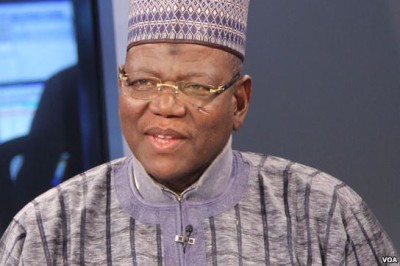
The President gave this directive when he declared open, a Summit on the Millennium Development Goals (MDGs) and the Post 2015 Development Agenda in Abuja today. His address was delivered by Vice President Mohammed Namadi Sambo.
He stressed that for the Post-2015 Development Agenda to have the necessary impact on the development trajectory of nations across the world, the new set of goals needs to tackle the issues that were not addressed under the current framework, with poverty eradication, access to sustainable energy, infrastructural development, population demographics and governance at the center.
“It must be understood that these areas are crucial to the process and cannot be left out. The new framework must finish the current business of the MDGs. “If the current framework was the so-called ‘floor’ for development aspirations on which we set more ambitious and contextually appropriate policy aims, then the new framework must consider the most fundamental problems facing the least developed societies in the world. It must tackle those problems first. The formulation process needs to continue to be inclusive so that development realities and not academic conjectures are tackled.
“This inclusion has the added benefit of increasing community buy-in across the world. Being cognizant of these, I assure you of Government’s commitment to consider the outcomes of this Summit.”
He said that the Summit has come at a better time as we approach the MDGs deadline and mobilize resources to craft the Post-2015 Framework.
The President said that with less than 500 days to the MDGs deadline, United Nations Member States are in a sprint to formulate an inclusive successor agenda, taking into account current and emerging development challenges that slow down progress on the Internationally Agreed Development Goals (IADGS).
The President implored the participants to pay particular attention to the important issue of structural transformation in determining an inclusive Post-2015 Agenda, stressing the need to focus on the developmental transformation of Nigeria’s economy in order to attain sustainable human development over the medium term, as well as poverty reduction in the context of current systemic vulnerability. “It is imperative that you discuss in detail our dependence on primary commodity exports and suggest ways by which we can escape the subtle trap of low-value added and low productivity agriculture, which tend to worsen the culture of dependency. The recommendations from your deliberations may eventually align with this Administration’s blueprint to urgently transform Nigeria’s economy from one dominated by primary extraction and low value-added agriculture and services, to one in which high value is added through industrialization, infrastructural development and the application of technology, innovation, beneficiation and better linkages between sectors in the wider economy.”
President Jonathan said that the transformation of these sectors required a transfer of technology, innovation and a healthy and educated workforce living in freedom, adding that Economic transformation should be linked to the social conditions of society. “This is one of the reasons why Nigeria affirms the African Common Position on the Post-2015 Development Agenda which promotes universal and equitable access to health care, gender equality and women empowerment, quality education and human capital development, disaster risk reduction, poverty eradication, shelter provisioning, water resources management as well as the judicious harnessing of Nigeria’s burgeoning population demographics.”
President Jonathan said that he is being prudent to take stock and review the implementation of the MDGs Framework, the global community has been saddled with the unique responsibility of making the process as inclusive as possible in order to ensure that no one is left behind.
“Nigeria has therefore convened a number of consultations which has provided opportunity for diverse population groups, including Civil Society, the Parliament, academia, subnational governments, vulnerable population groups, among others, to become actively involved and own the process as we chart the next development agenda.”
He said that the will serve to follow up on all these previous efforts even as he commended the UN Country System and other parties that have partnered with Nigeria as it doggedly commit itself to shaping a people-centred post-2015 agenda.
“While paying due consideration to the drawbacks that limit the MDGs Agenda as a best practice, it is not mere rhetoric that the framework has helped to galvanize development planning and execution globally. “In order to domesticate the MDGs Agenda, Nigeria laid down the institutional, policy and financial frameworks to implement and accelerate the attainment of these Goals. Nigeria has firmly demonstrated commitment by dedicating the entirety of the Debt Relief Gains (DRGs) negotiated from the Paris Club to MDGs interventions in addition to establishing an Office within the Presidency which serves as the secretariat to the high level Presidential Committee on the Assessment and Monitoring of the MDGs. Using the DRGs, Nigeria has put in place innovative programs such as the Conditional Grants Scheme and various social protection programmes aimed at providing high impact interventions at the grassroots where they are most needed.” President Jonathan said that the Countdown Strategy, the Nigeria’s blueprint to accelerate the attainment of the MDGs which integrates the core principles of the Vision 20:2020 and the National Implementation Plan have continued to guide the implementation of the MDGs in Nigeria.
He admitted that progress has been mixed, but that there has been remarkable improvement in the MDGs indicators when compared to baseline statistics.
“To start with, the United Nations Food and Agriculture Organization recently recognized Nigeria for halving the proportion of those who suffer from hunger way ahead of the 2015 deadline. “Government is taking proactive steps to stem the challenges that keep children out of school in some parts of the country. Nigeria has achieved the gender parity targets at primary and secondary education levels. We continue to provide incentives to ensure sustained female school participation.”
He said that significant progress has been made in the drive to attain the health MDGs, adding that under-five deaths declined from 157 deaths per 1,000 live births in 2008, to 94 in 2012.
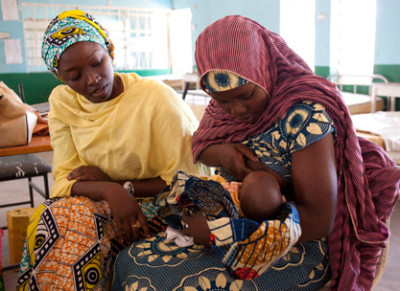
This trend, he said, is similar for infant mortality rate of 61 per 1,000 live births, saying that it needs to reduce by 50% in order to meet the 2015 target. Nigeria, Jonathan added, has continued to reduce the Maternal Mortality Ratio, saying that in 1990, it was estimated that 1,000 mothers died per 100,000 live births; in 2008 this declined to 545 and in 2012, the figure was 350. “Progress has been driven in a major part by the Midwife Services Scheme, among others, which has seen the reversal of the previously negative trend in the percentage of skilled health personnel attending to births.
“Furthermore, there is continuation in the fall of HIV prevalence, from figures as high as 5.8 to 4.1 in 2012. The prevalence in the general population is now 3.5. This falling trend satisfies the criteria for the attainment of Target 6A.
“Nigeria is implementing a comprehensive HIV/AIDs plan to reduce the incidence of mother to child transmission in order to get to zero.” President Jonathan said that whilst there has been remarkable improvement in many MDGs indicators, Government, in collaboration with stakeholders, is mobilizing the necessary attention needed to focus on Goals lagging behind in order to bring about the desired change.
According to him, in accordance with the dual directive of the UN Secretary General to accelerate progress on the MDGs in the little time remaining while aggregating citizens’ demands for the post-MDGs era, Nigeria deployed the United Nations MDGs Acceleration Framework (MAF) with focus on reducing the burden of maternal mortality.
This tool, he said, built on the success of policies such as the Midwives Service Scheme, Community Health Extension Workers Programme, the Village Health Workers Scheme and the Saving One Million Lives Initiative.
He said that the focus is not only on improving the efficiency of progress of Goal but that efforts are being made across board with other initiatives such as the use of a groundbreaking mobile money technology to drive the scale up of Conditional Cash Transfers being implemented across the Federation.
“This CCT Scheme, designed to stimulate demand for services, targets education, basic health care, as well as the transfer of agricultural enterprise, being a multi-faceted program implemented in the run up to the 2015 deadline.
“As demonstrated by the foregoing, the MDGs framework has helped to focus international and local attention on improving the lives of those most vulnerable in society. “We must now increase our efforts in these remaining 500 days to complete what was started under the MDGs Agenda. I have been informed that the recommendation to complete the “unfinished business” of the MDGs was indeed well articulated at the different stages of the National Consultations on the Post-2015 Development Framework held in Nigeria. Evidence gathered from aggregating citizens’ aspirations clearly shows that there is broad consensus that the current MDGs must not be sidelined. “Poverty eradication must remain in focus as we integrate the economic, social and environmental dimensions of development in an inclusive programme.” [myad]
Between the Israeli assault on Lebanon and the Zionist “War on Terror,” the world is now center stage in every American home. I see the carnage, death and destruction that have befallen Lebanon, but I also see something else: I see you. I can’t help but notice that almost every woman I see is carrying a baby or has children around her.
“Let him come and join us. He has said on many occasions that PDP is a corrupt party full of corrupt people. Let him come and be part of us. We will welcome him.”
Nollywood actress, Mercy Johnson has thrown her critics into ‘dustbin, saying that she will continue to move on in life ahead of them.


Lessons From Osun State Governorship Election, By Dele Momodu
Fellow Nigerians, what happened exactly one week ago Osun State was not as simple as it looked. Lest we take some things for granted as we love to do in our country, kindly permit me to do an elaborate post-mortem of that much anticipated gubernatorial election. It is no longer news that the incumbent, Governor, Rauf Aregbesola won. I never believed for any second that he was going to be defeated by his main challenger, Iyiola Omisore, for reasons I will explain shortly.
The battle for Osun was fought on different fronts and at different levels. There was the personal angle to the war.
Who was Aregbesola and who was Omisore?
That is usually the first layer of the struggle for supremacy. That aspect is always enhanced by media hype and propaganda. This was palpable in the war of modern day Ekiti-Parapo which was won by Ayo Fayose. Fayose had succeeded in projecting himself as being more popular, streetwise and down-to-earth than the current Governor, Kayode Fayemi. I had warned those who cared to listen to watch how the Governor had failed to challenge Fayose’s popularity contest. That, for me, was a fatal mistake. Human beings tend to follow what Francis Bacon called Idols of the Market Place.
The second mistake from Ekiti was simple and straight-forward. Theoretically, political parties would always attempt to rig elections in Nigeria because of the psychological fixation that the other party will rig. It then becomes the contest of the bigger-rigger. But a party can’t successfully rig where it is not overwhelmingly popular. This happened in 1983 when the NPN successfully took over power in Oyo State and sacked the supposedly popular government of the Cicero of Esa-Oke, Bola Ige, but could not get away with Akin Omoboriowo’s electoral victory over Adekunle Ajasin. This is an eloquent example of how elections are rigged and sustained through subtle connivance of unwary electorates. Omololu Olunloyo, an Ibadan man and Mathematical icon, had succeeded in projecting himself as matching Bola Ige intellect for intellect, popularity for popularity, thus erecting the optical illusion that Bola Ige was indeed defeatable.
But Omoboriowo did not invest in such monumental hypnotisation and mesmerisation of the people as a prelude towards preparing the people of Ondo State for the forceful takeover that the NPN had envisaged for most of the difficult and unfriendly states needed for the grandiloquent coronation and canonisation of President Shehu Shagari. Fayose had learnt this lesson in grandstanding and was able to reduce Fayemi into a pitiable pulp. Had Fayemi challenged Fayose’s farcical apotheosis, perhaps the results would have been different. But once the hunter transfigured into the hunted, it became obvious that Fayose was going to win fairly or crookedly because a fait accompli had been adequately prepared for the outcome of the election to be believable. If you doubt my theory, please, crosscheck the areas that returned incredible voter turnout and stupendous voting in the Osun election. They were mainly from Ife Local Governments. PDP would have loved to replicate and return such humongous votes all over the State but couldn’t because they had foolishly lost most of their warlords and protectors like Olagunsoye Oyinlola and Isiaka Adeleke. Fayemi did not have such formidable supporters in Ekiti.
This Ekiti scenario was cleverly avoided and nipped in the bud by Aregbesola’s strategists. They refused to be cowed or intimidated by the blistering PDP machinery and militarisation or, more appropriately, blitzkrieg. Those claiming that the unprecedented security presence in Osun was to make the election free and fair missed the point, or just chose to be clever by half. The whole idea was to establish a regime of scaremongering and if possible discourage many voters from even coming out to fulfil their civic responsibility. It is very easy for electoral manipulators to utilise the cards of disgruntled voters who refuse to vote to perpetrate their nefarious activities. This coupled with the fact that the bloated voter register is a mirage, in any event, makes rigging a delight for electoral cheats. Anyone who watched the PDP Grand Rally in Osogbo and listened to the speeches of their leaders would have come to the same conclusion with me that they desperately wanted Osun in their kitty, not because they loved Omisore but for future purposes. PDP was merely laying the grass for the electoral Olympics which would be staged in 2015 and must be won by their team. There was no indication whatsoever that PDP was going to be benevolent towards APC. Let me expand this further and better.
The 2015 Presidential election promises to be a battle-royale. And the main stage for this rumble in the jungle is likely to be the South West region of Nigeria. This makes it absolutely necessary for PDP to capture these States ahead and prepare the grounds for a major offensive. Their job would not be too difficult if they can secure Ondo, Ekiti, Osun, and others as at when due. Ondo and Ekiti have become friendly States and Osun would have made things even better by being the icing on the cake. PDP victory in Osun would have opened up APC for demystification and ostensibly subjected it to obvious ridicule. Had APC lost Osun, believe me, the game would have been over by now. The complete annihilation of Yorubaland would have been promptly achieved in one fell swoop. But God saved APC by the whiskers and gave them a second life.
The smartest thing APC did was to take on the PDP so fearlessly. They were able to reassure the people of Osun that they were ready to fight with everything if PDP ever attempted to rig them out and the people trusted them. If they had shown any sign of weakness and inner fears, PDP would have smashed them into smithereens and run away with cheap victory like they did in Ekiti where the stunned Governor who was hit by thunderbolt had to hurriedly concede defeat. The people of Osun went out boldly on Election Day to vote and seriously guard their mandate. They were not ready to tolerate any hanky-panky. The message was very clear in the way they turned the election into a celebration of the achievements of their Governor. Social media played a key role as well. The people were able to establish contact with every part and monitor the peaceful way Osun people went about the business of the day. Even the security guys tacitly supported the people contrary to whatever they were brought in to achieve in the first instance.
It must be noted with every emphasis that Aregbesola’s candidacy was very formidable and not a fluke. One mistake that PDP continues to make is its preference for brawn over brains. But it must be reminded that no leader has ever succeeded in enslaving Nigerians and no one has been able to subdue the people of South West through the use of coercion. The people are too sophisticated to be dragged on a leash by any leader no matter how popular and wealthy. This is the reason their leadership changes constantly and rapidly because of their impatience with aspiring slave-drivers.
APC itself has so much to learn from Yoruba history. This victory is an indication that the party still has a fair chance of winning at the Federal level if they can resist the rascality being credited to some of their leaders. I doubt if anyone tells them the home truth about the reason many of their admirers are afraid to join the party. This must be reiterated at this stage if for nothing but for posterity. If APC fails it would be as a result of the vaunting ambitions of its own leaders who keep coming up with all manner of selfish permutations in order to gain the upper hand in the power equation. It is such a tragedy that so much time is being wasted in coming together to present a common front that can convincingly confront the candidacy of Goodluck Jonathan in the 2015 elections.
I will enumerate some of the major hurdles ahead of APC. The first is that many keen watchers of its affairs and conduct still see it as a private and family business of Bola Tinubu. There is no question that this man has been the biggest single investor in what has become APC today but he must be extremely careful not to waste the uncommon goodwill he has garnered as dividend for his gallant effort. How he tries to wash himself clean of allegations of handpicking candidates at local and national levels would help in shaping people’s impression, perception and decision about him and the party. This was part of what caused the misfortune of the party in Ondo and Ekiti. It takes a lot of sacrifice for a great man not to exhibit his prowess but it can only be counter-productive if care is not taken at the end of the day. It would be to his eternal credit if the party is allowed to grow into an octopus rather than a one-fingered party. The party should be worried about possible and sudden disintegration after all that has been done and achieved so far.
The second hurdle is how to contain the combustive ambition of some of its members. I believe, it needs to form a shadow kitchen cabinet of its key members urgently before most of them are poached away by PDP. The party has practically lost key allies in Borno, Edo, Ogun, Adamawa, Kano, Sokoto and other places. This emigration must be stopped before it turns into a mass exodus. It should never take 20 years to prepare for madness, a lot of time has been wasted already. For every day it dilly dallies, the PDP resurgence gets stronger.
The APC should look for the most credible Nigerians from all over the world and walks of life to bring together as a powerful team to strategise for the forthcoming elections and then form the cabinet after winning those elections.
The third is how to connect speedily to the largest army of angry youths in Africa who have lost all hope in their country. APC would gain so much if they can offer genuine optimism and rekindle the fire of patriotism in them. What I see at the moment is the over reliance on hard-core politicians who may not be able to match PDP in the game of numbers. There is no way APC would defeat PDP without galvanising the overwhelming support of non-traditional and first time voters.
The fourth and probably most vital is how to balance our ethnic colouration and volatile religious sensibilities. APC is going to have an uphill task picking the number one and number two candidates for the Presidential election. This needs not be so if the Party simply realises that what Nigerians want is that somebody for once puts merit into the forefront of the choice of leaders without sacrificing equity and justice. Unfortunately, I’ve already uncovered so much confusion from them about who to pick, where to pick, the religion, the gender, and so on. If the truth must be told, only PDP can gain from this unnecessary commotion.
The more I listen to the argument of some of these APC members, the more I pray for these guys not to voluntarily throw their best chances into the Atlantic Ocean. What saddens me is that some of their permutations are based on selfish personal interests and do not take the larger interests of the Party or indeed Nigeria and Nigerians into consideration. Sometimes, I wonder if PDP has bewitched Nigerians and especially the opposition leaders. By now, there should be no argument whatsoever about sacking the party permanently for gross infractions and selecting the best candidates to achieve this objective. The disorderliness and seeming lack of focus of the opposition may ultimately keep the PDP in power in a manner even more serious than we can ever contemplate.
It is a sad reality we must grudgingly accept when tomorrow comes. [myad]