Nigerian armed forces have appealed for the support of traditional rulers and religious leaders in the ongoing war against criminality and terrorism even as they warned parents and guardians to be watchful of their wards.
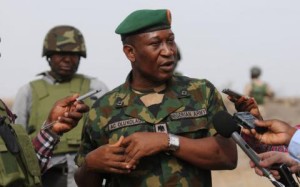
The chairman of the Forum of Spokespersons for Security and Response Agencies (FOSSRA), Major General Chris Olukolade made the appeal at the Palace of Oba of Lagos, Rilwan Akiolu when he led other members of the forum to the Palace after their monthly meeting and advocacy engagements in Lagos today.
Olukolade who is also the Director Defence Information noted that most undesirable elements who perpetrate evils live among innocent citizens in the community, adding: “they should therefore be properly warned or be exposed to security agencies.”
Olukolade gave the reasons for the formation of FOSSRA under the auspices of the Office of the National Security Adviser (ONSA), saying that it has ensured better interaction with the media and other practitioners in information management, a development that has brought about mutual understanding.
“We now have better inter-agencies cooperation, greater improvement in civil-military relationships, which have contributed immensely in various operations to protect lives and property”.
In his remarks, the Oba of Lagos, Rilwan Akiolu urged security agencies to improve on the inter-agency collaboration and avoid frictions and misunderstanding to ensure synergy and focus in tackling terrorist activities in the country. He said the establishment of FOSSRA should nip in the bud the occasional inter-agency rivalry being witnessed among the security forces.
According to the monarch, national security is an issue that affects everyone and as such, all Nigerians must take it more seriously especially now that the country is facing challenges.
He commended the FOSSRA for its regular dissemination of information, urging it not to relent in its duty of keeping the citizenry updated on security and emergency situations.
“The forum has been doing well and I encourage it to keep the flag flying. On my part, I will ensure that I contribute my quota in making Nigeria a safer place.
“Being a former AIG (of Police) myself, I don’t joke with security matters. In fact, there are times I pick my phone and inform senior security officials of any useful intelligence at my disposal.
“We have nowhere to go, this is our country and we must all join hands to make it work irrespective of religion, ethnicity or political affiliation”, he added.
FOSSRA is a body under the auspices of Office of National Security Adviser that coordinates public information activities of armed forces, security and response agencies. Its members are spokespersons of military, security and response agencies as well as special paramilitary outfits in Nigeria. They include Defence Headquarters, Army, Airforce, Navy, Police, State Security Service, Office of National Security Adviser, National Intelligence Agency, Nigeria Security and Civil Defence Corps, Federal Road Safety Commission, Nigeria Prison Service, National Immigration Service, Economic and Financial Crimes Commission (EFCC) National Emergency Management Agencies (NEMA) and Fire Service. [myad]
A professor of Epidemiology and Community Health Science, University of Ilorin, Kwara State, Tanimola Akande has described Ebola virus as having very tricky symptoms, which often mimic that of common illness, such as malaria, dengue, lassa and typhoid fever. He notes that many health workers may have already come in contact with an infected patient without knowing it.
“When a patient comes to your hospital and presents you with symptoms, such as fever, headache, general body pain, you are likely not to wear gloves or biohazards suits before treating the patient. That is the tricky part. You are infected before you know it is Ebola.”
To contain the transmission of the disease, Akande urges Nigerians to stop eating bush meat, as well as to wash their hands and fruits regularly before eating.
He also advises health workers to wear protective kits always while attending to their patients.
In deed, Ebola Virus Disease is presently the enemy that is knocking at the door of many West African countries and its effects are fast spreading. It is currently ravaging Guinea, Sierra Leone and Liberia and has killed a nurse in Nigeria, as the biggest health challenge facing the sub region at present.
Unlike other viruses, such as the Hepatitis A, B,C, which can stay in the body fluids of an infected person for 15 years without any symptoms, the Ebola virus, which symptoms include bleeding from the mouth and anus, can kill its victims within days .
Akande says that its mode of transmission is a major reason why it is deadlier than most viruses for, according to him the fact that Ebola has no cure is not the reason why it is deadly.HIV also has no cure, yet it does not kill all its victims, if it is properly managed. Ebola is deadlier because it is easy to contract; it is in all the body fluids of an infected individual as its infection can be through saliva, blood, sweat, sperm, excreta, body tissue. It can also be contracted by touching the surface an infected person has touched.
“Also, the natural host for Ebola is fruit bats, chimpanzees and other forest animals that many eat daily in different parts of the country. You can get it just by coming in contact with the blood of an infected animal. Any virus that can be contracted through food has the potential to wipe off many lives.”
Akande states, “We have been talking about HIV/AIDS, but Ebola is deadlier than HIV/AIDS. People who have HIV live for years if they take their drugs but any contact with an infected Ebola person is almost a death sentence because the virus has no vaccines, and no drugs. The best one can get is only palliative management”.
Ebola is the nightmare virus. It is feared as the second coming of the plagues of the 1400s. Why is this one virus so much more deadly than other viruses? Simply put, experts list five reasons why everyone must watch out for this virus.
Low survival rates
The chance of survival is almost zero, especially in Africa. It kills 90 per cent of those infected with the virus. Death is certain if the patient starts bleeding. Bleeding, of course, is its “trademark”.
From a medical point, any one that contracts this disease should be isolated –to wait for death! It is sad! It kills faster than AIDS, and in an equally dramatic way. Because of its mode of transmission, you cannot bury dead patients in the usual way — patients, dead or alive, are absolutely avoided! Dead bodies are equally infectious.
It is almost incurable.
The problem is that there is no drug yet for treatment or vaccine for prevention. Four different viruses cause this disease. At least, we have some drugs for HIV/AIDS patients, to help them live longer and better. The treatment offered for Ebola Virus Disease is for the person to die better and more peacefully. The vaccines we have can only prevent monkeys and mice from the disease! Antivirals do not work.
It is highly contagious
HIV/AIDS requires blood transmission or intimate contact for transmission; this disease requires contact with body. Transmission is by coming in contact with body fluids from diarrhea, vomitting, and bleeding. Doctors and medical staff attending to the patients wear protective kits from head to toe, making them look like astronauts heading for the moon! HIV is highest among commercial sex workers and gays; the people with the highest risk of Ebola Viral Disease are medical workers, their families, and their friends. Hunters that encounter monkeys and bats, and marketers of bush-meats should be careful.
No definite way to protect yourself
There is ABC of HIV/AIDS prevention. There are ways of preventing malaria. But preventing Ebola Virus Disease is not specific or clear-cut. You are advised to wash your hands frequently with soap and water, avoid contact with infected people (and their secretions and blood), and avoid contact with objects contaminated by infected people. Prevention is by hygiene! [myad]
President Goodluck Jonathan has made it clear that some of the security problems now faced by Nigeria and other African countries are transnational in scope and cannot be solved by any country acting alone. Jonathan, in Washington DC today, called for more effective global action and implementation of all existing international protocols against terrorism and violent extremism. Presenting the Nigeria’s statement at the US-African Leaders Summit that was concluded today, President Jonathan demanded a more effective international sanctions regime against countries, organizations and individuals that sponsor terrorism in any part of the world. The President said that because terrorism, piracy and transnational organised crimes have become global in scope, greater regional and international collaboration is needed to combat them. “Several African countries, including Nigeria, are now challenged by terrorism and violent extremism. For several countries in the continent, terrorism has become a real threat to social progress, peace and security. “The violent and criminal activities of Boko Haram in my country have captured the world’s attention. This has been especially so since the terrorist group abducted some girls from their school dormitory in the North-Eastern Nigeria in April. “Nigeria may be the epicentre of Boko Haram terrorist activities at the moment, but its affiliation with international terrorist networks, dramatically increases its capacity and reach beyond Nigeria’s borders. “Nigeria is doing everything possible to combat Boko Haram and violent extremism. While we continue to enhance our intelligence and military capacities, we are, at the same time, working on political and socio-economic solutions. We are also building partnerships, both at the regional and international levels, to combat the threat posed by terrorism in our sub-region. “In this enterprise, we are pleased to acknowledge the supportive role of the United States. The assistance that we continue to receive from the United States and our other international partners is proof indeed that partnership can multiply our strengths in addressing common challenges. “We call for an effective international sanctions regime that would hold accountable any country, institutions and individual that finances terrorism in any part of the world. This inaugural Africa-US Summit must also call for effective action and implementation of all existing international protocols on this critical issue. “Because terrorism, piracy and transnational organised crimes are global in scope, greater regional and international collaboration is required to combat them. We must act in concert.” The President had conveyed the same message at a bilateral meeting with Vice President Joe Biden on Tuesday, saying that Nigeria, the United States and the global community must work with greater synergy and unity of purpose to overcome Boko Haram and other terrorist groups. At the meeting which took place in the Roosevelt Room in the West Wing of the White House, Vice President Biden described Nigeria as an “extremely important” ally of the United States. He reaffirmed the United States’ commitment to working with Nigeria to overcome the Boko Haram insurgency, adding that his country was also willing to give Nigeria any assistance it may require to contain the more recent threat of Ebola. President Jonathan and Vice President Biden also discussed further joint cooperation to boost trade and investments, agricultural development and access to electricity in Nigeria. [myad]
Former Nigeria Vice President Atiku Abubakar has appealed to the electorate in Osun State to vote wisely on Saturday by returning the incumbent governor, Ogbeni Rauf Aregbesola for another four-year term. In a statement from his Media Office, Atiku, who is chieftain of the All Progressives Congress, (APC) and whose first wife, Hajiya Titi Atiku Abubakar hails from Ilesa in Osun State, called on his in-laws to trounce the PDP at the governorship election slated for this Saturday. The former Vice President spoke when a section of Osun leaders paid him a courtesy visit in his office. Atiku told the visitors that he was one of them by marriage, adding: “in fact, I am a son of the soil who share your revered ideals and tradition of honesty, modesty, dedication to duty, steadfastness, integrity and communal responsibility. We do have a common bond of a lifetime. So I am urging you to team up with the progressives in your state and Nigeria to put in place good governments that would benefit all and sundry. Please, don’t let me down. Vote Aregbesola and APC.” The APC cheiftain said that besides the matrimonial bond, he has political tentacles that stretch the length and breadth of Nigeria and beyond. According to him, his relationship with Governor Aregbesola dates back to many years even as he said: “Ogbeni is a people’s politician, a great policy maker and implementer. He is humane, simple and humble. He has the fear of God and respect for men and women. He is a steward of high repute and his numerous works and high performance ratings would see him win a second term massively.” Atiku’s solidarity flight to Ibadan enroute Osogbo yesterday was said to have been cancelled due to bad weather condition. It is on record that Hajiya Titi Atiku Abubakar, the wife of Atiku, holds some of the highest traditional titles ever bestowed on any woman in Yorubaland and Osun State respectively. Amongst them are the Yeye Adimula of the Source (Mother and Pillar of Support for Yorubaland, Ile Ife); the Yeye Odo of Osun State (Mother of Osun Youths) and the Yeye Atayase of Ijesaland (Mother of Improvement). [myad]
James Safechuck, 36, has sued the world pope master, late Michael Jackson, alleging that he abused him when he was 10 years old at the time the pair were working on a Pepsi advert together.
Reports said that. Safechuck’s lawyers filed the claims against Jackson’s estate on Monday. The court documents claim that Jackson “engaged in a calculated course of conduct to lure both (Safechuck) and his parents into a false sense of security and normalcy that was far from reality. And (Jackson) was successful in his efforts to the point that Safechuck endured repeated acts of sexual abuse of a heinous nature and was brainwashed by the decedent into believing they were acts of love and instigated by James himself rather than the decedent.” The initial hearing for the case has been set for September 4.
However, the lawyer for the Jackson estate, Weitzman, has asked for the claims to be dismissed, saying: “Mr. Safechuck’s request to file a late claim against the Jackson Estate so he can recover money from Michael’s beneficiary will hopefully be rejected. This is a person that made his claim five years after Michael died, more than 20 years after the incidents supposedly happened and has given sworn testimony that Michael never did anything inappropriate to him.” Jackson, who died in 2009, was previously accused of four child sexual abuse charges but was acquitted in 2005. [myad]
From left: Minister of Justice and Attorney General of the Federation, Mohammed Bello Adoke, Minister of State for Power, Mohammed Wakil, Minister of Aviation, Osita Chidoka and FCT Minister, Bala Mohammed during the Federal Executive Council meeting presided over by Vice President Mohammed Namadi Sambo at the Presidential Villa, Abuja, today, Wednesday.
The United States of America has announced a total sum of $33 Billion investment in Africa under what it called Doing Business in Africa (DBIA) campaign. This was the decision taken at the conclusion of a three-day US-African Summit in Washington DC.
President Barak Obama said at the end of the Summit today that the US is offering an additional $7bn of financing through the Doing Business in Africa (DBIA) Campaign to the initial $14 billion which the US companies have pledged to invest in Africa in areas such as energy and infrastructure.
President Obama, who hosted a dinner for the over 40 African heads of states that participated in the Summit, said that the proposed investment is an effort to strengthen US ties with Africa as China increases its African investments.
The investment include the deals that were announced of $5bn partnership between private-equity firm Blackstone and Aliko Dangote, Africa’s richest businessman, for energy infrastructure projects in sub-Saharan Africa, as well as more investments in Mr Obama’s Power Africa initiative.
According to the White House, Power Africa received an additional $12bn in pledges towards its effort to develop energy supplies on Africa through a mix of investment and state involvement.
The World Bank announced a $5bn investment in Power Africa and General Electric said it had committed $2bn to help boost infrastructure and access to energy.
“We gave it to the Europeans first and to the Chinese later, but today it’s wide open for us,” said General Electric chief executive Jeff Immelt.
“Up to tens of thousands of American jobs are supported every time we expand trade with Africa”, said Mr Obama.
“As critical as all these investments are, the key to unlocking the next era of African growth is not going to be here in the US, it is going to be in Africa, ” he added. [myad]
Nigeria minister of health, Professor Onyebuchi Chukwu has confirmed that a Nigerian female nurse had died of Ebola Virus Disease. The nurse was one of the medical officers that attended to a Liberian, Patrick Sawyer, who died few days on arrival in Lagos from his country a couple of weeks ago.
The minister did not disclose the name of the nurse, who is the first Nigerian to die of the deadly virus, even as Nigeria is now believed to have recorded seven confirmed cases of Ebola Virus Disease. The first one was the index case – the imported case from Liberia and the victim died.
According to the Minister the death of the nurse on 5th August, 2014, was the first known Nigerian case “and this was one of the nurses that attended to the Liberian. The other five cases are currently being treated at the isolation ward in Lagos. “The 24/7 emergency operations centre will be fully functional tomorrow. It will be headed by Dr Faisal Shuaibu as the incident manager. He will later today lead a six-man inter-agency team drawn from the National Primary Health Care Development Agency and Bill and Melinda Gates Foundation to Lagos to complete the setting up of the centre.
“They will be joined by the other personnel from Lagos state government and the federal hospitals in the Lagos area as well as the Nigeria Centre for Disease Control. “We are making arrangements to procure isolation tents to quicken the pace of providing isolation wards in all states of the federation and the federal capital territory.
“We are also setting up a special team to provide counselling and psychosocial support to patients, identified contacts and their families,” he said. The minister reassured Nigerians the government “was working hard to ensure the containment of the outbreak”.
The Ebola virus has claimed over 800 lives in West Africa, prompting the World Bank on Tuesday to mobilise $200 million in emergency funding to contain the disease. [myad]
Special adviser to President Goodluck Jonathan on media and publicity, Dr. Reuben Abati has hit back at the USA TODAY, a newspaper in the United States of America that attacked the Nigerian leader on the issue of abducted Chibok Gilrs, as he attends Africa-America Summit. The newspaper, in its editorial today, Wednesday, insisted that President Jonathan needs to give more attention to the abducted female students of the Government Girls Secondary School, Chibok in Borno state by members of Boko Haram since April 14, saying: “in the place of military, action is bargaining, and Nigerian leaders have sent ambiguous signals about who is negotiating and what’s on the table.” In a quick response, President Jonathan’s Chief spokesman, Abati said: “the rest may have moved on, as USA TODAY writes in its editorial, but I assure you that safely rescuing the abducted girls and returning them alive to their parents remains President Jonathan’s topmost priority.” Reproduced hereunder are the words of the two combatants: From USA TODAY EDITORIAL TO PRESIDENT JONATHAN
Nigerian girls deserve continued attention: Our view
When a vicious militant group kidnapped nearly 300 Nigerian schoolgirls in April, much of the world was outraged. The Twitter hashtag #BringBackOurGirls went viral, spawning broad concern from people around the globe — and smug derision from critics of digital advocacy.
Four months later, about 60 of the girls have managed to escape and the rest remain missing. The world has mostly moved on, distracted by such events as wars in Gaza and Ukraine, the shoot down of a Malaysian jetliner and the immigration crisis at the U.S. border.
But amid all the horrors that regularly compete for the world’s attention, this one shouldn’t be forgotten.
For one thing, the teenage captives are symbols of the importance of educating girls. They were all seized after returning to school in a dangerous area to take their final exams. Among them are future lawyers, doctors and teachers — women who could someday help lead their country.
For another, there’s evidence that the international uproar might have helped raise the cost of harming the girls too high even for Boko Haram, an extremist group that regularly kidnaps and kills in its quest to bring a brutal form of fundamentalist Islam to parts of Africa.
The Wall Street Journal reported Tuesday that U.S. surveillance flights spotted large groups of girls, suspected of being the captives, in remote parts of Nigeria. That dovetails with reports that Boko Haram — whose name means “Western education is forbidden” — is treating at least some of the kidnapped girls with unusual care.
Leaders of the group, after first warning that the girls would be sold into slavery, later offered to trade them for Boko Haram prisoners held by the Nigerian government. The world’s focus on the girls has made them both valuable pawns and risky victims.
The response of the Nigerian government, which has often seemed overmatched in its five-year struggle with Boko Haram, doesn’t inspire much confidence. President Goodluck Jonathan at first largely ignored the incident, then claimed activists invented it, and finally yielded to pressure to accept international assistance.
Jonathan, in Washington this week for a U.S.-Africa summit, says his government is making every effort to find the girls. But he offers no evidence, is dismissive of the foreign help and argues that divulging any details could compromise the mission.
Jonathan has said repeatedly that a military operation to free the girls would probably result in the deaths of many, all but ruling it out. In the place of military action is bargaining, and Nigerian leaders have sent ambiguous signals about who is negotiating and what’s on the table.
The challenge of fighting militants who casually sacrifice civilian lives in the name of religion isn’t confined to Nigeria. American forces have struggled inconclusively with extremists in Iraq and Afghanistan for more than a decade.
The world’s anger can sometimes seem a weak candle next to the flame of intolerance and murder, but in the case of the captive Nigerian schoolgirls, it’s important to keep it burning.
USA TODAY’s editorial opinions are decided by its Editorial Board, separate from the news staff. Most editorials are coupled with an opposing view — a unique USA TODAY feature.
From Dr. Reuben Abati To USA TODAY:
President Goodluck Jonathan will not be stampeded into ordering any rescue attempt that may further endanger the girls.
The rest may have moved on, as USA TODAY writes in its editorial, but I assure you that safely rescuing the abducted girls and returning them alive to their parents remains President Jonathan’s topmost priority.of the world
The president met recently with parents of the girls and leaders of their community to give them a personal assurance that his government will continue to explore every possible option and deploy all available resources in the ongoing effort to bring the girls home.
As President Jonathan explained to the parents, the great challenge, which may have paradoxically created the erroneous notion of tardiness in the rescue effort, is to ensure that none of the girls lose their lives in any rescue operation.
President Jonathan’s commitment is not just to get the girls out, it is also to rout Boko Haram completely from Nigeria. But he is very mindful of the safety of the girls and will not be stampeded into ordering any rescue attempt that may further endanger the girls.
We ask those who continue to suggest that the Jonathan administration is not doing all it can to rescue the girls to understand that we are dealing with terrorist thugs who celebrate death and have no qualms about slaughtering helpless men, women and children.
Other than the parents and relatives of the girls, no one else is more determined to do something about their plight than the president, who continues to be the target of unfair criticism over his government’s handling of the affair.
We quite understand that part of the problem is that the media and the public would like to know more of what is being done. But we ask our people and the global community to show greater appreciation of the fact that saying too much could have very adverse consequences for the entire effort.
Reasonable people should understand the challenging nature of this effort, but we know that there are persons in Nigeria who wish to exploit the plight of the girls for political reasons. That is unfortunate.
Above all, President Jonathan is committed in the long term to a comprehensive program of expanding educational opportunities for all girls and, indeed, all young people in Nigeria.
Reuben Abati is a special adviser to President Goodluck Jonathan of Nigeria. [myad]
Dangote Industries and Blackstone have announced a commitment to jointly invest up to $5 billion (N825 billion) over the next five years in energy infrastructure projects across Sub-Saharan Africa with a particular emphasis on power, transmission and pipeline projects.
The investment is facilitated by Black Rhino, a portfolio company of Blackstone Energy Partners and affiliated funds managed by Blackstone, and Dangote Industries.
While Dangote Industries is the largest industrial conglomerate in West Africa, and one of the largest in Africa, Blackstone Energy Partners is Blackstone’s energy-focused private equity business, with a successful record built on Blackstone’s industry expertise and partnerships with exceptional management teams, based in the United States of America. Blackstone has invested approximately $7 billion of equity globally across a broad range of sectors within the energy industry.
Dangote Industries’ commitment to investments in Nigeria and across the African continent has played a significant role in Africa’s recent economic success. Led by its Founder, President and Chief Executive Officer Aliko Dangote, Dangote Industries’ businesses span manufacturing, logistics, commodities trading and real estate across 14 African countries.
The two internationally acclaimed companies have agreed to jointly incorporate, own and operate a management company that will be responsible for the development and management of projects identified and agreed upon, across the sub-Saharan Africa. [myad]
We use cookies on our website to give you the most relevant experience by remembering your preferences and repeat visits. By clicking “Accept”, you consent to the use of ALL the cookies.
This website uses cookies to improve your experience while you navigate through the website. Out of these, the cookies that are categorized as necessary are stored on your browser as they are essential for the working of basic functionalities of the website. We also use third-party cookies that help us analyze and understand how you use this website. These cookies will be stored in your browser only with your consent. You also have the option to opt-out of these cookies. But opting out of some of these cookies may affect your browsing experience.
Necessary cookies are absolutely essential for the website to function properly. This category only includes cookies that ensures basic functionalities and security features of the website. These cookies do not store any personal information.
Any cookies that may not be particularly necessary for the website to function and is used specifically to collect user personal data via analytics, ads, other embedded contents are termed as non-necessary cookies. It is mandatory to procure user consent prior to running these cookies on your website.









You May Have Been Infected Before You Know It Is Ebola – Expert
A professor of Epidemiology and Community Health Science, University of Ilorin, Kwara State, Tanimola Akande has described Ebola virus as having very tricky symptoms, which often mimic that of common illness, such as malaria, dengue, lassa and typhoid fever. He notes that many health workers may have already come in contact with an infected patient without knowing it.
“When a patient comes to your hospital and presents you with symptoms, such as fever, headache, general body pain, you are likely not to wear gloves or biohazards suits before treating the patient. That is the tricky part. You are infected before you know it is Ebola.”
To contain the transmission of the disease, Akande urges Nigerians to stop eating bush meat, as well as to wash their hands and fruits regularly before eating.
He also advises health workers to wear protective kits always while attending to their patients.
In deed, Ebola Virus Disease is presently the enemy that is knocking at the door of many West African countries and its effects are fast spreading. It is currently ravaging Guinea, Sierra Leone and Liberia and has killed a nurse in Nigeria, as the biggest health challenge facing the sub region at present.
Unlike other viruses, such as the Hepatitis A, B,C, which can stay in the body fluids of an infected person for 15 years without any symptoms, the Ebola virus, which symptoms include bleeding from the mouth and anus, can kill its victims within days .
Akande says that its mode of transmission is a major reason why it is deadlier than most viruses for, according to him the fact that Ebola has no cure is not the reason why it is deadly.HIV also has no cure, yet it does not kill all its victims, if it is properly managed. Ebola is deadlier because it is easy to contract; it is in all the body fluids of an infected individual as its infection can be through saliva, blood, sweat, sperm, excreta, body tissue. It can also be contracted by touching the surface an infected person has touched.
“Also, the natural host for Ebola is fruit bats, chimpanzees and other forest animals that many eat daily in different parts of the country. You can get it just by coming in contact with the blood of an infected animal. Any virus that can be contracted through food has the potential to wipe off many lives.”
Akande states, “We have been talking about HIV/AIDS, but Ebola is deadlier than HIV/AIDS. People who have HIV live for years if they take their drugs but any contact with an infected Ebola person is almost a death sentence because the virus has no vaccines, and no drugs. The best one can get is only palliative management”.
Ebola is the nightmare virus. It is feared as the second coming of the plagues of the 1400s. Why is this one virus so much more deadly than other viruses? Simply put, experts list five reasons why everyone must watch out for this virus.
Low survival rates
The chance of survival is almost zero, especially in Africa. It kills 90 per cent of those infected with the virus. Death is certain if the patient starts bleeding. Bleeding, of course, is its “trademark”.
From a medical point, any one that contracts this disease should be isolated –to wait for death! It is sad! It kills faster than AIDS, and in an equally dramatic way. Because of its mode of transmission, you cannot bury dead patients in the usual way — patients, dead or alive, are absolutely avoided! Dead bodies are equally infectious.
It is almost incurable.
The problem is that there is no drug yet for treatment or vaccine for prevention. Four different viruses cause this disease. At least, we have some drugs for HIV/AIDS patients, to help them live longer and better. The treatment offered for Ebola Virus Disease is for the person to die better and more peacefully. The vaccines we have can only prevent monkeys and mice from the disease! Antivirals do not work.
It is highly contagious
HIV/AIDS requires blood transmission or intimate contact for transmission; this disease requires contact with body. Transmission is by coming in contact with body fluids from diarrhea, vomitting, and bleeding. Doctors and medical staff attending to the patients wear protective kits from head to toe, making them look like astronauts heading for the moon! HIV is highest among commercial sex workers and gays; the people with the highest risk of Ebola Viral Disease are medical workers, their families, and their friends. Hunters that encounter monkeys and bats, and marketers of bush-meats should be careful.
No definite way to protect yourself
There is ABC of HIV/AIDS prevention. There are ways of preventing malaria. But preventing Ebola Virus Disease is not specific or clear-cut. You are advised to wash your hands frequently with soap and water, avoid contact with infected people (and their secretions and blood), and avoid contact with objects contaminated by infected people. Prevention is by hygiene! [myad]