There was a physical assault launched today between Jordanian journalists Mohammad al-Jayousi and Shaker al-Johari during a talk show over a disagreement on the Syrian crisis. The fight was shown on-air by Seven Stars Television The two journalists were having a televised debate about the civil war in neighboring Syria but literally turned – and overturned – the table on each other during an on-air brawl. The program aired yesterday on the “Seven Stars” satellite television channel.
It featured journalists Shaker al-Johari and Mohammad al-Jayousi talking about the 3-year-old war pitting rebels against President Bashar Assad’s government, a conflict that activists say has killed more than 150,000 people. However, the debate fell apart as al-Jayousi accused al-Johari of supporting the Syrian rebels. Al-Johari then accused al-Jayousi of taking money for supporting Assad. The two men, obviously carried away by the debate, stood up and grabbed the edge of the studio table they had been seated at, and tried to fight each other. In the scuffle, the top of the table broke off and the rest of it toppled as the moderator and studio workers tried to stop the fight and finally separated the two journalists.
The Secretary-General of the United Nations (UN), Mr. Ban Ki Moon, President of the ECOWAS Commission, Mr. Kadré Désiré Ouédraogo, President of Ghana, Mr. John Mahama and other leaders across the world have expressed their sympathy to Nigeria and disgust at the abduction of female students of the Government Girls Secondary School at Chibok in Borno state about three weeks ago. Mr. Ban Ki Moon assured President Jonathan that the United Nations is ready to help Nigeria in every possible way to rescue the abducted girls and achieve greater security of lives and property in all parts of the country The leaders who spoke with President Jonathan on the phone today, conveyed the sympathy and solidarity of the global community with the government and people of Nigeria. The Ghanaian leader said that a meeting of Heads of Intelligence Services of ECOWAS member-countries will hold in Accra next week to work out a new framework for intelligence sharing in support of the effort to eradicate the threat of terrorism in Nigeria and the entire West African Sub-Region. President Mahama informed President Jonathan that to support Nigeria’s efforts to rescue the abducted girls and defeat terrorism, ECOWAS leaders have decided to invoke the community’s protocols on counter-terrorism. President Jonathan also had private meetings with the Founder of the World Economic Forum, Professor Klaus Schwab, who said that Nigeria deserved the maximum solidarity of the world at this trying moment. Jonathan also met with President Jakaya Kikwete of Tanzania, former President Lula Da Silva of Brazil and the Prime Minister of Mali, Mr. Moussa Mara all of who conveyed the solidarity of their governments and people. The President held a meeting with the United States Ambassador to Nigeria, Mr. James Entwistle to discuss modalities for the actualization of the offer made by President Barrack Obama to assist Nigeria in rescuing the girls abducted from Chibok, Borno State. The meeting on the sidelines of the ongoing World Economic Forum on Africa was a follow-up to talks held yesterday between Mr. Entwistle and Nigerian security officials on the United States offer of assistance. At the talks with the Ambassador, President Jonathan reiterated Nigeria’s appreciation of the United States offer to deploy U.S. security personnel and assets to work with their Nigerian counterparts in the search and rescue operation, which was conveyed to him on Tuesday by the U.S. Secretary of State, Mr. John Kerry. The President told Mr. Entwistle and other delegations which met separately with him at the venue of the World Economic Forum that the much greater support which Nigeria is receiving from the United States and other members of the international community in the aftermath of the Chibok abductions, will certainly help the country to rapidly overcome the Boko Haram insurgency.
Delta State Governor, Dr. Emmanuel has again stressed the need for state Police to effectively combat crimes at local levels before such crimes escalate to national level.
The governor who spoke today on Channels Television’s breakfast programme, Sunrise Daily live from Abuja said that the involvement of state police and the “locals” will reduce certain attacks.
He aid that his government has set up a committee, headed by the Commissioner of Police of the state and other security agencies to seek solution to the herdsmen and farmers clashes in the state.
On the abducted female students of the Government Girls Secondary School, Chibok in Borno state, Uduaghan said that it has now becomes a challenge for both Nigeria and international communities.
Governor Uduaghan said that before the abduction of the Chibok girls, there had been various ethnic and religious crises affecting the nation but “the Chibok abduction became the high point of concern.”
He called on Nigerians to stand solidly behind President Goodluck Jonathan to give him all the support that he needs in dealing with the issues of terrorism, even as he expressed delight on the supports from international countries such as the US, France, UK, amongst others in the fight against terrorism and finding the abducted Chibok girls.
He said that his government has mobilized the traditional rulers to meet with their communities in order to stop the clashes between herdsmen and farmers in the state, adding that there is the need for communities and village heads to hold regular meetings and look into issues affecting the communities.
The United States- based New York Times has delivered a verdict of low level of President Goodluck Jonathan’s government in the area of fighting corruption, even as it said that President Jonathan is leading a corrupt government.
Saying that the government has little credibility, the newspaper, in its editorial published on its website on May 6, condemned Jonathan’s “inept and slow” attitude towards locating and rescuing the schoolgirls abducted from Government Secondary School, Chibok, Borno State, on April 14.
It also condemned the reaction of the President’s wife, Patience, to the incident, describing it as “stunningly callous.”
It expressed worry that it took the Jonathan administration more than two weeks after the kidnappings, to call a meeting of government officials to discuss the incident.
The editorial stated: “Mr. Jonathan, who leads a corrupt government that has little credibility, initially played down the group’s threat and claimed security forces were in control.
“It wasn’t until Sunday, more than two weeks after the kidnappings, that he called a meeting of government officials, including the leader of the girls’ school, to discuss the incident.
“There is no doubt the intelligence and investigation help President Obama offered on Monday is needed.”
The violent Islamic sect, Boko Haram, had claimed responsibility for the kidnappings with its leader, Abubakar Shekau, saying in a video clip released on Monday that “I abducted your girls. I will sell them in the market, by Allah.”
The newspaper said the President’s inept and slow approach to the incident was shocking.
The editorial read in part: “Three weeks after their horrifying abduction in Nigeria, 276 of the more than 300 girls who were taken from a school by armed militants are still missing, possibly sold into slavery or married off.
“Nigerian security forces apparently do not know where the girls are and the country’s president, Goodluck Jonathan, has been shockingly slow and inept at addressing this monstrous crime.”
On the reaction of Patience to the incident hurling abuses at demonstrators who were demanding government’s action to rescue the girls, the newspaper said, “The reaction of Mr. Jonathan’s wife, Patience, was stunningly callous; according to state news media, she told one of the protest leaders, ‘You are playing games. Don’t use schoolchildren and women for demonstrations again’.”
It pointed out that the 6,000 troops deployed in Abuja for the World Economic Forum on Africa, could only keep delegates safe “but Nigeria’s deeply troubled government cannot protect its people, attract investment and lead the country to its full potential if it cannot contain a virulent insurgency.”
President Jonathan Addressing WEF Deligates in Abuja
President Goodluck Jonathan has boasted that the days of Boko Haram in Nigeria are numbered with optimism that the abduction of more than 200 schoolgirls in Chibok, Borno State, would be the last act of terrorism in the country.
The President spoke today at the opening plenary of the World Economic Forum on Africa holding in Abuja, saying that Nigeria is proud to host the event for the first time it is coming to West Africa.
President Jonathan thanked China, the US, United Kingdom and France for volunteering to assist Nigeria in the rescue efforts of the girls and in fighting the terrorists
“Let me specially thank all of you for accepting to come, especially this time that as a nation, we are facing attacks from terrorists. Let me appreciate you individually and collectively for your support and your sentiment.
“In fact by your presence here in Nigeria at this time, you have already supported us to win the war. If you have refused to come because of fear, the terrorists would have jubilated and even have committed more havoc.
“Your coming here to support us morally is a major blow on the terrorists and by God’s grace we will conquer the terrorists.
“Let me use this opportunity to thank the other countries who have volunteered to help us in terms of rescuing the abducted girls. The government of China has promised to assist us and I believe that assistance will come almost immediately.
“US, UK and France have also spoken to me and expressed their commitment to assist us. I believe that the kidnapping of these girls will be the beginning of end to terror in Nigeria.”
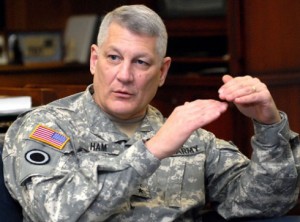
Retired General, Carter Ham, who until last year led the U.S. African Command, has said that there is still a chance to help to free over 200 abducted girls in Chibok, Borno state, and return them to their families.
General Ham’s former command will be part of the U.S. effort to search for the missing schoolgirls, who were kidnapped three weeks ago by Boko Haram. The group’s leader said this week that he plans to sell them.
General Ham said today that he suspected that some of the girls may have already been sent to other countries, saying: “that’ll be a difficult challenge,”
“But we have surveillance platforms, signals intelligence and other capabilities that would be helpful.”
Seven Social Entrepreneurs, including Nigeria’s Gbenga Sesan of the Paradigm Initiative, have been named Africa Social Entrepreneurs of the Year at the World Economic Forum on Africa currently taking place in Abuja, Nigeria. The awards were conferred today by Philipp Rösler, Managing Director, World Economic Forum.
The Head of the Schwab Foundation for Social Entrepreneurship, David Aikman said at the ceremony that social entrepreneurs are an integral community of the World Economic Forum and an increasingly sought-after one.
“A growing number of corporations see income inequality and environmental problems like climate change as fundamental threats to their long-term growth. Many governments are starting to rethink the way they deliver goods and services that improve social outcomes. I am confident this trend will only continue to grow in the future, and the Forum is proud to be at the forefront of catalysing partnerships among these stakeholder groups for social and environmental change.”
Those named for the 2014 Africa Social Entrepreneurs of the Year are:
Paradigm Initiative Nigeria’s (PIN) vision is to connect underserved young Nigerians with ICT-enabled opportunities to improve their livelihoods. Solving these twin problems – unemployment and cyber-crime – is at the heart of PIN’s strategy. Its model involves a two-pronged approach of capacity-building/ICT empowerment and ICT policy interventions. PIN offers income-generating ICT training and social media consultancy to private or non-profit organizations that need them, working with PIN’s graduates as implementing partners. Current partners include the Peery Foundation, Internews, Microsoft and Google.
Patrick Awuah, Ashesi University, Ghana
Ashesi was founded to address Africa’s biggest roadblocks to progress: the need for ethical leadership and innovative thinking. Ashesi University College is a secular, private, non-profit liberal arts college located in Ghana, West Africa. Ashesi aims to make a significant contribution to transform Africa by educating a new generation of ethical, entrepreneurial leaders. Ashesi’s unique curriculum combines a rigorous liberal arts core with practical, high-impact majors in business, computer science and MIS, and a four-year focus on leadership development and community service. To date, 100% of Ashesi’s graduates have found quality placement within a few months of graduating and over 95% have stayed to work for progress in Africa.
Ashifi Gogo, Sproxil, Ghana, Nigeria and India
Sproxil has developed and trademarked a Mobile Product Authentication (MPA) solution that enables consumers to verify that the pharmaceutical product they are buying is genuine. Consumers use a scratch card, similar to those used to replenish cellular talk-time, to reveal a one-time-use code on pharmaceutical products. Sproxil has set up Africa’s first national, mobile-based anti-counterfeit service in Nigeria and has already sold more than 250 million anti-counterfeit labels.
Martin Kariongi Ole Sanago, Institute for Orkonerei Pastoralists Advancement (IOPA), Tanzania
IOPA facilitates transformation and diversification of the economic system of the Maasai through social business, social entrepreneurship and innovation. Using radio programmes, roundtable discussions and festivals, the Institute prepares a fertile ground for self-examination and collective action. The Institute also teaches the Maasai veterinary services and techniques and sensitizes them to the use of both modern and traditional veterinary medicine; and carries out vaccination campaigns that have enabled pastoralists to use modern treatments and methods of livestock management, allowing animals to live healthier, longer, more productive lives.
Jay Kimmelman and Shannon May, Bridge International Academies, Kenya
Bridge International Academies is a chain of nursery and private schools in Africa delivering high-quality education for just $5 a month on average. The model of Bridge International Academies – centred on the academy-in-a-box solution, delivered through data-enabled tablets – enables thousands of teachers to deliver world-class lessons to children who had struggled simply to have a teacher show up at their previous schools. It has been just over four years since its first academy opened. As of January 2014, Bridge operates 259 academies in Kenya, employing over 3,000 people and educating approximately 80,000 pupils. By 2025, Bridge plans to be educating 10,000,000 pupils in over a dozen countries.
Allen Wilcox, Village Reach, Mozambique
VillageReach is a non‐profit social enterprise with a mission to save lives and improve health by increasing access to quality healthcare for the most underserved communities. VillageReach develops, evaluates and proves system innovations that improve health system performance. Through collaboration with governments, non-governmental organizations and communities, VillageReach seeks to extend the reach of health systems in scalable and sustainable ways by strengthening health service delivery, enhancing information and communication technology systems, and engaging the private sector.
President Goodluck Jonathan has expressed his gratitude to over 1,000 participants, including Presidents, Prime Ministers and other world leaders who turned up in Abuja, Nigeria for the World Economic Forum despite the obvious hightened insecurity in the country. The Forum is now in the second day today. The President who spoke at the High-Level closing plenary of Grow Africa, with the theme: A Leadership Agenda for Investing in African Agriculture on Wednesday commended the participants for not giving into to the threat of terror. The High-Level closing plenary of Grow Africa was held at the Sheraton Hotels, Abuja. Jonathan was also full of praises for the organizers of the Forum, the WEF team for not canceling the event. It would be recalled that members of the dreaded Boko Haram had, a few days to the event, struck twice at Nyanya, a Nigeria’s Federal Capital suburb, killing a number of people. Boko Haram also abducted over 200 female students of Government Girls Secondary School, Chibok in Borno State. President Jonathan who joined the panelists, made up of Presidents of Tanzania, Jakaya Kiweta; Paul Kigame of Rwanda, Boni Yayi of Benin Republic and Prime Minister of Cote d Ivore, Daniel Duncan, said that Nigeria is committed to self sufficiency in agriculture, especially production of rice for domestic and export purposes, stressing that his government is committed to moving agriculture from rural development to business and wealth creation. Jonathan enjoined Africa to create enabling environment for private investors to get returns on their investments in agriculture, adding that that is the only way to attract them to the sector. “No country can claim to be developed if you cannot feed yourself,” the President said, adding that his administration has dedicated 30 per cent of agric funds to women. He advised African leaders to go beyond campaign slogans if they want to reap the benefits of investment in agriculture, stressing the importance of encouraging the private sector to invest in agriculture. “You have to create environment to encourage investment because businessmen do not run charity organizations. That is why we are now looking at agriculture as a business. The youths before now see agriculture as something that is left for the poor and old people in the villages with traditional instruments. “If you invest in agriculture you will make returns on your investment. Agriculture is key because people must eat food no matter the situation. You can be sick and choose not to go to the hospital but you must eat every day.” He disclosed that Nigeria’s import bill is very high because it imports almost everything, adding: “that is why we are producing food for local consumption as well as to create jobs for our young people. “There is a unique opportunity in agriculture because you will create jobs, achieve food nutrition and empower women. “Before now, lending to farmers was 2.5 percent but presently it is 5 per cent and we are targeting a higher percentage. ”Before now, African leaders were playing politics with agriculture but today the story has changed. “In Nigerian, we dedicated 30 per cent of loans to women and encourage young men and women to be interested in modern agriculture. Financial inclusion is one of the limitations that discouraged young people from investing in agriculture. But if we encourage them, they will be attracted to the sector.” The panelists, including Kiwete, Kigame, Yayi and Duncan unanimously agreed on the importance of involving the private sector in development of agric sector even as President Kigame made it clear that the importance of agriculture cannot be overs emphasized. “We are only focusing on it to maximise it’s benefits for us and our people..”
From Left: Prime Minister Of Cote D’ivoire, Mr Daniel Duncan; President Jakaya Mrisho Kikwete Of Tanzania; President Goodlcuck Jonathan; Special Assistant To The Un Secretary General, Mrs Amina Mohammed; President Paul Kagame Of Rwanda; Mr Erastus Mwencha Of World Health Organisation; Panel Anchor-Man, Mr Rajiv Shah And President Boni Yayi Of Benin Republic Participants At The High Level Closing Plenary Of Growafrica Investment Forum In Abuja President Goodluck Jonathan; President Paul Kagame of Rwanda And Mr Erastus Mwencha of World Health Organisation
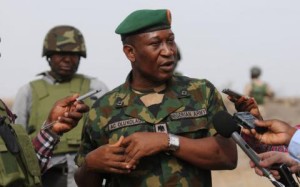
Nigerian soldiers have embarked on search for illegal arms across the North Central and North Western parts of the country, even as they have so far succeeded in recovering caches of arms and ammunition in those areas. A statement from the Director of the Defence Information, Major General Chris Olukolade said that during a cordon and search operation at Anyibe in Logo Local Government Area of Benue State, troops seized a cache of arms run by a young member of an armed gang. Items recovered during the operation inlcuded two Rifles, three locally fabricated pistols and 61 rounds of special ammunition. Olukolade said that some gang members that were arrested are currently being interrogated, even as the soldiers also recovered five guns, three locally fabricated pistols and two revolvers from a hideouts of armed gangs at Hukke and Reweinko in Plateau State. Other items recovered during the operation include some IED making materials, 45 live cartridges, various calibres of ammunition, bows and arrows and other items such as cutlasses, axes and diggers. “In Kaduna State, troops had encounter with armed gangs and bandits at Kwandaga during which some casualties were recorded and lots of arms and ammunition recovered.
We use cookies on our website to give you the most relevant experience by remembering your preferences and repeat visits. By clicking “Accept”, you consent to the use of ALL the cookies.
This website uses cookies to improve your experience while you navigate through the website. Out of these, the cookies that are categorized as necessary are stored on your browser as they are essential for the working of basic functionalities of the website. We also use third-party cookies that help us analyze and understand how you use this website. These cookies will be stored in your browser only with your consent. You also have the option to opt-out of these cookies. But opting out of some of these cookies may affect your browsing experience.
Necessary cookies are absolutely essential for the website to function properly. This category only includes cookies that ensures basic functionalities and security features of the website. These cookies do not store any personal information.
Any cookies that may not be particularly necessary for the website to function and is used specifically to collect user personal data via analytics, ads, other embedded contents are termed as non-necessary cookies. It is mandatory to procure user consent prior to running these cookies on your website.




 Seven Social Entrepreneurs, including Nigeria’s Gbenga Sesan of the Paradigm Initiative, have been named Africa Social Entrepreneurs of the Year at the World Economic Forum on Africa currently taking place in Abuja, Nigeria. The awards were conferred today by Philipp Rösler, Managing Director, World Economic Forum.
 President Goodluck Jonathan has expressed his gratitude to over 1,000 participants, including Presidents, Prime Ministers and other world leaders who turned up in Abuja, Nigeria for the World Economic Forum despite the obvious hightened insecurity in the country. The Forum is now in the second day today.