An urgent military action by the Economic Community of West Afrocan States (ECOWAS) to push out the junta in Niger is a necessity for several reasons. I will try to present the reasons as follows: 1. The Nigerien coup is not due to any particular political conditions, but to the personal interests of soldiers who had not anticipated anything, and want to serve themselves rather than serve the people. Why? Because: – The junta lied about the security situation in Niger, which, in actual fact, has improved in recent months. The Chief of Defence Staff (CDS) of Niger had recognized this fact in his wishes’ greetings in January 2023. This situation is weakening the army of Niger.- The political and security situation in Niger has improved significantly over the past two years thanks to the good governance of Mohamed Bazoum’s government and the coordinated action of the Nigerien and foreign forces, and always under command of Niger. 2. Why Tchiani wants power: – The coup was led by General Tchiani, head of the Presidential Guard. Whereas he was to be suspended from his post for incompetence, he managed to mobilize members of the Republican Guard to negotiate with the president a severance grant. General Tchiani has gone too far and found himself in a situation where he was either to grab power or he was going to end up in jail. So he chose to mobilize other embittered, disappointed soldiers in their ranking to join him in his attempt to take power. – Not wanting a confrontation between inhabitants of Niger, the CDS of Niger didn’t choose to frustrate the those responsible for this coup using force and then rally them. The perpetrators of the coup have started by arguing about who would take power, General Tchiani seems to have taken over and began to rewrite a history related to “national interests” to legitimize himself. Former pro-Bazoum civil servants and soldiers are now being hunted (many arrests), which shows moreover that promises of appeasement of the members of the junta are lies. 3. Another major reason for an ECOWAS action is that: This coup will have economic and security consequences for the entire sub-region region. – The coup brings an inexperienced, even pyromaniac, team to a key Sahel state. The Niger Republic will isolate itself regionally and internationally, which will have consequences on economy and movement of people. Ignoring Russia… Despite its reassuring rhetoric, Russia is reproducing its policy of pressuring the new junta as it did in Burkina Faso by mobilizing rioters with Russian flags. Russia seeks to combine defence of the junta with its own interests. Russia, which is not capable of moving forward a hundred meters into Ukraine, does not have the military or financial capacities to support Niger at the same level as Western forces. Likely Consequences of the coup The most likely outcome is a security collapse in Niger on the same level as in Mali, which has lost control of three-quarters of its territory. The most likely outcome is the emergence of a continuous insecure zone from Mauritania to Algeria border unto Boko Haram evolution zones. For this reason, Algeria has also condemned the coup. 4. The necessary ECOWAS’ answer ECOWAS is legitimate, as it represents Benin, Ivory Coast, Gambia, Ghana, Guinea Bissau, Nigeria, Senegal, Togo, Cape Verde, Liberia, Sierra Leone, and the Niger legitimate government. The accusations against ECOWAS of being controlled by France are racist and conspiracy: they imply that all authorities in all these countries are controlled by Paris. Because of the risk of serious economic and security destabilization posed by this coup over an important part of West Africa, an ECOWAS military intervention to restore order in Niger is necessary. The junta has the support of only a small part of the population and an upside down of the situation, meaning a support to the Nigerien people, will be fast thanks to an action by ECOWAS, including military action. James is an African affairs analyst
The Executive Secretary of the Nigerian Content Development and Monitoring Board (NCDMB), Engr. Simbi Kesiye Wabote has insisted on the indigenous oil and gas companies instilling the principles of corporate governance in their operations if they are to grow and achieve sustainability Speaking virtually at the ceremony marking the rebranding of the Niger Delta Exploration and Production (NDEP) into Aradel Holdings today , August 4, the Executive Secretary noted that many local oil and gas companies have died because they did not adhere to corporate governance principles. He commended the management of Aradel Holdings for setting high standards of corporate governance, adding: “one of the incredible things the Chairman, Chief Ladi Jadesimi; the former Managing Director, Dr. Layi Fatona and their team have done is instilling the spirit of corporate government. “That is why the company is succeeding The owners of the business are not contractors; they do not engage contractors and they do not engage in round tripping. That has led to their success.” Wabote described Aradel Holdings have made significant returns to their joint venture partners. “They are one of the local companies that NNPC Limited is proud to associate with. NCDMD is also proud of their success and we will continue to support them.” The NCDMB boss charged indigenous producers to emulate Aradel Holdings and to take corporate governance seriously, recommending that owners of businesses should detach themselves from the daily operations of their organizations. Wabote challenged Aradel Holdings to champion the development of local content, saying that the implementation of the Nigerian Content initiative and the Nigerian Oil and Gas Industry Content Development (NOGICD) Act enabled indigenous producers to exist and thrive. He insisted that it is the responsibility of Aradel Holdings and other local producers to support local content, protect and enhance it, with a view to creating jobs, growing technology, and developing the nation’s natural resources. He said that the percentage of unemployed Nigerians was about over 30 percent, warning that it would be a grave mistake if the oil industry were to de-emphasise local manufacturing and local production. He challenged Aradel Holdings to play an active role in the acquisition of assets being divested by some international operating oil companies. In his speech, the chairman of Aradel Holdings, Chief Ladi Jadesimi said that the firm had operated in the past three decades and pioneered several initiatives, including marginal field operations, one of which is the Okpele Field, which it has grown the daily production from about 1,000 barrels of crude oil per day to 13,000 barrels. The company is also a fully integrated oil and gas company, and also pioneered modular refinery initiatives with the first train of 1,000 barrels per day, which has since expanded to 11,000 barrels per day. In his comments, the Managing Director of Aradel Holdings, Adegbite Falade described the new name as an acronym of the founding Chairman, late Chief Aret Adams, and the firm’s original name and area of operations, which is the Niger Delta region. The new name also signified the company’s resilience and preparedness to meet the challenges of energy transition and security as well as become the leading energy company in the country. Falade announced that the company’s modular refinery will soon begin to refine premium motor spirit, alongside other major projects the firm plans to embark on.
President Bola Ahmed Tinubu has applauded the partnership between the Nigeria National Petroleum Company Limited (NNPCL) and NIPCO Gas Limite to produce Compressed Natural Gas stations and distribute across the country. He commended the initiative, saying that he landmark collaboration will expand Nigeria’s CNG infrastructure, improve access to CNG, and accelerate the adoption of a cheaper and cleaner alternative fuel for buses, cars, and kekenapep nationwide. President Tinubu spoke today, August 4, at the ground breaking ceremony of the new 350MW Gwagwalada Independent Thermal Power Plant (Phase 1) where he advised the NNPC and its partners to deliver the landmark project within the promised three years completion timeline, insisting that, “three years must be three years.” The President said that the recent strategic partnership between the NNPC Ltd and NIPCO Gas Limited to deploy Compressed Natural Gas stations across the country is another excellent example of the progress being made to bring succour to the motorists. “Under this NNPC – NIPCO partnership, 35 state-of-the-art CNG stations will be constructed nationwide, including three Mother stations. Once fully operational, the stations will have the ability to service 200,000 vehicles daily.” President Tinubu assured that despite the nation’s current rate of energy supply, his administration is poised to address all the obstacles militating against stable electricity supply in the country. He made it clear that his government will bring solutions to the multifarious challenges across the electric power sector value chain which will significantly relieve longstanding problems of suppressed demand and improve the steadiness of peak supply for Nigerians. He said that improved energy generation and distribution is an imperative for accelerated national growth. “Although the Nigeria Electricity Supply Industry (NESI) is currently characterized by huge supply-gap deficits owing to dilapidated power infrastructure and poor distributions networks, amongst others, this administration is poised to address every power value chain challenge that will significantly relieve the suppressed demand, enhance generation, and improve national peak growth & sustainability far above the hitherto abysmal and unacceptable 5,300MW for over 200 million Nigerians.” President Tinubu said that a swift improvement in the stability and quantum of energy supply will enhance national economic development, which remains a cardinal priority of his administration. “During my electioneering campaign, I made a commitment to Nigerians on providing stable electricity. This is to be achieved by ensuring that we use all available energy sources to boost power generation beyond the current installed capacity of 12,000 megawatts, strengthening the integrity of our transmission infrastructure and ensuring that all distribution bottlenecks are removed. We can not form the productive and industrialised economy we need in order to conclusively tackle poverty, and create thousands of high paying manufacturing jobs for our teeming young people, whose creativity and talent we must harness for national development, without reliable electricity.” The president said that adequate energy, broadly, and electricity, specifically, is to be treated as the topmost national economic imperative, if Nigeria must develop and maximise her human and natural resources, stating that “to accelerate our economic growth, we must work hard to remove every obstacle that has slowed down our progress. “I have often said that electricity is the greatest human invention of the last 1,000 years. “We cannot advance and join the rest of the developed world if we remain stuck with our current electricity supply situation and unable to supply the energy our country requires to power a doubling of the size of our Gross Domestic Product within the next decade.” The President expressed his excitement that the landmark project is commencing at the onset of his administration. “The groundbreaking for the Gwagwalada thermal power plant (Phase 1) is highly significant to the nation, as it marks the first bold step and the beginning of the administration’s concerted efforts to entrench a strong and virile energy foundation for uninterrupted power supply to boost the economy and accelerate industrial growth. The Gwagwalada 350MW (Phase 1) project is part of an incremental 3,600MW cumulative power project that is based on market-driven designs along the Abuja, Kaduna and Kano (AKK) gas pipeline corridors, which will further underpin the project’s economic viability while generating multiple foreign direct investments (FDIs) for the nation.” The President promised to harness the nation’s gas resources, assuring: “this administration will latch onto the global declaration of gas as a ‘transition fuel’ and the Petroleum Industry Act (PIA) to enhance investments in the oil and gas sector to fully harness the more than 200 trillion cubic feet (TCF) of proven gas reserves which are expected to deepen domestic gas utilization through improved power generation, establishment of gas-based industries, petrochemical firms, as well as liquified/compressed natural gas (auto-gas) development to catalyze sustainable economic development while creating millions of jobs for the teeming Nigerian populace.” President Tinubu pledged his administration’s commitment to addressing the power challenges and gas utilisation with a clear focus on advancing the diversification of its energy mix. “Nigeria will continue to vigorously pursue the implementation of other low-Carbon energy options as part of a larger mix, such as Solar, Hydro, Wind, Thermal and biofuels (for both on grid and off-grid power systems) to help shore-up our national energy supply to meet the growing domestic demands and ensure that adequate energy penetrates the homes of our people with a view to improving the standard of living of our people in the rural areas.” Tinubu commended the NNPCL for leveraging on the established AKK Gas pipeline through this laudable project, President Tinubu charged the NNPCL to ensure the prompt and early completion of the project saying: “while planning this project, the prudent use of resources has been given top priority, as by this endeavor, Nigeria will strategically underpin the commerciality of the multi-billion dollar AKK gas pipeline, even as we evolve a competitive low-power tariff structure and revitalize numerous industries that will create millions of direct and indirect jobs. “I would like to commend the efforts of the NNPC Ltd, alongside General Electric and CMEC, for this business partnership initiative and I hereby charge the team to ensure that this three year project is successfully implemented on the agreed scope, time, and budget.” The Group Chief Executive Officer of the NNPC Ltd, Mallam Mele Kyari, assured the President that the NNPC Ltd will leverage on the nation’s endowment of gas resources to power the nation’s industrial growth and stimulate ubiquitous job creation. He said that through the project, the NNPC Ltd would be providing a huge boost to the national grid. Kyari also assured the President that NNPC Ltd will continue to execute power projects to enhance energy security. According to him, such have already been completed and it includes the 50MW Maiduguri Power Plant, and the 900MW and 1,300MW power plants in Kaduna and Kano, respectively.
Ajuri Ngemela, Special Adviser on media and publicity to President Tinubu has given a hint of minimum wage for workers in Nigeria being doubled from where it is now. In an interview with Channels TV today, August 4, Ngelale outlined the steps the Tinubu administration is taking to mitigate the effects of subsidy removal. He said:”I don’t want to pre-empt the president or the work of the minimum wage committee that is getting it down in those states, but what I would say is this: the president will want nothing less than a doubling. I mean doubling the current minimum wage. “As of June this year, 36 states of the Federation have received N300 billion more than they had received in any previous month in the last 2 years. They already have more money right now. The Federal Government on its part is making sure it brings down the cost of food and energy by supporting transport companies and coming up with agriculture intervention.”
Governor Ademola Adeleke of Osun State has kickstarted the Osun State Business Growth Initiative through strategic partnership with federal and international organisations and agencies. A statement by the spokesperson to the Governor, Mallam Olawale Rasheed, said that said that the Governor directed the hosting of two top flight meetings to address business Growth and industrial foundation for Osun State, in line with his commitment to transform Osun from a civil service state to a business and industrial state. A statement said that while a delegation had far reaching discussions with the Nigeria Export Processing Zones Authority on reviving Osun free trade zone and kickstarting the agricultural processing zones, another team was at the Small and Medium Enterprises Development Agency of Nigeria (SMEDAN) has risen to develop a new Memorandum of Understanding (MOU) to strengthen SME growth in the state. It said that the team had met the SMEDAN management, led by Senator Akogun Lere Oyewumi with the Chief of Staff, Kazeem Akinleye and other top government officials in attendance. Organized by the Commissioner for Commerce and Industry, Rev. Bunmi Jenyo, the meeting had the full presence of directors and top management of the agency. The statement said that Senator Oyewumi who spoke on behalf of the state delegation, informed SMEDAN management of the state’s readiness to tap into all the programmes of the agency to develop Osun businesses. “You can see our delegation is strong and this demonstrates our readiness to grow the Osun business potentials. We seek revival of previous agreements and the creation of new ones. Our government is business friendly.” The Director General of SMEDAN, Olawale Fasanya told the delegation that Osun is receiving full attention of the agency, citing various initiatives such as the proposed training facility within the Industrial Development Centre, Osogbo, ongoing identification for development of small cluster business zones, matching fund programme advertisements and the conditional grant scheme. “We have had several MOUs with previous Osun state governments. Now is the time to build up a new one that will be very comprehensive.” At NEPZA, both parties agreed to accelerate the revival of the Living Spring Free Trade Zone which has been moribund for years. The Osun Government team, led by the State Commissioner for Commerce and Industry and the NEPZA team led by the agency Managing Director, Prince Adesoji Adesugba agreed on the following; resuscitation of the Livingspring free trade zone, partnership on the development of the Special Agriculture processing Zone and development of the state investment promotion agency. Speaking on the ongoing partnership deals which cover the United Nations Training agency, Governor Adeleke said: “Our administration is working hard to develop the state business sectors, we need new partnerships with several federal and international agencies. “I have the sense of urgency to change this label of civil service state. We want our industrial sector to grow. Therefore, we have to develop the abandoned free trade zone, this will drive inflow of investment. We hope to get the SME industrial clusters off the ground, need mini-industrial parks all over the Senatorial districts. We are reviewing the Omoluabi economic zone to make it truly functional. “With the state cabinet in place, I seek to quicken the pace of our delivery. That is why we are hosting several delegations locally and internationally. That is why we are targeting national and global agencies. As a businessman before now, I am convinced that developing our business is the best way to grow the state.”
The Benue State Governor, Reverend Hyacinth Alia has expressed worry over the United Nations’ prediction that nearly 25 million Nigerians are at risk of facing hunger due to food insecurity. He therefore, strongly advised the Federal Government to prioritize the development of the agriculture sector in helping Nigeria achieve food security. The Governor was at the presidency yesterday , August 3, to solicit the support of the federal government to put more efforts in the area of food security. Speaking to newsmen yesterday, August 3, shortly after a closed door meeting with the Vice President, Kashim Shettima, the Governor said that he is seeking for federal government support, especially for the Benue State that has been rated as the food basket of the nation. He said that the state is determined to achieve high level of food production in the state and the country. The Benue governor acknowledged that the Vice President is someone with high interest in agriculture, adding: “we need everyone with the thinking and with the actions that can help us to move from grass to grace in terms of food, food security and basic state security.” It would be recalled that the United Nation’s supported food and nutrition analysis, published this year, indicated that nearly 25 million Nigerians are at risk of facing hunger due to food insecurity.
President Bola Tinubu has made a move to send Nigerian armed forces to Niger Republic for military action and has written to seek the approval of the Senate. President Tinubu, as the Head of the Economic Community of West African States (ECOWAS), is seeking approval from the Senate to execute the proposed military action and other sanctions against the military officers for seizing power recenty in the Niger Republic. The letter was read on the floor of the Upper Chamber by the President of the Senate, Senator Godswill Akpabio. The letter read: “Political situation in Niger. “Following the unfortunate political situation in the Niger Republic culminating in the overthrow of its President, ECOWAS under my leadership condemned the coup in its entirety and resolved to seek the return of the democratically elected govt. in a bid to restore peace, ECOWAS convened a meeting and came out with a communique. “Closure and monitoring of all land borders with the Niger Republic and reactivating of the border drilling exercise.” Meanwhile, the military junta in Niger Republic has cut off ties with Nigeria after the efforts of Economic Community of West Africa States (ECOWAS) to resolve the ongoing impasse failed. “Niger severed ties with Nigeria, Togo, France, its coloniser, and the United States. “The functions of the extraordinary and plenipotentiary ambassadors of the Republic of Niger to France, Nigeria, Togo and the United States are terminated,” Radio France International quoted one of the putschists to have said on national television. ECOWAS had issued a seven-day ultimatum for the reinstatement of President Mohamed Bazoum to avoid possible clash with the junta. But President Bola Tinubu, yesterday, sent a high-powered delegation to the country to meet with the coup leaders, on Thursday. The delegation, led by retired General Abdulsalami Abubakar only met with representatives of the junta.
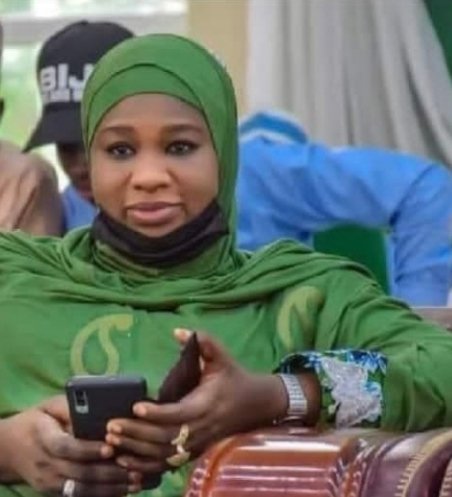
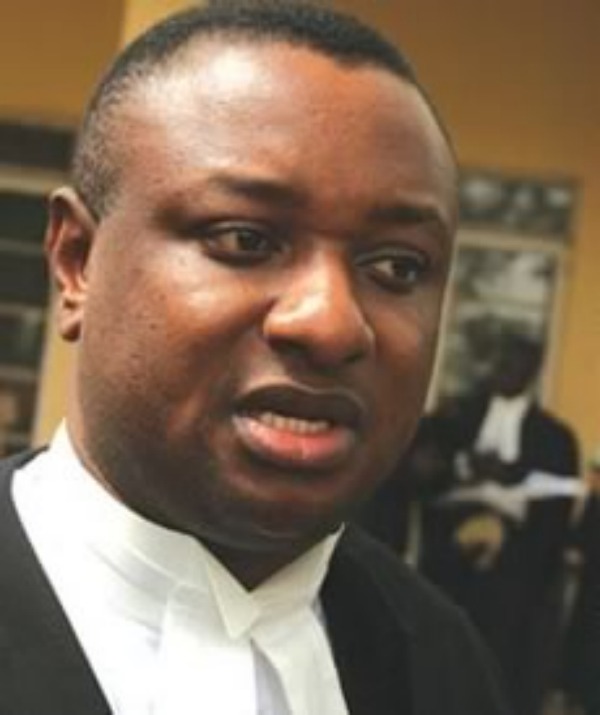
President Bola Tinubu has withdrawn Mariam Shettima (Shetty) from the list of the Ministerial nominees to the Senate for screening. She’s the nominee from Kano State. Senate President, Godswill Akpabio made this known at the plenary today, August 4, quoting from a letter from the President. Mariam Shettima had earlier been included in the list of 19 nominees sent to the Senate on Wednesday. Her inclusion had continued to generate mixed reactions from Nigerians on social media. Meanwhile, the name of the former minister of State for Labour and employment, Festus Keyamo, has been included in the list of the ministerial nominees to be screened by the Senate.
The Chairman of the ECOWAS Authority of Heads of State and Government, President Bola Ahmed Tinubu, has dispatched a delegation to Niger Republic with a mandate to expeditiously resolve the current political impasse in the country. Special Adviser to the President on Media and Publicity, m Ajuri Ngelale, in a statement today, August 3, said that the action is in line with the resolution reached at the end of the extraordinary summit of the ECOWAS held last weekend in Abuja.
The delegation, headed by former Nigerian Head of State, Retired General Abdulsalami Abubakar, who led the delegation, left for Niamey on today, after a briefing by President Tinubu at the State House in Abuja. The former Nigerian Head of State is joined in the delegation by the Sultan of Sokoto, Alhaji Muhammad Sa’ad Abubakar III and the President of the ECOWAS Commission,. Omar Alieu Touray. The President also sent a separate delegation, led by Ambassador Babagana Kingibe to engage with the leaders of Libya and Algeria on the Niger crisis. Briefing the two delegations, President Tinubu charged them to engage all stakeholders robustly with a view to doing whatever it takes to ensure a conclusive and amicable resolution of the situation in Niger for the purposes of African peace and development rather than a move to adopt the geopolitical positions of other nations. “We don’t want to hold brief for anybody. Our concern is democracy and the peace of the region,” the President said. Speaking after the meeting, retired General Abdulsalami Abubakar said that the delegation would meet the coup leaders in Niger to present the demands of the ECOWAS leadership. Both leaders of the two missions expressed optimism on the outcome of the assignments.
The First Lady, Senator Oluremi Tinubu was in Daura, Katsina State today, August 3, on a visit to check the well-being of the immediate past President, Muhammadu Buhari. The First Lady, who was accompanied by the wife of the Vice President, Hajiya Nana Shettima, said that the visit is also to thank Buhari for the fatherly support he has been giving. She prayed for long life , good health and more support from him not only for the administration of President Bola Ahmed Tinubu but Nigeria. In his brief remarks, the former president expressed appreciation to the visitors, saying that the visit was remarkable. “As you can all see, she came to check up on me and see that I am doing okay.“ Others with the First Lady were the wife of the Katsina State Governor, Hajiya Dikko Radda and the wife of the Speaker, Katsina State House of Assembly Hajiya Nasir Daura among other APC women chieftains in the State.
We use cookies on our website to give you the most relevant experience by remembering your preferences and repeat visits. By clicking “Accept”, you consent to the use of ALL the cookies.
This website uses cookies to improve your experience while you navigate through the website. Out of these, the cookies that are categorized as necessary are stored on your browser as they are essential for the working of basic functionalities of the website. We also use third-party cookies that help us analyze and understand how you use this website. These cookies will be stored in your browser only with your consent. You also have the option to opt-out of these cookies. But opting out of some of these cookies may affect your browsing experience.
Necessary cookies are absolutely essential for the website to function properly. This category only includes cookies that ensures basic functionalities and security features of the website. These cookies do not store any personal information.
Any cookies that may not be particularly necessary for the website to function and is used specifically to collect user personal data via analytics, ads, other embedded contents are termed as non-necessary cookies. It is mandatory to procure user consent prior to running these cookies on your website.







Why ECOWAS Military Action To Sack Niger’s Coup Leaders Is Necessary, By Godwin James
An urgent military action by the Economic Community of West Afrocan States (ECOWAS) to push out the junta in Niger is a necessity for several reasons.
I will try to present the reasons as follows:
1. The Nigerien coup is not due to any particular political conditions, but to the personal interests of soldiers who had not anticipated anything, and want to serve themselves rather than serve the people.
Why?
Because:
– The junta lied about the security situation in Niger, which, in actual fact, has improved in recent months. The Chief of Defence Staff (CDS) of Niger had recognized this fact in his wishes’ greetings in January 2023. This situation is weakening the army of Niger.- The political and security situation in Niger has improved significantly over the past two years thanks to the good governance of Mohamed Bazoum’s government and the coordinated action of the Nigerien and foreign forces, and always under command of Niger.
2. Why Tchiani wants power:
– The coup was led by General Tchiani, head of the Presidential Guard. Whereas he was to be suspended from his post for incompetence, he managed to mobilize members of the Republican Guard to negotiate with the president a severance grant. General Tchiani has gone too far and found himself in a situation where he was either to grab power or he was going to end up in jail. So he chose to mobilize other embittered, disappointed soldiers in their ranking to join him in his attempt to take power.
– Not wanting a confrontation between inhabitants of Niger, the CDS of Niger didn’t choose to frustrate the those responsible for this coup using force and then rally them. The perpetrators of the coup have started by arguing about who would take power, General Tchiani seems to have taken over and began to rewrite a history related to “national interests” to legitimize himself. Former pro-Bazoum civil servants and soldiers are now being hunted (many arrests), which shows moreover that promises of appeasement of the members of the junta are lies.
3. Another major reason for an ECOWAS action is that:
This coup will have economic and security consequences for the entire sub-region region.
– The coup brings an inexperienced, even pyromaniac, team to a key Sahel state. The Niger Republic will isolate itself regionally and internationally, which will have consequences on economy and movement of people.
Ignoring Russia…
Despite its reassuring rhetoric, Russia is reproducing its policy of pressuring the new junta as it did in Burkina Faso by mobilizing rioters with Russian flags. Russia seeks to combine defence of the junta with its own interests. Russia, which is not capable of moving forward a hundred meters into Ukraine, does not have the military or financial capacities to support Niger at the same level as Western forces.
Likely Consequences of the coup
The most likely outcome is a security collapse in Niger on the same level as in Mali, which has lost control of three-quarters of its territory.
The most likely outcome is the emergence of a continuous insecure zone from Mauritania to Algeria border unto Boko Haram evolution zones. For this reason, Algeria has also condemned the coup.
4. The necessary ECOWAS’ answer
ECOWAS is legitimate, as it represents Benin, Ivory Coast, Gambia, Ghana, Guinea Bissau, Nigeria, Senegal, Togo, Cape Verde, Liberia, Sierra Leone, and the Niger legitimate government.
The accusations against ECOWAS of being controlled by France are racist and conspiracy: they imply that all authorities in all these countries are controlled by Paris.
Because of the risk of serious economic and security destabilization posed by this coup over an important part of West Africa, an ECOWAS military intervention to restore order in Niger is necessary.
The junta has the support of only a small part of the population and an upside down of the situation, meaning a support to the Nigerien people, will be fast thanks to an action by ECOWAS, including military action.
James is an African affairs analyst