The Department of State Services (DSS) has said that the suspended Governor of the Central Bank of Nigeria (CBN), Godwin Emefiele has been charged to court in compliance with the order. An Abuja High Court had yesterday, July 13, ordered the DSS to charge Emefiele to court within seven days or release him. In a statement, the DSS public relations officer, Peter Afunaya, recalled that the Service had, in 2022, applied for a Court Order to detain him in respect of a criminal investigation. The statement said that though Emefiele obtained a restraining order from an FCT High Court, the Service, however, arrested him in June, 2023, on the strength of suspected fresh criminal infractions/information, one of which forms the basis for his current prosecution. The Service assured the public of professionalism, justice and fairness in handling the matter in the discharge of its duties within the confines of the law.
President Bola Tinubu has disclosed a plan by the Federal Government to transfer N8,000 to 12 million poor households in Nigeria for a period of six months to cushion the negative effect of the Federal Government’s recent removal of fuel subsidy.
The President elaborated in a letter to the Senate on 12 July, requesting approval of $800 million loan that the Federal Government sought from the World Bank under the ‘National Social Safety Net Program-Scale Up’ to support the poor and vulnerable citizens.
According to the President, N500 billion would be given as palliatives in the form of conditional cash transfers directly to the bank accounts of the 12 million households.
The letter read in part: “Please note that the Federal Executive Council led by President Muhammadu Buhari approved an additional loan facility to the tune of $800 million to be secured from the World Bank for the National Social Safety Net programme. Copy of FEC’s extract is attached.
“You may also wish to note that the purpose of the facility is to expand coverage of shock-responsive safety net support among the poor and vulnerable Nigerians. This will assist them in coping with basic needs.
“You may further wish to note that under the conditional cash transfer window of the programme, the Federal Government of Nigeria will transfer the sum of N800 per month to 12 million poor and low-income households for a period of six months, with the multiplier effect on about 60 million individuals,” the letter read in part.
President Bola Tinubu has made it clear that his government is determined to retrieve Nigeria from the vested interests that have stifled its development for a long time.
He stressed that issues of security, healthcare system and industrialization would be top on priorities of his administration.
President Tinubu spoke today, July 13, at the State House in Abuja, when he received in audience, the All Progressives Congress (APC) Women Leaders from the 36 States and Federal Capital Territory, led by the APC National Woman Leader, Dr. Betta Edu.
The President said that his administration is already implementing many policies and programmes that would positively impact the citizens.
Such policies, he stated, include the Students’ Loan Scheme, which he said would ensure that their children enjoy a stable academic calendar in their respective tertiary institutions.
“We have established a scholarship scheme that would guarantee their four years of tertiary education,” he further said.
“Security is paramount in my administration’s agenda because women bear the cost of insecurity anywhere in the world. Issues of insecurity are being discussed at the highest level and this administration will ensure that insecurity is halted immediately.
“Medicare is another. We will ensure that health facilities are revamped and we will pursue this with vigour. Industrialization is yet another priority as your children and relations will gain employment.”
President Tinubu appreciated the women leaders for the visit, and praised them for their support during the campaigns and elections, adding that they all deserve awards for their efforts.
“You all deserve gold medals because you worked so hard politically, overcoming so many obstacles like the fuel scarcity and Naira ‘confiscation,’ promising that their children would receive better rewards as their future is now guaranteed with the initiatives being put in place.”
President Tinubu told the visiting women that though his emergence as ECOWAS Chairman would place on him additional responsibility, it would spur him to work even harder.
“We will continue to strive for a better Nigeria. You will not regret your confidence in this administration.”
He reaffirmed his administration’s open-door policy, saying that the unity of the country is essential and central to his mind.
He advised the women leaders to be accommodating of others from other parties, who, having seen the silver lining and the brighter future that lie ahead, are now willing to come on board.
He tasked the APC women leaders to educate the citizens on the policies and programmes of his administration with the awareness that the present difficulties are temporary.
“You understand better, you are better coordinators, you know how to multi-task. The gains of the subsidy removal will be channeled to better the lives of Nigerians from the few that have been fleecing the nation.”
Earlier, the APC National Woman Leader, Edu said that the women had come to congratulate the President on his victory at the polls, for the several good policies of his administration and for his election as ECOWAS Chairman at the last Summit.
The National Woman Leader enumerated the sterling records of the President as Governor of Lagos State which had endeared him to Nigerians.
These, Dr. Edu said, include the unprecedented economic development of the state and infrastructural developments.
The APC Woman leader appealed to the President to consider more women in appointments into government positions.
The Nigeria Civil Aviation Authority (NCAA) has suspended, indefinitely, the operations of all Boeing B737 aircraft of domestic carrier, Max Air.
The suspension was with immediate effect, according to a letter by the regulator to the domestic airline.
The letter was dated July 12, 2023 and marked NCAA/DG/AIR/11/16/363. It was entitled, “Suspension of Parts A3 and D43 of the Operations Specifications Issued to Max Air with Immediate Effect.”
The letter was signed by NCAA Director of Operations, Training and Licensing, Captain Ibrahim Bello Dambazau, on behalf of NCAA Director General, Captain Musa Nuhu.
The implication is that all domestic flights of the airline will be on hold until the suspension is lifted.
The letter reads: “The Authority’s action is due to the several occurrences that involved your Boeing B737 aircraft as listed hereunder:
“Loss of Number 1 Main Landing Gear (MLG) wheel during the serious incident involving a Boeing 737-400 aircraft, registration marks 5N-MBD which occurred between Take-off at Yola Airport Adamawa State and on landing at Nnamdi Azikiwe International Airport, Abuja Nigeria on 7th May, 2023.
“Fuel Contamination of the main fuel tanks of aircraft B737-300, Registration Marks; 5N-MHM, leading to the Auxiliary Power Unit (APU) shutdown on ground Yola Airport on the 7th of July, 2023.
“Aborted take-off of Boeing 737-400 aircraft, registration marks 5N-MBD, which occurred at the Mallam Aminu Kano International Airport (MAKIA) due to high Exhaust Gas Temperature (EGT) indication on the 11th of July, 2023.
“An air return by aircraft B737-300, Registration Marks; 5N-MHM to Nnamdi Azikiwe International Airport (NAIA) due to duct overheat indication in the cockpit on the 11th of July, 2023.
“The authority has constituted a team of inspectors to conduct an audit of your organization. The result of this audit, it said, must be found satisfactory by the Authority prior to considering the restoration of the privileges of the operations Specifications to your organisation to further operate the aircraft type.”
Soldiers of the three Division of the Nigerian Army deployed to quell the crisis in Mangu Local Government Area of Plateau state have killed three bandits.
The soldiers, in the operation carried out yesterday, July 13, obliterated the criminals when they gallantly fought through an ambush staged by the bandits.
The operation, according to a statement today July 13, by the Director of the Army Public Relations, Brigadier General Onyema Nwachukwu was in response to a distress call in Mangu general area.
The statement said that items recovered from the bandits, include 3 x AK 47 Rifles,14 rounds of 7.62 mm Special rounds, 1 x Motorcycle and a Constabulary Police Identity card.
The statement said that the soldiers are currently on the trail of bandits who escaped with gunshot wounds during the fire fight.
President Bola Ahmed Tinubu has formally declared emergency in food security with back up agenda to bring about abundant food items, leading to crash in their prices
One of the items the President listed is the urgent move to create cattle ranch (Ruga) in each State, as a way of stopping Fulani herders from moving their cattles all over the place and streets in major cities.
Speaking to newsmen today, July 13, at the Presidential villa, Abuja, Special Adviser to the President on Special Duties, Communications and Strategy, Dele Alake said that the President is fully aware of the current food inflation in the country.
“Mr. President is not unmindful of the rising cost of food and how it affects the citizens. “While availability is not a problem, affordability has been a major issue to many Nigerians in all parts of the country.
“This has led a significant drop in demand, thereby undermining the viability of the entire agriculture and food value chain.
“Accordingly, in line with this administration’s position on ensuring that the most vulnerable are supported, Mr. President has declared, with immediate effect, the following actions:
• That a state of emergency on food security be announced immediately, and
• That all matters pertaining to food and water availability and affordability, as essential livelihood items, be included within the purview of the National Security Council.”
He said that as a direct and immediate response to this crisis, a number of initiatives will be deployed in the coming weeks to reverse this inflationary trend and guarantee future uninterrupted supplies of affordable foods to ordinary Nigerians.
According to Alake, there would be immediate, medium and long-term interventions and solutions.
“In the immediate term, we intend to deploy some savings from the fuel subsidy removal into the Agricultural sector focusing on revamping the agricultural sector.
“In an earlier meeting with Agriculture Stakeholders (today), we drafted a memorandum of partnership between the government and the individual stakeholder representatives that encompasses the decisions taken and actions proposed from our engagements.
“The immediate intervention strategies are as follows:
1. We will immediately release fertilizers and grains to farmers and households to mitigate the effects of the subsidy removal.
2. There must be an urgent synergy between the Ministry of Agriculture and the Ministry of Water Resources to ensure adequate irrigation of farmlands and to guarantee that food is produced all-year round.”
He said that President Tinubu made it clear that we can no be comfortable with seasonal farming, saying: “we can no longer afford to have farming down times.”
Read part of the President’s measures to address the food security challenges in the country:
We shall create and support a National Commodity Board that will review and continuously assess food prices as well as maintain a strategic food reserve that will be used as a price stabilisation mechanism for critical grains and other food items.
Through this board, government will moderate spikes and dips in food prices.
To achieve this, we have the following stakeholders on board to support the intervention effort of President Bola Ahmed Tinubu: The National Commodity Exchange (NCX), Seed Companies, National Seed Council and Research institutes, NIRSAL Microfinance Bank, Food Processing/ Agric Processing associations, private sector holders & Prime Anchors, small holder farmers, crop associations and Fertilizer producers, blenders and suppliers associations to mention a few.
We will engage our security architecture to protect the farms and the farmers so that farmers can return to the farmlands without fear of attacks.
The Central Bank will continue to play a major role of funding the agricultural value chain.
Activation of land banks. There is currently 500,000 hectares of already mapped land that will be used to increase availability of arable land for farming which will immediately impact food output.
– Mechanization and land clearing – The government will also collaborate with mechanization companies to clear more forests & make them available for farming
River basins- there are currently 11 rivers basins that will ensure planting of crops during the dry season with irrigation schemes that will guarantee continuous farming production all year round, to stem the seasonal glut and scarcity that we usually experience.
We will deploy concessionary capital/funding to the sector, especially towards fertilizer, processing, mechanization, seeds, chemicals, equipment, feed, labour, etc.
The concessionary funds will ensure food is always available and affordable thereby having a direct impact on Nigeria’s Human Capital Index (HCI). This administration is focused on ensuring the HCI numbers, which currently ranks as the 3rd lowest in the world, are improved for increased productivity.
Transportation and Storage: The cost of transporting Agricultural products has been a major challenge (due to permits, toll gates, and other associated costs). When the costs of moving farm produce is significantly impacted – it will immediately be passed to the consumers, which will affect the price of food – the government will explore other means of transportation including rail and water transport, to reduce freight costs and in turn impact the food prices.
As for storage, existing warehouses and tanks will be revamped to cut waste & ensure efficient preservation of food items.
We will Increase revenue from food and agricultural exports. As we ensure there is sufficient, affordable food for the populace, we will concurrently work on stimulating the export capacity of the Agric sector.
Trade Facilitation: Transportation, storage and export will be improved by working with the Nigerian Customs, who have assured us that the bottlenecks experienced in exporting and importing food items as well as intra-city transportation through tolling will be removed.
These are some of the immediate interventions this government will put in place to tackle this crisis.
Principally, one of the major positive outcomes of these interventions will be a massive boost in employment and job creation.
Indeed, agriculture already accounts for about 35.21 percent of employment in Nigeria (as at 2021), the target is to double this percentage to about 70% in the long term.
President Bola Ahmed Tinubu’s mandate to create jobs for our teeming youth population will be achieved with between 5 to 10 million more jobs created within the value chain, working with the current 500,000 hectares of arable land and the several hundreds of thousands more farmlands to be developed in the medium term.
In closing, this administration understands that food and water are the bedrock of survival and therefore is calling on all Nigerians to partner us in ensuring the success of this strategic intervention. This administration is working assiduously to ensure that Nigerians do not struggle with their essential needs.
President Bola Ahmed Tinubu wishes to use this medium to continue to assure Nigerians that this administration will not relent in its efforts until all strategic interventions are deployed efficiently and effectively and until every household is positively impacted. Our president is the president of all Nigerians and the father of the nation. The renewed hope mandate remains alive and no one, absolutely no one, will be left behind.
The recent removal of fuel subsidy by President Bola Tinubu’s administration has continued to generate discussions for and against the policy. While some support it due to the inherent benefits to the nation’s economy in the long run, others are clearly against the decision. This is due to the hardships they say, the policy will impose on Nigerians. The removal of the subsidy, according to some experts, would free up resources for the development of other key sectors such as education, healthcare, transportation and critical infrastructure. The government also added that the decision would curtail perennial corruption in the system and provide it with surplus revenue to spend on other projects. Either way one may decide to join, the fact is that the subsidy is in itself a form of palliative. Now that it has been removed, there is genuine concern that many Nigerians will be unable to meet the costs of healthcare, education, transportation, food and welfare. Unfortunately, the government has yet to propose tangible palliatives to mitigate the impact of its decision on low-income people. Aside from the inflationary effect of floating the naira, prices of essential commodities have skyrocketed beyond many Nigerians’ reach. And if the trend it is, is left unchecked, the policy will exacerbate poverty and further push Nigerians into extreme poverty. In addition, the authority widened its target by launching an innovative programme called the Group, Individual and Family Social Health Insurance Programme (GIFSHIP), as a deliberate attempt to enrol more Nigerians, not covered by other health insurance programmes, into the health insurance ecosystem. It will therefore be instructive for the Tinubu administration to speed up the implementation of these programmes to cover more poor Nigerians who cannot afford their own out-of-pocket health expenses. These and other programmes of the authority, if carefully harnessed and supported, will provide individuals and families with financial security. This is done by covering a significant portion of their healthcare expenses and will reduce the burden of out-of-pocket payments, particularly for those on lower incomes. It will also increase access to healthcare by offering affordable health insurance options; more individuals can access essential medical services without facing financial barriers. It will also provide a wide range of healthcare services a beneficiary will receive without incurring exorbitant costs. Therefore, the adoption of health insurance as a subsidy palliative is crucial for addressing rising healthcare costs and ensuring financial access to quality healthcare for all individuals. Health insurance, as a statutory palliative, will surely ease the health burden of subsidy removal.
Muhammad S. Shehu wrote from the NHIA State Office, Bauchi.
The Governments of Nigeria and the Republic of Equatorial Guinea have opened discussions on partnership opportunities for the establishment of a joint logistics base, deployment of indigenous capacities across countries, and lowering the costs of major oil and gas operations.
These possibilities were discussed yesterday when the Minister of Planning and Economic Diversification of the Republic of Equatorial Guinea, Gabriel Mbega Obiang Lima led a delegation to engage the Executive Secretary, Nigerian Content Development and Monitoring Board (NCDMB), Engr. Simbi Kesiye Wabote at the Board’s liaison office in Abuja.
Other diplomats in the Minister’s entourage included the Ambassador of the Republic of Equatorial Guinea to Nigeria, Francisco Edu Ngua Mangue; First Secretary of the Embassy, Josue Nsue Mbasogo and Personal Assistant to the Minister of Planning and Economic Diversification, Akim Lima.
A statement from the NCDMB said that onversations at the meeting centred around inviting reputable Nigerian oil and gas service companies to establish their operational bases at Equatorial Guinea, whereby the companies would use the country’s ports to launch their activities in neighbouring countries such Gabon, Cameroon and Angola. The Minister promised to send a formal request on the partnership to the NCDMB and that the support of government institutions would be needed before such business opportunities could be explored successfully.
The Minister complained about the exorbitant cost of key oil and gas operations in the Gulf of Guinea. He further suggested that operators in Nigeria and Equatorial Guinea could lower their costs significantly by collaborating in the scheduling of their respective work programmes such as mobilization and demobilization of drilling rigs and other assets.
He hinted that the proposed business relationship and pooling of demand profiles were necessary to attract key investments.
“This is because big companies like General Electric would only invest in a jurisdiction if they were assured of markets from neighbouring countries.”
On the clamour by western nations for energy transition and plans to progressively displace fossil fuels with renewable energy solutions, the Minister and the Executive Secretary re-echoed their positions that fossil fuels would remain the world’s dominant energy source for several decades, and Nigeria and Equatorial Guinea would not hurriedly abandon their natural resources to embrace renewable energy where they lacked competitive advantage. Rather both nations would continue to exploit their oil and gas resources to the fullest and use the proceeds to develop their national economies, including renewable opportunities.
In his comments, the Executive Secretary welcomed the Minister and his entourage, saying that both nations have collaborated closely in the energy sector in recent years and representatives of the Portuguese nation have participated in several Nigerian oil and gas conferences and visited some oil and gas facilities as well.
He confirmed that the Board and Nigerian oil and gas service companies are keen to participate in the proposed collaboration. Such arrangements were identified in the Nigerian Content 10-Year Strategic Roadmap under the pillar of Sectorial and Regional Market Linkages, he said.
He said that Nigerian service companies had developed surplus capacities in several key areas, hence it is imperative to explore opportunities across the Gulf of Guinea, where their expertise and collaboration with players from those nations are needed.
He assured that NCDMB “will galvanise Nigerian service producers under the Petroleum Technology Association of Nigeria (PETAN) and make sure they come with us to your conference, and we will synergize.
“There is no need going to US or Singapore. We can work out areas where we can partner. It might be in the marine sector, logistics base. There are huge opportunities.”
A Federal Capital Territory High Court has ordered the Department of State Services (DSS) to charge or release suspended Central Bank of Nigeria (CBN) Governor, Godwin Emefiele within one week or release him.
Justice Hamza Mu’azu gave the order today, July 13.
Governors who served in 1999 when the fourth Republic began, have assured one of them, who is now the President of Nigeria, Asiwaju Bola Ahmed Tinubu that they are ready to be his Footsoldiers as he is set to reposition the country.
The former Governors, who go with group name “Class of 1999,” were at the Presidential Villa, Abuja today, July 12, on a special visit to President Tinubu, who himself was Governor of Lagos State between 1999 and 2007.
The Governors in the group are George Akume (who is now the Secretary to the Government of the Federation and former Governor of Benue State).
Others are Niyi Adebayo, Ekiti State; Senator Orji Uzo Kalu, Abia State; Senator Sam Egwu, Ebonyi State; Adamu Muazu, Bauchi State; Donald Duke, Cross River State; James Ibori, Delta State; Obong Victor Attah, Akwa Ibom State; Chimaroke Nnamani, Enugu State; Saminu Turaki, Jigawa State; Senator Aleiro Adamu, Kebbi State; Olusegun Osoba, Ogun State; Adebisi Akande, Osun State; Senator Joshua Dariye, Plateau State; Attahiru Bafarawa, Sokoto State; Ahmad Sani Yarima, Zamfara State and Rev. Jolly Nyame, Taraba State. Ten others have died.
Speaking on behalf of the visiting leaders, chairman of the group, Chief Lucky Igbinedion, urged the President to pursue his vision for a greater Nigeria with vigour steadfastness, and resilience.
He promised the support of the group for development policies towards providing the necessary social structure for actualization of the nation of our dream.
“We are here with you. We are your foot soldiers, and you can tap into our experience. You are a person who believes in Nigeria. With your good leadership, Nigeria will take its place.”
This was even as President Tinubu said that he would take them as his advisers in an open government he is set to run.
“My commitment to democratic value is unwavering. I am overwhelmed and honored by the numbers of you here.
“I have an open door policy. You are my advisers. We went into the pond and wrestled with a pig. We got dirty, and cleaned up. That is why I am here today.
“We served as governors and sat in this Council Chamber. All I wanted was democracy and the salvation of the country. I never thought I was going to be here as President, but God Almighty has brought me.”
The President assured the governors and Nigerians that he will work towards the unity, equity, stability, and prosperity of the country.
President Tinubu appealed once more to Nigerians for patience as his government is speeding up the process of a full-proof social security structure that will not be compromised, especially in cash-transfer.
“I understand that our people are suffering yet there can be no childbirth without pain. The joy of childbirth is the relief that comes after the pain. Nigeria is reborn already with fuel subsidy removal.
“It is a rebirth of the country for the largest number over a few smugglers.
“Please tell the people to be a little patient.
“The palliative is coming. I don’t want cash-transfer to fall into wrong hands. I know it pinches and it is difficult. In the end, we will rejoice in the prosperity of our country.”
President Tinubu said that the country will not make meaningful progress without fixing electricity, assuring that his administration will harness gas resources, and explore every opportunity to ensure stable power generation and supply.
On Security, the President who had earlier met with Governor Babagana Zulum of Borno State to review situation in the North East, appealed to Nigerians, especially Plateau State, to sheath their swords and use dialogue in resolving conflicts.
He said that the issues of borders were man-made, not created by God, saying; “we will do everything possible to stabilize the country.”
We use cookies on our website to give you the most relevant experience by remembering your preferences and repeat visits. By clicking “Accept”, you consent to the use of ALL the cookies.
This website uses cookies to improve your experience while you navigate through the website. Out of these, the cookies that are categorized as necessary are stored on your browser as they are essential for the working of basic functionalities of the website. We also use third-party cookies that help us analyze and understand how you use this website. These cookies will be stored in your browser only with your consent. You also have the option to opt-out of these cookies. But opting out of some of these cookies may affect your browsing experience.
Necessary cookies are absolutely essential for the website to function properly. This category only includes cookies that ensures basic functionalities and security features of the website. These cookies do not store any personal information.
Any cookies that may not be particularly necessary for the website to function and is used specifically to collect user personal data via analytics, ads, other embedded contents are termed as non-necessary cookies. It is mandatory to procure user consent prior to running these cookies on your website.




 President Bola Tinubu has disclosed a plan by the Federal Government to transfer N8,000 to 12 million poor households in Nigeria for a period of six months to cushion the negative effect of the Federal Government’s recent removal of fuel subsidy.
 President Bola Tinubu has made it clear that his government is determined to retrieve Nigeria from the vested interests that have stifled its development for a long time.
 The Nigeria Civil Aviation Authority (NCAA) has suspended, indefinitely, the operations of all Boeing B737 aircraft of domestic carrier, Max Air.
 Soldiers of the three Division of the Nigerian Army deployed to quell the crisis in Mangu Local Government Area of Plateau state have killed three bandits.
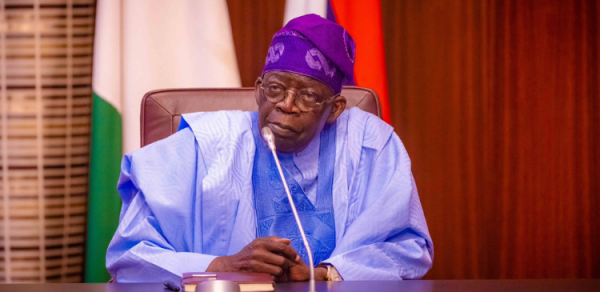 President Bola Ahmed Tinubu has formally declared emergency in food security with back up agenda to bring about abundant food items, leading to crash in their prices
 The Governments of Nigeria and the Republic of Equatorial Guinea have opened discussions on partnership opportunities for the establishment of a joint logistics base, deployment of indigenous capacities across countries, and lowering the costs of major oil and gas operations.
 A Federal Capital Territory High Court has ordered the Department of State Services (DSS) to charge or release suspended Central Bank of Nigeria (CBN) Governor, Godwin Emefiele within one week or release him.
 Governors who served in 1999 when the fourth Republic began, have assured one of them, who is now the President of Nigeria, Asiwaju Bola Ahmed Tinubu that they are ready to be his Footsoldiers as he is set to reposition the country.

Subsidy Removal: Adopt Health Insurance As Statutory Palliative, By Muhammed Saraki Shehu
The recent removal of fuel subsidy by President Bola Tinubu’s administration has continued to generate discussions for and against the policy.
While some support it due to the inherent benefits to the nation’s economy in the long run, others are clearly against the decision. This is due to the hardships they say, the policy will impose on Nigerians.
The removal of the subsidy, according to some experts, would free up resources for the development of other key sectors such as education, healthcare, transportation and critical infrastructure. The government also added that the decision would curtail perennial corruption in the system and provide it with surplus revenue to spend on other projects.
Either way one may decide to join, the fact is that the subsidy is in itself a form of palliative. Now that it has been removed, there is genuine concern that many Nigerians will be unable to meet the costs of healthcare, education, transportation, food and welfare. Unfortunately, the government has yet to propose tangible palliatives to mitigate the impact of its decision on low-income people.
Aside from the inflationary effect of floating the naira, prices of essential commodities have skyrocketed beyond many Nigerians’ reach. And if the trend it is, is left unchecked, the policy will exacerbate poverty and further push Nigerians into extreme poverty.
In addition, the authority widened its target by launching an innovative programme called the Group, Individual and Family Social Health Insurance Programme (GIFSHIP), as a deliberate attempt to enrol more Nigerians, not covered by other health insurance programmes, into the health insurance ecosystem.
It will therefore be instructive for the Tinubu administration to speed up the implementation of these programmes to cover more poor Nigerians who cannot afford their own out-of-pocket health expenses.
These and other programmes of the authority, if carefully harnessed and supported, will provide individuals and families with financial security. This is done by covering a significant portion of their healthcare expenses and will reduce the burden of out-of-pocket payments, particularly for those on lower incomes.
It will also increase access to healthcare by offering affordable health insurance options; more individuals can access essential medical services without facing financial barriers. It will also provide a wide range of healthcare services a beneficiary will receive without incurring exorbitant costs.
Therefore, the adoption of health insurance as a subsidy palliative is crucial for addressing rising healthcare costs and ensuring financial access to quality healthcare for all individuals. Health insurance, as a statutory palliative, will surely ease the health burden of subsidy removal.
Muhammad S. Shehu wrote from the NHIA State Office, Bauchi.