Has anyone any notion that God, Almighty, commits mistake in creating anything?
In other words, has it ever crossed the mind of anyone as to the fact that God, Almighty, made mistake in creating you as a male or as a female or as black or as white, or as tall or as short, and above all, as an Egbira man or woman?
The extent to which humanity has confused God’s meaning of creating us the way we should be, through changing the colour of our skins, adding to our height artificially and so on, would be treated in a separate forum another day soon, but the trend where we are abandoning our language in preference to the so-called major languages, is disturbing and absolutely unfortunate. Yes, you can hide under an excuse that the early educational system of our land was dominated by teachers from the neighbouring Yoruba speaking West through the colonial masters then, and therefore, many Yoruba words infiltrated the original Egbira words. But, there’s no excuse for Egbira people to continue to sink deeper into other so-called major languages such as Hausa, Yoruba and so on, with such avid interest to the point of viewing our own Egbira language as inferior and a shameful venture for us to speak outside.
WHY THERE ARE TRIBES
If we agree that God Almighty never makes mistake in whatever he does, we can then come to the conclusion that He, God Almighty, did not make mistake in creating us into different tribes. Holy scriptures tell us that God Almighty created us, human beings into different nations, tribes and with different colours so that we would, first, appreciate His ingenuity and second, for us to cherish and love where (the particular tribe) He places us. Not appreciating or avoiding where God Almighty places you is obviously a way of inviting confusion into your life and the life of your generations ahead.
EGBIRA AS A TRIBE
And, fortunately, we find ourselves as belonging to that unique tribe as Egbira. A researcher just came up with the fact that Egbira is the ninth oldest tribe in Nigeria (meaning that the tribe is among the top ten oldest in the country). Egbira is not just a tribe, but a process, a culture, a tradition and a way of beautiful life; life of fulfilment.
Egbira, which descended from Egypt, belongs to the Kwa group of Niger-Kongo family, according to Professor Greenberg. Nupe, Gbari, Gade, Jukun are within the Kwa subgroup. However, Hoffman and Bendor in 1976, separated Egbira from Nupe and Gade and set it up as subgroup on its own.
Places where Egbira or a semblance of it is spoken locally are Okene/Okehi, Koton Karfe, Toto Umaisha, Keffi, Igara (etuno), Abaji, Mozum and reverine areas of Benue State as well as Wukari in Taraba State and other spotted towns and villages across Nigeria.
Anebira or Egbira (both plural and singular) are people from Bira, a Hamlet in the Northern Gongola valley. The tradition had it that Egbira adopted this name after their migration to the lower Benue valley as a mark of identity. The migration started in Gongola valley and ended in lower Benue valley. They formed part of the Apa group (the Jukun) who founded Kwararafa Confederacy, consisting of Pindiga, Kona and Kwararafa. The Jukuns were said to have migrated from Egypt in about the year 500 A.D. The Jukuns and Beriberi people of Kanem-Borno empire, who were neighbours, had cause to engage each other in a series of intertribal wars in the 17th Century. Jukun empire collapsed in 1700 A.D after losing the wars, and couple with famine and political unrest, various subnational interest groups (clan groups) dispersed. Among them were the Egbira, Igala, Tiv, Idoma, Nupe and Kaje.
Egbira, in particular, took off from Wukari and went through Ibi, Lunga, Lafia, Toto, Koton Karfe, Lokoja, Itobe, Idah, and Ajaokuta, Opete and settled at Eganyi, Okengwe and Igara.
The leader of the group (confirmed progenitor of modern Egbira) which migrated from Idah to Opete is called Itaazi, believed to be blessed with five children’ named Ugah, Ododo, Obaji, Ohizi and Ochuga who individually spread across the four corners of Opete and beyond, with many offsprings.
The main neighbouring languages of Egbira are Yoruba to the West, Igala to the East, Edo to the South and Nupe to the North. Of all these, Yoruba had more influence than others because, for one, Western education and missionary activities spread from the Yoruba people to Egbira. For example, the first set of schools – Roman Catholic Mission (RCM) and Church Missionary Society (CMS) spread from Yoruba areas. Most teachers in these schools were Yoruba and the medium of instructions for the first three years was Yoruba language, which explains why many words of Yoruba origin infiltrated into Egbira language.
The Yoruba even corrupted the original nomenclature of EBIRA with IGBIRA, whereas there’s no G and B forming a word together. In 1974, Ebira People’s Association (EPA) corrected the nomenclature to be EBIRA which means both GOOD CHARACTER and the tribal identity. However, a couple of years ago, other groups within the group from Ebira, Koton Karfe in Kogi State, from Igara in Edo State, Toto and Umaisha in Nasarawa, Wukari and Ibi in Taraba, from Abaji in the Federal Capital Territory (through the migrations) came together to form a block and named it EGBIRA. In doing the forming and renaming, the interests and rights of the congregating parts were taken into consideration and so represented, and had since been Gazetted.
UNIQUE WORDS AND NAMES OF EGBIRA
It is interesting to know that Egbira language is richer and more original than even English language. While English language is full of borrowed words from Latin, Swahili, Swedish Teutonic and other tribes across the world, Egbira language is 85 percent original, natural coinages from the beginning, however, with different accent amongst the confederating group (etuno, Igara, Koton Karfe, etc). In compiling the Standard Ebira English Dictionary (which is now in the market), I discovered that the only language in the world that is as original and comprehensive as Egbira is Arabic. Even the native Egbira names are very original and triple the number of English or Arabic names. In all, no fewer than 3,000 original Egbira words and 663 names native to Egbira are captured in the Dictionary, which I call “the book of the future.”
Some of the unique words and names in the Dictionary, with appropriate tone marks and dots, are as follows:
1
Si – love
Si – search for
Si – take/lift
Si – quietness
2
Ipaki – fresh cassava
echuka – dry cassava
3
ose – wife (singular)
ose – alligator pepper
ose – boxing
4
aare – farm
aare – sand
5
ahe – song
ahe – sorry (greeting)
ahe – is that so? (question)
6
Ogu – surrounding
Ogu – profit/gain
Ogu – hamattern
Ogu – possession, wealth
Ogu – blockage
SOME EGBIRA NAMES:
Oovavi
Ootuhwo
Eneyamire
Onozare
Omeneke
Otinawu
Ocheere
Ogegere
Okeeku
Temtem
Uhuwache
Iregu
Isasheyiwu
Ipemida
Apetewa
Apokiti
Asayihi
Ataba
Atuwaka
Avamiku
CONCLUSION
Successful literacy agencies have shown that a person will learn English or any other language much more quickly and more thoroughly if he has learned to read and write his mother tongue and express himself in it. The process of thinking in a second language is greatly helped through an adequate insight into one’s tongue.
As a matter of fact, why would a child born in London by British parents still has to go to school to learn English, and may fail to pass the subject at examination level? In other words, every language requires more than passive efforts to comprehend. For instance, a Frenchman, though may be perfect in his tongue, cannot automatically read English properly unless he is introduced to the English way of writing and pronunciation.
It is therefore a wrong notion for an Egbira person to assume or argue that because he speaks the language well and so, he has mastered it, especially when it comes to the nitty gritty of fluency in reading and writing. We must therefore take it that the ability to read English does not necessarily imply that we can immediately read and understand written Egbira without going through some formal ways of learning it.
In any case, if, according to history, Egbira was not conquered by the Jihad of Othman Dan Fodio of Sokoto because of formidable unity of purpose amongst the natives, why would the same Egbira subjugate themselves, willy-nilly, to enslavement of their language by other major tribes, i.e, Hausa, Yoruba, Fulani and so on. Why would the Egbira willingly and or unwillingly sell their birthright and that of their children and future generations? Why do Egbira take pleasure in embracing English language wholesale, and make their children to feel proud at being good in spoken and written English, while making them (children) to feel ashamed of reading and writing native Egbira, their language?
More questions begging for answers or actions, for the reversal of the frightening trend.
However, it is a thing of fresh hope to begin to witness this type of competition in the name of Egbira language, especially amongst the very young upcoming ones. And, therefore, to you the young ones sprouting out, fall, the great challenges of getting down to the basics for the revival and sustenance of Egbira, the beautiful, cherished language of the world, for the generations coming after you to benefit from.
It gladdens my heart therefore, to, as I crawl into old age, see you, the budding young ones, positively agitating to lighten Egbira language.
I pray that God Almighty will give you the strength, the courage, the zeal and all the wherewithal to bring Egbira language into the world reckoning; into the world stages in all ramifications (Amen).
Thank you profusely, my young ones and the oldies, for your attention.
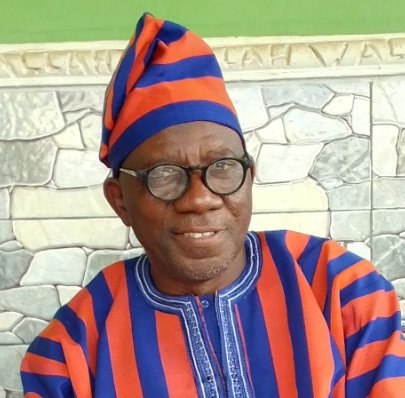
Above is a five-page lecture delivered by YUSUF OZI-USMAN, Editor-In-Chief of Greenbarge Reporters online newspaper and hardcopy magazine, at the Egbira Children Quiz competition, titled ASI-EGBIRA-VU, organized by the Abuja chapter of the Egbira Peoples Association (EPA), held at the Gwagwalada palace of the Odeyani of Egbira in FCT, on June 29, 2023
NB: e-copy of the Standard Ebira-English Dictionary can be obtained by downloading its app, via playstore.
Other books by the same author can also be obtained on Amazon thus:
ECHO FROM THE FOREST https://www.amazon.com/dp/B0BSV88JRB
PEOPLE AROUND NIGERIA’S PRESIDENT BUHARI https://www.amazon.com/dp/B0BZ58SXX9
NOT BECAUSE IT’S ME http://greenbreporters.com/downloads




 Chairman of the ECOWAS Authority of Heads of State and Government, Umaro Sissoco Embaló has said that actions taken so far by President Bola Ahmed Tinubu, barely a month in the saddle, have given hope to the rapid development of Nigeria and Africa.
 The Sultan of Sokoto, Alhaji Muhammad Sa’ad Abubakar III has commended President Bola Ahmed Tinubu for the “hard” policies, especially on economy, which his government has so far taken.
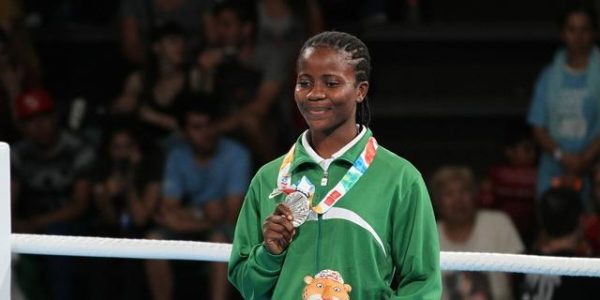 The first Nigerian female boxer to be crowned African Super Bantamweight Champion, Adijat Gbadamosi, is hoping for a shot at the World title in U.S. later in the year.
 A notorious bandit leader in Zamfara State, Dogo Gudali, has been killed by an Improvised Explosive Device (IED), planted by members of his terrorist group.
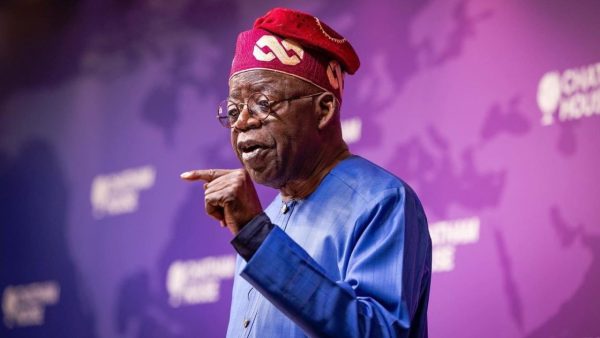 President Bola Ahmed Tinubu has narrated the obstacles he went through to win the November 23 Presidential election, including the cashless policy that was introduced at the eve of the election.



The Imperative Of Learning Native Language: Egbira In Focus, By Yusuf Ozi-Usman
Has anyone any notion that God, Almighty, commits mistake in creating anything?
In other words, has it ever crossed the mind of anyone as to the fact that God, Almighty, made mistake in creating you as a male or as a female or as black or as white, or as tall or as short, and above all, as an Egbira man or woman?
The extent to which humanity has confused God’s meaning of creating us the way we should be, through changing the colour of our skins, adding to our height artificially and so on, would be treated in a separate forum another day soon, but the trend where we are abandoning our language in preference to the so-called major languages, is disturbing and absolutely unfortunate. Yes, you can hide under an excuse that the early educational system of our land was dominated by teachers from the neighbouring Yoruba speaking West through the colonial masters then, and therefore, many Yoruba words infiltrated the original Egbira words. But, there’s no excuse for Egbira people to continue to sink deeper into other so-called major languages such as Hausa, Yoruba and so on, with such avid interest to the point of viewing our own Egbira language as inferior and a shameful venture for us to speak outside.
WHY THERE ARE TRIBES
If we agree that God Almighty never makes mistake in whatever he does, we can then come to the conclusion that He, God Almighty, did not make mistake in creating us into different tribes. Holy scriptures tell us that God Almighty created us, human beings into different nations, tribes and with different colours so that we would, first, appreciate His ingenuity and second, for us to cherish and love where (the particular tribe) He places us. Not appreciating or avoiding where God Almighty places you is obviously a way of inviting confusion into your life and the life of your generations ahead.
EGBIRA AS A TRIBE
And, fortunately, we find ourselves as belonging to that unique tribe as Egbira. A researcher just came up with the fact that Egbira is the ninth oldest tribe in Nigeria (meaning that the tribe is among the top ten oldest in the country). Egbira is not just a tribe, but a process, a culture, a tradition and a way of beautiful life; life of fulfilment.
Egbira, which descended from Egypt, belongs to the Kwa group of Niger-Kongo family, according to Professor Greenberg. Nupe, Gbari, Gade, Jukun are within the Kwa subgroup. However, Hoffman and Bendor in 1976, separated Egbira from Nupe and Gade and set it up as subgroup on its own.
Places where Egbira or a semblance of it is spoken locally are Okene/Okehi, Koton Karfe, Toto Umaisha, Keffi, Igara (etuno), Abaji, Mozum and reverine areas of Benue State as well as Wukari in Taraba State and other spotted towns and villages across Nigeria.
Anebira or Egbira (both plural and singular) are people from Bira, a Hamlet in the Northern Gongola valley. The tradition had it that Egbira adopted this name after their migration to the lower Benue valley as a mark of identity. The migration started in Gongola valley and ended in lower Benue valley. They formed part of the Apa group (the Jukun) who founded Kwararafa Confederacy, consisting of Pindiga, Kona and Kwararafa. The Jukuns were said to have migrated from Egypt in about the year 500 A.D. The Jukuns and Beriberi people of Kanem-Borno empire, who were neighbours, had cause to engage each other in a series of intertribal wars in the 17th Century. Jukun empire collapsed in 1700 A.D after losing the wars, and couple with famine and political unrest, various subnational interest groups (clan groups) dispersed. Among them were the Egbira, Igala, Tiv, Idoma, Nupe and Kaje.
Egbira, in particular, took off from Wukari and went through Ibi, Lunga, Lafia, Toto, Koton Karfe, Lokoja, Itobe, Idah, and Ajaokuta, Opete and settled at Eganyi, Okengwe and Igara.
The leader of the group (confirmed progenitor of modern Egbira) which migrated from Idah to Opete is called Itaazi, believed to be blessed with five children’ named Ugah, Ododo, Obaji, Ohizi and Ochuga who individually spread across the four corners of Opete and beyond, with many offsprings.
The main neighbouring languages of Egbira are Yoruba to the West, Igala to the East, Edo to the South and Nupe to the North. Of all these, Yoruba had more influence than others because, for one, Western education and missionary activities spread from the Yoruba people to Egbira. For example, the first set of schools – Roman Catholic Mission (RCM) and Church Missionary Society (CMS) spread from Yoruba areas. Most teachers in these schools were Yoruba and the medium of instructions for the first three years was Yoruba language, which explains why many words of Yoruba origin infiltrated into Egbira language.
The Yoruba even corrupted the original nomenclature of EBIRA with IGBIRA, whereas there’s no G and B forming a word together. In 1974, Ebira People’s Association (EPA) corrected the nomenclature to be EBIRA which means both GOOD CHARACTER and the tribal identity. However, a couple of years ago, other groups within the group from Ebira, Koton Karfe in Kogi State, from Igara in Edo State, Toto and Umaisha in Nasarawa, Wukari and Ibi in Taraba, from Abaji in the Federal Capital Territory (through the migrations) came together to form a block and named it EGBIRA. In doing the forming and renaming, the interests and rights of the congregating parts were taken into consideration and so represented, and had since been Gazetted.
UNIQUE WORDS AND NAMES OF EGBIRA
It is interesting to know that Egbira language is richer and more original than even English language. While English language is full of borrowed words from Latin, Swahili, Swedish Teutonic and other tribes across the world, Egbira language is 85 percent original, natural coinages from the beginning, however, with different accent amongst the confederating group (etuno, Igara, Koton Karfe, etc). In compiling the Standard Ebira English Dictionary (which is now in the market), I discovered that the only language in the world that is as original and comprehensive as Egbira is Arabic. Even the native Egbira names are very original and triple the number of English or Arabic names. In all, no fewer than 3,000 original Egbira words and 663 names native to Egbira are captured in the Dictionary, which I call “the book of the future.”
Some of the unique words and names in the Dictionary, with appropriate tone marks and dots, are as follows:
1
Si – love
Si – search for
Si – take/lift
Si – quietness
2
Ipaki – fresh cassava
echuka – dry cassava
3
ose – wife (singular)
ose – alligator pepper
ose – boxing
4
aare – farm
aare – sand
5
ahe – song
ahe – sorry (greeting)
ahe – is that so? (question)
6
Ogu – surrounding
Ogu – profit/gain
Ogu – hamattern
Ogu – possession, wealth
Ogu – blockage
SOME EGBIRA NAMES:
Oovavi
Ootuhwo
Eneyamire
Onozare
Omeneke
Otinawu
Ocheere
Ogegere
Okeeku
Temtem
Uhuwache
Iregu
Isasheyiwu
Ipemida
Apetewa
Apokiti
Asayihi
Ataba
Atuwaka
Avamiku
CONCLUSION
Successful literacy agencies have shown that a person will learn English or any other language much more quickly and more thoroughly if he has learned to read and write his mother tongue and express himself in it. The process of thinking in a second language is greatly helped through an adequate insight into one’s tongue.
As a matter of fact, why would a child born in London by British parents still has to go to school to learn English, and may fail to pass the subject at examination level? In other words, every language requires more than passive efforts to comprehend. For instance, a Frenchman, though may be perfect in his tongue, cannot automatically read English properly unless he is introduced to the English way of writing and pronunciation.
It is therefore a wrong notion for an Egbira person to assume or argue that because he speaks the language well and so, he has mastered it, especially when it comes to the nitty gritty of fluency in reading and writing. We must therefore take it that the ability to read English does not necessarily imply that we can immediately read and understand written Egbira without going through some formal ways of learning it.
In any case, if, according to history, Egbira was not conquered by the Jihad of Othman Dan Fodio of Sokoto because of formidable unity of purpose amongst the natives, why would the same Egbira subjugate themselves, willy-nilly, to enslavement of their language by other major tribes, i.e, Hausa, Yoruba, Fulani and so on. Why would the Egbira willingly and or unwillingly sell their birthright and that of their children and future generations? Why do Egbira take pleasure in embracing English language wholesale, and make their children to feel proud at being good in spoken and written English, while making them (children) to feel ashamed of reading and writing native Egbira, their language?
More questions begging for answers or actions, for the reversal of the frightening trend.
However, it is a thing of fresh hope to begin to witness this type of competition in the name of Egbira language, especially amongst the very young upcoming ones. And, therefore, to you the young ones sprouting out, fall, the great challenges of getting down to the basics for the revival and sustenance of Egbira, the beautiful, cherished language of the world, for the generations coming after you to benefit from.
It gladdens my heart therefore, to, as I crawl into old age, see you, the budding young ones, positively agitating to lighten Egbira language.
I pray that God Almighty will give you the strength, the courage, the zeal and all the wherewithal to bring Egbira language into the world reckoning; into the world stages in all ramifications (Amen).
Thank you profusely, my young ones and the oldies, for your attention.
Above is a five-page lecture delivered by YUSUF OZI-USMAN, Editor-In-Chief of Greenbarge Reporters online newspaper and hardcopy magazine, at the Egbira Children Quiz competition, titled ASI-EGBIRA-VU, organized by the Abuja chapter of the Egbira Peoples Association (EPA), held at the Gwagwalada palace of the Odeyani of Egbira in FCT, on June 29, 2023
NB: e-copy of the Standard Ebira-English Dictionary can be obtained by downloading its app, via playstore.
Other books by the same author can also be obtained on Amazon thus:
ECHO FROM THE FOREST https://www.amazon.com/dp/B0BSV88JRB
PEOPLE AROUND NIGERIA’S PRESIDENT BUHARI https://www.amazon.com/dp/B0BZ58SXX9
NOT BECAUSE IT’S ME http://greenbreporters.com/downloads