The Senate of the Federal Republic of Nigeria has described Professor Joash Ojo Amupitan as a scholar of integrity with distinguished public character. Confirming his appointment by President Bola Tinubu as new chairman of the Independent National Electoral Commission (INEC) today, October 16, the Senate commended the President for choosing him for the job. In his presentation to the Senate at the screening session, Professor Amupitan promised to restore public trust in the nation’s electoral system by strengthening institutional transparency and embracing modern technology to ensure credible elections. He also promised reforms that would improve logistics, staff training and digital transmission of results. The new INEC chairman vowed that henceforth “every vote must count in Nigeria.” The Senate President, Godswill Akpabio, in his remarks, congratulated the new INEC chairman, advising him to approach the office with impartiality and courage. “Professor Amupitan must prove to Nigerians that the integrity of our electoral process remains sacred.’ Lawmakers across party lines commended the nomination, citing Amupitan’s vast legal experience and academic pedigree. Before his appointment, he served as a Professor of Law and Dean of the Faculty of Law at the University of Jos, and is a Senior Advocate of Nigeria (SAN) with decades of legal scholarship and advisory work. His integrity and impartiality will be put to full test in the series of off-cycle elections that are still outstanding and importantly, during the preparations for the 2027 general elections. Professor Amupitan’s emergence signals the beginning of a potentially reform-minded era at INEC. His legal background and academic independence may help stabilise the Commission after years of public scrutiny and mixed performance ratings. Restoring voter confidence, safeguarding digital integrity and ensuring transparency in future polls will test both his leadership and Nigeria’s political will. If he delivers on his promises, Professor Amupitan would redefine INEC’s credibility in the eyes of Nigerians and the global democratic community.
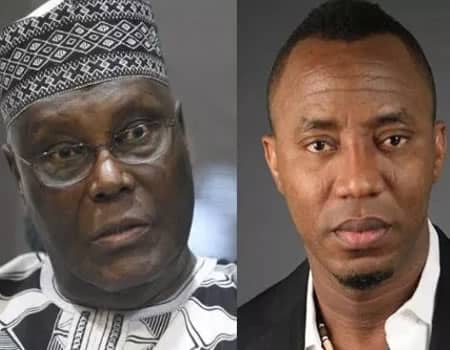
A group of Igbo businessmen based in the United States of America have raised concerns over the planned ‘Free Nnamdi Kanu Now’ protest being scheduled for October 20, describing it as a political ploy by 2023 presidential candidates, Atiku Abubakar and Omoyele Sowore, to derail the ongoing trial of the detained IPOB leader. The group, under the aegis of Njiko Amaka, in a statement by its chairman, Chief Emeka Ejidike, and secretary, Chief Okey Anosike, said that the protest is a “self-serving political stunt” by politicians seeking relevance after electoral defeat. “We are deeply worried by the rhetoric of politicians who lost relevance at the polls and are now trying to exploit the plight of our brother, Nnamdi Kanu, for cheap political points.” The group cautioned that the planned protest could undermine the trial process, which it said is finally progressing after years of delay. “Now that the prosecution has shown genuine commitment to speed up his trial, this is the wrongest of times to do anything that might jeopardize it.” The group accused Sowore of seeking attention through the protest while facing criminal charges of his own, and questioned Atiku’s sudden interest in Kanu’s case. The businessmen also queried why Atiku, who hails from the North, had not shown similar concern for Mohammed Usman, also known as Khalid al-Barnawi—the mastermind of the 2011 UN building bombing—who has been in detention since 2016. “Atiku ignored his brother al-Barnawi, who has been in detention since 2016, but suddenly found a cause in Nnamdi Kanu’s case. Only evil motives drive a man to cry more than the bereaved. The group asked Nigerians to disregard what it called the “self-serving antics” of Atiku and Sowore, insisting that Igbo leaders are already working on a political solution to Kanu’s case. “We have capable leaders—five governors, 15 senators, and many Representatives—who are engaging constructively. Even Governor Peter Mbah has assured that a political solution is being explored. We do not want fifth columnists to ruin this effort.”
An American based group known as The Future Platform, has called on the Nigerian Federal Government to save the country from the Internationaal embarrassment by moving fast to arrest the wanton killings of the citizens through the activities of bandits and other criminals. In a statement forwarded to Greenbarge Reporters online newspaper by the coordinator, Austine Dafe, the group cited recent incidents in Plateau, Benue, Kwara, Jigawa, Anambra and Kaduna states, where innocent people, both Christian and Muslims were attacked, worship centers burned and families displaced. “We strongly condemn these senseless killings and urge the Nigerian government to take decisive action to address the root causes of the violence and ensure the safety and security of all citizens. “The government must prioritize the protection of human life and hold perpetrators accountable for their actions. It’s crucial that we raise awareness about the situation in Nigeria and push for concrete actions to address the crisis. “We must stand in solidarity with the victims and their families, and demand justice and accountability from those responsible. “These acts of violence are not only a violation of human rights and religious freedom, but a stain on the conscience of our nation.The condemnation of the senseless killings in Nigeria has garnered international attention, with voices from the American Senate and Canada joining the call for action.” The group insisted that every Nigerian, regardless of faith, deserves the right to live in peace, worship freely, and feel safe in the communities. It said that the targeted attacks are unacceptable and must be met with swift justice and national outrage. “We call on the Federal and State Governments, Religious and community leaders to speak out boldly against hate, and to take immediate and decisive action to protect all citizens, investigate these crimes, and bring perpetrators to justice. This is not a time for silence. This is a time for moral clarity and courageous leadership. “We mourn the lives lost, stand with the grieving families and reaffirm our commitment to a Nigeria where every faith is respected and protected and for leaders to foster unity, peace and love. Enough is enough. The bloodshed must end.”
African philanthropist and business leader, Chief Tony Elumelu, has advocated a bold rethinking of Africa’s relationship with the world, in which there would be a shift from charity-driven models to one centered on investment, entrepreneurship and equal partnership Chief Elumelu who spoke at a high-level Africa-Europe summit focused on economic cooperation and sustainable development, insisted: “Africa needs partners, not charity. Our future will not be built by aid, but by investment, partnership and entrepreneurship.” He stressed that Africans must take the lead in driving their continent’s development, while global partners play supportive and collaborative roles. “The time has come to redefine the relationship between Africa and the world — one based on dignity, respect and shared prosperity.” Chief Elumelu, who is the chairman of the United Bank for Africa (UBA), said that Africa’s youthful population, abundant natural resources and growing innovation ecosystem offer immense opportunities for investors seeking sustainable and mutually beneficial growth. He emphasized the need to empowe small and medium-sized enterprises and young innovators as key to unlocking the continent’s economic potential and achieve inclusive development. Chief Elumelu, who has consistently championed entrepreneurship as the engine of Africa’s transformation. The summit brought together policymakers, investors and business leaders from across Africa and Europe to explore ways to deepen trade relations, promote sustainable growth and attract long-term investments.
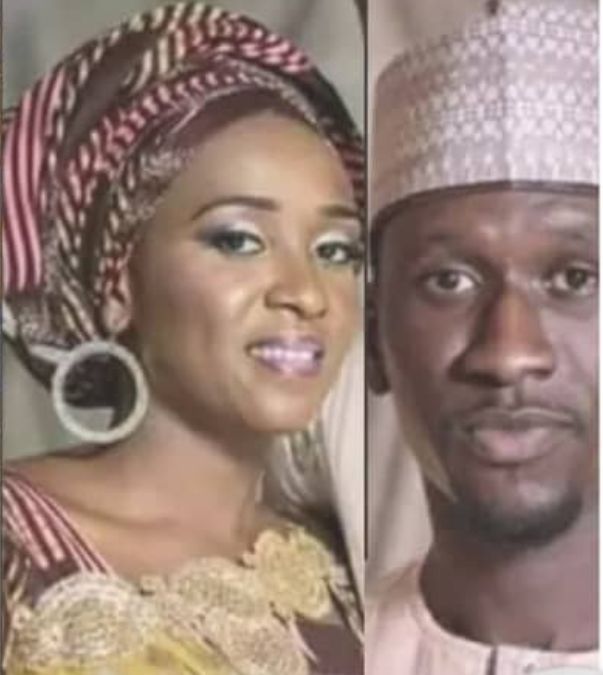
The family of the late Bilyaminu Ahmed Bello, who was murdered by his wife, Maryam Sanda, in 2017, has expressed deep pain and disappointment over the Presidential pardon recently granted to Maryam Sanda by President Bola Ahmed Tinubu under the Prerogative of Mercy. In a statement signed by Dr. Bello Haliru Mohammed, OFR (Dangaladiman Gwandu), on behalf of the family, the late Bilyaminu’s relatives described the decision as a cruel blow that has reopened old wounds and erased the justice that was painstakingly secured through years of legal battle. The family said that they had chosen silence and dignity since the tragic incident that occurred on Sunday, November 19, 2017, trusting Nigeria’s judicial system to deliver justice. They said that their faith was rewarded when the FCT High Court convicted and sentenced Maryam Sanda to death on January 27, 2020, a judgment that was upheld by both the Court of Appeal and the Supreme Court in 2020 and 2023, respectively. “Satisfied that justice had finally been served, the judgment provided some closure of sorts in the circumstance, if ever there could be one,” the statement read. The family said that though Maryam Sanda did not show remorse throughout the saga, but that they took solace in the court verdicts and moved on, “having painfully come to terms with the fate that life had thrust upon one of our own.” The family regretted that the Presidential pardon, which was among 175 granted to convicted persons, including some on death row had shattered their healing process and rendered the justice system hollow.
President Bola Ahmed Tinubu has made Nigerians to know that his son, Olewaseyi had, from early days of his life, shown the determination and a desire to create and lead. In a birthday message to Seyi, who turned 40 today, October 13, President Tinubu acknowledged that Seyi had walked his path with focus, courage and humility, and that he had done so with a heart that sought to build, serve and uplift others. The content of President Tinubu’s birthday message to Seyi goes thus: Today, as you turn forty, I thank Almighty God for your life and the man you have become. You have walked your path with focus, courage, and humility, and you have done so with a heart that seeks to build, serve, and uplift others. From an early age, you have shown determination and a desire to create and lead. I have watched you turn ideas into institutions and challenges into opportunities. In business and in service, you have shown that true success is not measured by wealth or power but by the impact we make and the lives we touch. Forty is a special age. It bridges youthful drive and the more profound wisdom that life brings. You have carried your name with honour and have remained faithful to the values of discipline, integrity, and hard work. Our entire family is proud of you. We are proud of the family you are building with Layal, your devotion as a husband and father, and your commitment to making a difference in your generation. As you celebrate this milestone, remember that your strength lies in what you achieve and how you inspire others to believe in themselves. May God bless you with wisdom, good health, and peace.Buy vitamins and supplements Happy 40th Birthday, my son. You have made us proud, and I know you will continue to make Nigeria proud. Your Dad, Bola Ahmed Tinubu, GCFR President and Commander-in-Chief of the Federal Republic of Nigeria Aso Villa, Abuja.
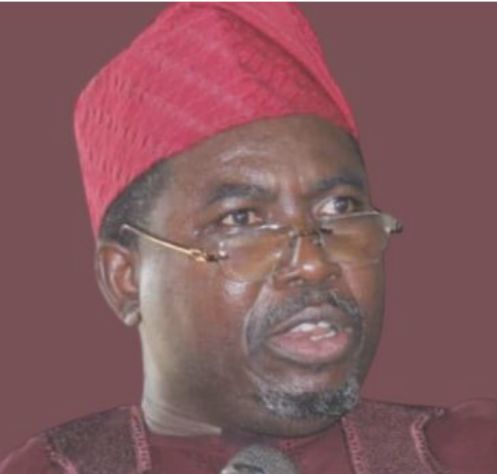
The Minister of Information and National Orientation, Mohammed Idris, has cautioned the newly elected President of the Guild of Corporate Online Publishers (GOCOP) Danlami Nmodu, his executives and members to tighten control on what he called “atrocious fake news peddlers.” In a congratulatory message to the new executive who were elected last week Thursday at the Annual General Congress of GOCOP in Lagos, the minister advised the leadership to prioritize the unity of the Guild through a harmonious corporate relationship that will stand the test of time. He emphasized the need for the Guild to remain vigilant in the face of the “atrocious effects of fake news, misinformation and disinformation threatening the credibility of the journalism profession. “As I congratulate Danlami Nmodu, it pleases me to urge him to run an inclusive leadership that guarantees the participation of all GOCOP members in sustaining the collective aspirations of the Guild. “Mr Nmodu, publisher of Newsdiary Online, with whom I have had a personal and professional relationship for many years, is a thorough journalist who has proved his mettle in journalism, and is deserving of such commanding heights.” Mohammed Idris advised the new GOCOP leadership to collaborate with the Federal Ministry of Information and National Orientation, as it champions media and information literacy across the country. “I am trusting Mr Nmodu, who has built a distinguished career in journalism molded in integrity, accountability, courage and resilience, also to bring the same to bear in collaborating with the government to uphold the values of media fidelity and literacy, especially in the fluid digital media space.” The Minister praised the immediate past President of the GOCOP, Dr. Maureen Chigbo, publisher of RealNews Online, identifying her efforts in “providing vibrant leadership to a galaxy of more than 100 online publishers and bequeathing a legacy of honour, dignity, credibility and remarkable growth of the Guild.”
Governor of the Central Bank, Olayemi Cardoso, has been picked to replace the nation’s Minister of Finance and Coordinating Minister of the Economy, Wale Edun, who is currently indisposed. Cardoso is therefore leading Nigeria’s delegation to the World Bank and International Monetary Fund Annual Meeting in Washington DC, which opens tomorrow, October 13. A statement today, October 12, from the presidency, issued by the presidential spokesperson, Bayo Onanuga, said that the Nigerian team would be made up of the Minister of State for Finance, Doris Uzoka-Anete. The key elements of the Annual Meetings of the world Bank include the Development Committee Plenary session on October 16 and the International Monetary and Financial Committee meetings on October 17. Other featured events include regional briefings, press conferences and fora focused on international development, the global economy and financial markets.
Nigerians were taken by surprise on Thursday, October 9, 2025, when President Bola Ahmed Tinubu announced the pardon granted 175 Nigerians, all convicted by the third tier of the government – the Judiciary (in a democratic setting). Out of the total number, 82 were granted full pardon, 65 had their sentences reduced while seven death-row inmates had their death sentences commuted to life imprisonment. There were also 15 ex-convicts, 11 of them deceased, including the Ogoni Nine, who received full pardon. Prominent among the convicts were the former member of the Federal House of Representatives, 62 year old Farouk Lawan, who was sentenced to five years in 2021 for Corrupt Practices and had served the sentence; 37 year Maryam Sanda, who was sentenced to death in 2020 for culpable homicide and had spent six years, eight months at Suleja Medium Security Custodial Centre. President Tinubu made it known that the reason for her pardon was that her family pleaded, and that it was in the best interest of her two children. “The plea was also anchored on her good conduct in jail, her remorse, and her embracement of a new lifestyle, demonstrating her commitment to being a model prisoner.” Also notable are 44 year old Nweke Francis Chibueze, who was serving a life sentence at Kirikiri for cocaine; 67 year old Dr. Nwogu Peters, who was Serving a 17-year jail term for fraud; 63 year old Mrs. Anastasia Daniel Nwaoba, who had already served her sentence for fraud as well as 58 year old Barrister Hussaini Alhaji Umar, who was Sentenced in 2023 to pay a fine of N150 million in the ICPC case, as well as 63 year old Ayinla Saadu Alanamu, who was sentenced to seven years for bribery in 2019 and has served the sentence. The presidential pardon, by the provisions of the Nigerian constitution 1999 (as amended) cannot be contested, for, it provides the legal foundation for presidential pardon, including for criminals and convicted politicians. This power is rooted in the “Prerogative of Mercy” vested in the President. Section 175 of the said Constitution grants the President the power of prerogative of mercy, which reads: The President may: (a) grant any person concerned with or convicted of any offence created by an Act of the National Assembly a pardon, either free or subject to lawful conditions; (b) grant a reprieve, that is, a temporary suspension of the execution of any punishment imposed; (c) substitute a less severe form of punishment for any punishment imposed; or (d) remit the whole or any part of any punishment imposed or of any penalty or forfeiture otherwise due to the Government of the Federation. As a matter of fact, the powers conferred on the President under subsection 1 are expected to be exercised after consultation with the Council of State. Still, the provision says that the President’s powers could be exercised in respect of: (a) persons concerned with offences tried by any court or tribunal constituted by federal law; and (b) persons convicted of any offence against the law of any State, but only after consultation with the Governor of that State. The constitution provides the scope of the Presidential Pardon to include pardoning any person convicted of a federal offence, e.g, corruption, economic crimes, drug offences, etc. Any person convicted under state law can be so pardoned provided the President consults the Governor of the state. Such persons include Politicians, military officers, or public servants convicted of offences, such as corruption or abuse of office. The civil rights of individuals so pardoned, including the right to vote, hold public office, or travel freely are restored. The conviction is forgiven, but not erased from record unless expunged by court order. In other words, a pardon does not mean innocence; it merely forgives the offence and cancels the legal consequences. While we in Greenbarge Reporters online newspaper are not arguing on the constitutional powers of the President to pardon, in consultation with members of the Council of State (made up of, among others, past Presidents and Heads of Government, present and past Chief Judges of the Nigerian, etc), we are however, appalled, like many Nigerians, by the obvious disregard for morality, integrity and sanity in the Tinubu’s arranged presidential pardon. It is curious that a woman who was convicted of murder and sentenced to death since 2020 (five years now) lived up to October 8, 2025 to enjoy the presidential pardon. This is true also of others who are serving various criminal jail terms, having been convicted by competent Court of justice, and were eventually released into what is supposed to be a sane society, in the name of clemency by the President. After pardoning Maryam Sanda, for example, is the president going to bring back to life, the husband she killed? Are the victims of others who are so pardoned going to be compensated? It is clear that while the families of those that were pardoned would be jubilating, the families of their victims would reel in fresh pain: they would feel cheated, to the point of feeling the reality of injustice in its naked form. To think that Farouk Lawal and others who were serving or have served jail terms over offences against the state and humanity are now free like birds in the air to vie for the governorship, and even presidential election in Nigeria makes the whole thing to look laughable and unimaginable. Presidential pardon to convicted politicians, some of who have already served out their jail terms clearly undermine anti-corruption efforts which the same government claims to be fighting. There is no running away from the fact that the latest pardons were politically motivated as the country heads to the 2027 general elections, and Presidential election in particular. An observer, perhaps in anger, vented out an opinion that soon, President Tinubu would come up with the idea of pardoning all the prisoners in the country, even including Nnamdi Kanu in his desperate bid to outdo all opponents in the 2027 election. With the way things are going, this point may not be far from the truth. Indeed, the presidential pardons are becoming so suspicious, to the point of undermining the rule of law, and conversely, giving criminals in and outside government, the hope and confidence that come what may, they would always come out of the temporary judicial convictions (for corruption and criminalities) victorious. As a matter of fact, the concept of Presidential pardon, especially with regard to the one President Tinubu had just pronounced, would go deeper to weaken public trust in the judicial process and anti-corruption campaigns, at best, and at worse, obliterate it (Public trust) completely. The public sanity is bound to suffer erosion!!!
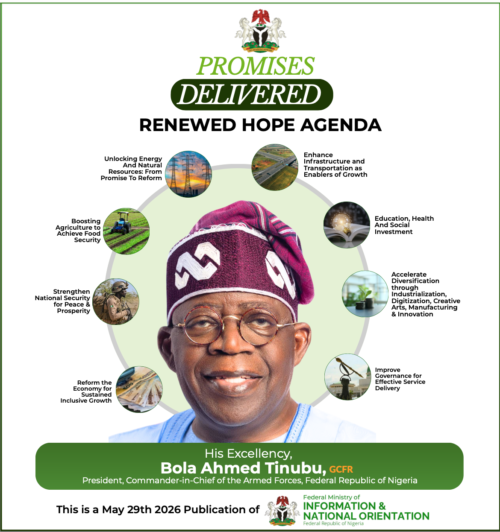
In his recent column titled: “New INEC Boss and Tinubu’s Visibilization of Northern Yorubas,” Professor Farooq Kperogi tried to frame President Bola Ahmed Tinubu’s appointment of Professor Joash Amupitan, SAN, as the new INEC Chairman within the usual ethnic politics narrative. While his piece may sound intellectual, it misses the simple truth about the philosophy behind President Tinubu’s leadership choices. They are guided by character, competence, and experience. From his early days in Lagos to his role today as President of Nigeria, Tinubu has remained consistent on one thing: Leadership must be oremised on capacity and results, not ethnic arithmetic. Back in Lagos, his team reflected the full map of Nigeria – people from different regions, faiths, and backgrounds – many of whom later became national and state leaders in various capacities. That same instinct for spotting talent, not tribe, still defines his appointments today. Professor Joash Amupitan, SAN, is far from a political lightweight. He is a seasoned academic, a respected legal scholar, and a man whose reputation for integrity and neutrality stands tall. Reducing his appointment to an ethnic or regional sentiment just because he hails from Kogi State and bears a Yoruba name is not only unfair, it is a disservice to national growth and development. It is an embarrassment to both the man and the President who appointed him. Our unrepentant disposition towards viewing every national appointment through ethno-religious jaundiced-eye has become a heavy burden on our unity and development as a nation. If a Northerner with a Yoruba name cannot be trusted to serve without suspicion, then the problem is not leadership, it is our unwillingness to rise above old divisions. President Tinubu’s pattern of appointments so far tells its own manifest story of competence over convenience, character over closeness, and delivery over demography. From the North East to the South South, from Christians to Muslims, from career technocrats to grassroots administrators, the spread has been balanced, well-thought. It is a deliberate for advancement over pettiness and myopism. And the goal is clear: results not rewards. Bearing in mind that our first and only constitutional identity is Nigerian, ethnicity – a product of accident of birth – may describe where we come from, but it should never define who we are or what we can achieve. The real test of leadership is not the language you speak but the values you live by. In appointing Professor Amupitan, the President once again reminds us that excellence has no region and integrity has no dialect. Those still trapped in ethnic thinking are the ones slowing down the unity we need. Nigeria’s strength has always been in its diversity, in the ability of a leader from Lagos to trust a scholar from Kogi, or a professional from Sokoto to work seamlessly with a counterpart from Enugu. That is the true spirit of the Renewed Hope Agenda; building a Nigeria where merit, not mistrust, defines progress. As we move forward, we must keep rejecting divisive narratives and instead amplify the dream of one united Nigeria, the same dream our founding fathers lived and died for. “Though tribe and tongue may differ, in brotherhood we stand.” Only then can we truly say that the promise of our great nation, under God and guided by justice, is finally taking shape in our time.
We use cookies on our website to give you the most relevant experience by remembering your preferences and repeat visits. By clicking “Accept”, you consent to the use of ALL the cookies.
This website uses cookies to improve your experience while you navigate through the website. Out of these, the cookies that are categorized as necessary are stored on your browser as they are essential for the working of basic functionalities of the website. We also use third-party cookies that help us analyze and understand how you use this website. These cookies will be stored in your browser only with your consent. You also have the option to opt-out of these cookies. But opting out of some of these cookies may affect your browsing experience.
Necessary cookies are absolutely essential for the website to function properly. This category only includes cookies that ensures basic functionalities and security features of the website. These cookies do not store any personal information.
Any cookies that may not be particularly necessary for the website to function and is used specifically to collect user personal data via analytics, ads, other embedded contents are termed as non-necessary cookies. It is mandatory to procure user consent prior to running these cookies on your website.




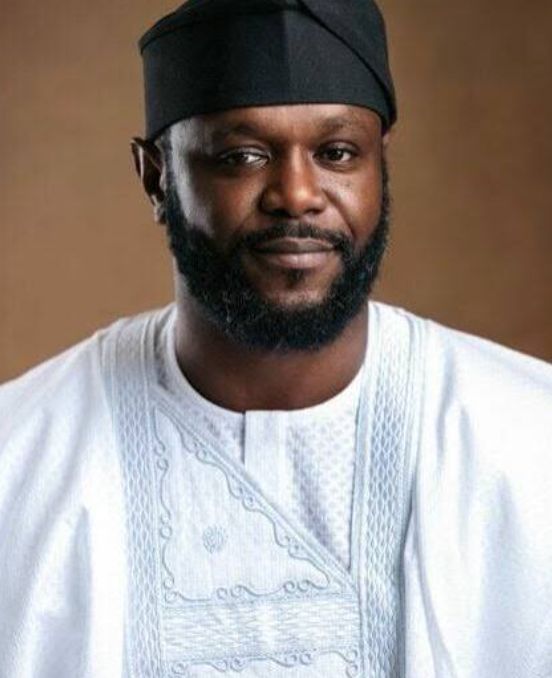
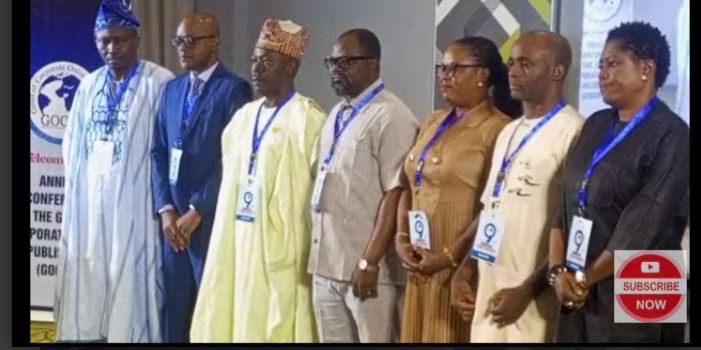 The Minister of Information and National Orientation, Mohammed Idris, has cautioned the newly elected President of the Guild of Corporate Online Publishers (GOCOP) Danlami Nmodu, his executives and members to tighten control on what he called “atrocious fake news peddlers.”



Appointments By President Tinubu Have No Ethnic Colouration, By Edward David Onoja
In his recent column titled: “New INEC Boss and Tinubu’s Visibilization of Northern Yorubas,” Professor Farooq Kperogi tried to frame President Bola Ahmed Tinubu’s appointment of Professor Joash Amupitan, SAN, as the new INEC Chairman within the usual ethnic politics narrative. While his piece may sound intellectual, it misses the simple truth about the philosophy behind President Tinubu’s leadership choices. They are guided by character, competence, and experience.
From his early days in Lagos to his role today as President of Nigeria, Tinubu has remained consistent on one thing: Leadership must be oremised on capacity and results, not ethnic arithmetic.
Back in Lagos, his team reflected the full map of Nigeria – people from different regions, faiths, and backgrounds – many of whom later became national and state leaders in various capacities. That same instinct for spotting talent, not tribe, still defines his appointments today.
Professor Joash Amupitan, SAN, is far from a political lightweight. He is a seasoned academic, a respected legal scholar, and a man whose reputation for integrity and neutrality stands tall. Reducing his appointment to an ethnic or regional sentiment just because he hails from Kogi State and bears a Yoruba name is not only unfair, it is a disservice to national growth and development. It is an embarrassment to both the man and the President who appointed him.
Our unrepentant disposition towards viewing every national appointment through ethno-religious jaundiced-eye has become a heavy burden on our unity and development as a nation. If a Northerner with a Yoruba name cannot be trusted to serve without suspicion, then the problem is not leadership, it is our unwillingness to rise above old divisions.
President Tinubu’s pattern of appointments so far tells its own manifest story of competence over convenience, character over closeness, and delivery over demography.
From the North East to the South South, from Christians to Muslims, from career technocrats to grassroots administrators, the spread has been balanced, well-thought. It is a deliberate for advancement over pettiness and myopism. And the goal is clear: results not rewards.
Bearing in mind that our first and only constitutional identity is Nigerian, ethnicity – a product of accident of birth – may describe where we come from, but it should never define who we are or what we can achieve.
The real test of leadership is not the language you speak but the values you live by. In appointing Professor Amupitan, the President once again reminds us that excellence has no region and integrity has no dialect.
Those still trapped in ethnic thinking are the ones slowing down the unity we need. Nigeria’s strength has always been in its diversity, in the ability of a leader from Lagos to trust a scholar from Kogi, or a professional from Sokoto to work seamlessly with a counterpart from Enugu.
That is the true spirit of the Renewed Hope Agenda; building a Nigeria where merit, not mistrust, defines progress.
As we move forward, we must keep rejecting divisive narratives and instead amplify the dream of one united Nigeria, the same dream our founding fathers lived and died for.
“Though tribe and tongue may differ, in brotherhood we stand.”
Only then can we truly say that the promise of our great nation, under God and guided by justice, is finally taking shape in our time.