Home Blog Page 332

People Voted For Obi Not Because Of His Integrity, Gov Wike Explains

Governor Nyesom Wike of Rivers State has said that the Presidential candidate of the Labour Party (LP), scored over six million votes in the February 25 election due to the fact that the Southerners were already yearning for one of them to be the President of Nigeria after the tenure of President Muhammadu Buhari.

Speaking on Channels Television’s Sunrise Daily programme, today, March 27, Governor Wike said that Peter Obi did not necessarily gathered the figures he got because of his alleged integrity.

He stressed that Peter Obi got a lot of votes from the Southeast because Igbo people have been yearning for presidency.

“First, it was because of the belief that the presidency should go to the Southeast. Secondly, some people wanted a younger person.”

Buhari Confirms Loyalty Of Minister Of State, Budget, Clem Agba, As He Clocks 59

Prince Clem Ikanade Agba,

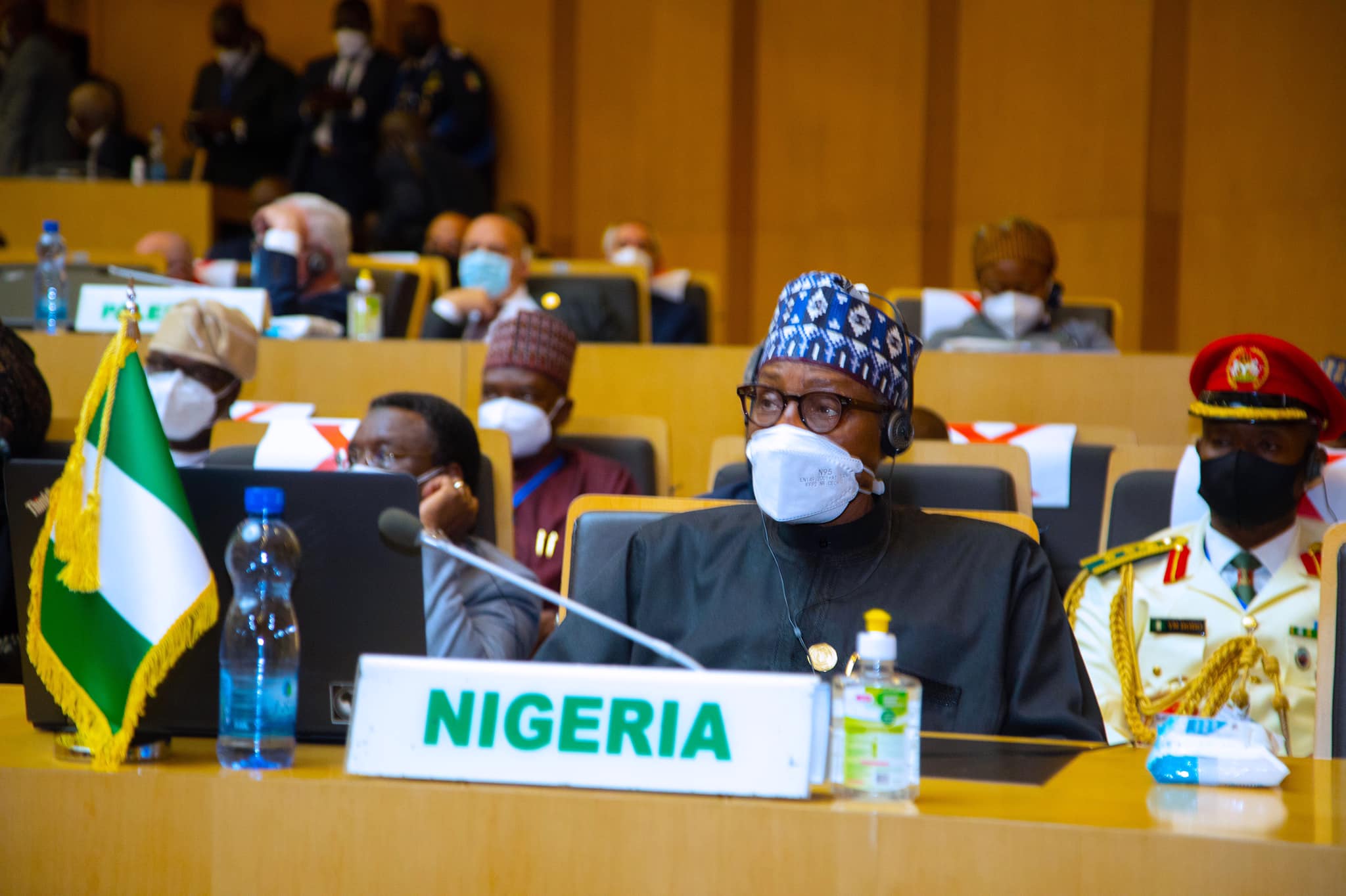
President Muhammadu Buhari has confirmed that Minister of State, Budget and National Planning, Prince Clem Ikanade Agba, has displayed loyalty to his government since 2019 when he joined the Federal Cabinet.

The President did the confirmation in a statement today, March 27, congratulating the minister as he celebrates his 59th birthday, scheduled for tomorrow, March 28.

The President also recognized the brilliance and innovativeness of the the minister, who said had served the nation in many capacities.

“As the minister turns 59, President Buhari affirms the loyal and noble roles of Prince Agba as a member of the Federal Executive Council (FEC) since August, 2019, where he has supervised national planning, early budget submission to the National Assembly and strengthening the Department of Monitoring and Evaluation in order to effectively drive the National Monitoring and Evaluation process.”

Buhari, in the statement by his spokesman, Femi Adesina, appreciated Prince Agba for dedicating his life to service of God, country and humanity, “leaving his well paid job at the private sector, to take up responsibilities as a Commissioner of Environment and Public Utilities and Ministry of Lands, Survey and Housing in Edo State, where he made an indelible mark including setting up the Edo Geographic Information Services (EGIS).

The President also acknowledged the kindheartedness of the minister, who set up the The Clem Agba Foundation (TCAF) to cater for the needs of vulnerable members of society, with great impact on funding of education and health for many.

INEC Fixes April 15 For Adamawa, Kebbi State Governorship, Other Elections

The Independent National Electoral Commission (INEC) has fixed Saturday, April 15, 2023 for the Adamawa, Kebbi State  governorship elections as well as National and State Assembly supplementary elections.

Kebbi and Adamawa States governorship elections were declared inconclusive by INEC with supplementary elections scheduled to hold in some polling units in both states.

Announcing this in Abuja today, March 27, the Chief Press Secretary to the INEC Chairman, Rotimi Oyekanmi, said that the decision to conduct the supplementary polls on April 15 was reached at the commission’s meeting.

“Arising from its meeting held today, the Independent National Electoral Commission has decided that all outstanding governorship, National and State Assembly supplementary elections will take place on Saturday 15th April 2023.

“A detailed official statement will follow shortly.”


Sacked PDP Boss Is Our Man, Gov Umahi Opens Up, Begs Tinubu To Integrate Him

PDP National Chairman, Ayu | Photo credit: Premium Times

The Ebonyi State Governor, David Umahi has said that the National Chairman of the Peoples Democratic Party (PDP), who has just been sacked by a court in Benue, Senator Iyorchia Ayu, worked for the victory of Bola Tinubu as the president-elect on the platform of the All Progressives Congress (APC).

Governor Umahi, who spoke today, March 27, at the commissioning of remodeled community secondary school, Okoro nu Odo, in Rivers State, said: ”I want to also thank the suspended Chairman of the PDP. He did very well because if he had accepted to resign, it would have been very difficult for the APC. So he is our man, and I commend him very, very well.

“And I am begging Wike that they should lift the suspension so that he can suspend many more of their leaders. We love what he has done, and so we commend him.

“I think Asiwaju must know that he worked for him and must also integrate him into the next administration.”

Governor Umahi, who has been elected as Senator under the APC,  was in Rivers State on the invitation of Governor Nyesom Wike for the project commissioning in the state.

 Source: Voiceof Naija.ng.

How Supreme Court Resolved Presidential Election On 25% Vote In FCT, By Olukayode Ajulo

An unwrinkled face is not good for a resounding slap. So it is somewhat indelicate for a lawyer who ought to be grounded in the ethics of the law profession to publicly criticize the opinions of other senior lawyers, who are revered to be authorities in their fields.

Afe Babalola, Gboyega Awomolo, Wole Olanipekun, J. B. Daudu, Lateef Fagbemi, Kanu Agabi, Oluwarotimi Akeredolu, J. K. Gadzama, E. C. Ukala, Yunus Ustaz Usman, Adeniyi Akintola, Emeka Ngige, Chris Uche, Dr. Onyechi Ikpeazu, Mike Ozekhome, Dele Adesina, J. S. Okutepa, Mahmud Magaji, Dayo Akinlaja, Ahmed Raji, Femi Falana, A. Mustapha, Ebun-Adegboruwa, and many hosts legends of the inner bar are jurists who have become oracles of constitutional law and whose opinions carry weight and speak volumes. For some of these oracles of law, their names have refused to leave the pages of our law reports.

And when they lend their respected voices to public issues, their words are taken as gospel by laymen who lack the qualification and the intellectual rigour to interrogate their opinions. So, to laymen, the opinions of these senior lawyers are Yeah and Amen!

However, this electioneering season has been an eye opening one for some of us. It has been a season of unraveling and miracles as to how some legal professionals have, either by deliberate action or absence of proper research, interpret one of the simplest provisions in our Constitution as regards election to the office of the President and requirements of the candidate for that highest public office in the land.

We have seen those that should know and those who have held exalted and enviable positions hold curious opinions on Constitutional issues that embarrass our industry and harass ones intellect.

For some of them, politics have been mixed with law in order to please certain quarters of the political class. But this is a dangerous mix. There is politics, and there is law. While they can sometimes intersect, they should not be muddled up when discussing pertinent legal issues that affect the nationhood of the country and the collective development of her citizens.

A number of emergency analysts of the law we have never heard of, or are known for being passive about crucial National issues suddenly appeared to become public figure in interpreting the laws in our Constitution as if they are a collection of formal and informal texts in an English textbook compiled for letter writing.

It is quiet even disturbing when some of my professional colleagues across border were analysing those colloquial interpretations here on one occasion of our group interactions. I must confess that I felt uncomfortable with many of their comments.

As I write this, I find myself grappling with the question: when is politics taken too far? This question has far reaching ramifications, because a honest answer to it will reveal that some senior lawyers give certain legal opinions they do not even believe in just because they have been tainted by politics. It is the common man on the streets that suffers this dangerous game of deliberate obfuscation and misinterpretation of our laws.

Lawyers cannot frown at the attitude of people flouting court orders and still be the ones selling the law of the land for a token on the altar of political standing. Deliberately misinterpretation of the law by a lawyer is a mockery of our Constitution and the legal profession and such character has a way of turning to hunt its maker.

It is therefore incumbent upon some of us who understand that the primary role of lawyers as ministers in the temple of justice is first and foremost the attainment of justice. And justice cannot be attained without truth.

Consequently, amidst the brouhaha surrounding the interpretation of section 134(2) of the Constitution of the Federal Republic of Nigeria and the multifarious explanations given by public commentators and senior lawyers alike, it is important to set the record straight and state the true position of the law, devoid of emotion and political chicanery.

The provisions of Section 134(2) of the Constitution of the Federal Republic of Nigeria, 1999 (as amended), particularly sub-paragraph (b) thereof have generated so much fuss and controversy in the past few days, especially after the conclusion and announcement of the winner of the recently concluded presidential elections.

Basically, there are two opposing sides in the arguments the above section has spawned: those who argue that for a candidate to be declared winner, he must get 25% of the votes cast in FCT (asides meeting other Constitutional criteria) and those who contend that a candidate need not poll 25% of the votes cast in FCT to be declared winner, so far as he meets other Constitutional requirements.

For the sake of clarity, Section 134(2) provides that:

(2) A candidate for an election to the office of the President shall be deemed to have been duly elected where, there being more than two candidates for the election –

(a) he has the highest number of votes cast at the election; and

(b) he has not less than one-quarter of the votes cast at the election in each of at least two-thirds of all the States in the Federation and the Federal Capital Territory, Abuja.

Even though the Federal Capital Territory, Abuja (FCT) is not a State properly so called, the Constitution has clothed it with the toga of a State. In other words, the FCT is treated like a State, and all the powers of a Governor in a State is vested in the Minister of the FCT. While the Houses of Assembly of the 36 States of the Federation legislate for each State respectively, the National Assembly makes laws for the FCT. Furthermore, while the States have their respective Local Government Areas, the FCT has Area Councils.

Pursuant to the above, Section 299 of the Constitution expressly provides that the provisions of the Constitution shall apply to the Federal Capital Territory, Abuja as if it were one of the States of the Federation. Section 299 of the Constitution has received the judicial imprimatur of the full panel of the Supreme Court in FAWEHINMI & ORS v. BABANGIDA & ORS (2003) LPELR-1255 (SC).

Hence, each time the draftsman intends to refer to the 36 States and FCT in the Constitution, it says “all the States in the Federation and the Federal Capital Territory, Abuja (FCT)”, bearing in mind that the FCT has also been clothed with the toga of a State.

Having made the above clarification, the “and” as used by the draftsman between “all the States of the Federation” and “the Federal Capital Territory, Abuja” in sub-paragraph (b) of Section 134(2) of the Constitution cannot be interpreted to mean that what applies to other States is inapplicable to FCT. Rather, it means that the FCT is on the same pedestal as the States of the Federation, even though it’s not a State properly so called.

So, the intention of the draftsman as regards Section 134(2)(b) of the Constitution is that, the candidate, in addition to having the highest number of votes cast at the election, must also poll not less than one quarter (25%) of the votes cast at the election in each of at least two-thirds of all the States in the Federation (36 States) and the FCT (a State kind of), thereby making it 25% of votes cast in at least 2/3 of 37 States. 2/3 of 37 is 24.6.

Drawing from the reasoning of the erudite jurist, Otutu Andrews Obaseki, JSC (of blessed memory), in the landmark decision of the full panel of the Supreme Court in AWOLOWO v. SHAGARI & ORS (1979) LPELR-653(SC), there’s nothing like 24.6 States, for a State is a geographical setting incapable of being divided.

Borrowing a leaf from the revered jurist, the construction that two-thirds of 37 States in the Federation (FCT inclusive) is 24.6 States may be correct in the abstract but in relation to the Constitution, it is impracticable. Where there are two possible meanings conveyed by the words of a statute or the Constitution, it is the most reasonable one that should be adopted. Where the other meaning leads to absurdity or evinces internal contradiction, that meaning should be dropped for the first as the legislature never intends to be absurd or contradictory.

The word ‘each’ in the sub-section (2)(b) of Section 134 qualifies a whole State and not a fraction of a State and to interpret it otherwise is to overlook the disharmony between the word “each” and the fraction “two thirds”. Two-thirds of thirty-seven (37), to avoid any disharmony, gives 25.

As a way of covering the base, the second school of thought contend that for a candidate to be declared winner, he must score 25% in the FCT (asides meeting other Constitutional requirements). If one agrees with this view, then it logically follows that if a candidate wins the entire 36 states of the Federation and polls the majority number of votes cast, if he fails to get 25% in FCT, then he cannot be declared winner. This cannot be the intendment of the draftsman, as the FCT cannot hold the entire nation to ransom.

So, once a candidate severally polls at least 25% of votes cast in at least 25 states, whether inclusive of FCT or not, he’s won the election so long he also has the majority of the votes cast all over the Federation.

The issue under reference has been before the Supreme Court, in 2003 in the case of Buhari Vs Obasanjo (2003) All NLR 168, the apex court in the land prophesied and held that if there’s any issue on the provision of Section 134(2), they’ll toe the part that accords with common sense. They further undertook that the court is bound to adopt a construction which is just, reasonable and sensible.

A calm perusal of the statement of the justices of the Supreme Court above reveals that they believe there is no ambiguity whatsoever in the provisions of section 134(2).

And like they opined, assuming without conceding that there is ambiguity, the Court is bound to adopt a construction which is just, reasonable and sensible.

For the sake of emphasis, the operative words are “just, reasonable and sensible.”

This then begets the question: is it just, reasonable and sensible to argue that a candidate who, for instance, won 36 States of the Federation and also polled the highest number of votes cast at an election but failed to score 25% of the votes cast in FCT, Abuja cannot be deemed the winner of the election? I think not. That would not be just, reasonable and sensible.

In Bakari v. Ogundipe (2021) 5 NWLR (Pt.1768) 1, the supreme Court held that by virtue of section 299(a) (b) of the Constitution, the provisions of the Constitution shall apply to the FCT, Abuja as if it were one of the States of the Federation.

If that is the case, why then would the FCT, Abuja be placed on so high a pedestal, like some lawyers have done, that it now supersedes other States of the Federation?

Buttressing further, If the provisions of the Constitution are to apply to FCT, Abuja as if it were one of the States of the Federation, then surely it cannot be ranked above other States of the Federation.

To steelman our arguments above, in Baba-Panya v. President, FRN (2018) 15 NWLR (Pt. 1643) 423, the Court held that the FCT, Abuja is to be treated like a State and it is not superior or inferior to any state in the Federation.

As a corollary, it would then be unjust, unreasonable and insensible to argue that scoring 25% of the votes cast in the FCT, Abuja is a mandatory Constitutional requirement, when no other State or even the entire States of the Federation enjoy this preferential treatment.

A reasonable, just and sensible interpretation of section 134(2) would then be that scoring 25% of the votes cast in the FCT, Abuja is like scoring 25% in any other State of the Federation.

That is just, reasonable and sensible.

OLUKAYODE AJULO, PhD, FCIArb. UK, is a Nigerian constitutional lawyer

I Did Not Regret Making Igbo Woman Finance Minister, Igbo Man CBN Gov – Obasanjo

Former Nigeria President Olusegun Obasanjo has said that he never regretted making an Igbo woman, Ngozi Okonjo-iweala his Finance minister and an Igbo man, Chukwuma Soludo the governor of the Central Bank of Nigeria (CBN) when he President, even to the anger of some people.

He recalled that soon after appointing Soludo as CBN governor, he (Obasanjo) found himself in an encounter with a dissenting voice.

“Somebody came to me and said, ‘Wow! You have ruined the economy of Nigeria.’

I said, ‘How?’ He said, ‘An Igbo woman, Minister of Finance; an Igbo man, Governor of the Central Bank? Then you have clearly completed the task of ruining the economy of Nigeria.’

“I don’t know why he said that, except for what I can call Igbophobia, and I don’t take that lightly. It remains, it persists.”

Obasanjo spoke yesterday, March 26, in Akwa, Anambra State capital, at an event to commemorate Governor Chukwuma Soludo’s one year in office chaired by Chief Emmanuel Iwuanyawu.

He said: “…when you have that type of thing that was said to me and the type of thing that you know is going on, as I have just called it, what do we do with it?

“I believe we have to go back to the scripture, which says we must conquer evil with good. And whoever you are, wherever people are afraid of you, you must make yourself friendly to those who are afraid of you and earn their friendship by being good to them, and that is what we have to do,” Obasanjo said.

He said from his personal experience, nothing wins friendship like one being friendly.

“The appointments of Okonjo-Iweala and Soludo were probably the best of the appointments that I made when I was president,” Obasanjo said.


Keep “Your Dirty Nose” Out Of Nigeria’s Affairs – Fani-Kayode Tells UK Envoy

“I would advise this Ben, who I am told is the Deputy High Commissioner of the UK to Nigeria, to keep his dirty nose out of our (Nigeria’s) internal affairs.

“I know that his preferred candidate did not win the presidential election but that does not mean he should cross the line and take liberties with us here. I wonder who the hell he thinks he is?”

These were the words of the Chieftain of the All Progressives Congress (APC), Femi Fani-Kayode, while reacting to comment by the British deputy high commissioner to Nigeria, Ben Llewellyn-Jones.

Llewellyn-Jones had on Sunday, in an interview with Nigeria Info FM expressed worries over the possible repercussions of derogatory comments being made by Fani-Kayode against opposition parties.

In a tweet on his official handle reacting to the Envoy, Fani Kayode, a former Nigerian Aviation minister, drew his attention to the fact that Nigeria is no longer their colony.

Enough Of Provocation, Afenifere Warns Ndigbo Leader Over His “Rascal” Statement

Chief Emmanuel Iwuanyanwu

A socio-cultural organisation of the Yoruba people of Nigeria, Afenifere, has drew attention to a statement by the Chairman of the Ohanaeze Ndigbo Council of Elders, Emmanuel Iwuanyanwu, describing Yoruba as “political rascal,” with a warning that it would not take it any more

In a statement yesterday, March 26 by its National Organising Secretary, Kole Omololu, Afenifere said: “we hereby call on Ohaneze to warn the Chief not to insult the Yoruba. We are a proud nation. We are a hospitable race. All these should not be interpreted to mean weakness. In fact, it is a sign of being civilized. Enough of the provocation.”

The statement said: “We have since reviewed the video recording of the event and our leadership will be reaching out to the leadership of Ohanaeze Ndigbo to seek clarification on why Chief Iwuanyanwu made the comment and whether his view is a reflection of what Ohanaeze Ndigbo indeed think of the Yorubas.”

It said that in line with the race’s ethos of good upbringing, it urged Yorubas, “and indeed all Nigerians, to remain calm and continue to show love to their Igbo compatriots and members of other ethnic nationalities.”

It noted that the Yorubas have a long history of association and partnership with Igbo counterparts and that “diversity is one of Nigeria’s strengths in the comity of nations and we should not allow politics, religion, ethnicity or anything else to divide us.”

“We urge all Yorubas to continue to relate well with all other ethnic groups in Nigeria and abroad. Our common humanity is more important than the divisive antics or careless remarks of any individual or group. The Yorubas are known worldwide as promoters of peace, unity, and orderliness. We should hold on strongly to those virtues in the interest of peace, progress, and prosperity in Nigeria and the world.”

In a short video clip that has since gone viral, Chief Iwuanyanwu, while speaking in Awka, Anambra State capital, at a forum to mark the first anniversary of the administration of the state governor, Charles Soludo, had angrily reacted to the reported clashes between Yorubas and Igbos in Lagos during the 18 March governorship election in the state.

The elder statesman had condemned the reported violence and informed the gathering of the efforts made by Igbo’s apex organisation to address it, even as he warned the Yorubas against further provocation.

As a statesman, Chief Iwuanyanwu was handed the microphone on Saturday for a remark, and he commended the governor for his work in the state.

He said the Council of Elders of Ohanaeze Ndigbo appreciates and supports him, “and we are very proud of you.”

However, after applauding the governor, the businessman turned politician delved into the reported tension between Igbos and Yorubas in Lagos, and assured the people of continued protection by the apex Igbo body.

For the avoidance of misinterpretation, the transcript of the short speech is reproduced below:

He said: “Now, I saw the various associations coming here from Lagos. I want to let our people in Lagos to know that on Wednesday, I called a meeting of the Ohanaeze Council of Elders Worldwide and we x-rayed the events in Lagos, and I want to tell you that people attended from America, Canada, Europe, and Nigeria. So I want those who are from Lagos to go home and tell those in Lagos that we have resolved that never again can we allow anybody to take the life of any innocent Igbo person. All of us are going to fight the person. We are going to fight the person. Never again!

“We are in Nigeria and we have invested in Nigeria, and our investments are so much. We are not going to take it when people tell us to go; we are not going anywhere. And I want to tell those who are in Lagos to realise that there is no war between us and Yorubas. Yorubas are just political rascals, and we are going to handle them.

“The elders have directed the Secretary General of Ohanaeze Ndigbo, Emuche… to set up a commission of inquiry, to find out things destroyed, people are going to pay.

“Meanwhile, I thank you for this opportunity, I’m very grateful and I want you to give Soludo support so that he will continue to concentrate on his job and do well. Thank you very much.”

Source: PREMIUM TIMES.

The Evils Of Complacency In Politics, By Abiodun Komolafe

Oftentimes, intrigues exist in political matrixes. Concepts such as political mass participation, collective demands, group identity and determination, and collateral damages could all mean different things to different people. It only depends on which side of the divide the definer pitches his or her tent. This unrestricted latitude and privilege to operationalize concepts and political ideas (especially in Nigeria) with _‘sidon look’_ response from the masses breeds complacency on the part of the political gladiators.   The salient issue, however, is that a little divergence from the standard definition or central course gnaws on both the integrity and legitimacy of the political institution.
Complacency comes in a surreptitiously slow-but-seamless manner. It doesn’t make noise even as it rubs in on people with definitive exactitude. Political activists become complacent when they are no longer thinking with the people, when they think they know it all, and when they are eventually disconnected from the people. A discernible disconnect between the people and the political party is always in a spiral form, thereby making it problematic to actually curb, or control. The central rule is: never take the people for granted! Political party is about the people, and for the people; not the people for the political party! To this end, the leadership of any party must stop thinking for the people, but with the people. These are the issues!
Once upon a time in Nigeria’s chequered history, the _National Party of Nigeria (_ NPN) was indeed a national party. During the 2nd Republic, NPN was the party to beat while other political parties appeared like Lilliputians. As time went by, Nigerians began to see it as a party of the elite, the powerful and the rich. So, the mass of the people, who obviously constituted the majority, started leaving the _‘One Nation, One Destiny’_ arrangement because, to them, they had nothing to show for being committed members of the party. After all, if you’re a politician of the NPN hue, you must be rich; otherwise, you’re just being used as cannon fodder. The perception went through the masses and it was well-received. Since politics is a game of numbers, the mass of the people left NPN – unknown to the party – for other political parties that showed some empathy towards the masses and the downtrodden.
Whereas Obafemi Awolowo’s _Unity Party of Nigeria_ (UPN) was determined to give the people, especially, the children of the poor ‘Free Education’, NPN started talking about ‘qualitative education’, which meaning was lost to the deaf ears of the masses. As far as they were concerned, what’s the meaning of ‘Qualitative Education’ when somebody else was ready to offer ‘Free Education’? In their opinion, that’s one sure way of deviating from the central theme of a political party. Thenceforth, complacency tampered with the destiny of NPN and its life never remained the same again! Sad therefore that the once-national party insisted on losing its vital contents! Ultimately, disintegration became its lot even before the military struck on December 31, 1983 and cleared whatever remained of NPN as a political party.
There was also a time when the _Peoples’ Democratic Party_ (PDP) boasted that it would be in power for the next fifty years. As fate would have it, Nigerians are now witnesses to what have become of its fortunes as a result of complacency, particularly, on the part of its leaders. Take, for instance, time it was in Nigeria when every nook and cranny of the country was overstuffed with the _‘Umbrella’_ men: strong in structure and texture, and powerful in shape and size!  It was such a rich, national party that it was at a time assumed to be the biggest party in Africa. To its handlers, power was a personal property that could last forever even as they had forgotten that ‘disservice power is like power thrown away.’ For the once-thriving party, the rest is history! _Labour Party_ (LP) came recently, allegedly, from nowhere, only to help put a ‘dying-slowly’ lid on the hope of the hitherto formidable party!
When PDP came, the general thinking was that the party would have learnt a lesson or two from its forebears because, in terms of structure and configuration, PDP and NPN were Siamese twins from the same father, the _Northern People’s Congress_ (NPC) of old; but, unfortunately, they went the same way! Now, and in our very eyes, PDP is disintegrating! Since the focus of its leadership is no longer the people but what each leader and/or handler can covet and convert to personal advantages, is it any wonder that members of the same political family are now fighting over positions? Aren’t they fighting over, even monetising privileges and personalise perks of office?
By the way, while the loss of the National Assembly seats by the _All Progressives Congress_ (APC) to the PDP in the just-concluded Osun State House of Assembly election was an expression of what had long happened and crystallized, the ‘25-1’, winner-takes-all choristers might have forgotten that the Ademola Adeleke swing wasn’t the first in the state’s rich political history. With the benefit of hindsight, Osun has once experienced the Olagunsoye Oyinlola ‘25-1’ swing (in 2003) and Rauf Aregbesola’s ‘26-0’ has also happened to the state (in 2011). Yet, the heavens did not fall! Anyway, this is a story for another day!
Complacency helps in pushing people away. On the other hand, it represents a gateway for renewal because it also causes the people to think. Complacency shrinks the horizon of political parties and spells their doom. When a system becomes unsystematic, aberration steps in and discipline is the first casualty as control becomes problematic. Besides, immediately an institution deviates from serving the purpose for which it was created, its social influence and functional relevance are bound to wane with time! Added to these is that power is functional; but, once it starts malfunctioning, its legitimacy is withdrawn. Needless to repeat that it is the reason men of unproven character who have taken over the control of political parties in Nigeria remain liabilities even as they portend ruination to our political system.
To sum up, there is a way leaders in the political space conveniently forget that performance and competence are key players in party sustainability and that no amount of political inducement or violence can help obliterate a cumulative history of non-performance. The principal reason for voting any government into power is to help bring the people up out of the valley of despair where the future is uncertain to the Next Level of development rooted in equality and the international character of mainstream socialism. Were Nigerians gainfully employed, the pressure wouldn’t have been that much on the politicians, and politicians would not have been taking the electorate for a ride! However, since the preys are seen as bootlickers even as the predators are tragically insensitive, one doubts if pressure can stop from being exerted on the politicians.
Above and beyond, since the politicians have always mistaken the masses for political irritants, it is doubtful if they (the politicians) will stop insulting the electorate’s collective intelligence with brazen ignominy. So, until there is a watershed in the life of each party, the way forward will always remain bleak! Normally, the credible way forward is total overhaul! Thankfully again, the introduction of the _Bimodal Voter Accreditation System_ (BIVAS) into Nigeria’s election process has now shown that her future is neither gloomy nor doomed.
May the Lamb of God, who takes away the sin of the world, grant us peace in Nigeria!
 •Komolafe wrote in from Ijebu-Jesa, Osun State, Nigeria (ijebujesa@yahoo.co.uk; 08098614418 – SMS only)_

Fallacies Of Religion, No-Man’s-Land In 2023 Election, By Hassan Gimba

One of the factors that determined the just concluded elections in Nigeria is religion. Oh, agreed, in our politics, religion has always been a factor in determining winners and losers. But never before was it flagrantly flaunted and made to be the driving force than in 2023.

Unfortunately, shepherds led their flocks by the nose, feasting on their ignorance of their faith. What happened buttressed the fact that where there is ignorance, charlatans make hay or, more succinctly put, the one-eyed leads in the country of the blind.

The constitutional democracy we are practising is neither Islamic nor Christian. No doubt, like many other things in life that are secular, certain fundamentals of religion guide it because humans know intuitively that certain things are right or wrong, but that’s that. And this is why the prophet of Islam, Muhammad (peace be upon him), who revealed that humans are born with the knowledge of God but circumstances make us what we are after, told us to listen to our hearts (conscience) even when a preacher does his preaching – or something akin to that, and this is what Sir William Blackstone called “Natural Law.

Sir William Blackstone was an English jurist, judge and Tory politician most noted for writing the Commentaries on the Laws of England.

This is how he defined natural law: “Thus when the Supreme Being formed the universe and created matter out of nothing, He impressed certain principles upon that matter, from which it can never depart, and without which it would cease to be… so that when He created man and endowed him with freewill to conduct himself in all parts of life, He laid down certain immutable laws of human nature, whereby that freewill is in some degree regulated and restrained, and gave him also the faculty of reason to discover the purport of those laws. These are the eternal and immutable laws of good and evil, to which the Creator Himself in all his Dispensations conforms; and which He has enabled human reason to discover, so far as they are necessary for the conduct of human actions… that we should live honestly, should hurt nobody, and should render to everyone his due.” (Christian History of the Constitution, 1960, p. 142)

He further said: “This Law of Nature, being coeval with mankind and dictated by God Himself, is, of course, superior in obligation to any other. It is binding over all the globe in all countries, and at all times: no human laws are of any validity, if contrary to this; and such of them as are valid to derive all their force, and all their authority, mediately or immediately, from this original.”

He went on to define Revealed Law as the law given to us by God in Scripture. He then clarified that all man-made laws must be in the right relationship with the previous two laws (Natural, Revealed). Scripture supports the order of the way God gave the law to humans, first natural, then revealed, then governmental.

Both Islam and Christianity believe humans, as a creation of God, have a right to life and to possess property. Humans have the right to self-defence to protect their rights to life and ownership of property, and it is considered jihad in Islam to do so.

And this is what, for example, Lockean (John Locke) Enlightenment philosophers call Natural Law. A good example is the killing of Abel by Cain. Was there a recorded religious law before the act that frowned on murder? Natural Law philosophers would tell you that Cain’s crime was depriving Abel of a natural right – the right to life.

And so, these are the bases of all religions and all governments, especially ours, formulated by man for man. They are based on our intrinsic understanding of what is good or bad, which syncs with the word of God but is not fundamentally based on it. This is why it is called secular, that is, not overtly or specifically religious. The word secular is derived from the old French seculer, from Latin saecularis, from saeculum ‘generation, age’, used in Christian Latin to mean ‘the world’.

And so this is why all types of religious adherents, including atheists, can contest together and against one another. Had the government been religious, there would never have been any argument. No Muslim is fit to contest for anything in a Christian government, just as no Christian would be eligible to contest with Muslims in an Islamic government.

Elsewhere, I observed that there is nothing religious about any of the tickets or candidates. To begin with, any position that is Islamic will not be contested for by a Christian and vice versa. And this is why no Muslim president will begin minuting on a file with the name of Allah or a Christian in the name of Jesus. Each one of them will preside over Nigeria according to the dictates of the manmade constitution. Nothing more, nothing less.

The two leading Muslim contenders have all identified with Christians. For instance, Atiku Abubakar has praised the agenda for national development brought to him by the Christian Association of Nigeria (CAN) while Tinubu has tried to assuage their fears over the Muslim-Muslim ticket by telling the Christians that his wife is a pastor and some of his children are Christians. His running mate, Kashim Shettima, had earlier told Muslims that their interests were to be taken care of by the Sultan of Sokoto while saying he had rebuilt thousands of churches as well as taken thousands of Christians to Jerusalem.

For these reasons, we should not allow ourselves to love or fight any of them based on their ethnicity or religion because none of these defines any of them. And this is why those being presented as the representatives of the competing religions neither know the religion nor practise it in its undiluted form.

And so, our government is not what the Imams, Bishops, or the Christian Association of Nigeria (CAN) want us to believe. They speak based on their interests and dance to the drumbeats of those who fill their pockets. It is only the Muslim/Christian who is ignorant (a jahil) of Islam/Christianity that will believe they are fighting Allah’s/Jesus’ cause based on the brouhaha we just witnessed.

Another contentious issue we witnessed was when some people designated Lagos as a “No-man’s-land”. They, therefore, swore to take it and make it theirs. Surely, that’s what happens when you appropriate what has no owner; you become the new owner. But is Lagos a “No-man’s-land” or does it have an “owner”?

Hassan Gimba is the Publisher and Editor-in-Chief of Neptune Prime.

Advertisement ADVERTORIAL
WP2Social Auto Publish Powered By : XYZScripts.com