Seye O’Dairo, the campaign director-general of the Peoples Democratic Party (PDP) gubernatorial candidate in Lagos State, Abdul-Azeez ‘Jandor’ Adediran, has dumped the party, just few hours to the State Governor and Houses of Assembly election, scheduled for tomorrow, March 18.
In a letter addressed to Adediran on Wednesday, the PDP former campaign director-general appreciated the gubernatorial candidate for giving him the opportunity to coordinate his campaign.
O’Dairo, who dumped the party, refused to state his reason for abadoning Adediran’s campaign on election eve.
“Please accept this as my formal resignation letter as the Director General of The Jandor for Governor Campaign Council.
“I have diligently worked tirelessly day and night since the inauguration of the campaign council.
“l appreciate the time and opportunity to have worked with you and the entire campaign team but have to formerly take my leave now and I hope this decision meets you well.”
Nigeria has closed all land borders into the country and across states ahead of the governorship and state Houses of Assembly elections, scheduled for tomorrow, March 18 across the country.
A memo by the spokesperson of the Nigerian Immigration Service (NIS), Anthony Akuneme, said that the 24-hour border closure will end at midnight on Sunday, March 19.
The directive, issued by the service Comptroller-General, Isah Idris, read: “The Federal Government has directed the total closure of all land borders effective from 00:00 hours on Saturday, March 18, 2023, to 00:00 hours on Sunday, March 19, 2023.
“Accordingly, all command comptrollers, especially those in the border states are to ensure strict enforcement of this directive.”
While the closure involves borders with neighbouring Cameroun, Niger, Chad and the Benin Republic, state governments will be responsible for the control of movement in and out of their jurisdictions during the 24-hour period.
The Ministry of Interior had earlier hinted today, that states will ensure the stoppage of the movement of persons and goods into their borders during the electoral exercise.
The March 18 governorship election, which will be conducted in 28 states, is the second leg of the 2023 general elections.
Nigeria’s First Lady, Aisha Muhammadu Buhari, has acknowledged the contributions of the African Union (AU) Commission to peace-building and conflict resolution on the African continent.
She commended the Commission for its efforts at strengthening the African First Ladies Peace Mission (AFLPM).
Aisha Buhari, who spoke today, March 17, when she received in audience, a 6-man delegation from the Commission, in Abuja, however, stressed the need for more women’s involvement, saying that women are the main victims of conflict.
The First Lady, who is the President of the African First Ladies Peace Mission, called for the recognition of first ladies as facilitators.
“Africa has many present and past First Ladies who are willing and ready to provide their services to this cause and all they need is a platform like the Africa First Ladies Peace Mission.”
Aisha Buhari said that the building of the headquarters of the Mission was conceived by Nigeria to provide such a platform that will also serve as a secure environment for women of all shades and ages to connect. The building, which she said is 90 percent complete, is to be commissioned in May 2023.
She thanked the President of the Commission, Moussa Faki Mahamat, for his positive contributions to the conflict prevention, management, and resolution in Africa.
The candidate of the Peoples Democratic Party (PDP) in the Kogi Central senatorial area, in the February 25 election, Natasha Akpoti-Uduaghan has dragged the Independent National Electoral Commission (INEC) and the winner of the election, Abubakar Saidku-Ohere of the All Progressives Congress (APC) before the election petition tribunal.
In the petition today, March 17, Natasha is requesting that the election petition tribunal should declare her the winner of the election, arguing that Ohere was incorrectly declared the victor by INEC.
She said that Ohere didn’t receive the majority of the legitimate votes cast at the election.
Natasha said that INEC incorrectly calculated the total votes she received at Ajaokuta LGA, resulting in the incorrect declaration of Ohere as the winner.
She said that the INEC wrongly computed voting data during the election, erroneously awarding 933 votes meant for PDP to APC.
She claimed that she received a total of 54,064 votes as opposed to the 51,763 votes reported by INEC, and requested that the tribunal proclaim her winner of the election.
The electoral umpire had declared Ohere as winner of the election as announced by Rotimi Ajayi, returning officer for Kogi Central senatorial district.
Ajayi declared that Ohere got 52,132 votes against Natasha’s 51,763 to clinch the seat, a difference of 369 votes between them.
Presidential candidate of the Peoples Democratic Party (PDP) in the February 25 election, Atiku Abubakar has cautioned political leaders across the country, especially in Lagos State to desist from actions that would promote election violence, such that can compromise peace and unity and democracy in the country.
Atiku specifically frowns at how lackeys of political leaders in Lagos State have continued to make ethnic slurs aimed at intimidating voters in the state.
“I have watched with profound disdain a certain video in circulation where some persons known to be associates of the leaders of the ruling party in Lagos State are issuing threats against other ethnic groups in the build up to the Governorship and State House of Assembly election in the state tomorrow.
“I condemn this uncivilized behaviour and also condemn the criminal silence of the security agencies and the political leadership in Lagos State and Abuja on this development.”
Atiku insisted that every democracy is as virile as the culture of the electoral system that governs it, saying: “the democracy that we fought for and operate in Nigeria thrives on the principle of free and equal participation.
“Beyond that, I find it morally wrong and repugnant for political actors to make broad day incitements against a particular ethnic bloc, in an attempt to intimidate them from voting their choice candidate.
“It is not enough to talk about the promise of a free and fair election. The actions that we take prior to Election Day must have the integrity of a badge of honour.
“It is therefore on this note, that I specifically call on security agencies in the country to ensure that politicians and their protégés submit to the rules of democratic fair-play across the country, especially in Lagos State, for the sake of decency and the promotion of peace and unity.”
“Anybody that wants to disrupt the system (governorship and State Houses of Assembly elections across Nigeria tomorrow, March 18) should be ready to die.
“Anybody that wants to die should come out and disrupt the system.
“If you love your life, keep away, cast your vote, go home and wait for the result.”
These staccato warnings were handed out to political thugs today, March 17, by the Deputy Inspector General of Police in charge of the South-East, John Amadi.
He spoke in Umuahia, while addressing officers of the state command at the Police Officers’ Mess, Umuahia, capital of Abia State..
The governorship and state Houses of Assembly elections will hold in 28 States across Nigeria.
The Presidential candidate of the Labour Party (LP) in the February 25 election, Peter Obi has distanced himself from any planned nationwide protest by Obidients.
He said: “My attention has been drawn to social media postings suggesting that a nation-wide groundswell “#ENDINEC”, “#ENDNigeria” Protest is being planned by the Obidients. We are aware that those postings are being orchestrated by the Opposition.
In an official Twitter handle today, March 17, Peter Obi said that he must reclaim his stolen mandate in due process, regardless of the distrust many may have about Nigerian Judiciary.
“My position is clear: Without prejudice to constitutional dictates on freedom of speech and freedom of assembly, I have publicly stated that in the matter of reclaiming our stolen mandate, we shall do so robustly, via the Courts and Due Process.
“Regardless of the misgivings many may have about our Judiciary, we must strive to build strong and resilient institutions, of which the Judiciary is one.
“As a firm believer in the separation of powers between the three arms of government, I am conscious that every so often, the Judiciary is called upon to vindicate itself on epochal national public-interest issues. The matter presently before the Presidential Electoral Tribunal (PET) is one such litmus test case.
“Therefore, we are committed to pursuing Due Process in an unfettered manner. That is our primary and priority option.”
The Executive Vice Chairman of the Nigerian Communications Commission (NCC), Professor Umar Garba Danbatta has said that the Commission has remained steadfast in its mandate to strengthen consumer protection while safeguarding the interest of telecom consumers.
Professor Danbatta, who spoke on March 15, in Abuja, at the 2023 World Consumer Day, said that in addition to continuing to implement the policy that ensured improved access to broadband connectivity, the Commission, through Nigerian Communications Commission’s Computer Security Incident Response Team (NCC-CSIRT) constantly alerted consumers to cyber threats that could have led to the compromise of their financial profile through the execution of malicious codes by threat actors.
He said that by the time cashless banking fully took off in late 2023, the connectivity platforms on which electronic transactions ride have become robust to the extent of being able to absorb the surge in demand for cashless transactions.
Part of the speech of the NCC boss is reproduced thus:
Arising from the successes in implementing initiatives to realize last year’s theme, the Commission is poised to realize the theme for this year, which is “Empowering Consumers through Clean Energy Transition”.The theme is geared towards delivering a smooth transition for consumers experiencing a high cost of living as the globe responds to the ongoing energy crisis caused by supply and climate issues. This theme is very relevant given Nigeria’s recent licensing of the 5G spectrum networks, which consume twice as much energy as 4Gs, although they are more energy-efficient per gigabyte.
Increased Demand for Energy Consumption
With the recent licensing of the Fifth Generation (5G) spectrum, Nigeria will witness an increased deployment of telecom infrastructure to satisfy the wireless service coverage requirement for 5G services. This anticipated growth in the number of 5G coverage will trigger high demand for data services which will result in increased energy consumption for the network infrastructure especially the Base Transceiver Stations (BTS), Internet of Things (IoT), 5G Customer Premise Equipment (CPEs) and mobile devices for example. This requires the industry to look for green and sustainable power solutions required for the connectivity of IoT devices and network optimisation.
All over the globe, telecom companies are among the biggest energy users, as a result of the stiff industry competition which causes them to try to satisfy their consumers by providing higher-speed networks. With the rising utility costs, it is critical for companies to reconsider the sustainability of their operations by lowering the operational impact on the environment. This is more so because it has been found that implementing energy efficiency measures could potentially reduce the operating costs of telcos by up to 20%.
Some of these energy-efficiency measures include the redesign of the Radio Access Networks (RAN) of Base Stations which were initially built to maximise connectivity, not energy efficiency. More than 75% of the time, the radio base station resources remain unused because of the hardware components activated at all times to transmit system information and synchronisation and reference signals. Therefore, to avoid waste heat, some of 5G’s newest RAN is equipped with an energy-saving measure allowing for the automatic switching of components. Some other energy efficiency measures can also include the use of renewable energy sources (hydrogen, wind, solar etc.) to supply the energy needed.
Renewable Energy Option
The Commission, as a responsive world-class organization, has been proactive in responding to the realities and challenges posed by the impact of using fossil fuel as a power source in the telecommunications industry. In this regard, the situation in Nigeria is peculiar. Owing to the overall energy challenges of the nation, the fifty-four (54) thousand BTS scattered across the countrydepend on diesel generators with the attendant noise and environmental pollution. Some of these BTS operate on diesel generators for 24 hours across seven days of the week in some locations. Therefore, transitioning to a renewable energy source like solar power will significantly reduce the menace of pollution from individually-powered generators. This will be zero carbon emission from the BTS just as noise pollution would be a thing of the past.
MNOs and the need for energy-efficient networks
Consequently, to minimize the environmental impacts of climate change caused by carbon emissions, telecom network providers need to come up with a modern and more energy-efficient network. This includes the use of Solar-powered Cells, wireless electricity or a hybrid system to replace higher energy-consuming equipment that will lead to a reduction in capital expenditure (CAPEX) and operational expenditure (OPEX) and by implication, a reduction in service costs to consumers.
Transitioning to renewable energy is predicted to result in a lower cost of operation as operators will be able to save on the cost of diesel, which accounts for a large chunk of the costs incurred by these licensees. The competition that the Commission consistently promotes among industry players has a natural consequence of the savings on the cost of diesel passed on to consumers, which would potentially result in lower prices for services.
Therefore, I want to use this opportunity to call on MNOs and Original Equipment Manufacturers (OEMs) to come up with innovations in sustainable energy in line with the International Telecommunications Union (ITU) Recommendation ITU-T L.1380 on smart energy solutions for telecom sites’ performance, safety, energy efficiency and environmental impact. This is vital to address the challenges of climate change and environmental degradation.
In this regard and for the industry stakeholders, especially consumers, to benefit from the advantages of renewable energy, the Commission is working on a policy to encourage the adoption of renewable energy sources by operators. When operational, the Policy will ensure that using clean energy sources for power has the potential to resolve the three key needs of the telecom industry, namely: reduction in diesel usage; expansion of telecom infrastructure to off-grid areas; and reduction in carbon emissions.
Collocation and Infrastructure Sharing Framework
The Policy on renewable energy in the telecom sector is an additional layer of other policies that contribute to protecting the environment. In recent years, the Commission introduced a regulatory framework on infrastructure sharing and collocation among the licensees which has encouraged operators to fully maximize their already-deployment infrastructure.
By sharing infrastructure, some operators do not need to entirely build a telecoms site in an area where another operator had deployed one. With the challenge of inadequate public electricity supply in Nigeria, telecom companies rely on diesel-powered generators to keep their telecom sites live round-the-clock. A regulatory framework such as infrastructure sharing, and collocation is helping in this regard and the Commission has recorded appreciable adoption of this regulation.
Factoring in energy efficiency in Type Approval
Another regulatory initiative in this regard is NCC’s Type Approval Regulations. For the sake of educating our media stakeholders, Type Approval is an official authorisation by the Commission prior to the use or supply of an Equipment Type in Nigeria. Our Type Approval of devices factors in energy efficiency, among others, which ensures a reduction of power consumption. It also ensures that Radio Frequency devices used in Nigeria operate effectively, without causing harmful interference and otherwise comply with the Commission’s technical requirement prior to importation or marketing.
ICT competitions focusing on renewable energy
The annual tech innovation competitions we organize for young innovators in Nigeria also make considerations for inventions that address the challenges of renewable energy. Some of the entries submitted in this regard are in the process of being commercialized as the innovators are seeking investors to make their discoveries available to the public. The Commission will continue to support research and innovations that contribute to transitioning to renewable energy sources.
Regulations on e-Waste
Also connected to NCC’s regulatory efforts in dealing with issues of sanitizing our environment is its efforts in 2019 to commence activities that will result in the formulation of a Regulation on E-Waste in Nigeria. Today, the global concern for the regulation of e-waste is two-pronged. First, is the acuteawareness of the hazardous properties and the potential risk to human health, as wellas their capacity to degrade the environment. Secondly, is the business case and vast Potential for wealth creation in recycling e-waste into more benign and productive uses.
In line with its regulatory mandate and to keep pace with efforts at managing e-waste-related issues, in a manner that reduces cases of indiscriminate burning of electronic devices with the potential for increased carbon emission in the environment, the Commission has been working, with other relevant agencies, to develop a Regulations on E-waste. The Regulations will represent a holistic intervention aimed at providing clarity and delimitingthe responsibilities of various stakeholders in the e-waste value chain within the Telecommunications industry. While the proposed Regulations are industry-specific, they, nonetheless,key into other initiatives at national and international levels.
Distinguished ladies and gentlemen, I wish to state that in the course of the year, the Commission’s Consumer Affairs Bureau (CAB) will sensitize telecom consumers about these interventions aimed at making the environment better for all of humanity. The CAB will carry this out as part of its Consumer Education mandate, with a significant part of this effort dedicated to providing information that equips the consumer to thrive in a world that has embraced digital finance.
Through its outreach programmes, which have continued to re-tool to reflect existing realities and trends, the CAB will use its consumer-centric initiatives such as the Telecom Consumer Parliament (TCP), Telecom Consumer Town Hall on Radio (TCTHR), Telecom Consumer Conversations (TCC) as well as social media platforms and Consumer Portal to sensitize consumers on how renewable energy benefits them and their role in achieving industry transition to it in the interest of the environment.
The CAB will develop and produce various consumer education materials such as Flexi and Roll-up Banners, and Handbills, and update its Consumer Handbook to include the message about renewable energy.
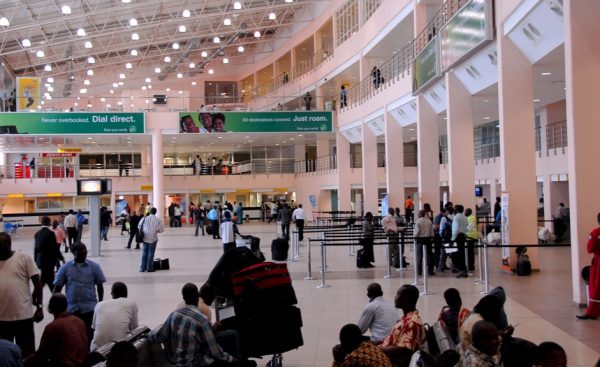
Ladies and gentlemen, as part of activities marking 2023 World Consumer Rights Day, the Commission is today launching itsTelecom Consumer Assistance, Resolution and Enquiries (TELCARE) Desk, in the Arrival Lounge of the Nnamdi Azikiwe Airport Abuja. The TELCARE Desk in Abuja will be a pilot as we plan to set up the desk at strategic locations across the country to provide information to telecom consumers.
The TELCARE Desk serves as an additional platform to receive and facilitate the resolution of consumer complaints; provide a meansthrough which consumers and citizens can make inquiries on consumer issues; provide a platform for advocacy on any thematic consumer issue or concerns; to further enhance awareness of the Commission’s activities.
Conclusion
Distinguished members of the NCC Board of Commissioners, Directors, and Staff of the Commission, respected stakeholders in the telecommunicationsindustry, as the global community celebrates World Consumer Rights Day (WCRD) 2023, the Commission is affirming that the theme of this year will form part of the consideration of the Commission’s regulatory mandate. We are committed to responsibly using the world’s resources, including protecting the environment by supporting the industry to transition to renewable energy.
Thank you.
Professor Umar Garba Danbatta (FNSE, FRAES, FAEng, FNIEEE)
President Muhammadu Buhari has said that he recently signed into law, the Business Facilitation Bill for the purpose of hastening the nation’s economic growth and creation of jobs.
According to him, the Business Facilitation Bill is what Nigeria needs to have vibrant and successful small and medium enterprises.
President Buhari, who spoke today, March 16, when he received the Governing Council and members of the Institute of Directors, led by its President and Chairman, Dr. Mrs. Ije Jidenma, said: “I was particularly interested to learn that you not only cater to large corporate, but are aware that for any economy to grow and create jobs, we need an equally vibrant and successful small and medium enterprise sector.
“This administration has, despite the difficult times brought upon us by a variety of external shocks, done much to ensure survival and development of SMEs.
“It is also my pleasure to share with you that your visit comes just a month after I signed into law the Business Facilitation Bill which eases various constraints for micro, small and medium sized enterprises. I am confident that this act will go some way in improving our business environment especially for the MSME’s.”
President Buhari congratulated the Institute on attaining the milestone of 40 years, saying that its commitment to nation building, stressing the values of transparency and good business ethics. He urged all stakeholders to recognize the noble roles that the Institute can play in the provision of the support base for the development of the economy.
“Let me congratulate the Institute on attaining this very important milestone of 40 years in existence. This is certainly a proud moment not just for the Institute, but for the nation as it signifies your commitment towards the objective of improved corporate governance, ethical business practices, improved corporate governance and transparency.
“These values are not just important pillars in the private sphere. They are also the keys to success in governance in the public sector, where the people have handed to us in trust, the responsibility to lead, guide and protect them.
“As our economy and conversely our private sector continues to grow and evolve, it behooves all stakeholders to recognize that such a resourceful institution not only exists, but is equipped and capable of providing the necessary support and development for the country.”
In her remarks, Dr. Jidenma noted that the reforms executed in various sectors of the Nigerian economy in the past eight years have increased expectations on the performance of business leaders and boards of public sector organisations.
This, the President of the Council noted, has made the Institute poised to sustain its leadership role in the orientation and capacity development for these Directors so that they can deliver on the mandates given to them.
Dr. Jidenma stated that the Institute had gained insights on areas that needed further action towards being ‘Chartered,’ and having interfaced with the National Assembly and relevant stakeholders, requested for the President’s kind consideration and assent when the Bill gets transmitted to him.
Also today, March 16 President Buhari, while receiving in audience, Management of the Code of Conduct Tribunal, led by the Chairman, Danladi Yakubu Umar, said that the foundation laid by his government in the war against graft would be sustained by successive governments in the country.
The President insisted that corruption remains an existential threat to the nation, describing the Code of Conduct Tribunal as “an important tool in our fight against corruption over the last seven years.”
According to him, such frontline agencies, “which are in the trenches, are relied upon to demonstrate that the government means what it says and remains committed against corruption in all its forms.”
“It is our hope that the foundation which has been laid by this administration will be carried forward and continued, as the issue of corruption remains an existential threat to all nations.”
President Buhari recognized the sacrifices being made by the Code of Conduct Tribunal and similar agencies in the midst of very challenging economic and revenue shortages, and pledged innovative and new models of financing very important agencies and work programs that are critical.
The Tribunal Chairman, Danladi Umar, commended the Buhari administration for the salutary impact it has made in the area of infrastructural development, agriculture, and provision of social services, among others.
He said that the Tribunal was hampered by funding challenges, poor staffing, and appealed for intervention of the President.
The Governor of the Central Bank of Nigeria (CBN), Godwin Emefiele, has advised the Governors of Central Banks and other African financial sector regulators to be more vigilant in their regulatory and supervisory roles to forestall any run on banks in their countries.
Emefiele, who spoke yesterday, March 15, at the opening of the 2023 African Central Bank Conference in Johannesburg, South Africa, advised central banks on the continent to draw lessons from the recent failure of Silicon Valley Bank (SVB) and Signature Bank in the United States of America, by putting in place regulations that will prevent any run on banks in their countries.
Speaking on the current global dynamics and specific policy developments in Nigeria to address emerging shocks, Emefiele, said that the threats posed to the financial system necessitated the release of new guidelines and regulations to tackle potential infringements and, in the process, protect depositors’ funds as well as promote greater transparency in the sector.
According to him, regulators must be alive to their responsibilities by ensuring that banks under their regulatory watch are financially healthy and do not suffer a similar fate as the Silicon Valley Bank, which,until its collapse recently, catered to many of the world’s most powerful tech investors.
Topics discussed at the conference, declared open by the Prime Minister of Namibia, the Rt Hon. Saara Kuugongelwa, centred around “African Solution for African Problems” and “Africa’s Seat at the Table,” among others.Other deliberations at the two-day confab, also addressed by Lesetja Kganyago, Governor, Reserve Bank of South Africa, bordered on “Calibrating for a New World Order”and “Unlocking Development Finance and Mobilising Institutional Investors for Development in Africa.”
We use cookies on our website to give you the most relevant experience by remembering your preferences and repeat visits. By clicking “Accept”, you consent to the use of ALL the cookies.
This website uses cookies to improve your experience while you navigate through the website. Out of these, the cookies that are categorized as necessary are stored on your browser as they are essential for the working of basic functionalities of the website. We also use third-party cookies that help us analyze and understand how you use this website. These cookies will be stored in your browser only with your consent. You also have the option to opt-out of these cookies. But opting out of some of these cookies may affect your browsing experience.
Necessary cookies are absolutely essential for the website to function properly. This category only includes cookies that ensures basic functionalities and security features of the website. These cookies do not store any personal information.
Any cookies that may not be particularly necessary for the website to function and is used specifically to collect user personal data via analytics, ads, other embedded contents are termed as non-necessary cookies. It is mandatory to procure user consent prior to running these cookies on your website.