Home Blog Page 36

International Press Institute Calls For Halt To Series Of Journalist Harassment In Nigeria

Former President of the Guild of Corporate Online Publishers, Musikilu Mojeed | Photo credit: Premium times Nigeria

The International Press Institute (IPI), Nigeria, has called for immediate halt to the rising cases of harassment of journalists by agents of government across Nigeria.
The President of IPI Nigeria, Musikilu Mojeed, at a dinner organised by the institute, to honour one of its members and a retired Director, Digital Media, Voice of Nigeria (VON) Hajiya Hadiza Hussaina Sani in Abuja, recounted what he called “disturbing” instances of banning of live political programme in Kano State and the arrest of a journalist in Ekiti State.
Musikilu Mojeed, who is Editor-in-Chief of Premium Times, said: “Akwa Ibom State Government recently evicted Channels TV crew, a journalist and a cameraman, from the press centre inside Government House, Uyo.
“The repressive action was taken, over the publication of a video clip, where the governor, eventually confirmed he is defecting from the Peoples Democratic Party (PDP) to the All Progressives Congress (APC).
“A journalist with FIJ, Sodiq Atanda was recently arrested by the police in Ekiti State.
“A former ThisDay employee, Azuka Ogujiuba, was reportedly arrested and harassed by the Police for doing her job.
“Every single day you wake up, it is one form of harassment or the other against the media.”
Mojeed called for continued advocacy to protect press freedom and promote independent journalism.
He said that efforts to protect journalists’ rights and promote independent journalism are crucial in Nigeria’s media landscape.
Speaking about Hajiya Hadiza Hussaina Sani, who retired after attaining the mandatory 60-year retirement age, the IPI President, said that her contributions to the Institute in Nigeria including her role in organising its World Congress in 2018, as well as her subsequent active participation in various committees.
Musikilu Mojeed appealed to her to continue advocating for press freedom and supporting the work of IPI Nigeria, adding that her expertise and experience are invaluable to the organisation.
This was even as the Director-General of VON, Mallam Jibrin Ndace, expressed gratitude to IPI Nigeria for recognising the contributions of Hajiya Hadiza, saying that the gesture also reflected positively on the entire VON team.
He described Hajiya Hadiza as a professional journalist who seamlessly transitioned from traditional journalism to modern digital practices, leading the digital department with innovation.
According to the Director General, Hajiya Hadiza’s leadership in the digital space kept VON at the forefront of public media institutions and global competitiveness.
He commended her experience, passion and love for journalism, which he said, enabled her to excel in her role and serve as a role model for younger journalists.
“Journalism is a marathon, not a sprint,” saying that the long-standing career of Hajiya Hadiza is a testament to her dedication and commitment to the profession.
Also, Garba Shehu, who was Senior Special Assistant to late Muhammadu Buhari when he was the country’s President for eight years, described the retirement of Hajiya Hadiza as a significant loss for the organisation but a potential gain for other sectors of the journalism profession.
Garba Shehu praised her for being “a strong and young professional with much to contribute to journalism.”
He highlighted her unique qualities, particularly her social responsibility, selflessness, and commitment to helping others to succeed.
According to him, Hajiya Hadiza embodies the principles of servant leadership, a concept often touted by politicians but rarely exemplified.
“Her legacy as a role model for young journalists and a champion of socially responsible journalism will continue to inspire others in the field.”
A former President of the Nigeria Union of Journalists (NUJ), Abdulwaheed Odusile
commended Hajiya Hadiza’s dedication and expertise that earned her recognition and respect in the industry.
Responding, the celebrant expressed gratitude to God and her family for their support throughout her 34 years career in public service.
She looked back at the challenges and rewards in service, emphasizing the importance of dedication, clear vision and family support as the principal factors for success.
She stressed the need for media professionals to adapt to new technologies and appreciate their impact on the industry and the society
She said that telling a good story starts with understanding oneself and one’s audience.
Despite retiring from active public service, she promised to remain active in the media space, pursuing research, teaching, writing and lecturing.
“It has been a very difficult, challenging, interesting and rewarding 34 years in service.
“It’s not easy. You have new and great ideas, but some people don’t understand, so they find it a bit difficult to agree with you.
“But if you are consistent, if you have a clear vision of what you want to achieve, and you are dedicated and resolute, the sky is not the limit.
“I have pulled out from active public service, but have not retired. My brain is still exceptionally active, and I plan to utilise it.
“I’ll be doing a lot of research work and writing, and I won’t get tired of seeing myself in the media space.” she said.
Her identical twin sister, Hajiya Ameena Hassaina Sani, also retired from the News Agency of Nigeria as Director.
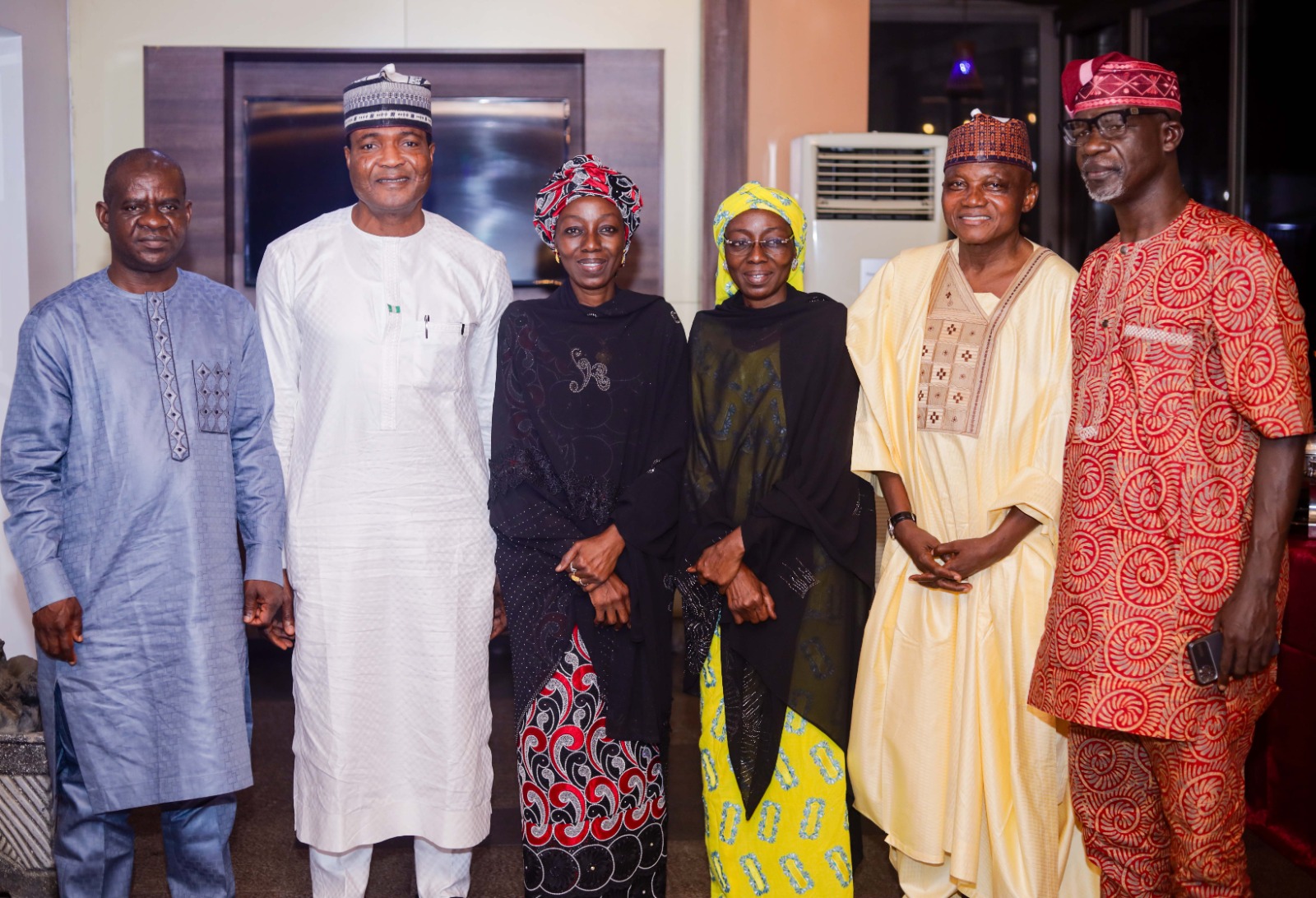
Photo: L-R: President, International Press Institute (IPI) Nigeria, Musikilu Mojeed; Director General, Voice of Nigeria (VON), Jibrin Baba Ndace; immediate past Director, Digital Media, VON, Hajia Sani; retired News Agency of Nigeria (NAN) staff, Ameena Sani; Senior Special Assistant on Media and Publicity to President Muhammadu Buhari, Garba Shehu; and former President of the Nigeria Union of Journalists (NUJ), Abdulwaheed Odusile, during a dinner organised on Saturday in Abuja by some members of IPI Nigeria in honour of Hajia Sani, who recently retired from VON.


We Can’t Accommodate You, Canada Tells 1,596 Nigerian Seeking Asylum

Canada has made it clear that it cannot accommodate 1,596 Nigerians seeking asylum in that country.
An updated data by the Immigration and Refugee Board (IRB) showed that Nigerian nationals submitted 3,548 claims in 2025, with 2,292 approved — a 65 per cent acceptance rate, higher than in previous years.
Nigerians remain among the top asylum seekers in Canada, alongside citizens of Mexico, India, Haiti and Colombia. Analysts attribute the high numbers to worsening insecurity linked to Boko Haram insurgency and economic instability at home.
Ontario and Alberta currently host the largest share of Nigerian asylum seekers.
Canada grants refugee protection if applicants meet the United Nations definition of a convention refugee, which requires proof of persecution risk based on race, religion, nationality, political opinion or membership in a vulnerable social group such as women, LGBTQ persons or people living with HIV/AIDS.
Applicants must also demonstrate credible threats to life, risk of torture or exposure to cruel treatment if returned to their home country.
The IRB’s records show that in 2024, 811 Nigerian claims were rejected while 2,230 were approved.
Between 2013 and 2024, more than 13,000 Nigerian applications were denied, with 2019 recording the highest number at nearly 4,000 rejections.
Despite the high rejection rate, Canada has granted refugee protection to 10,580 Nigerians over the past decade, including over 2,200 in 2024 alone.
Nigeria currently ranks eighth among the top 10 countries whose nationals secured asylum in Canada, behind Turkiye, Mexico, Colombia, Iran, Pakistan, Haiti and Afghanistan.
Commenting on the trend, Imaobong Ladipo-Sanusi, Executive Director of the Women Trafficking and Child Labour Eradication Foundation, said many Nigerians are denied asylum because of irregular migration practices.
“Most times, people don’t fully understand the laws governing refugee status in their chosen destination. Documentation is crucial, because entering irregularly increases the chances of rejection.
“Migration must be safe, orderly and regular.
“But those who truly need protection should be protected, regardless of status.”

Airpeace Pilot Accused Of Being On Drugs Threatens To Sue NSIB For Defamation

One of the pilots of the Air Peace aircraft, Victory Maduneme, accused of the use of illicit drugs during a flight, has given the Nigerian Safety Investigation Bureau (NSIB) 72 hours ultimatum to apologize or face court action for defamation of character.
“In the next 72 hours, if NSIB does not come and reiterate whatever they have said against me, then I think we should sue.
“This is really very bad. This is pure defamation of character.”
In an interview on Arise television, Maduneme accused the agency of attempting to tarnish the image of Air Peace and ruin her career.
“If NSIB has a smear campaign against the airline, they should keep the innocent people away from this.
“If not for the kindness of my chairman, they would have sacked me and blacklisted me.
“And once that is done, no airline in the world, I repeat, no airline in the world will pick me because now they’ve painted me as this person that has drugs in her system.”
The NSIB report, which stemmed from a July 13, 2025 runway incident involving Air Peace at the Port Harcourt International Airport in Rivers State, found the pilot and co-pilot involved in drug-taking.
Maduneme narrated that immediately after the flight landed, investigators requested samples from the crew.
“On the 13th of July, after we had landed, which was the day of the incident, after we had landed and we had to wait for NSIB to come on board, then they came, started their investigation, and five hours later, they asked us to come into a room for them to do a test.
“So we all went into the room, and our blood samples were taken, and our urine was also taken.
“Normally, when those kinds of tests are done, immediately after a drug test and an alcohol test, you’re supposed to get your result within a few hours or a few minutes.
“Right?
“But this was not given to us that day.
“Then, two weeks later, 10 days later, I was called by the Nigeria Civil Aviation Authority (NCAA) to come and pick up a letter…
“I was in utter shock to see what was in my result, actually.”
Maduneme said on receiving the letter, she immediately sought medical clarification and contested the result.
She was then referred to a licensed clinic for a re-confirmatory test.
“I went to go and meet the doctor.
“And he came to see me. Then he said marijuana usually stays in the system for 90 days…
“I told him I wanted to do the test immediately. The test was done to me and it came out, everything came out negative.”
Maduneme questioned NSIB’s failure to notify her airline immediately if the initial test indeed indicated drug use.
“If marijuana was found in my system, were they not supposed to tell this to my airline and are they not supposed to stop me from flying?
“Why? Because I’m a risk to the passengers on board and my licence would have been taken away from me.
“But no, they didn’t inform them of this till after two months.”

Shameless NLC! By Wale Ojo-Lanre, Esq

Of all the issues tormenting the Nigerian worker— the unpaid salaries, the pension arrears, the rising inflation, the exploitative workplace policies, the Nigeria Labour Congress (NLC) leadership suddenly finds its voice not in defense of workers, but in defense of a suspended senator? What an embarrassing fall from grace.
Natasha Uduaghan is not a member of the Nigeria Labour Congress. She is not a civil servant, neither is she a teacher, nor a nurse, nor one of the countless underpaid workers groaning under Nigeria’s economic burden. She is a politician—a political product who rode on the crest of partisanship into the Senate. If the Senate chooses to suspend her or lift her suspension, it is a political matter, not a labour matter. Yet, the NLC leadership, instead of facing its mandate, is threatening mass protest. On what basis? With what shame?
This is the same NLC that goes mute when governors toy with workers’ welfare. The same NLC that has perfected the art of sleeping with politicians at night and pretending to fight for workers by day. The same NLC whose leadership has turned its once formidable voice into a bargaining chip for crumbs from the political table. And now, like hired megaphones, they want to shut down the country because of Natasha.
One wonders: where was this fire when minimum wage negotiations dragged endlessly? Where was this fury when fuel subsidy removal crushed millions of workers? Where was this energy when electricity tariffs and food prices shot beyond workers’ reach? But now, over a senator who has nothing to do with workers’ welfare, the NLC wants to play the lion.
Shameless NLC! Instead of carrying placards to the Senate for Natasha, they should carry their conscience to the mirror. Instead of organizing protests for a politician, they should organize courage to face the real issues of workers’ exploitation. If the leadership of the NLC cannot distinguish between labour struggle and political sycophancy, then they have no moral right to speak for the Nigerian worker.
A labour movement that abandons workers to chase after politicians has sold its soul cheap. And no amount of shouting will cover the stench of that betrayal.

Lanre-Ojo Esq is a Lagos based Public- interest Analyst

Dangote And His Two Wives, By Funke Egbemode

Aliko Dangote

A man married two wives. To maintain fairness, he set up a roster to guide who shared his bed and when. Since they were only two, he made the bed-sharing a weekly arrangement. Both wives agreed, and the man faithfully fulfilled his duties in each wife’s bed. It seemed the women were satisfied until one day, the senior wife decided to rock the boat.
“You cannot sleep with me and you cannot sleep with my junior wife,” she declared.
The husband blinked in disbelief, as though trying to clear cobwebs from his brain. Even the second wife was stunned. Since when did “our mother” become the guardian of her own honey pot and that of her co-wife? Yet the senior wife insisted: no visiting or browsing of any website by their husband, period. That was when the husband flipped.
“You cannot cordon off your honey pot and also seal the cookie jar of my second wife—the one whose bride price I also paid in full, just like yours. A dog cannot watch over two compounds. Feel free to keep your thighs together as long as you wish, but I am free to do as I please with my second wife.”
Polygamy, like a free market economy, is about choices, competition, and alternatives. No wife is allowed to leave the husband stranded with blue balls, not that I know how black balls turn blue. A man who feeds and houses two or more wives will never be without a warm bed. If one wife is sulking, she will not be missed. In fact, I have reliably learnt that women in polygamy sometimes pray for their co-wives to go on strike, so they can enjoy bonus nights with their husband. When a senior wife,iyale, declares that the husband can neither touch her nor the others, she is not just being unreasonable, she is flirting with madness.
So, how did we get here? Aliko Dangote—or more precisely, Dangote Refinery’s “wives”—are at war. The senior wife wants to dictate whose pot their husband eats from and whose bosom he enjoys. But Dangote (as in Refinery, please) clearly anticipated this day. He is a Nigerian, after all. He knows no Nigerian has a monopoly on mischief. He knew this day of bedroom blackmail would arrive. He had seen other businesses suffer, not just blue balls but outright castration, at the hands of those they fed and clothed, the ones who once professed loyalty and devotion.
Thinking ahead, Dangote did not announce that he was going to buy trucks. If you ask me, I believe he suspected his senior wife might even lace his pounded yam withoogun igbabge(juju of forgetfulness) to make him abandon the project. Like a wise husband, he understood that he must increase operational bandwidth if he was to satisfy all “wives.” Just as a man with many wives must increase blood supply to his southern region to keep the harem happy, Dangote invested over N720 billion and prepared to deploy 4,000 Compressed Natural Gas (CNG)-powered trucks to distribute his products nationwide. This was innovation in fuel distribution designed to cut logistics costs and inefficiency. Until the senior wife got wind of the revolution and decided to pull the roof down with her protest: “You won’t do me, and you won’t do the new wife.”
What is a man supposed to do when he has many women to service? Sit idly while his land is taken over and tilled in his presence? Should he not, like Dangote, count his teeth with his tongue and buy his ownburantashibefore his wives start straying and his children start resembling the neighbour? What is wrong with producing petroleum products and wanting to deliver them directly to the market? Even orange sellers know it makes sense.
This new arrangement is expected to save Nigerians about N1.7 trillion annually in fuel distribution costs, costs filling stations would otherwise pass on to you and me, who are already heavily burdened. But now the wife who won’t do is insisting the wife who is ready to do cannot do. Do we not look like a crowd rushing toward the asylum? Isn’t this why Nigerians hesitate to invest at home because a few powerful enchanters always rise to kill newborn initiatives? Why are we like this? Who will drive these 4,000 trucks: Togolese, Chinese, Americans, or Nigerians? Won’t those drivers have families to feed? Is there any single Nigerian right now recruiting 4,000 drivers? Has the Nigerian government itself recruited 4,000 of anything this year or last? Yet a few fat cats puffing on cigars sit somewhere calling for a strike. They won’t invest, they won’t let investors breathe. What exactly do we call that, if not evil?
*Only Dangote, for now, has had the courage to build a refinery. Let us stop harassing him. Let us encourage others by our attitude. That is the only way to build this economy* .
The reasoning of those threatening a strike stands patriotism, development, and employment opportunities on their head. This is perhaps the most poorly thought-out union action in recent times, and it collapsed on Day One. I am embarrassed on behalf of NUPENG, PENGASSAN, and their allies who once terrified Nigerians. Remember those headlines—“NUPENG, PENGASSAN, NURTW VOW TO SHUT DOWN NIGERIA”—that sent us into panic buying and hoarding, sparking endless fuel queues and traffic jams? Did you see any of that on Monday? Even the most potent threats expire. Sorry. The days of holding Nigerians’ balls in a vice grip are gone. I filled both my cars in under ten minutes, and filling stations were calmly doing business.
Dangote Refinery is now accused of “crude and dangerous anti-union practices, monopolistic agenda, and indecent industrial relations strategies.” Critics say Aliko Dangote is unleashing war against Nigeria’s working class, against trade unionism, and against the principle of decent work. They allege the company pays some of the lowest wages in the oil and gas sector and treats staff beneath acceptable standards.
To bolster their case, they brandish Section 40 of the Constitution, the Labour Act, and ILO Conventions 98 and 87, accusing Dangote of bad industrial relations for barring his new drivers from joining oil and gas unions. Classic, predictable union rhetoric.
But let us consider the so-called freedom of association. Imagine a man who endured years of shame, unable to pay rent or school fees, finally receiving an appointment letter from Dangote Refinery. His armpits soaked with nervous sweat, his heart pounding, he clutched that letter and rushed to his church altar to thank God for deliverance from unemployment and his wife’s venomous tongue. Do you think, when he signed “Original copy received by me,” that he was thinking of unions? Would he not have sworn to renounce every union on earth just to secure that job?
One man risked everything to build one of the largest refineries in Africa. He fought the cartels who bled Nigerians dry through importation and subsidies. He took massive dollar loans from hard-eyed bankers who demanded their interest. He endured harassment from those who thought they owned Nigeria’s oil sector, torment by day, nightmares by night.
His blood pressure rose, his three-hour sleep vanished. Yet he stood firm. He rolled out his products. He let market forces speak. Then he said, why not deliver directly to filling stations?
After all, virtually every service in Nigeria has embraced delivery: food, aso-oke, shoes, jewelry, even electronics. Dispatch riders in their thousands now make a living from home delivery. Why then should Dangote be vilified for doing the same with petroleum? Even my hairdresser delivers at home.
Since I heard of Dangote’s delivery model, I have considered setting up a filling station. All I’d need is to build the station, paint it my favourite colours, call Dangote to bring the products, and sell. No need to buy trucks. No need to employ drivers. And truth be told—even regular drivers are full of drama. Just imagine the reduced stress.
Those clinging to analogue strikes should wake up and smell the coffee. The world has moved on. The Petroleum Industry Act (PIA) exists. Deregulation is in place. Dangote Refinery is a private concern. Those who begged for jobs with fasting and prayer cannot suddenly act like his masters. If Dangote says “no unionisation” in his house, it is sheer bad faith to agree and then later run to a union.
How will our manufacturing sector grow, how will investors stay, if we frustrate the few courageous ones who bring their money home instead of hiding it in tax havens? What Nigeria needs is more players across all sectors. More investors mean more jobs. More jobs mean more disposable income, more small businesses, more competition. And it is competition (not lazy complaints) that breaks monopoly.
You cannot wish monopoly away with rhetoric.
Only Dangote, for now, has had the courage to build a refinery. Let us stop harassing him. Let us encourage others by our attitude. That is the only way to build this economy. If we keep chasing investors away, we will eat our young to survive—and like every animal that does so, we too will face extinction.

*Egbemode (egbemode3@gmail.com)

Air Peace Plane Mishap In P/Harcourt: Investigation Bureau Finds Pilots Involved In Hard Drugs

The Nigerian Safety Investigation Bureau (NSIB) has found an Air Peace pilot and a Co-pilot to be involved in hard drugs and alcohol, in its preliminary report on the aircraft they flew that was involved in a runway incursion at the Port Harcourt International Airport on July 13, 2025.
The accident investigators tested the crew positive for the substances in the preliminary report signed by the Director of Public Affairs and Family Assistance at Nigerian Safety Investigation Bureau, Mrs Bimbo Olawumi Oladeji. The report was released today, September 12.
In the report, NSIB said: “The aircraft, operating as a scheduled domestic flight from Lagos to Port Harcourt with 103 persons on board, landed long on Runway 21 after an unstabilised final approach. The aircraft touched down 2,264 metres from the runway threshold and came to a final stop 209 metres into the clearway
“All passengers and crew disembarked safely, and no injuries were reported.”
According to the report, the domestic flight, which took off from Lagos, experienced an unstabilised final approach before landing long on Runway 21.
The NSIB said that the aircraft touched down 2,264 metres from the runway threshold, well beyond the recommended touchdown zone, and eventually came to a stop at 209 metres into the clearway. While all on board disembarked safely, the incident raised immediate safety concerns.
The preliminary reports said that toxicological test results conducted on the flight crew turned out positive.
The Tests indicated the presence of alcohol in the system of the crew, while another crew member also tested positive for tetrahydrocannabinol (THC), the active compound found in cannabis, colloquially referred to as “India hemp.”
The NSIB noted that these toxicology results were being assessed within the scope of human performance and safety management, both critical factors in aviation incident investigations.
Recall that the Air Peace aircraft, on 13th June, 2925, had a runway incursion after landing at the Port Harcourt International Airport, carrying 103 passengers.
An aircraft incursion is the wrongful or unauthorised positioning of an airplane at the runway.

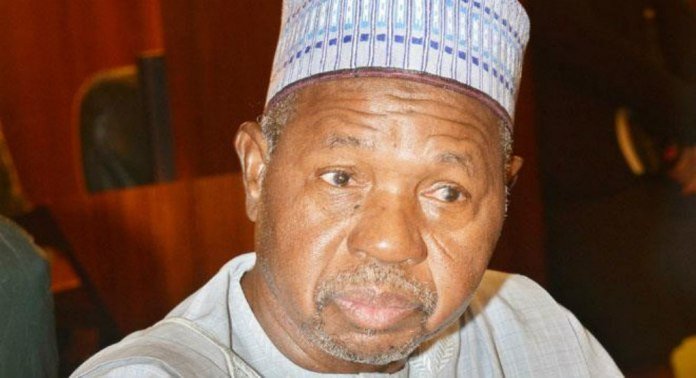
GOCOP 2025: Ex Katsina Gov, Aminu Masari To Speak On Campaign Promises, Governance Realities

Aminu Bello Masari

The immediate past Governor of Katsina State, Aminu Bello Masari, has been scheduled to deliver keynote address at the 2025 Guild of Corporate Online Publishers (GOCOP) Annual Conference coming up on October 9 in Lagos.
Masari, who is also former Speaker of the House of Representatives, will speak on the theme for the ninth edition of the Guild’s confab: “Reconciling Campaign Promises with Governance Realities: Challenges and Prospects.”
The former Governor, who confirmed his availability for the role during a courtesy visit by a GOCOP delegation, led by the Deputy President and Conference Planning Committee Chairman, Danlami Nmodu, mni, was presented with a copy of the newly published GOCOP book.
In a statement, GOCOP’s Publicity Secretary, Ogbuefi Remmy Nweke, said that Masari, who is currently Chairman of the Tertiary Education Trust Fund (TETFund), had a distinguished record of service.
● Profile:
Masari was Commissioner for Works, Housing and Transport in Katsina State (1991–1993), Speaker of the House of Representatives (2003–2007), and Governor of Katsina State (2015–2023).
Born in Masari village, Kafur Local Government Area of Katsina State, Masari’s career reflects a lifelong commitment to diligence, honesty, and service.
From his early days in the civil service, rising through the Water Board to senior management, to his training at Middlesex Polytechnic in the UK, he has consistently distinguished himself in public life.
His political journey and leadership earned him national and traditional honours such as the Commander of the Federal Republic (CFR), Dallatun Katsina, and Matawallen Hausa, alongside honorary doctorates and international recognitions including the U.S. Congressional Commendation Award.
As Governor, Masari focused on infrastructure, education, healthcare, and workers’ welfare, transforming Katsina into one of the few Nigerian states without salary arrears.
His leadership attracted accolades, including The Sun Courage in Leadership Award (2016) and the Zik Leadership Prize for Good Governance (2017).
Past GOCOP conferences had featured eminent speakers such as Bishop Matthew Hassan Kukah, Catholic Bishop of Sokoto Diocese (2019), who spoke on “Economy, Security and National Development: The Way Forward.”
Professor Mahmood Yakubu, INEC Chairman (2022), who delivered the keynote “2023 Elections: Managing the Process for Credible Outcome.”
Professor Uche Uwaleke, Capital Market scholar (2023), who addressed “Nigeria: Roadmap for Socio-Economic Recovery and Sustainability.”
Founded to uphold the tenets of journalism in the digital age, GOCOP is a professional body of 119 member organisations led by seasoned editors and senior journalists who transitioned from traditional media into online publishing.
According to the statement, “the annual conference provides a unique platform for sponsorship opportunities, offering brand visibility, media recognition, and networking with influential journalists, editors, and policy shapers.”
Partnering with GOCOP was a strong demonstration of commitment to ethical journalism and responsible media.

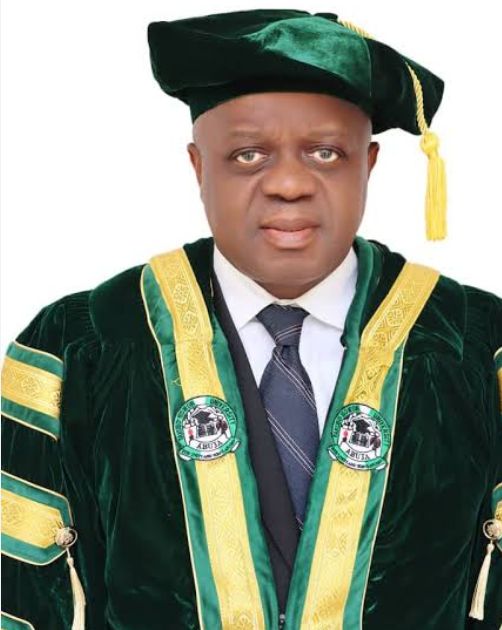
Mass Promotion At UniAbuja: 104 Academic Staff Elevated To Professional Rank

The Governing Council of the University of Abuja (now Yakubu Gowon University), has elevated 104 academic staff to professorial rank.
The approval for the mass promotion was made at the 78th Extraordinary Meeting of the institution’s Governing Council, held on 9 and 10 September 2025 at the University’s Main Campus. The Council is headed by Senator Dr. Olanrewaju Tejuoso.
A statement by the Acting Director of
Information and University Relations, Dr. Habib Yakoob, said that 58 of the staff were promoted to the rank of Professor, even as 46 others were elevated to the rank of Associate Professor.
According to him, the academic staff were promoted across various disciplines, including agriculture, animal science, Islamic studies, Islamic history and ethics, clinical sciences, surgery, obstetrics and gynaecology, radiology, ophthalmology, theatre arts, social science education, civil engineering, chemical engineering, electrical engineering, pharmacology, statistics, applied mathematics, nursing, and allied health sciences.
The Acting Vice-Chancellor of the University, Professor Mathew Adamu was quoted as having congratulated those that were promoted and acknowledged their dedication to scholarship and the advancement of knowledge.
“This promotion is a recognition of your hard work, academic excellence, and commitment to the values and growth of the University. We expect that your new academic status will inspire even greater achievements in teaching, research, mentorship, and community service.
“This promotion is particularly remarkable because the number of staff elevated to professorial rank is the highest in the history of this University. It is a great achievement and a credit to the commitment of Council, management, and the entire University community to reward excellence and strengthen our human resource capacity at this point of the University’s development.
“Let me also reassure you that, with the stability the University currently enjoys, greater achievements lie ahead. I am certain that both the University and its staff will benefit from this new drive to ensure an improved and timely reward system designed to strengthen our journey towards attaining the heights of world-class institutions.
“On behalf of the Governing Council and the Management of the University, I congratulate you on this noble achievement.”

Why Senator Natasha Cannot Resume At Senate Yet, By Ken Harries Esq

In Nigeria’s political landscape, the National Assembly is meant to be a sanctuary of sober deliberation and a place where rules and processes are observed with discipline, decorum and responsibility. Yet in this same hallowed chamber, the suspended Kogi Central Senatorial District Senator, Natasha Akpoti-Uduaghan, has continued to demonstrate a determination not to play by the book but to tear it up altogether.

Her rebuffed threat to resume legislative duties on 4 September 2025, after a six-month suspension, has exposed a troubling mix of arrogance, hypocrisy, and legal incoherence. It is one thing for a politician to fight for survival. It is quite another for a trained lawyer to insult the intelligence of the very system of justice she once pledged to defend.
The acting Clerk of the National Assembly, Dr Yahaya Danzaria, wrote a letter that has since circulated widely, calmly reminding Senator Natasha Akpoti-Uduaghan that her case is still before the Court of Appeal and that her unilateral announcement to return to the Senate chamber is an exercise in futility.
That letter was not a mere administrative formality. It was the institutional voice of the legislature reaffirming a principle as old as democracy itself: that one cannot be both litigant and judge in the same matter. It was the Senate standing firm, refusing to be bullied, and placing fidelity to process above the whims of one desperate politician.

■ The Suspension, the Court, and the Contempt
To understand the quagmire in which Senator Natasha Akpoti-Uduaghan now writhes, one must trace the sequence of her missteps. On 6 March 2025, she was suspended for six months following an unruly behavior towards the Senate President Godswill Akpabio over seat allocation, a quarrel that she escalated by levelling accusations of sexual harassment without any proof. The Senate Committee on Ethics, Privileges, and Public Petitions investigated and imposed suspension as a disciplinary measure to preserve the dignity of the hallowed chamber.
Senator Natasha Akpoti-Uduaghan refused to accept this sanction. Instead, she raced to the Federal High Court in Abuja, seeking judicial intervention. There, she encountered a ruling that should have taught her humility. On 4 July 2025, Justice Binta Nyako delivered an unambiguous verdict. The disciplinary measures and suspension were indeed found to be constitutional and well situated within the prisms of law and order. Yet, in the same ruling, the court fined her five million naira and to apologize in some National Newspapers for civil contempt after finding that she had violated a gag order. To be clear, the very court to which she turned for relief also found her guilty of misconduct.
This is where the doctrine of equity becomes relevant. The maxim that he who goes to equity must go with clean hands is not a rhetorical flourish but a cornerstone of legal reasoning, recognised in common law and frequently cited in Nigerian jurisprudence. Cases, such as Awojugbagbe Light Industries Ltd v. Chinukwe (1995), stand as monuments to its enduring power. Senator Natasha Akpoti-Uduaghan’s contempt conviction poisoned her entire plea. She sought justice with stained hands. She left the court diminished and shredded.
Her response to the judgement was not to acknowledge this taint with remorse but to appeal. She challenged the fine imposed while the Senate simultaneously filed a cross appeal. By their appeals, both sides placed the matter before the Court of Appeal, which has yet to pronounce upon it. Under Section 18 of the Court of Appeal Act, filing an appeal does not itself stay the execution of a judgement unless expressly ordered. Yet, in cases involving parliamentary privileges, a higher principle comes into play. The subjudice rule demands that parties refrain from actions that may prejudice an ongoing case. That is why the Clerk’s letter pointed out to the obvious: until the Court of Appeal delivers judgement, nothing can be done. Senator Natasha Akpoti-Uduaghan is bound by that rule. Her decision to disregard it is not only reckless but also contemptuous of the very system she invoked.

■ Playing Judge in Her Own Case
The arrogance of Senator Natasha Akpoti-Uduaghan’s conduct lies in her decision to appoint herself as judge, jury, and enforcer. She announced her return to the Senate chamber as though she were the Court of Appeal itself. This is not only laughable but also dangerous, for it undermines the doctrine of natural justice embodied in the principle of __nemo judex in causa sua,_ which holds that no one should sit in judgement over his or her own case.
This principle has been enforced repeatedly in the Nigerian courts. In _Garba v. University of Maiduguri_ (1986), the Supreme Court made it clear that fairness requires impartial adjudication. Yet here is Senator Natasha Akpoti-Uduaghan, a lawyer no less, choosing to place herself above that principle. Her unilateral declaration that her suspension has expired ignores the fact that the Senate’s cross appeal is still alive and pending. It also ignores the constitutional power of the National Assembly to regulate its own procedures under Section 60 of the 1999 Constitution(as amended). The Senate has exercised that power and appealed to defend it. By attempting to circumvent this process, Senator Natasha Akpoti-Uduaghan is attempting to tear apart the fabric of separation of powers.
Those who argue that the High Court’s order should have an immediate effect overlook the unique character of this case. This is not a landlord–tenant quarrel or a commercial dispute where execution can run immediately unless stayed. This is a constitutional contest between legislative privilege and judicial oversight. In such matters, courts themselves have traditionally acted with restraint to avoid unnecessary intrusions into parliamentary autonomy. The case of __El-Rufai v. House of Representatives_ (2003) is instructive, demonstrating the caution with which Nigerian courts approach disciplinary decisions of legislative bodies.
For the avoidance of doubt, Senator Natasha Akpoti-Uduaghan’s insistence on barging back into the chamber while the matter is under judicial review is more than procedural error. It is an affront to both the Senate and the Court of Appeal. It is akin to storming the pitch during a football match, while the referee is still consulting the video assistant referee(VAR). It is not only premature, but it is also disruptive. And, in politics, disruption of this kind invites fresh sanctions. The Senate would be well within its rights to impose additional penalties, and the Court of Appeal itself might take notice if it sees her conduct as an attempt to ridicule its authority.
■ Hypocrisy, Partisan Noise, and Lessons from History

The hypocrisy at play here is simply breathtaking. Senator Natasha Akpoti-Uduaghan claims to be the champion of justice and victim of harassment, yet she herself has been fined for contempt by a court of law. She insists on the sanctity of judicial review, yet now chooses to disregard the same judicial process by cherry picking and acting as though the appellate court’s verdict has already been written in her favour. She wears the robe of victimhood while wielding the sword of impunity. This is not the behaviour of a principled lawmaker. It is the behaviour of a political opportunist who wants sympathy when it suits her and who spits on process when it does not.
Her political party, the Peoples Democratic Party, has joined the charade by urging her to resume duties regardless of the pending appeal. This exposes the bankruptcy of its legal reasoning. It treats the law like a buffet table where one can select only the dishes that appeal to one’s palate. But the law does not work that way. It is a full meal that must be consumed in its entirety, bitter herbs and all. The acting Clerk’s letter is not an excuse, as her party would claim, but a necessary reminder that institutions must be defended from the tyranny of personal ambition and lure for power.
Comparisons from other democracies shed further light. In the United Kingdom, Members of Parliament have been suspended for lesser infractions, and none has dared return without due process. In Canada, suspensions have been treated with the utmost seriousness, with courts declining to interfere in the internal proceedings of Parliament. In India, similar disputes have arisen, and each time, the judiciary has been careful not to usurp the disciplinary powers of the legislature. Senator Natasha Akpoti-Uduaghan’s antics, therefore, do not represent boldness but recklessness. They show contempt not only for Nigerian institutions but also for the global traditions of parliamentary governance.
■ The Road Ahead
As of 10 September 2025, the Court of Appeal remained silent. That silence is eloquent. It tells the country that the matter is not yet ripe for conclusion. It reminds us that justice takes time and that impatience is not a substitute for law. Senator Natasha Akpoti-Uduaghan’s seat remains empty, and rightly so. She has entangled herself in a legal bind of her own making. She appealed a ruling that never favoured her, yet she now demands the immediate enforcement of a non existent judgement, ignoring the fact that the whole case remains under review.
This is the behaviour of a politician who has lost sight of principle. It is the behaviour of a lawyer who has betrayed her calling. By attempting to bulldoze her way back into the Senate chamber, she has deepened her isolation, eroded her credibility, and risked a legacy as the senator who could not wait for the courts to do their job.
The question here is not whether the Senate is right to shut its doors against the erring senator. The National Assembly has acted with restraint, dignity, and firmness. It has shown that it will not be cowed by theatrics. Most importantly, it has respected the judiciary by waiting for its verdict. And, it has upheld the constitutional order by refusing to allow an individual to hijack its processes. That is the mark of an institution that takes itself seriously.
The right question to ponder now is whether Senator Natasha Akpoti-Uduaghan has learned that theatrics cannot upstage set legal procedures. Whatever the answer, she still has a choice. She can pay her fine, show contrition, and await the judgement of the Court of Appeal. Or she can continue along the reckless path of self-aggrandisement, in which case she risks being remembered not as a trailblazing senator but as a cautionary tale. Nigeria deserves lawmakers who live by the law and not by political theatrics. Clean hands remain the only acceptable requirement in the court of justice. Until Senator Natasha Akpoti-Uduaghan acquires them, her rightful place is not on the floor of the Senate but in the waiting room of accountability.

Ken Harries Esq is an Abuja based Development Communication Specialist

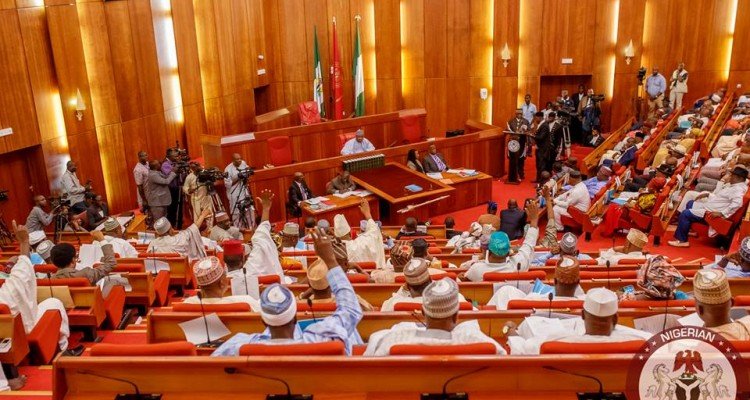
Natasha’s Move To Resume Hits Rock; Senate Awaits Court Ruling On The Matter

Natasha Akpoti

Move by Senator Natasha Akpoti-Uduaghan to resume her legislative activities in the Senate when it resumes on September 23, having completed her six month suspension, has hit the rock.
Responding to her request to resume her legislative duties in a letter to the Senate, the red chamber insisted that her six-month suspension would remain in force until the Court of Appeal delivers a verdict on her case.
In a letter signed by the Acting Clerk to the National Assembly, Dr. Yahaya Danzaria, the Senate acknowledged receiving the senator’s notification of her intention to return on September 4, 2025, which she viewed as the conclusion of her suspension period.
But the Senate said that since her suspension began on March 6, 2025, and the matter is currently before the Court of Appeal, no administrative action can be taken to facilitate her return.
Senator Akpoti-Uduaghan, who represents Kogi Central, was suspended for breaching the Senate’s standing orders.
While the Federal High Court in Abuja upheld the suspension, the senator has appealed the decision and awaits the Court of Appeal’s ruling.
The Senate emphasized that it will only reconsider the suspension once the appellate court delivers its judgment.
Until then, Senator Akpoti-Uduaghan remains barred from participating in Senate activities.
Both parties now await the court’s decision to determine the future of the suspension and the senator’s legislative role.

Advertisement ADVERTORIAL
WP2Social Auto Publish Powered By : XYZScripts.com