The Director-General of the Peter Obi’s Labour Party presidential campaign council, Dr. Doyin Okupe has threw in the towels, less than 24 hours after he was convicted of money laundering and narrowly escaped serving jail term. Okupe, who was also a spokesman of Olusegun Obasanjo when he was Nigeria’s President, tendered his letter of resignation today, December 20. The letter, dated December 20, 2022, was addressed to Peter Obi. Okupe’s resignation came less than 24 hours after an Abuja High court had convicted and sentenced him to two-year imprisonment, with an option of fine in the amount of N13 million. He paid the fine and escaped the prison term. The amount Okupe was convicted for laundering was N240 million, which he was said to have received from the Office of the National Security Adviser (NSA), retired Colonel Sambo Dasuki during the 2015 presidential election. He got the money in cash to prosecute assignments given to him during the 2015 presidential poll. He was charged for receiving the money in cash instead of through the financial institution.
Alhaji Shehu Malami, whose death was just announced through his bosson friend, President Muhammadu Buhari, was a Sokoto prince, a successful businessman and diplomat. The 85 years old Malami was held a powerful title of Sarki Sudan of Wurno.
Early this year, the Sarkin Sudan of Wurno, who spent a lot of his time in England, granted an interview to Daily Trust and spoke on his early years of education, his memories of Sultan Abubakar, and other interesting issues. Read:
You are from a royal family. Your father was a brother to the sultan, which means that you are part of the Sokoto elite, even from the beginning. I think it is fair to say you started life with a golden spoon. Would that be a right description?
My father was a younger brother to the late Sultan Abubakar. It was the Sultan who brought me up. My father told me that one day he was just sitting down and one of the palace guards entered his rooms and asked for Malami, informing him that he was asked to bring me to the palace. When the palace guard marched to the palace, Sultan Abubakar directed that I should be taken to elementary school. From that day, he took over my affairs without exception.
It appeared you went to many schools, not only in Sokoto, but Kano, Katsina, Bida; why all those changes?
I started with Sokoto Middle School, but later on, it was not upgraded. It was a middle school but they called it Provincial Secondary School, Sokoto. Kano was upgraded, so the whole of my class, including Alhaji Alhaji, and so many of us, were transferred to that place.
We were in Kano for one year. Then the authorities thought there were too many distractions there, so they decided to move us to Katsina. It was in Kano that I met Emir Ado Bayero and others and we all became friends at that particular time. After one year, I was transferred to the Katsina Provincial Secondary School. That was where I met General Buhari and Yar’adua, they were my schoolmates.
Were you their senior?
Yes.
From Katsina, I was moved to Bida. It is a very interesting story. When it was time for Sallah holidays, all our school belongings, including books, were collected so that we could go away. I decided to go to Kano from Katsina and Alhaji Alhaji decided to accompany me. When we got back, we were told that we had committed a very serious offence –we shouldn’t have gone out of Katsina at all as the holidays were meant to be spent there, not anywhere else.
So we were called in by the school authorities and told that we broke the rule. I asked which rule we broke as everything I brought into the school was collected from me. I felt I was just going for normal holidays. He said I shouldn’t have gone there, insisting that it was an offence, but I disagreed.
Alhaji, who accompanied me to Kano, felt threatened. He felt unsecured, so he wanted to apologise to the principal. But I refused to apologise, insisting that I had not committed any offence.
It was a case that involved me, Alhaji Alhaji and the Provincial Secondary School, Katsina. We got to the Sokoto Local Authority or Education Authority as you call them and it was a battle to remove me from Katsina to somewhere else. That was how it was decided to send me to Bida. It was an administrative decision.
I insisted that we did not commit any offence because we should have been told that the holidays should be spent in Katsina and not anywhere else. Nobody told us that in advance. So, it was decided that I should be sent to Bida Provincial Secondary School, where I met with General Babangida and many others.
Then it was time for the West African School Certificate exams and the documents were to come from Lagos to Bida for us to fill and the principal or whoever it was to sign and return them to Lagos. It was on a Friday and we were expecting the last mail. I was in school (of course on Fridays everybody was there) but we went away for the afternoon.
After we left the school, the mail arrived from Lagos and they were looking for everybody to fill the documents. Unfortunately, I was nowhere to be found. When I came back in the evening, they said I had committed an offence and should stay for another week waiting for another mail to come in from Lagos. I said I was not going to do that. I could stay one or three nights but not to wait until when the mail would come back the following week. So, I just collected everything belonging to the school, left there and made my way to Kaduna, then Sokoto. That was how I left Bida without completing the school calendar.
Alhaji Shehu Malami
Many people would think that this rebellion was because you were privileged, as the next thing was that you went to England to study; is that correct?
That was very interesting. When I was sent to school on the instruction of Sultan Abubakar, the man in charge of education was Ahmadu Bello, the Sardauna of Sokoto.
Was he the councillor for education?
Yes. Somehow, he kept an eye on me, deliberately or by accident, and saw that I was doing very well. So, not minding all the crises about staying in Bida or everywhere, Sultan Abubakar said they would take me out. That was how he decided to send me to England.
Interestingly, Sultan Abubakar gave me a cheque on his bank account, the Standard Chartered Bank, which was called Bank of British West Africa. It was in Zaria at the time.
When I went to collect the money, the European there refused, saying I was a young boy so he would not give me so much money. The cheque was for 400 pounds, which was a lot of money at the time. It would run into millions of naira now.
I went to the Iyan Zazzau, Aminu. He was not yet the Emir of Zaria, but whenever there was an opportunity, there used to be a horse racing. Sarkin Kudu Maccido was the district head of Mafara before he became sultan. He used to take me along to Zaria. That was how I got to know Iyan Zazzau. We stayed in his house at Tundun Wada.
So, I told the Iyan Zazzau that I needed to take the money to Ahmadu Bello. He accompanied me to see the manager of the bank and he released the money to me.
What was the money for?
When I took it to Ahmadu Bello, he organised my flight to the United Kingdom, school fees and other things about the school. Everything was paid for out of the 400 pounds.
Tell us about your years in England. How long did you stay and what was your experience?
I was in what they called North Devon Technical College. That was where I started. I was doing very well in the school, then it was decided that I should go to a better one. So I was sent to SouthEnd On Sea Municipal College, not far away from London. There, I registered with Middle Temple, together with my friend from Ghana, Kwasie Armah, who was the high commissioner from Ghana. We used to go for lectures together. He was a student like me.
I came to Nigeria with the intention of going back, but I got involved in local politics because I was part of the student movement in England. I came to Nigeria, and unfortunately, I was not there to complete the dinners, which were compulsory after exams.
I wanted to go into politics but they said I was too young for that. In fact, I wanted to be a member of the House of Representatives, but they said I should start with local politics. I refused and Ahmadu Bello was very annoyed. He told Gidado Idris to take me for an interview to work with Abubakar Imam, who was the chairman of the Public Service Commission. They interviewed me and said I wasn’t right, but when they came to Ahmadu Bello, I said I wasn’t interested in going to the civil service.
I went on my own and that was the end of my career in the civil service. But Ahmed Joda insisted that I must join the service. In fact, I was very good in writing, so I was interested in journalism, right from my schooldays in Katsina. Sani Kontagora made me extremely interested in writing.
Was he a teacher or fellow student?
He was in charge of Katsina at the time. He encouraged me to write; and I used to write quite often in the newspapers, especially the Nigerian Citizen. I used to write a lot. He rose to be an editor. I continued as somebody roaming around.
One day, at the last meeting of the Nigerian parliament, a Sokoto member was going to Lagos and died in a car accident near Funtua. So Ahmadu Bello said, “This is your time, so you can try and contest for election now.”
I was the chairman of what they called the Hospitality Committee of the Student Movement in the UK. The idea was that if anybody coming was important enough, we would organise lunch and meet him or some persons from Nigeria, like Sarkin Daura and others, just to keep in touch with what was happening at home.
One of the people, our member, was from PZ Industries. His uncle was the chairman of PZ. We became great friends, but later on, unfortunately, his uncle died and the young man invited me to join them in PZ. So that was how I gravitated into the private sector.
Do you think your years in England changed your life, the way you see the world? Did you become an English man from northern Nigeria in a way?
It opened me to opportunities, to meet people from all over the world. There were so many Nigerians, but not from Sokoto or Fulani. We had a big student movement and made friends from all over the world. And that helped me a lot because anywhere I telephoned I would know somebody. It eased movement from one country to another. So, that opened up so many opportunities for me.
But it didn’t change your lifestyle; you didn’t pick up European habits, so to say.
No.
At what point did you become Sultan Abubakar’s private secretary?
During independence celebrations, the Sultan of Sokoto had so many personal assistants, but there were so many areas that needed attention. People were given assignments but there was no standing private secretary or personal assistant, so I acted for that period.
Was that in 1960?
Yes. We went to Lagos together for the independence. I was with Sultan Abubakar at the Race Course when the British flag was lowered and that of Nigeria went up.
How long did you work as his personal assistant or private secretary?
Six months or so when things went back to normalcy and a lot of the people came back.
We have heard a lot about Sultan Abubakar; can you tell us more about him? How was he different from the Sardauna, whose image is much larger?
Sultan Abubakar was a straightforward and no-nonsense man, to the extent that he dismissed his own brother from Wurno. His brother was the district head of Wurno, but he was not handling money properly, so he was removed.
Was that his younger brother?
The district head was his elder brother. The sultan removed him and put me there and said there were rules and regulations that must be abided by, no matter who you were.
We heard he was a man with a great sense of humour, is that true?
Yes. And he was full of humility. He got on very well with General Gowon, who was his friend. He was a great man. I learnt a lot from him. There are some reports about him in the British press and libraries.
Is there any incident or story you remember about him?
So many of them. He didn’t like an atmosphere of quietness. He was always giving direction to people who didn’t know where to go or what they were doing. He always insisted that things must be done properly.
Instead of politics you became a businessman through the PZ opportunity. You are associated with many industries in Sokoto, Kano, even in Asaba, where you set up a furniture company. Can you share your experience in business?
About industries, during General Gowon’s time, Ahmed Joda was the permanent secretary of education and they put me on the board of the University of Nigeria, Nsukka. Earlier, Ironsi, through General Katsina, put me on the board of the Nigeria Industrial Development Bank (NIDB), which was partly owned by IFC. I was there for nine years. Ahmadu Kumasi was my chairman, so I learnt a lot about how to establish industries. That was how I got involved in the NIDB, where I was with Kumasi.
Again, I learnt a lot from very important people who I wish to remember all the time – Ahmadu Kumasi, Ahmed Tali, Yahaya Gusau. They were straightforward people. They were directed to do the right thing and would not tolerate any nonsense. They were great people.
You set up Wurno Bottling Company and a tannery in Sokoto; why didn’t they succeed?
At that time, everybody wanted to establish something. Ahmed Joda, myself and Aminu Dantata went to establish in Kano, Philip Asiodu went to Asaba and established something. There was a feeling that you must identify yourself with something of pride. Unfortunately, since then, things have degenerated. We accepted that as a dogma and went ahead with it. We didn’t care; wherever the opportunity was, we followed it.
What about your bottling company in Sokoto, where you were producing soft drinks?
As the economy dwindled, I established a brick industry. My experience at the Industrial Development Bank gave me a push to establish things. I even established borehole (drilling company).
One other notable thing about your career in business is that you were chairman or director of banks, including Union Bank. You were also part of the people who set up Ecobank; is that correct?
That’s right. I was on the Board of Trustees with Odumegwu Ojukwu.
Would you say you got those appointments because you had links in the government?
Well, in the UK, when I was the chairman of that committee I mentioned earlier, we met a lot of people coming from Nigeria. We tried to entertain them and make them feel at home. That was the atmosphere. We were always in touch. It was like a clique. And each one of us established something, but unfortunately, things later collapsed.
As a businessman, did you make a lot of money?
We made money. Last week, I was showing my children a small booklet where I put the investments I made with a small amount of money and the returns were very valuable.
You also set up a furniture factory in Asaba, what encouraged you to do that?
There was this feeling of doing something and not just trying to get something out of the country.
Alhaji Shehu Malami
Why do you think that spirit has been lost; what happened to the country?
I wouldn’t know. The prices of all commodities in Nigeria have gone up. In those days, there was determination, but of course, sometimes you would fail.
One of the highlights of your career was your appointment by General Abacha as the first high commissioner to South Africa; how did that happen, especially considering that you were a businessman?
I used to be a member of the World Economic Forum, which had a meeting in Davos. When Shehu Shagari was visiting India as president, I was one of those who accompanied him. When I returned, I remember that in Zurich, I saw a big list of conferences going on; they mentioned Davos. So I called Yahaya Kwande, who was the ambassador in Switzerland. That was how I became a member of the World Economic Forum.
Through that I had the opportunity to meet world leaders. Those that could not be there addressed Davos through the telephone and modern technology. As a member of the World Economic Forum your name was spread through those that attended. You would get invited to go to a country by the head of state. And you would go there and meet another conference and a head of state and you would become friends. Even now, I get a lot of letters from people I used to know in those days.
Were you surprised when Abacha called to make you a high commissioner, or you had a long standing relationship with him?
I knew him for some time. When I first met the late president of South Africa, Nelson Mandela, I informed General Sani Abacha. When he was going to South Africa he would take me along with him. He saw how much I was accepted, and that was how he made me an ambassador to the Republic of South Africa.
How was your tenure as a high commissioner in South Africa as a newly independent country?
It was very challenging and tough. It was tough because there was rumour everywhere. At that time, everybody was armed. If you looked into somebody’s pocket or mosques you would see that as people were praying there were guns everywhere because there were so many warring countries around South Africa. Everybody had a gun, to the extent that the man in charge of security in that country told us not to travel unless we had to. This shows you how dangerous the situation was.
In South Africa I was only wearing Nigerian cloths, but I was warned because I could easily be identified as the Nigerian high commissioner. But there was no occasion that I did not wear my Nigerian cloths. So, once they met Mandela, Sani Abacha said “this is going to be my Nigerian high commissioner”.
But the relationship between Abacha and Mandela went sour, especially over Ken Saro-Wiwa; how did you mediate in that conflict?
There was a conference in Australia and Sani Abacha sent a note for me to go to South Africa as the high commissioner, but in the conference, news leaked that Ken Saro-Wiwa was going to be hanged. Mandela tried to reach Abacha to stop him from taking such action. He tried all he could, including talking to Alhaji Alhaji, who was the high commissioner in London and was also in Australia, but Abacha was not friendly as the telephone would ring and he would ignore it.
He was able to get through to me to tell Abacha that it was Mandela, and he said he didn’t realise that we were great friends.
How did that incident affect the relationship between South Africa and Nigeria?
Mandela never believed in capital punishment. So, for the decision to hang Saro-Wiwa, he said Nigerians were barbarians. And Abacha said those criticising us were terrible people, looking at their records.
Abacha said that since Mandela was in prison for 27 years, he was not expected to behave properly. That triggered criticisms from both sides.
How did you manage to relate with Mandela as our ambassador?
He liked me before I became the high commissioner. I first met Mandela through a conference in Davos. So we became friends even before Abacha got to know my relationship with him.
We know him as a legend, but you related closely with him; what kind of man was he?
He was a kind man; a great friend of Nigeria.
Was he a great friend of Nigeria and he called us barbarians?
He gave me about three months before he could see me to present my credentials. But on the day I presented my credentials, he said I should remember that Nigerians were leaders in Africa, but if I did anything wrong they would tell the whole world. He was always straightforward.
When they had a meeting of African heads of states in South Africa, Abacha sent me, Gambari, Kaloma Ali and others to meet them and tell them good things about Nigeria.
Both Mandela and Thabo Mbeki were committed to Nigeria, but Mbeki later told me that he always called Nigeria his country. Mandela also referred to Nigeria as his own country.
He was a great man, very patient and friendly. I found him very rewarding.
I heard you are also the chairman of the Abuja Electricity Distribution Company (AEDC), which means that you are still active in business, even in your 80s, what is the secret?
Yes, I am very much active. I have the intention to give you all the dishonest things they did to take away the company from me.
You are in conflict with them?
A lot. I have some documents. When you have time I will sit and brief you. In fact, I have the intention of calling a press conference to reveal everybody who took part in it.
What is the story? You brought them to Nigeria; are they South Africans or Zambians?
They are Zambians. We invited them, and when they came, instead of discussing the privatisation aspect of it with us, they went to Elumelu of the United Bank for Africa (UBA), and all they did was to just send me a note about the decision of the Board, stating that I had to accept it within 24 hours or the project was off.
Were you the chairman of the board?
Yes. I established the whole company. They went and discussed with their financiers and not us; and somewhere, without the knowledge of Elumelu, somebody said one must sign the agreement within 24 hours and pay a certain amount of money, otherwise the deal was off. But Elumelu said there was no such condition. It was because of that nationality that they took that letter from the UBA to the Corporate Affairs Commission and registered 75 per cent shares for themselves – the foreigners. When we discovered this, we took up the matter with the authorities and they allowed them to go, register everything and take all the documents and sold out the Nigerian company as their own. So there was no way we could raise our own money to counter the small amount they brought from outside.
So they more or less took over the company; is the matter in court?
That is right. We have gone from one court to another. I asked for a fiat to prosecute them from the very beginning. On three occasions, we went to the minister of justice but he was avoiding us. Whatever it was, we could not get him.
His department sent our documents to the Director of Public Prosecution, who we are dealing with. But they took it away from there and gave it to the Economic and Financial Crimes Commission (EFCC).
They never gave them enough time to investigate the issue so as to give a report and recommend something. Then we heard that a former military head of state, Abdulsalami Abubakar, Ibrahim Aliyu and other heads of state were coming in. The matter is still in court.
Do you still engage in other businesses, or is there something else you enjoy doing in your retirement?
I have retired; I don’t do any business.
What about other activities? As a prince of the caliphate, a couple of times you were close to being a sultan, is it still an ambition for you?
I never prayed to God to make me a Sultan of Sokoto, never at any minute.
Why?
I only prayed to Allah to give me what is best for me and he has done it. I am completely satisfied with what Allah has done for me. I am not complaining to anybody.
If you had become the sultan, would you have been happy even though you didn’t pray for it?
I don’t know. There are so many ways to be fulfilled, it depends on the opportunity. You may be the sultan but may not have the opportunity to make it long. The appointment is nothing; it depends on who is there. The person there makes it important and not the title itself.
What do you make of what is happening in Nigeria now?
It is a terrible disaster, to say the least. You may know what is wrong with a broken car and fix it, but how do you identify what is wrong with Nigeria now? How can you repair the damage? How did we come about this situation? If possible, how do we go back to those times we said things were manageable? These are the basic question.
From your experience, do you have any idea how we can fix these problems?
If I have any idea I will send them to you. Nobody knows how. How do we start, from where? Who do you blame?
You don’t think anybody is to blame?
All of us are to blame because things were going bad slowly and we ignored them, now they have gone out of hand.
You have travelled all over the world; do you have any favourite country?
Yes, one or two of them. The people of Saudi Arabia are different; they would have treated us differently but for the fact that we are Muslims. I will not live in Saudi Arabia for anything.
But do you like visiting Saudi Arabia?
No, I will never live in Saudi Arabia.
You had to go because of religion?
Yes, if not for religion I would have nothing to do with it.
Where do you enjoy travelling to?
Well, I have so many friends in Tunisia, which is a beautiful country. I also have so many friends in Cairo, Egypt. I even have properties in Egypt.
What about England where you spent your youthful days; I hear you used to have a house there?
I hardly go there. I have no more children or grandchildren in England. They are qualified and all looking after themselves. What I always hoped for was to be able to take care of them. I paid every single kobo for their education; the government did not contribute anything in educating any of my children.
Tell us more about your family; is it big?
Manageable. I have seven children. They are not popular but they all have various degrees from Egyptian universities in Cairo, Paris, England. I have so many children; thank God they are all grown up.
You are 86 and retired, how is your typical day like?
Very busy, just like you are keeping me busy now. I wake up gently by 8am or 9am, say my prayers and just take it easy. I don’t allow engagement until after 1pm. I am happy.
What else do you do?
I do a lot of reading. The newspapers keep me busy also. I would like to know what is happening.
The Sarki Sudan of Wurno, Alhaji Shehu Malami is dead. He was 85 years old.
His death became known from his good friend, President Muhammadu Buhari, who said that “the death of Sokoto Prince and businessman, Dr. Shehu Malami was sad and shocking.”
President Buhari said, in a statement today, December 19, by his spokesman, Malam Garba Shehu, that he was reacting to the news of the demise of the former Sarkin Sudan of Wurno, (a senior title in the Sultanate) reported from Cairo, Egypt where he passed on.
“This is such shocking and sad news. I am absolutely stunned to hear this. It is another reminder of how fragile life is.
“He was a business leader respected globally who believed in this country’s economic prowess. He was an icon of business and industry and a graceful traditionalist.
‘‘His passing is a big loss to the nation. Condolences to his family and friends, the Sultanate and the government and people of Sokoto State. May his soul rest in peace.”
The statement did not indicate the cause of his death, but the 85 years old Shehu Malami has not been feeling strong for sometimes now.
The Nigeria Labour Congress (NLC) has handed over what it called Nigerian ‘workers’ Charter of demands’ to the Presidential candidate of the ruling All Progressives Congress (APC), Asiwaju Bola Ahmed Tinubu.
At a Townhall meeting with Organized Labour at Chida Hotel Conference Centre in Abuja today, December 19, the NLC President, Comrade Ayuba Wabba said that the charter of demands is powered by the urgent need for the next President to wage fierce war against corruption.
According to Wabba, corruption has almost destroyed the social and economic fabrics of Nigeria across the private and public sectors, saying that it is the reason the country is not making desired progress.
“In Nigeria, our problem is people problem and we must have a government that will prioritise the fight against corruption. This is a key demand of Labour. We also need government that will make social and economic justice a priority.”
Responding, Asíwájú Tinubu said that his administration would have a zero-tolerance to corruption, adding that his government will strengthen anti-corruption agencies.
On crude out theft, he said that if elected, he would ensure maximum deployment of technology to monitor, protect pipelines and block theft, while also condemning those receiving stolen crude, saying that if there is no receiver, there won’t be supplier.
Tinubu said that he has always been a fighter for democracy and the poor to have good life, saying: “I have dedicated my entire being to that cause. I was detained, then was forced into exile because of my refusal to accept anything less than a government based on the proposition that the will of the people is sovereign and should reign over armed might and imposition.
“I believe that those assembled here today share the same ideals of progressive and democratic good governance. I have spent my political life advocating for the rights and interests of ordinary Nigerians as you also do. We have long been fellow travellers on the same road. I hope that we shall continue as friends and brothers.”
Tinubu said that if elected, his administration would make the fiscal and monetary policies work for the workers and Nigerians so they can have a good life.
He also said that he would ensure the nation is massively industrialised to give more people better paying jobs, while also opening doors to more emerging sectors younger ones can harness.
“My Action Plan for a Better Nigeria, sets out a vision of opportunity, social justice and prosperity for all. I seek a Nigeria where sufficient jobs with decent wages give people the chance to live better lives. Where the private sector thrives, we will not disrupt it. However, where the private sector cannot do it alone, my government will take the lead in lending a helping hand.
“For young Nigerians, my goal will be to open the doors wide to emerging sectors such as the digital economy, entertainment and culture, and tourism. Specific policies will empower women and young people to become more active in our nation’s leadership.
“Our industrial policy will help Nigerian businesses manufacture, create, and invent more of the goods and services we require and to export more of those products across the globe. We will modernise and expand public infrastructure to create jobs, develop skills and spur rapid growth across all economic sectors, giving real opportunity to those who previously only dreamed of it.”
He added that his government would protect Nigerians and their property, strengthen the national security architecture to end terror, kidnapping, banditry, and all other forms of violent extremism and bring policing and the police closer to the communities they serve.
He promised to foster a closer partnership with Organised Labour where dialogue on major policy issues and cooperation will become the order of the day.
Deputy Director-General of the APC PCC, Comrade Adams Oshiomhole, said that Tinubu’s Action Plan will bring back dead industries like Kaduna Textile that once employed over 4000 workers.
Oshiomhole charged the labour movement and civil society that the basis for their support for a presidential candidate should be who among the candidates has social and economic policies that will make life better for the working families in Nigeria. The former Edo State Governor said Asiwaju Tinubu is the best candidate for the workers to adopt because of his antecedents as a successful governor in Lagos.
The session was well attended by Labour leaders from the Nigerian Labour Congress and Trade Union Congress among others. Comrades Wabba and Festus Osifo led the two Labour associations to the event.
Vice Presidential Candidate Senator Kashim Shettima, Speaker of the House of Representatives, Femi Gbajabiamila, Governors Simon Lalong (Plateau), Atiku Bagudu (Kebbi), Abubakar Badaru (Jigawa) and Abdulrahman Abdulrasaq (Kwara) as well as Hon James Faleke, Secretary of the Campaign Council, and other APC leaders attended the interactive session.
Former Deputy President of NLC and Director of Labour Directorate of the APC Presidential Campaign Council, Comrade Isa Aremu, set the tone for the engagement when he told the Labour leaders and workers that the choice before them and Nigerians in next election is who among the presidential candidates is truly committed, tested and trusted to protect workers and the poor and who is ready to industrialise the country to bring back decent jobs and good pay.
The air component and ground troops of Operation Hadarin Daji have recorded a major victory after eliminating terrorists in Malele Village of Dansadau Local Government Area of Zamfara State.
A defence intelligence operative said that the security services mobilized their troops in launching a series of attacks and airstrikes against those warring bandits coming from different parts of the country.
“Both the Nigerian Army and Nigerian Air Force (NAF) operations are yielding fantastic results in the area with several terrorists being eliminated as the battle is still on.
“Bandits who were fleeing from NAF airstrikes ran into a small village called Mutunji to take refuge. After ensuring that civilian lives in the village were not at risk, the NAF aircraft undertook a precision strike at the exact location while the ground troops cleared the fleeing bandits in their escape bids
“The intent of the strike was no doubt achieved as it neutralized over 40 of the terrorists who were holed up in a building in the village. Few civilians were however injured with no life-threatening injuries.”
This was even as information has shown that terrorists’ kingpins, Halilu Jan Buzu, Turji, and Adamu Aleiru are making efforts to reinforce their terrorist colleagues in the battlefield after the devastating air strike.
Some locals have confirmed sighting Halilu Buzu’s boys along Dankurmi on their way to Malele, while those of Adamu Aleiru were seen at Yar Gada, a border between Dansadau and Gusau Emirates, waiting for sunrise to move to the battleground. Meanwhile, some community leaders have expressed their joy over the renewed vigour of the military offensives in the area.
Speaking, a youth leader who pleaded anonymity urged the military to sustain the tempo of targeting the enclaves of the terrorists.
“Honestly, we must thank the Nigerian Air Force and the Military for their renewed commitment to ensuring that our villages our freed of these criminals.
“We are particularly impressed with their quick and immediate response and intervention whenever called upon. We will however implore the Federal Government to continue to equip the military with more ammunitions capable enough to destroy and neutralize the large number of bandits that we are seeing coming from different places.”
Meanwhile, there are fresh reports that the terrorists, obviously reeling from their devastating loss after the air strike attempted an attack on a military convoy on their way to Malele.
But no life was lost except for a soldier who sustained an injury.
The soldier is said to be positively responding to treatment.
Terrorist activities in the area have been exacerbated due to the lingering crisis between Hausas and Fulanis over the devouring of farm produce, thereby making the area very volatile, especially in Malele, Maigoge, Yan Sawayu, Ruwan Tofa, Mai Awaki, and Zama Lafiya, all under Mutunji district of Dansadau Emirate Council.
Efforts to reach NAF Spokesman, Air Commodore Edward Gabkwet for comment proved abortive as he was said to be out of town on official assignment.
Former senior special assistant on media to ex-President Goodluck Jonathan, Dr. Doyin Okupe has paid the sum of N13 million to escape 52 year jail term slammed on him by an Abuja court over money laundering.
Justice Ijeoma Ojukwu had today, December 19, sentenced the former presidential aide to a 52-year jail term after he was convicted for money laundering and diversion of funds.
Okupe, who is currently the Director-General of the Labour Party (LP) Presidential Campaign Council, was arraigned on a 59-count charge of money laundering by the Economic and Financial Crimes Commission (EFCC) for accepting N204 million from the former National Security Adviser, Sambo Dasuki, in 2014.
Justice Ojukwu found the defendant guilty in 26 out of the 59 charges. She ordered that the 26 charges which attract a two-year jail term each, would run concurrently.
The judge, however, gave the convict an option of N500, 000 fine in each of the counts, totaling N13 million to be paid before 4:30 p.m. on Monday.
She ordered that Okupe be taken to Kuje correctional centre in Abuja to serve his jail term if he fails to pay the fine within the time frame.
However, a check by journalists at the court at about 6:00 p.m today showed that Okupe had paid the N13 million and went home a free man.
Ikharo Attah , senior special Assistant on Monitoring, Inspection and Enforcement to the minister of the Federal Capital Territory (FCT), has said that those who are patronizing local chiefs and indigenes in the allocation of plots of land in the capital territory are doing so at their own risk.
According to him, it is only the minister that has constitutional power to allocate in the federal capital.
Speaking today, December 19 while demolishing illegal structures at Guzape I and Guzape II, in Abuja, Ikharo said: “cleanup of illegal structures in Abuja will continue ‘during’ and ‘after’ the yuletide.
“We came here today to actually continue from where we stopped because some persons in FCDA informed us that we haven’t finished the job.
“The one at Kobi village in Guzape II, all the illegal structures on the road corridors were all removed today in order to give way to the infrastructural work that is ongoing in that area.
“The main Guzape I village here, we are trying to remove the illegal structures, shanties and all encroachment that are owned by non-indigenes were all removed here.
“We have warned the non-indigenes to stop buying land from the locals, the locals are up, you can see the village up there, they are in their respective homes watching what is ongoing”.
“We had earlier marked structures for removal and we are now here to remove them.
“When we came here they thought the locals will come and tell us when to remove and where not to remove. The locals are in their houses and those who bought land from them are crying and the Minister has asked us to clear to pave way for the infrastructural work that is ongoing in the area.
“We will be working deep into Christmas and probably ‘during’ Christmas and ‘after’ Christmas.”
One of the affected persons, who simply gave his name as Mr. Amos said he bought the land about two years ago for N120, 000 from the indigenes and moved in 2021.
“I built here in Kobi Sarki. I built about two years ago. I bought 25:30 square meters at N120,000, nobody told me that the land is illegal. I bought the land from the indigenes and they gave me a paper from Madaki’s house and it was the Emir that signed the paper they gave to me. I even paid for the signing of the paper, I paid N3k.
“I started building in 2020 and I parked in 2021, and I spent about N1 million to build the house and everything is gone now.
“Nobody informed us that the land is illegal; if they had told me I wouldn’t have bought the land or built here. The locals are supposed to tell us that they will still demolish the buildings.”
He said that he might be moving back to the village.
Also, Mr. Yohhana who was also affected lamented the fact that nobody told them that their houses will be demolished one day.
He said that the first demolition they held a meeting with the indigenous people and they assured them that no demolition for now but that now their houses are gone.
He said that he bought his land for N70,000 and he wants his money to be refunded.
He said the Madaki has already asked them to go after the people that sold the land to them in order to get their refund.
Top operatives around the Presidency, including the Secretary to the Government of the Federation (SGF), Boss Mustapha; Chief of Staff to the President, Professor Ibrahim Gambari; Chief of Protocol (SCOP), Ambassador Lawan Kazaure and others, gathered at the Presidential villa, Abuja, to give President Muhammadu Buhari a befitting ceremony to mark his 80th Birthday.
Here are the pics:
From left: Garba Shehu, Senior special assistant on media and publicity: Permanent Secretary in the State House, Tijjani Umar; SGF, Boss Mustapha; present Buhari; Chief of Staff, Prof Gambari and SCOP, Amb. Lawan Kazaure.
Buhari and his top aides looking at the photos of the past Nigerian leaders.
The government of President Muhammadu Buhari has now taken full control of Ajaokuta Steel Company, having reacquired it by settling an Indian company, Global Steel Holding Limited (GSHL), the sum of $496 million.
Ex President Olusegun Obasanjo’s government, through his vice, Atiku Abubakar, had sold the Steel company to GSHL for a meager price, leading to a situation where 120,000 lost their jobs.
And with the full settlement of the amount with which the Indian company bought it, the Steel Company is fully back in the hands of Nigeria.
The settlement of the money to the GSHL, according to the government sources, is in fulfillment of the promise on September 3, 2022 that the contract with the Indian company would be terminated as soon as possible.
Ajaokuta steel company was built by the Soviets between 1979 and the mid-1990s but has never produced steel as the project was never completed.
The Attorney-General and Minister of Justice, Abubakar Malami confirmed that the federal government has paid the company the sum of $496 million to resolve the dispute arising from the $5.258 billion which the corporation requested
He had said that the agreement to settle the Indian company was achieved inside the International Chamber of Commerce’s alternative dispute settlement framework.
The dispute, according to reports, followed the federal government’s revocation in 2008 of an agreement that handed control of the steelworks and the National Iron Ore Mining Company to GSHL.
In canceling the deal, the Umar Yarádua administration said the terms of the concession at the time were not favourable to the country.
The government said, five contracts signed between 1999 and 2007 that gave one firm group, Global Steel group, total control over the Nigerian steel market were the origin of the problems.
According to the justice ministry, a new administration in 2008 decided to terminate the contracts defying legal counsel from the Federal Ministry of Justice, which noted the termination cost in the form of damages.
It was reported that if the government had waited 55 days, the agreement would have been formally canceled and the government would have been able to recoup more than $26 million from Global Steel, the report says.
“This was because the firm appeared unable to pay the first tranche for the Ajaokuta shares before the first anniversary of the agreement (25 May 2008),” the statement reads.
“Global steel, in consequence, took the federal government to the International Chamber of Commerce, International Court of Arbitration, Paris, commencing arbitration in 2008. Although the Federal Government negotiated a settlement in May 2013, the previous administration failed to implement its settlement agreement,” the statement says.
Global Steel issued an anticipated claim in damages of around $10–14 billion against Nigeria in May 2020 and threatened to restart the arbitration.
The government said it agreed to pay over $400 million to settle the case once and for all after engaging PwCNigeria to do a comprehensive review to ensure taxpayers are protected.
With this development, the statement notes that President Muhammadu Buhari has now “rescued the steel industry from interminable and complex disputes as well as saving the taxpayer from humongous damages.”
Minister of Communications and Digital Economy, Professor Isa Ali Ibrahim Pantami, has taken the campaign for partnership to strengthen Nigeria’s digital economy to the United States of America.
A statement today, December 18, by the Director of Public Affairs of the Nigerian Communications Commission (NCC), Reuben Muoka, said that the minister took time up to hold a meeting with the top officials of the Space Exploration Technologies Corporation (Space X) headquarters in Hawthorne, California, as well as a meetings at the World Bank Headquarters and and with Google Corporation.
The statement said that the meetings with the World Bank and Google were held on the sidelines of the US-Africa Leaders’ Forum (USALF), which took place in Washington DC, while the visit to Space X was a follow up to the events at the USALF.
It said that Professor Pantami was received at Space X by Samuel (Chad) Gibbs IV, the Vice President of Business Operations, on behalf of Elon Musk, Founder and CEO of Space X.
It said that both parties discussed how Space X can expand its presence in Nigeria, following their entry into the Nigerian market through the Starlink broadband service.
The Minister asked the Space X team to consider sourcing some of its engineers from Nigeria’s digital talent pool.
“During the visit, the Honourable Minister and his team were given a personalised tour of the SpaceX Rocket Manufacturing Facility, Starlink Assembly Line, and Product Development Facility.
“He also witnessed the live Space X rocket launch of 2 telecom satellites into orbit.
On the invitation of the World Bank Group, the Honourable Minister had a meeting with top officials of the Bank, including Vyjayanti Desai, the Practice Manager for the World Bank’s Identification for Development (ID4D) and Digitizing Government to Person Payments (G2Px) Programs.
“Also at the meeting were Franz Drees-Gross, Director of Infrastructure, World Bank West African Region and Michel Rogy, World Bank’s Digital Development Practice Manager for Africa and the Middle East.
“The World Bank team commended the Minister for his great leadership, which has led to significant development in Nigeria’s digital economy sector.
“The meeting also discussed how the Bank can further partner with Nigeria to strengthen the digital economy ecosystem in areas such as infrastructure, skilling, cybersecurity, and digital identity.
“Professor Pantami also had a meeting with Karan Bhatia, Vice-President, Government Affairs, and Public Policy at Google. Mr. Bhatia was full of praise for the Honourable Minister for the significant progress that has been made in the digital transformation of the Nigerian economy.
“He also commended the Minister for Nigeria Startup Act, noting the potential of the legislation to serve as a catalyst for rapid development of the entrepreneurial ecosystem in Nigeria and other parts of Africa. The Google Vice-President discussed the company’s growing focus on Africa and looks forward to expanding partnerships with Nigeria in areas such as skilling, cybersecurity, and cloud computing, among others.
“The Federal Ministry of Communications and Digital Economy, under Professor Pantami’s leadership, remains committed to implementing the National Digital Economy Policy and Strategy (NDEPS) in order to ensure that Nigeria’s digital economy remains a leading light, both in Africa and across the globe.”
We use cookies on our website to give you the most relevant experience by remembering your preferences and repeat visits. By clicking “Accept”, you consent to the use of ALL the cookies.
This website uses cookies to improve your experience while you navigate through the website. Out of these, the cookies that are categorized as necessary are stored on your browser as they are essential for the working of basic functionalities of the website. We also use third-party cookies that help us analyze and understand how you use this website. These cookies will be stored in your browser only with your consent. You also have the option to opt-out of these cookies. But opting out of some of these cookies may affect your browsing experience.
Necessary cookies are absolutely essential for the website to function properly. This category only includes cookies that ensures basic functionalities and security features of the website. These cookies do not store any personal information.
Any cookies that may not be particularly necessary for the website to function and is used specifically to collect user personal data via analytics, ads, other embedded contents are termed as non-necessary cookies. It is mandatory to procure user consent prior to running these cookies on your website.



 Alhaji Shehu Malami, whose death was just announced through his bosson friend, President Muhammadu Buhari, was a Sokoto prince, a successful businessman and diplomat. The 85 years old Malami was held a powerful title of Sarki Sudan of Wurno.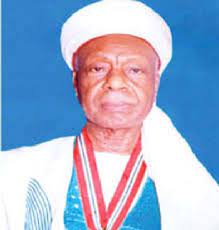
 The Nigeria Labour Congress (NLC) has handed over what it called Nigerian ‘workers’ Charter of demands’ to the Presidential candidate of the ruling All Progressives Congress (APC), Asiwaju Bola Ahmed Tinubu.
 The air component and ground troops of Operation Hadarin Daji have recorded a major victory after eliminating terrorists in Malele Village of Dansadau Local Government Area of Zamfara State.
 Former senior special assistant on media to ex-President Goodluck Jonathan, Dr. Doyin Okupe has paid the sum of N13 million to escape 52 year jail term slammed on him by an Abuja court over money laundering.



