Ordinarily, we consider it beneath us as well-bred media professionals to continue to engage in public spat with Mr. Nduka Obaigbena, a congenital blackmailer and hustler, especially in deference to ceasefire calls by well-meaning leaders and elders. The interventions followed our statement on Monday entitled “Obaigbena and His THISDAY/ARISE News’ Hypocritical Grandstanding On Public Morality”.
But we crave the indulgence of these well-meaning Nigerians to allow us respond to Obaigbena’s latest rambling, called a statement.
The largely diversionary composition was an attempt to deodorise his ethical problems.
Obaigbena tried to deflect attention from those pertinent issues we raised about ethics. There is nothing he said to creditably detract a jot from our accurate summation of his well-known perverse and ignoble approach to media practice over the years, a practice that continues to undermine the integrity of journalism profession in the country.
In his first statement attacking us, Obaigbena craftily attempted to mis-characterise as an attack on free speech, our principled stand against his blackmail to have Asiwaju Bola Ahmed Tinubu appear on Arise TV and its PDP sponsored Town Hall meetings.
In the second statement, he was still adamant that our candidate must attend his Town Hall debate, despite our stance that our candidate is already executing another communications strategy to reach the most important target: the Nigerian voters. We, repeat again: We will not make our candidate available to validate a scheme which, in the light of unassailable information at our disposal, is nothing but a racket by the Arise TV owner, designed to embarrass our candidate.
We now proceed to give a blow-by-blow response to Obaigbena’s latest very poor attempt at red-herring:
Rigmarole on Dasukigate: How laughable that Obaigbena is now denying he was not in EFCC custody for receiving illicit funds from NSA Sambo Dasuki. He attempted to rationalise that the money received was compensation for losses incurred by newspaper proprietors following the clampdown by security agents. But he craftily glossed over the meat of the matter: the grave misconduct to have the funds paid into the bank account of Hydrocarbon, a shell company (obviously set up for money-laundering) to which Obaigbena was the sole signatory. Since NPAN has bank accounts, why was the money not transferred there directly?
Moreover, the petty lie in Obaigbena’s was punctured by the joint disclaimer issued on 12 December 2015 by Tribune, New Telegraph and Peoples Daily in whose names he had collected money. The three newspapers said they did not receive a kobo.
His claim that he pocketed the chunk of the money received from Dasukigate as compensation for the alleged terrorist attack on his Abuja office is a laughable afterthought.
Rewriting June 12 story: Contrary to Obaigbena’s lame attempt to rationalise his campaign against June 12 as action taken in furtherance of his membership of NRC, nothing can be further from the truth. His long story about sitting close to MKO Abiola on a London-Johannesburg flight begs the questions. He craftily sidestepped the issue of being recruited by the Babangida military regime to go on CNN to unconscionably declare “Abiola did not win any election”, shortly after NEC suspended the announcement of June 12 results. That dirty campaign was to prepare the grounds for Babangida’s eventual national broadcast on June 23 annulling the results. If Obaigbena was pro-democracy as he falsely claims, why did he take up media consultancy work to Ernest Shonekan, the head of the Interim National Government, cobbled together by Babangida to legitimise the illegality?
South African/London fiascos: Obaigbena also tried to downplay the gravity of his misadventure in South Africa for which he had to flee, abandoning his office equipment and furniture till today. On one hand, he lied that it was President Nelson Mandela who asked that he set up the newspaper in South Africa because the dominant newspapers in the country were owned by the white establishment. On the other hand, he claimed that the same white establishment frustrated his venture. He forgot that when he floated ThisDay South Africa in 2003-4, a black President was in power!
Contrary to claims that he met a hostile environment, his habitual unethical practices gave him out. His business model of funding his newspapers and a champagne lifestyle from proceeds of blackmail rackets fell flat in South Africa where rules of a good society are rigidly enforced. To deceive advertisers, he inflated his circulation figures which the regulatory agency frowned at. Also, he owed printers and his workers. Gale of complaints against the “carpetbagger from Nigeria” soon reached the authorities and one official was quoted as famously saying, “You call yourself Thisday, very soon it will become That-day”. The prophecy came to pass with chilling accuracy soon after.
On his misadventure in London, Obaigbena disingenuously put it down to Forex crisis as if it happened this year or last year. The details of the judgment by the presiding judge were damning enough: Obaigbena lacks the personal honour and integrity to run any decent company.
His claim that his seven year directorship ban has been appealed is not the full story. He already lost one appeal at the Chancery in August.
Payment of salaries/pension: Obaigbena tried to deflect his chronic indebtedness as something common in the media industry. It is an affliction peculiar to THISDAY/Arise which purports to make lots of money (as reflected by bumper advert patronage) but curiously still fails to pay workers as at when due. Even when the economy was relatively “good”, Obaigbena never paid workers regularly. His popular saying to staff as well known in the industry, is that : “THISDAY/Arise ID card alone is your meal ticket”.
Such corrupt philosophy underlies the unethical practices in media companies run by Obaigbena.
A classic illustration of the untold hardship and dehumanization of his workers was provided by Mr. Paul Ibe, who is now the Special Adviser on Media to Alhaji Atiku Abubakar.
Obaigbena tricked Ibe to South Africa with mouth-watering offers. But Ibe ended up enduring hunger there before finding his way back to Nigeria. Following a suit filed at the National Industrial Court in 2011 (suit no NICN/ABJ/26/2011), Mr. Ibe was awarded damages against Obaigbena for backlog of salaries, non-remittance of taxes and pension deducted from his wages over the years and outstanding entitlement. Tens of other staff of Thisday have died due to lack of money for medical care while awaiting Obaigbena to pay them their entitlements.
Open partisanship/Mefy racket: We observe too that Obaigbena disingenuously sidestepped the questions raised about employing the services of Dr Reuben Abati, a card-carrying member of PDP as anchor person on Arise TV, as well as Obaigbena’s multi-million Naira consultancy role in the ill-fated attempt by a sitting Central Bank governor, Godwin Emefiele to compete for APC’ presidential ticket.
These are weighty moral issues Obaigbena, with all his resourceful facilities to lie and dissemble, could not defend.
Again, we challenge him to deny if Abati wasn’t the running-mate of Senator Buruji Kashamu on PDP’s platform in the governorship contest in Ogun in 2019. Kashamu was a wanted drug lord in the US. Of course, the same Abati, who never allows any opportunity to pass without attacking Asiwaju Tinubu daily, would have been one of those Obaigbena would have lined up at his dubious Town Hall meetings to “interrogate” Tinubu! Such shameless, unethical practice!
Further, while pontificating on public morality, Obaigbena conveniently ignored the perversity of collecting hundreds of millions as “media consultant” to Godwin Emefiele, the occupant of a critical public office from which utmost sobriety and non-partisanship is expected. Through patronizing reportage in THISDAY/Arise, Emefiele was egged on to openly descend into the political arena and bid for the presidential ticket of APC in its last primaries in what is now commonly called the “Mefy racket”.
This has antecedents: Obaigbena was also “consultant” to President Jonathan as he was to Chief Ernest Shonekan. Whatever happened to journalism ethics?
The culture of media merchandising: In a futile attempt to burnish his image, Obaigbena resorted to dropping the names of U.S. and UK leaders who had attended events staged by him. Dropping the names and pictures of these former Western leaders who attended paid-for-appearance ThisDay events as if they attended when serving in office, is another Obaigbena’s vainglorious clout chasing scheme to scam the public. He failed to disclose that the high-profile personalities who delivered keynote addresses at such events were handsomely paid from money he collected through media blackmail from captains of industries notably bank chiefs. To con the outside world, Obaigbena had boasted in an interview with New York Times that he had corporate fortune of $100m accruing to his company annually. But later, tax officials in Lagos could not reconcile those bogus claims with his tax records and non-remittance of taxes deducted from workers. It was so easy to expose his fake lifestyle.
Since Nduka Obaigbena introduced his brand of blackmail and extortionist brand of journalism into Nigeria, generation of Bank CEOs, company Chief Executives, politicians and Governors from 1999 have suffered in silence, seeking liberation from oppressive journalism by intimidation. In 2009, Nduka Obaigbena raided Niger Delta states with his Thisday Entertainment’s packaged Niger-Delta Peace Concert. He coerced the Niger-Delta Governors then to contribute hundreds of millions of Naira with a promise to bring A-list pop stars such as Jay-Z and Beyonce to perform. After collecting the money the promised superstars didn’t show up. One of the governors was at the airport till almost midnight waiting to receive the superstars. These governors complained and suffered in silence because they were afraid of Nduka and his Thisday Newspaper which he has turned to instrument of oppression.
8. We took notice of Reuben Abati’s ramblings on Arise TV on his Wednesday Morning Show where he laboured in vain to defend his despicable record and perversions. Abati queried our statement that he is a registered member of PDP.
The query is rather for him. How did he become a deputy governorship candidate to Late Senator Buruji Kashamu in 2019 without a membership of PDP as required by law?
We really do not expect much from Abati. He is a known pathological liar , who has lived on lies and deceit all his professional life. While he has successfully created the image of a conscientious public intellectual over the years, the fact is that he is a morally bankrupt man who has no scruples in selling his soul to the devil as long as money is involved.
Abati has very odious reputation within the corporate and political circles as “anything goes newspaper columnist” as long as the money is right.
A total of 138,309 statutory marriages were conducted by Federal Marriage Registries between 2016 to 2022.
The Minister of Interior Rauf Aregbosola in a document released today, December 15, said that the total number of places of worship licensed to conduct statutory marriages in the last seven years is 251.
“The total number of statutory marriages conducted in the period under review is 138,309, while the total number of places of worship licensed to conduct statutory marriages is 251,” the document read.
Aregbesola added that the Federal Government is planning to also establish no fewer than 20 additional marriage registries across the country, noting that the government desires to have a federal marriage registry in each senatorial zone.
“We commenced the process of expanding statutory marriage registries across the country. In the period under review, five new federal marriage registries were established in Benin, Kano, Jos, Owerri and Port Harcourt. We are in the process of establishing at least 20 more.
“Our goal is to set up at least one federal marriage registry in each of the senatorial zones where statutory marriages are patronised,” the document added.
Aregbesola stressed that the objective is to make the statutory marriage process easier and closer to the people who require the services.
The minister further noted that the ‘Legal Notices’ in the Marriage Act has been amended, stressing that the discord between federal and local governments had been settled.
“The ‘Legal Notices’ contained in the 2nd Schedule to the Marriage Act have been amended and approved by Mr President and published in the Federal Official Gazette of April 16, 2021, Vol. 108, while the review of other sections of the Marriage Act (MA) is still being processed.
“This is a monumental achievement as marriage registries and federal marriage registries bring to an end the discord between local governments by bringing them into the fold and recognising and authorising them to conduct statutory marriages upon the fulfilment of certain administrative guidelines put in place by the Ministry.”
TheNigeria Communications Commission (NCC) has warned Nigerians to be wary of a new Malware called “Schoolyard Bully.”
According to the Commission’s Computer Security Incident Response Team (NCC-CSIRT), the malware that steals Facebook account credentials has infected over 300,000 Android devices globally.
In its latest advisory, the NCC-CSIRT reminded Nigerian mobile users to only download applications from official sites and application stores.
The NCC-CSIRT advisory in this regard further recommended that users double-check each application and uncheck boxes that request extra third-party downloads when installing apps downloaded from the Google Play Store and to use anti-malware applications to routinely scan their devices for malware.
It added that researchers from mobile security firm, Zimperium, found several apps that transmit the “Schoolyard Bully” malware while disguising themselves as reading and educational apps with a variety of books and topics for their victims to study.
The malicious apps were available on Google Play, yet they have already been taken down. However, they still spread via third-party Android app shops.
The primary objective of the malware, which affects all versions of Facebook Apps for Android, is to steal Facebook account information, including the email address and password, account ID, username, device name, device RAM (Random Access Memory), and device API (Application Programming Interface).
How the malware attacks: Explaining how the malware attacks its victims, NCC-CSIRT said:
“The (Zimperium) research stated that the malware employs JavaScript injection to steal the Facebook login information. The malware loads a legitimate URL (web address) inside a WebView (a WebView maps website elements that enables user interaction through Android View objects and their extensions) with malicious JavaScript injected to obtain the user’s contact information (phone number, email address, and password), then send it to the command-and-control server.
“Furthermore, the malware uses native libraries to evade detection and analysis by security software and machine learning technologies.”
In case you missed it: Recall that the NCC’s Computer Security Incident Response Team (NCC-CSIRT) previously warned Nigerians about other possible cyber attacks. Most recently, it warned about the potential harm of participating in the Invisible Challenge on TikTok.
Earlier on, Nigerians were warned about the discovery of malware that compromises victims’ VPN (Virtual Private Network) accounts to attach messaging app, Telegram.
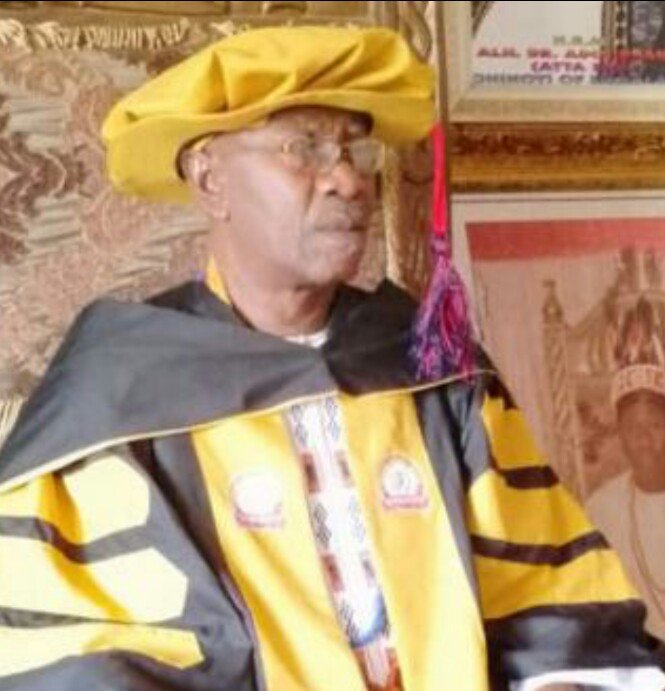
The Obobanyi of Ihima, in Kogi State, Samuel Adayi Onimisi, has been confered with Honourary Doctorate Degree and appointed as International Peace Advocate by the United Nations’ Positive Livelihood Awards Centre (UN – POLAC). The UN – POLAC, which conferred the award on the Obobanyi, who was once a practicing journalist, said that the Award and Appointment were in recognition of the following qualities which the Obobanyi of Ihima possesses. His vast knowledge of traditional history and Language development. His positive contribution and practical commitment to disputes resolution(Alternative Disputes Resolution). His unrivalled culture of Peace making, Justice & social harmony, Interreligious & ethnic Co-operation and general community services. His high quality Leadership mettle & Proven Integrity and promotion of universal moral values. Citation on him at the conferment of the honour on December 20, 2022 reads in part: “The Royal Person of the Awardee is a man of many parts with varied and diverse experience. He is defined by his activism in the Civil Society groups, identified with Voluntary Services and dedicated to Research for Development and Growth. He is a Chattered Marketer, trained Journalist and Cultural Anthropologist rolled into one. “His Royal Highness is an Author, was Editor and Publisher of the now rested “Our Vision” and “Kogi Focus” Newsmagazines respectively; and an ex-Columnist of the Leadership Newspaper. “He was also an Ordained Pastor of the Pentecostal Movement.” As a Grassroots Mixer and Mobiliser, the Royal Father is credited with achievements too numerous to reproduce here. A statement from his palace said that before ascending to the Throne of his Forefathers, as Obobanyi of Ihima, Samuel Adai Onimisi, had participated and contributed immensely to the political re-engineering of Nigeria, serving in various capacities under various political activist platforms and Movements and had worked with iconic personalities like late Chief Anthony Enahoro, Chief Olu Falae and Professor Wole Soyinka and others in the bid to restructure Nigeria and political party formation initiatives. The statement said that the most recent of these efforts was as a key member of the Mega Summit Movement, the group which mid-wifed the merger that brought about the All Progressive Congress(APC) into existence in 2013. We in Greenbarge Reporters online newspaper and hardcopy magazine, published in Abuja by Greenbarge Media and Communications Limited (GMCL) congratulate Chief Samuel Adai Onimisi on this achievement. You have brought honour not only to the exalted Stool of Obobanyi of Ihima but also Ihimaland in particular and Ebiraland in general. May you reign long.
The Publisher/Editor-in-Chief of THISDAY newspaper and ARISE News TV Channel, Nduka Obaigbena, has protested with vehemence, personal attacks launched on him by the Media Communication Directorate of the Bola Tinubu’s APC Presidential Campaign Council, accusing them of media bullying tactics, blackmail and fake news.
In a statement today, December 14, Obaigbena said that Dele Alake and Bayo Onanuga’s orchestrated media war, bullying tactics, blackmail and fake news will not work in the build up to the 2023 polls.
He said that rather, the duo should present their Presidential candidate for Town Hall meetings, debates and interviews by the independent media and not for “pre-arranged Townhalls where questions are pre-set, pre-arranged and rehearsed.”
“Present your Presidential candidate for Town Hall meetings, debates and interviews by the independent media that last for more than 8 minutes, and not pre-arranged Townhalls where questions are pre-set, prearranged and rehearsed.
“The resort to media bullying tactics, blackmail and fake news will not work. Journalists are not your opponents in the 2023 elections. When they go low we go high.
“Every day the media calls on public officials and those who seek public office to account. Since the media is a public trust, we will respond to the duo’s allegations in a comprehensive manner, even if we are not bound to so do, as we do not seek public office.
“But we believe we owe it a duty to our audiences who may have read the lies and fake news reminiscent of the Nazi Party’s chief propagandist Joseph Goebbels, or the incorrigible Iraqi Ali Hassan al-Majeed, otherwise known as Chemical Ali, who was still propagating his country’s successes in the 1990 Gulf War long after the allied forces had taken over the capital, Baghdad,’’ said Obaigbena in a statement given to Persecondnews in Abuja.
The statement from Obaigbina, titled: “LIES HAVE SHORT LEGS, THEY DO NOT RUN FAR. The Fake News from Bayo Onanuga and Dele Alake,” was signed by the Chief Of Staff, Office Of Nduka Obaigbena, Fauziya Mohammed.
It said: “We read with dismay Messers Dele Alake and Bayo Onanuga’s continued vehement personal attacks, supposedly on behalf of the APC PCC Media Communication Directorate (many APC PCC members have called us to dissociate themselves), on the Chairman/Editor-in-Chief THISDAY & ARISE News Channel, Nduka Obaigbena, and his media group.
“No misinformation, fake news of Bayo Onanuga and Dele Alake will change Obaigbena’s global trajectory.
“The journalists at THISDAY and ARISE News Channel are doing their duty by raising pertinent questions. Rather than addressing our questions, Alake and Onanuga countered with wild and misleading allegations and fake news.’’
The statement, however, categorized the “Lies And Fake News’’ into four:
1) M.K.O. Abiola and June 12: “When the late Chief M.K.O Abiola was the flag bearer of the Social Democratic Party (SDP) for the 1993 presidential election, Obaigbena was a senatorial candidate on the platform of the National Republication Convention (NRC). And Abiola supported SDP’s Candidate, the late Chris Okolie, leading to a strain in their relationship. Obaigbena was also Special Adviser to the NRC National Chairman Tom Ikimi in 1991, and later Hameed Kusamotu. Before and after the annulment of the 1993 presidential election, Abiola and Obaigbena were friends and remained friends till the end.
“Abiola was broad-minded enough to understand that Obaigbena, like his other friends in NRC, were competitors for power. But that competition ended when Abacha took power and all true democrats moved against military rule. Indeed, Abiola’s last public appearance was an Obaigbena event at the Nigeria Institute of International Affairs (NIIA) on June 8,1994 where he took the Abacha government to the cleaners while demanding his mandate. After his speech against the Abacha junta, he went underground only to reappear in Epetedo, Lagos Island, on June 12,1994 to declare himself president. The rest, as they say, is history.
“Some weeks before the Epetedo Declaration on May 9,1994, Abiola and Obaigbena had met on a South African flight from London to Johannesburg for Nelson Mandela’s presidential inauguration. Obaigbena sat on one side of an aisle seat, while Abiola sat on the other side of that aisle seat with his wife Kudirat taking the window seat next to him. On the Abiola delegation was the late Chief Ralph Uweche, and Cameron Daodu, the Ghanaian-born London Observer journalist and writer. Abiola and Obaigbena spoke throughout the 12-hour flight on the events leading to June 12 and thereafter made peace.
“Abiola reminded Obaigbena that he had driven all the way from Ilorin to Lagos City Hall to attend his wedding in 1987. I then invited him to my event of June 8,1994. As we arrived Johannesburg International Airport as guests of the Mandelas, Obaigbena was witness to his claim of being the elected Nigerian President and his delegation was driven of in official motorcade while Obaigbena made his way to the Carlton Hotel, downtown Johannesburg (the same hotel most invited guests lodged), and later bussed to Union Building in Pretoria, venue of the inauguration where he ran into Dele Olojede who was covering the event for a New York newspaper.
“Military leader at the time, Gen. Sani Abacha soon arrived; on his delegation were then foreign minister Babagana Kingibe, Naval Chief Allison Madueke, former president Shehu Shagari and ex-Head of State Yakubu Gowon. Abiola sat in studied silence and was like everybody inspired and driven by the Mandela moment in the sun.
“In the evening, Abiola did not attend the banquet; he left for London and then returned to Nigeria and to Owo for consultations. Shortly after, the National Democratic Coalition (NADECO) was formed in Lagos.
The next morning, I attended the meeting on the sideline with Mandela associates, who said they wished Abiola had not left; they wanted our assistance in setting up a newspaper as the South African media was controlled by the white minority. Although I promised to help, that opportunity did not come until 2003 when we started THISDAY South Africa which soon became easily one of the best newspapers in the country, by every ranking.
“However, the establishmentdid not like it that a Nigerian –owned newspaper was shaping public opinion. A South African special security official once invited me to play golf and told me pointedly that they couldn’t have a Nigerian newspaper Reporter at the (Union Buildings) State House. Despite the support of Mandela and Thabo Mbeki, who had become president then, the establishment insisted on South African ownership for THISDAY Newspapers.
“Shortly after that request, bank credit lines were frozen in South African banks despite presenting a US$5 million Citibank guarantee from GTBank. The banks simply refused to grant credit to the newspaper. After a few crisis meetings with South African investors and with Naaspers, and our refusal to cede editorial control in any co-ownership from the bigger South African media companies, we closed our SA operations after some $30 million USD investment over two years.
“At ARISE News Channel and THISDAY we believe the narratives around Africa and Africans and the black race can only change when we have strong global voices. We have used our “sorrow, blood and tears” (apologies Fela) to pioneer this process in South Africa, Europe and the USA. It can only get better. Aljazeera has done it for the Arab world; we too can.
“Even at home, back in Nigeria, we are being misrepresented and libelled by some envious peers. Contrary to the wild claims of Alake and Onanuga, we did not owe any tax authorities in South Africa; we also paid all our creditors in an organised exit strategy.
“If they have any such evidence to the contrary, they should publish it immediately. Indeed, our debacle in South Africa is one of the factors that persuaded the patriotic President Olusegun Obasanjo administration to cancel the South African Airways takeover of Nigeria Airways, given that Nigerian businesses were being discriminated against in that country.’’
2) ARISE Networks Limited (ANL) UK “Nduka Obaigbena’s disqualification as a Director is still a subject of litigation in the UK Court of Appeals and we wouldn’t want to make further comments on matters before the Appeals Court. It is sufficient to point out, however, that due to the foreign exchange shortage from Nigeria, ARISE Networks Ltd (ANL), one of our UK operating companies supplying personnel to the network, couldn’t meet creditor payments for some months, as at when due.
“The judge was of the considered opinion that ANL should have shut down its business in the UK instead of trading when there was no clarity as to when the FX situation would improve in Nigeria. The judgment made it clear that there was no evidence of any dishonesty against Obaigbena. Since those initial teething difficulties, other ARISE entities have traded out of the shortages and ARISE News Channel is now thriving in the UK, Europe, the USA, Middle East and 54 countries of Africa.
“We await the judgement of the Appellate Courts on ANL as to why and if we ought to have known that the FX shortages in Nigeria would not improve to continue trading.’’
3) EFCC and NPAN Refund: “That the Economic and Financial Crimes Commission (EFCC) invited Obaigbena and Executives of other national newspapers to clarify payments made to the Newspaper Proprietors Association of Nigeria (NPAN).
“Obaigbena as NPAN president at the time was invited, just as the executives of all newspapers involved (The Nation owned by Bola Tinubu inclusive), to clarify the payments received. He was not detained as he signed no bail bond, and indeed has never been detained by the EFCC or the Police in any criminal case, contrary to the fake news of Bayo Onanuga and Dele Alake.
“What were the facts of the EFCC invitation? For about two weeks security agents carried out raids of circulation vehicles of media houses, in the guise of searching for arms, disrupting their operations, resulting in losses of millions of naira in advert and newspaper sales.
“The Nation newspaper (owned by Bola Ahmed Tinubu) was perhaps the most affected, a situation they interpreted as being targeted as an opposition newspaper. The NPAN called a meeting of media owners and other stakeholders and decided to challenge the Jonathan government in a class action in court.
“President Goodluck Jonathan, however, invited newspaper owners to a meeting, which Bayo Onanuga attended in State House Marina, Lagos and committed to pay compensation for the losses. All affected newspapers were requested to submit their claims within a given deadline; 13 newspapers sent in their applications within the deadline, with The Nation filing a N200 million claim.
“However, Jonathan sought media owners understanding to pay N10m each and N130m was released to the NPAN by the Office of the National Security Adviser (NSA) for that purpose. The NPAN issued N9m cheque each to the 13 newspapers that met the application deadline, the media owners having collectively decided that the association make the payment less N1m each to run NPAN affairs.
“The Buhari government, however, took over and requested a refund ostensibly because the payment came from the arms fund, something the media owners were in no position to know, a priori. All the media houses that had collected their payment cheques refunded them to the NPAN which paid the refund.
“It is patently untrue and fake news that some media houses didn’t get the payment NPAN collected on their behalf; cheques were issued for pickup at the Secretariat and some newspapers had not picked up their cheques before the Buhari government requested a refund.
“Like the N130m for newspapers, the N500 million THISDAY refunded was compensation the Jonathan administration paid THISDAY for the Boko Haram bombing of the newspaper’s elegant Abuja office. The Jonathan administration paid compensation for, and/or rebuilt properties bombed by Boko Haram terrorists in Abuja, The United Nations and THISDAY inclusive. Again, when the Buhari administration requested refund, it was fully made. The property remains un-rebuilt.’’
4) Staff Salaries and Other Matters: “We have been very consistent in paying salaries regularly and as at when due every month at ARISE News Channel. We do not owe staffers at ARISE whatsoever despite the fake new of Bayo Onanuga and Dele Alake.
“Of course, all Newspaper houses are facing the tough economic environment arising from increasing cost of operations and dwindling copy and advert sales and most newspapers owe salaries from time to time. It is, however, taking hypocrisy to a new level for Onanuga to be sermonizing about salary payments.
“Those who passed through The News stable of which he was co-founder and CEO have not forgotten how the company owed 11-month salaries between 1996 and 1997, how protesting staff were forced to forfeit 5-month salary as “contribution to the democratic struggle”, and how union leaders were sacked over the same protest.
“All we do is create value. We have had over 3,000 people in the employment of THISDAY/ ARISE Media Group over the years and we are proud to have created value in human and resource capital.
“Dozens of those we have employed here have moved to become ministers, special advisers, ambassadors, commissioners, special assistants, and publishers of print and online newspapers, including several who are Tinubu’s personal staff and executives in his companies.
“And all have continued to serve with honour. The kind of journalism we practice and the training we give, make our staffers the most sought after by all leaders around the country.
“Obaigbena never sought to be NPAN president, he was invited to become President and yet he served for all of 10 years. Despite meeting only about N2m in the association’s account on taking over, with his robust leadership, the association was able to acquire a property of its own for a secretariat and he left N10m in the balance sheet. He was also invited to be the founding president of Africa Media Leaders Forum.
“Obaigbena organised seminars and conferences with the International Monetary Fund (IMF) and the World Bank (Programme of Seminars) in 1997 and 1999 in Washington, DC as Convener, the Nigeria Investment Summit, and has been keynote speaker at several national and international fora, including those of the World Economic Forum in Davos, Switzerland; Dalian, China; and Cape Town, South Africa.
“Obaigbena has hosted US presidents and global leaders like Presidents Bill Clinton and George W. Bush; Prime Ministers Tony Blair, Gordon Brown, Bertie Ahern, Vicente Fox and John Howard; Chancellor Gerhard
“Indeed, to invite a US president or a spouse of a US Secretary of State, you must go through White House Security vetting to show you are fit and proper.”
President Muhammadu Buhari has asked world leaders to rise up and raise youths that are devoid of religious extremism and bigotry.
He said that the country’s youths are its promise for a better future and therefore, solving their problems should be the priority of the government.
President Buhari spoke today, December 13, when the Secretary General of the Abu Dhabi Forum, Sheikh Al-Mahfoudh Bin Bayyah and his deputy, Pastor Bob Roberts of the US visited him in Washington, USA.
He spoke about the need to raise generations of youths devoid of religious extremism and bigotry, advising the group to continue to target the young people who are the promise of the future.
“Your work is very important in helping, especially the youth, to understand one another and at the same time, to be proud of their heritage. This great initiative by you will help future generations to plan well and live together in peace.
“On our part, we will continue to solve our problems, especially as they relate to the youths. We are big in size and population, facing many challenges, but in many areas, we are trying. In seven-and-a-half years, I have done my best.”
The Foundation Secretary General said that they had come to inform the President, and to invite him to attend the conferment upon him, the Abu Dhabi Foundation’s award in recognition of his outstanding achievements in promoting peace and security.
They said that the conferment was in line with the Foundation’s work in fighting religious extremism and promoting peaceful coexistence and dialogue amongst all religions.
A chieftain of the Peoples Democratic Party (PDP) and former military governor of Ondo State, Chief Bode George, has vowed that he will not vote for the party’s Presidential candidate, Atiku Abubakr in the next year’s election
In a chat with Arise TV today, December 13, George, who is one of the prominent members of the PDP who had supported the call for the National Chairman of the party, Dr Iyorchia Ayu, to step down, said: “I will not vote for the presidential candidate of our own party. Let them sit down and think over it. It is not negotiable; every Nigerian is important for this election.”
Saying that the lingering crisis bedeviling the party might cause its defeat in the 2023 presidential election, Bode George said: “until this party returns to the founding fathers’ principles of unity with equity, fairness and justice being the pedestal for any political decision taken in this party, and ensuring broad-mindedness to accommodate the concerns of all zones in this country, PDP becomes vulnerable to disaster in the 2023 elections.
He said that the South West has not held the position of the national chairman since the party was founded and it must be corrected before the 2023 elections.
“It is not a solution that cannot be handled. All we are saying is give what belongs to Caesar what belongs to Caesar. Give us what belongs to us; Turn-by-turn Nigeria limited.
“Take for example, what I am angry about is: the first chairman was the late Solomon Lar from North Central, the second chairman, North-Central, the third chairman, Audu Ogbe, was from North-Central, the fourth chairman, Amadu Ali, from North-Central; Kawu Baraje, from Kwara, was also North-Central. Now you have Ayu, also North-Central.
“The South-West has never enjoyed this position since the party started almost 25 years ago. What is our crime? If you are telling us you want to rule this country, you have to weave all the tribes and all the people together.”
President Muhammadu Buhari has asked world leaders to rise up and raise youths that are devoid of religious extremism and bigotry.
He said that the country’s youths are its promise for a better future and therefore, solving their problems should be the priority of the government.
President Buhari spoke today, December 13, when the Secretary General of the Abu Dhabi Forum, Sheikh Al-Mahfoudh Bin Bayyah and his deputy, Pastor Bob Roberts of the US visited him in Washington, USA.
He spoke about the need to raise generations of youths devoid of religious extremism and bigotry, advising the group to continue to target the young people who are the promise of the future.
“Your work is very important in helping, especially the youth, to understand one another and at the same time, to be proud of their heritage. This great initiative by you will help future generations to plan well and live together in peace.
“On our part, we will continue to solve our problems, especially as they relate to the youths. We are big in size and population, facing many challenges, but in many areas, we are trying. In seven-and-a-half years, I have done my best.”
The Foundation Secretary General said that they had come to inform the President, and to invite him to attend the conferment upon him, the Abu Dhabi Foundation’s award in recognition of his outstanding achievements in promoting peace and security.
They said that the conferment was in line with the Foundation’s work in fighting religious extremism and promoting peaceful coexistence and dialogue amongst all religions.
The detained leader of the proscribed Indigenous People of Biafra (IPOB), Nnamdi Kanu, has accused those he referred to as “enemies of his peaceful movement” of funding the sit-at-home order in the South East, asking the people of the region to fish out the criminals from their hideouts.
Speaking today, December 13, through his Counsel, Ifeanyi Ejiofor, at the Department of State Services (DSS), in Abuja, during his routine meeting with his legal team, Kanu commended the people of the South East for ignoring the recent sit-at-home order in the region.
“Onyendu Kanu directed that the criminals who are still on rampage, ostensibly being funded by the enemies of his peaceful movement in their desperate bid to ensure that our land is completely destroyed, should be fished out from their hideouts.”
The detained leader requested that UmuChineke should monitor the modus operandi of the financiers of the mayhem in the Southeast, whom he described as “soulless beings” and that they should be discretely smoked out from their various hideouts.
Kanu condemned the killings and destruction by these criminal elements.
Lately, there has been a series of killings and destructions in the South East.
The attacks followed the sit-at-home order issued by Finland-based agitator, Simon Ekpa.
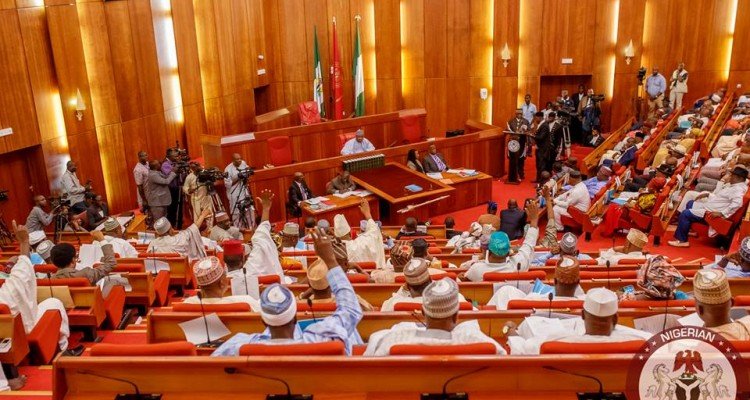
Senate has threatened the Permanent Secretary, Ministry of Finance, Budget and National Planning with a warrant of arrest if the Director, Cash Departments fails to appear before it tomorrow to provide sensitive documents related to disbursement of Service Wide Votes and missing N113 million on salary adjustment for Joint Admission Board Matriculation (JAMB). Speaking in Abuja, Chairman, Senate Committee on Public Accounts, Senator Matthew Urhoghide, said that the threat became imperative over the absence of the Director, having been invited three times and refused to honour the invitations.
Senator Urhoghide, who spoke at the commenced sitting of the Committee when the Director failed to come, but only the Joint Admission and Matriculation Board, JAMB, said the Committee had written a letter of appearance to the Ministry on 20th of October, 2022 and the letter was received on 21 October, 2022 by the Ministry to also give details of released to all the Ministries, Departments and Agencies (MDAs) including Police and Armed Forces.
According to him, another letter was written to the Ministry on December 8, 2022, on the issue concerning missing N113 million of salary augmentation for JAMB. Meanwhile, the office of Accountant General of the Federation, (AGF) told the Committee yesterday that the N113 million was released to JAMB in May 2017 for salary augmentation.
In the invitation letter written to the Ministry of Finance, the Ministry was invited to make clarification on the matter at stake at the Committee’s room yesterday which the Ministry officials failed to honour.
The representative of JAMB, Director of Finance and Administration, Mufutau Bello told the Committee that the N113 million was not released to them, just as he argued that if the money was released, it would have cut across the whole year.
According to him, it would cut across all MDAs using CONLESS, if there is a shortfall in May, it will spread to the whole year.
Not happy with the Development and frequent shunning of the Committee by the Permanent Secretary of Ministry of Finance and the Director, Cash Management of the Ministry, Senator Urhoghide then gave the Permanent Secretary 48 hours to appear and provide the relevant documents to the Committee or face warrant of arrest by next week. According to him: “they have to appear before the Committee by Thursday this week since JAMB has denied knowledge of that release, we want to interface with them in your presence Cash Management Office has to come before this Committee, this payment was used to clear salary adjustment of 2017. He warned that failure of the Ministry Permanent Secretary to appear on Thursday will lead to warrant of arrest by next week.
Meanwhile, the Senate yesterday approved the 2023 budget of the Nigerian Communications Commission, NCC of N559,080,711,000.00
The passed budget was sequel to the presentation of the report by the Chairman, Senate Committee on Communications, Senator Oluremi Tinubu, APC, Lagos Central. The NCC 2023 budget is N559,080,711,000.00 made up of total recurrent expenditure of N86. 7 billion, total capital expenditure of N5. 2 billion and special projects of N35 bilion.
In the report, the Commission is expected to transfer N416bn out of the projected revenue, to the Consolidated Revenue Fund. The Senate also passed the Universal Service Provision Fund 2023 budget of N16bn which is made up of N2. 4 billion recurrent expenditure, N124.8 billion capital expenditure and projects expenditure of N13. 4 billion.
We use cookies on our website to give you the most relevant experience by remembering your preferences and repeat visits. By clicking “Accept”, you consent to the use of ALL the cookies.
This website uses cookies to improve your experience while you navigate through the website. Out of these, the cookies that are categorized as necessary are stored on your browser as they are essential for the working of basic functionalities of the website. We also use third-party cookies that help us analyze and understand how you use this website. These cookies will be stored in your browser only with your consent. You also have the option to opt-out of these cookies. But opting out of some of these cookies may affect your browsing experience.
Necessary cookies are absolutely essential for the website to function properly. This category only includes cookies that ensures basic functionalities and security features of the website. These cookies do not store any personal information.
Any cookies that may not be particularly necessary for the website to function and is used specifically to collect user personal data via analytics, ads, other embedded contents are termed as non-necessary cookies. It is mandatory to procure user consent prior to running these cookies on your website.









Obaigbena At A Glance, By Dele Alake and Bayo Onanuga
Ordinarily, we consider it beneath us as well-bred media professionals to continue to engage in public spat with Mr. Nduka Obaigbena, a congenital blackmailer and hustler, especially in deference to ceasefire calls by well-meaning leaders and elders. The interventions followed our statement on Monday entitled “Obaigbena and His THISDAY/ARISE News’ Hypocritical Grandstanding On Public Morality”.
But we crave the indulgence of these well-meaning Nigerians to allow us respond to Obaigbena’s latest rambling, called a statement.
The largely diversionary composition was an attempt to deodorise his ethical problems.
Obaigbena tried to deflect attention from those pertinent issues we raised about ethics. There is nothing he said to creditably detract a jot from our accurate summation of his well-known perverse and ignoble approach to media practice over the years, a practice that continues to undermine the integrity of journalism profession in the country.
In his first statement attacking us, Obaigbena craftily attempted to mis-characterise as an attack on free speech, our principled stand against his blackmail to have Asiwaju Bola Ahmed Tinubu appear on Arise TV and its PDP sponsored Town Hall meetings.
In the second statement, he was still adamant that our candidate must attend his Town Hall debate, despite our stance that our candidate is already executing another communications strategy to reach the most important target: the Nigerian voters. We, repeat again: We will not make our candidate available to validate a scheme which, in the light of unassailable information at our disposal, is nothing but a racket by the Arise TV owner, designed to embarrass our candidate.
We now proceed to give a blow-by-blow response to Obaigbena’s latest very poor attempt at red-herring:
Rigmarole on Dasukigate: How laughable that Obaigbena is now denying he was not in EFCC custody for receiving illicit funds from NSA Sambo Dasuki. He attempted to rationalise that the money received was compensation for losses incurred by newspaper proprietors following the clampdown by security agents. But he craftily glossed over the meat of the matter: the grave misconduct to have the funds paid into the bank account of Hydrocarbon, a shell company (obviously set up for money-laundering) to which Obaigbena was the sole signatory. Since NPAN has bank accounts, why was the money not transferred there directly?
Moreover, the petty lie in Obaigbena’s was punctured by the joint disclaimer issued on 12 December 2015 by Tribune, New Telegraph and Peoples Daily in whose names he had collected money. The three newspapers said they did not receive a kobo.
His claim that he pocketed the chunk of the money received from Dasukigate as compensation for the alleged terrorist attack on his Abuja office is a laughable afterthought.
Rewriting June 12 story: Contrary to Obaigbena’s lame attempt to rationalise his campaign against June 12 as action taken in furtherance of his membership of NRC, nothing can be further from the truth. His long story about sitting close to MKO Abiola on a London-Johannesburg flight begs the questions. He craftily sidestepped the issue of being recruited by the Babangida military regime to go on CNN to unconscionably declare “Abiola did not win any election”, shortly after NEC suspended the announcement of June 12 results. That dirty campaign was to prepare the grounds for Babangida’s eventual national broadcast on June 23 annulling the results. If Obaigbena was pro-democracy as he falsely claims, why did he take up media consultancy work to Ernest Shonekan, the head of the Interim National Government, cobbled together by Babangida to legitimise the illegality?
South African/London fiascos: Obaigbena also tried to downplay the gravity of his misadventure in South Africa for which he had to flee, abandoning his office equipment and furniture till today. On one hand, he lied that it was President Nelson Mandela who asked that he set up the newspaper in South Africa because the dominant newspapers in the country were owned by the white establishment. On the other hand, he claimed that the same white establishment frustrated his venture. He forgot that when he floated ThisDay South Africa in 2003-4, a black President was in power!
Contrary to claims that he met a hostile environment, his habitual unethical practices gave him out. His business model of funding his newspapers and a champagne lifestyle from proceeds of blackmail rackets fell flat in South Africa where rules of a good society are rigidly enforced. To deceive advertisers, he inflated his circulation figures which the regulatory agency frowned at. Also, he owed printers and his workers. Gale of complaints against the “carpetbagger from Nigeria” soon reached the authorities and one official was quoted as famously saying, “You call yourself Thisday, very soon it will become That-day”. The prophecy came to pass with chilling accuracy soon after.
On his misadventure in London, Obaigbena disingenuously put it down to Forex crisis as if it happened this year or last year. The details of the judgment by the presiding judge were damning enough: Obaigbena lacks the personal honour and integrity to run any decent company.
His claim that his seven year directorship ban has been appealed is not the full story. He already lost one appeal at the Chancery in August.
Payment of salaries/pension: Obaigbena tried to deflect his chronic indebtedness as something common in the media industry. It is an affliction peculiar to THISDAY/Arise which purports to make lots of money (as reflected by bumper advert patronage) but curiously still fails to pay workers as at when due. Even when the economy was relatively “good”, Obaigbena never paid workers regularly. His popular saying to staff as well known in the industry, is that : “THISDAY/Arise ID card alone is your meal ticket”.
Such corrupt philosophy underlies the unethical practices in media companies run by Obaigbena.
A classic illustration of the untold hardship and dehumanization of his workers was provided by Mr. Paul Ibe, who is now the Special Adviser on Media to Alhaji Atiku Abubakar.
Obaigbena tricked Ibe to South Africa with mouth-watering offers. But Ibe ended up enduring hunger there before finding his way back to Nigeria. Following a suit filed at the National Industrial Court in 2011 (suit no NICN/ABJ/26/2011), Mr. Ibe was awarded damages against Obaigbena for backlog of salaries, non-remittance of taxes and pension deducted from his wages over the years and outstanding entitlement. Tens of other staff of Thisday have died due to lack of money for medical care while awaiting Obaigbena to pay them their entitlements.
Open partisanship/Mefy racket: We observe too that Obaigbena disingenuously sidestepped the questions raised about employing the services of Dr Reuben Abati, a card-carrying member of PDP as anchor person on Arise TV, as well as Obaigbena’s multi-million Naira consultancy role in the ill-fated attempt by a sitting Central Bank governor, Godwin Emefiele to compete for APC’ presidential ticket.
These are weighty moral issues Obaigbena, with all his resourceful facilities to lie and dissemble, could not defend.
Again, we challenge him to deny if Abati wasn’t the running-mate of Senator Buruji Kashamu on PDP’s platform in the governorship contest in Ogun in 2019. Kashamu was a wanted drug lord in the US. Of course, the same Abati, who never allows any opportunity to pass without attacking Asiwaju Tinubu daily, would have been one of those Obaigbena would have lined up at his dubious Town Hall meetings to “interrogate” Tinubu! Such shameless, unethical practice!
Further, while pontificating on public morality, Obaigbena conveniently ignored the perversity of collecting hundreds of millions as “media consultant” to Godwin Emefiele, the occupant of a critical public office from which utmost sobriety and non-partisanship is expected. Through patronizing reportage in THISDAY/Arise, Emefiele was egged on to openly descend into the political arena and bid for the presidential ticket of APC in its last primaries in what is now commonly called the “Mefy racket”.
This has antecedents: Obaigbena was also “consultant” to President Jonathan as he was to Chief Ernest Shonekan. Whatever happened to journalism ethics?
The culture of media merchandising: In a futile attempt to burnish his image, Obaigbena resorted to dropping the names of U.S. and UK leaders who had attended events staged by him. Dropping the names and pictures of these former Western leaders who attended paid-for-appearance ThisDay events as if they attended when serving in office, is another Obaigbena’s vainglorious clout chasing scheme to scam the public. He failed to disclose that the high-profile personalities who delivered keynote addresses at such events were handsomely paid from money he collected through media blackmail from captains of industries notably bank chiefs. To con the outside world, Obaigbena had boasted in an interview with New York Times that he had corporate fortune of $100m accruing to his company annually. But later, tax officials in Lagos could not reconcile those bogus claims with his tax records and non-remittance of taxes deducted from workers. It was so easy to expose his fake lifestyle.
Since Nduka Obaigbena introduced his brand of blackmail and extortionist brand of journalism into Nigeria, generation of Bank CEOs, company Chief Executives, politicians and Governors from 1999 have suffered in silence, seeking liberation from oppressive journalism by intimidation. In 2009, Nduka Obaigbena raided Niger Delta states with his Thisday Entertainment’s packaged Niger-Delta Peace Concert. He coerced the Niger-Delta Governors then to contribute hundreds of millions of Naira with a promise to bring A-list pop stars such as Jay-Z and Beyonce to perform. After collecting the money the promised superstars didn’t show up. One of the governors was at the airport till almost midnight waiting to receive the superstars. These governors complained and suffered in silence because they were afraid of Nduka and his Thisday Newspaper which he has turned to instrument of oppression.
8. We took notice of Reuben Abati’s ramblings on Arise TV on his Wednesday Morning Show where he laboured in vain to defend his despicable record and perversions. Abati queried our statement that he is a registered member of PDP.
The query is rather for him. How did he become a deputy governorship candidate to Late Senator Buruji Kashamu in 2019 without a membership of PDP as required by law?
We really do not expect much from Abati. He is a known pathological liar , who has lived on lies and deceit all his professional life. While he has successfully created the image of a conscientious public intellectual over the years, the fact is that he is a morally bankrupt man who has no scruples in selling his soul to the devil as long as money is involved.
Abati has very odious reputation within the corporate and political circles as “anything goes newspaper columnist” as long as the money is right.