Home Blog Page 42

Rape Allegation: Lady Admits Lying Against Ex-minister Turaki, Apologizes
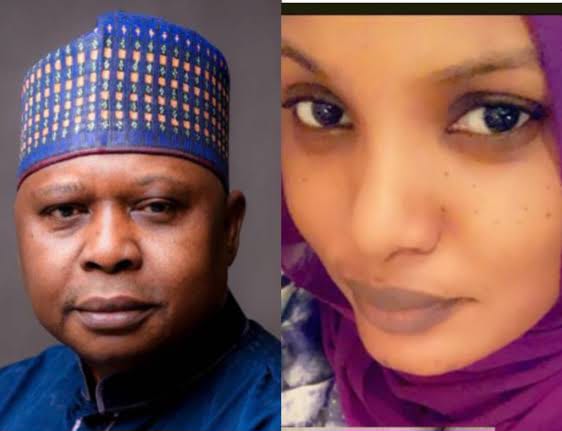
A young lady, Hadiza Baffa, who accused the former Minister of Special Duties, Alhaji Kabiru Tanimu Turaki of rape, has admitted lying and tendered public apology to the minister.
Hadiza Baffa, who withdrew her petition against the minister with the police, leading to the striking out of the case from the court, said that time “has become necessary both for the record and for posterity to set the facts straight, as silence is no longer golden.”
The court had, following the new development, discharged the former minister of the false allegations and charges.
This came even as the father of the lady, Musa Bashir Baffa, wrote a formal letter of apology to Turaki, pleading for forgiveness for his family, saying that his daughter, Hadiza Baffa and her mother, his former wife, as having been used by the former Minister’s political adversaries to tarnish his image.
It is on record that Hadiza Baffa had last year claimed that the former minister took advantage of her, violated her and harvested eight pregnancies for alleged ritual purposes and was also after her life.
As a result of the allegations and petition by Hadiza Baffa, the former Minister, who is also a Senior Advocate of Nigeria (SAN), was charged to court. But the matter was eventually struck out by the court after Hadiza Baffa admitted lying against Turaki, apologised and withdrew her petition with the police.
Turaki, in turn, in September 2024, sued Hadiza Baffa, the Nigeria Police Force, the Inspector General of Police and others over the matter.
According to Turaki, in a statement on Wednesday by his Special Adviser on Media, Lawal Umar: “In light of these facts, it is both fair and just to acknowledge that the allegations were unfounded and as Mr. Turaki has consistently maintained, were orchestrated by political adversaries using her as part of a smear campaign. He has refused to succumb to such tactics and remains committed to upholding his integrity, the rule of law, and the principles of justice.”
The statement however noted that Turaki, being a former minister and a SAN, refrained from commenting on the matter during police investigation to avoid being accused of interference and contempt for judicial processes.
This stance of the former Minister, the statement added, however, gave room for unverified narratives to trend on social media while Turaki: “allowed the authorities to conduct their work without interference.”
Turaki, however, stated that despite the court striking out the case after discharging him, and since “the matter has continued to trend with different narratives tailored to suit various sponsors,” he has found it imperative, for record purposes and posterity, to speak out.
Therefore, revealing the background of the lady’s false allegations against the former minister, the statement explained, “Hadiza Baffa was entrusted to Mr. Turaki’s care by her mother when she relocated to Abuja, as she was new to the city. In the spirit of longstanding friendship with her family, he accepted this responsibility and treated her in a manner befitting that of a guardian. However, following her repeated involvement in financial scams and subsequent detentions where Mr. Turaki was frequently called upon to intervene and settle matters he reported her conduct to her mother and withdrew his guardianship. Aggrieved by this decision, Hadiza Baffa petitioned the police, making spurious allegations against him, including claims of rape, unlawful termination of pregnancy, and threats to life, which she also published on various social media platforms.
“Following a thorough police investigation, Hadiza Baffa was unable to substantiate her allegations. Despite the lack of evidence, a charge was filed against Mr. Turaki. However, she later wrote to the police and the court to withdraw her petition, leading to the striking out of the charge and Mr. Turaki’s subsequent discharge.”
It further said: “Significantly, her father who had initially supported his daughter later reviewed the circumstances in full and wrote a letter of apology to Mr. Turaki, expressing appreciation for his care towards his daughter and regret over the entire episode. Subsequently, Ms. Baffa herself sent a written WhatsApp message from her verified number (0806 795 7035), stating: “Salaam, ya ibada? Allah ya karba mana. Seeing you yesterday in the witness box was heart-wrenching and it saddens me a lot, I couldn’t stop thinking about it. I never wished for all this to happen but unfortunately, we are here already. I want to withdraw my police case and for the sake of this holy month please forgive me, bygones be bygones. May Allah ease our affairs.””
The statement further said: “Regarding the DNA aspect of the matter, Mr. Turaki only became aware of the purported result through certain social media platforms and has challenged its authenticity in court. The Court has, in fact, restrained parties from relying on it pending the determination of the suit.”

Nigerian Govt Withdraws Criminal Charge Against “Unruly” Ibom Air passenger, Ms Comfort

Nigerian Government has withdrawn the criminal charge against Ms Comfort Emmanson, an Ibom Air passenger accused of unruly behaviour during a flight from Uyo, the capital of Akwa Ibom State to Lagos.
The government also reduced the flight ban on King Wasiu Ayinde Marshal for the same offence, even as it ordered that the suspension of the licences of the pilots of Value Jet over the K1 De Ultimate incident be reduced to one month.
The Minister of Aviation and Aerospace Development, Festus Keyamo, who made the position of the government known in a press release on his verified X handle today, August 13, said: “In the last 48 hours, I have been in consultation with critical stakeholders in the Aviation Sector and those involved in the unfortunate incidents regarding the unruly behaviours of certain individuals at our airports of recent.
“Though regrettable, we think valuable lessons have been learnt by all sides to these incidents and airport security protocol, especially, have been well highlighted for the travelling public. If nothing at all, the episodes have undoubtedly helped to raise public awareness about appropriate conduct within the aviation space.
“As highlighted in my previous statements on the last two incidents, clear wrongs were committed by both the offending passengers and staff of the airlines involved from all the evidence available to us and those available to the public. It is clear that all the actors involved cannot continue to highlight the injury or injustice done to them without acknowledging their own equal culpability.
“Therefore, after reviewing the entire incidents, including appeals made by well-meaning individuals and remorse shown by the actors, the following decisions have been reached:
THE CASE OF IBOM AIRLINE AND MS. COMFORT EMMANSON
“(a) In the case of the unruly passenger, Ms. Comfort Emmanson, on the Ibom Airline on Sunday, the 10th of August, 2025, I have conferred with Ibom Airline to withdraw the Complaint against her today. When the Police took her Statement in presence of her lawyer, she exhibited great remorse for her conduct.
“(b) Subsequent to the withdrawal of the complaint by the Complainant, the CP of Airport Command and the Police Prosecutor will immediately take the remaining steps to facilitate her release from Kirikiri Prisons within this week.
“(c) I have also conferred with the leadership of the Airline Operators of Nigeria (AON) and have appealed to them to lift the life-time flying ban imposed on her, to which they agreed. The details of the resolution will be made public by the AON subsequently.
THE CASE OF VALUEJET AND WASIU AYINDE MARSHALL (KWAM 1)
“(d) In the case of KWAM 1, the NCAA is to reduce his flight ban to a one-month period. FAAN will also work with the music star with a view to engaging him as an ambassador for proper airport security protocol going forward.
“(e) Having publicly demonstrated penitence, the NCAA is also to withdraw its criminal complaints against KWAM 1 earlier lodged with the Police.
“(f) In the case of Captain Oluranti Ogoyi, and the co-pilot, First Officer Ivan Oloba of VALUEJET, the NCAA is to restore their licenses after the same period of one-month ban after undergoing some mandatory professional re-appraisal. The details will be announced by the NCAA.
AIRLINE OPERATORS, AVIATION AND OTHER GOVERNMENT AGENCIES
“I have directed all relevant Aviation agencies in collaboration with other complementary agencies outside aviation to IMMEDIATELY begin a retreat NEXT WEEK to properly retrain and prepare our Aviation security personnel on how to deal with errant and disruptive passengers and how to deescalate potentially explosive situations. The retreat will be fully covered by the Press with the opportunity to ask all the relevant questions.
“The Airlines will also have their own session when the conduct and attitude of their staff towards members of the travelling public will be in full focus.
FINAL COMMENTS
“These above decisions were taken by Government and the airline operators purely on COMPASSIONATE grounds as Government will never pander to base sentiments, politically-motivated views or warped legal opinions when clear encroachment of our laws are involved.
“We are also sending a CLEAR MESSAGE that we take safety and security in the aviation sector very seriously and we have decided to draw a line after these clemencies.”

Again, Dangote Reduces Fuel Pump Price By N30

Dangote Petroleum Refinery has announced a further reduction in the ex-depot (gantry) price of Premium Motor Spirit, commonly referred to as petrol, by N30; from N850 to N820 per litre.
A statement today, August 12, by the Group Chief Branding and Communications Officer of the company, Anthony Chiejina, said that the reduction is with effect from today, 12th August 2025.
“As part of our unwavering commitment to national development, Dangote Petroleum Refinery assures the public of a consistent and uninterrupted supply of petroleum products.
“In line with our dedication to operational excellence and sustainable energy solutions, Dangote Petroleum Refinery will commence the phased deployment of 4,000 Compressed Natural Gas (CNG)-powered trucks for fuel distribution across Nigeria, effective August 15, 2025.”

Nigeria Shines At Namibia Oil And Gas Conference

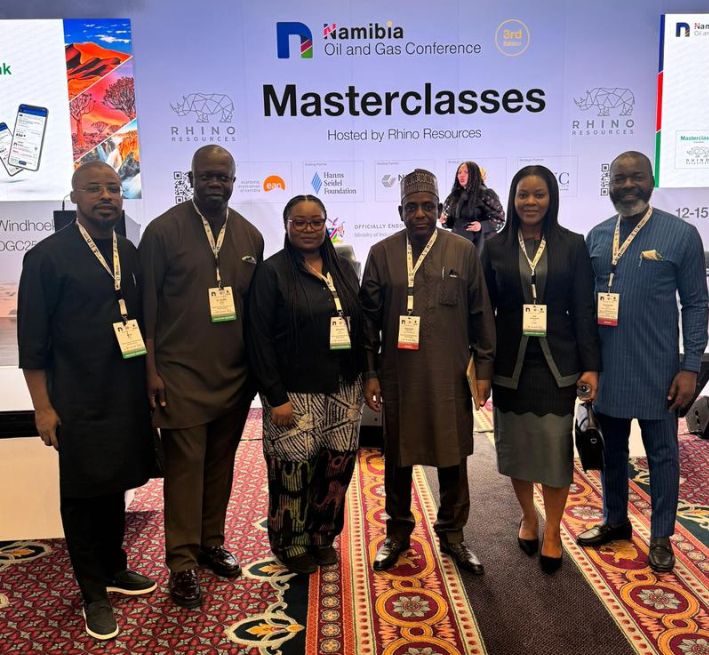
Nigeria’s local content successes in the oil and gas industry came up today, August 12, as example of what it ought to be, at the 2025 Namibia Oil and Gas Conference, at Windhoek, Namibia.
A statement today, by the General Manager, Corporate Communications of the Nigerian Content Development and Monitoring Board (NCDMB), Dr. Obinna Ezeobi, said that the event is being attended by policymakers, international oil and gas operating and service companies, Namibian indigenous players and other stakeholders. The goal is to enhance the local content ecosystem in the Southern African country’s evolving oil and gas industry.
The statement said that NCDMB and the Petroleum Technology Association of Nigeria (PETAN) are participating at the Namibian event in furtherance of their collaboration for the promotion of African local content, creation of opportunities and new markets for Nigerian oil and gas companies.
The Board’s delegation, according to the statement, is led by the Executive Secretary, Engineer Felix Omatsola Ogbe, represented by the Director, Corporate Services, Dr. Abdulmalik Halilu, while the PETAN team is led by its Chairman and member of NCDMB Governing Council, Wole Ogunsanya.
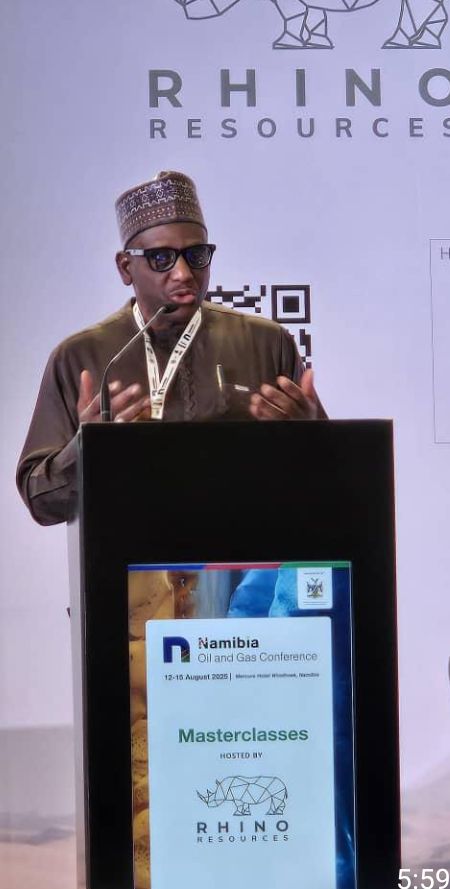
It said that Dr. Halilu delivered a presentation at the Local Content Masterclass at the opening, and outlined a number of strategies that African oil producing countries can adopt to grow their local content capabilities.
According to him, local content value proposition for Africa include research and technology development, local employment, strategic partnerships, ownership and control of assets, value chain optimisation, sustainable operations, increase production and utilization of locally made goods and contribution to gross domestic product (GDP).
He identified government’s role in supplier development as regulatory, developmental and promotional.

Using Nigeria as a case study, Halilu listed key achievements of NCDMB to include the establishment of world class fabrication and construction yards, human capital development, manufacturing initiative, service sector growth, financial support and establishment of integration capability for floating production and storage and offloading facility (FPSO).


On the new wave of local content development in Nigeria, the Director pointed to the promotion of equipment assembly and components manufacturing, development of small and medium enterprises, enforcement of research and development and technology transfer as well as prioritization of gas based industrialisation.
On the strategies that would support the growth of African local content, he urged oil-producing countries to specialise in different manufacturing and service areas of the oil and gas industry and develop their competencies to the right specifications. This will enable the countries to trade among themselves and contribute towards the manufacturing of complex oil and gas equipment.
He cited an example with the Boeing aircraft, which has critical components produced by different original equipment manufacturers (OEMs) and assembled at a designated factory. Such a model, he noted, will ensure that each African country develops a competitive advantage and can contribute effectively to the African oil and gas industry.
The representative of the Executive Secretary concluded by offering local content nuggets, which include that local content implementation is not a sprint but a marathon and must be executed as a business and not as corporate social responsibility.
Local content must also be cost effective and local peculiarities must be given key considerations, he noted.
Other recommendations include the fact that local content regulations must apply to all players in the industry and not only foreign companies or expatriates and the implementation takes time, consistency, and coordination.
He also suggested that capacity building initiatives should include grassroots and underserved communities, adding that local content practice would not grow if new projects are not developed.
He assured the audience that Nigeria is ready to partner with Namibia and other African nations to build an energy sector that empower the African people and drive shared prosperity.
The opening day also featured a presentation by NCDMB’s General Manager, Human Capacity Development, Esueme Dan Kikile, Esq.
He shared the Board’s success stories in human capital development.
The conference continues till Friday and is expected to feature another presentation by the NCDMB boss on Wednesday, while one of the panel discussions would feature the Chairman of PETAN, Wole Ogunsanya.

Ibom Air Forceful Pulls Out “Unruly” Passenger From Its Aircraft, Bans Her From Its Flights


Report reaching us at Greenbarge Reporters online newspaper indicated the forceful removal of an alleged unruly female passenger, Ms Comfort Emmanson, from Air Ibom Aircraft en-route Uyo–Lagos.
It was gathered that the young lady attacked the Chief flight attendant, known as purser, forcibly tearing off her wig, removing her glasses and throwing it to the floor, and using her footwear to assault her.
The unruly passenger, it was learnt, also slapped the purser several times and when the other cabin crew member tried to intervene, the angry passenger slapped her too.
“She then attempted to forcibly remove a fire extinguisher to use as a weapon, an act that could have damaged and grounded the aircraft.”

A statement today, August 11, from Ibom Airlines Limited, narrated how it all happened thus:

Ibom Air confirms that on Sunday, August 10, 2025, an incident occurred on board our Uyo–Lagos flight involving a passenger, Ms. Comfort Emmanson, whose conduct posed a serious threat to the safety of our crew, passengers, and aircraft.
Shortly before take-off from Uyo, Ms. Emmanson was instructed in line with standard aviation safety procedures, to switch off her mobile phone. She bluntly refused to comply until the Pilot-in-Command made an announcement, after which a fellow passenger seated beside her took the phone and switched it off. This action prompted a verbal tirade from Ms. Emmanson. The situation was eventually calmed, and the flight departed as scheduled.
Upon arrival in Lagos, Ms. Emmanson waited for all other passengers to disembark and then proceeded to confront the Purser who had earlier instructed her. She walked up to the unsuspecting Purser, stepped on her, forcibly tore off her wig, removed her glasses and threw it to the floor, and used her footwear to assault her. She slapped her several times and when the other cabin crew member tried to intervene, she slapped her too. She then attempted to forcibly remove a fire extinguisher to use as a weapon, an act that could have damaged and grounded the aircraft.
By this time, the Pilot-in-Command had alerted airport security. Before security could arrive, the Purser as seen on the viral video on the internet, prevented the passenger from leaving the aircraft until security arrived. The arrival of Ibom Air Security personnel, did not deter the passenger as she attacked them as well, lashing out violently at both Ibom Air and FAAN security. She was then restrained and removed from the aircraft by force. Even after disembarking, she continued to assault both Ibom Air and FAAN security staff, and even slapped the ground supervisor.
The passenger was removed from the ramp and taken into custody by FAAN security and handed over to the Nigeria Police Force for further investigation.
Ibom Air has since submitted a report on the incident to the Nigerian Civil Aviation Authority, and placed a travel restriction on Ms. Emmanson, who will no longer be permitted to fly on any of our aircraft.
Ibom Air reiterates its zero-tolerance policy towards any form of unruly or violent conduct that threatens the safety of passengers, crew, or equipment. Such behavior will be met with the strongest possible response, including legal action and permanent restriction from our services.
We commend the bravery and professionalism of our crew in handling this situation under extremely challenging circumstances, as well as the swift support from airport security and the Nigeria Police.
Safety remains our highest priority. We urge all passengers to comply with crew instructions at all times for the safety, security, and comfort of everyone on board.

31 States Cannot Attract Foreign Capital Inflow, But Spend Funds Recklessly – NBS Report

The National Bureau of Statistics (NBS), in its Capital Importation report for Q1, 2025 has revealed that 31 states of Nigeria failed to attract any form of foreign capital Inflow during the period under review.
This was despite collectively spending billions of naira in public funds on local and foreign trips purportedly aimed at driving investment.
The report however listed five states and the Federal Capital Territory (FCT) as having recorded foreign capital inflows during the review quarter with FCT emerging on the top with $3.05 billion, accounted for 54.11 per cent of the total capital Inflow.
Lagos State followed closely with $2.56 billion or 45.44 per cent, while Ogun State received $7.95 million (0.14 per cent). Other beneficiaries were Oyo State with $7.81 million, Kaduna State with $4.06 million, and Kano, trailing with mere $120,000.
The agency which is yet to publish results for the second quarter, took a cursory review of the budget implementation, reporting that only 26 states have published their financial records for both the first and second quarters of the year.
Benue, Lagos, Delta, and Katsina have so far released only their Q1 reports, while Akwa Ibom, Enugu, Ogun, Rivers, and Plateau are yet to make any financial records public for the period under review.
This is even as an analysis of the fiscal performance of each state, utilising data from the Q1 to Q2 budget performance reports obtained from each state’s website, revealed that 29 state governors spent N79.97 billion on domestic and international travel expenses between January and June 2025.
An analysis of the state-by-state breakdown of travel expenses revealed significant disparities in the amount spent by governors on local and foreign trips, with some states spending more than double the amounts recorded by others within the same period.
Lagos State, Nigeria’s commercial capital, recorded the highest expenditure, with a staggering N6.23 billion spent in the first quarter of 2025 alone. It was closely followed by Osun State, which recorded N6.21 billion, and Kano State, which spent N5.58 billion, placing it as the highest spender in the North.
Also ranking among the top spenders were Taraba State, which spent N5.22 billion, and Bayelsa, which committed N3.78 billion to travel-related expenses. Ekiti (N3.76 billion), Borno (N3.68 billion), and Cross River (N3.68 billion) also maintained high spending profiles, alongside Yobe (N3.70 billion) and Edo (N3.51billion).
In the North-East, Adamawa spent N2.24 billion, while Bauchi recorded N3.66 billion. Gombe spent N1.20 billion, and Yobe committed N3.70 billion. Borno State matched Cross River’s figure with N3.68 billion. From the North-Central, Niger State incurred N2.63 billion in travel costs, while Nasarawa and Benue reported N2.24 billion and N1.13 billion respectively, with Benue’s figure reflecting only Q1 expenditure.
Kogi and Kwara states recorded N1.75 billion and N1.2 billion, respectively. In the South-East, Abia state spent (N1.03 billion), Ebonyi state (N1.45 billion), and Imo state (N928.34 million). Enugu and Anambra states had not published their expenditure reports for the year at the time of this report.
For the South-South region, Bayelsa state led with N3.78 billion, followed by Cross River State (N3.68 billion) and Edo State (N3.51billion). Delta state reported N884.81 million in Q1 alone, while Akwa Ibom and Rivers States had not made any financial disclosures for the period under review. Kebbi and Sokoto in the North-West reported N1.53 billion and N2.59 billion respectively, while Zamfara state recorded N2.77 billion. Jigawa state spent N1.26 billion, Kaduna State (N1.86 billion), Kano State (N5.58 billion), and Katsina State (N548.24 million) in Q1.
In the South-West, Osun and Ekiti states led with N6.21 billion and N3.76 billion respectively. Ondo state spent N1.83 billion, Oyo state (N1.89 billion), and Lagos state N6.23 billion in Q1. Ogun State is yet to publish its financial report. Notably, Delta, Benue, Katsina, and Lagos only published their Q1 records, meaning their actual annual travel expenses may be significantly higher.
A geopolitical analysis of the expenditure revealed that South-West governors were the biggest travellers, accounting for N19.92 billion or 24.9 per cent of the total amount spent, even though only four of the six states in the region had available data.
The North-West states followed closely with N17.58 billion (22 per cent), while the North-East region recorded N13.92 billion (17.4 per cent) in travelling expenses. In the South-South region, state governors collectively spent N11.81 billion, representing 14.8 per cent of the total travel expenditure.
The North-Central 🙏 region governors spent a total of N10.79 billion, accounting for 13.5 per cent of the overall spend. In the South-East, travel expenses stood at N5.94 billion, amounting to 7.4 per cent of the total.
The wide-ranging figures have continued to raise concerns about fiscal discipline and value-for-money in governance, particularly in states battling infrastructure deficits. At different fora, financial experts have also raised concerns about states’ spending on recurrent expenditure, highlighting the need to embrace financial innovations.
Source: Economic Confidential.

Faforlife Health Products Company Storms Abuja

Nigerian company engages in local production of herbal health production, Faforlife, hit Abuja today, August 9.
No fewer than four thousand people thronged Chida Hotel in Jabi area of the capital city to witness the testimonies of those who have benefited from the company’s products.
A lady from Benue State, Ambassador Mary narrated how she was diagnosed with breasth cancer type two and after taking the Faforplife herbal product, she was healed.
“I had to fly to India to remove only the lump, and the medical personnel there were surprised how I got the cancerous tumor out. I had to go to India because almost all the hospitals I went to in Nigeria to remove the lump insisted that they had to get the tumor out too.”
The Chief Executive Officer of the company, Chief Francis Brave told the audience that the company is not only into herbal Production with One hundred percent local content but also is into raising hundreds of multimillionaires across the country.

He said that by next year, Faforlife would establish mobile Clinic in every community in Nigeria to further assert its relevant to the nation’s health care delivery system.

Audu Ogbeh, Late President Buhari’s Agric Minister Is Dead

Chief Audu Ogbeh

Audu Innocent Ogbeh, Minister of Agriculture in the government of late President Muhammadu Buhari is dead.
Ogbeh, who had also served as National Chairman of the Peoples Democratic Party (PDP) was aged 78. His death was confirmed in a statement by his family today, August 9.
The statement read: “It is with deep sadness that we announce the passing of our beloved husband, father and grandfather; Chief Audu Ogbeh.
“He passed away on the 9th of August 2025 at the fulfilled age of 78.
“He departed peacefully, leaving behind a legacy of integrity, service, and dedication to our nation and community.
“We are comforted by the many lives he touched and the example he set.
“Details of the funeral arrangements will be communicated in due course.
“We thank friends, colleagues, and well-wishers for their prayers and support during this time.
“We will appreciate some privacy at this time while we mourn the loss of our patriarch.”

We Detained Sowore Because He Would Not Speak To Us – Nigerian Police

Nigerian Police have said that they detained the publisher of Sahara Reporters online newspaper, Omoyele Sowore because he refused to speak to the officers.
“The same law that gives him the right to remain silent also imposes responsibilities on the police (to detain) when a suspect chooses not to talk.
“We cannot simply release a suspect because he has decided to keep mute. Procedures under the law are being followed.”
Speaking on the detention of Sowore, the Commissioner of Police in charge of the Special Intervention Squad, Abayomi Shogunle,said that his arrest followed his alleged refusal to make a statement during police interrogation, despite being confronted with two petitions against him.
According to Shogunle, the petitions accused Sowore of forging a police document, which he allegedly published online and engaging in cyberbullying.
“The two petitions were shown to him in my presence, alongside his lawyers,” Shogunle said in a video streamed by Sahara Reporters.
“One concerns forgery of a police document, and the other relates to cyberbullying. The law is clear—you have a duty to explain how you obtained such a document. But he refused to make a statement, even in the presence of his lawyers.”
Shogunle said that Sowore was not coerced to speak and that the police were following due process.
When asked by a lawyer why Sowore was being held beyond the constitutionally stipulated 24 hours, Shogunle insisted that the detention was lawful.
“We are professionals, and we are complying with the law. Everything required in keeping someone in custody is being observed.”
The police boss said that Sowore came voluntarily, “but the moment he refused to make a statement, his arrest was ordered. The law is being followed regarding his apprehension and detention.”
Meanwhile, Sowore has announced that he has been released from the custody.
In a post on his X (formerly Twitter), Sowore wrote: “I have been released from unjust, unwarranted, and unlawful detention.
“It is nothing to celebrate, but I can’t do without thanking you all for not giving up. You’ve all seen the power of unity.”
Sowore, who was presidential candidate of the African Action Congress (AAC) in 2019, was detained after honouring an invitation from the IGP Monitoring Unit at the Force Headquarters in Abuja.

How Politicians Are Bastardizing Nigeria’s Academic Institutions, By Deen Adavize

In a country where public universities face perennial underfunding, dilapidated infrastructure, and frequent strikes, Nigeria’s political class has found a new way to erode the dignity of its academic institutions through abrupt renaming, driven by political gratification rather than merit or history. This creeping trend, where institutions are renamed after politicians or individuals with little or no ties to their founding vision, is not only revisionist but also a calculated desecration of academic heritage.
The Nigerian academic landscape is littered with stories of such political interference. One of the most controversial attempts as reported in the dailies was in 2012 when the federal government under President Goodluck Jonathan sought to rename the prestigious University of Lagos to Moshood Abiola University. The backlash was swift and deafening. Students, alumni, and civil society groups vehemently rejected the move, staging protests across the nation. Many questioned the rationale behind the decision and decried the lack of consultation. Eventually, the government backtracked but the attempt left a sour taste in the mouth of many Nigerians.
Unfortunately, other institutions were not as lucky. Kogi State University, popularly known as KSU originally established to serve as a beacon of higher learning in the North Central region, was renamed Prince Abubakar Audu University by the state government in honor of the late former governor. While Abubakar Audu played a significant role in the founding of the university, critics argue that renaming the institution unilaterally without input from stakeholders undermines its neutrality and opens the door for political manipulation of academia.
Even more recently, news broke out, of the federal government’s plan to rename the University of Maiduguri (UniMaid) after former President Muhammadu Buhari. While some saw it as a tribute to a former head of state, many others interpreted it as a political maneuver that fails to respect the history, mission, and cultural significance of the institution. Beyond the name change lies the issue of credibility. How do international partners, researchers, and alumni reconcile such arbitrary changes with the continuity and stability expected of academic institutions?
The implications of this trend are deeply troubling. Globally, universities, by their nature, are meant to be independent centers of knowledge, critical thinking, and cultural preservation. Their names are often symbolic, carrying the weight of their history, founding ideals, and community values. When politicians impose name changes based on transient political motives, they effectively rewrite history and erode the identity of the institution.
Moreover, these changes are frequently announced with no input from students, faculty, alumni, or the host communities, stakeholders who are the lifeblood of any academic institution. The absence of due process not only undermines the democratic ethos expected in academic spaces but also stirs resentment and distrust.
One of the less discussed consequences is the impact on the institution’s global reputation. Nigerian universities are already struggling with international recognition, limited research funding, and minimal global partnerships. Frequent name changes confuse international collaborators and harm the continuity of institutional branding. Academic publications, citations, and alumni credentials become difficult to trace, affecting both academic visibility and employability of graduates.
This political meddling also sends the wrong message to young Nigerians. At a time when the country needs role models grounded in academic excellence, research breakthroughs, and innovation, politicians are glorifying themselves by imposing their names on public assets. It signals to the younger generation that political power, not scholarly impact or societal contribution is the ultimate currency of recognition.
This undignified trend is not isolated to the aforementioned institutions alone. Other institutions have also faced similar fates or proposals. The Federal University of Agriculture, Makurdi, was once renamed Joseph Sarwuan Tarka University, and the Federal University Ndufu-Alike Ikwo was changed to Alex Ekwueme Federal University. While some may argue that these individuals contributed to nation-building, critics maintain that renaming institutions in their honor without transparent dialogue reduces universities to mere political trophies.
It is worth noting that academic institutions around the world reserve such honors for individuals with groundbreaking contributions to knowledge or to the institution itself, not merely for holding political office. The University of Oxford, Harvard, and other globally revered universities maintain their identities for centuries, which partly contribute to their esteemed legacies. Nigeria should not be an exception.
If the goal is to honor distinguished individuals, there are many alternative means. Endowments, lecture halls, research chairs, and scholarships can be named after deserving figures without altering the institution’s foundational identity. Such gestures not only preserve the historical name of the institution but also contribute to its development in tangible ways.
The bastardization of academic institutions through politicized renaming is a symptom of a deeper malaise: the disregard for the sanctity of education in Nigeria. It is a distraction from the real issues, which are underfunding, brain drain, overcrowded lecture halls, and outdated curricula. Instead of investing in infrastructure, research grants, and staff welfare, politicians are rebranding campuses for vanity.
To safeguard the future of Nigerian education, a national policy must be enacted to prevent arbitrary name changes to public institutions without a comprehensive consultation process involving all stakeholders. Academic institutions must be protected from political interference, not just in nomenclature but also in governance and administration.
Until Nigerian leaders begin to see academic institutions as sacred grounds for learning rather than monuments for political memory, our universities will remain victims of ego-driven politics, disconnected from global academic progress.

  • Adavize is researcher and public affairs analyst, writes from Abuja.
Advertisement ADVERTORIAL
WP2Social Auto Publish Powered By : XYZScripts.com