

Tinubu Walking Into Nigeria From London

Presidential candidate of the ruling All Progressives Congress (APC), stepping into the soil of Nigeria from London, where he had been for a couple days now. He arrived today, October 6, 2022.
Presidential candidate of the ruling All Progressives Congress (APC), stepping into the soil of Nigeria from London, where he had been for a couple days now. He arrived today, October 6, 2022.
 The First Lady, Aisha, has narrated what it has been like being the wife of President Muhammadu Buhari from the time she married him at the age of 19.
“It is a reality that soldiers and military families have to live with challenge, despite its negative consequences.
“Being a soldier’s wife or a retired soldier’s wife and a wellness expert, I understand the challenges associated with PTSD and its impact on military families and the nation.
“My husband served the Nigerian Army for 27 years before he was overthrown in a coup d’état. He fought civil war for 30 months without rehabilitation; he ruled Nigeria for 20 months and was detained for 40 months without disclosing the nature of his offence.
“One year after he came out from detention, we were married, I clocked 19 years in his house as his wife, legitimately. I suffered the consequences of PTSD, because having gone through all these, and at the age of 19, to handle somebody, who was a former Head of State and Commander-in-Chief of Nigeria’s Armed Forces, to tell him that he is wrong is the first mistake you will make.”
“I want to thank DEPOWA for this foresighted vision of establishing a Post Traumatic Stress Disorder (PTSD) Centre for our soldiers. Indeed, PTSD is a mental health condition triggered by terrifying events.
Aisha spoke yesterday, October 4, as a special guest of honour at the ground-breaking ceremony for the Armed Forces Post Traumatic Stress Disorder Centre (AFPTSDC), initiated by the Mrs. Lucky Irabor-led Defence and Police Officers’ Wives Association (DEPOWA).
Aisha said that she suffered the consequences of PSTD at an early stage in her marriage to the president.
“So, at the age of 19, I had to figure out how to tell somebody of his calibre that he was wrong or right and that was the beginning of my offence in his house, and contesting elections in 2003 and failed, 2007, failed and 2011, the same thing – all without rehabilitation – I became a physiotherapist.
“Finally, the whole nation rose against the misuse of power and bad governance. He only succeeded when it became a movement and here we are today. He ruled Nigeria before and he is ruling Nigeria now and this is the last time and final.
“Failing election for three times was a big blow to every contestant but those that have contested for just yesterday, a simple primary election, they are still living in a traumatic condition, I tried to console them, I tried to talk to them, some of them have switched off their phones up till today, just because of a primary election.
“You can imagine myself at 19 years, handling somebody that went to war, suffered coup d’état, then lost several elections, and, finally, getting to the Villa in the 2015. Also, for a woman to tell them that this is wrong or right in Nigeria and Africa is a problem.”
She commended the sacrifices made by members of the armed forces and their contributions to nation building, saying: “In that case, I want to use this opportunity to appreciate members of the Armed Forces of Nigeria for their sacrifices and contributions to nation building.
“The fallen Heroes remain evergreen in our minds and many with us are wounded physically and mentally. I want to appreciate their wives and families; I want to let them know that the whole nation is with them.”
Aisha said that the PTSD centre was important to members of the armed forces and beyond, stressing that soldiers were the primary victims.
“This centre is timely, as PTSD is a problem that really deserved solution of this nature, and providing facilities for treatment and rehabilitation of patients is key.
“Therefore, fund raising is not the solution, the solution is the federal government that sent them to war front to take responsibility in taking care of the mental health of returnees from war front. PTSD cuts across all ages.”
The president’s wife, then, halted the scheduled fund raising for the project and pledged that the presidency and the armed forces would take it over.
“I thank DEPOWA for this initiative and the military establishment for supporting them. I call on them to ensure that this centre provides quality and sustained care for soldiers that suffer from PTSD.
“It is the responsibility of the whole armed forces to extract from their budget and build this centre. Mrs Irabor, it is no longer your project; it is my project and the project of Mr. President, we are going to work round the clock to make sure that it is completed and commissioned before we leave office.”
President of DEPOWA, Mrs. Vickie Irabor, said the centre was born out of compassion for families of soldiers and research conducted by the association.
“We have identified the extraordinary challenges being faced by officers and soldiers on the frontlines in securing our nation by fighting terrorism, banditry, and other societal ills. Some of these challenges range from physical injuries, mental health issues, and sometimes, sadly, paying the supreme price in the defence of our dear nation Nigeria.
“While we have hospitals to take care of physical injuries, we have realised that there is a huge gap in mental health responses globally, including Nigeria, especially, in the treatment, management, and rehabilitation of PTSD, faced by families in the armed forces.
“In response to these issues, DEPOWA, under my leadership, decided to pursue the implementation of a novel, first-of-its-kind, Legacy-based Armed Forces PTSD Centre. When completed, the centre will help evaluate, counsel, and provide adequate support to personnel and, by extension, their families before reintegration from conflict zones.
“It will also help to enhance national, regional, and global stability, as well as help, boost military capability to continue to deal with all forms of insecurity. I believe that establishing this facility will be a step in ensuring the stability of military families post-conflict engagements and encouragement to officers and soldiers that help is available should they need it after assignments. The facility will also serve as a repository for future research on mental health challenges in the Armed Forces of Nigeria.”
The event was attended by former President of Malawi, Dr Joyce Banda; Vice President of Liberia, Dr Jewel Howard-Taylor; Member, UK House of Lords, Baroness Sandy Verma; Borno State Governor, Babagana Zulum; Minister of Defence, Maj-Gen Bashir Magashi (rtd); Chief of Defence Staff, Gen Lucky Irabor; and the service chiefs.
Source: THISDAY.
 “Presenting Obi as a (Presidential) candidate (of the Labour Party (LP) is what any rational human being should not even think about.
“Presenting Obi as a candidate; a man who failed in Anambra. Nothing to show for in Anambra and that is the best Igbos can present. I feel sorry for Igbos.”
These were the words of the former Niger Delta militant leader, Asari Dokubo while reacting to members of Peter Obi Movement that threatened him.
He said: “anybody who talks you abuse them…you can’t abuse me. You can’t do me anything. If you come I go pursue you. Me na Tinubu I dey o. Na Tinubu go win this election o. Obi self no go carry third. I be coward? I dey here.
“Obi is going nowhere. This your Obi movement is a joke.”
According to Dokubo, Peter Obi should be in jail for investing the funds of the Anambra State government while he was a Governor.
He queried Obi’s movement on claim of staging two million-man match in a fifteen thousand capacity Jos stadium.
“In fifteen thousand capacity stadium and you held a 2 million-man match? You people should stop lying.”
 Presidential candidate of The Labour Party (LP), Peter Obi has questioned the rational in declaring the Indigenous People of Biafra, IPOB a terrorist group by the Federal Government of Nigeria.
In an interview with Channels Television today, October 5, Peter Obi said that IPOB members live around him and do not constitute a threat to the country.
“The only thing I disagree with is naming IPOB terrorist; they are not terrorists. “Those who took the decision may have information that I don’t have.
“I stay in Onitsha, and I can tell you that they are people. I pass them on the road every day.
“I meet and live with them; in fact, I usually see people gathering, and I have never had the sense of threat or molestation from them, even when they gather,” he said.
The Nigerian government had long proscribed IPOB, declaring it a terrorist organization for pursuing the creation of Republic of Biafra out the Nigerian state, and doing so violently.
Members of the group have killed many police officers, soldiers, destroyed government structures, including police stations across Igbo land.
 Congress of University Academics (CONUA), an academic Union in the Nigerian universities just registered, ostensibly as rival to the embattled Academic Staff Union of Universities (ASUU), has resolved not to allow university education to be traumatized by academic Union.
In a statement today, October 5, the National Coordinator of CONUA, Dr. Niyi Sunmonu, described the registration of the Union as monumental and historic.
“The registration of the Congress of University Academics (CONUA), as a trade union in the Nigerian university system, is monumentally historic. The hurdles we have faced to get here, since 2018 when we submitted our application for registration, have been seemingly insurmountable.
“The registration is therefore the validation of the power of the human will. It asserts the value of courage, initiative, focus, tenacity, patience, forbearance and persistent positive thinking.
“We are immensely grateful to the Honourable Minister of Labour and Employment, Dr. Chris Ngige, and his team of diligent staff for insisting on merit, due process and thoroughness all through the processing of our application for the registration of CONUA. “The very strict and dispassionate review of our application brought out the best in the membership of the union.
“We regard the registration of CONUA as a sacred trust, and pledge to reciprocate by devoting ourselves unceasingly to the advancement of university education in this country.
“We would make the details of our programmes available to the public in due course. “For now, we are giving the assurance that we would work to ensure that the nation is not traumatised again by academic union dislocations in the country’s public universities.
“We are also deeply grateful to the numerous personalities and well-wishers whose good counsel and concrete actions have facilitated the success we have witnessed today.
“We believe in the saying that to whom much is given, much is expected. “We would therefore constantly strive to make them all proud of CONUA.”
 Femi Falana (SAN)
A Nigerian constitutional lawyer, Femi Falana, SAN has cried foul over the registration of splinter academic unions of universities which he said will neither dismember nor disorganize the striking Academic Staff Union of Universities (ASUU).
Falana, in an interview today, October 5, in Arise TV’s Newsday, described the registration as illegal and a desperate measure by the government to break the strike.
According to Falana, ASUU has been at the forefront of sanitizing the Nigerian university system looking for funding to power the universities.
“Government has tried various measures but the latest one is perhaps going to embarrass the government because it is an illegal exercise and won’t work. ASUU is today one of the most organised and united trade unions in Africa.
“Under the current Labour Law regime in Nigeria, you cannot have two unions or three unions in the same sector. In other words, within the academia in Nigeria, there can only be one registered trade union that is the Academic Staff Union of Universities (ASUU) registered pursuant to the Trade Union Act as amended.”
He said that the development will result in proliferation of academic unions, adding that the economy will suffer for it.
“We are going to have to have a mushrooming of trade unions, which threatens industrial peace in the country. We cannot have two unions in the university nor can we have two unions in other unions in the country. Politically it wont work.”
He advised the government to return to the drawing table and ensure that proper advice is sought in order not to expose the country to ridicule.
 AUSUU Leaders
The Academic Staff Union of Universities (ASUU), has said it does not bother over the registration of two new unions by the government for academic staff in the university system.
The National President of ASUU, Professor Emmanuel Osodeke, while reacting to the registration of the two new unions said: “that does not in any way affect us. We are a disciplined and focused union and we know what we are doing and what we are after. Let them register as many unions as they like. That is inconsequential as far as we are concerned.
“We are not also in any way threatened. The sky is big enough for birds to fly.
“We know our members, we know our strength and we also know what our vision and mission are. Our members are not saboteurs or bootlickers . “Our struggle is for a better educational system in the country. If the system is good, all of us will benefit and it is not only ASUU members’ children and wards that are going to benefit from improved funding and the provision of better facilities in our institutions.”
Source: Vanguard.
The Federal Government has dealt a mighty blow on the embattled Academic Staff Union of Universities (ASUU) by giving official recognition to splinter groups; the Congress of University Academics (CONUA) and the National Association of Medical and Dental Academics (NAMDA).
The new university-based academic unions were presented with certificates of registration yesterday, October 4, at the Conference Room of the Ministry of Labour and Employment.
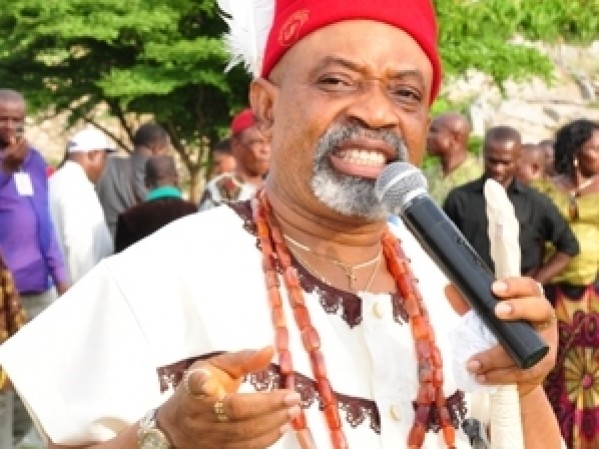
The Minister of Labour and Employment, Senator Chris Ngige, who announced this in his office in Abuja, said the two unions would operate along with ASUU, whose members have been on strike, abandoning classrooms in the last more than seven months.
Reacting to the development, the National Coordinator of the Congress of University Academics, CONUA, Dr. Niyi Sunmonu, described the registration of the body as historic.
Sunmonu in a statement said: “The registration of the Congress of University Academics, CONUA, as a trade union in the Nigerian university system is monumentally historic.
“The hurdles we have faced to get here, since 2018 when we submitted our application for registration, have been seemingly insurmountable. The registration is, therefore, the validation of the power of the human will. It asserts the value of courage, initiative, focus, tenacity, patience, forbearance and persistent positive thinking.
“We are immensely grateful to the Minister of Labour and Employment, Dr Chris Ngige, and his team of diligent staff for insisting on merit, due process and thoroughness all through the processing of our application for the registration of CONUA. “The very strict and dispassionate review of our application brought out the best in the membership of the union.
“We regard the registration of CONUA as a sacred trust and pledge to reciprocate by devoting ourselves unceasingly to the advancement of university education in this country. We will make the details of our programmes available to the public in due course.
“For now, we are giving the assurance that we will work to ensure that the nation is not traumatised again by academic unions’ dislocations in the country’s public universities.
“We are also deeply grateful to the numerous personalities and well-wishers whose good counsel and concrete actions have facilitated the success we have witnessed today. We believe in the saying that to whom much is given, much is expected. We will, therefore, constantly strive to make them all proud of CONUA.
“We appreciate the entire membership of the union for believing in the righteousness of the CONUA cause and for believing in the leadership of the union, and thereby remaining salutarily steadfast, even when disconcerting and demoralising situations arose.
“In this journey, the invaluable role of the media cannot be discounted. We are truly grateful to the media and look forward to furthering mutually beneficial interactions as we strive for the development of this nation. Above all, we are absolutely grateful to Almighty God for granting us this grace.”
It will be recalled that public universities in the country have been shut down since February,14, as ASUU proceeded on a one-month warning strike, which later snowballed into an indefinite strike.
In 2016, the Obafemi Awolowo University, OAU, Ile-Ife chapter of ASUU was enmeshed in a crisis and as usual, leaders and members of the union took the matter to the national leadership for resolution.
However, instead of the crisis being resolved, some of the members felt the national leadership took sides with the leaders of the local chapter that they had grouse with.
The issues dragged till 2018 and when the aggrieved members waited endlessly for a solution that did not come, they formed CONUA.
Since it was formed, it struggled to get registered until that was done yesterday.
The body now has members in 12 universities across the country, including OAU, Federal University, Lokoja, Ambrose Alli University, Ekpoma, Edo State, Federal University, and Oye-Ekiti in Ekiti State, among others.
The incessant face-off between ASUU and the government no doubt hastened the registration of CONUA.

Nigeria has been re-elected as a Council member of the International Telecommunication Union (ITU), which is the United Nations specialised agency that oversees global telecommunication operations.
With the election yesterday, October 3 in the capital city of the Republic of Romania, Nigeria will serve on the Council again from 2023-2026. The election was the highpoint of the Plenipotentiary Conference 2022 (PP-22) in Bucharest.
A statement today, October 4, by the Director of Public Affairs of the Nigeria Communications Commission (NCC), Reuben Muoka, said that the Nigerian delegation was led to the global event by the Minister of Communications and Digital Economy, Professor Isa Ali Ibrahim Pantami.
He listed other members of the delegation to include the Chairman, Board of Commissioners of the Nigerian Communications Commission (NCC), Professor Adeolu Akande, and the Executive Vice Chairman/Chief Executive Officer of NCC, Professor Umar Danbatta.
“At the conference, which started on September 26, 2022 and scheduled to end on October 14, 2022,, member states at the event voted on the composition of the next ITU Council and the 12 representatives to serve on the Radio Regulations Board (RRB) for the next four years.
“The 21st Plenipotentiary Conference of the Council, also saw the election by member states, of Doreen Bogdan-Martin of the United States of America as the organisation’s next Secretary-General.”

The statement said that others that were elected into the Council are Bogdan-Martin, as the first woman to lead ITU in its 157-year history and Houlin Zhao who would have completed his second final term of four years in office as ITU Secretary General.
It said that the seats in ITU Council are divided into five regions, A to E. Nigeria was elected into the ITU Council, Region D for Africa, which has 13 seats. Other 12 countries elected alongside Nigeria are Algeria; Egypt; Ghana; Kenya; Mauritius; Morocco; Rwanda; Senegal; South Africa; Tanzania; Tunisia; Uganda.
“Elections of member states also took place into the Region A for The Americas (nine seats); Region B for Western Europe (eight seats); Region C for Eastern Europe & Northern Asia (five seats); and Region E, for Asia and Australasia with 13 seats as Africa.
“Commenting on Nigeria’s re-election as ITU Council member, the Executive Vice Chairman and Chief Executive Officer, Prof. Umar Danbatta, thanked the ITU member states for the confidence it has in Nigeria expressed by the re-elected into the ITU Council, in which the country has been playing critical role over the years.
“The re-election of Nigeria as a member of ITU Council for the next four years, again, points to the globally-recognised leadership role Nigeria is playing in Africa and at the level of ITU Council in the area of telecommunications policy formulation and technical regulations development to drive ITU’s mission and vision,” the NCC Executive Vice Chairman said.
It said that the ITU, originally established in 1865 as the International Telegraph Union and became a United Nations specialised agency in 1947, was set up to coordinate telecommunications operations and services throughout the world. It is headquartered in Geneva, Switzerland.
“Nigeria became a member of ITU on November 4, 1961. The USA joined on July 1, 1908; United Kingdom, February 24, 1871, and UAE on June 27, 1972.
“The ITU is governed by the Plenipotentiary Conference and the Administrative Council. The Plenipotentiary Conference is the supreme organ of the Union. It is the decision-making body which determines the direction of the Union and its activities.
“The Council, on the other hand, acts as the Union’s governing body in the interval between Plenipotentiary Conferences. Its role is to consider broad telecommunication policy issues to ensure that the Union’s activities, policies, and strategies fully respond to today’s dynamic, rapidly changing telecommunications environment.
“ITU Council also prepares a report on the policy and strategic planning of the ITU, and it is responsible for ensuring the smooth day-to-day running of the Union, coordinating work programmes, approving budgets, and controlling finances and expenditure.
“The Council also takes all steps to facilitate the implementation of the provisions of the ITU Constitution, the ITU Convention, the Administrative Regulations (International Telecommunications Regulations and Radio Regulations), the decisions of Plenipotentiary Conferences, and where appropriate, the decisions of other conferences and meetings of the Union.”
 2nd-Niger-Bridge | Photo credit: news.band
The Federal Government has given assurance that the second Niger Bridge will be ready for use by Christmas this year.
Ag Controller of Works in Anambra, Mr Seyi Martins, in an interview with the News Agency of Nigeria (NAN) in Awka today, October 3, said that the first phase of the Bridge, measuring 1.6km, has reached 95 per cent completion.
The Controller said that contrary to the news making the round that the project would be ready by 2024, it would be ready for use for travelers during Christmas, saying that President Muhammadu Buhari administration is determined to ensure that travelers enjoyed stress free motoring over the River Niger.
He assured that motorists that they would not be subjected to gridlock experienced on the existing bridge during Christmas this year.
“The first phase of the project, which was the bridge itself, is substantially completed.
“The bridge project is 95 per cent complete and it is expected to be ready by December 2022.
“The steel guard rails are complete, the roads are set for vehicle traffic; the toll plaza area is almost completed, and what is left is the installation of toll booth canopies.”
The Controller said that the bridge could be accessed from the interchange at Obosi on the Onitsha-Owerri road and that a road was being constructed to connect traffic on the Asaba-Benin expressway to it pending the completion of the second phase.
“The second phase of the project is yet to commence, but the government has deemed it fit that upon completion of the first phase it will be open to traffic.
“At the Onitsha end, there is an interchange at Obosi along the Onitsha – Owerri highway where you can access the bridge.
“On the Asaba end, there is a link road we are constructing to enable travelers to access the bridge from Benin-Onitsha road.”