Presidential candidate of the Peoples Democratic Party (PDP) and former Vice President of Nigeria, Atiku Abubakar, joined the national chairman of the party, Dr. Iyorchia Ayu, to welcome Senator Ibrahim Shekarau, representing Kano Central and former Governor of Kano State, into the PDP in Kano. The Vice Presidential candidate of the PDP and governor of Delta State, Ifeanyi Okowa and Chairman of the Board of Trustees of the PDP, Senator Jibrin Wali look on.
Employees who perpetrate fraud through stealing in the workplace have been labeled as “Workplace Rats” in a new book, which has just been released to the public.
The book, which admits that poor business model and financial management contribute to business failures, specifically identified stealing as a major cause of bankruptcy in organisations.
The book says that some employees and executives within the lowest and highest rung of organizational ladder are pilfers, who often exploit any cavity within the system to generate unearned income for selfish ends, referring to such employees as Workplace Rats.
The book, which reveals motives, schemes, intrigues and tactics deployed by fraudulent employees to rip off employers, also contains ways and how organisations can prevent Workplace Rats from executing their dishonest and unethical practices at the workplace.
Written by Dr. Michael Owhoko, renowned author and journalist, the book is entitled: “Workplace Rats. It was published by Exceller Books, and is currently on sale on Amazon, Banes and Nobles as well as major bookstores worldwide.
“Fraudsters in organizations are likened to rats at the workplace because they leave in their trail, destruction of valuables and capital through fraud and unethical practices, resulting in most times, to bankruptcy or liquidation. Like rats, their actions invoke pains as they never add value to anything. Wherever rats are found, there is complete threat to material order. They destroy by consuming all valuables within sight,” Owhoko said in the book.
“Like rats, there are people in organizations whose only motive is to perpetuate selfish agenda through methods that advance their interests, even if it is at the expense of the organization. They have prick-proof conscience that does not respond to malevolence, attendant destruction, losses and pains resulting from their actions.”
The author said further that Workplace rats are not limited to employees alone. “They are also found among entrepreneurs, business executives, politicians and top government functionaries, including civil and public servants.”
He said that the book is a must read not only for entrepreneurs, business leaders, government officials and business influencers, but all Nigerians with potentials to establish their own business in the country.
Dr. Michael Owhoko is a Lagos-based journalist and author who has mostly worked in the banking, oil and gas, as well as media industries where he held senior and management positions. He earned degrees in political science and mass communications, and had authored The Language of Oil & Gas; Career Frustration in the Workplace; Nigeria on the Precipice: Issues, Options and Solutions; The Future of Nigeria; and Feminism: The Agony of Men.He can be reached at www.mikeowhoko.com.
The presidential candidate of the New Nigeria Peoples Party (NNPP), Rabiu Musa Kwankwaso has described as rubbish, insinuations and suggestions in certain quarters that he would step down for the flag bearer of the ruling All Progressives Congress (APC), Asiwaju Bola Tinubu or form alliance with any of the political parties for the 2023 elections.
He declared, when he spoke to news men yesterday in Maiduguri, capital of Borno State: “to say NNPP will join or withdraw for APC or PDP is absolutely rubbish; it can’t happen.
“Some people are terribly mischievous and I don’t see how any of these four political parties at this critical time will accept joining one another. There are some elements making mischievous postings and insults on social media, but we believe in sportsmanship and we are out for good campaign.”
“Some are envisaging that there will not be an outright winner in the first round of the presidential election but from our own camp, we believe that we are going to win during the first round of the presidential election because we have the people.”
The NNPP candidate said that those who are saying that his popularity is limited to Kano or the Northwest alone are mistaken.
“Some people are saying Kwankwaso’s political base is Kano state and I am so happy about that because Kano is not a small state in terms of millions of registered voters, some are saying Northwest and others are saying the North is the only base for Kwankwaso but they are making a mistake. Unfortunately, some people are now campaigning on social media; they have employed irresponsible people talking about things that they know is not true but we have kept on telling their masters. To say that anyone of us is withdrawing for the other, everybody knows that is absolutely impossible.”
The former Kano State Governor said that he was a founding member of both the Peoples Democratic Party (PDP) and the APC, adding that their failures led to the establishment of NNPP and there’s no way he would go back to the parties that had led Nigeria into problems.
“Don’t forget that six months ago. there was nothing like NNPP; it was when we joined that it became the force that it is today and from now to another six months, only God knows what this party will become.”
“The people of goodwill are now saying, how do we get out of it because nobody wants this country to collapse and that’s is why you see people coming into the movement to rescue the country.
You see these parties, the PDP and APC, I was a founding member of all the two but they have derailed completely and that is why some of us had to leave and bring in a new thing; that was why we brought NNPP and people are buying into it.”
Founder and General Overseer of Apata Adura Cherubim and Seraphim Church, Ekute, Ado-Ekiti, Ekiti State, Pastor Adekunle Afolabi has converted to Islam.
After practicing Christianity for over 25 years, who now wants to be addressed as Alfa Abubakar Afolabi, explained that his reason for accepting Islam is because he had a divine encounter with a stranger in his dreams.
He said that the man showed him certain flaws in Christianity and convinced him that Islam is the only religion that leads to heaven, adding that he had no regrets swapping to the other religion.
“I was preparing for the anniversary when I started having dreams that eventually led to my conversion.
“At first in the dreams, I noticed my members were sitting on the floor in the church and some of them were covering their heads. I also saw that people were washing their hands and feet before entering the church just like it is done in Islam”.
Asked if he still engaged in some spiritual activities like he did while in Christianity, Afolabi said, “rendering spiritual help is given to all men by God for their own use, so the wisdom of it is given to me by God, he didn’t take it away from me because that is different from religion.
“It is a way of livelihood; so, if any one falls sick, wants to give birth, is having stillbirth, stagnation at work, that is all what we use that for. He showed me places in the Bible where many prayed to God in Islamic way. By this praying, I mean to kneel down and bow down your head and face down.”
Answering questions on how his church members reacted when he decided to dump Christianity, he said: “They all left me the day I invited an Imam to come and preach in my church, the day of our anniversary.
“I have also been stripped of my position as president of our association. The only thing the pastors do once in a while is to call to ask me if indeed I still want to continue in the new faith and I usually confirm it. As for friends, some have stayed, while others have left.”
I didn’t realise how much Nigeria’s water sector has been grossly under-reported until I attended a media briefing, addressed by the Minister of Water Resources, Engineer Suleiman H. Adamu in Abuja recently.
Mrs Kenechukwu Offie, a fellow of the Nigerian Institute of Public Relations (NIPR) and the Director of Public Relations in the Ministry, had made several efforts to stoke my interest in the water sector for possible media coverage in our Economic Confidential or PRNigeria platforms.
I had worked closely with Mrs Offie, my senior while I was in the public service and after my retirement a decade ago. I always wondered what was so exciting for her about the Ministry of Water Resources, particularly after she had served in a number of ‘juicy’ positions in the State House, Aso Rock, Abuja; the Office of the Sustainable Development Goals (SDGs), during the tenure of Mrs Amina Mohammed (now Deputy Secretary General of United Nations); and the Office of the Accountant General of the Federation, among others.
Therefore, last Thursday, she invited me again to attend a press brief, where some milestones in the water sector under President Muhammadu Buhari’s administration were to be revealed with facts and figures, I finally decided to honour her requests.
She had early told me that the Minister was a pragmatic leader who deliberately refused to abandon inherited projects, as he essentially regards government as a continuum for which the public good is paramount and the overriding consideration, not personalities. With this crucial mindset, Engineer Adamu has not only improved on ongoing programmes within his remit, but has more so ensured the completion of most of the old projects he inherited on coming into office.
At the briefing, the Minister proudly emphasised his strong conviction on how it was a vital professional imperative for him to make sure he completes all inherited projects before engaging in newer ones. This is a highly unusually and largely commendable attitude to enhancing the Nigerian commonwealth and infrastructure for the greater good, particularly in an environment in which many are prone to the individualism – if not selfishness – of executing only projects that they are architects of, and which serves interests with which they are identified, without much contemplation of what is really of enduring benefit to the public.
As such, the entire country almost feels like a dumpsite of uncompleted, and even overlapping, projects that have been some of the biggest sources of wastage of the national commonwealth, very unfortunately.
Engineer Suleiman pointed out that being one of the key sectors that drive the agenda for national food security and human capital development, the Ministry of Water Resources’ core mandates are to improve the supply of potable water in the country, the improvement of irrigation systems to bolster what could otherwise be low-yield rain-fed agriculture, and the development of Nigeria’s hydro-power infrastructure.
Beyond the controversy over the Water Bill that was criticised by politicians and sections of the media, I was amazed by the accomplishments of the Ministry in its core mandates.
Apart from the construction of 185 solar-powered water projects and 370 public sanitation facilities across the states of the federation, the Ministry engaged 77,400 youth volunteers for Hand Washing and ODF campaigns, which also created awareness on open defecation in Nigeria, across all the 774 local government areas of the country.
With the revitalisation of the River Basin Development Authorities to deliver on their obligations to Nigeria, the Songhai model of integrated agricultural practice was introduced by the Ministry to boost agricultural production and achieve integrated rural development. In this regard, 253 farmlands have been leased to the private sector for commercial farming, out of which 182 are fully utilised presently.
Currently, there are a total of 250 medium- and large-sized dams in the country, with a combined storage capacity of about 30 billion cubic metres, of water, which is more than the projected future demand of Nigeria by the year 2030. Some of the inherited and now completed dam projects include the Kashimbilla Multipurpose dam in Taraba State; Ogwashi-uku Multipurpose Dam in Delta State; Adada Dam in Enugu State; Sulma Earth Dam in Katsina State; Amla-Otukpo Dam in Benue State, alongside four others dams, and the rehabilitated Kampi Omi Dam in Kogi State.
In addition to the above, at least about 42 small dams have been constructed across the nation by the River Basin Development Authorities, while six of the dams are currently being utilised to support aquaculture farms.
In the energy sector too, the Ministry of Water Resources has also pursued the goal of ensuring the completion of inherited hydropower projects. So far, these include the Gurara One 30MW power plant in Kaduna State; the Kashimbila 40MW project in Taraba State; and the Daduin Kowa 40MW power project in Gombe State, which have all been completed and are ready for concessioning, while the contract for the Farin-Ruwa 20MW hydropower project in Nasarawa has been awarded. There are two other power projects that would generate a combined 1,750MWs of electricity in Lokoja, Kogi State and Makurdi in Benue State, which are currently being planned for development on Build, Operate and Transfer (BOT) arrangements.
In similar vein, the Ministry is implementing an ambitious irrigation programme to boost agriculture production and support the nation’s quest for food security. Under the scheme, a 130,000 hectarage of irrigation has been developed, while another 55,000 hectarage has been leased to commercial farmers. Some of the completed irrigation projects include the Mamu Awka Drainage and Land Reclamation scheme in Anambra State; the Sabke Irrigation system in Katsina State; the Gari Irrigation schemes in Kano and Katsina States, coupled with the Rima Valley Irrigation project in Sokoto State, the Middle Ogun River Irrigation scheme in Oyo State and the Azare-Jere Irrigation project in Kaduna State.
Likewise, the Ministry of Water Resources has constructed 340 rural water supply schemes in the North-East, in IDP camps and some federal institutions and establishments. Through the implementation of the Partnership for Expanded Water Sanitation and Hygiene (PEWASH) programmes, the Ministry constructed 3,372 rural water supply schemes in 19 states of the federation for the benefit of 5,262,189 people.
I am just been a bit concerned that even though all the states flagged off the WASH and Clean Nigeria campaigns, surprisingly only 83 out of the 774 local government areas are now Open Defecation Free in the country! Nevertheless, the water projects executed by the Ministry will go a long way in reducing dependency on the erstwhile largely rain-fed agricultural sector, thereby boosting food production, addressing rural poverty through progressive management transfers and, to some extent, curbing youth restiveness due to joblessness.
As the longest-serving Minister of Water Resources since 2015, I wish to reiterate the fact that Engineer Suleiman deserves to be commended for not abandoning old projects within his sphere of influence while initiating and implementing new ones geared toward economic diversification, job creation, and strengthening the quality of productivity by enhancing market access services for farmers. This certainly appears to be the secret to his longevity on the job – as we say: Why fix it when it is performing so well?
Convener of Concerned Nigerians Group, Deji Adeyanju, has said that the opposition frontliners in the 2023 presidential election, Atiku Abubakar of the Peoples Democratic Party (PDP); Peter Obi of Labour Party (LP) and Rabiu Musa Kwankwanso of the New Nigeria Peoples Party (NNPP), need to form an alliance to be able to defeat the All Progressives Congress (APC) presidential candidate, Asiwaju Bola Ahmed Tinubu.
Adeyanju said that it is sad that ‘big ideas’ don’t win elections in Africa, saying that for the opposition to take power from the APC, they must form an alliance.
He said that he has monitored over 39 elections in Nigeria and outside the country, insisting that ‘big ideas’ don’t win elections in this clime except ‘stomach infrastructure’.
Speaking on LEADERSHIPTwitterSpaces @LeadershipNGA at the weekend, Adeyanju noted that even though the presidential candidates have been meeting secretly and openly, they were unserious about taking over power in 2023.
“They have been meeting secretly and openly. They are completely unserious political parties heading for a defeat,” Adeyanju said of the PDP, LP and the NNPP.
“Big ideas don’t win elections in Africa. What wins elections in this part of the world is tribe, ethnicity, religion, rigging, vote buying, stomach infrastructure. What the opposition are doing now will not help them. Wike may not work for Atiku if he is not sure he will win.
“No politicians want to be identified with failure. Peter Obi is good but it is not possible for Atiku to step down for him. So, they must unite. It is common sense.
“We know the states where these candidates will win. When the results start coming from the KKK states, there will be throttling. Atiku, Obi, Kwankwanso must form a force. They should put somebody forward. Kwankwaso is already working for Tinubu because he does not want Atiku to emerge,” Adeyanju claimed.
Also speaking, the chairman of Emohua local government area of Rivers State, Hon. Chidi Lloyd, accused the Atiku camp of already boasting as if they have won the election.
“We can’t afford to go to this election with a divided house. The Atiku people are already talking as if they have won the election already,” Llyod said.
On his part, a member of the PDP in Kaduna State, Danjuma Bello Sarki, said he was confident that the PDP will win the 2023 presidential election.
According to Sarki, Nigerians can’t afford to allow the ruling APC to continue in 2023.
“Atiku is reaching out and by the grace of God, PDP will win because Nigerians can’t afford to allow the APC to continue,” Danjuma said.
A speaker, Charles Ideho, who said Atiku made a mistake in picking Governor Ifeanyi Okowa as a running mate, added that the Delta State governor doesn’t have the political muscle to produce votes from the South as expected.
Emir of Zurmi in Zamfara State, Atiku Abubakar Muhammad, who was recently dismissed for allegedly aiding bandits in his domain, has been reported dead.
Reports available to us in Greenbareg Reporters online newspaper said that Atiku, who had suffered an undisclosed illness, died at a private hospital in Abu Dhabi in Dubai, the United Arab Emirates.
A family member, Sani Zurmi, confirmed the development today, August 28. He said that the remains of the deceased is yet to be brought to Nigeria for burial.
“His remains are still in Dubai due to non-availability of plight to bring the deceased back home for burial,” Zurmi was quoted as saying.
Recall that the Governor of Zamfara State, Bello Matawalle had in June 2021, suspended Atiku from being the Emir of Zurmi over his alleged involvement with bandits‘ activities in the kingdom.
Matawalle ordered the formation of a strong commission to investigate allegations that the suspended king was involved in the escalation of banditry activities in his area.
A statement issued by the acting secretary to the governor, Kabiru Balarabe, had revealed that the commission of inquiry into the suspended Emir of Zurmi would consist of eight members, headed by the state deputy governor, Ibrahim Wakkala, and would submit its report within three weeks.
Atiku was subsequently dethroned alongside the Emir of Dansadau, Husaini Umar for allegedly aiding banditry in their respective emirates.
Former President of Nigeria, Olusegun Obasanjo has made it clear that he is not supporting any of the Presidential candidates as the nation marches towards the 2023 general elections.
Speaking to news men today, August 28, Obasanjo, who had held meetings at different times with the Presidential candidates of the Peoples Democratic Party (PDP), Atiku Abubakar, that of the All Progressives Congress (APC), Asiwaju Bola Tinubu, that of the Labour Party (LP), Peter Obi, said that what he is doing is a national agenda.
Obasanjo who was in Minna, Niger State to visit the former Nigerian military Head of State, retired General Abdulsalami Abubakar, said: “I don’t have a special candidate, I have a national agenda.
“I have come to see my brother who was a bit indisposed and when he was abroad I had wanted to visit him, and the day I arrived in London to visit him was the day he left.
“So I said, well since I could not see him in London, I will come to see him in Nigeria. And so, that is what I have come to do.
“He is special in a way and he was indisposed, so I had to come and see him. If there is anybody again who is special and indisposed that I have to see, I will see him. I am still strong enough.”
The duo earlier had a closed door meeting which lasted for 30 minutes.
Vice President Yemi Osinbajo has articulated his personal commitment to the virtues of integrity, transparency and social justice which he said are also virtues exhorted in the different faiths and religions in the country. “For me, spirituality connotes values. I came into government with values about what I think is important, especially around transparency, social justice and justice, among others. You are almost always a product of the values you believe in. Fortunately, a lot of these values cut across the different faiths; they are not necessarily restricted to a religion or one faith. “In societies that are more developed institutionally, you don’t need to be told that you shouldn’t do certain things because you could end up in jail if you do and there is a good likelihood that you could be detected and the process will go through and you will be punished. “I speak about corruption and all that. But where the institutions are weak, some people have reasons for not doing the right thing.”
Professor Osinbajo, who addressed a group of Harvard Business School students who visited him on Friday, August 26, at the Presidential Villa, Abuja, said that international community can only appreciate the enormity and complexity of some of Nigeria’s challenges if they first understanding the size of the country. “First, there is a need to appreciate the size of the country, which is crucial to understanding what the issues are. “For instance, Borno State is about the size of the whole of the United Kingdom plus Sweden or Denmark. So, when it is reported that there is violence in Nigeria, it is probably an incident in one remote area of the country, and many people in Abuja and Lagos may hear about it on social media; such is the size of this country. “When they talk about economy, we are often compared with smaller African countries, but there are 10 states in Nigeria that have bigger GDPs than those countries, it is a huge target market.” On some inaccurate characterization of Nigeria in sections of the international community, the Vice President said: “it is important to constantly engage the international community to show them how we feel about the stereotypes. It comes down to the work we do as government and people about the characterization. “This is why some of the work around the Ease of Doing Business etc. are all initiatives that have behind them, the whole idea that this environment is one that is welcoming to business and people can come and do business.” The students numbered about a dozen and are currently on an African excursion. They asked questions about leadership, faith, spirituality, government policies in education, health, economy, and national image, among others.
Minister of Communications and Digital Economy, Professor Isa Ali Ibrahim Pantami is excited by the contribution of the Information and Communications Technology (ICT) sector to Nigeria’s Gross Domestic Product (GDP) in the second quarter of 2022 (Q2 2022).
The National Bureau of Statistics (NBS) broke the news yesterday, August 26, in the ‘Nigeria’s Gross Domestic Product Report’ for Q2 2022.
According to the NBS report, Digital Economy sector under Professor Pantami, continued its trend of playing a key part in the growth on Nigeria’s economy.
The Report by the NBS indicated that the ICT sector contributed 18.44% to the total real GDP in Q2 2022. This is the highest contribution of ICT to the GDP which is said to be unprecedented and marks the third time that the sector has achieved such contribution to Nigeria’s GDP. Others were in Q1 2020, Q2 2021 and now Q2 2022.
The oil sector contributed 6.33% to the total real GDP in Q2 2022, which was lower that the contribution in Q2 ‘2021 and Q1 ‘2022, where it contributed 7.42% and 6.63% respectively. The non-oil sector’s contribution grew by 4.77% in real terms, resulting in a 93.67% contribution to the nation’s GDP in the Q2 ‘2022, higher than Q2 ‘2021 and Q2 ‘2022, where it contributed 92.58% and 93.37% respectively.
Minister Pantami said that the growing contribution of the ICT sector to the GDP is as a result of the commitment of the administration of President Muhammadu Buhari to the development of the digital economy.
He added that the diligent implementation of the National Digital Economy Policy and Strategy (NDEPS) for a Digital Nigeria, stakeholder engagement and creation of an enabling environment have all played an important role in this achievement.
“The support of President Muhammadu Buhari, GCFR, has contributed immensely to the impressive developments in the sector. The unprecedented contribution of ICT to Nigeria’s GDP can also be attributed to the dynamic and results-oriented leadership of the sector. The GDP Report has shown how critical the ICT sector is to the growth of our country’s digital economy and, by extension, the general economy.”
The Minister congratulateed all stakeholders in the digital economy ecosystem for this news even as he renewed his call to all sectors to take advantage of the Federal Government’s new focus on the digital economy to enable and improve their processes through the use of ICTs.
“This would enhance the output of all the sectors of the economy and boost Nigeria’s GDP.”
We use cookies on our website to give you the most relevant experience by remembering your preferences and repeat visits. By clicking “Accept”, you consent to the use of ALL the cookies.
This website uses cookies to improve your experience while you navigate through the website. Out of these, the cookies that are categorized as necessary are stored on your browser as they are essential for the working of basic functionalities of the website. We also use third-party cookies that help us analyze and understand how you use this website. These cookies will be stored in your browser only with your consent. You also have the option to opt-out of these cookies. But opting out of some of these cookies may affect your browsing experience.
Necessary cookies are absolutely essential for the website to function properly. This category only includes cookies that ensures basic functionalities and security features of the website. These cookies do not store any personal information.
Any cookies that may not be particularly necessary for the website to function and is used specifically to collect user personal data via analytics, ads, other embedded contents are termed as non-necessary cookies. It is mandatory to procure user consent prior to running these cookies on your website.




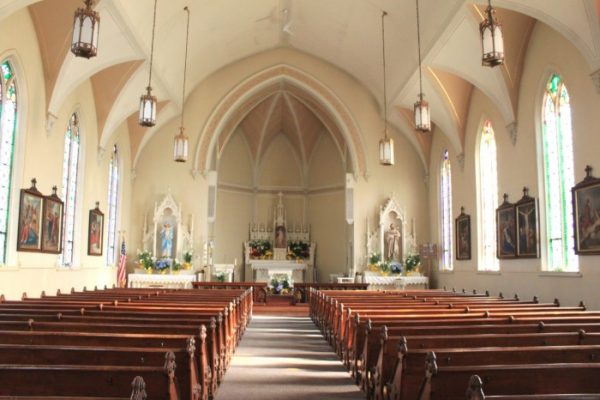 Founder and General Overseer of Apata Adura Cherubim and Seraphim Church, Ekute, Ado-Ekiti, Ekiti State, Pastor Adekunle Afolabi has converted to Islam.
 Emir of Zurmi in Zamfara State, Atiku Abubakar Muhammad, who was recently dismissed for allegedly aiding bandits in his domain, has been reported dead.




Untold Stories Of Nigeria’s Water Sector, By Yushau A. Shuaib
I didn’t realise how much Nigeria’s water sector has been grossly under-reported until I attended a media briefing, addressed by the Minister of Water Resources, Engineer Suleiman H. Adamu in Abuja recently.
Mrs Kenechukwu Offie, a fellow of the Nigerian Institute of Public Relations (NIPR) and the Director of Public Relations in the Ministry, had made several efforts to stoke my interest in the water sector for possible media coverage in our Economic Confidential or PRNigeria platforms.
I had worked closely with Mrs Offie, my senior while I was in the public service and after my retirement a decade ago. I always wondered what was so exciting for her about the Ministry of Water Resources, particularly after she had served in a number of ‘juicy’ positions in the State House, Aso Rock, Abuja; the Office of the Sustainable Development Goals (SDGs), during the tenure of Mrs Amina Mohammed (now Deputy Secretary General of United Nations); and the Office of the Accountant General of the Federation, among others.
Therefore, last Thursday, she invited me again to attend a press brief, where some milestones in the water sector under President Muhammadu Buhari’s administration were to be revealed with facts and figures, I finally decided to honour her requests.
She had early told me that the Minister was a pragmatic leader who deliberately refused to abandon inherited projects, as he essentially regards government as a continuum for which the public good is paramount and the overriding consideration, not personalities. With this crucial mindset, Engineer Adamu has not only improved on ongoing programmes within his remit, but has more so ensured the completion of most of the old projects he inherited on coming into office.
At the briefing, the Minister proudly emphasised his strong conviction on how it was a vital professional imperative for him to make sure he completes all inherited projects before engaging in newer ones. This is a highly unusually and largely commendable attitude to enhancing the Nigerian commonwealth and infrastructure for the greater good, particularly in an environment in which many are prone to the individualism – if not selfishness – of executing only projects that they are architects of, and which serves interests with which they are identified, without much contemplation of what is really of enduring benefit to the public.
As such, the entire country almost feels like a dumpsite of uncompleted, and even overlapping, projects that have been some of the biggest sources of wastage of the national commonwealth, very unfortunately.
Engineer Suleiman pointed out that being one of the key sectors that drive the agenda for national food security and human capital development, the Ministry of Water Resources’ core mandates are to improve the supply of potable water in the country, the improvement of irrigation systems to bolster what could otherwise be low-yield rain-fed agriculture, and the development of Nigeria’s hydro-power infrastructure.
Beyond the controversy over the Water Bill that was criticised by politicians and sections of the media, I was amazed by the accomplishments of the Ministry in its core mandates.
Apart from the construction of 185 solar-powered water projects and 370 public sanitation facilities across the states of the federation, the Ministry engaged 77,400 youth volunteers for Hand Washing and ODF campaigns, which also created awareness on open defecation in Nigeria, across all the 774 local government areas of the country.
With the revitalisation of the River Basin Development Authorities to deliver on their obligations to Nigeria, the Songhai model of integrated agricultural practice was introduced by the Ministry to boost agricultural production and achieve integrated rural development. In this regard, 253 farmlands have been leased to the private sector for commercial farming, out of which 182 are fully utilised presently.
Currently, there are a total of 250 medium- and large-sized dams in the country, with a combined storage capacity of about 30 billion cubic metres, of water, which is more than the projected future demand of Nigeria by the year 2030. Some of the inherited and now completed dam projects include the Kashimbilla Multipurpose dam in Taraba State; Ogwashi-uku Multipurpose Dam in Delta State; Adada Dam in Enugu State; Sulma Earth Dam in Katsina State; Amla-Otukpo Dam in Benue State, alongside four others dams, and the rehabilitated Kampi Omi Dam in Kogi State.
In addition to the above, at least about 42 small dams have been constructed across the nation by the River Basin Development Authorities, while six of the dams are currently being utilised to support aquaculture farms.
In the energy sector too, the Ministry of Water Resources has also pursued the goal of ensuring the completion of inherited hydropower projects. So far, these include the Gurara One 30MW power plant in Kaduna State; the Kashimbila 40MW project in Taraba State; and the Daduin Kowa 40MW power project in Gombe State, which have all been completed and are ready for concessioning, while the contract for the Farin-Ruwa 20MW hydropower project in Nasarawa has been awarded. There are two other power projects that would generate a combined 1,750MWs of electricity in Lokoja, Kogi State and Makurdi in Benue State, which are currently being planned for development on Build, Operate and Transfer (BOT) arrangements.
In similar vein, the Ministry is implementing an ambitious irrigation programme to boost agriculture production and support the nation’s quest for food security. Under the scheme, a 130,000 hectarage of irrigation has been developed, while another 55,000 hectarage has been leased to commercial farmers. Some of the completed irrigation projects include the Mamu Awka Drainage and Land Reclamation scheme in Anambra State; the Sabke Irrigation system in Katsina State; the Gari Irrigation schemes in Kano and Katsina States, coupled with the Rima Valley Irrigation project in Sokoto State, the Middle Ogun River Irrigation scheme in Oyo State and the Azare-Jere Irrigation project in Kaduna State.
Likewise, the Ministry of Water Resources has constructed 340 rural water supply schemes in the North-East, in IDP camps and some federal institutions and establishments. Through the implementation of the Partnership for Expanded Water Sanitation and Hygiene (PEWASH) programmes, the Ministry constructed 3,372 rural water supply schemes in 19 states of the federation for the benefit of 5,262,189 people.
I am just been a bit concerned that even though all the states flagged off the WASH and Clean Nigeria campaigns, surprisingly only 83 out of the 774 local government areas are now Open Defecation Free in the country! Nevertheless, the water projects executed by the Ministry will go a long way in reducing dependency on the erstwhile largely rain-fed agricultural sector, thereby boosting food production, addressing rural poverty through progressive management transfers and, to some extent, curbing youth restiveness due to joblessness.
As the longest-serving Minister of Water Resources since 2015, I wish to reiterate the fact that Engineer Suleiman deserves to be commended for not abandoning old projects within his sphere of influence while initiating and implementing new ones geared toward economic diversification, job creation, and strengthening the quality of productivity by enhancing market access services for farmers. This certainly appears to be the secret to his longevity on the job – as we say: Why fix it when it is performing so well?
Yushau A. Shuaib
Editor-in-Chief Economic Confidential and blog
www.YASHuaib.com