Director of Media, Tinubu Campaign Organization, Bayo Onanuga, has confirmed that the All Progressives Congress (APC) has chosen Ibrahim Masari as substitute running mate to the presidential flagbearer, Asiwaju Bola Ahmed Tinubu.
In a statement today, June 18, Onanuga said that Ibrahim Masari’s name was submitted along with that of Tinubu in fulfillment of the regulation of the Independent National Electoral Commission INEC)., saying that while he (Ibrahim) is not regarded as surrogate, “he is just holding forth.
“The electoral act stipulates that candidates have the window period to substitute up till sometime in August. Asiwaju will use that time to continue consulting with the party, governors and the president. He is taking his time and doesn’t want to rush it.
“Asiwaju Tinubu just wants to carry everybody along. Even the elections will take place in 2023 and the campaign wouldn’t start until September. The window period is still long. There is no need to rush anything about it.
“I think we have fulfilled our own part by submitting the name as required before the window of INEC deadline closes.”
The spokesman said that Ibrahim Masari once worked as a member of the National Working Committee when Adams Oshimhole was in charge of the APC executive.
Leadership of the Southern and Middle Belt Leaders’ Forum (SMBLF), Afenifere, and Ohanaeze Ndigbo Worldwide, have rejected Governor Ifeanyi Okowa of Delta State as running mate to the presidential candidate of the Peoples Democratic Party (PDP), Alhaji Atiku Abubakar.
This was contained in a statement signed by Chief (Dr.) Edwin Kiagbodo Clark, Leader of the SMBLF/PANDEF; Chief Ayo Adebanjo, Leader of Afenifere; Dr. Dru Bitrus, President-General of the Middle Belt Forum as well as Ambassador (Prof.) George Obiozor, President-General of the Ohanaeze Ndigbo Worldwide.
The statement reads: “It bears recalling that the 17 Governors of the Southern States of Nigeria, both of the People’s Democratic Party (PDP) and the All Progressives Congress (APC), under the Chairmanship of the Governor of Ondo State, Rotimi Akeredolu, SAN, met in Asaba, the capital of Delta State on May 11, 2021, and took far-reaching decisions, including that, based on the principles of fairness, equity and justice, the presidency should rotate to the south, at the end of the statutory eight years of President Muhammadu Buhari’s tenure.
“And this very Governor Okowa was the host of that historic meeting. The Southern Governors later met again in Lagos, on July 5, where they reaffirmed their decision, and again in Enugu, on September 16, to restate the call that the presidency should rotate to the south in 2023.
“It is, therefore, most unfortunate that the Governor of Delta State, Senator Ifeanyi Okowa who should know better, accepted his appointment as running mate to Alhaji Atiku Abubakar. We do not have anything personal against Ifeanyi Okowo but his action is treacherous and tantamount to a despicable pawning of the political future of the people of Southern Nigeria.
“It is unspeakable and quite disappointing that Governor Ifeanyi Okowa, who is currently Chairman of the South-South Governors’ Forum, and a native of Owa-Alero in Ika North-East Local Government Area (one of the Igbo-speaking areas) of Delta State, would exhibit such barefaced unreliability.
“It is difficult to fathom how a political party can claim to be on a supposed “rescue mission” with such false footings of unfairness, injustice, duplicity and gross insensitivity to national outlook.
“Governor Okowa has, by his action, betrayed the trust reposed on him by his colleagues; the southern governors, the entire good people of southern Nigeria and all well-meaning Nigerians. He has made himself persona non grata, not only, with SMBLF but all citizens who treasure our oneness and yearn for a more united and peaceful Nigeria.
“We, therefore, reject Governor Ifeanyi Okowa and his Vice Presidency, and leave him to his lot, but let the world know that this is a betrayal of the highest order.
“And that this is not a matter of loyalty to one’s political party, but rather a greedy, parochial and unpatriotic action, committed against the general interest of his State, Delta state, the Niger Delta region, and Southern Nigeria. It is, certainly, also not in the interest of the nation at large.”
The All Progressives Congress (APC) has submitted the name ofIbrahim Kabiru Masari to the Independent National Electoral Comission (INEC) as placeholder running mate to the Presidential candidate of the party, Asiwaju Bola Tinubu for the 2023 elections.
It was learnt that the APC is putting up Kabiru as a placeholder to beat the deadline given by INEC for presidential candidates to submit the names of their running mate. INEC had given today, Friday, June 17th, as deadline for all the political parties to submit the names of their Presidential candidate.
Speaking today, on Channels Television’s Politics Today, a chieftain of the APC, Kabiru Faskari said: “Ibrahim Kabiru Masari is our vice presidential nominee. He was the Welfare Secretary of the APC under Oshiomhole (former national chairman of the party).”
According to him, Kabiru Masari is a well-known politician in Kaduna State, saying that Kabiru hails from Katsina State.
He said that Kabiru is experienced and has been close to Tinubu, adding that he will not have problem working with the former Lagos State governor.
“He is young; he represents the youths and is grounded in politics and was even a national official of the APC. He is quite close to the presidential candidate and has been with him for a very long time,” he explained. “It is a very informed decision to put out his name.”
He said that the decision was taken to forward the name of Kabiru to INEC after wide consultations.
“I think what it is, is that it was the decision of the presidential candidate after due diligence.”
The Nigerian stock market extended its downward trend with a loss of N341.26 billion at the close of trading today, Friday, June 17, following the crash of the market capitalization by -1.20 percent from N28.25 trillion posted yesterday, June 16 to N27.91 trillion.
Similarly, the All-Share Index was down by 633.01 basis points to close at 51,778.08 compared to 52,411.09 achieved the previous day. Investors traded 241.19 million shares worth N3.66 billion in 5,043 deals on Friday.
This surpassed the 211.61 million shares valued at N2.36 billion which exchanged hands in 4,750 deals on Thursday.
Ellah Lakes led the gainers with N0.31kobo to move from N3.69kobo to N4 per share.
UACN gained N0.70kobo to move from N10.80kobo to N11.50kobo per share.
Livingtrust’s share was up by 5.26 percent to end trading with N1.20kobo from N1.14kobo per share.
Mutual Benefit gained 4.17 percent to close at N0.25kobo from N0.24kobo per share.
Fidelity Bank’s share appreciated by N0.11kobo to rise from N3.26kobo to N3.37kobo per share.
McNichols topped the losers’ chart after shedding N0.20kobo to drop from N2.05 to N1.85kobo per share.
Ardova’s share dropped by N1.45kobo to end trading at N13.50kobo from N14.95kobo per share.
Livestock lost N0.14kobo to end trading with N1.33kobo from N1.47kobo per share.
International Breweries lost N0.65kobo to drop from N6.90kobo to N6.25kobo per share.
Courtville’s share dropped from N0.54kobo to N0.49kobo per share after losing 9.26 percent during trading.
Jaiz Bank led the day’s trading with 40.66 million shares valued at N37.21 million.
UBA followed with 35.71 million shares valued at N269.42 million.
Zenith Bank traded 33.19 million shares worth N718.99 million.
GTCO sold 16.77 million shares worth N359.69 million, while Transcorp traded 10.90 million valued at N13.99 million.
President Muhammadu Buhari has restated Nigeria’s commitment for a safer and healthier global climate, listing the country’s updated Nationally Determined Contribution (NDC) to include elimination of kerosene lighting by 2030, increase in use of buses for public transport and reduction in burning of crop residues.
In a virtual meeting of the World Energy Forum, hosted by President Joe Biden of the United States, on Major Economies Forum on Energy and Climate Change (MEF), President Buhari said that an updated Nationally Determined Contribution to the UN Framework Convention on Climate Change had been submitted to replace the interim contribution of May 27, 2021.
“Our updated NDC includes the waste sector which is expected to contribute to the reduction of Nigeria’s Greenhouse Gas emissions. This development raised an additional two per cent to the Nationally Determined Contribution from 45 per cent to 47 per cent conditionally and 20 per cent unconditionally below business-as-usual.
“Other action plans that are inherent in our NDC include; elimination of kerosene lighting by 2030, increase in the use of bus rapid transit as a means of transportation for the general public, 50 per cent reduction in the fraction of crop residues burnt by 2030 and implementation of forest programmes.
“Initiatives to deliver 20 per cent Green House Gas emission reductions and enhanced removals equivalent to approximately 74.2 Metric tons of Carbon Dioxide by 2030, and Ratification of the Kigali Amendment to the Montreal Protocol to phase out Hydro-fluoro-carbon emissions,’’ the President said.
President Buhari, at the Forum today, June 1, said that Nigeria is developing National Frameworks for Article 6 and for carbon pricing, adding, “we have finalized the Sectoral Action Plan for the implementation of the revised NDC in the key priority sectors, namely Energy, Oil & Gas, Agriculture & Land use, Power, Transport and Water and Waste.”
On the Global Methane Pledge, the President told the world leaders that Nigeria joined the Global Methane Alliance in 2019 with commitment to methane reduction targets of at least 45 per cent by 2025 and a 60-75 per cent reduction by 2030.
“Nigeria’s 2019 National Plan to Reduce has started through the required voluntary actions, with an initial focus on elimination of Short-Lived Pollutants methane in the Oil and Gas sector.
“Our plan aims to improve air quality and reduce Nigeria’s contribution to climate change through 22 specific mitigation measures in 8 source sectors (transportation, cooking and lighting in households, industry, waste, oil and gas, agriculture, power and Hydro-Fluoro-Carbon), as well as adoption and ratification of the Kigali Amendment to the Montreal Protocol aimed at phasing out Hydro- fluoro-carbon emissions.
“The full implementation of these measures would be effective in reducing Short-Lived Pollutants, with an 83 per cent reduction in black carbon emissions by 2030 compared to a business-as-usual scenario, and 61 per cent reduction in methane emissions.
“These measures are also effective in reducing other air pollutants, such as nitrogen oxides and particulate matter, and also reduce Carbon Dioxide emissions.”
The President said that implementation of the measures could reduce exposure to air pollution across Nigeria by 22 per cent in 2030, while reducing Nigeria’s contribution to climate change.
“My administration approved Nigeria’s Sustainable Energy for All Action Agenda in 2016, which has a target of almost tripling generation capacity in the next decade, to reach a total of 30 Gigawatt by 2030.
“Of this, 30 per cent will be generated from renewable resources, with almost half of this provided by medium and large hydro. The Clean Energy Transport Scheme in major Nigerian cities involves the introduction of compressed natural gas for buses in public transport.
“Nigeria is aware that its heavy dependence on fossil fuel makes the country especially vulnerable in a world that has a target to reduce or even eliminate fossil fuel as a key driver of the global economy.”
The President noted that a number of countries are already setting bans on the sale of oil consuming Internal Combustion Engine vehicles, saying: “however, Nigeria is also aware that short term response to transition from fossil fuel to clean energy may jeopardize our economic growth. As a result, we intend to use the Long-Term Low-Emissions Development Strategy as our transition process.”
President Buhari explained that the Long-Term Low-Emissions Development Strategy provides Nigeria the pathway to carefully assess the opportunities that might arise in terms of a cleaner, more dynamic, and more sustainable growth model.
“It will also provide the options for the country to implement a less carbon-intensive model of economic development in the face of decreasing global reliance on fossil fuel energy.“
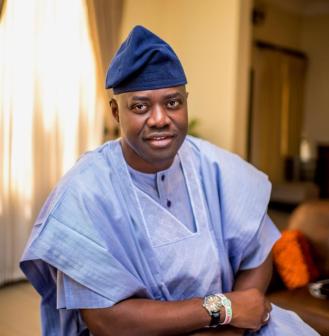
No fewer than 9, 227 primary school Teachers in Oyo State have cause to celebrate as the State Government has handed them letters of promotion from Grade level 13 to 15.
The Executive Chairman, Oyo State Universal Basic Education Board (OSUBEB), Dr. Nureni Aderemi Adeniran, who distributed the promotion letters to the teachers today, June 17, said that the pending promotion letters are in fulfillment of Governor Seyi Makinde’s promises to teachers in the State.
Dr. Adeniran said that the category of teachers who received their letters of promotion were placed on a six years waiting period by the previous administrations, adding that this policy had affected the morale of teachers in Public Primary Schools, because their counterparts in the Secondary Schools were not affected by the policy.
“I am pleased to be here this morning at the official presentation of Promotion letters to our teachers from the grade level 13 to 15. You are all aware that a similar programme was held in October, 2021 for teachers and non-teaching staff.”
Dr. Adeniran appreciated Governor Makinde for his love for teachers, which was demonstrated by the approval granted, that six years waiting period be reverted with immediate effect.
“This by implication means that all teachers affected are going to enjoy their promotions with a month’s arrears and this takes financial effect from the month of June, 2022”, he said.
Dr. Adeniran added that teachers that have retired from service, in the course of processing the approval for the lifting of the six year waiting period will also enjoy the promotion due to them, simply by applying for the re-computation of their gratuity and pension in line with the Pension Act.
“The present administration has positively impacted the lives of both public and Civil Servants because of its people oriented policies. In view of this, I want to admonish all our teachers to ensure that, to whom much is given, much is expected.”
He called for the support of teachers, adding that the State Government, under Governor Makinde’s leadership has left no stone unturned to better the lot of teachers in the State.
“This administration will request your support to enjoy continuity of prompt payment of salaries and promotion as and when due, as well as, a conducive working milieu.”
He acknowledged the support of the Nigerian Union of Teachers, (NUT) and Association of Primary School Head-teachers of Nigeria, (AOPSHON) Oyo State Branch to the success of this exercise.
“In all, a total number of Nine Thousand, Two Hundred and Twenty-seven (9,227) letters of promotion were produced for teachers on GL. 13-15.
“This has taken care of those that will benefit from two promotions. Once again, I wish to admonish all teachers to be patient and appreciative of the present administration’s various kind gestures, geared towards ameliorating their sufferings, improving their career progression and their well-being, all of which are unprecedented. These gestures can only be reciprocated by being more committed to their duties at all times, with a view to ensuring improved learning outcomes in our schools.”
Speaking earlier, the NUT Chairman, Raji Oladimeji assured the State Government that the gesture of the state governor would never be forgotten, adding that this would further encourage teachers in Primary schools to deliver good, qualitative and efficient education to the pupils across the state.
The event was attended by Principal officers of NUT, AOPSHON, Directors at OYOSUBEB, among others.
The United Nations Children Education Fund (UNICEF) and Katsina State Government have partnered to launch a cash transfer programme that will provide learning opportunities for over 20,000 out-of-school children in the state and improve the socio-economic wellbeing of beneficiaries and their households.
The cash transfer programme will provide access to learning for the beneficiaries and help reduce the number of 536,132 children currently out of school in Katsina State.
Launching the scheme today, June 16 in Mani town, Katsina State, the State Governor, Alhaji Aminu Bello Masari, said that the partnership has yielded many positive results, not just in the education sector, but in other sectors of the state.
“We are grateful to UNICEF and the Educate A Child (EAC) project for the funds. The Programme Implementation Unit for the cash transfer programme will monitor the programme closely and ensure that the beneficiaries make judicious use of the resources.”
It was disclosed that through the cash transfer programme, a total of ₦332,832,000 will be disbursed to 20,802 out-of-school children (OOSC) and Almajiris in Kafur, Mani and Safana LGAs of Katsina State.
Information had it that the funds will be disbursed through 10,557 female parents/caregivers to increase school enrolment and attendance rates for boys and girls.
It was confirmed that each female parent/caregiver will receive N8,000 per tranche twice in 2022, amounting to N16,000.per beneficiary.
The cash transfer programme will also ensure that beneficiaries are enrolled and retained in any form of organized school, including Integrated Qur’anic Schools (IQS) and provided with literacy and numeracy skills linked to employability and livelihood schemes.
The cash transfer programme is being delivered together with the birth registration programme which has so far seen registration of 20,400 children. Social workers will be equipped with required skills to track and reunify children living on the street or similar situations with their families, thereby ensuring family-based care for children.
Already, 50 Mallams of Tsangaya schools in three LGAs have been trained on safeguarding and keeping children safe from violence and abuse in their facilities.
Speaking at the event today, UNICEF Representative in Nigeria, Peter Hawkins said: “we are thankful to our partners, the Educate A Child Project, for funds for the cash transfer programme in Katsina State.
“The take-off of the cash transfer programme provides the opportunity to take children off the streets back to the classrooms where every school age child should be.
“We urge the government to continue to build on these interventions to ensure that every school age child is in school and learning.
“UNICEF is excited that with this launch, we’ll be addressing the important issues of not just access to education, but quality of learning as we focus on literacy and numeracy skills to build the foundation for employability and livelihood skills.”
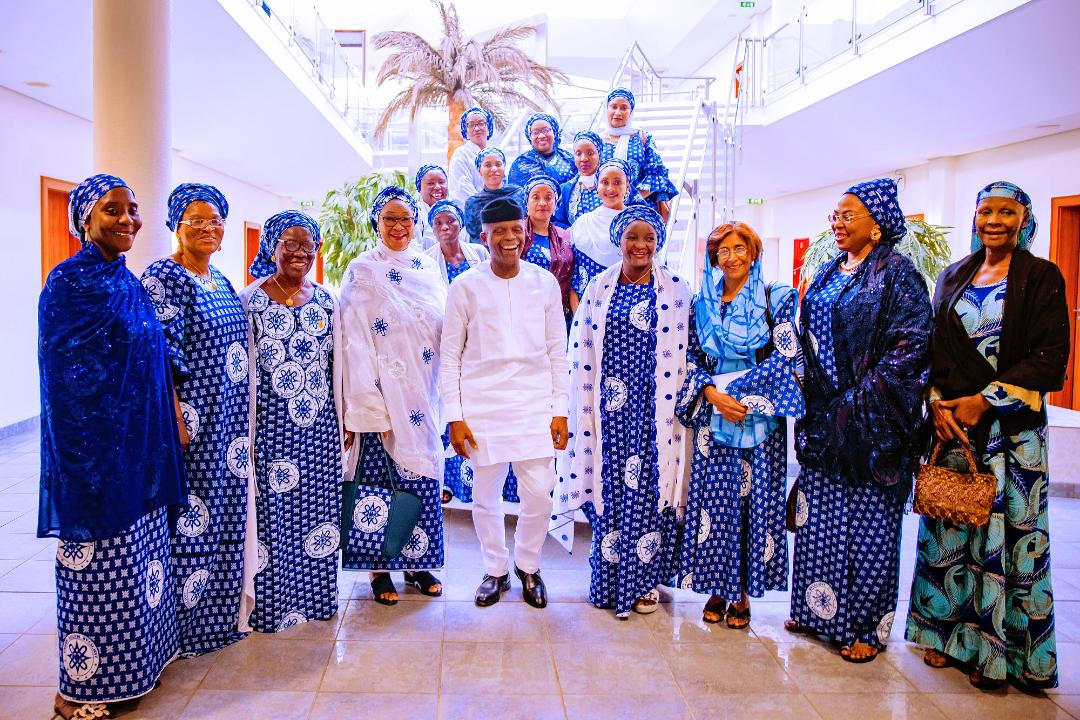
The Jamiyyar Matan Arewa Association has conferred on Vice President Yemi Osinbajo an award of Icon of Hope Humanitarian. The insignia of the award was handed to him today, June 17 during a visit by members of the Association to Professor Osinbajo at the Presidential villa, Abuja.
Africa needs more energy. Total electricity use for more than a billion people, covering all 48 sub-Saharan African countries except South Africa, is less than that used by Spain (home to just 47m). The dearth of power hurts livelihoods and destroys the dreams of hundreds of millions of young people.
We must close the global energy inequality gap. Africans need more than just lights at home. We want abundant energy at scale so as to create industrial and commercial jobs. To participate fully in the global economy, we will need reliable low-cost power for facilities such as data centres and, eventually, for millions of electric vehicles.
If our continent’s unmet energy needs are already huge, future demand will be even greater as populations expand, urbanisation accelerates and more people move into the middle class. By 2050, Nigeria will surpass America in population with over 400m people on current forecasts, with the vast majority of citizens in cities. Lagos’s population alone will surpass 30m people.
The Nigerian government remains committed to universal energy access, and all Nigerians deserve to enjoy the benefits of modern energy that are taken for granted in the rich world. We should aim to generate a national average power output of at least 1,000 kilowatt-hours per person which, combined with population growth, means that by 2050 we will need to generate 15 times more electricity than we do today. That ambitious goal will require vast resources.
President Muhammadu Buhari has also pledged that Nigeria will reach net-zero emissions by 2060. We are currently implementing power sector initiatives and reforms focused at expanding our grid, increasing generation capacity, and deploying renewable energy to rural and underserved populations. We aim to end wasteful gas flaring by 2030, instead leveraging this domestic resource for our own economic growth. Reaching both our development and climate ambitions, however, will require far more external support and the same policy flexibility that rich nations claim for themselves in the energy transition. We cannot achieve our goals otherwise.
Despite the tremendous energy gaps, global policies are increasingly constraining Africa’s energy technology choices. Rich countries, especially in Europe, have repeatedly called for African states to use only renewable power sources. This is partly because of a naive belief in leapfrogging, the assumption that, like skipping landlines for mobile phones, Africa can ‘leap’ to new energy technologies. The renewables-only mantra is also driven by unjustified fears of the continent’s future emissions. Yet under no plausible scenario is Africa a threat to global climate targets. Such demands extend even to cooking, where some funders will not support any gas projects although they bring immediate and substantial benefits. The vast majority of Africans still use charcoal or wood to cook, leading to deforestation, early death from indoor air pollution and avoidable carbon emissions.
Instead of viewing Africa’s emergence as a threat to be blocked, the continent should be seen as a tremendous opportunity. The challenge for the continent is to transition to net-zero emissions while at the same time building sustainable power systems to drive development and economic opportunity. The EU’s recent decision to label natural gas and nuclear power as green investments recognises a critical truth: different countries will follow different paths in the energy transition. If this is true for Europe, it’s even more true for diverse African nations.
A promising step was announced last year in Scotland at COP26, the annual UN climate talks, when South Africa received an $8.5bn package to accelerate its energy transition. It is high time to extend that kind of support to the rest of the continent. Nigeria has four times South Africa’s population and yet uses just one-eighth as much electricity. COP27 will be held in Egypt in November. Now is the ideal time to reset global policy so as to bolster Africa’s plans for producing clean energy. Wealthy countries have contributed the most to climate change, and they cannot demand more stringent actions than they will commit to themselves.
First, developed nations should commit to funding in full Africa’s energy transition. This is both a moral imperative and an environmental necessity. We estimate that Nigeria requires $400bn of new investment above business-as-usual spending to meet its net-zero pledge. A green energy package, akin to South Africa’s, should offer at least $10bn per year over the next two decades. Investments would cover not only new renewable generation projects, but also transmission infrastructure, smart grids, data management systems, storage capacity, electric vehicles, clean cooking, and the costs of integrating new distributed energy systems.
Second, there must be a hiatus on blanket bans for fossil-fuel financing in developing countries. Coal investment is already dead in most of Africa and any future oil investment will come from private sources. But financing rules on natural gas will greatly affect our development and our energy transition to net zero. Though solar will provide most of our power in the future, we still need natural gas for baseload power and balance. We insist that liquefied petroleum gas (LPG) be included as a clean cooking alternative to save the lives of our women and girls and to protect our own natural environment. Europe says it needs a decade more of gas investment to meet its 2050 climate targets. Africa—with our greater challenges—should have at least two more decades in order to meet our climate targets.
The world cannot tackle collective challenges if poor nations are treated as second class, or their aspirations are ignored. After enduring colonialism, decades of unfair economic practices and covid-19 vaccine apartheid, we cannot accept regressive climate policy as another injustice. Tackling the dual crises of poverty and climate change can only succeed if all countries play their fair part–and all of humanity is lifted up together.
Yemi Osinbajo is the vice-president of Nigeria.
Source: The Article was first published by the Economist-UK
Restructuring. This has been the governing subject since 2015. It became very tendentious with the secessionist agitations and the killings by gangs of criminals across the country. The APC government was accused of coming to power on the pinions of lofty ideals and precepts, including restructuring, but abandoned them as soon as it got the prize. But will restructuring be or not be – under a new administration in 2023?
There are variants of restructuring – according to whoever is arguing. But the nucleus of the argument on restructuring is devolution of more power to states. The south-west where Bola Tinubu, APC presidential candidate, comes from has been the fiercest proponent of the restructuring of Nigeria according to regions and of a return of Nigeria to the 1963 constitution. Under the 1963 constitution, also called the Republican constitution, the old regions existed as semi-autonomous orbiting entities with a surfeit of power to decide their future as regards education, healthcare, basic facilities, customs, identity, etc.
The south-west’s pursuit, which became more trenchant under the Buhari administration, is the absolute restructuring of Nigeria. In September, 2017, leaders of the region converged on Ibadan, Oyo state where they made a bold and incisive declaration – ‘’the Ibadan declaration’’. They demanded the immediate restructuring of Nigeria.
The south-west leaders declared that the Yoruba no longer wanted to be governed under the 1999 constitution. In a 16-point communiqué signed by the chairman of the summit, Afe Babalola (SAN), and read by the late Yinka Odumakin, the leaders demanded regional governance, according to them, to enable the Yoruba to decide their own future.
Will restructuring still be or not be if Tinubu becomes president? Will the same decades-long demand by the south-west persist? Or will Tinubu bell the cat?
Tinubu gave an interesting perspective on restructuring and the national divergences in a treatise entitled: ‘’A new Nigeria or a better one: The fitting tools of a great repair’’, which he delivered at the annual dinner of the King’s College Old Boys’ Association in Lagos in September, 2017. Please permit me to quote Jagaban copiously here — as a record of history.
On the agitations for secession, he said: ‘’Let us be frank. Many who cry separation do so because their personal ambitions will be better served by such a thing. They believe they will have greater chance at political power under a different arrangement. Yet the cry for separation has gained traction among average people; this is due to the chronic failure of government to meet basic aspirations. If over the years, government had delivered on the promise of growth, prosperity, and justice, those calling for such extreme remedies would be but a small fringe of little consequence. Our task is not to condemn but to listen and understand. I care not at all for this proposed solution. But I dare not discount the concerns and problems that have led many people into advocating such a thing.’’
On the existential question of national cohesion, Tinubu said: “We all lined up to call ourselves Nigerian without gathering to discuss what it meant. Thus, we inhabit a nation that has not sufficiently defined its governance. We may be defined by political borders and boundaries but we have not glued ourselves to collective purpose and vision. Too many of us are born in Nigeria but not of it.”
And on reworking the system to reflect true federalism, the APC presidential candidate said: ‘’We cannot become a better Nigeria with an undue concentration of power at the federal level. Many of the 68 items on the Exclusive Federal List should be transferred to the Residual List. This would be in harmony with the 1963 Constitution, again an instance of reaching back to revive something old yet more likely to give us a better Nigeria. That prior constitution granted vast powers to the regions enabling them to carry out their immense responsibilities as they saw fit. By virtue of the clear fact that regional governments were closer to the people, they had a better feel for the material and intangible priorities of their populations. We must return to this ideal. Some items which should left for the states to handle such as police, prisons, stamp duties, regulation of tourist traffic, registration of business names, incorporation of companies, traffic on federal truck roads passing through states, trade, commerce and census are now on the Exclusive List for the federal government.’’
Throughout the treatise, Tinubu maintained his accustomed patriotic zeal, reemphasising the fundamentality of retooling Nigeria to make it better rather than discarding the entire establishment along with its merits.
But the gnawing question is, will Tinubu stick to his guns if he becomes president and initiate the process (with the national assembly) that will effectively make Nigeria a working federation based on the views he espoused, considering the fact that restructuring or whatever concomitant variant does not sit well with the north?
Or will this noble but polarising pursuit be buried awaiting exhumation after eight years?
By Fredrick Nwabufo; Nwabufo aka Mr OneNigeria is a writer and journalist.
We use cookies on our website to give you the most relevant experience by remembering your preferences and repeat visits. By clicking “Accept”, you consent to the use of ALL the cookies.
This website uses cookies to improve your experience while you navigate through the website. Out of these, the cookies that are categorized as necessary are stored on your browser as they are essential for the working of basic functionalities of the website. We also use third-party cookies that help us analyze and understand how you use this website. These cookies will be stored in your browser only with your consent. You also have the option to opt-out of these cookies. But opting out of some of these cookies may affect your browsing experience.
Necessary cookies are absolutely essential for the website to function properly. This category only includes cookies that ensures basic functionalities and security features of the website. These cookies do not store any personal information.
Any cookies that may not be particularly necessary for the website to function and is used specifically to collect user personal data via analytics, ads, other embedded contents are termed as non-necessary cookies. It is mandatory to procure user consent prior to running these cookies on your website.




 Leadership of the Southern and Middle Belt Leaders’ Forum (SMBLF), Afenifere, and Ohanaeze Ndigbo Worldwide, have rejected Governor Ifeanyi Okowa of Delta State as running mate to the presidential candidate of the Peoples Democratic Party (PDP), Alhaji Atiku Abubakar.
 The Nigerian stock market extended its downward trend with a loss of N341.26 billion at the close of trading today, Friday, June 17, following the crash of the market capitalization by -1.20 percent from N28.25 trillion posted yesterday, June 16 to N27.91 trillion.
 President Muhammadu Buhari has restated Nigeria’s commitment for a safer and healthier global climate, listing the country’s updated Nationally Determined Contribution (NDC) to include elimination of kerosene lighting by 2030, increase in use of buses for public transport and reduction in burning of crop residues.
 No fewer than 9, 227 primary school Teachers in Oyo State have cause to celebrate as the State Government has handed them letters of promotion from Grade level 13 to 15.
 The United Nations Children Education Fund (UNICEF) and Katsina State Government have partnered to launch a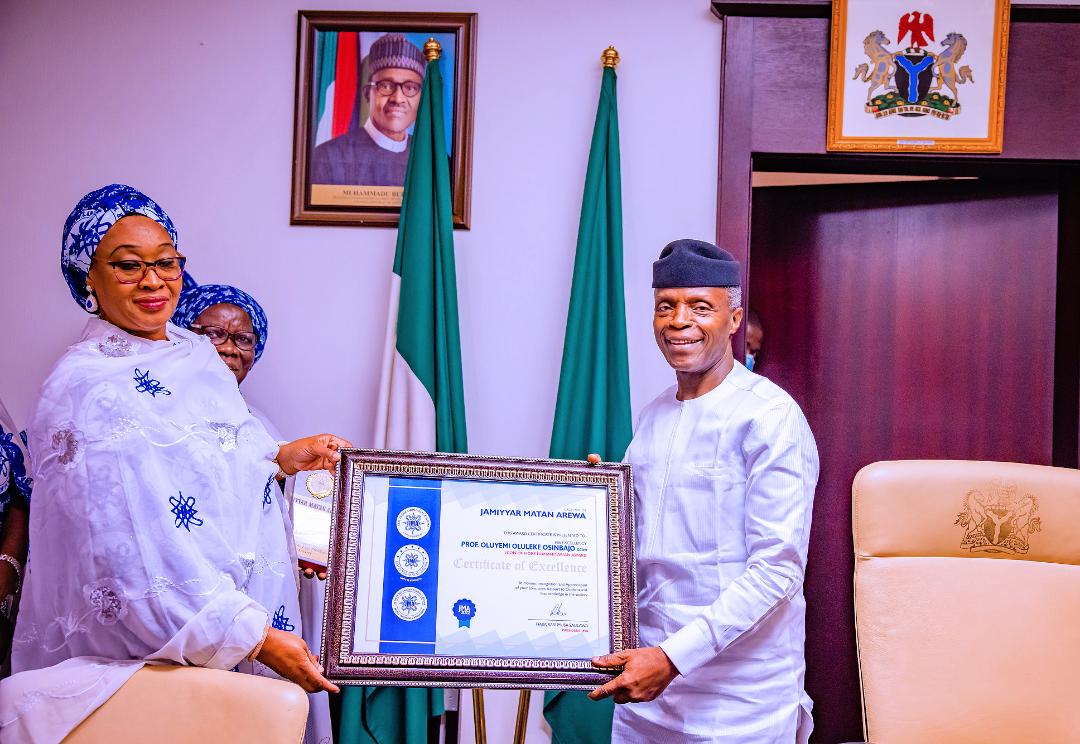




Hypocrisy Of Rich Countries On Climate Policies, By Prof Yemi Osinbajo
Africa needs more energy. Total electricity use for more than a billion people, covering all 48 sub-Saharan African countries except South Africa, is less than that used by Spain (home to just 47m). The dearth of power hurts livelihoods and destroys the dreams of hundreds of millions of young people.
We must close the global energy inequality gap. Africans need more than just lights at home. We want abundant energy at scale so as to create industrial and commercial jobs. To participate fully in the global economy, we will need reliable low-cost power for facilities such as data centres and, eventually, for millions of electric vehicles.
If our continent’s unmet energy needs are already huge, future demand will be even greater as populations expand, urbanisation accelerates and more people move into the middle class. By 2050, Nigeria will surpass America in population with over 400m people on current forecasts, with the vast majority of citizens in cities. Lagos’s population alone will surpass 30m people.
The Nigerian government remains committed to universal energy access, and all Nigerians deserve to enjoy the benefits of modern energy that are taken for granted in the rich world. We should aim to generate a national average power output of at least 1,000 kilowatt-hours per person which, combined with population growth, means that by 2050 we will need to generate 15 times more electricity than we do today. That ambitious goal will require vast resources.
President Muhammadu Buhari has also pledged that Nigeria will reach net-zero emissions by 2060. We are currently implementing power sector initiatives and reforms focused at expanding our grid, increasing generation capacity, and deploying renewable energy to rural and underserved populations. We aim to end wasteful gas flaring by 2030, instead leveraging this domestic resource for our own economic growth. Reaching both our development and climate ambitions, however, will require far more external support and the same policy flexibility that rich nations claim for themselves in the energy transition. We cannot achieve our goals otherwise.
Despite the tremendous energy gaps, global policies are increasingly constraining Africa’s energy technology choices. Rich countries, especially in Europe, have repeatedly called for African states to use only renewable power sources. This is partly because of a naive belief in leapfrogging, the assumption that, like skipping landlines for mobile phones, Africa can ‘leap’ to new energy technologies. The renewables-only mantra is also driven by unjustified fears of the continent’s future emissions. Yet under no plausible scenario is Africa a threat to global climate targets. Such demands extend even to cooking, where some funders will not support any gas projects although they bring immediate and substantial benefits. The vast majority of Africans still use charcoal or wood to cook, leading to deforestation, early death from indoor air pollution and avoidable carbon emissions.
Instead of viewing Africa’s emergence as a threat to be blocked, the continent should be seen as a tremendous opportunity. The challenge for the continent is to transition to net-zero emissions while at the same time building sustainable power systems to drive development and economic opportunity. The EU’s recent decision to label natural gas and nuclear power as green investments recognises a critical truth: different countries will follow different paths in the energy transition. If this is true for Europe, it’s even more true for diverse African nations.
A promising step was announced last year in Scotland at COP26, the annual UN climate talks, when South Africa received an $8.5bn package to accelerate its energy transition. It is high time to extend that kind of support to the rest of the continent. Nigeria has four times South Africa’s population and yet uses just one-eighth as much electricity. COP27 will be held in Egypt in November. Now is the ideal time to reset global policy so as to bolster Africa’s plans for producing clean energy. Wealthy countries have contributed the most to climate change, and they cannot demand more stringent actions than they will commit to themselves.
First, developed nations should commit to funding in full Africa’s energy transition. This is both a moral imperative and an environmental necessity. We estimate that Nigeria requires $400bn of new investment above business-as-usual spending to meet its net-zero pledge. A green energy package, akin to South Africa’s, should offer at least $10bn per year over the next two decades. Investments would cover not only new renewable generation projects, but also transmission infrastructure, smart grids, data management systems, storage capacity, electric vehicles, clean cooking, and the costs of integrating new distributed energy systems.
Second, there must be a hiatus on blanket bans for fossil-fuel financing in developing countries. Coal investment is already dead in most of Africa and any future oil investment will come from private sources. But financing rules on natural gas will greatly affect our development and our energy transition to net zero. Though solar will provide most of our power in the future, we still need natural gas for baseload power and balance. We insist that liquefied petroleum gas (LPG) be included as a clean cooking alternative to save the lives of our women and girls and to protect our own natural environment. Europe says it needs a decade more of gas investment to meet its 2050 climate targets. Africa—with our greater challenges—should have at least two more decades in order to meet our climate targets.
The world cannot tackle collective challenges if poor nations are treated as second class, or their aspirations are ignored. After enduring colonialism, decades of unfair economic practices and covid-19 vaccine apartheid, we cannot accept regressive climate policy as another injustice. Tackling the dual crises of poverty and climate change can only succeed if all countries play their fair part–and all of humanity is lifted up together.
Yemi Osinbajo is the vice-president of Nigeria.
Source: The Article was first published by the Economist-UK