Days after he jilted the main opposition People’s Democratic Party (PDP), Peter Obi has secured the Presidential ticket of the Labour Party (LP). So far, he is the second Presidential candidate that had emerged in the march to the 2023 general elections. The first one is Atiku Abubakar of the PDP.
While Peter Obi is from the Southeast (Ibo speaking area of the country), Atiku is from the Northeast (Hausa/Fulani area).
I was in our nation’s capital, Abuja last week and I wept over that beautiful city because it is fast becoming John Milton’s classic description of another paradise (being) lost. Our remarkable capital where I have practised journalism for thirty-four years is very dark at the moment. I drove in the night from District to District, from Area to Area, and I was shocked that the capital of the federation where the two major political parties are holding their conventions at the moment has become another Joseph Conrad’s ‘Heart of Darkness’.
Even the Eagle Square precinct where the ruling party, APC convention is taking place now is in partial darkness. And curiously, no one is raising questions about the strange darkness in Abuja city . All the streetlights all over the place are gone and no one to replace them.
Sadly, no one within the three arms of government located in the capital has drawn the attention of the Governor and Deputy Governor of Abuja to the darkness that has entombed Nigeria’s barely 45-year-old capital. It is sad that no one within the federal bureaucracy in the same capital is confronting the authorities in Abuja to rise up to the challenge of maintaining the capital of our already challenged federation.
No one within the security and defence community in Abuja has drawn the attention of the commander-in-chief to the nexus between darkness in Abuja and growing insecurity in and around the capital. It is also shameful that even the two Federal Capital Territory Committees in the National Assembly cannot tour Abuja to ask the Minister of the Federal Capital Territory (FCT), the Executive Secretary of the Federal Capital Development Authority (FCDA) the Permanent Secretary of the FCTA why our nation’s capital is in darkness. We need to know why the authorities in Abuja cannot maintain street and sometimes traffic lights in the Federal Capital Territory.
Doubtless, it has never been so bad. There are other infrastructure challenges in the city but when darkness descends on a city, there is a cause for alarm. It is important at this time to draw attention to what may be termed an inconvenient truth: Abuja, is one of the most important capitals in Africa and indeed the black race. It is our pearl we should not cast before a swine.
What this ancient word implies is that Abuja isn’t a portfolio to be given to anyone who isn’t a competent technocrat. It is like Lagos you don’t just give to any Dick and Harry. You can see that people who have run Lagos are the ones aspiring to run Nigeria. One of the former Governors of Lagos State, now a front-runner on the ruling party’s platform, is running for president. Two of them who were earlier speculated to be interested chickened out of the tight race. It is like New York, their New York City. Anyone who can win the NYC Mayoral election can contest to be President of the United States. Michael Bloomberg, a successful businessman, a media entrepreneur and former Mayor of New York City has contested U.S presidential election more than once. Lest we forget, Rudolph William Louis Giuliani, (Rudy Giuliani) 107th Mayor of NYC has aspired to be U.S President more than once too. So, it should be with the Minister of FCT. The current Minister of FCT who has been there for seven years needs to answer some questions about his stewardship. But specifically, he needs to wake up to light up the city. It isn’t about the competence of Abuja Electricity Distribution Company. It isn’t about electricity supply to residents of the city centre and territory. It is about urban renewal and city management. Illumination is part of security of even the rural areas. The founding fathers of FCT have tried their best. Controversial as it was in the beginning, the FCT has been accepted nationwide as Nigeria’s capital. Since the constitution provides in Sections 299-304 that the President and the Vice President shall be regarded as the Governor and Deputy Governor of the Federal Capital Territory as a State, it behoves the President the same constitution empowers to appoint a Minister if he so wishes, to consider a person who is as technically competent as Malam Nasir el-Rufai who is still more remembered as FCT Minister than as Governor of Kaduna State.
This discussion point on our nation’s capital is coming at a time of constitution review and election politics. President Buhari should note in his handover papers that the FCT Minister he appointed in 2015 has been a disservice to the nation.
The Minister waited for more than two and half years before he could form his cabinet. The Minister was without a cabinet, (Mandate Secretaries) I complained about for two years. The President approved the cabinet only on November 22, 2021. And no one asked any questions about this kind of docility, nurtured by gross procrastination in public office. Two years wasted in a four year mandate for Mandate Secretaries who should act as Commissioners in Nigeria’s Capital. As I have written several times, the rains of mediocrity will continue to beat us in Abuja as long as the FCT administration remains undemocratic. It will be recalled that a former Minister of FCT, Senator Bala Mohammed, (now Governor of Bauchi State) was appointed FCT Minister by the then President Jonathan because he (Bala) pushed the registration paper of Senators who then supported a strange ‘Doctrine of Necessity’, which paved the way for the then Vice President Jonathan to act as President while his principal, President Umaru Yar’Adua was on medical vacation in Saudi Arabia.
When Jonathan assumed office as President, he rewarded Senator Bala Mohammed with the FCT portfolio – for the way he diligently manipulated the Senate Paper on ‘Doctrine of Necessity’ at the Senate. Here is the thing, the President in any dispensation can always appoint anyone he likes (even if incompetent) as FCT Minister. What is worse, the Federal Capital Territory has no Legislature. The Constitution empowers the National Assembly to assume that responsibility. That is why the Constitution should be amended to ensure that a Mayor of Abuja is elected during a general election.
Let’s return to the brass tacks, darkness should not be tolerated in any discussions. Darkness connotes danger, evil and whatever is negative. That is why evil people such as terrorists choose forest darkness to perpetrate evil.
That is also why even Joseph Conrad’s novel, ‘Heart of Darkness’ is overtly metaphorical and political, demonstrating how colonialism destroys the hearts and souls of all human beings.
Here, “heart of darkness” is a short-hand for European stereotypes of Africa, which Conrad’s novel did its part to reinforce. There is a review of it, which plays on racist anxieties about immigration: the idea that certain places and peoples are primitive, exotic and dangerous.
Darkness has therefore become a symbol of hatred, fear and symbol of the power of evil. A reviewer of Conrad’s classic begins his story believing that these elements exist within the jungle, then with the natives and finally makes the realisation that ‘darkness’ lives within the heart of each man. Mita Ramani, a young writer in Chicago, while dissecting the struggle between darkness and light notes that the universal struggle between darkness and light, good and evil, is one that has plagued mankind for ages. The human race seeks daylight and yet paradoxically cannot survive without the night.
Traditionally, darkness is associated with emptiness, ignorance, and evil. Shadows hide in the darkness, but without a black night one would never be able to see the stars that light up the sky. Light is often a symbol of knowledge and truth, values that will never disappear from humanity. Humans are seekers of light, as they are drawn towards trying to learn what lies beyond our basic understanding of the world. Literature and art typically portray darkness as an absence of morality and truth, and ‘The Name of the Rose’ by Umberto Eco follows the common interpretation perfectly. In the novel, ‘Jorge de Burgos’, the elderly blind monk of the abbey, embodies the qualities of darkness ranging from wickedness to ignorance. His physical disability leaves him to live without light, which compels him to perform drastic measures in order to ensure the other monks live in intellectual darkness or ignorance. The fear of widespread knowledge drives Jorge to commit the grave sin of murder at night and hide in the shadows of darkness. His character and actions are a reflection that ignorance and evil fester in darkness. The obscurity or absence of knowledge is the epitome of darkness in the novel. Ultimately, Jorge’s crimes are only revealed with the light of understanding, knowledge, and religion, just as light is the only quality that can combat blindness and ignorance in the material world.
The darkness over the city of power and Nigeria’s capital should not be taken for granted. It is both physical and spiritual. There has been too much darkness over so many fundamental issues in our country. There is darkness over even the status of the Federal Capital Territory 45 years after. There is still darkness over the terminal date of the Buhari administration. It isn’t clear whether insecurity will end for elections to hold so that we have a president-elect next year. It wasn’t clear at press time whether the APC primary will be peacefully held, after all. There is also strange darkness over why a former President Goodluck Jonathan would like to return to Aso Presidential Villa on the platform of the Party that disgraced him out of office in 2015. There is so much darkness in Abuja over why so many presidential candidates have curiously emerged from the South West where there has always been a major candidate who is generally believed to have capacity and war chest to prosecute the #project-2023 (presidential election). It is indeed dark over why Governor Yahaya Bello’s presidential election campaign has suddenly become the most remarkable so far in a survey by our own Channels Television. In the same vein, there is still darkness over the reasons zoning arrangement and policy of the two political parties suddenly collapsed like a pack of cards before the primaries.
In the main, the darkness in Nigeria’s capital may have symbolised darkness over the future of democracy in Nigeria, our Nigeria. It wasn’t clear yet at press time despite declarations of assurances whether some light will drive away darkness over the 2023 hand-over that a Senior Advocate of Nigeria (SAN), Robert Clark has declared could be affected by consequences of insecurity that isn’t abating. Oh Darkness, why is thy sting resident in Nigeria’s Capital?
Inside Stuff With MARTINS OLOJA ‘The Guardian’, Sunday May 29, 2022, Back Page
The National Agency for Food and Drug Administration and Control (NAFDAC), is angry with the Chief Executive officer of Bioresources Development and Conservative Programme, Professor Maurice Iwu for claiming that the Agency had approved IHP Detox Tea for the cure of COVID-19 patients.
The Director-General of NAFDAC, Professor Mojisola Adeyeye, said in a statement that it is only NAFDAC that is mandated by law to make any pronouncement on the quality, safety, and efficacy of all regulated products that showed satisfactory scientific evidence.
Professor Mojisola said that the media reports ostensibly circulated at the instance of the promoters of IHP Detox Tea that claimed that the herbal medicine was the only product approved by the Agency for the treatment of COVID-19, was false.
In a letter to Professor Maurice Iwu, the Director-General of NAFDAC said: “it is worrisome that such an unguided statement is made without the fact that no product can be approved by NAFDAC without satisfactory clinical evidence.”
She explained that three herbal formulations were approved for clinical trial studies during the COVID-19 Pandemic.
Mojisola Adeyeye said that while two studies have commenced, including the IHP Detox Tea, the third clinical trial study is yet to start, adding that the IHP Detox Tea clinical trial study at CMU/LUTH and NAUTH, approved for Professor Iwu’s company, was only a pilot study, (that is still ongoing), with a small sample size that is inadequate to make a pronouncement on safety and efficacy of the product.
Professor Mojisola Adeyeye said that the World Health Organisation (WHO) team and other well-meaning individuals in the research space have found the claim of the efficacy of the IHP Detox Tea misleading, and that the Agency is saddled with the responsibility to provide oversight and deter such inaccurate information on regulated products in the country.
According to her, preparatory to the WHO team’s visit to Nigeria for the study, NAFDAC officials on inspection of the clinical trial site of IHP Detox Tea had found some lapses.
“We discovered some seventeen (17) lapses during our inspection visit. We passed the lapses to them as compliance directive to address.”
She said that the company is yet to respond to the identified lapses by the regulatory authority before making the pronouncement that the product is efficacious for the treatment of COVID-19 patients.
She asked Professor Iwu to retract the statement on the same newspapers and any other platforms used for such improper and misleading representation of the IHP Detox Tea study within 48 hours from the receipt of the letter and inform the Agency of the action to avoid further regulatory sanctions.
Responding in a letter dated May 17, 2022, and addressed to the D-G NAFDAC, Professor Iwu admitted that NAFDAC is the only authorised Agency by law, allowed to make any pronouncement on the quality, safety and efficacy of all regulated products with satisfactory evidence.
The apex Igbo socio-political and cultural organization, Ohanaeze Ndigbo Worldwide, has vowed to oppose Atiku Abubakar and the Peoples Democratic Party (PDP) on which platform he emerged Presidential candidate for the 2023 election in Nigeria.
The group also made it clear that no Igbo person will be allowed to campaign and project his presidential agenda in the region, describing the PDP presidential primaries that produced him as its 2023 presidential candidate, as corrupt and erratic.
Reacting to Atiku’s victory, Ohanaeze in a statement made available to newsmen today, May 29, through its Secretary-General, Mazi Okechukwu Isiguzoro, said that the PDP presidential candidate will never become Nigeria’s president.
Describing the PDP, which is the main opposition political party in Nigeria as having been reduced to a “Northern party,” Ohanaeze rejected Atiku’s candidacy, alleging that his emergence as PDP’s candidate was a plot by unpatriotic Northerners against the Southern part of the country.
Okechukwu Isiguzoro said that the Igbo would rise up against Atiku and that his presidential campaign would be rejected in the South-East.
Part of the statement reads: “It’s amusing that PDP is now a Political party for the Northern region, with Dr. Iyocha Ayu as PDP chair, Walid Jubril as BOT Chair and Atiku Abubakar as 2023 PDP Presidential candidate.
“PDP has fulfilled her threats to sideline the Igbo in 2023 and we will carefully answer back to them.
“Another Northerner, Senator David Mark supervised the process that schemed out Igbo from PDP. The consequences of the 2022 PDP Convention will be a discontinuity of milking of Igbo votes by a party that butchered the Igbo’s dream.
“We are waiting for the APC presidential primary to take the final decision on whether or not Igbos will participate in the 2023 elections.
“Atiku Abubakar will be opposed in the South-East, and no Igbo is anticipated to champion or project Atiku Presidency in the East. Nobody is going to take the risk of campaigning for Atiku in the East since the PDP is now a regional northern political party. Atiku will not have Igbo support him in 2023, he cannot be the President of Nigeria in 2023.
“Ndigbo will rise against PDP and Atiku Abubakar as a prize for PDP’s ingratitude and dishonesty against Igbo.”
Director-General of Voice of Nigeria (VON), Chief Osita
The Director-General (DG) of Voice of Nigeria (VON), Osita Okechukwu decried the dollar rain during the recent Presidential primary of opposition Peoples Democratic Party (PDP) at the National Stadium Abuja which he said sought to depreciate the nation’s currency, the Naira.
According to him, a nation’s currency is one of the critical indices of measuring the general health of its economy, but that when the currency nose-dives it leads to hype-inflation, gross unemployment and abject poverty, thereby worsening the nation’s security.
In a statement today, May 29, Okechukwu cited the withdrawal comments of Mohammed Hayatu-Deen, a financial guru, even as he called on President Buhari to support the use of consensus method to ensure that the forthcoming APC presidential primary does not follow the PDP’s highest bidder Dollar Rain.
In his speech before withdrawing from the PDP primary, the former banker, Hayatu-Deen, said, “it is, therefore, based on personal principles and with great humility that I have decided, after wide consultation, to withdraw from this contest, which has been obscenely monetised.”
Okechukwu stated: “Albeit, our sister opposition political party has every constitutional right to elect whoever they want as their flag bearer; the Dollar rain is worrisome as noted by Mohammed Hayatu-Deen, who dubbed it obscenely monetised presidential primary.
“Sincerely, I congratulate His Excellency, Atiku Abubakar on his emergence from the opposition party primary. But, as a patriot and stakeholder in the Nigeria project, I am worried by PDP’s induced Dollar Rain, which led to unprecedented depreciation of the Naira.”
Therefore, Okechukwu called on President Buhari to consider the consensus option to be adopted in the APC presidential primary election to save the Naira.
He lamented the monumental harm PDP’s Dollar Rain did to the nation’s economy, saying “if that could happen in a party with about 731 delegates, imagine what will happen if APC with about 2, 322 delegates is allowed to indulge in Dollar Rain.”
His words: “If the Naira is already bleeding because of Dollar Rain on 731 delegates; please better imagine the degree of depreciation of the Naira if another blitz of Dollar Rain is allowed to be splashed on 2,322 delegates? This is the farming season, as such the Buhari’s Agrarian Revolution would also be at risk if the Naira is allowed to depreciate further. Prices of fertilizer, seedlings and other farm implements will hit roof top.”
On why he is calling for consensus instead of direct and indirect mode of primary election, which are more democratic than consensus, the DG VON said: “All the three are democratic and are in our law books. Please, is it not paradoxical that the governors, and ex-governors who oppose consensus had adopted same consensus and even outright imposition to select their successors? To me they have lost the moral high ground to oppose Mr President from adopting such legal mode of primary election. One’s appeal is that politically correct aspirant should be consensually presented.”
Okechukwu dismissed insinuations that with Atiku the APC will not adhere to the rotation convention of electing a presidential candidate of Igbo extraction or a southerner. APC is Brand A1, and we follow the rule of law and rotation convention.
“Methinks His Excellency Atiku Abubakar’s opportunistic victory will have little or no impact on APC’s election of a presidential candidate from among Ndigbo aspirants or by extension the southern belt aspirants. I don’t think Mr President I know even going by consensus will deny the south their turn.”
Reminded of the possibility that with APC Southern presidential candidate Atiku will sweep the northern votes, OKechukwu wondered what new tangible thing Atiku was bringing to the table in the face of prevailing daunting economic scenario.
He said Atiku is used to sharing money, but that today there is little or none to be shared, adding, “Most importantly, one, northern voters are sophisticated, having voted for Chiefs MKO Abiola and Olusegun Obasanjo, with all indicators they will vote southerner this time around so as to shame the PDP for breaching the rotation convention in their constitution.
“Secondly, there are number of northern voters who are patriots who believe sincerely on the ancient doctrine of equity, natural justice and the imperative of unity of our dear country. For going south is the best solution to smoothen the polarization in the land. Thirdly, the dormant Igbo voters in Kano, Lagos and other towns plus core non-Igbo APC voters will be woken up to trounce Waziri Adamawa at the polls.”
Former spokesperson to ex-President Goodluck Jonathan, Dr. Doyin Okupe, has revealed how Atiku Abubakar’s victory was concluded before the Peoples Democratic Party (PDP), presidential election.
Reacting to Atiku’s victory today, May 29 in Twitter, Okupe wrote: “ATIKU’S VICTORY AND THE SUPREMACY OF THE NORTH”
“Atiku won the PDP presidential primaries on Saturday, the 28th of May 2023. But the assurance of the victory was concluded some 24hrs before the delegates elections.
“The main challenger, Nyesom Wike had nearly overran the whole country with massive deployment of resources and had actually overtaken the Crown Prince himself.
”Prior to the advent of the primaries, the North had taken a preemptive strike by installing a loyalist as the National Chairman with ready acquiescence of PDP Southern leaders who believed naively that with that arrangement in place, a southern presidential candidate was a certainty.
”The only job of the National Chairman was to cause a flagrant violation of the PDP constitution and ensure a paralysis of the zoning arrangement.
“After this the remaining job, which was completely overlooked by Wike and his powerful clique of serving and former governors, was to cause a late rally of northern delegates which was certain to guarantee victory since the north had a significant numerical advantage over the south.
”There was partial compliance but that was enough to tilt the crown towards the forever towering Atiku.
”The motley crowd of southern aspirants present a shameful and near pathetic view. An assembly of self-seeking and self-conceited but nevertheless unwise collection of naive politicians, competing in as minions in a game organized and executed by experts and celebrated master.
“My only regret in all these is that southern politicians will always be defeated in this arena till kingdom come because each crop of new leaders assumes that assertion to power is an incontestable evidence of acquisition of knowledge and experience.
”Those who asked Tambuwal to withdraw were not rich people, neither were they serving nor former governors. Those who do not respect the council of elders are often met with failures and shame in their many pursuits.
”Once again, the North has triumphed over the folly of their southern counterparts. But let us hope this is not a pyrrhic victory. Only time will tell.”
National convener of Nigeria Equity Group (NEG) has faulted the emergence of Atiku Abubakar, a Muslim from the Northern part of the country, as the Presidential candidate of the main opposition party, the Peoples Democratic Party (PDP) after President Muhammadu Buhari would have finished eight years in office.
The group, in a statement today, May 29, by its President, Dr. Emeka Nwosu and national secretary, Mohammed Mubarak, called on the ruling All Progressives Congress (APC) to give its 2023 presidential ticket to a Christian from Southern Nigeria in order to create a balance.
The group said that for a country as complex as Nigeria, retaining power in one part of the country will not promote unity, even as it promised to mobilise for the APC nationwide and ensure that the PDP is not returned to power for ignoring the complex and diverse nature of Nigeria.
The statement reads: “We wish to respond to the emergence of the former Vice President, Alhaji Atiku Abubakar as the Presidential candidate of the People’s Democratic Party (PDP) for the 2023 presidential election, Alhaji Atiku, a northern Muslim, defeated a plethora of PDP presidential aspirants in a contentious primary election in Abuja to lead the PDP charge for the general elections.
“We wish to draw attention to the fact that the Nigeria Equity Group (NEG) has campaigned vigorously for equity, fairness and inclusion in our body polity. In our several interventions over the years, we have appealed to the major political parties to be mindful of the complex heterogeneous Nigerian society and to work out a political solution that will be fair, inclusive and equitable to all.
“In this case, we believe what is just and fair is for presidential powers to be zoned to the South, specifically to a southern Christian, after the eight-year rule of President Muhammadu Buhari, a northern Muslim. We consider it to be very inequitable, unfair and potentially dangerous for the Presidency to remain in the North after President Buhari’s tenure.
“We wish to note that the various crises that have plagued the Nigerian society lately stem from the feeling of neglect, marginalization and inequity. These cries of marginalization seem to have some validations and have been amplified under the tenure of President Buhari who apparently has favored the North in key appointments and interventions.
“For instance, all the leaders of the various arms of government are Northern Muslims, starting from President Buhari himself; Ahmad Lawan, Senate President and Chairman of the National Assembly, and Ibrahim Tanko Muhammad, who is the Chief Justice of Nigeria. Key appointments in the military and paramilitary agencies are also skewed in favour of the north.
“This atmosphere has heightened the call for a more equitable distribution of political offices and appointments in a manner that reflects the complexity and diversity of the Nigerian State. We, at the NEG, have been at the vanguard of this campaign because of our love for Nigeria and understanding that it is in the country’s strategic and long term interest to put issues of equity and inclusion at the centre of our politics.
“We therefore totally condemn the decision of the PDP to elect a northern Muslim presidential candidate at this point of our national life. This is a potentially dangerous decision that has serious implications for national unity and security. We strongly believe this decision does not bode well for our country and would lead to further crises and aggravate the growing fissures of the Nigerian society.
“We will therefore mobilize Nigerians of goodwill everywhere against this act of arbitrariness by the PDP. We note that one man’s ambition cannot be greater than the security and stability of our country.
“We call on the ruling Party, the All Progressives Congress (APC) to be deliberate about its search for a Presidential candidate and to work towards a consensus around a southern Christian, for the sake of the peace and long term good of our country. This would demonstrate that the APC has better understanding of the Nigerian society and is a Party built on trust, goodwill, and diversity.
“We assure the APC of total victory if they do this as we will mobilize Christians and Muslims, northerners and southerners, and all men and women of goodwill to back this ticket.
“Finally, we note that Nigeria is on the precipice and we should be careful not to push it down the cliff.”
Mobil Producing Nigeria Unlimited, a subsidiary of ExxonMobil has reinstated a veteran image-maker, Ernest Omo-Ojo three years after he was sacked.
The oil company withdrew the letter of sack to the image-maker following the intervention of the Minister of State Petroleum Resources, Chief Timipre Sylva.
Acting swiftly on a petition dispatched to his office by Omo-Ojo to protest the seeming arbitrary termination of his appointment by the multinational oil corporation, the Minister in July last year, inaugurated a three-man committee, all directors, from the Ministry to investigate the matter and make recommendations to his office.
His Special Adviser on Media, Horatious Egua confirmed that his principal had in 2022 intervened in between the firm and Omo-Ojo.
National Leader of the ruling All Progressives Congress (APC) and frontline presidential aspirant, Asiwaju Bola Ahmed Tinubu has congratulated former Vice President Atiku Abubakar for emerging as the flag bearer of the opposition Peoples Democratic Party (PDP) at the party’s primary in Abuja yesterday, May 28.
In a statement today, May 29, by the Director of Media and Communication, Tinubu Campaign Organisation, Bayo Onanuga, Tinubu reminded Atiku of many questions Nigerians will be asking regarding the 16 year rule of the same PDP.
“Unfortunately for the PDP, its candidate will be burdened to explain why Nigerians should give it another opportunity, after squandering 16 years at the central government, without much to show.
“Nigerians are yet to forget the national ruin and mismanagement of our country for 16 years by successive PDP administration and this bad memory will dog the campaign of the PDP Candidate.”
Tinubu, who however, commended Atiku for his patriotism and commitment to Nigeria’s progress, said that he expected the former Vice-president , who was also the 2019 presidential candidate of the PDP, to be his worthy opponent, by the Grace of God and the support of APC delegates, in the coming 2023 President election.
The APC National Leader said that Atiku’s victory didn’t come as a surprise to Nigerians because of his vast experience as a statesman and veteran of many presidential contests from 1993.
While welcoming the PDP candidate to the race, Tinubu added that the coming election should be about issues that will improve the quality of life of Nigerians; bring peace, progress, political stability and solve myriad of sociopolitical challenges and insecurity currently facing the country.
“I welcome the victory of Alhaji Atiku Abubakar as the candidate of the Peoples Democratic Party in the just concluded primary. I look forward to squaring up with him as a worthy opponent in the coming election. I have known the former Vice President as a formidable politician and a patriot who believes in the unity and progress of our dear country.
“As we move further into the election season, I charge the PDP presidential candidate and all political actors across Party lines that we should make this election season one that is devoid of bitterness, rancour and strife.
“We should make our campaigns peaceful and issue based. Election season should be a festival of ideas that will uplift our country and improve the living condition of all our people.”
Former Vice President Atiku Abubakar on Saturday in Abuja emerged as the Peoples Democratic Party (PDP) candidate for 2023 presidential election.
Abubakar scored 371 votes to emerge as the party flagbearer defeating his close contender, Gov. Nyesom Wike of Rivers, who polled 237 votes.
Sen. David Mark, the Chairman and Chief Retuning Officer of the PDP Special Convention, announcing the results, said total number of accredited delegates was 767, the total number of votes cast was 763, while 13 were invalid votes.
Mark said that “Abubakar haven scored the highest votes in the election is hereby declared the winner”.
He also announced the votes scored by other aspirants as Gov. Udom Emmanuel of Akwa-Ibom – 38 votes, and Gov. Bala Mohammed of Bauchi State – 20 votes.
Former President of the Senate, Sen. Bukola Saraki – 70 votes; and former Secretary to the Government of the Federation, Sen. Anyim Pius Anyim – 14 votes.
The only female Aspirant, Mrs Tari Oliver, and the former President of the Pharmaceutical Society of Nigeria, Mazi Samuel Ohuabunwa scored one vote each.
Other aspirants without vote included former governor of Ekiti State, Ayodele Fayose; the Publisher of Ovation Magazine, Dele Momodu; former Speaker of Abia State, Chikwendu Kalu; and former Deputy Speaker of Abia State, Cosmos Ndekwe.
The News Agency of Nigeria (NAN) reports that former governor Peter Obi of Anambra had earlier withdrawn from the race and resigned from the party.
Others that withdrew from the race were financial expert, Mohammed Hayatudeen, Gov. Aminu Tambuwal of Sokoto State and Dr Nwachukwu Anakwenze.
Abubakar born on Nov. 25, 1946 in Jada, Adamawa, ran for governor of the state three times in 1990, 1997 and 1998, when he was elected before becoming the running mate to former President Olusegun Obasanjo in 1999, of which he remained the vice president till 2003.
Abubakar contested for the office of the president several times, including 2014, when he ran on the platform of the All Progressives Congress (APC) and lost at the primaries to incumbent President Muhammadu Buhari.
He also run as the PDP presidential candidate in 2019, but lost president Buhari of APC. (NAN)
We use cookies on our website to give you the most relevant experience by remembering your preferences and repeat visits. By clicking “Accept”, you consent to the use of ALL the cookies.
This website uses cookies to improve your experience while you navigate through the website. Out of these, the cookies that are categorized as necessary are stored on your browser as they are essential for the working of basic functionalities of the website. We also use third-party cookies that help us analyze and understand how you use this website. These cookies will be stored in your browser only with your consent. You also have the option to opt-out of these cookies. But opting out of some of these cookies may affect your browsing experience.
Necessary cookies are absolutely essential for the website to function properly. This category only includes cookies that ensures basic functionalities and security features of the website. These cookies do not store any personal information.
Any cookies that may not be particularly necessary for the website to function and is used specifically to collect user personal data via analytics, ads, other embedded contents are termed as non-necessary cookies. It is mandatory to procure user consent prior to running these cookies on your website.




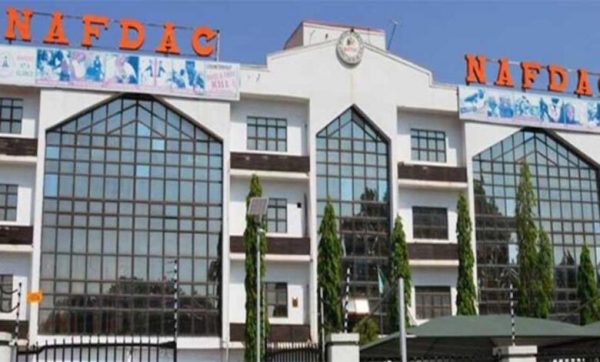 The National Agency for Food and Drug Administration and Control (NAFDAC), is angry with the Chief Executive officer of Bioresources Development and Conservative Programme, Professor Maurice Iwu for claiming that the Agency had approved IHP Detox Tea for the cure of COVID-19 patients.
 The apex Igbo socio-political and cultural organization, Ohanaeze Ndigbo Worldwide, has vowed to oppose Atiku Abubakar and the Peoples Democratic Party (PDP) on which platform he emerged Presidential candidate for the 2023 election in Nigeria.
 Former spokesperson to ex-President Goodluck Jonathan, Dr. Doyin Okupe, has revealed how Atiku Abubakar’s victory was concluded before the Peoples Democratic Party (PDP), presidential election.
 The oil company withdrew the letter of sack to the image-maker following the intervention of the Minister of State Petroleum Resources, Chief Timipre Sylva.




Abuja: From Capital To National Darkness, By Martins Oloja
Even the Eagle Square precinct where the ruling party, APC convention is taking place now is in partial darkness. And curiously, no one is raising questions about the strange darkness in Abuja city . All the streetlights all over the place are gone and no one to replace them.
Sadly, no one within the three arms of government located in the capital has drawn the attention of the Governor and Deputy Governor of Abuja to the darkness that has entombed Nigeria’s barely 45-year-old capital. It is sad that no one within the federal bureaucracy in the same capital is confronting the authorities in Abuja to rise up to the challenge of maintaining the capital of our already challenged federation.
No one within the security and defence community in Abuja has drawn the attention of the commander-in-chief to the nexus between darkness in Abuja and growing insecurity in and around the capital. It is also shameful that even the two Federal Capital Territory Committees in the National Assembly cannot tour Abuja to ask the Minister of the Federal Capital Territory (FCT), the Executive Secretary of the Federal Capital Development Authority (FCDA) the Permanent Secretary of the FCTA why our nation’s capital is in darkness. We need to know why the authorities in Abuja cannot maintain street and sometimes traffic lights in the Federal Capital Territory.
Doubtless, it has never been so bad. There are other infrastructure challenges in the city but when darkness descends on a city, there is a cause for alarm.
It is important at this time to draw attention to what may be termed an inconvenient truth: Abuja, is one of the most important capitals in Africa and indeed the black race. It is our pearl we should not cast before a swine.
What this ancient word implies is that Abuja isn’t a portfolio to be given to anyone who isn’t a competent technocrat. It is like Lagos you don’t just give to any Dick and Harry. You can see that people who have run Lagos are the ones aspiring to run Nigeria. One of the former Governors of Lagos State, now a front-runner on the ruling party’s platform, is running for president. Two of them who were earlier speculated to be interested chickened out of the tight race. It is like New York, their New York City. Anyone who can win the NYC Mayoral election can contest to be President of the United States. Michael Bloomberg, a successful businessman, a media entrepreneur and former Mayor of New York City has contested U.S presidential election more than once. Lest we forget, Rudolph William Louis Giuliani, (Rudy Giuliani) 107th Mayor of NYC has aspired to be U.S President more than once too. So, it should be with the Minister of FCT. The current Minister of FCT who has been there for seven years needs to answer some questions about his stewardship. But specifically, he needs to wake up to light up the city. It isn’t about the competence of Abuja Electricity Distribution Company. It isn’t about electricity supply to residents of the city centre and territory. It is about urban renewal and city management. Illumination is part of security of even the rural areas. The founding fathers of FCT have tried their best. Controversial as it was in the beginning, the FCT has been accepted nationwide as Nigeria’s capital. Since the constitution provides in Sections 299-304 that the President and the Vice President shall be regarded as the Governor and Deputy Governor of the Federal Capital Territory as a State, it behoves the President the same constitution empowers to appoint a Minister if he so wishes, to consider a person who is as technically competent as Malam Nasir el-Rufai who is still more remembered as FCT Minister than as Governor of Kaduna State.
This discussion point on our nation’s capital is coming at a time of constitution review and election politics. President Buhari should note in his handover papers that the FCT Minister he appointed in 2015 has been a disservice to the nation.
The Minister waited for more than two and half years before he could form his cabinet. The Minister was without a cabinet, (Mandate Secretaries) I complained about for two years. The President approved the cabinet only on November 22, 2021. And no one asked any questions about this kind of docility, nurtured by gross procrastination in public office. Two years wasted in a four year mandate for Mandate Secretaries who should act as Commissioners in Nigeria’s Capital. As I have written several times, the rains of mediocrity will continue to beat us in Abuja as long as the FCT administration remains undemocratic. It will be recalled that a former Minister of FCT, Senator Bala Mohammed, (now Governor of Bauchi State) was appointed FCT Minister by the then President Jonathan because he (Bala) pushed the registration paper of Senators who then supported a strange ‘Doctrine of Necessity’, which paved the way for the then Vice President Jonathan to act as President while his principal, President Umaru Yar’Adua was on medical vacation in Saudi Arabia.
When Jonathan assumed office as President, he rewarded Senator Bala Mohammed with the FCT portfolio – for the way he diligently manipulated the Senate Paper on ‘Doctrine of Necessity’ at the Senate. Here is the thing, the President in any dispensation can always appoint anyone he likes (even if incompetent) as FCT Minister. What is worse, the Federal Capital Territory has no Legislature. The Constitution empowers the National Assembly to assume that responsibility. That is why the Constitution should be amended to ensure that a Mayor of Abuja is elected during a general election.
Let’s return to the brass tacks, darkness should not be tolerated in any discussions. Darkness connotes danger, evil and whatever is negative. That is why evil people such as terrorists choose forest darkness to perpetrate evil.
That is also why even Joseph Conrad’s novel, ‘Heart of Darkness’ is overtly metaphorical and political, demonstrating how colonialism destroys the hearts and souls of all human beings.
Here, “heart of darkness” is a short-hand for European stereotypes of Africa, which Conrad’s novel did its part to reinforce. There is a review of it, which plays on racist anxieties about immigration: the idea that certain places and peoples are primitive, exotic and dangerous.
Darkness has therefore become a symbol of hatred, fear and symbol of the power of evil. A reviewer of Conrad’s classic begins his story believing that these elements exist within the jungle, then with the natives and finally makes the realisation that ‘darkness’ lives within the heart of each man.
Mita Ramani, a young writer in Chicago, while dissecting the struggle between darkness and light notes that the universal struggle between darkness and light, good and evil, is one that has plagued mankind for ages. The human race seeks daylight and yet paradoxically cannot survive without the night.
Traditionally, darkness is associated with emptiness, ignorance, and evil. Shadows hide in the darkness, but without a black night one would never be able to see the stars that light up the sky. Light is often a symbol of knowledge and truth, values that will never disappear from humanity. Humans are seekers of light, as they are drawn towards trying to learn what lies beyond our basic understanding of the world.
Literature and art typically portray darkness as an absence of morality and truth, and ‘The Name of the Rose’ by Umberto Eco follows the common interpretation perfectly. In the novel, ‘Jorge de Burgos’, the elderly blind monk of the abbey, embodies the qualities of darkness ranging from wickedness to ignorance. His physical disability leaves him to live without light, which compels him to perform drastic measures in order to ensure the other monks live in intellectual darkness or ignorance. The fear of widespread knowledge drives Jorge to commit the grave sin of murder at night and hide in the shadows of darkness. His character and actions are a reflection that ignorance and evil fester in darkness. The obscurity or absence of knowledge is the epitome of darkness in the novel. Ultimately, Jorge’s crimes are only revealed with the light of understanding, knowledge, and religion, just as light is the only quality that can combat blindness and ignorance in the material world.
The darkness over the city of power and Nigeria’s capital should not be taken for granted. It is both physical and spiritual. There has been too much darkness over so many fundamental issues in our country. There is darkness over even the status of the Federal Capital Territory 45 years after. There is still darkness over the terminal date of the Buhari administration. It isn’t clear whether insecurity will end for elections to hold so that we have a president-elect next year. It wasn’t clear at press time whether the APC primary will be peacefully held, after all. There is also strange darkness over why a former President Goodluck Jonathan would like to return to Aso Presidential Villa on the platform of the Party that disgraced him out of office in 2015. There is so much darkness in Abuja over why so many presidential candidates have curiously emerged from the South West where there has always been a major candidate who is generally believed to have capacity and war chest to prosecute the #project-2023 (presidential election). It is indeed dark over why Governor Yahaya Bello’s presidential election campaign has suddenly become the most remarkable so far in a survey by our own Channels Television. In the same vein, there is still darkness over the reasons zoning arrangement and policy of the two political parties suddenly collapsed like a pack of cards before the primaries.
In the main, the darkness in Nigeria’s capital may have symbolised darkness over the future of democracy in Nigeria, our Nigeria. It wasn’t clear yet at press time despite declarations of assurances whether some light will drive away darkness over the 2023 hand-over that a Senior Advocate of Nigeria (SAN), Robert Clark has declared could be affected by consequences of insecurity that isn’t abating. Oh Darkness, why is thy sting resident in Nigeria’s Capital?
Inside Stuff With MARTINS OLOJA
‘The Guardian’, Sunday May 29, 2022, Back Page