The new National Chairman of the ruling All Progressives Congress (APC), Senator Abdullahi Adamu has warned that the 2023 general elections will not be easy for the party. Adamu, who formally assumed duty today, March 29, after the last week Saturday National Convention that threw him up as chairman, said: “I want to say on behalf of the new National Working Committee (NWC) of the All Progressives Congress, that it is not going to be easy time for us. “We have a major event, that is going to not only test the waters but to see how stable that water will be after. That is the general elections.” He made it clear that the most important thing the new leadership should be concerned with is “how we handle the elections as a party. “I cannot deliver alone. But what I am asking for is driven by something called loyalty. You have to be loyal. We must have one team. If you bring any divisive tendencies, deal with it. This country is greater than anybody, anyone of us. And this party is bigger than any single member.”
”We humbly invite the President to step-in to dissuade political tax gladiators to sheath their swords.”
The appeal was made by the chairman of the Federal Inland Revenue Service (FIRS), Muhammad Nami, at the Tax Dialogue today, March 29 in Abuja.
Nami agreed however that tax revenue has always been an inherently apolitical issue, saying that it should be treated as such by all, irrespective of their political leaning.
”However, it is surprising that some people have begun to play politics with tax revenue generation.”
The FIRS chairman, who appreciated the directive by the President to government agencies to enable FIRS connect to their ICT systems, said that this singular pronouncement had softened the grounds for the Service to roll-out its system for seamless acquisition of data.
”We are confident that by the time all the agencies achieve 100% compliance with the President’s directive, Nigeria shall be the envy of other countries for tax compliance and domestic tax revenue mobilization,” he said
On the remittances of the Service to the Federation Account, the FIRS Chairman announced that the statistics from March 2022 Federation Account Allocation Committee (FAAC) meeting show that out of a total revenue of N803.072 billion from all revenue agencies, tax revenue contributed by FIRS was N513.522 billion (63.94%) while non-tax revenue from all other agencies amounted to N289.55 billion (36.06%).
The Chairman noted that that the average tax or FIRS contribution to FAAC in 2021 was 59.45%.
”I mentioned in my welcome address to the 2021 edition of the Tax Dialogue that the world had begun a tax race of which Nigeria must be a winner.
”The revenue profile of the country in 2021 has clearly shown that our continued survival as a nation depends on tax revenue.
”This trend is set to continue for some time to come. As such, all hands must be on deck to support the tax system and make it function efficiently.
In her remarks, the Minister of Finance, Budget and National Planning, Zainab Ahmed said the dialogue is designed to engage stakeholders in the Nigerian tax-space in meaningful discourse so as to glean information, ideas and experience in the aid of policy formulation and improved tax environment.
According to the minister, the main tax revenue objectives of the Federal Government include developing an economy that does not lean too heavily on resource wealth.
She explained that Nigeria’s economic history provides enough facts that resource wealth alone cannot lead to sustainable development, self-sufficiency and sustainable.
The other tax revenue objectives are:
”To institutionalise a healthy tax culture among Nigerians. The right attitude towards taxation will enable every Nigerian to become a co-guardian of the tax system and the commonwealth.
”To create a participatory system of taxation whereby the taxpayers and other stakeholders understand and accept that they have equal stakes in the tax system.”
President Muhammadu Buhari has expressed concern at the current tax system in Nigeria, which he said, is characterised by fragmented administration, multiple and sometimes, overlapping taxes.
Vowing that his government would remain committed to an efficient tax administration in order to improve tax revenue in the country, while declaring open today, March 29, in Abuja, the second National Tax Dialogue Week, the President said: “in most tax-efficient nations, tax administrative processes and practices are harmonised within a single system.
”One key deliverable of this year’s tax dialogue is to promote synergy in tax administration among the different tiers of government.
”Harmonising taxpayer identification across the country is a good start, but we must do more to promote ease of doing business (including ease of tax compliance) in Nigeria.
”On our part, we have started by clarifying in the 2021 Finance Act that FIRS is the sole authority to administer tax for the Federal Government.
”This clarification became necessary in order to avoid taxpayers being burdened with multiple tax compliance obligations towards different agencies of the same government.
”Multiplicity of tax administration is as undesirable as multiplicity of taxes; it creates uncertainty and instability and above all, it is inefficient.”
The theme of the Dialogue is: ”Tax Harmonisation for Enhanced Revenue Generation.’’
President Buhari said that there is an urgent need to maximise domestic revenue within the extant tax policy and laws.
He, therefore, proposed improved tax revenue for the country which will not necessarily impose new tax rates on Nigerians.
”We all know that good intentions are not enough as they simply cannot pay for infrastructure, security or social amenities. We must therefore improve tax revenue without necessarily raising new taxes.
”Revenue from commodities, including crude oil, are too volatile and unreliable. Therefore, I pledge government’s support for any viable initiative for improving tax revenue that should emanate from this dialogue.”
On Nigeria’s Tax-to-GDP ratio, the President said that the country also needs to do more in securing a buoyant domestic revenue base of the country that bequeaths an enduring economic foundation, political stability and social harmony to the next generation.
”According to the Organisation of Economic Cooperation and Development (OECD), in its Revenue Statistics in Africa 2021, the average ratio of Tax-to-GDP of 30 selected African countries in 2019 was 16.6% while Nigeria recorded a mere 6.0%.
”It is obvious that much needs to be done in the area of tax revenue mobilisation.
”It is my expectation that the discussions at this 2022 National Tax Dialogue will be focused on what we must do to maximise legitimate revenue collection and massively improve the Tax-to-GDP ratio.”
On the importance of the Tax Dialogue, which was instituted by the Minister of Finance, Budget and National Planning, and the Executive Chairman, Federal Inland Revenue Service (FIRS), President Buhari noted that the first edition in 2021 was very productive and integral in influencing tax policy, as well as legislative and administrative changes that were introduced last year.
He said that the most important testament to the success of the first edition is the fact that the FIRS achieved 100% of its collection target in 2021 and surpassed N6 trillion revenue threshold for the very first time.
The President assured Nigerians that the present administration would continue to maintain prudent management of the collective resources.
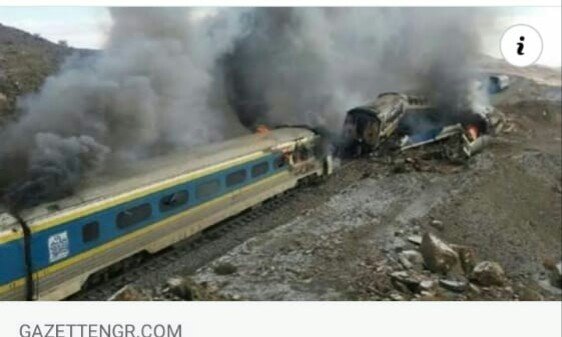
The leadership of all the military formations, the police and other security services have briefed President Muhammadu Buhari on the attack of a Abuja-Kaduna train yesterday by terrorists.
Those who were at the presidential villa today, March 29 to brief the President are the Chief of Defence Staff, General Lucky Irabor, leading the Chief of Army Staff, Lt-General Faruk Yahaya, the Chief of Air Staff, Air Marshal Isiaka Amao, the Inspector General of Police, Usman Baba.
Also at the Presidential villa as were Major General Samuel Adebayo, the Chief of Defence Intelligence and the Director General of the Department of State Services (DSS), Yusuf Magaji Bichi.
The details of their briefing was not disclosed in a statement by the Senior Special Assistant to the President on media and publicity, Malam Garba Shehu, but said that the President charged the law enforcement chiefs to bring back all passengers kidnapped and ensure that each of the callous terrorists are hunted down and made to face justice for their heinous acts as no one or group should be allowed to make the country prostrate.
President Buhari reiterated his earlier directive that the military should deal ruthlessly with terrorists and asked them to be more decisive and not spare anyone unlawfully wielding the AK 47 weapon.
“No one should be allowed to hold the country to ransom.”
President Buhari strongly condemned the bombing of the passenger train, describing it as a “matter of grave concern.”
According to the President, “like most Nigerians, I am deeply pained by its occurrence, the second of its type, which has resulted in the death of a yet to be determined number of passengers and others who suffered injuries.
“The attack on the train, a safe means of transport to many, is callous; and our thoughts are with the families of the deceased and prayers for the injured.”
The President commended the Law Enforcement agencies for their prompt response and emergency personnel who were responsible for the evacuation and treatment of the injured persons.
Meanwhile, President Buhari has directed the immediate conclusion of all the processes for the implementation of the integrated security surveillance and monitoring solution for the Abuja to Kaduna railway line and that this be extended to cover the Lagos-Ibadan railway line.
He also directed the Nigerian Railway Corporation management to speedily repair the damaged lines and resume normal service without delay.
Facts have started emerging on the attacked Abuja-Kaduna train yesterday, March 28 by terrorists. A passenger manifest obtained by the officials of the Kaduna State government, showed that 398 passengers bought tickets for the trip, but that 362 were validated as having boarded the train through the recognized turnstile. The report said that the manifest did not include the staff of the Nigerian Railway Corporation (NRC) and security officials who were on board. An update by the Kaduna State commissioner of Internal Security and Home Affairs, Samuel Aruwan today, March 29, said that security agencies reported that eight bodies were recovered and 26 persons were injured during the attack. The statement said that investigations are still ongoing to ascertain the status of the passengers who were on board the train and remain unaccounted for at the time of this update. “Search operations are also being sustained. Citizens are requested to contact the Kaduna State Emergency Management Agency on the phone line 09088923398, to make enquiries or provide information regarding passengers who were on board the Abuja-Kaduna train AK9. “Further updates will be communicated to the public.” The statement said that the report on the detailed passenger manifest for the Abuja-Kaduna train service AK9 which was attacked by terrorists was received from the Nigerian Railway Corporation.
The Governor of the Central Bank of Nigeria (CBN), Godwin Emefiele has said that the focus of the apex bank is to stabilize the macroeconomic sector.
A statement from CBN’s Corporate Communications Department today, March 29, said that Emefiele spoke at the 40th Anniversary/Convocation lecture of Ekiti State University, Ado-Ekiti yesterday, March 29.
In a paper, titled “The Role of Central Banks in Managing Economic Downturns,” delivered on his behalf by the CBN’s Deputy Governor in charge of Corporate Services, Edward Adamu, Emefiele said that the bank had created various initiatives geared towards building a strong, stable and resilient economy that is self-sustaining and able to weather unanticipated shocks.
According to Emefiele, the Act establishing the CBN envisaged the role of development finance, which the Nigerian context presently demands.
“The intervention of central banks in development financing is not new as it dates back to the 1920s.”
He said that some central banks in more advanced economies got directly involved in the financing of government programmes/projects in their early days.
He said that central banks in both advanced and emerging markets embraced quantitative easing.
This according to him, is to support their economies toward recovering from the global financial crisis of 2008/2009, and the associated economic downturn triggered by the COVID-19 pandemic.
“Many central banks in advanced, emerging and developing economies during the recent COVID-19 pandemic supported their fiscal authorities.
“The aim is to aid recovery of their economies following the significant decline in global growth occasioned by the pandemic.
“These central banks, particularly in developing countries, intervene in the real economy to enhance the transmission mechanism of monetary policy actions.
“As well as facilitate the development of financial markets through the creation of easy access to credit for investment and production.
“it is thus undeniable that development finance interventions are frequently an integral part of the recovery strategy in most countries,” he said.
Emefiele said that the philosophy behind central banks’ interventions in the real economy was to indirectly influence cost of production for firms and affect prices positively by improving the flow of credit.
The CBN governor expressed worry that the country’s manufacturing sector contributed less than 15 per cent of the Gross Domestic Product (GDP).
Emefiele also decried the continuous importation of many commodities which Nigeria had the capacity to produce and export.
“To address this challenge, we have accepted the charge of President, Muhammadu Buhari for the country to produce what it eats and eat what it produces.
“The CBN, working with Deposit Money Banks and participating financial institutions, is focused on critical areas such as the agricultural and manufacturing sectors.
“We have granted more than three trillion naira in intervention loans that have aided economic recovery and employment generation.
“Given the limited fiscal space due to the significant drop in government revenue, the CBN has had to intervene with development finance tools and some monetary policy innovations to aid recovery without jeopardising price stability,” he said.
Emefiele said that different categories of Nigerians, particularly women and youth, had benefitted from various CBN intervention programmes.
He listed the programmes to include the Anchor Borrowers’ Programme (ABP), Targeted Credit Facility, and Agri-Business Small and Medium Enterprises Investment Scheme (AGSMEIS).
He expressed the commitment of the bank to continue leading a “people-focused” central bank that would promote macro-economic objectives such as low inflation and stable exchange rates.
Emefiele said the bank would also focus on promoting inclusive growth and reducing unemployment in the country.
“With an annual population growth rate of close to 2.8 per cent, it is important that all efforts are made to ensure that employment opportunities are available for Nigerians.
“Particularly in sectors that have the potential to absorb the youth.”
Former Kano State Governor and a Senator, Rabiu Musa Kwankwaso, has dumped the main opposition Peoples Democratic Party (PDP) for reason bordering on what he called “serious and irreconcilable differences”
In a letter addressed to the PDP Chairman in his ward in Kano today, March 29, Kwankwaso, who was the party’s Presidential aspirant in the 2019 election, said that his resignation from the party took effect from March 29.
“May I begin by thanking my ward chairman, friends and well-wishers of my ward, state and indeed, the country and beyond, for the very respectful relationship we have had.
“It is with deep sense of responsibility that I write to notify you that, as a result of some serious and irreconcilable differences, I have reached the conclusion that my continued stay in PDP is untenable.
“Therefore, effective from today, Tuesday, March 29, 2022, I have withdrawn my membership from Peoples Democratic Party (PDP),” the letter read.
For a couple of weeks, Kwankwaso had been linked with New Nigerian Peoples Party (NNPP), but he has been keeping mum over which political party he was planning to join.
Amidst the drought and heat waves that is devastating Morocco, the World Bank has approved a loan of $180 million dollars for the country. The loan is aimed at boosting the country’s agriculture. Official news agency MAP reported that the loan is as well aimed at enhancing the governance of water in agriculture, and improve the quality of irrigation services. The report said this came as climate change is putting increased pressure on water resources in the North African country. The severe drought and heat waves have so far affected the agricultural sector, representing 14 per cent of Morocco’s gross domestic product (GDP). The country’s central bank expects that Morocco’s economy will grow by 0.7 per cent in 2022, down from 2.9 per cent in the earlier forecast and the 7.3 per cent growth in 2021.
As family, friends, associates, admirers and fans from all over the world celebrate a living music legend, Evangelist Ebenezer Obey Fabiyi on his 80th birthday anniversary, the celebrant has given more insight into the circumstances of his rise to stardom in the entertainment world. According to him, his choice of music as a career was the will of God for him and it was God who made possible all of his acclaimed achievements in the music industry and did not allow him to fade out or die in the prime of his career like many music stars in history Looking back at his humble beginnings in the journey to stardom, he said the spirit led him from the time he was a baby and subsequently joined the church choir and the school band and then the local band in his town. As time went on he began to notice an inner inspiration or vision in him that always propelled him forward to see and take advantage of opportunities in his music adventure even without thinking of monetary or material gains. Going down memory lane, he said: ” I love music from the time when I used to crawl to where the drums and other musical instruments were placed in the church, then to becoming a member of the choir and then a member of the school band and then playing music as a hobby to entertain people when we formed a local band in my town.” Somehow, along the line, the young Ebenezer took interest in learning to play all the musical instruments available then and this was not a common practice. Soon he achieved proficiency in all of them including the “Agidigbo”, a local instrument that many did not want to touch because of the energy and stress it exerted on the player. Another uncommon attribute he gained was his ability to compose songs with ease and to compose different songs that fitted various individual occasions which left his audience excited during and after every show. Unknown to him, God was just preparing him for the big league. As God would have it, he had to leave his home town for Lagos to stay with his father. By the time he left Idogo, he had become a multi talented musician but it did not occur to him to take up music as a career. Explaining why this was so, he said: ” We were then playing music as a hobby where we entertained people for the fun of it and we would be given biscuit and cola soft drink at the end of every show. So despite my love for music, I never at the initial stage gave a thought to making a living out of it. I was working as a Pools Betting Agent on a salary of three Pounds per month.” The opportunity to go professional came unexpectedly in a curious manner that could only have been divine. Hear him: ” An incident occurred and it changed my entire orientation which eventually launched me into a professional musician and propelled me to take up music as a career. “One day, I was sitting in front of my father’s house in Mushin, Lagos when I saw two elderly people, whom I later knew their names as Akinbomi Savage and Jumoda Bamgbose alias Abengo Mayana. They were local musicians who were searching for a place where they could get a particular local musical instrument called Ajadudu to rent for their show. From their discussion, I knew that they had an outing that night of which the musical instrument was vital. “With my knowledge of matters of music, I knew where they could get it and I approached them that I could help. They were at first sceptical of a young man having a huge knowledge of music and, of course, such a scarce musical instrument. They agreed that I show them the place and they eventually got the instrument. “Eventually, they started to invite me to their night outings and I was making more money than I was being paid as a Pools clerk. There was a day I made One Pound, seven shillings after a show, which was more than half my salary of Three Pounds per month. There was no day I returned home with less than five shillings. So money was no longer a problem and I could give to those in need. “This was one of the key consideration that propelled me into full time music. My thought was that if I was making that much money from music shows with people every night then going professional and leaving the regular pay job would be a better option.” Another significant factor in the journey of Evangelist Obey Fabiyi to stardom occurred when he met and teamed up with the late Fatai Rolling Dollars. Many reports about his career in music had interpreted this to mean that Obey Fabiyi went through some training and tutelage under Fatai Rolling Dollars but he says this is not true. He describes his meeting Fatai Rolling Dollars as ” both accidental and providential or by design.” He said on the first day he met Fatai Rolling Dollars, he (Obey) composed three songs while they were walking along the street and Fatai was so impressed that he invited him to join his group for night shows. According to Obey Fabiyi, ” my meeting with Fatai coincided with when he was sacked from his regular job at the railway corporation. ” I used to ‘raise him’, that is, assist him financially because I was making money from outings with the groups I have been with. Later I teamed up with him as a musical partner though he was the owner of the band. In fact, I helped him name his band Fatai Rolling Dollars and his Rhythm Band. We blended well but six years later we separated without rancour when l decided to find a label to record.” Obey Fabiyi then formed the International Brothers Band and went on to approach Decca, the most popular recording label at the time to record him. The story has been told repeatedly of how the secretary to the Managing Director of the company tried to prevent Obey from seeing him and how the then budding star argued his way to the presence of the expatriate boss and convinced him that he was a future star while asking not to be paid until the sales from marketers had confirmed his boast that the record will be a sell out and shake the market. Indeed, the record sold very well and a star was born. With time, Obey Fabiyi became the most prominent and viable artiste on Decca Label. His fame grew boundless over the years and he later bought the company which is still operating till today under his management. His verdict: ” When I look back, I have no doubt that my journey in life to becoming a music star was planned by God Himself.”
Government of Kaduna State has confirmed that terrorists attacked Abuja-Kaduna train yesterday, March 28, but would not say how many people were killed and injured. In a statement today, March 29, the state commissioner of Internal Security and Home Affairs, Samuel Aruwan Commissioner, that the State government is liaising with the Nigerian Railway Corporation (NRC) to ascertain the list from the passengers’ manifest for efficient tracking. “This is to acquire an accurate inventory of all passengers and their actual status.” Samuel Aruwan said however, that passengers who sustained injuries have since been rushed to hospitals for urgent medical attention. He said that Governor Nasir El-Rufa’i has been in constant touch with the security forces and had commended them for their prompt response and thanked them for successfully securing the train and passengers on board. The commissioner said that security forces have continued to comb the general area in additional rescue efforts, adding that emerging developments will be communicated to the public. He said that security agencies had reported to the Kaduna State Government that the military has secured the Kaduna bound train from Abuja trapped by terrorists, adding that the state government had earlier received multiple reports of an attack on the Abuja-Kaduna train service at around Kateri-Rijana general areas. “Relevant action agencies were urgently contacted, and robust deployments of personnel were swiftly made to the area to secure the passengers on board.”
We use cookies on our website to give you the most relevant experience by remembering your preferences and repeat visits. By clicking “Accept”, you consent to the use of ALL the cookies.
This website uses cookies to improve your experience while you navigate through the website. Out of these, the cookies that are categorized as necessary are stored on your browser as they are essential for the working of basic functionalities of the website. We also use third-party cookies that help us analyze and understand how you use this website. These cookies will be stored in your browser only with your consent. You also have the option to opt-out of these cookies. But opting out of some of these cookies may affect your browsing experience.
Necessary cookies are absolutely essential for the website to function properly. This category only includes cookies that ensures basic functionalities and security features of the website. These cookies do not store any personal information.
Any cookies that may not be particularly necessary for the website to function and is used specifically to collect user personal data via analytics, ads, other embedded contents are termed as non-necessary cookies. It is mandatory to procure user consent prior to running these cookies on your website.




 President Muhammadu Buhari has expressed concern at the current tax system in Nigeria, which he said, is characterised by fragmented administration, multiple and sometimes, overlapping taxes.
 The leadership of all the military formations, the police and other security services have briefed President Muhammadu Buhari on the attack of a Abuja-Kaduna train yesterday by terrorists.