No fewer than 513 workers of the Edo State Sports Council have been relieved of their jobs by Governor Godwin Obaseki with effect from March 21, 2022. The approval to this effect was contained in a memo dated March 4, 2022. The memo said that the affected workers who are junior, senior, and management staff members, were part of the government transition plan from the now-defunct Edo State Sports Council to the Edo State Sports Commission. It said that while the affected staff members would be immediately paid their one month in lieu of notice, their pension payment would commence in April 2022. The approved memo by the governor was entitled: “Transition Plan for Staff of Edo State Sports Council to Edo State Sports Commission.” “Following the assessment for the establishment of the Edo State Sports Commission, we have completed the assessment of staff of the defunct Sports Council who possess the requisite skills to transit to the new Sports Commission. “In the foregoing, we have carefully reviewed the organisation structure for the new Sports Commission and assessed the existing staff of the defunct Council against the required competencies required to operate in the Commission.” Meanwhile, the affected staff members have protested their sack by blocking all roads leading to the Samuel Ogbemudia Stadium in Benin City. The affected workers, comprising athletes, coaches and administrative staff members, prevented vehicular movement within the stadium area and prevented anyone from gaining entrance into the stadium. Some of the protesters, who spoke with Journalists noted that they were shocked to receive a circular of their disengagement from the Edo Civil Service and were asked to reapply as casual staff members. One of the protesters, and former Paralympian, Patience Igbiti, said, “I have been here for over 20 years as permanent staff, and all of a sudden you disengaged me. “I have rejected jobs abroad to train people for my State, where do you now want me to start from? “The Governor has not done well and this is not the right way to do this. We have people who are retiring soon, and you sack them. “I am an international figure and I am a breadwinner, do you want me to go to the ring road and be begging? God forbid.” Another affected staff member, Friday Aibangbe, a blind athlete said: “I believe that the governor did not consider us at all. “We worked for him and voted for him and fought for him, now he has disappointed us. “You sacked the cripple, you sacked the able, and you sacked the blind. Look at somebody like me, where did the governor want me to go to. Do I go and start begging for money? Make them get a human face. It is very sad, it is very painful,” he said. Addressing the protesters, the Commission’s Chairman, Yusuf Ali, promised to take their complaint to the government. “I wouldn’t have wanted this to be the way we met for the first time, I am a former athlete myself and you know me very well. “I have always fought for the welfare of athletes that is why I am here to see how we can solve this. “I need suggestions from you so I can take something back to the government,” Ali stated. Source: NAN.
The Government of Nigeria, in partnership with the United Nations Education Children Education Fund (UNICEF) and other partners has launched the Nigeria Learning Passport (NLP), an online, mobile and soon-to-be offline learning platform that will provide continuous education to three million learners in 2022 and a total of 12 million by 2025.
Vice President of Nigeria, Professor Yemi Osinbajo, represented by the minister of education, Malam Adamu Adamu, stressed in Abuja at the launch today, March 23, the need for Nigeria to change and re-imagine the education sector to ensure continuity of learning for all children and the resilience of education systems to future shocks.
“Deploying innovations that re-think the current methodologies, including new approaches to delivering education in ways that defy the digital divide, and ensuring learning continuity in emergencies, has become imperative.”
The Nigerian Learning Passport is designed for pre-primary, primary and secondary school learning. Children, youth, and teachers can access a digitalized curriculum providing learning materials in all core curriculum subjects for Primary One to Six, and all Junior and Senior Secondary School classes.
A learner can register on the platform, using any device with a web browser, or through the NLP mobile application, to access a variety of high-quality learning content.
With the launch, Nigeria has joined 20 other countries in the world where the Learning Passport is reaching children with improved learning opportunities.
UNICEF’s Executive Director, Catherine Russell in a goodwill message at the launch said that before COVID-19, about 10.5 million Nigerian children aged between 5 and 14 were not in school.
“Today in Nigeria, more than 9.7 million children are at risk of never returning to school, their learning left behind. The Learning Passport can help change that.
“By offering simple, easy, and fun ways to learn, as well as tailor-made training programmes, the Learning Passport will help respond to the needs of every child. With online, offline, and mobile options, it can help us reach the most vulnerable and marginalized learners.”
Nigeria’s education sector faces many challenges that have contributed to keeping more than 10.5 million children out of school in Africa’s most populous nation.
One of these challenges is access to quality learning, exacerbated in recent times by attacks on learning institutions and abduction of students. Both have made parents fearful of sending their children to school. The disruption to education by school attacks has meant millions of children have significantly missed out on learning they would have acquired if they had been in the classroom.
The COVID-19 pandemic has highlighted the digital divide two-thirds of the world’s children face, having no access to internet in their homes. This lack of connectivity affects low-income countries and rural regions in greater proportions and puts children and youth in these areas at greater risk of missing out on education, perpetuating inequalities.
“Both the digital divide and COVID-19 have shown us that we must innovate to help Nigerian children fulfil their right to an education,” said Peter Hawkins, UNICEF Representative in Nigeria.
“We appreciate the partnership with Microsoft, the Global Partnership for Education, and all partners who collaborated with the Federal Ministry of Education on this project to provide continuous learning access to children in Nigeria.”
The NLP is supported by GenU 9JA (Generation Unlimited in Nigeria), with the aim of delivering connectivity and digital learning to young Nigerians at scale. Partners such as IHS Towers and Airtel are currently connecting schools to the internet and providing zero-rated data to ensure that UNICEF can deploy the NLP in connected schools and reach millions of children with digital learning.
GenU 9JA has an ambitious objective to support 20 million young Nigerians (aged 10 to 24) to transition from learning to earning and delivering data, digital learning, job-related skills, and livelihood opportunities by 2030.
Former Nigeria Vice President Alhaji Atiku Abubakar has called on Nigerians to join him in rescuing the country, warning that it must be now or never.
Atiku, who formally declared in Abuja today, March 23, his intention to contest the next Presidency under the umbrella of the Peoples Democratic Party (PDP), stressed that this campaign is not about him but about Nigerians in general.
“It is about the future of this country. Let our stories be told for generations to come that we are the ones that rescued Nigeria when it was on the verge of fatal destruction. This is our last opportunity to write our names with the golden ink of history. It must be now or never.”
Atiku, who was also the Presidential candidate of the PDP in the 2019 election in which he was defeated by President Muhammadu Buhari of the All Progressives Congress (APC) vowed that this time around is different.
“Our journey will not end at the poll; we will get to work and rescue Nigeria. I invite every Nigerian to join me in this mission to save our dear country. I believe together we can do it. This is what we owe to Nigeria and the future generation. I have never been this optimistic, and with your support and God’s grace, we will get to the promised land.”
Full text of his speech as he jumped into the field is reproduced under:
First, I want to thank you all for being here today and for all your enduring supports. I know there are over twelve million Nigerians out there, who may not be here with us today, but they have been with us since the 2019 election. I know these numbers are growing every day. I want to thank you all for believing in our vision.
I want to thank you all for your bravery. Despite the disappointment in the last election, you still believe that this time around, it is possible. For me, I could say there was never a break. Since our last fight in the court, challenging the 2019 election results, I have received several calls and encouragements from you to contest again.
I have listened to your brave voices. Beyond the words coming out of your mouths, I could imagine your frustrations, yet you are hopeful. I admire you greatly for choosing hope over despair.
I know why you are doing this. You are doing this because deeply you believe something good is possible and is coming to Nigeria.
In the face of the worst division, you believe this country can still unite. In the face of economic hardship, you believe prosperity is coming. In the face of the worst insecurity, you believe peace is possible. I also share in your optimism; that is why I am here today to give you an answer.
The 2023 Election.
The 2023 election is not just like the usual elections; it is a referendum to decide whether we want greatness or continuous destruction. It is a choice between two paths: the path of unity and progress or the path of division and backwardness.
We need a new kind of leadership that will steer us to a positive path. In 2023, we want a President who has ideas on how to fix Nigeria. We want a president who understands, who inspires and is empathetic.
As the election is fast approaching, we should not be distracted from the devastating conditions we are in now. The ruling party wants to divide us; they want to divide us along the political, ethnic, and religious lines so that we forget to blame them for the rising inflation.
They want to distract us from holding them responsible for the insecurity and rising poverty. They want us to be facing each other and hating one another. We should focus on the issues, not our differences. Let us unite and fight our common enemies: the lack of unity, insecurity, poverty, inflation, and unemployment.
That is what this election is about. I have no doubt in my mind that we as Nigerians can do it. We have done it in 1993. We can do it in 2023. We must stand firm, get our PVCs, come out en-masse, cast our votes, and protect it against any manipulation.
I have contested for the office of the President of the Federal Republic of Nigeria a couple of times in the past. My enduring persistence is borne out of my passion to rekindle the Nigerian dream that I was privileged to live.
Nigeria is a land of possibility. There is no challenging background that will make any Nigerian give up. I am a living witness to what is possible in Nigeria.
My Story
Who could have ever imagined, an eleven-year-old village orphan, who had to rear other people’s cattle to raise money to feed his family, would have the opportunity to go to school for free, rise through the cadre of a decent profession, establish successful businesses, and become the Vice President of this country?
That is the Nigerian dream and that is my story. That is the possibility I want to pass to you and your children. No matter your current circumstances, that should not limit your success in life. There should not be any limit to what you want to achieve if you are willing to work for it.
That is my dream for Nigeria. However, that is not possible without credible and visionary leadership, and that is what I want to offer to Nigerians.
The Declaration
You and I know that Nigeria is in dire need of visionary leadership. Our fundamental principles and purpose as a nation have never been challenged as it is today. Presently, Nigeria is a sinking ship; it must be rescued urgently. That is why I am happy to announce my candidacy for the President of the Federal Republic of Nigeria, under the platform of the People’s Democratic Party (PDP).
I offer myself to rescue the sinking ship. Under my captainship, this ship will sail to a brighter course by the grace of God.However, this journey is not mine alone. It is a journey I am taking for all Nigerians. It is also a journey to a destination I planned with my late great mentor, Major General Shehu Musa Yar’adua, and with my beloved compatriot, the late, and great, Chief Moshood Kashimawo Olawale Abiola. May their souls rest in peace.
These two gentlemen helped me find my path in politics, and as a group we had a vision to run Nigeria in a businesslike manner, where, as one nation, we would bid farewell to poverty, by understanding our differences, and harnessing them to do together what we would not be able to do separately.
My Plan
Under my presidency, I want to focus on five key areas: Unity of Nigeria, Security, Economy, Education and devolving more resources and powers to the federating units.
Since the civil war, the unity of Nigeria has never been threatened as it is today. Nigerians are losing hope in the oneness of this country. My fellow Nigerians, I am the unifier that is coming to bond the broken union.
We will open doors for dialogue to hear the grieving voices of all Nigerians. Under my presidency, there will be a new Nigeria, where everybody has an equal voice and is heard.
Throughout my life, I have never looked at Nigerians as divided people. In my eyes, all Nigerians are the same. When I see you, I don’t see Yoruba or Hausa or Igbo or Fulani or a northerner or southerner; when I see you, I only see a Nigerian, and I expect the best from you.
All Nigerians are equal and should be seen and treated equally. There is no unity without justice and fairness. That is why I will deliver leadership of justice and fairness.
Why is unity a priority? Well, we must work to strengthen our unity as my dear friend and brother, Chief Alex Ifeanyichukwu Ekwueme, once said. National integration, he continued, will not come as a gift. It is the role of government to work very hard and promote it.
The APC administration has failed in its fundamental responsibility of protecting the lives and properties of Nigerians. The most significant human right is the right to life, which has not been protected under the APC administration.
Our military forces are fighting on the front lines without equipment and morale. That is not fair. If we get into power, we will increase the welfare of all security forces. We will use modern technology and intelligence to combat insecurity. We will also increase the number of personnel for our security agencies.
Why security? Because national security is the first sign of a functional government, and where it does not exist, we must not blame those who threaten it. We can only blame a government that allows it to be threatened. And if I am elected as your President, insecurity is one thing I will not tolerate.
All the macro-economic indicators are not favorable under the APC administration. APC inherited single-digit inflation; they now increased it to about 16%. When APC came into power, unemployment was around 9%; now, unemployment is more than 33%.
The Exchange Rate was N197 to a Dollar in 2015, but in the hand of APC, Naira suffered the worst devaluation ever. As we speak, the exchange rate is more than N400 to a dollar, the official rate.
That was not the change we wanted. If we get elected, we will create alternative sources of foreign exchange supply to Nigeria and reduce importation to increase the value of the Naira.
They said we should go back to the farmlands. How can you ask people to go to the farms while you have not secured the farms? People cannot go back to the farm because they are afraid, they could be kidnapped or killed.
Under my leadership, we will ensure absolute security because that is the number one condition for economic prosperity. We will provide access to mechanized farming systems and develop the agricultural value chain. We must diversify our foreign exchange sources through exports of processed agricultural products.
When APC came into power, Nigeria’s debt was N12 trillion, and now they increased it to N32 trillion. They still want to borrow more. Under my leadership, we will reduce government borrowing. Too much borrowing comes at the detriment of future growth.
We will operate a liberal economy that allows small businesses to grow through lower taxes and charges for small businesses and low-income earners. We will encourage the expansion of the private sector to spur economic growth.
For our population to have a positive impact, we must equip our people with modern competitive skills and provide the right environment for them to thrive. As Chief Abiola once said, “we in Nigeria must not allow ourselves to be left behind.” If you look at our present state, you will agree with me that the world, and sadly, even the rest of Africa have left us behind.
More than 100 million Nigerians are either unemployed, underemployed, or unemployable. How could our ever-increasing population be of added value if we do not create opportunities for our people?
I know how to create jobs. I built several successful businesses and companies within Nigeria, and as a result of which thousands of people are gainfully employed. If I can manage my businesses well, I can manage the Nigerian economy well.
Education should be given free to every Nigerian, at least up to the secondary school level. I know the value of education; if not because of education, what kind of value would someone like me, a poor child from a small village would have added to Nigeria?
That is why I established an educational community in my hometown, where I built schools from Kindergarten to University all in one place to provide education to the promising younger generation.
The success of any educational policy is not measured based on the number of bodies in classrooms or schools alone but also the quality and relevance of the education. That is why we will invest in improving access and quality of education.
Nelson Mandela once said, “No country can really develop unless its citizens are educated.”
Every Nigerian must have access to affordable and decent healthcare. No Nigerian should be afraid of falling sick just because they cannot pay for the hospital bill. We will strengthen our health care programs so that every Nigerian can have access to the required minimum healthcare quality.
Nigerians cannot afford to pay high petrol prices. That is why we must ensure sufficient refining capacities within Nigeria. If we do that, petrol will be cheaper because it is locally produced. In the meantime, we will protect Nigerians from higher petrol prices through a new comprehensive Energy Policy.
To provide an adequate and affordable electricity supply for every Nigerian, we will ensure sufficient investment in the sector. We will leverage renewable energies to power homes and commercial centers.
And that is why we must provide opportunity for our people. When the citizens of any nation have the opportunity to progress at their own pace, they themselves will help make insecurity a thing of the past. We must remember that terror only thrives where there is local support and crime flourishes where it is profitable.
If we introduce opportunities for Nigerians to express and progress themselves, we would have depressed the insecurity.
My Policy Document
As you are aware, I am a man of policy. I will never be that kind of a president operating based on impulse. My administration will be guided by a consolidated and timely policy document.
You and I will be working together to update and review my existing policy document. We should consolidate our ideas into a unified people’s policy that will reflect the realities and possibilities of the current time. The consolidated and reviewed people’s policy document will be announced in due course. It will also serve as an input into the PDP manifesto.
Style of governance
I am confident in my ability to deliver inclusive governance. I invite every well-meaning Nigerian to join me in rescuing Nigeria. I don’t have to be the most qualified Nigerian, but I should be wise enough to bring together the most qualified Nigerians to work with them even if I don’t know them previously. I will summon the best brains and work with them.
I would like to work more with young people. Young people are more agile, creative, and conversant with contemporary opportunities and challenges. I too, I feel like I am a 25-year-old. So, you can call me a youth too.
Our administration is going to be a transition of power from the senior generation to a younger generation.
We will cut down the cost of governance because leaders must sacrifice first for the benefit of the people. We will set our fiscal budget within a realizable and realistic level so that we can reduce government debts. We will support and actively engage the private sector in building infrastructure and creating more job opportunities.
Conclusion
In the end, this campaign is not about me; it is about you; it is about the future of this country. Let our stories be told for generations to come that we are the ones that rescued Nigeria when it was on the verge of fatal destruction. This is our last opportunity to write our names with the golden ink of history. It must be now or never.
This time around is different; our journey will not end at the poll; we will get to work and rescue Nigeria. I invite every Nigerian to join me in this mission to save our dear country. I believe together we can do it. This is what we owe to Nigeria and the future generation. I have never been this optimistic, and with your support and God’s grace, we will get to the promised land.
The late sage, Chief Obafemi Awolowo, did say that “after rain comes sunshine. After darkness comes the glorious dawn.” We have experienced rain, and darkness has enveloped us for too long. Now is the time for sunshine. The hour of our glorious dawn is finally here.
Let me take this opportunity to specially thank the executives and members of the North-East Business Community for not only encouraging me to contest once again, but also for going ahead to purchase the Expression of Interest and the Nomination Forms for me.
My appreciation also goes to all the members of TEECOM chaired by the High Chief Dr. Raymond Dokpesi, for their hard work, dedication, and commitment to this project. I pray that God will crown our efforts with success.
AS ONE WE CAN GET IT DONE.
Thank you
God bless you
And may God bless the Federal Republic of Nigeria.
File photo of PDP Politicians sharing money during election | Credit: Policy and Legal Advocacy Centre
Some political leaders have advised Nigerians to vote for good leaders in the 2023 general elections, instead of queuing behind those who mortgage their lives by giving them money and food as incentive in exchange for votes.
Former Governors of Ogun State, Anambra State and Kaduna State, Gbenga Daniel, Peter Obi, Ahmed Makarfi respectively, as well as other eminent Nigerians offered the advice yesterday, March 22 at the 4th yearly lecture of Freedom Online newspaper in Lagos.
In his keynote address, titled: “Nigeria’s Political Indices: Bright or Bleak Future,” Chief Daniel asked Nigerians to realize that the only way to see a developed Nigeria is to ensure that they vote with their brains and not their stomach.
this was even as Alhaji Makarfi, the chairman of the event, expressed optimism about a brighter Nigeria, but that the leaders Nigeria need now must be those that would provide a Government of National Unity (GNU).
ex givernor Obi observed that the recruitment and selection process of leaders are poor, adding: “we have everything but lack the right leadership. In choosing the right leaders, we must look at character, competence and capacity. Leaders must also invest in education, health and pull people out of poverty.”
Former Deputy National Chairman of the Peoples Democratic Party (PDP) and Military Administrator of old Ondo State, Chief Olabode George, said that Nigerians must be seen to be selfless in service and to the rule of law.
George, who was represented by erstwhile member of The Guardian Editorial Board, Prince Uthman Shodipe-Dosunmu, said that no matter the situation, he would not give up on Nigeria, saying: “This nation will not, should not and must not fail.”
The Aare Ona Kakanfo of Yorubaland, Iba Gani Adams, called for restructuring, saying: “the issue of restructuring is very important to us.”
meanwhile, the Lagos State Governor, Babajide Sanwo-Olu, who was represented by the Commissioner for Information and Strategy Gbenga Omotoso, said that though there are challenges, there are still good narratives about the country.
“Nigeria is not retrogressing. We are making progress. The youths are doing wonderful things all over the world. For instance, in Lagos, youths are deploying technologies to solve societal problems. The future of Nigeria is very bright and everything is in the hands of all of us—the old and the youths.”
For the former Director-General of Nigerian Maritime Administration and Safety Agency (NIMASA), Dr. Dakuku Peterside, it is time to stop dwelling so much on the past and focus on the future “as tomorrow may be too late.”
According to him, quality of leadership impacts on all citizens and aligns with the need to rethink recruitment process for the leaders of this country.
President Muhammadu Buhari has declared that Nigeria’s dependence on imported products in the agriculture sector will soon be a thing of the past.
Speaking today, March 22, at the commissioning of Dangote Fertilizer Plant, which has an installed capacity of 3.0 million metric tonnes of Urea per annum, in Ibeju Lekki, Lagos State, the President said the plant will further advance Nigeria’s drive towards achieving self-sufficiency in food production, create jobs, increase the inflow of foreign exchange and accelerate economic growth.
The President, who commended the Chairman, Board and Management of Dangote Industries Limited for their business initiative in conceptualizing and building the plant, the second largest in the world, expressed confidence that the investment in the plant will replicate the Group’s earlier exploits in the cement sector.
“This new plant is a renewed testament to the widely acknowledged patriotism of Alhaji Aliko Dangote and the leadership of Dangote Industries Limited. It also demonstrates their commitment to the socio-economic development of our country and the well-being of our people.
“The Group’s investment in integrated cement plants, spanning the value chain from quarry to ‘bagging, has effectively ended Nigeria’s dependence on imported cement products.
“Along with the several other subsidiaries, Dangote Industries Limited has created thousands of jobs across Nigeria. It is the second biggest employer of labour in this country, after the Federal Government.
“This is very pleasing because job creation by private sector operators is vital to security as it takes thousands of youths off the street.”
The President expressed delight that with the commencement of exports to other countries, including the United States, India, and Brazil, Nigeria is already gaining extensively in earnings of foreign exchange from the excess production of, and export from, the plant.
He noted that emergence of the plant has created huge opportunities in the areas of job creation, trade, warehousing, transport, and logistics, which would, in turn, create significant wealth, reduce poverty, and help in securing the future of the nation.
“In the agricultural sector, another focal point of our economic policy, we expect a boom as fertilizer is now readily available in greater quantities and better quality.
“Many Nigerians who hitherto practiced subsistence farming because of nonavailability of necessary inputs can now take up agriculture as a business.
“We expect the rise of a new breed of agropreneurs who will add value to farming and make the nation self-sufficient in food production.”
President Buhari used the occasion to reassure Nigerians that his government is focused on providing an enabling environment for the private sector to thrive, pledging continuity in improving infrastructure, power and security as well as enacting relevant laws and regulations to drive investments in the economy.
“We are partnering with the private sector, through a tax credit scheme, in the rehabilitation of roads across Nigeria under Presidential Order No. 7.
“As we know, good roads contribute to easy movement of goods and services across the nation, thus reducing the cost of doing business and improving productivity.
“We are also rehabilitating our railway lines and building new ones to lessen the burden on our roads and create more effective multi-modal transportation networks,’’ he said.
“I look forward to coming back to inaugurate the Refinery and petrochemical plant later in the year.
“Projects of this magnitude and complexity require the support and collaboration of many persons and organisations. I am grateful to all of them.
“In particular, I would like to commend the Central Bank of Nigeria, the Development Finance Institutions and the Local and Foreign Commercial Banks that have supported the investor to make these projects a reality.”
After the commissioning, President Buhari inspected the Group’s 650,000 barrels per day Petroleum Refinery and 900,000 tonnes per annum Polypropylene Plant sited within the Dangote Free Trade Zone Complex.
This was even as Aliko Dangote said that the fertiliser complex, which occupies 500 hectares and built at a cost of $2.5 billion will drastically reduce the level of unemployment and youth restiveness in the country, through generation of direct and indirect employment.
“Agriculture accounts for over 20 per cent of Nigeria’s GDP, and the country is a leading producer of various agricultural commodities. The sector has the potential of becoming the biggest source of income for our Nation, providing employment and raw materials for industries.
“However, low fertilizer usage has been a major reason for low productivity in the sector. It is common knowledge that non availability of the product, in quantity and quality, rather than affordability, is the primary constraint to the use of fertilizer.
“Our goal is to make fertiliser available in sufficient quantities and quality for our teeming farmers assuring greater agricultural output.”
The Chief Executive of Dangote Industries expressed immense gratitude to President Buhari, for his sustained support and encouragement, and for honoring the invitation to come, in person, and inaugurate the plant.
He also commended the leaders of the host communities and their people for providing a peaceful and conducive environment for the project to thrive, recognizing the many years of enthusiastic teamwork, labour, toil and sweat of the Management and Staff of Dangote Group for their commitment to high performance, perseverance and resilience.
The governor of Lagos State, Babajide Sanwo-Olu, recounted the role played by a former governor of the State, Asiwaju Bola Ahmed Tinubu, in the establishment of the fertiliser plant and the refinery.
”The idea of having a free zone in the Ibeju Lekki was conceived by our leader Asiwaju Bola Ahmed Tinubu.
”I was with him in 2003, when we took a trip to China and we were trying to conceive a free zone and this is where we are.
”The free zone is not only home to the largest fertilizer plant in Africa but will certainly be home to the largest refinery.”
The Nigeria Labour Congress (NLC) has dissociated itself from clandestine groups allegedly organising uprising, aimed at destabilising the country.
The NLC President, Ayuba Wabba, in a statement on Monday night in Abuja, said that the linking of trade unions and by extension national labour centres with such subterfuge and criminality by the Department of State Service is indeed very unfortunate.
“First, trade unions and national labour centres such as the Nigeria Labour Congress are independent organisations.
“That is recognised by both our national laws and international conventions with fundamental rights and liberties to associate, organise and undertake activities in the defence of workers’ rights and interests.
“By the provisions of our laws and in line with global industrial relations standards, no permission is required under the law for peaceful assembly of workers and citizens.”
Wabba said that as a responsible national labour centre, the Nigeria Labour Congress always informs the DSS and indeed other security agencies of its activities, especially when such were undertaken in the public space.
“In all our undertakings as trade union and labour centre, we have never been found to be violent or complicit in encouraging acts of brigandage.
“It is, therefore, surprising that the DSS would suddenly decide to lump trade unions among the lot of organisations with subversive intentions.”
The NLC president said trade unions exist to protect the interest of their members.
He explained that some of the socio-economic realities such as the strike by university lecturers and the scarcity of refined petroleum products pointed out by the DSS in its press release were all of legitimate concern to citizens.
He said that citizens have the right to draw the attention of government to their plights through petitions, peaceful protests, and other advocacy initiatives.
“It will be greatly disrespectful to the Constitution of the Federal Republic of Nigeria and our democratic order to issue statements that appear to scare citizens from their rights to peacefully engage their government.
“The Nigeria Labour Congress has already condemned and rejected the current paralysis of academic activities in our universities.
“This, we believe is as a result of government dishonouring commitments made in Collective Bargaining Agreements with university lecturers.
“We have also lampooned the persisting scarcity of refined petroleum products which have exposed our people, especially workers to great sufferings and anguish.
“We have already spoken and we are still speaking to draw the attention of government to do the needful,’’ he said.
Wabba also expressed worry on the repeated collapse of the national electricity grid that had thrown most of the country into total blackout.
“We have had reasons in the past to protest against the neglect of Nigeria’s critical electricity assets and anti-people electricity policies.”
Recently, the DSS had in a statement, included labour unions among the list of clandestine groups allegedly organising to subvert public order.
The DSS had also in the statement alleged that the groups also planned to unleash violence on the streets and destabilise the country.
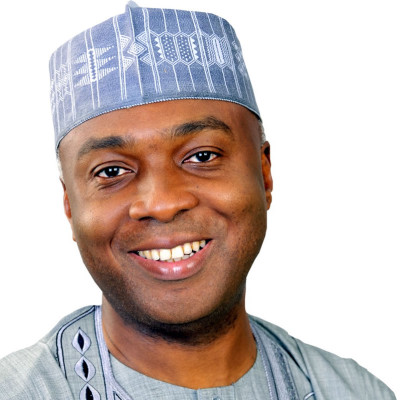
Former Senate President, Dr. Bukola Saraki, has picked the People’s Democratic Party (PDP) nomination and expression of interest forms to contest the presidential seat in the 2023 election.
Saraki, who said after collecting the form that the battle to fix Nigeria has just started, claimed that the form was purchased at N40 million by Young Professionals of Nigeria ahead of the 2023 general election.
He said that if he is elected President in 2023, he will appoint ministers below the age of 35 years, adding that the plan is in line with his long-time belief that the younger generations have a lot to contribute to Nigeria’s development.
“With your action today, I do not have an option but to listen to the voice of the youths who represent 62 per cent of the over 200 million Nigerians.
“That is why I want to promise that if I become the President of Nigeria, all positions of ministers of state in the cabinet will be occupied by youths.
“This is a promise that I will not fail because I believe the ideas of the youths are needed to drive modern development efforts.
“I am told that in buying the forms, many of you contributed N200,000, N500,000 and the highest is N2m. The initiative and noble effort are perhaps unprecedented in the history of Nigerian politics.
“What you have done is a symbolic message that you are mandating me to go out to the field and work hard among all our leaders, delegates and other stakeholders to win the PDP presidential ticket come May as well as subsequently follow up with decisive victory in the general elections in February 2023.”
On his Twitter handle, Saraki wrote, “Last night, I was truly touched by the gesture of the young professionals convened by Abubakar Danmusa, who helped to raise the N40 million for my Presidential Expression of Interest Form and my Nomination Form.
“These young people, who went out of their way to rally their friends, family, and coworkers, made contributions of N500,000 to N2 million to reach their desired goal.
“This symbolic gesture, a first of its kind in the history of our nation, is also a challenge to me. Now, I promise to work twice as hard as I originally intended.
“I promise to meet the yearning and aspirations of all our young people to run a modern government.
“As it stands, this is a clarion call. This is why I make this promise:
“When I become President on the 29th of May 2023, all the Ministers of State in my Cabinet will be experienced young people who are under the age of 35.
“We have our work cut out for us. But the battle to fix Nigeria has just started!”
Chairman of the Independent Corrupt Practices and Other Related Offences Commission (ICPC), Professor Bolaji Owosanoye, has submitted that “endemic” corruption and illicit financial flows by Politically Exposed Persons (PEP), and the inability of member States of the sub-regional block, the Economic Community of West African States (ECOWAS) to meet the requirements of the African Union Convention on Preventing and Combating Corruption, has continued to devastate Africa, most times arousing military coups.
Speaking in Abuja at the 5th General Assembly of the National Anti-Corruption Agencies in West Africa themed: “The Role of Regional Economic Communities in the Implementation of the African Union Convention on Preventing and Combating Corruption,” Professor Owosanoye, said: “we are all aware that corruption is a significant contributory factor to Africa’s underdevelopment. One can surmise that the inability of our institutions to fully implement our individual mandates and by implication the regional treaty obligations is a contributing factor to the resurgence of unconstitutional take over of government within the West African sub-region.”
This was even as Chairman of the Economic and Financial Crimes Commission (EFCC), Bawa Abdulrasheed, linked security challenges in the sub-region to corruption.
“As you may be aware, the ECOWAS sub-region is threatened by existential security challenges which may not be unrelated directly or indirectly to corruption.
“We must, therefore, intensify efforts to stem the spate of illicit financial flows in the region including illicit flows by Politically Exposed Persons (PEP).”
Anambra State governor, Professor Charles Chukwuma Soludo, has lamented that his predessor, Willie Obiano, who handed over power to him less than a week ago, bequeathed a paltry sum of N300 Million and huge N400 Billion for him as as at December 2021.
Professor Soludo, who spoke today, March 22, 2022 on Arise TV, said that his government is still taking the inventory of the financial dealings by his predecessor, especially other financial details from January to date, adding that the details will be made available as soon as possible because they’re public documents.
The Presidency has said it will hold the opposition Peoples Democratic Party (PDP) responsible for any violent uprising aimed at destabilizing the country. “The People’s Democratic Party (PDP) has given itself away as being interested only in the destabilization of the country, peradventure it could then sneak its way back to power. “Less than 24 hours after the Department of State Services (DSS) raised alarm about sinister plots by some elements to cause disorder in the land, using the energy crisis as a smokescreen, the PDP issued a statement, saying; “Our party fears that the situation is getting to a boiling point and can trigger a nationwide agitation that might be worse than the October 2020 EndSARS if not addressed immediately.” In a statement today, March 23, the Special Adviser to President Muhammadu Buhari on media and publicity, Femi Adesina asked: ” which patriotic political party or organization ever threatens its country with anarchy, social upheaval and disorderliness, except one still smarting from its snout being yanked from the honeypot, as happened to PDP in 2015?” Adesina reminded “the now tepid opposition party” that it was Nigerians that gave it the boot seven years ago, and that the same Nigerians have not forgotten the travails they experienced, at a time the country was awash with money. According to him, during the PDP era, there was no power and infrastructure, even as insurgents ran riot round the nation, with the collective patrimony of all Nigerians looted blind. “Those same Nigerians are not ready for another PDP misrule, not now, and perhaps not for a long time to come. “Rather than plot and encourage agitation worse than October 2020 EndSARS, which it may well be conceiving, the PDP should work for harmony and cohesion in the country, if it ever understands such concept. “EndSARS signified murder, mayhem, mass destruction, even cannibalism. PDP now wishes Nigeria something worse. “A presidential aspirant of the PDP has warned that the party would die by 2023, unless it wins the Number One position in the country. And die it would, if the party wishes the country nothing except something worse than EndSARS.”
We use cookies on our website to give you the most relevant experience by remembering your preferences and repeat visits. By clicking “Accept”, you consent to the use of ALL the cookies.
This website uses cookies to improve your experience while you navigate through the website. Out of these, the cookies that are categorized as necessary are stored on your browser as they are essential for the working of basic functionalities of the website. We also use third-party cookies that help us analyze and understand how you use this website. These cookies will be stored in your browser only with your consent. You also have the option to opt-out of these cookies. But opting out of some of these cookies may affect your browsing experience.
Necessary cookies are absolutely essential for the website to function properly. This category only includes cookies that ensures basic functionalities and security features of the website. These cookies do not store any personal information.
Any cookies that may not be particularly necessary for the website to function and is used specifically to collect user personal data via analytics, ads, other embedded contents are termed as non-necessary cookies. It is mandatory to procure user consent prior to running these cookies on your website.




 The Government of Nigeria, in partnership with the United Nations Education Children Education Fund (UNICEF) and other partners has launched the Nigeria Learning Passport (NLP), an online, mobile and soon-to-be offline learning platform that will provide continuous education to three million learners in 2022 and a total of 12 million by 2025.

 President Muhammadu Buhari has declared that Nigeria’s dependence on imported products in the agriculture sector will soon be a thing of the past.
 The Nigeria Labour Congress (NLC) has dissociated itself from clandestine groups allegedly organising uprising, aimed at destabilising the country.