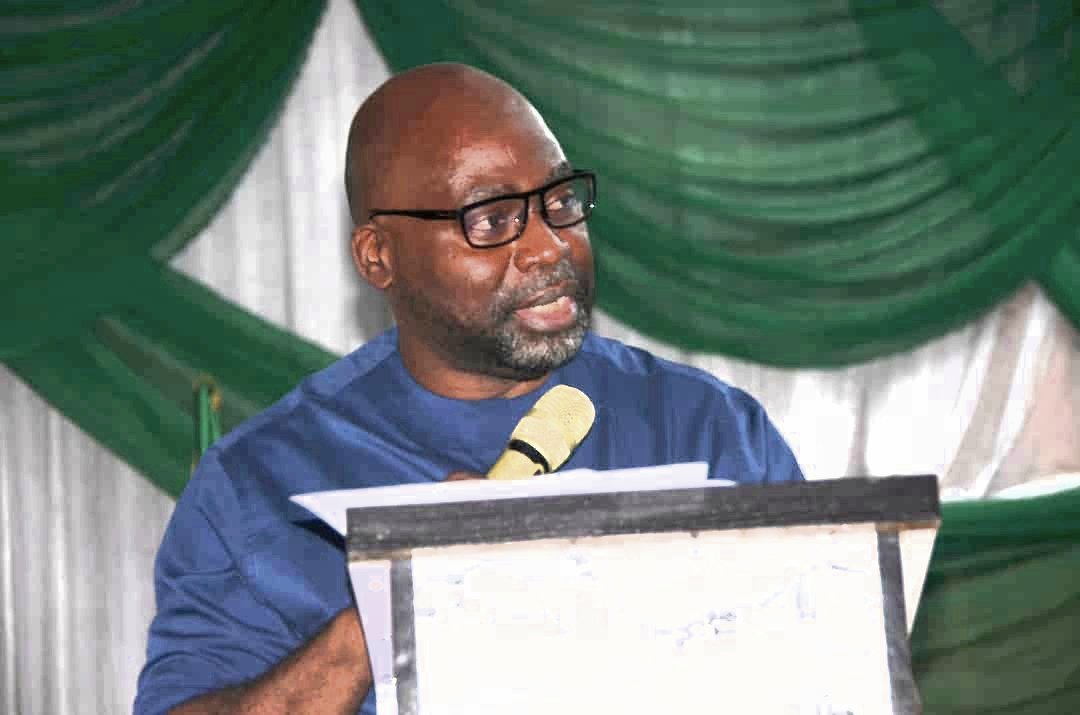
Former President Olusegun Obasanjo has opened fire on Nigerian politicians currently aspiring to lead the country at various levels from 2023, saying that many of them are supposed to be serving jail terms now.
“I cast a cursory look at some of the people running around and those for whom people are running around. If EFCC and ICPC have done their jobs properly and supported adequately by the judiciary, most of them would be in jail.
“Any person who has no integrity in small things cannot have integrity in big things. Fixing Nigeria must begin on the principles of nation building, not necessarily on emotion, sentiments, euphoria, ignorance, incompetence, ethnicity, nepotism, bigotry, sectionalism, regionalism, religion or class.
“The issues of security, stability, development, economy and our relationship within Africa and with the rest of the world can only be taken care of if we get the issue of the nation building right.”
The former President spoke today, March 5, at the international symposium, organised to mark his 85th birthday at the Olusegun Obasanjo Presidential Library (OOPL), Abeokuta, the Ogun State capital. The symposium was attended physically and virtually by personalities, including President Paul Kagame, President Nicéphore Soglo, Dr. Ngozi Okonjo-Iweala, Professor Goski Alabi (Ghana), Ambassador Barry Desker (Singapore), Professor Juma Shabani (Burundi), Dr. Mary Khimulu (Kenya), Dr. Moussa Kondo (Mali); Professor Sarah Agbor (Cameroon), Anambra Governor-elect Chukwuma Soludo and Sanusi Lamido Sanusi, among others.
The theme of the symposium was: “Africa Narrative with Nigeria Situation.”
Obasanjo stressed that Nigerians should learn from the events of the past and put aside sentiments in choosing the next President of the country.
“We have a lot to learn from the events of the last almost 24 years and God is not to blame if we fail.
“It would appear that we are not getting our priorities right and that can spell doom on our country if we fail to do what we should do for nation-building in terms of fundamentals of equity, justice, common ideals, popular education, shared values, mutual respect and equality of opportunity anchored and propelled by leaders across the board that are persons of integrity, honour, morality, competence, great virtue, courage to do what is right, humility and ability to put a team together and work with them in selfless devotion and service with the fear of God.”
President Muhammadu Buhari has described ex President Olusegun Obasanjo as a good study in patriotism, leadership and courage.
In a message to Obasanjo as he marked his 85th birthday today, March 5, Buhari, stressed the leadership quality of Obasanjo, which led the country to democratic government in 1979.
He said that Obasanjo also became an elected President and reigned from 1999 to 2007.
The President said that the former President’s influence had continued to resonate beyond the country, extending to the international community and multilateral institutions.
He acknowledged that as a former military and civilian leader, with a strong network nationally and internationally, Obasanjo gathered enough wisdom and that he brought insight and versatility to bear on things, reflecting his experience, diligence and versatility.
Buhari then felicitated with Obasanjo and celebrated him as well as thanking God for the life, health and alertness of the former leader.
He prayed for grace and more strength for the former leader, “as he continues to serves country, Africa and the world.”
President Muhammadu Buhari can be inscrutable. Difficult to predict and divine. You cannot tell what he is thinking. And like the old general that he is, he has perfected the art of not telling it all and choosing his words carefully like a cat on tightropes.
In an interview with Channels Television in January 2022, the old fox kept his mystery and had everyone guessing. When asked who his preferred 2023 presidential candidate was, the artful general said: “I don’t have any favourite for 2023 and if I do, I won’t reveal his identity because if I do, he may be eliminated before the election. I better keep it secret.’’
Since this ‘’tactical manoeuvring’’, many presidential aspirants have been courting the president’s attention and seeking to establish themselves in the national consciousness as his sanctified pick.
Who is Buhari’s consecrated presidential choice? Is it Bola Tinubu, former Lagos state governor and national leader of the All Progressives Congress (APC)? Well, one thing is certain – we may not know Buhari’s preference, but we do know those who will not go through his beatification. In January, Tinubu visited Buhari at the presidential villa. He later announced that day that he had informed the president of his intention to run for presidential office in 2023 — and the pyrotechnics began.
Some regard Tinubu’s ‘’ambush’’, considering how, where and why he declared his presidential bid, as a desperate move. It is common knowledge that Tinubu and the president, including members of the recondite cabal, have not had a sunny relationship. It is alleged that Tinubu who contributed principally to the success of the APC in 2015 was given the heave-ho soon after the president and ‘’his men’’ came to power.
Remi Tinubu, the former Lagos governor’s wife, is one of those who have taken this allegation to town. She said Tinubu was ‘’trashed’’ after helping the APC win the presidential election in 2015. Her words: “I was hurt [by] what they did to my husband after the campaign. He didn’t say a thing. We were running three campaigns in my house, and for him to be trashed like that…”
Those privy to palace gossip say Buhari is not ‘’comfortable’’ with Tinubu based on principles. Buhari is of the conservative stock, but Tinubu is the wheeler-dealer politician who understands the art of the deal. If Tinubu was good enough to help bring the current administration to power, why is he not fit to be supported by the same hand he held up?
The declaration of Tinubu’s presidential bid at the presidential villa was not necessarily to seek the permission of Buhari, but to call his bluff and soldier on with ambition. It was a case of ‘’I know you do not want me to succeed you, but hey, I am getting on with my ambition anyway’’.
Is Vice-President Yemi Osinbajo Buhari’s presidential favourite? It will be too hasty to say, but the chronicle of relationship between the two puts a doubt to the question.
In September 2019, Buhari took drastic steps to whittle down the power and influence of Osinbajo. The vice-president had reportedly offended ‘’members of the conclave’’ when he sacked Lawal Daura as the director-general of the Department of State Services (DSS) following the siege on the national assembly by the DSS in 2018. The vice-president was also alleged to have taken some unsanctioned decisions and actions.
In a presidential memo, as reported by TheCable, the president asked Osinbajo to, henceforth, seek presidential approvals for agencies under his supervision. This was not the case during Buhari’s first term in office. Osinbajo is the chairman of the governing boards of the National Emergency Management Agency (NEMA), the National Boundary Commission (NBC) and the Border Communities Development Agency (BCDA).
He is also the chairman of the board of directors of the Niger Delta Power Holding Company (NDPHC), a limited liability company owned by the three tiers of government.
The directive was for the vice-president to follow due process in seeking approvals for contract awards, annual reports, annual accounts, power to borrow, and power to make regulations, among other key functions. Buhari also appointed the Economic Advisory Council (EAC) and disbanded the Economic Management Team led by Osinbajo.
Not sparing any effort in this blitz, the president removed NEMA and the National Social Investment Programme (NSIP) from the office of the vice-president and put them under a newly-created ministry of humanitarian affairs, disaster management and social development, headed by Sadiya Umar Farouq.
However, Osinbajo took the president’s decision well – without acting out or gunning for a dogfight. But does Buhari trust him enough to put the laurel wreath on his head?
Is Buhari’s presidential favourite Rotimi Amaechi, minister of transportation; David Umahi, governor of Ebonyi state; Yahaya Bello, governor of Kogi state, or Chris Ngige, minister of labour? Only the retired general can tell – a clairvoyant will find it hard to decipher this mystery even from the president’s famous ‘’body language’’.
The fact is whoever Buhari ‘’sanctifies’’ will get the support of the north – which holds the ace in elections in Nigeria.
The Inspector-General of Police (IGP), Usman Alkali Baba has approved a new dress code for Women Officers.
A statement today, March 4 by the acting Force Public Relations Officer, CSP Olumuyiwa Adejobi said that the new code permits women police officers to wear stud earrings, and headscarf under their berets or peak caps as the case, may be, while in uniform.
The statement said that the dress code was unveiled at the IGP’s meeting with Strategic Police Managers yesterday, March 3.
The statement quoted the IGP as saying that the Nigeria Police workforce has officers from every local government in the country with a variety of ethnic and religious backgrounds, and an increased inclusion of female folks.
“This therefore brings the need to guarantee inclusion, gender mainstreaming, ethnic and religious diversity in the work place for optimum output and professionalism.
“This has informed the improvement for effective global workforce diversity management. Other countries that have adopted same dress code include Canada, the United States of America, Sweden, Turkey, Australia and the United Kingdom amongst others.”
The Inspector-General of Police said that this development, which is in line with international best practices addresses the growing concern for gender mainstreaming and respect for culture and diversity.
The statement said however, that the new dress code is optional and that Senior Women Police Officers have been tasked to ensure compliance with the approved standard for women police officers who have opted to adopt the dress code.
Nigeria is set to earn more revenue and foreign exchange from crude oil sale as Brent has risen to $114.57 a barrel while U.S. West Texas Intermediate crude also rose to $112.01.
The rise in the prices may also lead to additional savings from earnings above the budget bench mark of $60 a barrel for the 2022 budget, in addition to enabling the country pay off its foreign debts as they fall due.
However as Nigeria imports it refined petroleum, the cost of subsidy will increase more than is being provided for in the budget. So government may be forced to abandon its plan to keep subsidy in place.
Brent was on track for its highest close since June 2014 and WTI for its highest close since May 2011.
During the week, Brent rose to its highest intraday since May 2012 and WTI its highest since September 2008. Crude prices post their strongest weekly gains since the middle of 2020, with the U.S. benchmark up more than 22% and Brent 16%.
“Russia’s invasion of Ukraine means that fears over supply will remain front and centre,” said Stephen Brennock of oil broker PVM, though he added that there is “a new sense of urgency” to revive the Iranian nuclear deal. Oil jumped about 4% on Friday in a volatile session as fears that Western sanctions would disrupt Russian exports outweighed hopes for more Iranian supply if Washington reaches a nuclear deal with Tehran.
Crude prices rallied after Russian troops seized Europe’s biggest nuclear power plant. A blaze in a training building was extinguished and officials said the facility was now safe. Indirect talks between Iran and the United States on reviving the 2015 Iran nuclear deal are close to reaching an agreement, the chief British envoy said on Friday as she and her French and German colleagues flew home to brief ministers. “Iran claims they will be able to ramp up production quickly, but the potential disruptions of Russian supplies is too big of a shock for energy markets,” said Edward Moya, senior market analyst at OANDA.
On Thursday prices swung in a $10 range but settled lower for the first time in four sessions as investors focused on the revival of the Iran nuclear deal, which is expected to boost Iranian oil exports by as much as 1 million barrels per day (bpd) and ease tight supplies. Still, Iran’s Foreign Minister Hossein Amirabdollahian said on Friday that the West’s “haste” to reach a nuclear agreement “cannot prevent the observance of Iran’s red lines,” including economic guarantees. Oil prices are rising on fears that Western sanctions over the Ukraine conflict will disrupt shipments from Russia, the world’s biggest exporter of crude and oil products combined. Trading activity for Russian crude has slowed as buyers hesitate to make purchases because of sanctions against Russia while U.S. President Joe Biden comes under growing pressure to ban U.S. imports of Russian oil.
More oil supplies are set to be added from a coordinated release of 60 million barrels of oil reserves by developed nations, agreed this week. Japan said on Friday that it plans to release 7.5 million barrels of oil. Also supporting oil prices this week, Libya’s National Oil Co (NOC) temporarily halted exports from four ports due to bad weather, it said on Thursday. Libya, an OPEC member, produced about 1.2 million bpd of crude in 2021, according to U.S. energy data.
President Muhammadu Buhari has said that the evacuation of Nigerians from Ukraine as a result of the conflict between it and Russia was not the first time such act would be carried out by his government in its determination to defend the interest of Nigerians wherever they may be.
The President, who spoke in Nairobi, Kenya at a Townhall Meeting with a group of Nigerians resident in the country, said: “we did it in Libya, South Africa and we have just commenced doing the same in Ukraine, where thousands of our citizens, especially students, are trapped by the on-going war between Russia and Ukraine.”
He made it clear that his government would continue to defend the interests of all Nigerians wherever they may be, emphasizing: “we have demonstrated this over time, as we have had cause to evacuate our citizens in harm’s way abroad.”
President Buhari, who was represented at the event by the Minister of Foreign Affairs, Geoffery Onyeama, said that his government is determined to forge a partnership with the ‘Ambassadors-at large’ towards building the country together that led to the establishment of the Nigerians in Diaspora Commission (NiDCOM).
He commended the diasporans in Kenya for the unity that exists among them, and peace with their host communities, advising them to respect the laws and be good ambassadors of Nigeria.
He expressed delight that the Commission had been engaging the diasporans and had also come up with laudable programmes that would appeal to them.
According to the President, as part of his diasporan agenda, “we expect your willingness to ‘give back’ to Nigeria, some of your resources, talents, skills and global exposure in the development of our great country, Nigeria.”
He encouraged the Ambassadors to key into the programmes of NiDCOM, especially the Nigerian Diaspora Investment Trust Fund whose mandate is holistic for all Nigerians abroad. He added that the platform would assist them to expeditiously contribute to the development of their fatherland.
The President assured them that the administration is forging ahead with the provision of critical infrastructure for the collective prosperity of all despite the challenges posed by the COVID-19 pandemic and activities of terrorists.
The Chief Executive Officer of the Nigerians in Diaspora Commission, Abike Dabiri-Erewa, appreciated the Ambassadors for honouring the invitation, urging them to register with the Commission in order to have an up- to-date database of them for easy interface, adding that working with them, the Nigerian government will build the country of our dreams.
The President of Nigerians in Diaspora (Kenya), Dr. Nicholas Ozor, on behalf of the diasporans, expressed his appreciation to the President for always meeting with them when he is in the country as this boosts their morale. He appreciated efforts of the Nigerian High Commission officials for their support and care.
Dr. Ozor however requested the President to intervene in some of the challenges confronting them, such as the stoppage of visa on arrival for Nigerians; delay in getting student permits; obstacles to ease of doing business, and undue negative profiling of Nigerians.
Dangote Cement Plc is set to pay N173.93 billion as tax to the government for the financial year ended 31st December 2021.
According to the cement group’s audited results released on the portal of the Nigerian Exchange Ltd (NGX), the tax charge represents an increase of 78.7 per cent over N97.24 billion in 2020.
A statement from the company’s spokesperson said that analysis of the company’s financial result for the review year indicated that Group sales volume stood at 29.3Mt, with Nigeria accounting for 18.61Mt while operations in other countries did 10.86Mt.
The statement said that the Group’s revenue was N1,383.6 billion for the full year, made up of N993.34 billion from Nigeria while revenue from across African plants was N397.32 billion, in contrast to the group revenue of N1,034.20 billion in 2020 which constituted of N719.95 billion from Nigeria and N318.68 billion from other African operations.
It said that Dangote Cement recorded a gross profit of N538.37 billion and after-tax profit of N364.44 billion while earnings per share (EPS) rose to N21.24 from N16.14. The directors have proposed a dividend of ₦20.00 per share.
The statement quoted the Chief Executive Officer of Dangote Cement, Michel Puchercos as saying: “we are pleased to report a solid set of the results for the full year 2021. Group volumes for the year were up 13.8 percent and Group EBITDA was up 43.2 percent, to ₦684.6 billionat a 49.5 percent margin. I am delighted to report that Dangote Cement experienced its strongest year across all line items, with a record PAT of ₦364.4 billion up 32.0 percent.
“Our business model remains robust, thanks to the prudent and flexible approach we have taken across our operations. Due to an increased focus on efficiency while meeting double-digit market growth and maintaining costs under control, Dangote Cement has and will consistently deliver superior profitability and returns to its shareholders.”
The statement said that Dangote Cement became the first Nigerian listed company to report its financial results using XBRL format with the IFRS taxonomy.
Vice President Yemi Osinbajo has described Nigeria as a country of great dreamers and doers, full of resilience people with great potentials.
The Vice President, who spoke at the official commissioning of the Bankers House of the Chartered Institute of Bankers of Nigeria (CIBN) in Abuja, stressed with the kind of productive people, Nigeria is set for great heights.
“With a population constituting the largest market on the continent, a swelling demography of ambitious, tech-savvy young people, accelerating regional integration and connection to new markets, Nigeria has been presented with an unprecedented opportunity to launch the country into a new decade of sustained prosperity.
“An opportunity we are fully committed, as a government, to translating into lived realities for millions of Nigerians across the country,” the Vice President declared. “Every time Nigeria has been expected to sink, we have soared and risen beyond our troubles. We have drawn joy from the depths of despair and found the courage to keep going, even in the most daunting of challenges. The Nigerian spirit remains unfazed and persistently bankable.” The Vice President said that the realization of our country’s potential, at this crucial moment, will require the careful choreography of government policies that remove every impediment in the way of those determined to pursue their dreams and build businesses. Professor Osinbajo highlighted the impact of government policies in this regard, including the work of the Presidential Enabling Business Environment Council (PEBEC) towards improving Nigeria’s business environment and economy. The Vice President noted that in the past six years, the Buhari administration, through PEBEC, has aggressively pursued the creation of an environment that allows Nigerian businesses, at every level, operate without the bottlenecks and drawbacks that have come to characterize their interface with agencies and regulators. He added that the Administration is also building on the progress of these reforms and aggregating lessons from some of the setbacks in its implementation, with the launch of PEBEC’s 7th 60-day National Action Plan (NAP 7.0) on the Ease of Doing Business. “We will consolidate on the achievements in removal of regulatory constraints around agro-exports, driving electronic filing of taxes and working closely with the States to make their own business environments friendlier.”
The Vice President restated the Administration’s commitment to follow through on its economic policies to better the lives of Nigerians.
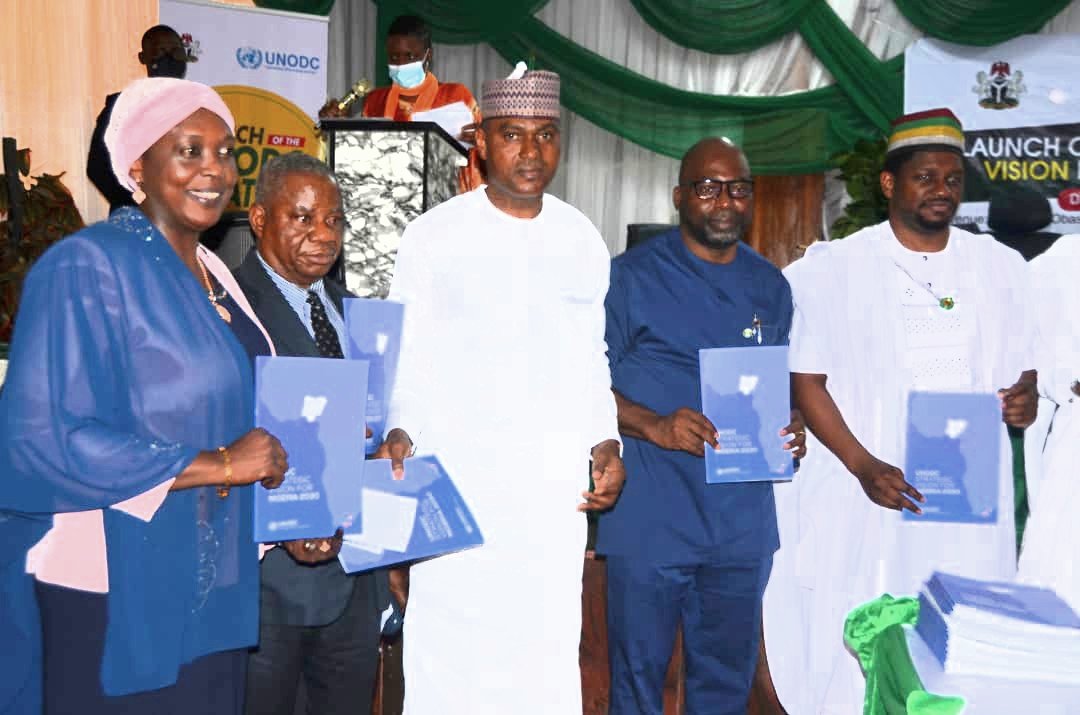
Chairman of the Independent Corrupt Practice and other related Commission (ICPC), Professor Bolaji Owasanoye, has expressed fear that corruption and illicit financial flow may continue to threaten the development of Nigeria and Africa in many ways. Speaking today, March 4, at the launching of the United Nations Office on Drugs and Crime’s (UNODC) Strategic Vision for Nigeria 2030 in Abuja, Professor Owasanoye warned that corruption and illicit financial flows may threaten Nigeria’s and Africa’s ability to realize the Sustainable Development Goals (SDGs) if not tackled. “The illicit and sometimes criminal consignment of resources to foreign jurisdictions undermines domestic resource mobilization. Beneficiaries of corruption and enablers of illicit financial flows undermine governments and state institutions. “A vision and plan of action underwriting the resilience of vital institutions, including anti-corruption agencies and justice system are critical to the achievement of the core SDG vision of leaving no one behind.” he ICPC Chairman added. The UNODC, in collaboration with government stakeholders, civil society and academia, private sector and development partners, had developed the strategic vision to assist Nigeria to achieve its SDGs as well as combat corruption, terrorism, economic and financial crimes and drugs. Professor Owasanoye commended the UNODC for the launching of the Strategic Vision, adding that it would strengthen crime prevention, enhance justice, address organized crime, ensure a balanced response to drugs and improve the rule of law.
“The UNODC thematic areas are the global drug problem; organized crime; corruption and economic crime; terrorism; and crime prevention and criminal justice. A strategic vision that addresses these thematic areas in the context of Nigeria is directly relevant to the mandate of the ICPC as outlined in section 6 of the ICPC Act. “I therefore commend the UNODC for the Strategic Vision for Nigeria 2030. The ICPC will continue to work with UNODC and other stakeholders in the justice sector to realise our shared vision of a crime free society.” He stressed that the UNODC mission would provide more safety to Nigerians and Africans, government and institutions from drugs, crime, corruption, terrorism and illicit financial flows. In his keynote address, the Attorney General and Minister of Justice, Abubakar Malami, expressed the support of the Federal Government for the UNODC’s Nigeria 2030 Strategic Vision. The Minister, who was represented by the acting Solicitor-General of the Federation and Permanent Secretary of the Federal Ministry of Justice, Benjamin Okolo, conveyed the Government’s assurance in implementing the strategic vision. This was even as the Executive Director of UNODC, Mrs. Ghada Waly, emphasized the need to strengthen Nigerian laws to address drugs, economic and financial crimes, corruption and terrorism. Waly, who was represented by UNODC’s Representative in Nigeria, Dr. Oliver Stolpe, said the United Nations body would continue to work hand-in-hand with its counterpart in the Nigerian Government to achieve the SDGs. “Our aim is to take our partnership with the government and people of Nigeria to a new level in our shared mission to tackle crime, drugs, terrorism and corruption, and their effects on the economy, environment and people. “Through this Strategic Vision for Nigeria, we will support the country in developing a fairer and more effective criminal justice system, countering the insidious activities of terrorist groups, promoting integrity and transparency across institutions, protecting Nigeria’s precious resources from exploitation by criminals, and supporting the health of Nigerians affected by drug use.” The UNODC executive director assured that the international agency would look to empower women, children and youth as critical actors, build new partnerships, enhance its focus on prevention, and leverage science and technology as key enablers for change.
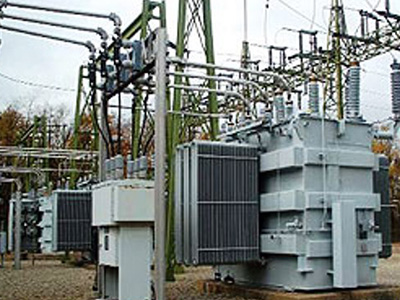
The Federal Government has outlined measures to end what is called power delivery challenges in the country. Speaking to newsmen today, March 3 at the Presidential villa, Abuja, the Minister of Power, Abubakar Aliyu said that the government is worried over “the increased load shedding you may have observed in Abuja and other areas in the country.” He said that the situation is as a result of the reduction in Hydro capacity during the dry season. According to the Minister, additional load needs to be taken up by the nation’s gas plants, even as the country battles with the maintenance work in the Eastern Axis around Odukpani. “The maintenance leads also to reduced power supply from the usually reliable NDPHC Calabar Power Plant and we are having challenges at Okoloma Gas Station linked to Afam VI power plant. “We are working with NNPC and other Gas suppliers also to improve the pressure on the Western Axis that is precluding units from reaching optimum supply. “These challenges are surmountable and we have a three pronged approach we are executing. ” One: “we are working on more Gas supply contracts for the Power sector backed by improved liquidity. These contracts will have stiff financial penalties for underperformance. ” Two: we will increase energy mix to improve energy security. We will complete the Zungeru Hydro plant, the Katsina Wind plant, Kashimbila Hydro as well as ensuring that the challenges with Gurara are permanently resolved (partnering with the Ministry of Water). We are also working to resolve issues that have prevented large On-grid Solar from taking off in Nigeria. “And three: ” we are re-tooling the System Operator for improved dispatch optimization, based on technologies and improved maintenance schedule alignments across generators. “The challenges have been identified and we have short term solutions as well as long term solutions. “We are working assiduously to resolve short term load shedding challenges. “I would like you also to take away that we deliver 8,000MW of electricity daily through a combination of Grid, Embedded and Industrial Captive supply of Electricity (not 4,000MW as is frequently reported). Much of this capacity has been added during the life of this administration. “The Federal Government has secured and is executing up to $4 billion investments in the Grid to ensure more grid power is delivered to citizens. “We are on the path to resolving the financial challenges in the sector and we will continue to provide robust and clear regulation to keep participants, such as DISCOs, GENCOs and even TCN in line to deliver for Nigerians. I will continue to provide updates periodically on our progress.”
We use cookies on our website to give you the most relevant experience by remembering your preferences and repeat visits. By clicking “Accept”, you consent to the use of ALL the cookies.
This website uses cookies to improve your experience while you navigate through the website. Out of these, the cookies that are categorized as necessary are stored on your browser as they are essential for the working of basic functionalities of the website. We also use third-party cookies that help us analyze and understand how you use this website. These cookies will be stored in your browser only with your consent. You also have the option to opt-out of these cookies. But opting out of some of these cookies may affect your browsing experience.
Necessary cookies are absolutely essential for the website to function properly. This category only includes cookies that ensures basic functionalities and security features of the website. These cookies do not store any personal information.
Any cookies that may not be particularly necessary for the website to function and is used specifically to collect user personal data via analytics, ads, other embedded contents are termed as non-necessary cookies. It is mandatory to procure user consent prior to running these cookies on your website.



 President Muhammadu Buhari has described ex President Olusegun Obasanjo as a good study in patriotism, leadership and courage.
 The Inspector-General of Police (IGP), Usman Alkali Baba has approved a new dress code for Women Officers.
 Nigeria is set to earn more revenue and foreign exchange from crude oil sale as Brent has risen to $114.57 a barrel while U.S. West Texas Intermediate crude also rose to $112.01.
 President Muhammadu Buhari has said that the evacuation of Nigerians from Ukraine as a result of the conflict between it and Russia was not the first time such act would be carried out by his government in its determination to defend the interest of Nigerians wherever they may be.
 Dangote Cement Plc is set to pay N173.93 billion as tax to the government for the financial year ended 31st December 2021.