President Muhammadu Buhari has approved $8.5 million dollars to the ministries of Foreign Affairs and Humanitarian, Disaster Management, and Social Development, for the immediate evacuation of over 5,000 Nigerians stranded in Ukraine as a result of the ongoing war between Russia and Ukraine.
According to a tweet post by Personal Assistant to the President on Digital and New Media, Bashir Ahmad, on his official Twitter account, this was made known by the Minister of State for Foreign Affairs, Zubairu Dada, on Wednesday in Abuja.
Zubairu Dada was said to be speaking to State House correspondents after the weekly Federal Executive Council (FEC) meeting today, March 2.
The minister said that three aircrafts to be provided by Air Peace and Max Air, would be dispatched to 4 countries today.
The minister said that the countries where the pickup flights would be headed include – Poland, Hungary, Slovakia, and Romania. Two flights from Air Peace and one from Max Air are expected to carry out the evacuation exercise.
Zubairu Dada said that all agencies are fully resourced to ensure that aircraft leave on Wednesday to begin the evacuation. They noted that the flights will embark on a number of shifts until the process is complete.
The Minister of Foreign Affairs, Geofrey Onyeama, had earlier, during a meeting with members of the House of Representatives and the Nigeria in Diaspora Commission (NIDCOM), announced that the evacuation of Nigerians from Ukraine had been slated to commence on Wednesday, March 2, 2022.
This is as the Romanian and Hungarian governments granted visa-free access to Nigerian nationals and students stranded at the Ukrainian border.
The Abuja Bureau Chief of the Nigerian Tribune, Dr. Leon Usigbe, escaped death yesterday night when a group of armed Robbers attacked him in Abuja, the Federal Capital Territory (FCT). Information reaching us at Greenbarge Reporters online newspaper said that the armed robbers attacked and stabbed him in several parts of his body, living him with deep cuts on his right hand and backside. The information had that Dr. Leon had just left a meeting between former Vice President Atiku Abubakar and the Peoples Democratic Party (PDP) House of Representatives Caucus hosted by the House Minority Leader, Ndudi Elemelu, at his Lobito Crescent, Wuse residence. It was learnt that the robbers, who were speaking Hausa language, swooped on him as he alighted from his car to mount a reflective triangle behind, just as the engine suddenly went off at the traffic stop. The bad boys were said to have grabbed him by his neck from behind and indiscriminately unleashed sharp objects on his body, almost severing his right thumb. The robbers succeeded in dispossessing him of his two mobile phones, including an iPhone 13 pro and Samsung Galaxy A32 series, before disappearing into the wasteland opposite the Phase 4 Federal Secretariat. Drenched in his own blood, he managed to walk to the nearby police post at the Federal Secretariat where some policewomen on duty conveyed him to the State House Medical Centre for treatment. His wounds were stitched up before being discharged today, March 2. We in Greenbarge Reporters online newspaper send our sympathy to the Editor and prayer for his quick heal.
No fewer than 71 Civil Society Organisations (CSO) have kicked against the move by the National Assembly to grant immunity to its members, as well as to the Judicial Officers through the alteration of section 308 of the 1999 Constitution.
In a petition, the CSOs also asked for the cancellation of the immunity currently enjoyed by the President, Vice President, State Governors and their deputies.
According to them, one of the greatest weaknesses of the Fourth Republic is the immunity clause that protects the President, the Vice President, the Governors and Deputy Governors from prosecution while in office.
The petition reads:
While the original intention of the Constitution was to protect such officers from frivolous suits, in practice, many such office holders have abused the immunity they enjoy by recklessly engaging in criminal activities including corruption and other forms of abuse of office.
It is for this reason that there have been persistent calls by proponents of good governance to eliminate the clause altogether.
It is also for this reason that the undersigned organisations and individuals are alarmed by the surreptitious attempt by the National Assembly to expand the immunity clause to cover the legislative and judicial arms of government at both the State and National levels.
The proposed constitutional amendment has the dangerous potential to widen the non-accountability circle for more public officials and create conditions for the escalation of criminal acts of corruption, abuse of office and breaches of the rule of law as public officials would be emboldened to think they are above the law.
Although there are many legitimate demands for constitutional amendments by Nigerians, extending the immunity clause has never been part of it. Instead, one of the demands that has featured consistently is for the complete abrogation of the immunity clause.
We note that as the legislature moves to vote and adopt the proposed 68 amendments to the Constitution, the ruling classes in Nigeria, most especially in the National Assembly have failed to include pro-people amendments to resolve the vexatious issues of indigeneship/settler dichotomy, true devolution of powers, fiscal federalism, resource control, constitutional backing for the office of the auditor general and improvement of the security architecture since 1999.
Nigerians have also been complaining about the failure of the National Assembly to carry out an amendment separating the office of the Attorney-General of Federation and Minister of Justice to prevent political interference in the justice system.
We urge the National Assembly to prioritise amendments that are beneficial to citizens as outlined above rather than indulge in self-serving amendments that would place them on a pedestal that is above the law of the land.
Signed by the following groups working on constitution amendment and good governance in Nigeria:
SIGNED BY:
1) Centre for Democracy and Development (CDD)
2) Centre for Democratic Research and Training (CRDDERT)
3) Civil Society Network Against Corruption (CSNAC)
4) Human and Environmental Development Agenda (HEDA Resource Centre)
5) Civil Society Legislative Advocacy Centre (CISLAC)
6) Partners for West Africa – Nigeria
7) Centre for Information Technology and Development (CITAD)
8) Socio-Economic Right and Accountability Project (SERAP)
9) Falana Falana Chambers
10) International Refugee Rights Initiative (IRRI)
11) Zero-Corruption Coalition (ZCC)
12) Accountability Maternal New-born and Child Health in Nigeria (AMHiN)
13) Partners on Electoral Reform
14) State of the Union (SOTU)
15) African Centre for Media and Information Literacy (AFRICMIL)
16) National Procurement Watch Platform
17) Say NO Campaign—Nigeria
18) Resource Centre for Human Rights and Civil Education (CHRICED)
19) Social Action
20) International Press Centre
21) WANGONET
22) Community Action for Popular Participation
23) Borno Coalition for Democracy and Progress (BOCODEP)
24) Global Rights
25) Project Alert
26) Institute of Human Rights and Humanitarian Law
27) Alliance for Credible Elections (ACE)
28) Youth Initiative for Advocacy, Growth & Advancement (YIAGA)
29) Tax Justice Nigeria
30) Environmental Rights Action/Friends of the Earth, Nigeria
31) Women In Nigeria
32) African Centre for Leadership, Strategy & Development (Centre LSD)
33) Centre for Social Justice
34) HURIDAC
35) Protest to Power
36) Network on Police Reform in Nigeria(NOPRIN Foundation)
37) Rule of Law and Accountability Advocacy Centre(RULAAC)
38) Education As a Vaccine Against Women
39) Baobab for Women’s Human Rights
40) Nigerian Feminist Forum
41) Alliances for Africa
42) Space for Change
43) CLEEN Foundation
44) Northern Alliance Movement
45) Order Paper Nigeria
46) Women In Media Communication Initiative
47) Transition Monitoring Group(TMG)
48) Women Being Concern Nigeria
49) Centre for Awareness on justice and Accountability
50) Coalition of Northern Groups
51) Community Outreach for Development and Welfare Advocacy (CODWA)
52) Garkuwa Arewa Foundation
53) Corporate Accountability and Public Participation Africa(CAPPA)
54) Health Mother Earth Foundation(HOMEF)
55) Women In Nigeria
56) Women Advocates Research and Documentation Center (WARDC)
57) Nigerian Women Trust Fund
58) Women Empowerment and Legal Aid(WELA)
59) BudgiT Foundation
60) Conference of Northern states Civil Society Networks
61) Basic Rights Action
62) Conscience for Human Rights and Conflict Resolution
63) Kano Civil Society Forum
64) Network for Development Foundation (NDF)Kano
65) Organization for Community Civic(OCCEN)
66) Citizens for Development and Education
67) Resource Centre for Human Rights and Civil Education (CHRICED)
68) Women’s Rights Advancement and Protection Alternative(WRAPA)
69) Socio Economic Rights & Accountability (SERAP)
The Oyo State Government has ordered the immediate closure of Oke-Ogun College of Management Sciences and Technology, Iseyin.
The State Commissioner of Education, Science and Technology, Barrister Rahman Abiodun Abdu-Raheem, who gave the order today, March 1, said that the institution was shut down for non-compliance with registration procedures.
He said that the closure was preceded by a petition from some indigenes of the State, under the auspices of ‘Ebedi Frontliner’, complaining that the institution was neither registered nor accredited for students’ enrolment among other allegations.
Barrister Abdu-Raheem advised the Proprietors of the College to always do the needful, adding that this will avoid unnecessary embarrassment to them and the state government.
Barrister Abdu-Raheem had last month, invited and directed the Proprietor of the College, Mr. Adewale Owoseni to remove all billboards with the inscriptions of the school, until the needful is done.
The Commissioner stressed the determination of the State Government to ensure that due process is followed in all affairs of the state.
Nigeria and Equatorial Guinea have formally agreed to supply gas from Nigerian offshore fields to the neighbouring Equatorial Guinea’s Gas Processing Facility at Punta Europa.
In a Memorandum of Understanding which the two countries signed today, March 2, Minister of State for Petroleum Resources, Timipre Sylva, who signed for Nigeris said: “the execution of this MOU meets one of the imperatives of the decade of Gas in Nigeria.”
The Minister said that while Nigeria has been focused on the domestic gas agenda, “we are keeping an eye on the global gas market as well.
“Nigeria has huge gas resources, a significant amount of which is offshore and will require unprecedented investment in infrastructure to bring them to market.
“This collaboration allows much of that stranded gas to access the global gas market within 18 to 24 months in what will be the fastest timeline to market for a Nigerian offshore gas asset. This is possible because Equatorial Guinea brings to the table a major portfolio of world class gas processing and liquefaction infrastructure already in place in Punta Europa, coupled with investment funds for development.
“Additionally, the project which envisions an offshore gas pipeline development will also create huge in-country local content opportunities for pipeline and other infrastructure service providers. This is in addition to accelerated royalty revenues that come from producing many gas fields that would have otherwise remained stranded.”
This was even as the Minister of Mines and Hydrocarbons of Equatorial Guinea, Gabriel Nguema Obiang Lima, said that the execution of the MOU is a great example of the South-South cooperation between neighbouring Nigeria and Equatorial Guinea.
“As the global geopolitics of natural gas evolves and within the context of the world transitioning to a lower carbon footprint, it is imperative that we think differently on how to remain an important player in energy markets.
“New, fast, and competitive sources will be a major determinant of success.
“This strategic collaboration breaks down geographical boundaries and allows delivery of gas from Nigeria to Equatorial Guinea’s Punta Europa facilities, extending their life and providing access to the regional and global energy markets.
“The NNPC and its’ JV partners get a unique opportunity to monetize gas that would have otherwise been stranded offshore due to absence of infrastructure.”
The MOU kicks off a strategic economic collaboration across the Gulf of Guinea wherein Nigeria’s abundant natural gas reserves compliments Equatorial Guinea’s world class Gas Processing and Liquefaction infrastructure.
Recent passage of the Petroleum Industry Act coupled with “Nigeria’s Decade of Gas” initiative together create an enabling environment which has triggered conceptualisation of this project, facilitating major investment inflow from Equatorial Guinea into Nigeria.
The project also signals the joint effort of the two countries in working towards a greener energy world.
A female journalist who herself has made it big in the profession, Olori Janet Afolabi has paid tribute to late Dele Giwa, Ray Ekpu, Dan Agbese, Mohammed Yakubu and other founders of the famous Newswatch magazine for the opportunity they offered her to blossom into an excellent professional journalist. In a book titled: “The Masters who Trained Me,” publicly unveiled in the Palace of Alapomu of Apomu, headquarters of Isokan local government area of Osun state, Olori Janet Afolabi said that the book is a book of tributes to her mentors in Journalism. Olori Janet Afolabi, who is a CNN award winning journalist acknowledged that the cream of Newswatch top journalists guided, trained and tutored her till she decided that their efforts deserve to be documented for posterity. “It is acknowledgment of excellence of the work of the most famous Ray Ekpu, Dan Agbese, Yakubu Mohammed, Soji Akinrinade, Nosa Igiebor and Dare Babarinsa.” Olori Janet Afolabi who is a publisher and Queen of Apomu Kingdom, said that she wrote the book to “honour these renowned journalists who trained, drilled and molded me into someone with valuables skills. They gave me media platform to operate, explore and express myself. They gave me wings to fly in the winds of journalism travails and triumphs. “I want to appreciate them while they are alive. I am expressing my gratitude by giving them a gift that will live after them. The gift is this book. My experience with each of them and the techniques of news writing they taught me are chronicled in the six chapters of the book.” The book was unveiled as part of the activities to mark the second coronation anniversary of Oba Kayode Adenekan Afolabi the Alapomu of Apomu. Presenting the book to the guests, the General Manager/Editor-In-Chief of Vanguard Newspapers, Gbenga Adefaye described the book as an important gift that should last till eternity. Adefaye who is a former two term President of Nigerian Guild of Editors (NGE) said: “Olori Janet Afolabi could be regarded as a famous journalist and not just that, but an award winning journalist who has won local and international awards. He appreciated Olori Janet for remembering those who took her on the journey of learning to become a master and successful journalist. He said that the book is a source of material for the younger generation of journalists and journalism students. He added that the book is also an addition to the existing literature on Nigerian Media Industry. According to him, the history of journalism in Nigeria would not be complete without the contributions of these great men who have trained and mentored some of the best hands in journalism. “They are indeed an asset to the world of journalism.” Among those who attended the event were the Alaafin of Oyo, Olofa of Offa, Oba Mufutau Gbadamosi, Secretary to State Government, Oluwole Oyebamiji who represented Osun state governor, Gboyega Oyetola; Asoya of Isoya who represented the Ooni of Ife, Akarigbo of Remo, Babatunde Amoo; Onire of Ire, Ekiti State Olowu of Owu kuta. Other personalities include Waheed Olagunju, Former Acting Managing Director of Bank of Industry, Marouf Olanrewaju; Majority leader of Osun state House of Assembly, Yemi Lawal; Commissioner for Youth and Sports, Osun state, Marouf Akinremi; Chairman Isokan Local Government area of Osun state, Soji Akinrinade; former Executive Director/Editor in Chief, Newswatch magazine, Mustapha Isa; President of the Nigerian Guild of Editors, Bolaji Adebiyi; Managing Editor, ThisDay Newspaper/Vice President (West) Nigerian Guild of Editors, Dotun Oladipo who is the immediate past President of the Guild of Corporate Online Publishers (GOCOP) and Gabriel Akinadewo, Publisher Freedom Online.
Responding swiftly to the war between Russia and Ukraine, the world football governing body, the Federation of International Football Association (FIFA), has suspended Russia’s national teams from international football and all club sides from FIFA and UEFA competitions until further notice. Russia is due to play Poland on March 24, 2022 in Europe’s World Cup qualifying play-off semi-finals, but the suspension will stop them from the process. By the FIFA’s action, Russia has forfeited the hope of taking part in the World Cup competition scheduled for November and December this year.
It also means that Russia cannot compete in this summer’s Women’s Euro 2022, hosted by England in July. It means also that Spartak Moscow’s elimination from the Europa League, where they were due to face RB Leipzig in the round of 16. Pressure began to be mounted on FIFA to act when Poland refused to play against Russia. Other football associations including England, Scotland and Wales followed suit in announcing their boycott of any game in which Russia is taking part.
Heliculturists have called more Youths to go into snail farming as part of measures to meet local and international demand. The farmers, in interviews with the News Agency of Nigeria (NAN), said that heliculture (snail farming) is a lucrative agricultural business that many young entrepreneurs often overlook. Heliculture is the act of rearing or raising snails specifically for meat, slime, eggs, or other economic uses. One of the farmers in Kuje, Abuja, Mrs. Antonia Ekpe, advised youths to invest in heliculture. She described snail farming as a viable business venture that is gradually being explored in Nigeria and Africa. According to her, snail farming has an inexhaustible market potential that not only tend to the production of meat, but also skin care products and medication. Yamtaly Abdulmarie, who is the Director of Dimfarms, said that few individuals are creating wealth and leaving behind legacies on snail farming in Nigeria. He said that there is need for more investors in the business considering that it is a lucrative venture with enormous benefits and huge market potentials. ”In Nigeria, the price of medium size snail cost between N250 and N600. “Research shows that the annual demand for snail in Nigeria is about 7.5 million kg and countries like the U.S. imports more than four million dollars worth of snails annually from all over the world, including Nigeria. “Imagine the broad benefits that can be reaped from the venture, yet we see only a small number of youths going into the sector. “Snail farming is a low-risk business. Unlike many other livestock businesses, snail farming requires very little start up and operating costs. ”It is not time intensive and it allows you to focus on other businesses.” Abdulmarie, however stressed the need for scientific research and long-term investments in the development of snail farming in the country. This was even as Victor Onwuchekwa, a heliculturist and Chief Executive Officer of Animal Agro Ventures (AAV), called on government to properly sensitise the youths on snail farming and encourage investments on all platforms. “Youths should have access to credit facilities from the government with favourable repayment plan, to enable beneficiaries manage the business. “They should be introduced to snail farming through the Centre for Entrepreneurial Development programmes in the universities, National Youth Service Scheme programmes and skills intervention plans.“ Onwuchekwa said that besides being a source of protein, there are other benefits derived from snails, such as cosmetic and medicinal ingredients. ”Snail slime (the drawing liquid) is used by cosmetic and pharmaceutical industries in the treatment of skin diseases such as pimples. “It also provides vitamin B12, an essential vitamin needed to prevent and control diabetes. The benefits are numerous.” On the challenges in the sector, Kalu Igbe, said that they include lack of access to capital, lack of infrastructure and many others. “Returns on investment in snail farming are as slow as the snail themselves. This makes it difficult for snail farmers to access loans from financial institutions or establishments. “However, financial institutions must understand that snail farming was a long term investment that yielded more than 100 per cent of its input. ”Lack of technical know-how in snail farming is another challenge that threatens the sector’s existence.” Igbe said that more research needs to be carried out if the sector must survive another decade and meet up with international standards. Mrs. Justina Ayuba, another heliculturist, said that snail farming practice by itself is highly untapped, as it is a money making machine with vast possibilities. She advised the youths to seize the opportunities presented to them rather than waiting for government’s intervention
Events in Ukraine are moving fast and faster. Dangers of economic paralysis in Ukraine and of wider war with Russia are very real. This essay will argue that we all need to notice our historical biases in perceiving and misperceiving events. My own bias is anti-war. Now is not the time in human history for geopolitical power plays and military alliances. Now is the time for coordinated international actions on climate and economy. I am a Professor of Social and Community Psychology at the University of Tromsø in Arctic Norway, near the Russian border. I have no special knowledge of Russia other than conventional sources (Google Scholar, Wikipedia, JSTOR). My surname is Lithuanian, from my grandfather’s emigration in 1897 when Lithuania was controlled by Russia. James Joyce’s famous statement that “history is a nightmare” from which we should try to awake, aptly describes current events in the Ukraine. All nations involved in these events are biased by the remembered, misremembered, forgotten, and mythologized history they carry in their heads. Chaos in Maidan Square, neo-fascists in positions of power in Kiev, Russia annexing Crimea, these are inkblots that everyone sees differently depending on the historical visions that dominate their minds. Our national memories have the passion and power to drive us blindly to hatred and to war. The histories we believe set us up for easy manipulations and disastrous actions. Hillary Clinton, on March 5, said that Putin’s concern for Russians in Ukraine is like Hitler’s concern for Germans in Poland and Czechoslovakia. It is also like Ronald Reagan’s concern for US medical students in Grenada by which he justified his 1983 invasion of that small island nation. Clinton said, “We can learn from this tactic that has been used before.” That is good advice if we consider this tactic of: a) personifying a nation by its leader’s personal name, and b) then labelling that leader “Hitler.” This is a sure way to activate a demon in the American national memory, and to mobilize the United States to again fight evil personified by the new Hitler. John Kerry said Assad is Hitler. John McCain said Castro is Hitler. George Bush said Saddam was Hitler. Donald Rumsfeld said Chavez was Hitler. The list of leaders the US has targeted as Hitler includes Allende (Chile), Noriega (Panama), Ortega (Nicaragua), Milosevic (Serbia), Arafat (Palestine), Gaddafi (Libya), Ahmadinejad (Iran), and Kim (North Korea). Hitler, in fact, was defeated by the USSR more than by the USA. After the Battle of Stalingrad in February 1943 and the Battle of Kursk in August 1943, Germany had effectively lost WWII. D-Day was a year later, in June 1944. Soviet armies caused more than 90% of total German casualties. Nevertheless, Americans remember that it was they who defeated Hitler. Americans also “Remember the Alamo”. In 1835, American settlers in the Mexican territory of Texas felt threatened by the government of Santa Anna in Mexico City, which had come to power by coup. In1836, the American settlers in Texas declared independence, and later negotiated annexation by the United States. Thus, Americans can, if they wish, appreciate that Crimeans felt threatened by the government in Kiev, which came to power by a coup d’etat, and that Crimeans also declared independence, and also then negotiated annexation by the nation of their origin. However, unlike Texas, Crimea had previously been part of Russia for 170 years. Just as the Alamo is an iconic historic site for Americans, so, too, is the Crimean fortress of Sevastopol, an iconic historic site for Russians. Both symbolize steadfast courage and sacrifice in the face of overwhelming force. The Siege of the Alamo in 1836 lasted 13 days, with 1,500 Mexican soldiers overwhelming 250 Americans who died heroically defending liberty and independence. The first Siege of Sevastopol in 1854, lasted two years, with 175,000 British, French, Turkish, German, Italian, Polish and Swiss soldiers overwhelming 35,000 Russian soldiers heroically defending Russian Crimea. Americans should remember that they own Alaska only because Russia sold it, in large part, to pay debts incurred defending Crimea from the attacking European alliance. The second Siege of Sevastopol in 1941 lasted one year, with more than 200,000 German, Romanian, Italian and Bulgarian forces overwhelming 106,000 Soviet soldiers heroically defending Russian Crimea. When, and if, Americans feel emotional remembering the Alamo, they can then begin to imagine the depth of emotion Russians must feel remembering Sevastopol. America experienced invading foreign forces during its War of Independence in the 1770s, and again on a small scale during the War of 1812. But only two foreign attacks are seared into the American psyche with historic force. One is the Dec 7, 1941 attack on Pearl Harbor which lasted less than 2 hours and killed 2,400 Americans. The other is the Sept 11, 2001 attack on NY City and Washington, DC which lasted less than 3 hours and killed 3,000 victims. Americans’ anger to avenge those attacks is deep and enduring, allowing no limits of cost, no limits of law, to prevent such attacks happening again. Thus, Americans can, if they wish, appreciate Russia’s reactions to being attacked by foreign armies, and can understand why Russia also will allow no limits of cost, no limits of law, to prevent such attacks happening again. The USA has not suffered invasions because it is bounded by large oceans east and west, and by powerless, peaceful nations north and south. Russia has no protective natural barriers, and has had aggressive neighbors on three sides. Although they may forget or deny this history, Turks, Poles, Swedes, French, Germans, British, Italians, Romanians and Japanese have each invaded Russia more than once. For example, in the early 1600s, Poland twice invaded Russia when its government was in disarray. Russians of all social classes united in popular uprising and saved the nation. In 1613, the Romanov Tsar instituted a holiday called “Day of Moscow’s Liberation from Polish Invaders” which is now celebrated every November 4 as “Unity Day”. In the early 1700s, Sweden invaded Russia with 40,000 troops but was defeated by Peter The Great’s use of scorched-earth retreat across vast distances. Although only the Swedish king and 543 soldiers survived, he immediately raised another army of Turks to attack Russia. It is not something unique in the personalities of Tsar Peter or President Putin that drives Russia to require non-threatening neighbors. It is the collective Russian memory of invasion. Each era of history has had its military super-power, and each super-power in turn attacked Russia: *The Mongol Super Power:* The Mongol Empire was the largest in history, conquering the Chinese Empire and Persian Empire. In 1238, the Mongols crossed the Volga River with 35,000 mounted archers backed by 70,000 Turks including Chinese siege equipment for attacking walled cities. They conquered most Russian regions as well as Crimea. In 1240, the Mongols captured Kiev and killed most of its 50,000 inhabitants. An estimated 500,000 Kievan Rus (Russians, Ukrainians and Byelorussians) died during the Mongol invasion. For several centuries afterwards, regional Khans continued attacking Russia. For example, in 1382, the Golden Horde sieged Moscow, slaughtered 24,000 Muscovites, and took thousands of captives. *The Ottoman Super Power:* At the height of its power in the 1600s, the Ottoman Empire controlled half of the Mediterranean world and all of the Black Sea and Red Sea regions. The Crimean Tatars supplied the Ottoman slave trade by “harvesting the steppe”, taking an estimated 2 million captives between 1500 and 1700. For example, in 1571, a combined Crimean and Ottoman force of 120,000 invaded Russia, burned Moscow, killed an estimated 80,000 Russians, and took 150,000 captives to slave markets in the Crimea. Historians count more than 50 Tatar attacks. The last “harvest” of Russians was in 1769. In the 7th Russo-Turkish War, Russians conquered Crimea and finally freed themselves from Tatar attacks and slavery. In 1783, Russia annexed Crimea. This is the same time in history that the American colonies finally freed themselves from oppressive British taxation. *The Napoleonic Super Power:* Napoleon harnessed the passionate ideals of the French Revolution to coercive diplomacy and to new military tactics of massed armies and mobile artillery and was thus invincible in conquering Continental Europe in only 9 years. In 1812, Napoleon assembled the largest army Europe had ever seen, comprised of an estimated 600,000 troops, including 98,000 from Poland. Although Napoleon won battles at Vilnius, Smolensk and Borodino, the Russian strategy of scorched-earth retreat across vast distances, including the evacuation and burning of Moscow, starved and demoralized the invading army. Relatively few survived the winter retreat from Moscow. Russian deaths are estimated to have been 150,000 – 400,000 soldiers and as many civilian. *The Nazi Super Power:* Hitler harnessed the passionate ideals of fascism to coercive diplomacy and to new military tactics of blitzkrieg and was thus invincible in conquering Continental Europe in only 2 years. In 1941, Hitler assembled the largest army Europe had ever seen, comprised of an estimated 3.2 million German soldiers and about 500,000 from Italy and Romania. Although Hitler conquered vast stretches of territory, he failed to capture Moscow, Leningrad, Stalingrad or the Caspian Oil Fields. Soviet deaths were an estimated 8 – 13 million soldiers and as many as 20 million civilians. For example, 200,000 soldiers and 1.2 million civilians died in the Siege of Leningrad. In contrast, total US deaths during WWII were 418,000 military and fewer than 2,000 civilians. *The US Super Power:* The US has harnessed the passionate ideals of democracy to coercive diplomacy and to new tactics of covert operations, advanced weapons technology and economic warfare to achieve what it calls, “full spectrum dominance”. Considering its own immense military resources and those of the other 27 NATO nations it controls, plus the resources of its Asian allies of Australia, New Zealand, Japan and South Korea, the US commands the greatest military might the world has ever seen. As with past super-powers, the US and its NATO allies seem to be setting their sights on Russia. Perhaps Cold War history causes them to confuse Russia with the USSR and its many atrocities under the dictatorships of Stalin (native Georgian) and Khrushchev (native Ukrainian). Or perhaps racist perceptions of Russians as “untermensch” (a person considered racially or socially inferior) are still active in Western minds. Or maybe the vast resources of Russia are too attractive to leave untaken. President Gorbachev allowed the re-unification of Germany based on promises from President Bush and Chancellor Kohl that NATO would not expand eastwards, and then NATO did exactly that, even inviting Ukraine and Georgia to prepare for NATO membership. Georgia is closer to India than it is to the North Atlantic; all the while the US has been determined to install anti-missile systems in Poland, purportedly to shoot down non-existent Iranian ICBMs, but suspiciously capable of nullifying Russia’s nuclear deterrence. Recent telephone intercepts show that US State Department officials (Victoria Nuland and Geoffrey Pyatt) selected an anti-Russian replacement government for the Ukraine when the elected, constitutional government was still in power. Then chaos in Kiev caused by unidentified snipers resulted in the elected Ukrainian government collapsing. As per US planning, the selected anti-Russian replacement government took power in Kiev and was quickly declared legitimate by NATO nations. It is easy to see why Russia would perceive these events as another super-power preparing to attack Russia. It is perfectly predictable that Russia would react in ways to defends itself, no matter what the costs. It is mental manipulation by historical trigger-words to claim that Putin is “Hitler”, or that Stalin’s “Red Army” again threatens Europe. Because Americans know nothing of Russian history and have no national experience of foreign invasion, they cannot escape the confines of their own Cold War rhetoric. They cannot imagine history seen from a Russian perspective. Europeans, however, know the horror of war on their own territory, and well remember their own history of attacking Russia. European nations know how many times they’ve teamed up to attack Russia, and know it never worked out well; and probably will not this time either. In this crisis, it is the European nations who need to stand up and shake the super-power awake before an incident turns into a conventional war, turns into a missile war and then turns into a nuclear war. Those transitions could take 30 minutes. At this moment in human history, the world community has more pressing priorities than re-enacting our historical nightmares.
*Floyd Rudmin is a Professor of Social and Community Psychology at the University of Tromsø in Arctic Norway.*
Minister of the Federal Capital Territory (FCT), Malam Muhammad Musa Bello has expressed concern over the resurgence of kidnapping and other crimes, especially in satellite towns around the city centre.
The Minister, who spoke at the monthly security meeting yesterday, February 24, asked the security agencies to improve the security situation in the Territory against serious crimes, especially in the satellite towns where the activities of criminals, especially kidnappers have become a serious source for concern in recent times.
He also charged them to work hard to rid the city of miscreants who harass residents and carry out criminal activities within residential areas.
Muhammad Musa Bello promised them of all the necessary support in the discharge of their responsibilities of ridding the FCT of violent crimes and criminality.
“There is an urgent need for our security agencies to improve on the implementation of the strategies being deployed in tackling the security situation in the Federal Capital Territory.”
The Minister acknowledged moves by the Area Council Chairmen to embark on serious community Policing, which has been the Government policy to help in information gathering and overall security.
The Minister, who commended the residents for the successful area council elections, advised them to take extra caution to prevent fire outbreaks in their places of residences and businesses.
They were reminded that fire outbreaks are more likely to occur during the dry harmattan season and that they should follow all fire prevention measures.
The security meeting was attended by the heads of the various military and paramilitary agencies in the FCT, community, religious and traditional leaders as well as senior officials of the FCTA.
We use cookies on our website to give you the most relevant experience by remembering your preferences and repeat visits. By clicking “Accept”, you consent to the use of ALL the cookies.
This website uses cookies to improve your experience while you navigate through the website. Out of these, the cookies that are categorized as necessary are stored on your browser as they are essential for the working of basic functionalities of the website. We also use third-party cookies that help us analyze and understand how you use this website. These cookies will be stored in your browser only with your consent. You also have the option to opt-out of these cookies. But opting out of some of these cookies may affect your browsing experience.
Necessary cookies are absolutely essential for the website to function properly. This category only includes cookies that ensures basic functionalities and security features of the website. These cookies do not store any personal information.
Any cookies that may not be particularly necessary for the website to function and is used specifically to collect user personal data via analytics, ads, other embedded contents are termed as non-necessary cookies. It is mandatory to procure user consent prior to running these cookies on your website.




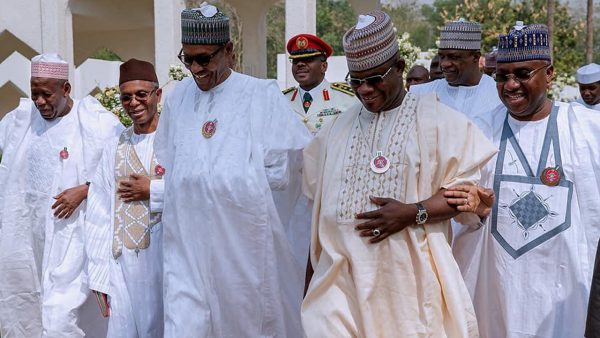
 The Oyo State Government has ordered the immediate closure of Oke-Ogun College of Management Sciences and Technology, Iseyin.
 Nigeria and Equatorial Guinea have formally agreed to supply gas from Nigerian offshore fields to the neighbouring Equatorial Guinea’s Gas Processing Facility at Punta Europa.


 Minister of the Federal Capital Territory (FCT), Malam Muhammad Musa Bello has expressed concern over the resurgence of kidnapping and other crimes, especially in satellite towns around the city centre.


Russia-Ukraine crisis….A Historical Perspective: By Floyd Rudmin
Events in Ukraine are moving fast and faster. Dangers of economic paralysis in Ukraine and of wider war with Russia are very real. This essay will argue that we all need to notice our historical biases in perceiving and misperceiving events.
My own bias is anti-war. Now is not the time in human history for geopolitical power plays and military alliances. Now is the time for coordinated international actions on climate and economy.
I am a Professor of Social and Community Psychology at the University of Tromsø in Arctic Norway, near the Russian border. I have no special knowledge of Russia other than conventional sources (Google Scholar, Wikipedia, JSTOR). My surname is Lithuanian, from my grandfather’s emigration in 1897 when Lithuania was controlled by Russia.
James Joyce’s famous statement that “history is a nightmare” from which we should try to awake, aptly describes current events in the Ukraine.
All nations involved in these events are biased by the remembered, misremembered, forgotten, and mythologized history they carry in their heads. Chaos in Maidan Square, neo-fascists in positions of power in Kiev, Russia annexing Crimea, these are inkblots that everyone sees differently depending on the historical visions that dominate their minds.
Our national memories have the passion and power to drive us blindly to hatred and to war. The histories we believe set us up for easy manipulations and disastrous actions.
Hillary Clinton, on March 5, said that Putin’s concern for Russians in Ukraine is like Hitler’s concern for Germans in Poland and Czechoslovakia. It is also like Ronald Reagan’s concern for US medical students in Grenada by which he justified his 1983 invasion of that small island nation. Clinton said, “We can learn from this tactic that has been used before.” That is good advice if we consider this tactic of:
a) personifying a nation by its leader’s personal name, and
b) then labelling that leader “Hitler.”
This is a sure way to activate a demon in the American national memory, and to mobilize the United States to again fight evil personified by the new Hitler. John Kerry said Assad is Hitler. John McCain said Castro is Hitler. George Bush said Saddam was Hitler. Donald Rumsfeld said Chavez was Hitler. The list of leaders the US has targeted as Hitler includes Allende (Chile), Noriega (Panama), Ortega (Nicaragua), Milosevic (Serbia), Arafat (Palestine), Gaddafi (Libya), Ahmadinejad (Iran), and Kim (North Korea).
Hitler, in fact, was defeated by the USSR more than by the USA. After the Battle of Stalingrad in February 1943 and the Battle of Kursk in August 1943, Germany had effectively lost WWII. D-Day was a year later, in June 1944. Soviet armies caused more than 90% of total German casualties. Nevertheless, Americans remember that it was they who defeated Hitler.
Americans also “Remember the Alamo”. In 1835, American settlers in the Mexican territory of Texas felt threatened by the government of Santa Anna in Mexico City, which had come to power by coup. In1836, the American settlers in Texas declared independence, and later negotiated annexation by the United States. Thus, Americans can, if they wish, appreciate that Crimeans felt threatened by the government in Kiev, which came to power by a coup d’etat, and that Crimeans also declared independence, and also then negotiated annexation by the nation of their origin. However, unlike Texas, Crimea had previously been part of Russia for 170 years.
Just as the Alamo is an iconic historic site for Americans, so, too, is the Crimean fortress of Sevastopol, an iconic historic site for Russians. Both symbolize steadfast courage and sacrifice in the face of overwhelming force.
The Siege of the Alamo in 1836 lasted 13 days, with 1,500 Mexican soldiers overwhelming 250 Americans who died heroically defending liberty and independence. The first Siege of Sevastopol in 1854, lasted two years, with 175,000 British, French, Turkish, German, Italian, Polish and Swiss soldiers overwhelming 35,000 Russian soldiers heroically defending Russian Crimea.
Americans should remember that they own Alaska only because Russia sold it, in large part, to pay debts incurred defending Crimea from the attacking European alliance. The second Siege of Sevastopol in 1941 lasted one year, with more than 200,000 German, Romanian, Italian and Bulgarian forces overwhelming 106,000 Soviet soldiers heroically defending Russian Crimea.
When, and if, Americans feel emotional remembering the Alamo, they can then begin to imagine the depth of emotion Russians must feel remembering Sevastopol.
America experienced invading foreign forces during its War of Independence in the 1770s, and again on a small scale during the War of 1812. But only two foreign attacks are seared into the American psyche with historic force. One is the Dec 7, 1941 attack on Pearl Harbor which lasted less than 2 hours and killed 2,400 Americans. The other is the Sept 11, 2001 attack on NY City and Washington, DC which lasted less than 3 hours and killed 3,000 victims. Americans’ anger to avenge those attacks is deep and enduring, allowing no limits of cost, no limits of law, to prevent such attacks happening again. Thus, Americans can, if they wish, appreciate Russia’s reactions to being attacked by foreign armies, and can understand why Russia also will allow no limits of cost, no limits of law, to prevent such attacks happening again.
The USA has not suffered invasions because it is bounded by large oceans east and west, and by powerless, peaceful nations north and south. Russia has no protective natural barriers, and has had aggressive neighbors on three sides. Although they may forget or deny this history, Turks, Poles, Swedes, French, Germans, British, Italians, Romanians and Japanese have each invaded Russia more than once. For example, in the early 1600s, Poland twice invaded Russia when its government was in disarray. Russians of all social classes united in popular uprising and saved the nation.
In 1613, the Romanov Tsar instituted a holiday called “Day of Moscow’s Liberation from Polish Invaders” which is now celebrated every November 4 as “Unity Day”. In the early 1700s, Sweden invaded Russia with 40,000 troops but was defeated by Peter The Great’s use of scorched-earth retreat across vast distances. Although only the Swedish king and 543 soldiers survived, he immediately raised another army of Turks to attack Russia. It is not something unique in the personalities of Tsar Peter or President Putin that drives Russia to require non-threatening neighbors. It is the collective Russian memory of invasion.
Each era of history has had its military super-power, and each super-power in turn attacked Russia:
*The Mongol Super Power:*
The Mongol Empire was the largest in history, conquering the Chinese Empire and Persian Empire. In 1238, the Mongols crossed the Volga River with 35,000 mounted archers backed by 70,000 Turks including Chinese siege equipment for attacking walled cities. They conquered most Russian regions as well as Crimea. In 1240, the Mongols captured Kiev and killed most of its 50,000 inhabitants. An estimated 500,000 Kievan Rus (Russians, Ukrainians and Byelorussians) died during the Mongol invasion. For several centuries afterwards, regional Khans continued attacking Russia. For example, in 1382, the Golden Horde sieged Moscow, slaughtered 24,000 Muscovites, and took thousands of captives.
*The Ottoman Super Power:*
At the height of its power in the 1600s, the Ottoman Empire controlled half of the Mediterranean world and all of the Black Sea and Red Sea regions. The Crimean Tatars supplied the Ottoman slave trade by “harvesting the steppe”, taking an estimated 2 million captives between 1500 and 1700. For example, in 1571, a combined Crimean and Ottoman force of 120,000 invaded Russia, burned Moscow, killed an estimated 80,000 Russians, and took 150,000 captives to slave markets in the Crimea. Historians count more than 50 Tatar attacks. The last “harvest” of Russians was in 1769. In the 7th Russo-Turkish War, Russians conquered Crimea and finally freed themselves from Tatar attacks and slavery. In 1783, Russia annexed Crimea. This is the same time in history that the American colonies finally freed themselves from oppressive British taxation.
*The Napoleonic Super Power:*
Napoleon harnessed the passionate ideals of the French Revolution to coercive diplomacy and to new military tactics of massed armies and mobile artillery and was thus invincible in conquering Continental Europe in only 9 years. In 1812, Napoleon assembled the largest army Europe had ever seen, comprised of an estimated 600,000 troops, including 98,000 from Poland. Although Napoleon won battles at Vilnius, Smolensk and Borodino, the Russian strategy of scorched-earth retreat across vast distances, including the evacuation and burning of Moscow, starved and demoralized the invading army. Relatively few survived the winter retreat from Moscow. Russian deaths are estimated to have been 150,000 – 400,000 soldiers and as many civilian.
*The Nazi Super Power:*
Hitler harnessed the passionate ideals of fascism to coercive diplomacy and to new military tactics of blitzkrieg and was thus invincible in conquering Continental Europe in only 2 years. In 1941, Hitler assembled the largest army Europe had ever seen, comprised of an estimated 3.2 million German soldiers and about 500,000 from Italy and Romania. Although Hitler conquered vast stretches of territory, he failed to capture Moscow, Leningrad, Stalingrad or the Caspian Oil Fields. Soviet deaths were an estimated 8 – 13 million soldiers and as many as 20 million civilians. For example, 200,000 soldiers and 1.2 million civilians died in the Siege of Leningrad. In contrast, total US deaths during WWII were 418,000 military and fewer than 2,000 civilians.
*The US Super Power:*
The US has harnessed the passionate ideals of democracy to coercive diplomacy and to new tactics of covert operations, advanced weapons technology and economic warfare to achieve what it calls, “full spectrum dominance”. Considering its own immense military resources and those of the other 27 NATO nations it controls, plus the resources of its Asian allies of Australia, New Zealand, Japan and South Korea, the US commands the greatest military might the world has ever seen. As with past super-powers, the US and its NATO allies seem to be setting their sights on Russia. Perhaps Cold War history causes them to confuse Russia with the USSR and its many atrocities under the dictatorships of Stalin (native Georgian) and Khrushchev (native Ukrainian). Or perhaps racist perceptions of Russians as “untermensch” (a person considered racially or socially inferior) are still active in Western minds. Or maybe the vast resources of Russia are too attractive to leave untaken.
President Gorbachev allowed the re-unification of Germany based on promises from President Bush and Chancellor Kohl that NATO would not expand eastwards, and then NATO did exactly that, even inviting Ukraine and Georgia to prepare for NATO membership. Georgia is closer to India than it is to the North Atlantic; all the while the US has been determined to install anti-missile systems in Poland, purportedly to shoot down non-existent Iranian ICBMs, but suspiciously capable of nullifying Russia’s nuclear deterrence.
Recent telephone intercepts show that US State Department officials (Victoria Nuland and Geoffrey Pyatt) selected an anti-Russian replacement government for the Ukraine when the elected, constitutional government was still in power. Then chaos in Kiev caused by unidentified snipers resulted in the elected Ukrainian government collapsing. As per US planning, the selected anti-Russian replacement government took power in Kiev and was quickly declared legitimate by NATO nations.
It is easy to see why Russia would perceive these events as another super-power preparing to attack Russia. It is perfectly predictable that Russia would react in ways to defends itself, no matter what the costs. It is mental manipulation by historical trigger-words to claim that Putin is “Hitler”, or that Stalin’s “Red Army” again threatens Europe. Because Americans know nothing of Russian history and have no national experience of foreign invasion, they cannot escape the confines of their own Cold War rhetoric. They cannot imagine history seen from a Russian perspective. Europeans, however, know the horror of war on their own territory, and well remember their own history of attacking Russia. European nations know how many times they’ve teamed up to attack Russia, and know it never worked out well; and probably will not this time either. In this crisis, it is the European nations who need to stand up and shake the super-power awake before an incident turns into a conventional war, turns into a missile war and then turns into a nuclear war. Those transitions could take 30 minutes. At this moment in human history, the world community has more pressing priorities than re-enacting our historical nightmares.
*Floyd Rudmin is a Professor of Social and Community Psychology at the University of Tromsø in Arctic Norway.*