After 15 years of broadly targeting the 3.3 million-member community and extensively monitoring its activities, the Federal Bureau of Investigation (FBI) has declared an end to its surveillance of Muslim Americans, saying its exhaustive study of their beautiful culture was finally complete. Officials confirmed that the program was started in the fall of 2001 when federal agents, captivated by Islam’s complex history and rich spiritual traditions, redirected the full force of the bureau’s intelligence-gathering apparatus toward developing a more thoughtful, nuanced appreciation of the Muslim-American way of life. “We’d always known Islam was one of the great world religions, but it wasn’t until we recruited a network of 15,000 informants and infiltrated mosques all over the country that we came to understand just how magnificent and fascinating it truly is,” said FBI director, James B. Comey, who noted that agents gained a valuable and eye-opening understanding of Islam—while also learning a lot about themselves and their own faith in the process—after entering the Muslim places of worship to collect as much information as they could on the intriguing personal beliefs of the religion’s followers. “After analyzing the transcripts of thousands of phone calls and intercepting the communications of prominent Muslim-American leaders and academics, we’ve really come to admire their vibrant culture. “The considerable amount of intel we’ve gathered and carefully pored over for the past 15 years has shown us that their faith and customs are really quite inspiring,” Comey added. “If there’s one thing we’ve taken away from all our surveillance, it’s what a glorious and enriching part of our world Islam is.” According to sources within the bureau, the harvesting of internet data, widespread racial profiling, and the nationwide mapping of Muslim communities have allowed agents to closely observe the followers of Islam on an extremely personal level, thereby allowing them to develop a deep respect for the amazing ethnic and cultural diversity of the faith’s 1.6 billion believers, as well as the striking distinctions between the religion’s various sects, which, they stressed, went far beyond just Sunni and Shiite. Remarking on all the information they had gathered, FBI officials emphasized that adherents of Islam speak dozens of beautiful languages—Arabic, but also Urdu, Pashto, Farsi, Bengali, Javanese, and many others—and noted that agents came to treasure this linguistic richness after installing recording devices throughout Muslim-American communities and then surreptitiously listening in on Quranic study groups, prayer sessions, and social events. “Thanks to advances in video surveillance, we’ve been able to look inside Muslims’ homes and view some breathtaking calligraphy prints and handwoven tapestries,” said former agent Casey Hanna, who fondly recalled assignments that allowed him to overhear moving recitations of the Hadith, which he was fascinated to learn come from an oral tradition and are considered to be the direct word of the Prophet Muhammad. “I went undercover in hundreds of Muslim-owned businesses and residences across the nation and was lucky enough to sample many variations on the aromatic stews and delectable desserts that serve as staples of halal cuisine—Arabian, North African, Indonesian. They were all delicious, and unlike anything I’d ever tasted. “I’ll never forget this one instance when I closely trailed a New York shop owner for three straight years—his coffee was just spectacular,” Hanna added. “Muslims were the first people to drink coffee, you know.” After realizing they could not fully nurture their curiosity by limiting their study to Muslims in the United States, the FBI reportedly enlisted the help of the NSA to find out more about the incredible religion. Between 2002 and 2008, the bureau is known to have monitored 7,485 email addresses around the globe in order to learn answers to their many questions about Muslims’ compelling lives and rituals, from why they don’t eat pork, to what Muslim holidays are like, to why some Muslim women wear garments that cover their heads while others don’t. Comey told reporters the FBI also received information from the CIA, whose enhanced interrogation techniques and clandestine intelligence-gathering methods yielded many interesting revelations from Muslim sources around the world, such as the fact that Arabs make up only 15 percent of the global Muslim population, and that through most of history, women in Islamic societies actually had more property rights than women in the West. Saying they thoroughly enjoyed studying “such a lovely people and such a lovely faith,” Comey explained that agents would often remove a Muslim citizen from their community and keep them detained for days, weeks, or even months on end to learn everything they could from them about Islam. “There’s no way I could remember the names of all the Muslim citizens that our agents brought in to discuss the beauty of Islam with one-on-one, but rest assured that with their help, the FBI has gained a deep and illuminating understanding of Islamic culture,” said Comey, who noted that by combing through thousands upon thousands of citizens’ banking records, agents discovered with astonishment how some observant Muslims set up special loan payment plans to avoid paying interest, as they consider it usury, which is forbidden under Sharia law. “It’s crazy to think about, but until little more than a decade ago, I had no idea there were Five Pillars of Islam that guided all Muslims’ spiritual lives. I also didn’t know anything about the multitude of Muslim contributions to mathematics and science that have been absolutely vital to the world. But that’s not to say they don’t value art, though. Poets like Rumi and Hafez drew upon mystical Sufist interpretations of the Quran to write verse that is every bit as sublime as, say, Keats or Coleridge. And don’t even get me started on the architecture. “As this program sadly comes to an end, I just want to thank Muslim Americans from the bottom of my heart for teaching us all about your faith and your culture,” he continued. “We’ve learned so much about you over the years. More than you could possibly imagine.”
A governorship aspirant of the People’s Democratic Party (PDP) in Osun state, Senator Ademola Adeleke has vowed to win the March 7, 2022 election with a view to rescue the state from bad governance.
Reacting to the report of the PDP Appeal Screening Panel which again cleared him to contest the governorship primaries, Senator Adeleke expressed appreciation to the committee and the national leadership of the party for standing by truth and justice.
“My ambition to govern Osun state is people-driven. We are not afraid to face the delegates at the primary and the people of Osun state at the general election. I urge my colleagues to take the contest like a sporting race.
“As for me, I repeat: we are not enemies; we want to serve; our ambition should not be a do or die affair. Let the delegates decide the candidate; let the voters elect the governor.
“We must be mindful of our actions as we belong to the same party and family. We must be getting set for a united front to defeat our common enemy.”
Sacked Secretary to the Government of the Federation (SGF), Babachir David Lawal has floored the Economic and Financial Crimes Commission (EFCC) as court declared evidences presented by prosecution witness in respect of the allegation of fraud levelled against him and others as “hearsay.”
Justice Charles Agbaza of an FCT High Court, in his ruling today, January 28, said: “I have carefully examined the foundation of arguments for and against the admissibility of the evidence in dispute and found only two issues for determination.
“The first issue is on whether the evidence of the prosecution witness falls on hearsay in respect of the exhibits, while the second issue is on whether this court has once rejected the exhibits sought to be tendered.
“On issue one, the witness on his own informed the court of how he was invited into the EFCC laboratory and was shown information extracted from a iPhone7.
“On this, I am satisfied that the witness is not the maker of the exhibits in dispute. They were only shown to him according to his oral evidence here.
“Therefore, anything said or to be said by the witness is nothing but hearsay and for this reason, I resolve this issue in favour of the defendants.
“On the second issue, there is no dispute that the exhibits were earlier sought to be tendered but they were turned down and marked rejected and even, the rejection is a subject of appeal at the Court of Appeal.
“For this reason, I agree that the evidence cannot be admitted having been earlier rejected and marked rejected.”
Babachir Lawal is charged alongside his younger brother, Hamidu, who is a director of Rholavision Engineering Limited; an employee of the company, Suleiman Abubakar; Managing Director of Josmon Technologies Limited, Apeh John Monday; the two companies: Rholavision Engineering Limited and Josmon Technologies Limited.
The EFCC charged them with 10 counts of fraud relating to contract awarded by the Presidential Initiative for the North-East (PINE) for the removal of evasive plant species to the tune of N544 million.
They all pleaded not guilty.
Continuing with his ruling in the case, Justice Agbaza agreed with the defendants that the court in 2021 rejected some exhibits on the said phone.
He added that the EFCC was only attempting to bring into the court records, exhibits already marked rejected.
The judge held that any oral evidence of the EFCC’s witness on the rejected exhibits would amount to hearsay since he was not the maker and did not sign them.
The former SGF had on January 13, through his lawyer, Chief Akin Olujimi, objected to the line of evidence being given by the witness, Dare Folarin, on an iPhone seized from one Musa Bulani.
Olujimi said that EFCC wanted to smuggle in an evidence earlier rejected by the court when it ruled against admitting a compact disc on the said iPhone.
Other defendants counsel aligned themselves with Olujimi’s submission.
Counsel for the third defendant, Napoleon Idelana, said that EFCC filed an appeal against the ruling of the court on the rejection of the disc.
The Prosecution Counsel, Ofem Uket, urged the court to discountenance the defendants’ objection, arguing that Folarin’s evidence was not a hear saying evidence.
Uket argued that the witness, who is the eighth prosecution witness (PW8), was only saying what he and other investigators saw and did at the EFCC laboratory on the iPhone.
The case could, however, not process due to the information given to the court that the PW8, who ought to continue with his evidence-in-chief was not present in court as he was indisposed and therefore, sought an adjournment.
Justice Agbaza adjourned the case to February 16 and 17 for continuation of hearing.
The Nigerian Communications Commission’s Cyber Security Incident Response Team (NCC-CSIRT) has independently identified two cyber vulnerabilities through which cyber attacks are being carried out.
The body has therefore offered Nigerian telecom consumers the measures to be taken to get protected from such cyber-attacks.
The CSIRT, in its first-ever security advisories, less than three months after its creation, alerted Nigerians over what it called Juice Jacking, which it said can gain access into consumers’ devices when charging all kinds of mobile phones at public charging stations.
The other is a Facebook for Android Friend Acceptance Vulnerability, which targets only Android Operating System.
According to CSIRT security Advisory 0001 released on January 26, 2022, with Juice Jacking, attackers have found a new way to gain unauthorized entry into unsuspecting mobile phone users’ devices when they charge their mobile phones at public charging stations.
Many public spaces, restaurants, malls and even in the public trains do offer complementary services to their customers in a bid to enhance customer services, one of which is providing charging ports or sockets.
However, an attacker can leverage this courtesy to load a payload in the charging station or on the cables they would leave plugged in at the stations.
Once unsuspecting persons plug their phones at the charging station or the cable left by the attacker, the payload is automatically downloaded on the victims’ phone. This payload then gives the attacker remote access to the mobile phone, allowing them to monitor data transmitted as text, or audio using the microphone.
The attacker can even watch the victim in real time if the victims’ camera is not covered. The attacker is also given full access to the gallery and also to the phone’s Global Positioning System (GPS) location.
When an attacker gains access to a user’s Mobile phone, he gets remote access to the User’s phone which leads to breach in Confidentiality, Violation of Data Integrity and bypass of Authentication Mechanisms. Symptoms of attack may include sudden spike in battery consumption, device operating slower than usual, apps taking a long time to load, and when they load they crash frequently and cause abnormal data usage.
The NCC-CSIRT, however, proffered solutions to this attack to include using ‘charging only USB cable’, to avoid Universal Serial Bus (USB) data connection; using one’s AC charging adaptor in public space; and not granting trust to portable devices prompt for USB data connection.
Other preventive measures against Juice Jacking include installing Antivirus and updating them to the latest definitions always; keeping mobile devices up to date with the latest patches; using one’s own power bank; keeping mobile phone off when charging in public places; as well as ensuring use of one’s own charger, if one must charge in public.
On the other hand, the NCC-CSIRT Advisory 0001 of January 27, 2022, warns that Facebook for Android is vulnerable to a permission issue which gives privilege to anyone with physical access to the android device to accept friend requests without unlocking the phone. The products affected include Versions 329.0.0.29.120 of Android OS.
With this, the attacker will be able to add the victim as a friend and collect personal information of the victim, such as Email, Date of Birth, Check-ins, Mobile phone number, Address, Pictures and other information that the victim may have shared, which would only be visible to his/her friends.
However, to be protected from the Facebook-associated vulnerability, NCC-CSIRT in the security advisory recommends to users to disable the feature from their device’s lock screen notification settings.
The NCC-CSIRT was inaugurated in October, 2021 to provide guidance and direction for the constituents in dealing with issues relating to the security of critical infrastructure in their possession, and periodically assess, review and collate the threat landscape, risks, and opportunities affecting the communications sector, in order to provide advice to relevant stakeholders in those regards.
As the telecoms-industry specific intervention, the objective of which aligns with the objective of the National Cybersecurity Policy and Strategy (NCPS) document published by the Office of the National Security Adviser (ONSA), the NCC-CSIRT ensures continuous improvement of processes and communication frameworks to guarantee secure and collaborative exchange of timely information while responding to cyber threats within the sector.
In recent times, NCC-CSIRT has raised a series of cyber-vulnerability awareness based on security advisories it receives from the Nigerian Cybersecurity Emergency Response Team (ngCERT), which is the national body for the implementation of the NCPS objective. However, Juice Jacking and Facebook for Android Friend Acceptance Vulnerabilities are the two first-ever cyber vulnerabilities published by the NCC-CSIRT.
The Economic Community of West African State (ECOWAS) has suspended Burkina Faso following a military coup in that country.
ECOWAS also called for the new junta to release ousted President Roch Marc Christian Kabore and other officials detained during Monday’s coup.
The summit, which lasted about three hours, also decided to send a mission of its chiefs of staff to Ouagadougou, the Burkinabe capital, tomorrow, January 29 on fact finding mission.
It will be followed on Monday by ministerial level envoys from the bloc.
The 64 years old Kabore was elected in 2015 following a popular revolt that forced out the country’s strongman, Blaise Compaore.
He was re-elected in 2020, but the following year faced a wave of anger over the mounting toll from a jihadist insurgency that swept in from neighbouring Mali.
On Sunday, mutinies broke out in several barracks and the following day, Kabore was arrested and taken away by troops.
The impoverished Sahel state is being run by a junta led by Lieutenant Colonel Paul-Henri Sandaogo Damiba, who commands military units in the country’s jihadist-torn east.
On the eve of the summit, Damiba made a televised appeal for “the international community to support our country so it can exit this crisis as soon as possible.”
He promised that Burkina would “return to a normal constitutional life… when the conditions are right.”
Burkina Faso joins two other ECOWAS countries, Mali and Guinea, where there have been coups in the past 18 months.
Those two countries have been suspended by the regional ECOWAS, which has also imposed an array of sanctions on them, including measures against individuals.
Lagos State Government has flagged off urban farming programme to curb food scarcity. The State Commissioner for Agriculture, Ms Abisola Olusanya inaugurated the programme yesterday, January 27, at the Lagos State Agricultural Development Authority (LSADA), Oko Oba, Agege. Olusanya explained that the programme was introduced to boost food security in the state. The commissioner, who was represented by the Permanent Secretary in the ministry, Hakeem Adeniji, said that urban farming is an agricultural revolution which had started in some developed countries to solve food insecurity. According to her, the development will encourage local food promotion and urban sustainability efforts. “Urban farming is among the most pressing needs of any urban agglomeration to achieve food security and one of the ways to achieve this is by supporting and recognising the economic, environmental and social benefits which the project offers. “According to Food Agriculture Organisation, urban agriculture is the form of agriculture practices within and around cities which compete for limited resources like land, water, energy and labour. “The diversity of urban agriculture is one of its main attributes, as it can be adapted to wide range of urban situations and to the needs of diverse stakeholders.” Olusanya said that urban farming is popular for several reasons including sustainability, affordability, health and convenience. She said that it is a sustainable movement that do not only produce an abundance of organic locally grown food but also would reduce food related carbon emissions, including transportation that is low food mileage. Olusanya said that the farming process has the potential to stimulate the local economy through job creation, income generation and the growth of small businesses. She said that the agricultural process would make fresh food more affordable in the state. Olusanya said that the project would become a global green evolution if well embraced. She noted that it would give households direct access to consume a more diverse, quality, richer and highly nutritional based fresh homegrown products.
The Programme Manager, LSADA, Dr. Olalekan Pereira-Sheteolu, in his remarks, said that urban farming is a flagship that would take the state to greater heights through food production. Pereira-Sheteolu said that the agricultural process would ensure food security with higher number of population in the state. The project manager appealed to Lagos residents to feel free to consult the agency for assistance in starting the urban farming in their various homes. “We urge the residents to embrace the development by turning their compounds to farming, by planting vegetables and other can crops that are important in the kitchen.” A farmer in the state, Professor Idowu Ogunkoya, commended the state government for the laudable initiative. Ogunkoya advised residents to embrace the development, to ensure more food production and self sufficiency the statenan.
President Muhammadu Buhari has said that his government has succeeded in creating enabling environment for businesses to thrive in Nigeria.
The President, who spoke when he inaugurated a new three million metric tonnes per annum BUA Cement Sokoto Line 4 Factory, emphasized that the Federal Government policies on economic diversification, job creation and creating an enabling environment for businesses to thrive are working.
“As you all know, one of the key economic pillars of our administration has been to create an enabling environment for businesses to thrive. This is necessary for job creation and indeed, for our economy and national security.
”In the past few weeks, I visited Ogun and Kaduna States where I observed many private sector investments in action. And today, I am here in Sokoto to commission this multi-billion Naira project.
”It is therefore very clear for all to see that our policies are working. Progress is gradually being made in all parts of the country.”
The President pledged that his administration would continue to support serious investors to set up businesses that will take advantage of huge reserves of resources in different parts of the country.
The President recalled that in 1985 as the then Head of State, he was at the same location to commission the 2nd line of the facility, adding: “today, almost 37 years later, I am here to commission the fourth line. It is a very special day for me personally.
The President thanked the Founder of BUA Cement, Abdul Samad Rabiu and the entire team for the great work they are doing in supporting the government’s economic diversification and job creation agenda.
He noted the company, which has completed four new cement plants of similar capacity in the last five years in different parts of the country and is set to complete two more plants soon, had shown through these investments that they believe in Nigeria and its potential.
”I am pleased that through these investments, BUA Cement has created employment opportunities for our citizens. Today, BUA is the largest employer of labour in the North-West region.
”I always remind Nigerians that every region, indeed every State, in Nigeria sits on huge reserves of resources. For example, in this area, Kebbi, Sokoto and Zamfara can boast of rice production, gold and other precious metals development and of course, heavy industries like cement manufacturing.
”As a Government, we introduced policies and mechanisms to support such investments in a legal, ethical and inclusive manner.
”For example, we have the National Food Security Council on Food Security Matters and the Presidential Artisanal Gold Mining Development Initiative to develop local artisanal gold mining and ensure health and safety of mining workers and protect the environment.
”We remain prepared to support serious investors to set up businesses that will take advantage of these opportunities through value addition so as to take advantage of the huge market here, as well as in the greater African region and the world at large.”
President Buhari expressed confidence that the Ajaokuta–Kaduna–Kano (AKK) gas project, adding that when completed, it will bring gas for domestic and industrial purposes from the South South region to the South East, North Central and North West Geopolitical zones.
He said that the AKK project would significantly reduce cost of operations for industries in the regions.
The President also used the occasion to reassure Nigerians that his government would continue to invest heavily in roads and rails to ease movement of people, goods and services, with a view to facilitating trade while lowering logistics costs associated with the inefficiencies of bad roads and bridges.
On security, President Buhari reiterated his commitment to bring peace and stability to all parts of Nigeria, listing a raft of measures undertaken by this administration to ensure that normalcy returns to the country.
”We continue to recruit and equip security personnel while expanding our social investment programs to support the youth and some of the most vulnerable members of our communities.
”You should all be reassured that we will win this battle against the criminal elements looking to destabilize our nation by hindering the progress of our economy.
”I want to now call on all entrepreneurs and businesses to emulate what is being done here.
”The task of nation building requires all hands to be on deck. The public and private sectors must collaborate if we are to achieve our aim of collective peace and prosperity across the entire nation.”
Chairman of BUA Cement, Alhaji Abdul Samad Rabiu commended the President for creating the enabling environment for businesses to thrive, acknowledging the support of the Central Bank of Nigeria (CBN) and its Governor in setting up the gigantic project.
He announced that so far, “we have invested over a billion dollars in the past four years and we urge the CBN to continue to support industries like ours that use locally sourced raw materials to add value.”
He pledged that BUA would continue to invest more in the cement industry until Nigeria is self-sufficient and the commodity is made available, accessible, and affordable for all Nigerians.
”In the past six years, we have completed four plants – two in Obu, Edo State and two in Sokoto (of which this Sokoto line four is the fourth) with BUA’s total production capacity now standing at 11.5 million tonnes with the completion of this plant.
”Next year, we intend to complete the construction of two new plants of 3 million metric tonnes each for which construction is ongoing – one in Edo and the other, here in Sokoto.”
The Chairman of BUA said that he looked forward to President Buhari commissioning these plants next year which will bring total production capacity to 17.5million metric tonnes.
The Nigeria Police have denied that their Helicopter, Bell 429 5NMDA, crash-landed in Bauchi with some occupants sustaining injuries.
A statement by the spokesman of the Force Headquarters, Frank Mba, admitted however, that the helicopter, flying from Abuja to Bauchi, was involved in a controlled safe landing yesterday, January 26, at the Sir Abubakar Tafawa Balewa International Airport, Bauchi.
“The aircraft did not crash as being reported in some sections of the media and none of the occupants sustained any injury whatsoever.
“All six on board, including the pilot and co-pilot are in good condition.
“Similarly, the aircraft, which was flown by one of the best Police Pilots, was professionally safe-landed with minor damage on the rear rotor as a result of obstacle at the landing spot. The incident occurred around 7:30PM (local time).”
Mba said that the Inspector-General, Usman Alkali Baba, has commended the Police Air-Wing for their professionalism in safe-landing the aircraft and averting any serious air-mishap.
“He further noted that the Nigeria Police Air-wing – with a fleet of one fixed-wing aircraft, a citation jet and 13 helicopters – has got a strong history of air safety since its establishment in the year 1972.”
The Federal Executive Council (FEC), headed by President Muhammadu Buhari, has approved a N5.4 billion contract for the construction of access road from Mpape to Shere-Galuwyi Resettlement Housing Scheme in Bwari Area Council for the original Abuja indigenes who have been moved from their communities.
The minister, Malam Muhammad Musa Bello, who made this known in a press statement by his Chief Press Secretary, Anthony Ogunlelye, said the absence of access road and other infrastructure in the new resettlement site has continued to prevent movement of the people of the communities.
“The Galuwyi Shere Resettlement Site is located on a 900-hectares of land in Bwari Area Council. Sixteen Communities are to be moved in two Phases: Phase I consists of most of the Communities in Phase II of the Abuja Federal Capital City (FCC) and include seven communities namely: Utako, Maje, Mabushi, Jabi Samuel, Jabi Yakubu, Kpaadna, Zhilu.
“Phase II comprises of nine Communities: Gwarimpa, Galadima, Jahi I, Jahi II, Kado Bimiko, Kado Kuchi, Lungu, Gishiri and Daki Biu”.
He said that already, some complimentary facilities like Primary School, Secondary School, Police Post, Overhead water tanks have been provided at the site.
“If this road is not constructed, it will lead to further decay of the development at the Resettlement site, heightening security concerns and thereby amounting to colossal loss of financial resources as well as constituting a clog in the developmental efforts of the government.
The minister explained that the movement of the Communities will open up development along that axis and free up land for the orderly development of the city in line with the Abuja Master Plan.
The contract for the 14.15 kilometers road was awarded to Messrs Vipan Global Investment Resources Limited and is expected to be completed within eighteen months.
The Governor of the Central Bank of Nigeria (CBN), Godwin Emefiele has pledged the Bank’s determination to bring down prices of building materials to make housing affordable to the less privileged by supporting manufacturing sector.
Emefiele, who spoke today, January 27, at the inauguration of the new BUA cement plant in Sokoto, performed by President Muhammadu Buhari, recalled the decision of the Bank to restrict access to foreign exchange for the importation of 43 items, including cement, which could either be produced in Nigeria or for which raw materials could be sourced within the country.
The apex bank boss said that the decision had helped to boost the production capacity of cement in the country.
He said that the production capacity of cement companies in Nigeria has increased from 30 million metric tonnes in 2014 to 60 million metric tonnes in 2021, adding that no dollar has been spent on the importation of cement into Nigeria in the past seven years.
Emefiele commended the BUA cement company for its effort in constructing the plant with no external finance, saying that such private sector initiatives are yielding fruits. He said such are critical complimentary ingredients to reducing unemployment and boosting production activities in Nigeria.
He said that such investments have also helped to support the CBN’s mandate of promoting stable macro-economic growth in Nigeria.
Emefiele assured current and prospective operators in the industrial sector that the CBN will collaborate with them to develop a viable manufacturing sector in Nigeria.
“For those who are willing to invest in new greenfield or existing brownfield projects, the CBN will provide all the support needed, both in Naira and dollars to import plants and equipment to actualize these investments.”
He stressed that the CBN’s stand is directly in harmony with the resolve of the bank to create a professional and people-centred Central Bank that will act as a financial catalyst for job creation and inclusive economic growth in Nigeria.
Emefiele advised manufacturing companies in the construction sector of the country to focus more attention on satisfying the domestic needs in the infrastructure sector, with a view to reducing the prices of cement and steel.
This was even as the Sokoto State Governor, Aminu Tambuwal commended the Buhari administration for its commitment towards revolutionizing the manufacturing sector, as exemplified in the cement manufacturing sector, which now provides jobs for Nigeria’s teeming population.
Also, the trio of Alhaji Abdul Samad Rabiu, Chairman, BUA Cement Plc; Alhaji Lawal Bello, Chairman, Cement Manufacturers Association of Nigeria (CMAN) and Engr. Yusuf Binji, the Managing Director of BUA Cement Plc, lauded the efforts of the current administration and the CBN in collaborating with stakeholders to boost the economy of Nigeria.
We use cookies on our website to give you the most relevant experience by remembering your preferences and repeat visits. By clicking “Accept”, you consent to the use of ALL the cookies.
This website uses cookies to improve your experience while you navigate through the website. Out of these, the cookies that are categorized as necessary are stored on your browser as they are essential for the working of basic functionalities of the website. We also use third-party cookies that help us analyze and understand how you use this website. These cookies will be stored in your browser only with your consent. You also have the option to opt-out of these cookies. But opting out of some of these cookies may affect your browsing experience.
Necessary cookies are absolutely essential for the website to function properly. This category only includes cookies that ensures basic functionalities and security features of the website. These cookies do not store any personal information.
Any cookies that may not be particularly necessary for the website to function and is used specifically to collect user personal data via analytics, ads, other embedded contents are termed as non-necessary cookies. It is mandatory to procure user consent prior to running these cookies on your website.



 The Nigerian Communications Commission’s Cyber Security Incident Response Team (NCC-CSIRT) has independently identified two cyber vulnerabilities through which cyber attacks are being carried out.
 The Economic Community of West African State (ECOWAS) has suspended Burkina Faso following a military coup in that country.
 President Muhammadu Buhari has said that his government has succeeded in creating enabling environment for businesses to thrive in Nigeria.
 The Federal Executive Council (FEC), headed by President Muhammadu Buhari, has approved a N5.4 billion contract for the construction of access road from Mpape to Shere-Galuwyi Resettlement Housing Scheme in Bwari Area Council for the original Abuja indigenes who have been moved from their communities.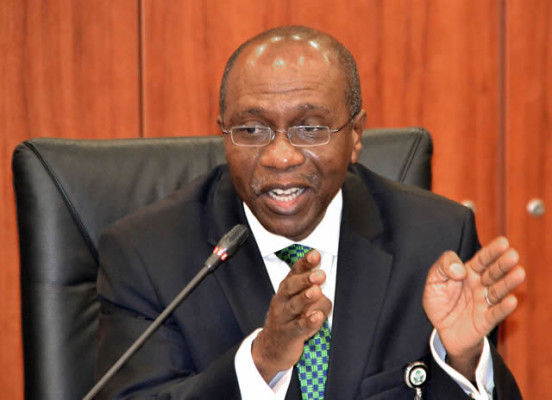


FBI Findings After 15 Years Investigation Of Islam Through 15,000 Informants
After 15 years of broadly targeting the 3.3 million-member community and extensively monitoring its activities, the Federal Bureau of Investigation (FBI) has declared an end to its surveillance of Muslim Americans, saying its exhaustive study of their beautiful culture was finally complete.
Officials confirmed that the program was started in the fall of 2001 when federal agents, captivated by Islam’s complex history and rich spiritual traditions, redirected the full force of the bureau’s intelligence-gathering apparatus toward developing a more thoughtful, nuanced appreciation of the Muslim-American way of life.
“We’d always known Islam was one of the great world religions, but it wasn’t until we recruited a network of 15,000 informants and infiltrated mosques all over the country that we came to understand just how magnificent and fascinating it truly is,” said FBI director, James B. Comey, who noted that agents gained a valuable and eye-opening understanding of Islam—while also learning a lot about themselves and their own faith in the process—after entering the Muslim places of worship to collect as much information as they could on the intriguing personal beliefs of the religion’s followers.
“After analyzing the transcripts of thousands of phone calls and intercepting the communications of prominent Muslim-American leaders and academics, we’ve really come to admire their vibrant culture.
“The considerable amount of intel we’ve gathered and carefully pored over for the past 15 years has shown us that their faith and customs are really quite inspiring,” Comey added.
“If there’s one thing we’ve taken away from all our surveillance, it’s what a glorious and enriching part of our world Islam is.”
According to sources within the bureau, the harvesting of internet data, widespread racial profiling, and the nationwide mapping of Muslim communities have allowed agents to closely observe the followers of Islam on an extremely personal level, thereby allowing them to develop a deep respect for the amazing ethnic and cultural diversity of the faith’s 1.6 billion believers, as well as the striking distinctions between the religion’s various sects, which, they stressed, went far beyond just Sunni and Shiite.
Remarking on all the information they had gathered, FBI officials emphasized that adherents of Islam speak dozens of beautiful languages—Arabic, but also Urdu, Pashto, Farsi, Bengali, Javanese, and many others—and noted that agents came to treasure this linguistic richness after installing recording devices throughout Muslim-American communities and then surreptitiously listening in on Quranic study groups, prayer sessions, and social events.
“Thanks to advances in video surveillance, we’ve been able to look inside Muslims’ homes and view some breathtaking calligraphy prints and handwoven tapestries,” said former agent Casey Hanna, who fondly recalled assignments that allowed him to overhear moving recitations of the Hadith, which he was fascinated to learn come from an oral tradition and are considered to be the direct word of the Prophet Muhammad.
“I went undercover in hundreds of Muslim-owned businesses and residences across the nation and was lucky enough to sample many variations on the aromatic stews and delectable desserts that serve as staples of halal cuisine—Arabian, North African, Indonesian. They were all delicious, and unlike anything I’d ever tasted.
“I’ll never forget this one instance when I closely trailed a New York shop owner for three straight years—his coffee was just spectacular,” Hanna added. “Muslims were the first people to drink coffee, you know.”
After realizing they could not fully nurture their curiosity by limiting their study to Muslims in the United States, the FBI reportedly enlisted the help of the NSA to find out more about the incredible religion. Between 2002 and 2008, the bureau is known to have monitored 7,485 email addresses around the globe in order to learn answers to their many questions about Muslims’ compelling lives and rituals, from why they don’t eat pork, to what Muslim holidays are like, to why some Muslim women wear garments that cover their heads while others don’t.
Comey told reporters the FBI also received information from the CIA, whose enhanced interrogation techniques and clandestine intelligence-gathering methods yielded many interesting revelations from Muslim sources around the world, such as the fact that Arabs make up only 15 percent of the global Muslim population, and that through most of history, women in Islamic societies actually had more property rights than women in the West.
Saying they thoroughly enjoyed studying “such a lovely people and such a lovely faith,” Comey explained that agents would often remove a Muslim citizen from their community and keep them detained for days, weeks, or even months on end to learn everything they could from them about Islam.
“There’s no way I could remember the names of all the Muslim citizens that our agents brought in to discuss the beauty of Islam with one-on-one, but rest assured that with their help, the FBI has gained a deep and illuminating understanding of Islamic culture,” said Comey, who noted that by combing through thousands upon thousands of citizens’ banking records, agents discovered with astonishment how some observant Muslims set up special loan payment plans to avoid paying interest, as they consider it usury, which is forbidden under Sharia law.
“It’s crazy to think about, but until little more than a decade ago, I had no idea there were Five Pillars of Islam that guided all Muslims’ spiritual lives. I also didn’t know anything about the multitude of Muslim contributions to mathematics and science that have been absolutely vital to the world.
But that’s not to say they don’t value art, though. Poets like Rumi and Hafez drew upon mystical Sufist interpretations of the Quran to write verse that is every bit as sublime as, say, Keats or Coleridge. And don’t even get me started on the architecture.
“As this program sadly comes to an end, I just want to thank Muslim Americans from the bottom of my heart for teaching us all about your faith and your culture,” he continued.
“We’ve learned so much about you over the years. More than you could possibly imagine.”