A group of Nollywood actors and entertainers under the canopy of Ambassadors of Voice for Change, have conferred a merit award on the Special Adviser to President Muhammadu Buhari on media and publicity, Femi Adesina. They were at the Presidential villa, Abuja today, January 14 to hand in the award to Adesina at a short ceremony.
The representatives of the group led by Ahmed Bala were Kure, Gentle Jack, Saheed Balogun, Mr. Ibu, Shina Peters and Onyekweli Harry B.
The Executive Vice Chairman of the Nigerian Communications Commission (NCC), Professor Umar Garba Danbatta, has listed the wonders of the Information and Communication Technology (ICT) in today’s world, considered impossible a few years ago. At the 10th and 11th combined Convocation Lecture of the Fountain University at Osogbo, Osun State, which he delivered yesterday, January 13, Professor Danbatta noted that in all continents of the world, people, organisations and countries have continued to witness leaps and bounds in economic, social and political activities through instrumentality of ICT. In the paper titled: “Empowering the Nigerian Youth though Information and Communication Technology,” the NCC boss said that ICT has come to be synonymous with empowerment, as it transforms processes efficiently acting as an enabler of effectiveness in operations in every sector of the economy, including commerce, agriculture, health, security and governance. According to Professor Danbatta, Uber, the world’s largest taxi company, owns no vehicle; Airbnb, the world’s largest accommodation provider, owns no real estate; Facebook, world’s most popular public-facing digitally-mediated social networking platform, creates little or no content; Alibaba, a leading global retailer, has little or no inventory, yet they have become signposts of prosperity riding wholly on ICT resources. He stressed that it would be a failing prophesy decades ago if anyone had said a company with no vehicle, just via an application, will control more than 75 million active commercial drivers in, at least, 80 countries. It would also be contested that through a mere app, a company will provide accommodation to millions of travellers and tourists in more than 100,000 cities of the world. “Similarly, just as Alibaba, without inventory, had over 828 million annual active customers across its China retail markets, as at June 2021. “Needless to mention that the troves of contents synonymous with Facebook are actually generated by its 2.89 billion monthly active users. The NCC boss said that the foregoing contextual demonstrations of the possibilities of ICT explain Federal Government’s decisions to strengthen ICT adoption in building a robust digital economy in Nigeria, eloquently expressed in the National Digital Economy Policy and Strategy (NDEPS), 2020-2030; the Nigerian National Broadband Plan (NNBP), 2020-2025 and other series of policies, guidelines and regulations derivative of the NDEPS and NNBP. He explained that adoption of digital revolutions by government is creating multiplier effects across critical sectors, aiding job creation, better governance, youth empowerment and overall socio-economic development. “It is the reason this objective reality is cited as the Fourth Industrial Revolution (4IR). “Indeed, for over 10 years, ICT has consistent contributed more than 10 per cent of the Nigeria’s Gross Domestic Product (GDP) – the telecom sector alone contributed 12.45 per cent to GDP as at the fourth quarter of 2020. “Given that Nigeria accounts for 82 per cent of Africa’s ICT market and 29 per cent of continental Internet usage and sub-Sahara Africa being the fastest growing region for ICT adoption, the Federal Government, in its determination to ensure that the nation harness full benefits of ICT, instituted a broadband vision that will see Nigeria as a society of connected communities of high-speed broadband access and connectivity.” The Executive Vice Chairman said that the envisioned society will deliver Internet connectivity speed 10 megabits per second (Mbps) in rural areas and 25 Mbps in urban areas by 2025. Additionally, effective coverage will be available to, at least, 90 per cent of the population by 2025 at a price not more than N390 per one gigabyte of data. The professor of telecommunications engineering informed the audience that the NCC has connected to the policies of government through its Strategic Management Plan (SMP) 2020-2024 and the Strategic Vision Plan (SVP), 2021-2025, which streamline the provision of key extant policies for effective implementation by the Commission. Professor Danbatta, therefore, appealed to the Nigerian youths to take advantage of Federal Government’s laudable policies, which have found expression in many activities of the Commission targeting the Nigerian youths. These activities and interventionist programmes has, as primer, the ICT Hubs Support and Engagement programme, which brings youths together in the Nigerian tech ecosystem to deliberate and recommend frameworks and strategies for the development of the sector. He said that the overarching objective of the engagement is to harness the innovative and creative energy of the young people to promote ICT innovation and entrepreneurship, provide the linkage between policy makers, industry, entrepreneurs and tech enthusiasts to leverage the power of digital technology through local content development. “This engagement and collaboration aligns with the Commission’s policy of inclusiveness which by the reckoning of development scholars, is imperative for growth and development.” Earlier in his welcome address, the Vice Chancellor of the University, Professor Olalekan Sanni described Professor Danbatta as an accomplished academician and administrator, whose wealth of experience was considered worthy of tapping into by the university community towards proffering solutions to the issue of youth empowerment and to suggest ways for enhancing Nigeria’s socio-economic life through effective leveraging of ICT.
A Journalist and Publisher, Dele Momodu, has declared interest to run for the Office of the President in the 2023 election on the platform of the Peoples Democratic Party (PDP).
The aspirant, who met with the national chairman of the PDP, Senator Iyorchia Ayu, today, January 13, with a letter he handed to the chairman, said that his move is to put an end to speculations in the public space over his interest.
He said that his decision to offer himself for the Presidency came after due consultation with his family, stakeholders and mentors.
According to him, now is the time for full reconciliation and forgiveness among Nigerians and an opportunity to seek closure for the country’s ugly past
”Nigeria urgently requires a reset and a total redirection. With this letter, Sir, I wish to humbly put the speculations to rest by coming to you with every sense of purpose and responsibility.
”I hasten to add that this is my personal decision, although I have received advice, encouragement and support from diverse quarters since I started my consultations.
”I urge the Party not to consider picking its candidate based on the usual considerations which had spectacularly failed our country in the past. The mood of the teeming youths, and indeed every patriotic Nigerian, who we need to come out en masse to vote for our party, aligns with this view.
”I invite our great party, PDP, to accept that it must search for a veritable flag bearer with the requisite leadership and visionary qualities that Nigerians now earnestly yearn for.
”I’m convinced that the time has come to seriously challenge and dislodge those politicians who have held our country to ransom by kidnapping, hijacking and destroying the future of our younger generation and generations yet unborn.
”I’m better prepared now than at the time of my first foray into the fray in 2011, and I am fully ready and certainly capable for the onerous tasks and responsibilities ahead.”
Dele Momodu, however, warned that he will not accept any form of harassment or bullying from richer politicians in the course of the race.
“I wish to place on record my firm promise and commitment not to be harassed, bullied or intimidated by anyone who feels he or she can buy the whole of Nigeria with loads of cash fraudulently and illegally filched and taken from the Nigerian people.”
”Nigeria deserves much better than where we are now, and my appeal to fellow Nigerians is that we should collectively rescue our dear country from the suffocating claws of slave masters, overlords and tyrants. I vociferously and vehemently reject any suggestion that Nigeria should continue to tread this dangerous path.”
President Muhammadu Buhari has openly commended the Ogun State Governor, Dapo Abiodun, for delivering what he called “visionary and trail-blazing projects” to the people, even in the midst of prevailing and challenging circumstances, occasioned by the COVID-19 pandemic.
He said: “Your Excellency, well done! I am proud of what you have done for your State and your people.
‘‘You have made our great Party, the APC, proud too. You are a worthy example of promises made, promises kept.”
President Buhari, who is on a one-day working visit to the State today, January 13 and inaugurated five key projects in the State, described Governor Abiodun as the ‘‘performing Governor of Nigeria’s Gateway State.”
The President said that the Governor e is a worthy example of ‘‘promises made, promises kept.’’
According to the President, the lofty projects, including the Gateway City Gate, the 42-Kilometre Sagamu Interchange-Abeokuta Road, the 14km Ijebu-Ode-Epe Expressway and two Housing Estates for low, medium and high income earners at Kobape and Oke-Mosan in Abeokuta, respectively, could not have materialised without the State government’s huge investment and commitment to security of lives and property.
‘‘This has made Ogun State one of the safest and most peaceful States in the country and investors’ destination of choice.
‘‘You (Prince Abiodun) have justified the mandate of the people of Ogun State. You have represented our Party very well.”
The President expressed delight that the 14km Ijebu Ode-Mojoda-Epe Road commissioned by him has been reconstructed into a modern expressway by the State government.
He noted that the impressive road would complement the Sagamu-Benin Expressway that the Federal Government is currently reconstructing; also due for commissioning this year.
“Just across the road is the 42-kilometer Sagamu-Interchange-Abeokuta Road which the state Government has reconstructed and equipped with street lights.
“That road enjoys a direct linkage with the Lagos-Ibadan Expressway that the Federal Government is rebuilding and due for completion later this year.
“I am particularly impressed by the quality and standard of your road projects, and the creative way you have deployed resources to reconstruct and rehabilitate them.
“It is significant to note that the two road projects being commissioned today are federal roads. This is an example of constructive engagement, cooperation and collaboration between the States and Federal Government.
“These roads also fit well into our rail transportation masterplan that connects Lagos, Nigeria’s economic capital to Kano, with Ogun State having more rail stations, along the Lagos-Ibadan rail corridor.”
On the housing programme of the Ogun State Governor, the President commended its inclusiveness, saying that it is equally heart-warming that it cuts across different social strata, capturing the low, medium and high income earners.
Buhari admired the Gateway City Gate Project, saying: ‘‘it is not just a Park beautification project. It depicts that something new is happening in Ogun State, a welcoming entrance into the State Capital at the centre point of the State.”
He said that the project is also an ICON that depicts the joining of hands for building the future of Ogun State in togetherness.
“These lofty projects could not have materialised without your huge investment and commitment to security of lives and property.”
Responding to requests by the State governor to give priority to the Lagos-Ota-Abeokuta and the Sango Otta-Idiroko Roads respectively, the President assured the people of Ogun State that these roads will receive Federal Government attention.
He said that the Federal Government would consider extending tax credit as funding option for the reconstruction of these roads, as done for the 100km Sagamu Interchange-Papalanto-Ilaro road.
Similarly, the President promised to consider the approval of the reconstruction of Sagamu-Ogijo Road by the Nigerian National Petroleum Company (NNPC) Limited under the tax credit scheme.
The President thanked the residents of the State for the warm reception accorded him and his entourage in the Gateway State, which is his first visit to any State in the New Year.
“This welcome by the large crowd brings back the nostalgia of my first arrival on this soil as a young infantry officer in the Nigerian Army at the then Lafenwa Barracks in Abeokuta, not long after independence.
“The traditional hospitality of the people of this State has not waned a bit. Today, I am “Omowale” and very happy at this homecoming to meet my brothers and sisters whose goodwill I have always enjoyed.”
The President also congratulated the people of Ogun State for having such a focused, deliberate and inclusive Administration under the watch of Prince Abiodun, advising them to continue to support the governor for the successful implementation of the “Building our Future Together” Agenda of his Administration.
“The reward for success is more hard work to meet the increasing expectations of the people.
“When state governments deliver impactful projects, in consultations with stakeholders, like we have witnessed in Ogun State, the trajectory of our national development will be enhanced.’’
The President, who was conferred with ‘‘honourary indigeneship’’ of the State, said: ” it is with a sense of responsibility that I receive and cherish the honourary indigeneship bestowed on me as symbolized by the presentation of the key to the Gateway State by Governor Abiodun.
“I will leave Ogun State with fond memories and look forward to enjoying the privilege of my honorary indigeneship.”
Foremost social media platform, the Twitter has expressed happiness for its return to the Nigeria media space from suspension that lasted a couple of months. President Muhammadu Buhari had yesterday, January 12, approved the lifting of the suspension, after consultations and due diligence. Reacting to the lifting of the suspension, Twitter said: “our mission in Nigeria and around the world, is to serve the public conversation. ” We are deeply committed to Nigeria, where Twitter is used by people for commerce, cultural engagement and civic participation.”
Nigeria’s Federal Government has finally lifted the suspension it placed on the operations of a social medium, the Twitter, with effect from tomorrow, January 13.
In a statement today, January 12, the
Chairman,Technical Committee on Nigeria-Twitter Engagement who doubles as Director-General of the
National Information Technology Development Agency (NITDA), Kashifu Inuwa Abdullahi said that the directive for the lifting of the suspension was given by President Muhammadu Buhari.
He said that the President’s approval was based on a memo written to him by the Minister of Communications and Digital Economy, Professor Isa Ali Ibrahim.
According to him, in the Memo, the Minister updated and requested the President’s approval for the lifting based on the Technical Committee Nigeria-Twitter Engagement’s recommendation.
The statement read:
You may recall that on 5th June 2021, the FGN suspended the operation of Twitter through an announcement made by the Honourable Minister of Information and Culture, Alh Lai Mohammed. Thereafter, the President constituted a seven-man Presidential Committee to engage Twitter Inc. Subsequently, in its wisdom, the Presidential Committee set a 20-member Technical Committee comprising all relevant government agencies. The Technical Committee engaged and worked directly with the Twitter team.
The immediate and remote cause of the suspension was the unceasing use of the platform by some unscrupulous elements for subversive purposes and criminal activities, propagating fake news, and polarising Nigerians along tribal and religious lines, among others. These issues bordering on National Security, Cohesion and the effects of the abuse of the Twitter platform forced the FGN to suspend the operation of Twitter to address the direct and collateral issues around its operations in Nigeria.
The new global reality is that digital platforms and their operators wield enormous influence over the fabric of our society, social interaction and economic choices. These platforms can be used as either a tool or a weapon. Every nation is grappling with how to balance its usage efficiently. Without balancing, every citizen’s security, privacy, social well-being, and development are at stake. Therefore, our action is a deliberate attempt to recalibrate our relationship with Twitter to achieve the maximum mutual benefits for our nation without jeopardising the justified interests of the Company. Our engagement has been very respectful, cordial, and successful.
The process of resolving this impasse between the FGN and Twitter Inc. has helped lay a foundation for a mutually beneficial future with endless possibilities. Twitter is a platform of choice for many Nigerians ranging from young innovators to public sector officials who find it helpful to engage their audience. Therefore, our engagement will help Twitter improve and develop more business models to cover a broader area in Nigeria. Furthermore, the FGN looks forward to providing a conducive environment for Twitter and other global tech companies to achieve their potential and be sustainably profitable in Nigeria.
While appreciating all Nigerians, especially the vibrant Nigerian youths who have borne with the long wait to resolve this impasse, the FGN is happy to say that the gains made from this shared national sacrifice are immeasurable. Some of the gains include:
Ongoing economic and training opportunities as the Company continues to consider expanding its presence in Nigeria;
Getting a better understanding of how to use the Twitter platform effectively to improve businesses;
Revenue generation from the operation of Twitter in Nigeria;
Smooth and coordinated relationship between Nigerian Government and Twitter leading to mutual trust;
Reduction of cybercriminal activities such as terrorism, cyberstalking, hate speech, etc.; and
Working with Twitter and other global companies to build an acceptable code of conduct following the global best practice.
The FGN has asked Twitter to fulfil some conditions before restoring its services. These conditions addressed legal registration of operations, taxation, and managing prohibited publication in line with Nigerian laws. Twitter has agreed to meet all the conditions set by the FGN. Consequently, the FGN and Twitter have decided on an execution timeline, which has started this week. Our engagement with Twitter opens a new chapter in global digital diplomacy and sets a new operational template for Twitter to come back stronger for the benefit of Nigerians.
The following are the resolutions agreed with Twitter. Inc.:
Twitter has committed to establishing a legal entity in Nigeria during the first quarter of 2022. The legal entity will register with the Corporate Affairs Commission (CAC). The establishment of the entity is Twitter’s first step in demonstrating its long-term commitment to Nigeria.
Twitter has agreed to appoint a designated country representative to interface with Nigerian authorities. The Global Public Policy team is also directly available through a dedicated communication channel.
Twitter has agreed to comply with applicable tax obligations on its operations under Nigerian law.
Twitter has agreed to enrol Nigeria in its Partner Support and Law Enforcement Portals. The Partner Support Portal provides a direct channel for government officials and Twitter staff to manage prohibited content that violates Twitter community rules. At the same time, the Law Enforcement Portal provides a channel for the law enforcement agencies to submit a report with a legal justification where it suspects that content violates Nigerian Laws. Taken together, these represent a comprehensive compliance apparatus.
Twitter has agreed to act with a respectful acknowledgement of Nigerian laws and the national culture and history on which such legislation has been built and work with the FGN and the broader industry to develop a Code of Conduct in line with global best practices, applicable in almost all developed countries.
Therefore, the FGN lifts the suspension of the Twitter operations in Nigeria from midnight of 13th January 2022. We encourage all users of the Twitter platform to maintain ethical behaviour and refrain from promoting divisive, dangerous, and distasteful information on the platform. As patriotic citizens, we need to be mindful that anything illegal offline is also illegal online and that committing a crime using a Nigerian Internet Protocol (IP) is synonymous with committing a crime within our jurisdiction.
Considering Twitter’s influence on our democracy, our economy, and the very fabric of our corporate existence as a Nation, our priority is to adapt, not ban, Twitter. The FGN is committed to working with Twitter to do anything possible to help Nigerians align and navigate Twitter algorithmic design to realise its potentials while avoiding its perils.
In his approval, the President appreciates the Presidential Committee led by the Honourable Minister of Information and Culture, Alh Lai Mohammed, for the supervisory role and guidance given to the Technical Committee during the engagement. Similarly, the Presidential Committee commends the Technical Committee for a professional, robust and productive engagement with Twitter Inc. It also appreciates Government Regulatory Agencies and Internet Service Providers who implemented the FGN’s directives during the suspension.
Nigeria’s Super Eagles have defeated the Pharaohs of Egypt 1-0.
The defeat was in the opening game of Group D today, January 11 at the 2022 AFCON in Cameroon.
Kelechi Iheanacho’s volley in the 30th minute helped the Nigeria defeat a rather spineless Egypt which fielded star player Mohamed Salah.
But for lack of composure in the final third, the Super Eagles should have won the game by a larger margin.
Standing on a spot, Iheanacho slotted home a delightful pass from Joe Aribo to give the Eagles a first-half lead. The scoreline remained the same until full time.
Twice in the game, referee Bakary Gassama changed the football for lack of quality.
Nigeria will play Sudan next on Saturday, January 15.
A win in that encounter will guarantee the Super Eagles entry into the next round.
The Governor of Ebinyi State, Dave Umahi has met with President Muhammadu Buhari and informed him of his interest in contesting the Presidency of Nigeria in the next year, 2023 election.
Umahi, who answered Reporters’ questions shortly after a private meeting with the President at the Presidential villa, Abuja today, January 11, “I told Mr. President, that without prejudice to whatever will be the decision of the party, which we shall abide by, that if the party throws the ticket open or zoned it to southern part of Nigeria, that I believe that with what I have put in place in the past six years plus, that I will be running for Presidency, on the platform of APC.
“So, I told him and of course, he believes that whoever wants to run for president of this country must have to consult widely; go to all the leaders and that we must do everything to remove ethnicity and religion in our politics, so that this country can grow.”
On whether he had made his intention to run known to Ohaneze Ndigbo, the Ebony State Governor insisted that Ohaneze leadership should not play politics.
“Yes, they can speak for the interest of the south East, they can speak for fair treatment to south East as people, but as a matter of equity, justice and fairness, and leaving a level playing field for all the political parties and the aspirants. “They should not dabble into politics or whom to support or whom not to support. I think that they hear it just like they heard other political parties aspirants.
“We will also write them to notify them that yes, they have culpable sons and daughters that if God wills, that could do this job.”
The Governor said that he had chosen to first consult with President Buhari before going ahead to consult others across the Southeast and the country in general.
“I wouldn’t have done that without first come in to clear with Mr. President that there is this feeling in South East that have not been President and that people feel that those of our leaders in the various political parties should indicate interest to contest. And this is fair, this is important. But at the end of the day, it is God Almighty and the political parties that will decide.”
Umahi said that he is not going to contest the Presidency with anybody, but with himself, believing the saying by Samuel in the Holy Bible that by strength shall no man prevail, and power and might belongs to Go and that he chooses whomever he wills and he will do that in 2023.
Parts of the answers to the questions are reproduced here:
Q: Why are you here (in the Presidential villa)?
Ans: Thank you very much gentlemen of the press.
Recall that in September, I came to see Mr. President to invite him to Ebonyi state to commission some of our completed projects, and lay foundations stones for some of our ongoing projects, especially the Ebonyi State International Airport.
But while we were in Paris together, I asked him to defer the visit to the first quarter of 2022, which he graciously approved for me. So today, I came to re-invite him to commission numerous projects in Ebonyi State in South East for March 15, 2022. So, we are working on that.
I also briefed the President on the ongoing international airport of Ebonyi State of which I requested for his assistance, it’s taking due process. And I believe that Mr. President, if he finds merit in it, will definitely assist us to purchase airport equipment to enable us commission the airport about the end of May 2022.
Q: What is President Buhari going to see when he comes to Ebonyi State?
Ans: First and foremost, it is not fair to ask what he is coming to see because I’m sure you you know what Mr. President is coming to see.
We have completed 13 twin flyovers, each one going between 300 meter length to 500. We are doing the next flyovers. We have completed a mall that is not like any other mall in the entire West Africa. We’ve completed the best university in this country, which we tagged, University of Medical Sciences, with all the Center of Excellence in it.
You have the artificial bed there, the best eye center, the cancer center, the liver center, kidney transplant center, the heart surgery center. And so, the center is the best of its kind in the whole of Africa.
Mr. President, will also be commissioning very uncommon flyover complex, which he laid the foundation stone of. And this flyover is quite complex, and it’s called President Buhari’s flyover tunnel.
Mr. President will also see the first airport in West Africa whose runway is being constructed with concrete. Mr. President will also be seeing the three industrial clusters. Mr. President will be seeing the biggest international market in the West Africa. Mr. President will be seeing a lot of over 500 kilometers of completed eight inches concrete roads. Mr. President will be seeing a lot of agric projects in the state completed, fertilizer plants and so on and so forth.
Q: Your plateau state colleague told reporters that you were going to have a meeting on Sunday on party convention but it didn’t hold. Are the APC governors likely to meet as regards the party’s convention? Is the February date still realistic for holding the APC national convention?
Ans: I am not Mr. President who must have the final say on the date for convention. And I don’t believe that the governor you mentioned should have spoken for the party. Because if it is APC governors forum, we have a leader; the chairman who is His Excellency, the governor of Kebbi State. He wasn’t even aware of the meeting when I called him. And if it is the party administration, we have His Excellency, the governor of Yobe state. And I think these two would have been able to speak to the press, if we’re going to have such a meeting on Sunday. So I was not aware but I had to inquire from the chairman of APC Governors Forum who wasn’t also aware. So I’m not sure the meeting held.
“But I read in a newspaper sometimes when the party leadership came to brief Mr. President, and they told him February convention. Mr. President said yes. He is not a man that says yes and says no at the same time. He is a man of integrity. He is a man of his words. So I believe that if he ever said February that he is going to stick to that February. I am very sure of that but it is for him to speak or for the party leadership to speak. I speak for my state.
Q: What is Umahi Presidency bringing on board?
Ans: Yeah. God willing, and if it’s the wish of the people of this country, Umahi’s presidency, will be looking at the same thing we did in Ebonyi state. Before we came on board, we were a state written off: we had nothing to write home about infrastructure. But I must commend the first two civilian governors Dr. Sam Egwu and Chief Elechi, they did quite a lot, because they came in the midst of the dust of the nation, Ebonyi State. And so they had quite a lot of challenges.
So I can say that they laid the foundation upon which I started to build. And so there are a lot of things that we have done in Ebonyi.
We have the best government house. You can see anyway, we have the best EXCO chamber and the largest you cannot see anyway. And so we intend to replicate the same thing. And I believe that with the little resources we have and people have been asking us how did you do it? Or how do you do it? And it’s all about patriotism. It’s all about fear of God. It’s all about bringing in our experience to bear. I have been into construction since I graduated. So I have a lot to give in terms of how to run government as business because you have to have the heart to help the people and that’s what we’ve demonstrated in Ebonyi.
So, we want to treat the nation, if God permits, that what we’ve done becomes a microcosm of the macrocosm, of which we expect.
We also believe strongly that we’ll be able to continue with what Mr. President has done. One of the greatest problems we have in this country is ethnicity, religion and unpatriotic features of a lot of people. And I think that there is a need to engage starting from where Mr. President would have stopped.
Let me also add that as the chairman of South East governors forum, that I support a political solution to our insecurity problems in south East. And of course, I mentioned it to Mr. President.
You see, political solution does not terminate the judicial process. And if you know, Mr. President, very well, he has always said, and has always demonstrated that he wouldn’t interfere with any judiciary process, everybody knows him for that.
But you remember very well, that if agreement is reached between parties, you don’t expect Mr. President to be the negotiator, there are a lot of federal, government officials.
And so I believe strongly that as South East is proposing political solution, they should be able to engage the federal government.
After all, there’s always what is called out of court settlement, but it is for our people, and, our brother (Nnamdi) Kanu to be willing for us to truly engage so that we can find true peace in our region. Because, the activities there have destroyed, a lot of the economy of southeast a lot of lives have being lost. And when we were shouting it that it wasn’t going to benefit, because agitation shouldn’t have gone the way it did.
Today, the matter has gone beyond them. You know, every criminal: kidnapper, armed robber tend to claim IPOb and IPOB in turn is fighting them. But I think it is late. So we desire peace, we desire to save the lives of our people. And so we are willing to engage, to see that we have, you know, an amicable settlement. And you know, rebuild the economy of south East.
Q: What will be the starting point of your engagement?
Ans: You see the leaders of south East, of course, not all of them, they must be selected leaders, and there is already Ohaneze and Chief Mbazurike is already in the forefront, and we can find true peace in our region. They have always been briefing me and so I’ve joined them together without this governors. So that could be the starting point, and we will be able to know what we want; we we want peace. And so there are things we must give up in order to acquire that peace.
Because if we are not being fairly treated, and some people feel we are not being fairly treated, we should be able to, you know, constructively show to the federal government, the areas we think that we are not being fairly treated, not through hate speeches, not through violence. I don’t believe in these things, you know, because even in homes, in families, you know, the wife or husband or children, will still have one thing or the other against the family, but they should be able to discuss.
Q: Did you share your thoughts with the President. What really what his response, was he forthcoming?
Ans: If you listen to me very well, Mr. President has never been in disagreement for peace, or anything that will bring peace. But you must allow him for what he believes in and for his pedigree and integrity, not to interfere with the judiciary, but it is up to us because the byproduct of our discussion and negotiation is such that we can now go to the court and seek for out of court settlement, and whatever is the agreement becomes the settlement of the court.
So I believe strongly that a political solution, would be far better than the process which may last for very long time.
President Muhammadu Buhari has said that Nigeria owes Chief Earnest Shonekan, who died today, January 11 in Lagos, a lot of gratitude because he saved the country from disintegrating. “With courageous wisdom, Chief Shonekan left his flourishing business career to become the Head of Government, at a delicate time when the country needed someone of his calm mien and pedigree to save the ship of state from sinking.” In a condolence message expressing profound sadness on the death of Shonekan, who he described as “a great statesman and former Head of the Interim National Government,” President Buhari said that Chief Shonekan demonstrated to all that his love for the country and commitment to its development, peace and unity transcend the trappings of office and the transient nature of political power. President Buhari emphasized that Nigeria owes a great debt to Chief Shonekan, saying that he was peacemaker, “who even at the twilight of his life time never stopped believing and working for a prosperous and democratic country.” The President said that the late Head of the interim government was an internationally respected statesman who had given his best to the country and the world up to the end of his life. He expressed his deepest condolences to Chief Shonekan’s wife, Margaret, loved ones, as well as the government and people of Ogun State. He prayed that the memory of the departed Head of Government will remain a blessing to Nigeria, wishing him perfect peace with Almighty God. Chief Shonekan died today in Lagos at the age of 85. He was the head of the interim government, put together by the former military President, General Ibrahim Badamasi Babangida when he was relinquishing power on August 26, 1993. Shonekan lasted in power up to November 17 of the same year when General Sani Abacha sacked him via a palace coup.
In the heat of the 2018 killings by criminals, I received a deluge of broadcast messages steeped in conspiracy theories of how the government was backing certain criminal groups in their festival of bloodletting. According to one of the well-noised fibs, the government was paving the way, through militias, for the occupation of Nigeria and for the domination of ethnic nationalities by the Fulani.
One notorious conspiracy theory claimed the killings were the surreptitious agenda of a powerful clique in government who were working at conquering territories and forcibly converting Nigerian locals to Islam. Another canard said the government was contriving how to take over lands of citizens and hand them over to the Fulani by stoking the crisis. Too many lies.
Doctored videos and photos rippled on social media purportedly showing the military dropping arms and supplies from helicopters to bandits. The criminals were alleged to be enjoying protection as ancillaries of the government.
Really, conspiracy theories in Nigeria come with the ethnic origin of the leadership of the day. The administration of former President Goodluck Jonathan, who is Ijaw and from the south-south, was accused of sponsoring Boko Haram to depopulate the north. Murtala Nyako, former governor of Adamawa state, at a meeting with Susan Rice, former US national security advisor; US officials and some northern leaders, at the White House on March 8, 2014, said Jonathan was eternalising the Boko Haram crisis to whittle down the voting power of the north ahead of the 2015 elections.
Azubuike Ihejirika, former chief of army staff, who was the first army chief of Igbo extraction since the civil war of 1967-1970, was also accused of sponsoring Boko Haram as a way to exact vengeance for the perils the Igbo suffered in the war. He was alleged to be deploying arms and ammunition to the insurgents. Nigeria has always been fertile with conspiracy theories.
Since 2017, the Buhari administration has been accused of angling to Islamise and Fulanise Nigeria. In fact, the allegation was so intense that some Nigerians wrote to foreign bodies asking them to sanction the country. In September 2017, the Christian Association of Nigeria (CAN) claimed the government’s issuance of N100 billion Sukuk bonds (an instrument of Islamic financing) was an attempt to pawn the country to Arab nations. According to the association, the government was accelerating the process of islamising the country.
Islamic financing is celebrated globally for its interest-free and equitable fundamentals, and has been advanced as a better financing alternative for developing countries. Ironically, the Sukuk funds over which CAN raised a hue and cry have been used to finance the construction of a road (Kolo-Otueke-Bayelsa Palm road) in former President Jonathan’s hometown. 44 other road projects have also been funded with Sukuk.
Instead of uniting against the bogey of kidnapping and banditry, Nigerians were divided – and some coloured the tragedies in ethnic complexions. Ethnic knights rose up, threatening the survival of the country. Nigeria was in chaos. Only the heavens know how the country escaped the plunge to certain doom.
And all of this for what? Politics? Because the president is of Fulani ethnic origin? I believe our predatory and pernicious politics was at the heart of the labelling and conspiracy theories. It is nearly seven years in the life of the Buhari administration and about a year to the next presidential election, but the conspiracy theories of Islamisation and Fulanisation appear to be vapourising. Perhaps because the government is inching towards the departure lounge and the ruses no longer serve any political purpose.
The Buhari administration is at its twilight, but Sunday is still a ‘’holy day’’ for Christians. The foundational Christian elements on which Nigeria is built are still the same – and Islamisation has not happened. There is no Fulanisation or Islamisation of the civil service, the military or anywhere. It has been all propaganda.
As I have always said, Nigeria is a Christianised country. This is largely due to British colonialism. Islam had made an in-road into northern Nigeria by the 11th century – before Uthman Dan Fodio’s Jihad of 1804, which was the climactic denouement. Borno was among the first disciples of Islam in the 11th century. There was a literate population, a well defined system of government and codified laws. But the British yanked off a prodigious part of this heritage, imposing its own systems which were fore-grounded in Christian values and practices.
We have become so used to our Christian ways that any blip of the obverse sends us, top gear, into panic and revulsion.
President Buhari has left the orthodoxies the way he met them – and by dint of that, I think he has contributed in the Christianisation of Nigeria.
By Fredrick Nwabufo; Nwabufo aka Mr OneNigeria is a writer and journalist. Twitter/Facebook/Instagram: @FredrickNwabufo
We use cookies on our website to give you the most relevant experience by remembering your preferences and repeat visits. By clicking “Accept”, you consent to the use of ALL the cookies.
This website uses cookies to improve your experience while you navigate through the website. Out of these, the cookies that are categorized as necessary are stored on your browser as they are essential for the working of basic functionalities of the website. We also use third-party cookies that help us analyze and understand how you use this website. These cookies will be stored in your browser only with your consent. You also have the option to opt-out of these cookies. But opting out of some of these cookies may affect your browsing experience.
Necessary cookies are absolutely essential for the website to function properly. This category only includes cookies that ensures basic functionalities and security features of the website. These cookies do not store any personal information.
Any cookies that may not be particularly necessary for the website to function and is used specifically to collect user personal data via analytics, ads, other embedded contents are termed as non-necessary cookies. It is mandatory to procure user consent prior to running these cookies on your website.

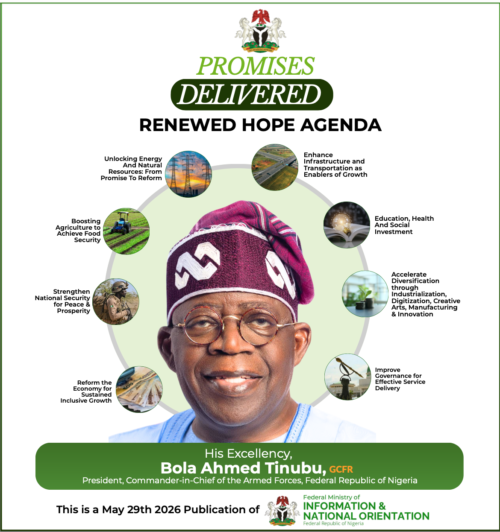


 Nigeria’s Federal Government has finally lifted the suspension it placed on the operations of a social medium, the Twitter, with effect from tomorrow, January 13.
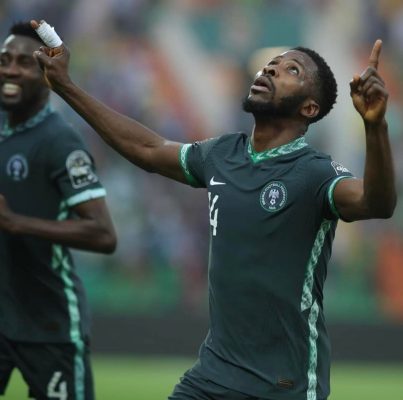 Nigeria’s Super Eagles have defeated the Pharaohs of Egypt 1-0.
 The Governor of Ebinyi State, Dave Umahi has met with President Muhammadu Buhari and informed him of his interest in contesting the Presidency of Nigeria in the next year, 2023 election.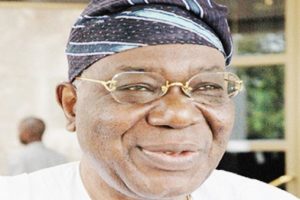


The Christianisation Of Nigeria By Buhari, By Fredrick Nwabufo
In the heat of the 2018 killings by criminals, I received a deluge of broadcast messages steeped in conspiracy theories of how the government was backing certain criminal groups in their festival of bloodletting. According to one of the well-noised fibs, the government was paving the way, through militias, for the occupation of Nigeria and for the domination of ethnic nationalities by the Fulani.
One notorious conspiracy theory claimed the killings were the surreptitious agenda of a powerful clique in government who were working at conquering territories and forcibly converting Nigerian locals to Islam. Another canard said the government was contriving how to take over lands of citizens and hand them over to the Fulani by stoking the crisis. Too many lies.
Doctored videos and photos rippled on social media purportedly showing the military dropping arms and supplies from helicopters to bandits. The criminals were alleged to be enjoying protection as ancillaries of the government.
Really, conspiracy theories in Nigeria come with the ethnic origin of the leadership of the day. The administration of former President Goodluck Jonathan, who is Ijaw and from the south-south, was accused of sponsoring Boko Haram to depopulate the north. Murtala Nyako, former governor of Adamawa state, at a meeting with Susan Rice, former US national security advisor; US officials and some northern leaders, at the White House on March 8, 2014, said Jonathan was eternalising the Boko Haram crisis to whittle down the voting power of the north ahead of the 2015 elections.
Azubuike Ihejirika, former chief of army staff, who was the first army chief of Igbo extraction since the civil war of 1967-1970, was also accused of sponsoring Boko Haram as a way to exact vengeance for the perils the Igbo suffered in the war. He was alleged to be deploying arms and ammunition to the insurgents. Nigeria has always been fertile with conspiracy theories.
Since 2017, the Buhari administration has been accused of angling to Islamise and Fulanise Nigeria. In fact, the allegation was so intense that some Nigerians wrote to foreign bodies asking them to sanction the country. In September 2017, the Christian Association of Nigeria (CAN) claimed the government’s issuance of N100 billion Sukuk bonds (an instrument of Islamic financing) was an attempt to pawn the country to Arab nations. According to the association, the government was accelerating the process of islamising the country.
Islamic financing is celebrated globally for its interest-free and equitable fundamentals, and has been advanced as a better financing alternative for developing countries. Ironically, the Sukuk funds over which CAN raised a hue and cry have been used to finance the construction of a road (Kolo-Otueke-Bayelsa Palm road) in former President Jonathan’s hometown. 44 other road projects have also been funded with Sukuk.
Instead of uniting against the bogey of kidnapping and banditry, Nigerians were divided – and some coloured the tragedies in ethnic complexions. Ethnic knights rose up, threatening the survival of the country. Nigeria was in chaos. Only the heavens know how the country escaped the plunge to certain doom.
And all of this for what? Politics? Because the president is of Fulani ethnic origin? I believe our predatory and pernicious politics was at the heart of the labelling and conspiracy theories. It is nearly seven years in the life of the Buhari administration and about a year to the next presidential election, but the conspiracy theories of Islamisation and Fulanisation appear to be vapourising. Perhaps because the government is inching towards the departure lounge and the ruses no longer serve any political purpose.
The Buhari administration is at its twilight, but Sunday is still a ‘’holy day’’ for Christians. The foundational Christian elements on which Nigeria is built are still the same – and Islamisation has not happened. There is no Fulanisation or Islamisation of the civil service, the military or anywhere. It has been all propaganda.
As I have always said, Nigeria is a Christianised country. This is largely due to British colonialism. Islam had made an in-road into northern Nigeria by the 11th century – before Uthman Dan Fodio’s Jihad of 1804, which was the climactic denouement. Borno was among the first disciples of Islam in the 11th century. There was a literate population, a well defined system of government and codified laws. But the British yanked off a prodigious part of this heritage, imposing its own systems which were fore-grounded in Christian values and practices.
We have become so used to our Christian ways that any blip of the obverse sends us, top gear, into panic and revulsion.
President Buhari has left the orthodoxies the way he met them – and by dint of that, I think he has contributed in the Christianisation of Nigeria.