Home Blog Page 580

We Produce Enough Rice But Middlemen Sabotage Us By Importing, Farmers Complain

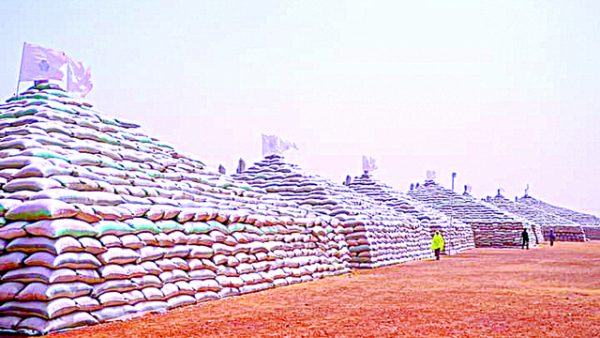
Rice Farmers have said that they are producing enough rice for Nigerians, especially during the end of the year festivities, but that Middlemen are sabotaging them by continuing to import foreign rice.

Deputy National President of the Rice Farmers’ Association of Nigeria (RIFAN), Segun Atho, in an interview with the News Agency of Nigeria (NAN), in Lagos, lamented the continuous smuggling of foreign rice into the country.

Segun Atho also blamed the marketers of foreign rice for allegedly sabotaging the growth of the sector.

“We can affirm that we have locally processed rice available all over Nigeria for the Yuletide.  We have more than enough to meet any demand; we have enough to go round.

“As it is, we are still looking for more distributors for our locally processed rice, because Nigerians still have a hang for foreign rice.

“Our local marketers are also not helping the situation because they are not ready to off take locally grown rice.

“The marketers should stop hoarding or boycotting local rice for their own benefits. If you sell Nigerian rice, you can still make good returns on your investments.”

Segun Atho said that smugglers of foreign rice are having a field day because of the growing demands for their products at the detriment of local rice.

According to him, security agencies and governments are making efforts to change the trend but some unscrupulous persons are bound at sabotaging their efforts.

“Let the marketers go to the north and off take this rice to the south. Our local rice has flooded markets in Niger, Kano, Kaduna, Jigawa, Kebbi, but the opposite is the case in the south.

“In Lagos, that should be the centre of excellence in the promotion of Nigerian goods, we still crave for imported rice.

“The security agencies at the land borders have their hands full chasing smugglers of foreign rice. We cannot develop like this.

“The President is making great efforts in this sector; we just have people who want to sabotage his efforts.

“The marketers should be asked why the price of local rice is almost at par with foreign rice.”

Segun Atho also questioned why some Nigerians are refusing locally processed rice, adding: “let’s eat what we grow and grow what we eat and Nigeria will move forward.”

Ebira People From Kogi Launch Ebira-English Dictionary Tomorrow In Abuja

Ebira speaking people from Kogi State Central Senatorial District will launch a standard Ebira-English Dictionary in Abuja, the nation’s Federal Capital Territory (FCT), tomorrow, December 11.
Speaking to newsmen about the launching, chairman of the organising committee, Engineer Shuaibu A . Salami said that the launching would be chaired by Professor Adam Ahmed Abere of the Nigerian Defense Academy (NDA) and supported by a Board member of the NNPC, Mrs. Lami Onayi Ahmed.

According to Engineer Salami, the governor of Kogi State, Alhaji Yahaya Adoza Bello will be at the launch along with Ebira people in his cabinet.
Other prominent Ebira people expected at the launch are the Central traditional ruler of Ebira people in FCT, Dr. Abdulkarim Ibrahim, Hon. Abdulhameed Momoh, Senator Oseni Yakubu, former Director in the CBN, Chief J O. Omuya; Deputy Inspector General (DIG) of Police, Raimi Yusuf, former Editor-In-Chief of Blueprints newspaper, Hajiya Zainab Suleiman, Dr. Abdullahi Anate, Abu Imam, Ambassador Lawal, Ogirima Raji, Hon. Asuku Bello as well as Barrister Yusuf Amuda and Barrister Momohsani Shuaibu.
The launching committee chairman said that the Standard Ebira-English Dictionary has been comprehensively packaged in such a way that it will enhance the learning; reading and writing of Ebira language by especially, the new generation of Ebira people, particularly those that were born and brought up outside home.
Engineer Salami said that the book will be reviewed by an expert in the language, Itopa John Sadik, even as the Talba of Ebira, Alhaji Hamza Usman and Onyize of Ebira land, Minister of State in the FCT ministry, Dr. Ramatu Tijjani Aliyu, Abdulmumuni Isa of the CBN and Alhaji Sanusi Abubakar Gamji, as well as other prominent people, even from outside Ebira confinement, will play outstanding roles at the occasion, scheduled to hold from 11am at the Unique World Garden, near Grand Ibro Hotel, Wuse zone 5.

About 1 Million COVID19 Vaccines Expire In Store

About one million COVID-19 vaccines are estimated to have expired in Nigeria last month without being used.

According to sources, it is one of the biggest single losses of doses that show the difficulty of African nations in getting shots.

Governments on the continent of over one billion Africans have been pushing for more vaccine deliveries as inoculation rates reach richer regions, increasing the risk of new variants such as the Omicron coronavirus now spreading across South Africa.

In Nigeria, Africa’s most populous nation and home to more than 200 million people, fewer than 4% of adults have been fully vaccinated, according to the World Health Organization.

The expired doses were made by AstraZeneca and delivered from Europe, the sources with direct knowledge of vaccine delivery and use told Reuters.

They were supplied via COVAX, the dose-sharing facility led by the GAVI vaccine alliance and the WHO which is increasingly reliant on donations.

A source with knowledge of the delivery said some of the doses arrived within four-to-six weeks of expiry and could not be used in time, despite efforts by health authorities.

A count of the expired doses is still underway and an official number is yet to be finalised, the sources said.

“Nigeria is doing everything it can. But it’s struggling with short shelf life vaccines. Now (supply is) unpredictable and they’re sending too much,” a source told Reuters.

A spokesperson for the National Primary Health Care Development Agency – the body responsible for vaccinations in Nigeria – said the number of vaccines received and used is still being tallied and it would share its findings in the coming days.

The WHO said doses had expired, but declined to give a figure. It said 800,000 additional doses that had been at risk of expiry in October were all used in time.

“Vaccine wastage is to be expected in any immunization programme, and in the context of COVID-19 deployment is a global phenomenon,” the WHO said in a statement responding to Reuters’ questions. It said vaccines delivered with “very short” shelf lives were a problem.

Nigeria’s vaccine loss appears to be one of the largest of its kind over such a short time period, even outstripping the total number of vaccines that some other countries in the region have received.

The Executive Director of the NPHCDA, Faisal Shuaib is yet to released an official statement.

But he once told journalists at a press briefing in Abuja that some doses of Astrazeneca vaccine donated by the UK government would expire in September and October.

Faisal had also assured that the government would make use of the vaccines before the expiration.

Fed Government Shuts Down Shop Allegedly Selling Fake Fertilizer

The Federal Ministry of Agriculture and Rural Development (FMARD) has sealed off a fertiliser shop in Mubi South Local Government Area of Adamawa State for alleged sale of substandard products.

Assistant Director, Farm Inputs Support Services of the (FMARD), said that the product was taken for laboratory test and was confirmed substandard.

He said laboratory analysis showed the nutrient content of the substandard product was N.P.K 7-0-6 as against the N.P.K 20-10-10 written on the bags.

He added that the product would negatively affect farmers’ productivity.

“This particular shop is found to be selling substandard fertiliser.

“By regulation, the FMARD is mandated to seal any shop or production facility found to be engaged in either production or sale of substandard fertiliser.

“Therefore, the shop shall remain sealed until conclusion of additional investigation,’’ Adamu said.

“Farmers are being cheated because they will not get the value for their money. The product will affect the yield of their efforts negatively.

“So, as an authority, we are carrying out this assignment in order to safeguard the interest of our farmers,’’ Adamu stressed.

He warned those involved in the production of the substandard product to desist, adding that anyone caught would face the full wrath of the law.

Adamu advised farmers to always buy quality fertiliser for good results, and report any dealer who engaged in the sale of substandard products to the appropriate authority.

Source: NAN

We Can’t Take Roles Of Women For Granted, FCT Minister Tells Group

Muhammad Musa Bello | Photo by Sun News

Minister of the Federal Capital Territory (FCT), Malam Muhammad Musa Bello has given assurance that the Muhammadu Buhari’s Federal Government will never take the important roles women are playing for granted.

Speaking today, December 8, when he received members of the National Council of Women’s Societies (NCWS) in audience, the Minister commended the Councl over its efforts at ensuring inclusivity of women in governance.

“I commend you for the promotion of inclusivity of women in the country, you have done tremendous work and have been very supportive of our activities, particularly during COVID-19.

“We know the role of women in Nigeria and we know the role of women in bringing about this particular government and we know the positive views of our leader, President Muhammadu Buhari in respect to gender issues.

“And in the FCT, we have always keyed into these views and ideals and that is why we have a specific Departments and Units dedicated to handling these issues.” The Minister added

Commenting on requests made by the NCWS President for more support to the Council, Malam Bello affirmed that it was incumbent on everybody to support the NCWS because of its complementary activities and programmes.

“Quite frankly, your requirements are things that everyone will want to support because it is our duty to support you because you are complementing what we are doing.”

The Minister asked the NCWS President to work closely with FCTA’s Social Development Secretariat in order to build an institutional relationship.

The NCWS national President, Dr. Shoda had requested the Minister to assist the group in its activities to help improve the livelihood of women across FCT.


Benin Republic Lures Nigerian With 30,000 Hectares Of Land To Produce Rice

Government of the Republic of Benin has lured a Nigerian company, Labana Rice Mills with 30,000 hectares of land to cultivate rice in that country.

Alhaji Abdullahi Idris-Zuru, the General Manager of the company, who made this known in a statement today, December 8 in Birnin Kebbi, said that the company would in 2022, finance farmers in the country through the Benin Republic Government, to produce 20,000 metric tonnes of paddy rice during the dry season.

“A total of 30,000 hectares of farmland are being made available in Benin Republic to Labana Rice Mills for cultivation of rice.

“These resolutions were made during a joint meeting of Beninous Government officials with Labana Rice Mills delegation at Cotonou, the country’s capital, last weekend.

“The meeting with the Labana delegation led by the Chairman, Abubakar Abbah-Adamu, was chaired by the Benin Minister of Agriculture, Gaston Dossouhoui.”

He said that the Beninouis government granted the farmland after an assessment of the company’s rice mills and and farms in Kebbi, Nigeria.

“The report has convinced the government of Labana Rice Mills’ capacity to be a reliable partner in agriculture,” the general manager added.

He said that the chairman of the company, Abbah-Adamu, expressed gratitude for the trust and confidence the Benin government had in Labana rice mills and the government and people of Nigeria.

Source: NAN.

Full Vaccination Can’t Guarantee Your Safety From COVID19, Medical Association’s Warns

The President, Nigerian Medical Association (NMA), Prof. Innocent Ujah, has warned the public to be cautious because being fully vaccinated does not guarantee total safety from COVID-19 infection.

Dr. Ujah, in a speech at the 11th Annual Symposium of the Health Writers Association Of Nigeria (HEWAN) today, December 8 in Lagos said that preventive measures should still be adhered to.

He said that research is ongoing to ascertain the degree of protection vaccines provide against the virus and transmission.

The symposium was themed: “Building Confidence In COVID-19 Vaccines”, and sub themed: “Addressing COVID-19 Hesitancy In Nigeria: The Role Of The Media.”

According to the NMA boss, there is an urgent need to inoculate more Nigerians against the virus toward achieving herd immunity quickly.

The NMA president noted that the available vaccines in the country are more than the population that had been vaccinated, stressing the need to overcome vaccine hesitancy.

Dr. Ujah said that vaccine hesitancy was fueled by mistrust, complacency, fear and misinformation, saying that the media have a role to play in educating the public on the importance of vaccine.

He commended HEWAN for its efforts in disseminating health promotion messages and dispelling rumours and misinformation about the various vaccines.

Dr. Ujah appealed to world leaders to ensure equitable access to the vaccine, especially for the most vulnerable people.

According to him, Africa must stop its dependence on other countries for vaccine, noting that the continent must develop vaccine production capacity.

Ujah was represented by Dr Saliu Oseni, Deputy Secretary, Nigerian Medical Association.

Also, Professor Oyewale Tomori, Professor of Virology, called for collaboration between the government and private sector to actualise the vaccine production in the country.

Tomori, in his speech titled: “Vaccine Production In Nigeria: The Role Of The Government”, said that there is a need for government to remove bureaucracies that hinders synergies in vaccine development.

The virologist appealed that the government should make the facts available to people to enable them decide, bridge mistrust and invest.

Tomori advised the public to maintain all preventive measures and avoid exposure to the virus, adding that these would assist to curtail spread of the virus.

The professor said that people ascribe the vaccine to what it was not supposed to do.

He said the role of the vaccine was to protect a person from getting infected by the virus, and not to stop exposure, noting that the vaccine was internal while exposure was external.

Tomori noted immunity takes at least 10 days before it develops, adding that it was a body reaction.

Commenting, Mrs Chioma Obinna, President of HEWAN, said that the theme was chosen following continued conspiracy theories around the COVID-19 vaccines and the disease as a whole.

Obinna said that many Nigerians continued to reject the COVID-19 vaccine out of ignorance or based on unconfirmed stories and information they get from social media, friends and family members.

“As responsible health journalists, these and more informed our choice of the topics for this year’s symposium,” she said. (NAN) (nannews.ng)

Agric Minister Meets 36 States’ Commissioners On National livestock Transformation Plan

The Minister of Agriculture and Rural Development, Dr. Mohammad Abubakar, has held a virtual meeting with Commissioners of Agriculture across the 36 states of the federation to address the issues around the implementation of the National livestock transformation Plan (NLTP).
The meeting of yesterday, December 7, was also attended by representatives of the Federal Capital Territory and other stakeholders and also discussed the State Level Project Socialisation on Livestock Productivity and Resilience Support Project (L-PRES).
The minister, who, according to a statement today, December 8 by Juliet Okeh, an Information Officer, in the ministry of Agriculture and Rural Development, was represented by Mrs. Winnie Lai-Solarin, the Director, Animal Husbandry Services Department in the Ministry, said that the L-PRES program, is a project to support the actualization of the NLTP.
”The L-PRES programme is a project is targeted at addressing the age-long low investment profile in the sub-sector to improve livestock productivity, resilience, and commercialization of selected value chains, as well as strengthen the country’s capacity to respond to crisis or emergency.”
He said that the L-PRES project would facilitate the achievement of food security, reduce incessant conflict between farmers and herdsmen and cushion the effect of a COVID-19 Pandemic on the livestock industry in alignment with Government strategies and policies.
“It is glaring with the current priorities in the World’s food supply systems, that the next issues of focus will be animal protein supply chains and its nexus with global welfare and security.
”Nations’ ability to provide good quality and affordable animal proteins has not only been linked with their pecuniary status, it has been confirmed to have direct relationship with human capital development and intellectual quotient.
“Although Nigeria Livestock subsector provides about 36.5 per cent of the total protein intake of Nigerians.
“It also contributes about 8-10 per cent of the Agricultural Gross Domestic Product (GDP) and 5 per cent of the National Gross Domestic Product and has been a key contributor to poverty reduction, especially in rural areas.
“We are yet to take full advantage of the regional markets under our influence and have in recent times spent huge amounts of forex on importation of products that can be produced effortlessly in the country.
”Importation of dairy products where we spend about US $1.3 Billion annually according to the CBN (2019) is a prominent example of the above narrative.
”The successful implementation of the National Livestock Transformation Plan will close importation gaps and address other challenges to livestock development in Nigeria.”
This was even as the Country Director of the World Bank, Dr. Shubham Chadhri, said that the programme is designed to realise the full potential in the livestock sector in Nigeria and urged state governments to key into it.
Chadhri said that implementing the programme across the nation would go a long way in the reduction of poverty, providing job opportunities, and grow the nation’s GDP.
He reaffirmed the World Bank’s commitment to partner with the Federal and State Governments for the realization of the L-PRES project in Nigeria.
Chadhri commended President Muhammadu Buhari for promoting the implementation of the National Livestock Transformation Plan (NLTP) as national priority and encouraged the state governments to embrace the program.
In her presentation on the update on L-PRES Project Preparatio, Lai- Solarin, said that the State Commissioners and participants that the Federal government and the World Bank are ready to have the project take-off in 2022.
She appealed to the state governments to facilitate the project implementation by increasing their budgetary allocation for livestock development, giving adequate state counterpart financing and providing office spaces, vehicles, and other basic facilities.
She said that these would demonstrate their commitment and readiness to implement the project in their states.
The director, who said that so far, states and the FCT have expressed interest in the project, appealed to others to take advantage and identify with the project.

Agric Body Moves To Establish Markets For Vegetables To Stem Post-Harvest Losses

Photo Credit:
Food and Agriculture Organization of the United Nation

National Agricultural Lands Development Authority (NALDA), has embarked on plan to establish markets for vegetables across the country to prevent post-harvest losses.

The Executive Secretary of the body, Prince Paul Ikonne, in a statement today, December 7 in Abuja, said that the markets are necessary because of the perishable nature of vegetables, adding that such markets would be furnished with state of the art facility for farmers to store their vegetables

“Having provided us with the enabling environment, NALDA will provide farmers with ‘NALDA’s Market’ for vegetable and with a land. That project will be completed before the end of February 2022.

“NALDA will also site the first Integrated Farm Estate in Gombe State. We enjoin you to also make yourself available as we lay the foundation by the end of this month.

“We want to thank Gov. Muhammad Yahaya of Gombe for the commitment towards achieving President Muhammadu Buhari’s vision of ensuring food security, engaging youths and reducing unemployment.”

The executive secretary appreciated relevant stakeholders for their partnership and called on other states to collaborate with the Federal Government for the benefit of the people and the entire country.

“Your excellency,  I urge you to continue to create the enabling environment for federal projects and support for NALDA cannot go unnoticed.

”We position ourselves to support the President’s vision of lifting millions of people out of poverty and engage them in the entire agriculture production value chain.

“And NALDA will engage more youths among farmers if you provide more land as an agric-friendly governor,” he said.

Yahaya commended NALDA for the project and promised to support all the agency’s ongoing projects as they would benefit Gombe people and boost agriculture.

Source: NAN.

CBN Floats Quick N5 Billion Loan Under Its Production, Productivity Initiative

Central Bank of Nigeria (CBN) has floated a N5 Billion loan to any investor that will key into its “Production and Productivity” initiative, through the project known as “100 projects for EVERY 100 days.”

Releasing the guidelines on the initiative on its website today, December 7, the apex bank said that the initiative has been designed to support the Federal Government’s push to boost productivity and economic diversification.

It explained that N5 Billion is the minimum and that any amount over N5 billion would require special approval from his administration.

According to the apex bank, the credit line is a long-term loan for the acquisition of plant and machinery, as well as working capital.

“The initiative will create the flow of financing and investments to companies with the potential to promote a trajectory of sustainable economic growth, accelerate structural transformation, promote diversification and improve productivity.

It is a support to private sector companies with the objective of reducing certain imports, increasing non-oil exports and improving the economy’s ability to generate foreign exchange.”

According to the CBN, the overall objective of the initiative is to reverse the nation’s excessive dependence on imports by creating an ecosystem that targets and supports projects with the potential to transform and catalyze the productive base of the economy.

“Specific objectives include: catalyzing import substitution for specific commodities; increase local production and productivity; increase non-oil exports; and improve the economy’s ability to generate foreign exchange.”

It said that under the initiative, comprehensive and regular monitoring of specific benchmarks and key performance indicators (KPIs) would be carried out on a regular basis.

“The KPIs will include the increased production of the financed companies; percentage increase in capacity utilization and percentage increase in the volume and value of exports. It will also include a decrease in the volume of imports and the value of industrial raw materials and an increase in the number of jobs created,” said the main bank.

It further said that the focal activities will be businesses and existing projects (brownfield) with the potential to transform and reactivate the productive base of the economy.

These include manufacturing, agriculture, and agricultural processing; extractive, petrochemical and renewable energy industries; medical and pharmaceutical care, logistics services and trade-related infrastructure; and any other activity that is prescribed.”

Advertisement ADVERTORIAL
WP2Social Auto Publish Powered By : XYZScripts.com