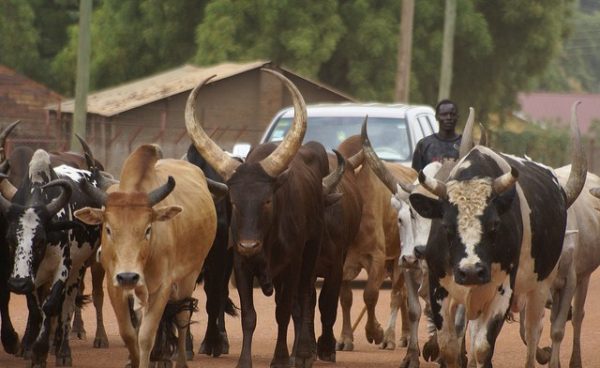
Governor Babagana Zulum of Borno has embarked on total irrigation farming in the state, targeting 10,000 irrigation farmers in 2022.
Governor Zulum, who addressed some of the 1,750 farmers who benefited from the 2021 dry season farming inputs yesterday in Shani, Bayo and Hawul Local Government Area of the state, said: “we want to do more than what we are doing now by identifying more potential sites for irrigation.
“We are targeting 10,000 irrigation farmers for next year.”
This was even as the chairman of the Borno Mega Farm Committee, Alhaji Inuwa Kubo, said that beneficiaries for the 2021 farming season were provided fertilizer, water pumps and agro-chemicals, as well as maize and rice seeds.
Kubo said that very soon, the committee would commence registration of wheat farmers for government support.
He advised farmers in the state to exploit the big opportunity provided by irrigation farming.
The National Cotton Association of Nigeria (NACOTAN) has appealed to the Federal Government to establish a National Cotton, Textile and Garment Development Council.
It said that the Council would strengthen coordination, boost production and the marketing of cotton as well as enhance the development of the sector generally.
National Secretary of the association, Alhaji Hassan Buhari, who spoke today, November 27, at the Cotton Master Sampling and Production meeting in Zaria, Kaduna State said: “the Council, when established, shall provide the necessary support to cotton industry development through appropriate services in production, research, extension and training, financial assistance and other support services.
“It shall also prescribe and strictly enforce regulations and quality control needed to safeguard cotton growers.”
Hassan Buhari said that the Council would also serve as the country’s cotton development authority and would be committed to innovate and make cotton production competitive to increase farmers’ income, and generate foreign exchange revenue.
The national secretary expressed the association’s appreciation to President Muhammad Buhari for including cotton in government’s Anchor Borrowers Programme.
He said that the Anchor Borrowers Scheme had provided completed linkages between farmers and ginneries and between ginneries and the textile factories.
He also appealed to the Federal Government to sustain the scheme to boost production.
Earlier, the Deputy Director, Institute for Agricultural Research (IAR), Professor Ado Yusuf, said that the meeting was convened to set the standard for uniform seed cotton grading to meet international market requirements.
The meeting also reviewed production, quality and marketing issues, related challenges and possible solutions.
Professor Yusuf noted that the cotton industry had witnessed successive government interventions, and that the desired transformation to place Nigeria among the comity of cotton producing nations is yet to be achieved.
This was even as the Deputy Director, Produce, Kebbi State Ministry of Agriculture, Alhaji Mohammed Tilli, called on the government to replicate efforts put on rice and maize in cotton.
This, he said, would help to scale up cotton production.
Experts on Organic agriculture practice have advocated the harmonisation of its standards by the 15 ECOWAS member countries.
They stressed that such harmonisation will enhance quality trade in certified produce and products in the region.
They gave the assurance at the close of the 6th West African conference on organic agriculture with the theme: “Feeding the world without poisoning’’ held at Ouagadougou.
The conference had participants from across the world who rubbed minds on how to ensure healthy, sustainable agriculture practices.
The experts assured participants that the harmonisation of standards is for the good of the health of the people of the member states and their environments.
Head of Agriculture, ECOWAS Commission, Abuja,
Ernest Aubee said that the standards documents would be submitted to ECOWAS headquarters for ratification and approval.
Aubee is also Chairman of Ecological Organic Agriculture (EOA) Regional Steering Committee.
“In West Africa, we have different standards in different countries, while some countries do not have any at all; so this harmonisation will protect the interests of the two groups.”
Aubee added that organic agriculture is developing speedily at the global level, but that the pace is still slow in West Africa compared to East Africa, Europe and Australia.
“This harmonisation will accelerate organic agriculture development, regional growth of food and security integration.
“We want to achieve food security and safety so that our people do not only have enough to eat, but eat quality and nutritious food.
“I encourage stakeholders to appreciate and key into these harmonised standards when approved, in the interest of the region.”
In his contribution, Project Manager, International Federation of Organic Agriculture Movement (IFOAM), Rene Emmenegger, stressed the importance of organic agriculture standards, saying that the standardisation would improve development of organic agriculture in West Africa and also encourage export business.
He added that IFOAM offers a platform for organic standards setters to discuss standards and create synergies for standard development and harmonisation to also ease trade.
“Agriculture and certified organic farming without viable trade is not sustainable.
“It will bring diversity of produce, simplicity of the process, empowerment of farmers, and easy access to standardised produce and products in the region.
“It will also promote and increase supply of organic produce and products and stimulate the growth of the organic sector of the region.”
In another contribution, Dr Olugbenga AdeOluwa, Secretary, West Africa Ecological Organic Agriculture (EOA) cluster, noted that political and financial support is needed for proper formulation and implementation of the standards.
AdeOluwa suggested an enactment of stand-alone EOA policies, strategies and frameworks that supports regional standards.
“These policies should give clear guidelines and full support to the production of organic inputs and products.
“The policies should have proper institutionalisation and inclusivity of all stakeholders and public-private partnerships.
“It must include a bottom-up approach in the policy implementation which offers farmers good opportunities to contribute to the process and ensure its success.”
National Conference on the Revival of Ajaokuta Steel Company Limited has appealed to President Muhammadu Buhari to hasten work on the revival of the project before he leaves office next year.
A communiqué issued at the end of its meeting on November 25 in Abuja, the Conference also wants the proposed Steel University to be sited in Ajaokuta, Kogi State.
The event was organized by NGO Network in collaboration with Institute for Governance and Leadership Studies in Africa and CSO Coalition for the Revival of Ajaokuta Steel Company.
The conference complained that the delay in the revival of the steel industry spanning over 30 years, has caused untold hardship to workers, retirees, youths and women across borders that have skills, and trained but not utilized, thereby increasing redundancy, capacity gaps and unemployment in large scale, crimes and drug abuse among teenagers.
It said that the delay in the completion of the Ajaokuta Steel Company had been due to lack of Political will “until President Muammadu Buhari came to power in 2015.
“Infrastructural development has been undermined along the mining and steel areas which include roads, electricity, water supplies and has set the nation steadily backward over a long period of time.”
The Conference observed that there has been a disconnect between the local people, state and federal government on the value addition of local community which informed the crises recorded in the past that resulted into destruction of properties and stolen of assets at the feeder Agency.
It also observed that the biggest challenge hindering the quick revival and administration of the Ajaokuta Steel Company Limited is funding, even as the 2022 Budget Proposal undermines the efforts towards making Nigeria an industrialized nation.
The Conference recommended the following as key issues to take forward to the National Conference:
Commended President Muhammed Buhari’s commitment to the revival of the steel industry as exhibited in his visit to Russia, setting up the Ajaokuta Presidential Project Implementation Team (APPIT) and a recommendation to negotiate with the foreign partners on the legal tussles caused by the termination of the contract, but appealed that he should go a step forward by ensuring adequate and regular order to the supervising Ministry to ensure the foreign partners commences the Audit of Ajaokuta Steel Company Limited (ASCL) and National Iron Ore Mining Company (NIOMCO).
That government should as a matter of urgency and necessity, consider the inclusion of a representative of civil society organization in the Ajaokuta Presidential Project Implementation Team (APPIT) to promote inclusiveness and ownership by the people.
That to reduce unemployment among the youths and the citizenry, the government should as a matter of urgency, ensure the commencement of audit of Ajaokta Steel Company and feeder company, National Iron Ore Mining Company.
That government should initiate the recall of retired staff that have the skill, technical knowhow and experience to help in training, which will help to reduce the cost of foreign experts to train workers.
Called on the Federal Government to declare a state of emergency on the federal roads connecting Lokoja, Ajaokuta, Itakpe, Okene and environs for enhanced social economic activities while noting that the revival of the steel plant will assist greatly in revamping the power generation to the companies and adjourning states and FCT.
That a Host Community Relations Initiative that will identify certain statutory benefits to the people of the areas as compensation should be put in place by the Federal Government with adequate funding and monitoring.
That it supports the ongoing proposal to the National Assembly for the establishment of a Steel University in Nigeria, which should be in Kogi State, specifically for the purpose of training of youths and by extension reduce capital flight among trained experts currently working in other countries where their steel industries are working.
That the current statutory allocation of meager One Hundred and Fifty Million Naira (₦150,000,000.00) as yearly overheads should be increased in three folds or more, above under mining and steel companies, to enable it function effectively, while it is strongly advised that government should collaborate with the organized private and non-profit sectors of Nigeria to seek alternative funding sources for the mines and steel industries.
Those who signed the communiqué are Otumba Dele Ajayi-Smith, chairman,
Dr. Idris Jimoh (Joly) of the African Citizen Development Foundation, Lagos State Level Stakeholders; Hajia Medina Nadabo Dauda of the Next Generation Youth Initiative Int’l., Makurdi.
In a very strategic move, Special Forces deployed to tackle the incessant kidnapping of travellers along Kaduna-Abuja highways have succeeded in killing dozens of bandits suspected to be behind recent kidnapping.
Video footage obtained by PRNigeria show the corpses of more than a dozen kidnappers that were killed this week.
Some of the corpses were recognised as residents within some of the communities.
A security source confirmed that there was a massive deployment of troops comprising military, police and intelligence operatives in selected communities along the highways.
“Before the Presidential directive, some deployments were effected. The directive has now influenced more deployment and provision of equipment and intelligence gathering tools to fight the bandits.
“We have so far killed more than a dozen armed bandits who attempted to escape on motorcycles after sighting the movements of the troops.
“Most of them are behind recent abductions on the highways as some people identified the corpses as known faces within the communities,” a top Military source said on the condition of anonymity.
President Muhammadu Buhari had, yesterday, November 25, gave marching orders to the security chiefs to go after insurgents, bandits and terrorists, at the meeting of the National Security Council (NSC).
The President emphasised that they must not rest until all Nigerians sleep with their eyes closed, asking them to pay special attention and surveillance on the Abuja-Kaduna Road.
Meanwhile, the Kaduna State Government has announced the restoration of telecommunications services that were earlier suspended in some parts of the state.
The government had, on September 30, shut down the networks as part of efforts geared towards checking the activities of bandits.
Kaduna had joined fellow Northwest states like Zamfara and Sokoto, who had earlier taken the same measure to curb banditry and rising insecurity.
The state’s Commissioner for Internal Security and Home Affairs, Samuel Aruwan, announced the restoration of the network services while addressing journalists on Friday.
Aruwan said the state government has contacted the relevant federal agencies to effect the immediate restoration of telecommunication services which were suspended in some local government areas.
He said that the other measures announced as part of the security containment orders remain in force.
These include the prohibition of motorcycles all over the state, the ban on weekly markets, transportation of cattle, and the prohibition of sale of fuel in jerrycans in specified local government areas.
President Muhammadu Buhari has reluctantly sent a birthday greeting to the former Vice President of Nigeria, Atiku Abubakar as he clocked 75 today, November 26.
In a two-paragraph message, President Buhari said: “Happy birthday and best wishes to Waziri Atiku Abubakar. I wish you good health and long life.”
In the same statement, the President also congratulated the former Military Governor of Kano State, retired Colonel Sani Bello, who will be 79 tomorrow, November 27.
Buhari recalled that Sani Bello is among those leaders who left the military with the foresight and intellect to establish themselves in business.
Nigerian Farmers’ Cooperative Societies (NANFACOS) has expressed concern over the practice whereby real farmers are often sidelined on the issue of agricultural funding and other related matters in Nigeria.
“It is a known fact that agricultural funding and materials from government most times do not get to the targeted farmers; it is been taken by portfolio farmers.”
Speaking to newsmen today, November 26 in Abuja, the President of the group, Nwogwugwu Uzoma
Uzoma, appealed to the Federal Government to support the group to gain access to credit facilities, land and vehicles.
He said that these would assist the government in stimulating the gains of agriculture in the country.
Uzoma asked the government to persuade the state governments to make at least 1,000 hectares of land available for agricultural activities in every state of the Federation.
The president said that NANFACOS would create a difference between cooperative farmers and ordinary farmers in Nigeria, as well as have good book-keeping programme to assist the farmers in business.
According to him, the cooperative is made up of 127, 000 registered farmers with a conglomerate of over 68 million individuals and practising cooperative farmers across the country.
Uzoma said that the cooperative has been able to visit funding agencies like ministries, parastatals, banks, and non-governmental organisations to negotiate for the funding of agribusiness.
”Those visited include Federal Ministry of Agriculture and Rural Development, Federal Ministries of Special Duties and Intergovernmental Affairs, and Central Bank of Nigeria.
“Others are Small and Medium Enterprises Development Agency of Nigeria, Nigeria Incentive-Based, Risk Sharing System for Agricultural Lending , and Bank of Agriculture.”
NANFACOS was given official recognition via its registration by the Federal Department of Cooperatives at the Federal Ministry of Agriculture and Rural Development in 2019, in accordance with the Nigeria Cooperative Societies Act.
The Benue State Governor, Samuel Ortom has accused the former Governor of the State, now Senator George Akume of misappropriating over N4.5 Billion when he was Governor.
The alleged financial fraud ranged from misappropriation of public funds, approvals above limit, abuse of office and public trust to sale of 33,440,818 units of shares at the Benue Investment and Property Company (BIPC).
In a petition to the antigraft agencies, Governor Ortom wanted Akume, who is now the Minister of Special Duties and Intergovernmental, to be investigated for financial impropriety amounting to N4,556,899,632.9.
The petitioner alleged that the shares, which were valued at billions of naira, were sold without recourse to due process.
A letter of complaint to the Economic and Financial Crimes Commission (EFCC); Independent Corrupt Practices Commission (ICPC) and the Inspector General of Police, was written and signed by counsel to the Benue State Government, Okeoga Darlington, Esq and made available to newsmen by the Attorney General and Commissioner for Justice, Barrister Michael Gusa.
The letter of complaint which was generated from an audit report, spanning 1999 – 2007 when Senator George Akume served as Governor, said he unilaterally approved the sum of N117 million which was above his approval limit without recourse to the State Executive Council meeting.
According to the letter, the reckless financial expenditures were for consultancy and feasibility study for Mbatiav Cement which turned out to be a white elephant.
The project, the petitioner claimed, never saw the light of the day.
The petitioner also alleged financial indiscipline, abuse of fiscal policies and misappropriation for various contracts amounting to N3,125,882,409.25 billion.
The former Governor was also accused of misappropriation of ecological funds amounting to N300,002,000 million, which was spent on projects different from ecological projects.
During the audit report, it was also discovered that on the watch of the former Governor, a loan of N150 million was taken from defunct Afri-Bank in December 2000 for purchase of shares in companies but the money was transferred to All Securities Limited for which no receipts were found for the transaction.
It was also discovered during the audit that the former Governor Akume claimed to have executed ‘many projects’ that were never located which the petition deemed to be an aberration of due process, abuse of fiscal policies and criminal violation of relevant laws.
“Regrettably, many of such projects, valued at N1,074,017,023.65 billion were not accounted for as there was no evidence of their execution anywhere.”
A visiting Professor at the National Universities Commission (NUC), Professor Hafiz Abubakar, has called for the adoption of what he described as agricultural-based economic diversification as a way of containing the insecurity in the country.
Professor Hafiz, who is also the former Deputy Governor of Kano State, insisted that the state of insecurity in the country can be managed with the aid of agriculture-based economic diversification.
Speaking today, November 26, at the 10th convocation lecture of Michael Okpara of Agriculture, Umudike (MOUAU), in Abia State, the Professor said that the development of the economic diversification plan requires clear guidelines and responsibilities of all stakeholders.
Professor Hafiz said that a strong political will is also required to develop and implement policies and strategies for the country’s economic diversification.
“To accommodate a growing number of young people entering the labour market, Nigeria will need to create at least five million new jobs each year over the next decade.
“Based on the experience of other countries, embracing more open trade and competition policies would help diversify the economy and reinvigorate growth, particularly as the African Continental Free Trade Area takes effect.”
According to Professor Hafiz, who is also the former Deputy Vice-Chancellor of Bayero University Kano, for Nigeria to move closer to unlocking its full agriculture potential, the value chain has to be identified, mapped, prioritised and digitised.
He advised MOUAU to lead research in the identification, mapping and deepening agricultural value chain and to explore the triple helix model (Academia-Industry-Government) partnership to build a model agricultural food value chain for self-sufficiency and national orientation.
This was even as chairman of the lecture, Senator Chris Adighije, described the topic of the lecture as apt because the role of security in nation-building could not be over-emphasised.
Adighije, who is the Pro-Chancellor and Chairman of Governing Council, Federal University, Lokoja, also described security as a pre-condition for everything and social development.
Earlier in his opening remarks, the Vice-Chancellor of MOUAU, Professor Maduebibisi Iwe, said the lecture was timely as the country was in dire need of economic advancement.
Professor Iwe, who was represented by his deputy (Academics), Prof. Udo Herbert, described the lecturer as a renowned academic, with vast knowledge in the agricultural sector.
We use cookies on our website to give you the most relevant experience by remembering your preferences and repeat visits. By clicking “Accept”, you consent to the use of ALL the cookies.
This website uses cookies to improve your experience while you navigate through the website. Out of these, the cookies that are categorized as necessary are stored on your browser as they are essential for the working of basic functionalities of the website. We also use third-party cookies that help us analyze and understand how you use this website. These cookies will be stored in your browser only with your consent. You also have the option to opt-out of these cookies. But opting out of some of these cookies may affect your browsing experience.
Necessary cookies are absolutely essential for the website to function properly. This category only includes cookies that ensures basic functionalities and security features of the website. These cookies do not store any personal information.
Any cookies that may not be particularly necessary for the website to function and is used specifically to collect user personal data via analytics, ads, other embedded contents are termed as non-necessary cookies. It is mandatory to procure user consent prior to running these cookies on your website.