This investigation examines the impact of Covid-19 on the Shea butter industry in Kaiama, a community in Kwara state. Shea butter is synonymous with health and well-being and many in Kaiama and outlying villages, believe it grants immunity and protects them from the virus. However, science has not confirmed this latter point. Its trees are felled for charcoal, and for the making of mortars and pestles. This threatens the Shea butter industry which is driven by women. If the industry declines the women will be impoverished. Reviving and modernising the industry is, for women, a major act of empowerment. The economy is seen as a ‘woman’s affair’, a ‘woman’s thing’, which may explain why it is undeveloped and why men earn all the profits, rather than the women. A revived Shea butter industry can lift millions of women out of poverty. Here is an investigation with environmental, agricultural, health, gender, economic, and cultural and development angles, emerging from one of the ‘poorest’ regions of West Africa.
“If you are given the vaccination against Covid-19, you will die within the following year.” A lady in Kaiama local government in Kwara state remembers the ominous information that began to circulate in the agrarian community when vaccinations against Covid-19 began sometime in April this year. The idea initially scared her, but she was reassured by a member of the local government health department. This is a form of myth making generated to control the mind as well as human behaviour. Its emphasis on death was bound to scare many in quiet Kaiama. It did.
‘being forced’
Abdullahi Yakub, Monitoring and Evaluation officer, department of health of the local government, opens up on the challenges his office went through in the effort to get locals tested: “We visited institutions. It is as if they were being forced to release samples. They were coming forward reluctantly. One problem we had here is that we don’t have people who will voluntarily go to the hospital and say they want to be tested. We go to institutions and speak with the officials, who compel them to allow samples to be collected and taken for tests.”
Between June and August 2021 one thousand persons were vaccinated in Kaiama, according to statistics provided by the health department during my second visit.
In addition, there were only five confirmed cases of the coronavirus in the community. One hundred and fifty seven individuals were tested for Covid -19 between 2020 and August 2021. Royal wisdom
Ahmad Ibn Mohammed, the Kiwazi of Wazibe, opens up on how he fought stigma and vaccine hesitancy to get his people vaccinated: “I gathered people in my palace. I didn’t tell them we were going to be given the vaccine. I simply told them we had visitors, and they came around. Very soon I was vaccinated.
“Then I asked the group to give the vaccine to all of them. That was the tactic I used. If I had told them about the vaccination in advance, they wouldn’t have accepted because of the traditional way of doing things here. More than forty persons were vaccinated on that day. We still need to do a lot of orientation among the people.
“The old people here do not believe in taking injections. Even in my palace some of my council members told me that they have never taken injections in their lives,” says Mohammed during an interview in Kaiama.
‘strange belief’
“People had the strange belief that if you take the vaccine, then in the following year you will die. That’s the pandemic of lies that scared most of the women, including the Shea butter producers, and prevented them from coming forward for testing and vaccination,” adds Bashir Muhammad, Head of Health department.
He continues: “Some people here don’t believe that Coronavirus exists. They don’t believe it exists. When the pandemic started, there was a testing ground in Kaiama. Later, the government sent medical personnel to the general hospital, and began obtaining samples at the hospital. They trained our laboratory technicians on how to take samples and convey same to Ilorin. Now, all the staff at the primary health care centres have been taught on how to take samples.”
Impact of lockdown
Last year’s Lockdown had varying impact on the Shea butter producers of Kaiama. Zainab Musa, a Shea butter producer in Kaiama, adds: “Lockdown did not affect our work. The main problem was the moment when we wanted to sell the product. We would send a message to the buyers. They will transfer the cost to our accounts, and then they will travel down to collect the Shea butter.” She explains that because of the required protocols which Covid-19 demands, the Shea butter producers had to separate themselves while they worked.
“Covid-19 affected the business because we were asked not to go to the market, and that we should abide by the Covid-19 protocols. We are not used to wearing face masks, and some of us found it difficult to wear it. Before lockdown there were many women involved in the Shea butter industry. The little capital they had was used up during the lockdown. So there was no money left to continue with the trade. There are fewer women today participating in the industry,” says Adama Umar, Vice President of the Kibefandi Shea Producers Cooperative. The lockdown brought a level of impoverishment to the Shea butter producers.
Umar explains that she uses the earnings from the trade to fund the education of her children, and to buy foodstuff for the house. Umar mentions that she has not gone for testing, and that Shea butter alone is enough protection for her from the virus.
Buyers not coming:
At Gwetekuta village lying some distance away from Kaiama, Adama Ibrahim mentions “during the lockdown the marketers were no longer coming. We could not sell and were therefore not earning any money.” This meant that the women were to an extent forced to rely on their husbands and families for the running of their households. There are about a hundred Shea butter producers in the community, and there are several open spots within where Shea butter is processed.
She laments: “The business is too hard. However, we cannot sit idle, and there is no profit. If we had money, we will buy machines. Several machines here in Gwetekuta will make the work easier.”
Adama Mudashir, a resident of Kugizi village opens up “During the lockdown those coming from the big cities such as Ilorin, Ogbomoso and Ibadan to buy Shea butter were no longer coming. The economy declined, but after the lockdown we experienced a revival in the industry.”
Economy flattened
“I didn’t have money during the lockdown. Our economy was completely flattened. If there’s another lockdown we will suffer,” says Mariam Zakari, a housewife and Shea butter producer at Kugizi. She adds that there are no good roads leading to the village, which also lacks pipe borne water.
Aisha Usman comments: “During the lockdown we didn’t have any money. The buyers were no longer coming.
“We began to apply the Shea butter around our nostrils since they said the virus is an airborne disease,” exclaims Hadiza Ibrahim at Banisunlla, another community in the local government.
Ibrahim Igbeki, a farmer comments “If somebody is infected with Covid-19 they will use Shea butter to treat that person. They will mix Shea oil with some herbs and hot water. Even those who go to the city are protected from the Coronavirus. They return safely without being infected.”
Maryam Adamu hails from Bezira village. Hear her “Lockdown affected our business. The price of Shea butter fell because visitors from outside were not coming. Before the lockdown one mould of Shea butter was sold for eight hundred Naira (N800). During the lockdown the cost declined to six hundred Naira (N600). It remained like this for a period of nine months.” One large mould of Shea butter is today sold for N1,200. Terrible event
Aisha Ibrahim, Head Education and Social Services, Kaiama local government, recalls: “Most of the customers at the market had the contact numbers of the Shea butter producers, and they used to call them. Some of them sent money through their bank accounts, and then they will travel down from Ilorin, go to their houses and buy the Shea butter. Covid-19 did not affect the business much, except that the women could not go to the Kibefandi centre to process Shea butter.
“Last year’s lockdown was a terrible event for our market women, especially the Shea butter sellers. It paralysed the whole business. There was no market to go to. Most of us depend on farming. The market women depend on Shea butter for their daily earnings. It was not possible for them to go to the site where they process the nut. The market was closed, and the usual gathering of the women at the market was not taking place. The women couldn’t even make Shea butter. So the overall effect was negative,” adds Mohammed, HOD Health.
‘poorest regions in west africa’
Anthony Asiwaju in his foreword to Hussaini Abdu’s Partitioned Borgu describes Borgu of which Kaiama is a part, as a ‘deplorable, infrastructurally deficit region’(XVIII). Hussaini Abdu writes in the conclusion to the work: “Borgu typifies exclusion, neglect and underdevelopment. It is an example of how colonial devastation and balkanisation have combined with post-colonial state failures and neglect, to produce one of the poorest regions in West Africa” (p.348). The three federal roads that converge on Kaiama illustrate this point. They are all in bad shape with many failed or failing portions, and this has implications for life, livelihoods, the Shea butter trade and economy as a whole.
One of the roads to Kaiama leads from Ilorin, capital of Kwara state. Upon leaving Ilorin, a fairly good road gets the traveller to Igbeti in Oyo state, a town famous for its marble. On the way to Igbeti we pass a colonial style iron bridge. A fellow traveller mentions that the bridge is even better ‘than the so-called bridges being built today all over Nigeria.’ As soon as we pass Kisi, also in Oyo state, the nightmare journey begins. The road is untarred and has numerous potholes and ‘craters’, some of which are filled with rain water at this time of the year making the journey difficult. Very soon the car breaks down.
Shea butter fair
Every Saturday morning a section of the Kaiama market awakens. It may be called a Shea butter fair. The women sit in the open and there is not much of a shade or cover. Neglect has also caught up with the market. Neatly dressed women of various ages but without face masks, gather in the market as early as 6.30 am, with hundreds of multi-coloured moulds of Shea butter – in basins of varying sizes and colours – to sell to the eager buyers.
They are borne on motor cycles from all the outlying villages which make up the local government. It is a swift convoy of rural women. Saturday morning is always a time of brisk business for the transporters of Kaiama. If business was slow during the week, dawn on Saturday is the time to wake up and make good gains. It is important for the women to get to the market early enough, for the heat of the sun means that the butter may melt and this will not make for good sales. There are no storage facilities for Shea butter, and this is common throughout Nigeria’s Shea butter belt, a major challenge facing the industry. Also, there is no facility to properly store the nuts after they have been picked. A lot of the work is done by hand, a slow laborious process lasting many hours. There are no proper concrete slabs to dry the nuts, and bad in country roads worsen matters.
To the people the Shea nut tree is not just a tree that is found everywhere, it is a special gift from nature’s green, leafy and generous pharmacy.
‘butter on babies’
“Immediately a baby is born and they bath the child, the first thing rubbed on it is Shea butter. Some communities rub Shea butter on the baby, before bathing the child,” explains Dr. Amina Ahamad, a lecturer at the Kwara state University, who hails from Kaiama in Kwara state. Dr. Ahamad grew up learning the basic elements of the trade, and received quality guidance from her grandmother who was active in the industry. Her words: “I was fortunate to be in this sector with my grandmother who used to sell Shea butter, not only within Kaiama, but also in places as far afield as Abeokuta and Onitsha.”
Maanikuu and Peker describe the Shea nut tree in a recent article in the Journal of Biology, Agriculture and Health Care, (2017) as the ‘Tree of Life,’ a powerful spiritual concept which has been given an earthly dimension. ‘Tree of Life’ is a reference to the numerous uses of the Shea nut tree which make it useful to the human being, as well as the pharmaceutical and cosmetic industries where it is much sought after today. It also possesses anti-bacterial, anti-fungal, anti-aging and anti-microbial elements. This means that Shea butter is effective in eliminating germs and in promoting health.
‘increases immunity’
Professor Zainab Mohammed, a professor of Pharmacognosy at the department of Pharmacognosy and Drug Development, Ahmadu bello University, Zaria, opens up on the culture of applying Shea butter on the newly born “The new baby is quickly rubbed all over with the Shea butter, and then cleaned up with a towel or cloth. This helps to clean up the dirt that a baby is born with and also promotes warmth for the baby. Above all, using Shea butter to rub on new born babies helps to increase their immunity to infections, thereby improving quality of health.”
“I know that most knowledge of science from the aspect of medicine comes from the plants we know locally. If you read the history of malaria treatment, it’s from a plant in South America. Chloroquine treatment is derived from a tree. They tested the bark and the roots, and found out if it is useful for the treatment of diseases, and that’s how Chloroquine came into being. It’s not surprising that a lot of their knowledge of medicine comes from traditional knowledge,” explains Dr. Aminu Raji, former Executive Director, Fisheries Research Institute, New Bussa, Niger state, making appoint about traditional knowledge and modern knowledge.
‘I am not aware of it’
Aminat Abdullahi was taught how to produce Shea butter by her grandmother at the age of eleven. She asks “Why must I go for vaccination. I have not gone for vaccination. I am not even aware of it.” She has not been tested for the virus.
Abdullahi compares the old and new methods of processing Shea butter “In the past we used our hands to do everything. Nowadays, the processing is easier than in the past. This is because of the use of machines.”
“When a grandmother can no longer knead the gradually forming Shea butter, it is a form of retirement. Children will then take over and another will supervise the work. Even pregnant women can do the work,” she explains showing the approved levels of transition within the industry.
Abdullahi mentions that the proceeds from the trade have come in useful over the years. Gains have been used to buy foodstuff for the house, to treat the sick, and to purchase items for the occasional wedding ceremony.
Musa has been vaccinated. Her words “I went for testing because it’s good to be tested. The result was negative and I have also been vaccinated.” She is the exception rather than the rule.
She has an interesting story. She used the earnings from the Shea butter trade to fund her education at the School of Legal Education, Ilorin.
‘unaware of Covid-19’
Rahamat Yusuf of Gbanagizin village says that she has heard of Coronavirus, but believes that “Shea butter can protect one from the disease. The oil is a medicine and it protects one. It is very good for the body. This explains why in this community nobody has come down with Coronavirus.” Like many before her, she has not been tested and has also not been vaccinated.
Aisha Usman of Kugizi village stuns the visitors when she adds that she is unaware of Covid -19. Her words “I have not heard of Covid-19, and I have not heard of anyone developing Covid -19 in our community.”
“Shea butter can protect people from Covid-19. I have been using Shea butter for a long time now. Since nobody in our village is infected, it means that Shea butter is working for us,” says Zuliat Mohammed, a resident of Banisunlla, shedding light on the local reaction to Coronavirus in her community.
‘hand sanitizer’
Some of the locals refer to Shea butter as a traditional ‘hand sanitiser’, and so they turned to it in droves with the advent of Covid-19, rubbing it daily on their faces and nostrils. The inhabitants of Kaiama seem to have independently discovered certain truths about the butter, centuries before science reached conclusions about it. In this case science has come to validate a people’s intuitions or traditional knowledge.
“Shea butter is our local hand sanitizer. The main thing with Coronavirus is catarrh. That’s why we rub ourselves with Shea butter. We put it in hot water, mix it and drink it and we are okay. It works for us,” says Musa.
Professor Mohammed, who is also a qualified herbalist, states “Shea butter has scientific validation for use in the treatment of colds related ailments. Because of the anti-inflammatory effects of the butter, it helps alleviate nasal congestion and mucosal damage. For allergic reaction, common cold or sinusitis, the use of Shea butter is significant.”
On Shea butter as a ‘hand sanitizer’, she comments “It is not surprising that Shea butter is considered a hand sanitizer by the locals in Kaiama. In fact, it is a component of many commercially available sanitizers where as much as 99.9% protection against the most common bacteria responsible for infections is obtained. Shea butter, because of the anti-bacterial and anti-fungal effects is capable of reducing germs significantly.”
Professor Rukayat Oyi, of the department of Pharmaceutics and Pharmaceutical Microbiology, at the Ahmadu Bello University, Zaria, adds “In one of our research findings, Shea butter was discovered to have anti-bacterial and anti-fungal activities, though mild.”
Not proven by science
Yakub responds “We believe that Shea butter is medicinal, but not to the level of protection against Covid-19, not to that extent. No one has ever been infected and cured as a result of ingesting Shea butter. Science has not proven it but we believe Shea butter is medicinal. Majority of those that use it say that it makes their skin smooth, and we believe that it boosts immunity.”
“Shea butter is obtained from the seeds of Vitelleria paradoxa , the Shea butter tree. It is indigenous to Africa and has many natural healing properties. In some parts of Nigeria, like Kaiama in Kwara state, new born babies are immediately cleaned up with Shea butter. This is due to the natural healing properties of Shea butter. Unrefined Shea butter is non-toxic or harsh and has moisturizing and healing benefits,” explains Professor Mohammed.
500 year old Shea nut trees
“In those days anyone in a house who is not involved in producing Shea butter, is regarded as a lazy person. It’s a tradition and a business among our people. When we were growing up, we used Shea butter to eat our yams, to prepare stews and to eat. It’s an ancient tradition among our people, and shows how our people have promoted health in their communities,” says the Kiwazi of Wazibe, who plans to set up a one kilometre long plantation of Shea nut trees in his community.
Hear him: “We grew up to see Shea nut trees that are up to five hundred years old. They grew up naturally, and were not planted by anybody. Our Shea butter is quite different. We have the best quality of Shea nuts in Africa.”
‘The Lord has given us more than enough’
“We also rub Shea butter on the newly born here. It makes the skin smooth and produces good strong bones,” says Ibrahim, a housewife in Gwetekuta village. The women stand in a circle beneath numerous trees, at a spot where Shea butter is produced in the community. A little fire burns beneath a large pot in a corner, and women arrive bearing water in buckets from a nearby stream.
According to Rahamat Yusuf, who lives in Gbanagizin village “Shea butter can provide an individual with immunity. If it is rubbed on the body, it can protect the individual from the disease. The oil is a medicine. It protects one, and it is very good for the body. That’s why nobody in this community came down with Corona Virus. We rub it on our hands as well as all over the body.”
Ibrahim, HOD Education and Social Services adds that Shea nut trees are more numerous than the mango trees in Kaiama “The Lord has given us more than enough, so nobody cares to plant Shea nut trees.” Illegal logging
Meanwhile, Shea nut trees are being felled within Kaiama for fire wood, to make mortars and pestles, as well as for charcoal. This is a huge threat to the Shea butter industry, with trees being cut down, and no effort being made to replace them. It is also a huge threat to the environment for the reduction in the number of trees can trigger climate chaos even at the local level, as the world has clearly seen.
Jacob Shekarau, USAID trained Technical Consultant on Shea Products, speaking on Shea butter, says “The major problem we have along the line is the fact that most of the trees are being cut for charcoal that will be exported. Most of the trees are being cut down, because people don’t know the economic value. It is unfortunate that we are not enjoying the export potential of the nut. A lot of its potential has not been utilised. What we utilise is not up to 10% of the 100% deposits that we have in the country.”
“Unfortunately, the Shea trees are being felled. They are being felled anyhow. These are part of the challenges facing the Shea nut tree,” explains Mohammed Kontagora, President, National Shea Producers Association of Nigeria (NASPAN).
Giwa Mukaila, Secretary, Shea Nut Buyers Association, Kaiama, insists “Loggers and makers of charcoal fell the Shea nut trees in the forests. Some farmers wish to expand their farms, and so they cut down the trees as well. Some farmers actually burn the Shea nut trees.”
Form of advertisement
Rudimentary tools are used in the industry, and it is labour intensive activity which lasts many hours from sunrise to sunset. Young girls, middle aged women, as well as grandmothers are involved in the economy. Shea butter holds a very important place in the lives of the people of Kaiama. Many young girls are present at the market selling the Shea butter, or under supervision, learning the ropes of the trade. Within the vicinity of the Kibefandi Shea processing centre can be found numerous houses where Shea nuts are being dried. This is done at the very front of the houses, with the nuts placed on large cement slabs, or put on empty grain bags and spread out on the ground.
During the regular Saturday market, it is common to see a young girl or an elderly lady who will put a single mould of Shea butter on her head, and walk around the busy market. It is recognised as an ancient form of advertisement for the product done mainly by females. The ability to balance the vertically placed mould on her head and calmly walk about advertising the product without it falling off is impressive. Soap, Lamps
Shekarau, who is also a Consultant to UNDP and NEPC, says “Shea butter is mostly found in the rural areas. Rural people know the advantages of Shea butter. The grandparents used it as a source of vegetable oil. They use it for soaps, and they use it to light a traditional lamp. It has multiple uses.” He states “Nigeria accounts for 50% of the Shea nut deposits in the entire world, according to a recent FAO document. Nigeria produces five hundred thousand (500,000) metric tonnes of Shea nuts a year.”
Home based savings
Abdullahi now refers to Kolo, a savings scheme indigenous to the people which looks like a form of empowerment. It refers to a little pot made from clay with an opening at its top into which the locals insert money from time to time. “When they sell Shea butter, the gains made are kept in the Kolo, which is a home grown savings scheme. The Kolo is made of clay and it is circular in shape. When it is full, the women break the Kolo and count the amount saved within. They now plan what to do with the amount saved,” she explains.
Umar explains “The money saved in the Kolo is used by the parents to buy clothes, jewellery and other items for the children. Then another cycle with the Kolo begins, and the makers of local clay pots will always be in business on this account. You cannot put your hand into the Kolo to take any amount. The opening at the top is so small that a human hand cannot retrieve any money.”
She recalls “When I break the Kolo I usually laugh because I never knew that I had saved such a huge amount. Kolo is part of our culture. Young children are trained to learn how to save using the Kolo. They are encouraged not to be extravagant.”
From an early age she was introduced to the various steps in the processing of Shea butter. “I started learning when I was five years old. My grandmother began to train me. This is a common story in most of the houses in Kaiama. It takes three years to become expert in the processing of Shea butter,” she says, as more women bring buckets of water to the Kibefandi Shea processing centre.
‘no fixed price’
“There are more than fifty (50) women working at the Kibefandi processing Centre. Owing to lack of funds to carry on with the business, some of them left. The lack of machines to process the nut is another problem”, says Umar.
She points out “If you have enough capital, something in the range of fifty thousand Naira (N50,000), within a month you can earn One hundred thousand Naira (N100, 000) from the Shea butter trade. It’s hard for us to fix the price of Shea butter. If we decide to sell at a particular price at Kibefandi, people from neighbouring villages may bring theirs and sell at a lower price. This is the reason why we don’t have a fixed price.”
According to her “This business is helping the households here in Kaiama. Most activities in the households are sponsored by the wives. Husbands do just a little. For instance, when children return from school, the fathers say they should go and meet their mother, if there is an item that needs to be purchased.”
Khadijat Ahmad, a grandmother, is already used to the rigours associated with the processing of Shea butter, so that pain has transformed to become something pleasurable to her. Hear her “I don’t see any challenge here as we work. I go to the stream to fetch water. This is not a challenge. I also fetch fire wood from the farm. The money I realise from the trade is used to buy foodstuff for the household. I keep some of the capital to buy Shea nuts.”
‘If it is mechanised’
“When we were young we will see women going into the bush, picking Shea nuts and bringing them home. They will then spread them on flat rocks on the outskirts of the town, while some will take it home. The way they pick it and wash it, in fact the entire process of producing Shea butter is supposed to be mechanised by now. Once they gather the Shea nuts, they clean them and dry them in the sunlight. This can be mechanised. If it is mechanised, the women will be able to produce a lot more. Twenty bags can be done in a day,” says Nasiru Musa, President Kaiama Development Association (KDA).
He comments on the losses suffered by the women “Some people come here and buy the nuts at give-away prices, while some buy the processed ones. The people who actually put in their labour, that is, the women, do not benefit much. The men make a lot of money. They pay the women a paltry amount of money. When you export it what you get is impressive.”
Abdullahi Danbaba, represents Kaiama, Kimanji and Wajibe in the Kwara State House of Assembly. He goes down memory lane detailing various aspects of Shea butter processing “Our mothers basically go with us, and during the season of the Shea nut harvest, they pick it, and gather it at a point in the farm. When they have gathered a huge number, they fix a specific day when they boil the Shea nut and dry it. After serious boiling, the Shea butter will rise up. Three to four hours later it solidifies and becomes Shea butter. In those days it’s the major delicacy we use in cooking.”
‘you will pity them’
Dr. Ahamad describes the infrastructural challenges affecting the industry “The women do not have the facility to preserve the nuts. If they had a cemented place for drying, we would have better quality Shea butter. They use their hands to process the nut and this takes a lot of time. When you see them using their hands, you will pity them. I used to go there to watch them. I find it very interesting. It’s brownish in colour, but by the time they start stirring it with their bare hands, it turns white. The men exploit them. So this exploitation is also there as a challenge. There is no proper pricing, and so the men, rather than the women, make a lot of money.”
It affected harvest
Mohammed explains the impact of the lockdown “It affected everybody. We believed that if the virus entered our community it will affect a lot of people, because the road network is not there. The question was how will we move the person to a hospital? The person may die before we get to the hospital because the roads are bad. We discouraged women going to pick Shea nuts. They always go in groups to pick it. The women in the village pick it, boil it dry it, and remove the shell. They break it into pieces and fry it again. There are so many processes. But if you take it to a machine, within a day you will get your Shea butter. Up to this moment, the women, particularly the elderly women, still believe in the old system. I think that is where the government and traditional rulers need to intervene, to let them know about the advantages of the new system.”
He concludes “If you compare the quantity produced last year, compared to the one produced two years ago, you will see that Covid-19 affected the harvest.”
most threatened tree
“The Shea nut tree is threatened. Shea tree is the tree which charcoal makers use most. They see it as the best tree to produce the best charcoal which makes the Shea tree the most threatened tree in the bush. The Shea tree as a threatened species is the main reason we have our Shea plantation in Kaiama. We observed that the Shea tree is declining in numbers, and no one is looking into it as a means of livelihood for some people. We felt that if this is not looked into now, there may be no Shea tree in Nigeria again. This is the reason we thought of having our own Shea plantation, where we can easily plant and see these trees grow to the stage of fruiting, and no one can just walk into the plantation to cut the trees,” says Oke Joseph Mayowa, Operation Supervisor, AmuGold Global Network. AmuGold is setting up an ultra-modern Shea butter collection and processing hub in Kaiama.
No plan, no budget
Speaking on the state of the Shea sector today, he laments “We have noticed a lack of a deliberate effort by the federal government to ensure sustainability of the Shea sector. There is no specific plan in the national budget for Shea sector development and sustainability right now. There is no plan, no budget and no allocation. We need a deliberate effort in setting up Shea parklands across the Shea belt in Nigeria.”
He refers to the Save the Shea Initiative of his organisation “This initiative was incorporated in 2018 with a vision to save the Shea. The vision is to plant nothing less than two thousand trees within five years. On this plantation in Kaiama we have over two hundred trees planted already, apart from the grown trees that are already fruiting.”
AmuGold has extended support to the Kibefandi centre. According to him “We are the official investor and central coordinator appointed by the federal government, through the Nigeria Export Promotions Council (NEPC). After taking over the centre, we began to support the place technically, financially, also in terms of operations and market expansion. We brought in new machines. We empower the women to produce Shea butter. We buy the product directly from them, without the women taking it to the market.”
Bad roads, snakes, water
Shekarau who is also a consultant to several state governments, comments on infrastructural challenges “There is the lack of good quality water in the villages. In the process of processing Shea nuts, the women need clean water to wash it. Also, there is the lack of access roads. The villages do not have storage facilities. After picking you don’t allow it to stay long, you need to process it. It is not supposed to stay more than three days after picking. We also need government to provide legislation against the cutting of Shea trees.”
‘woman’s thing, woman’s affair’
Kontagora draws attention to the cynical indifference of many towards the industry, who see it as a woman’s thing “If you go to our communities you will find that the women trek a lot. They go picking with their bare hands and stand the risk of being bitten by snakes. When she takes the nuts home, there is no storage facility for her and no clean water. They process the nut under a tree, with no roof above them.”
He laments “We don’t see it as a dignified profession, and we see it as a woman’s thing. We see the activities of Shea butter as mainly a woman’s affair. The men come after all the labour to do the marketing, to collect all the money. The men go to all the villages, collect the nuts from the women. Some of them even advance money to the women, before they produce, before the processing. Thus the women live at the mercy of the local buying agent. The men determine the price, not the women.”
Kontagora reasons: “So, if you have a common facility, for the women, things will be different. For instance, we established a Shea butter village in Niger state in 2011. It is working and the women are trained on group dynamics, how to manage themselves. They are doing value addition in that community. You cannot go to that community and decide the price for them. They are grouped into cooperatives.”
Ten million trees
He opens up on the strategic plan to grow ten million Shea nut trees, a reaction to the depletion which the trees have suffered over the years “The Shea tree is such that it can take a minimum of fifteen years before it starts fruiting. Some can last up to thirty years before fruiting. This is a challenge, but happily, we are working on how to domesticate the Shea trees to reduce the gestation period to between five to seven years. The Niger state government has given us the right to use some of its forests. We are looking at the future, targeting to plant ten million Shea trees in the next ten years. That’s our agenda to ensure that every year we plant at least one million Shea trees, which amounts to ten million trees in ten years. We are starting with Niger, but we want to do it across the Shea belt. “
Lack of data
The Shea butter industry is one fraught with challenges. Hear him “One of the major challenges is collecting data, but according to FAO, Nigeria accounts for 57 % of world Shea trees concentration. It means the larger percentage of the Shea nut in all the world comes from Nigeria. At a time we had a statistic of 3.8 billion dollars ($3.8b) as the worth of the Shea. Imagine 57% of that which is over $2b in a year coming out of Nigeria. We are not known in the international market, because we are not doing things the right way.”
He reasons “People come here take our Shea nuts, and go out and process it in their country. It is captured as their own, and you do not blame them. It is our fault, we do not regulate. The authorities concerned are not doing what they are supposed to do. Shea nut is not on the prohibited list. You can take it out, but is the export being done in the right way? Most of the export is taking place in an informal way. Nobody is capturing data, but we are taking it up.”
Way forward
Dr. Ahamad draws attention to the plight of the producers “Women suffer while processing Shea butter. The process followed is what makes them produce less. If we can have machines, if government can come in, we will have more Shea butter to produce. Every woman in the villages is involved in the business.”
She reasons “Kaiama can satisfy the Shea butter needs of the whole country. If the industry is supported with modern machines, the women Shea butter producers within the belt will earn more and have more time for themselves.”
The government is also making efforts to tackle some of the challenges faced in the Shea industry in Nigeria, in order to aid production with a view to repositioning the Shea industry and taking optimal advantage of Nigeria’s huge potential in production to achieving self –sufficiency in the Shea sub sector of the economy,” says Mr. Niyi Adebayo, Minister of Industry, Trade and Investment, speaking in Abuja recently during a conference on Shea butter organised by the National Shea Producers Association of Nigeria (NASPAN).
He added “Shea is an agricultural commodity with application across virtually all aspects of our lives. The uniqueness and the amazing benefit of Shea have given it some features which stand the commodity tall among other agricultural commodities.”
Speaking in his palace, Mohammed points to contemporary developments in the industry “If the women see the modern way of processing Shea butter, they will be interested. The old way is time consuming and labour intensive. The women do it like a hobby. They don’t see it as work, because Nigeria doesn’t see it as work. ”
Danbaba speaks on an issue afflicting the industry, and suggests a way forward “The problem with the Shea butter industry is that it is primitive, and most of the educated women think it is a business they can no longer carry on with, because of the primitive or rudimentary way of doing it. There is only one processing site in the whole of Kaiama local government. Our plan is to have another site, that is, to have a modern way of processing Shea, so all categories of women will see it as attractive.”
“Shea butter is a woman led activity, but if it is promoted and mechanised, it will be a general activity, not only for women, and everybody will be able to take part. By the time you establish a Shea nut plantation, everybody can go in. Government can encourage business men to go in and do the Shea butter business. We are talking about diversification of the economy. I think government should look at this area. Shea butter is one area where we can earn foreign exchange. The political economy of Kaiama will improve. It will reflect in the state and the national economy, and the GDP will improve,” says Umar, projecting into the future of the industry.
“Women in the Shea butter business need assistance from the government, either in form of a loan or for government to give them machines to make the processing of Shea nuts easier. The population of producers outnumber the engines present. A housewife uses her bare hands to produce fifty moulds of Shea butter, if she has an engine, she will be able to produce more than one thousand moulds in a day,” Yakub indicates during a discussion.
The report was made in partnership with PAGED Initiative as part of the Covid -19 Media response in Africa project funded by the EU.
Throughout last week in New York, the United Nations General Assembly – the congress for the world – gathered for its annual re-affirmation of the principles upon which the organisation was founded.
These are the principles of territorial integrity of nations, of sovereignty, and the rights of all peoples to be treated equally; and of the unacceptability of tribalism, ethnic bias, racism, and fascism – the poison which twice caused World War to be fought, and saw the United Nations founded to uphold the principles which would ensure one would never be fought again.
They are also the principles upon which Nigeria was founded – and which make us one people.
The certainty that we are united as a country of over 500 languages, nearly 400 communities, 36 states – and one nation.
What unites us are our differences. What divides us are those who, for their own nefarious ends, seek to use them to prise us apart.
While President Buhari was focusing on the problems plaguing the nation and in some instances asking for international support to deal with such, a coalition of groups protested outside the UN building.
This happens with all countries- the United States, UK, India, Iran, China, Egypt- about everyone and about every conceivable issue but most especially climate change, gender and animal rights among others.
There are some from the so-called “Yoruba nation” group and the so-called “Indigenous People of Biafra” (IPOB) terrorist group who worked together to protest outside the United Nations building in New York.
They sought to claim astonishingly that, somehow, they have earned rights through violence, murder of law enforcement agents and the innocent, and extortion to run their own affairs.
Many Nigerians at home were disconcerted by the tribal bullying of government officials as they moved to carry out their diligent work between the Nigerian Mission in New York and the UN building, a walkable distance of less than 400 meters.
Protests are allowed by all who had anything to say. Tribal bullying is uncivilised. So is any effort to strengthen insurgency in the country.
This is an extraordinary misinterpretation of the principles of the United Nations. There is no place in or before this organisation for racists, ethnic cleansers, and those who associate with them.
On the other hand, those pro-Buhari/pro-Nigeria demonstrators in immaculate green-white-green deserve to be praised for the maturity and decorum with which they carried on, ignoring crude insults and abuse from an opposition campaign inspired and conducted in accordance with rule book of the Nazi against Jews, Hutu extremists against the Rwandan Tutsi.
In Nigeria today, IPOB has created an armed terror wing, the Eastern Security Network – complete with a fascistic logo – to coerce through violence innocent Nigerians, forcing them to protest against those of other ethnicities and religious beliefs and to lockdown states and stop people from the pursuit of their legitimate aspirations.
They seek power by demonising other communities and targeting those Nigerians who speak other dialects. Any group associating with this recognised terrorist group is demonstrating there is little difference in their beliefs, or their intent.
Two fierce fighting group of insurgents, Boko Haram and the Islamic State of West Africa Province (ISWAP) are now facing each other in a killing spree in the quest for territorial domination.
This is coming barely three days after one Ameer Abubakar Dogo Daawa, a top Commander of Boko Haram was killed by the ISWAP fighters.
Information reaching us indicated that in retaliation, fighters of Boko Haram today, September 28, launched brutal reprisal attacks at the ISWAP criminals in Lake Chad axis.
It was learnt that ISWAP jihadists, led by one Commander Modou Bashir Okocha had killed Dogo Daawa, a Boko Haram Commander under the late Shekau, in an ambush in Sambisa forest, recently.
Provoked by the killing of Daawa, Boko Haram fighters loyal to Bacoura Buduma launched a major reprisal attack against ISWAP, to avenge the death of their slain Commander, it was learnt.
Credible sources said that with the appointment of Fiya Bakoura Salaba and Bakoura Doro as new Commanders at Toumboun Gajimi, the Bakoura Buduma-led Boko Haram faction is now out for major confrontations with ISWAP in the Lake Chad axis.
One of the sources said that the Boko Haram faction mobilised a large number of their fighters in the latest reprisal attacks on ISWAP.
The source said that the Boko Haram fighters congregated with their Commanders, Amirs and Khaid (Chiefs) in Lelewa, Duwa, Wallal and Hauwa Bulumwa villages in the axis of Niger Republic before attacking ISWAP major camps.
“The Boko Haram militants launched the attack from Kaduna Ruwa and Kaiga, where it massively eliminated ISWAP terrorists in a silent Operation and seized many of their arms and ammunition.
“At about 1900 hours, it dislodged and dominated Tumbun Ali, Kaduna Ruwa, Mardas and Kahuram, all major camps of ISWAP, killing large scores of high-valued fighters, commanders and their bodyguards, while many others were seriously injured.”
He said that the Boko Haram fighters are currently battling with the ISWAP elements at Kirta, and Wulgo communities in Marte local government of Borno State.
File photo: Members of IPOB during protest in Anambra
A group known as Southern Nigeria Youths has warned the Indigenous People of Biafra (IPOB) to stop provoking war in Nigeria, with its recent announcement banning the Nigerian flag in the South East region, especially during the October 1 Independence Day Anniversary celebration.
The group warned that the action is provocative, and an open invitation to war.
“Enough of this provocation against the federal government by IPOB; let them pursue their agitation for secession legally. They are endangering the lives and welfare of their people with their ungodly orders and activities.
“The federal government may decide to respond to their recent banning of our national flag by sending a large number of troops into the region to protect lives and properties of law-abiding citizens, and this action may have casualties that will affect both the South-South and South-West sub-regions negatively.
Christian Abeh, Coordinator of the group, Christian Abeh, in a statement today, September 28, said that IPOB’s action is a threat to the existence of citizens not only in the South East region but in South-South and South-West geopolitical regions.
“We received information of an alleged banning of our national flag in the entire Southeastern part of the country by members of IPoB with rude shock, considering the fact that most of these people do not know the true meaning of crossing the boundary,” the group said.
“In as much as we do not want to dabble into IPoB’s activities, we will not fold our arms and watch few individuals residing outside the shores of this country bring indignation on the entire sub-region and by extension Southern Nigeria.
“IPoB should have lobbied their members in the National Assembly, traditional rulers and state governors to demand a referendum where every citizen of their sub-region will vote, than making callous and provocative statements that are capable of setting the sub-region ablaze.
“It is a well-known fact that the South-East is not a conquered region in Nigeria of today, but the illegal and ungodly activities of IPoB in the region will leave the Federal Government with no option than to send a large number of troops to the sub-region and militarize it in order to forestall any act of forceful/illegal secession, confrontation, and terrorism.
”It is the duty of the Federal Government to protect lives and properties of her citizens in every part of the country, including the South-East.
“Therefore, the government should not be blamed for unleashing its military might on troublemakers in the land.
“Under our present constitution, nobody has the right to declare the banning of our national flag in any part of the country; doing so is an invitation to war against the Federal Republic of Nigeria.
“While we are complaining about the Monday sit-at-home order that is terribly affecting the people and economy of that sub-region, they are now pushing the provocation further through indirect war declaration by banning our national flag as from October 1st, 2021.
“We cannot continue to keep quiet as a people from the same Southern region while these few people destroy their sub-region in particular and entire region in general. Like they say; a mad man does not know he is mad. And we cannot wait for the mad man to destroy treasures before we pounce on him for the little items he destroyed.
“We are tired of having IDP camps in the country, and we do not want more.
“The traditional rulers, clergies, and political leaders should prevail on these people to drop this idea of trying to engage the federal government because their people will be the worst hit while most of these elements will escape to neighbouring countries.
“It is high time leaders from the region speak out and openly condemn the activities of these boys, except they are in support of the banning of our national identity (flag) and other assets of the government, and you do not expect the federal government to fold its arms and watch helplessly.”
IPOB had announced on Saturday, September 25 that it had banned the hoisting of the Nigerian flag in the South East, with effect from that day, September 25. It also said it would enforce the sit-at-home order on October 1, Nigeria’s independence day.
As the nation prepares to mark the 61st Independence Anniversary on October 1, the Federal Capital Territory Administration has stepped up activities to ensure a successful and hitch free celebrations.
A statement today, September 28 by Anthony Ogunleye, the Administration’s
Chief Press Secretary said that part of the activities include the decoration of parts of the city with flags and other national symbols.
The statement quoted an Assistant Director in the Protocol Department, Chukwuma Nwaji as having said that the decorations were carried out to promote a sense of national consciousness in FCT residents, as well as reiterate the importance of a united Nigeria.
Nwaji said: “the national symbols serve as very strong reminder of the essence of a virile and indivisible nation. October 1st is like a national reminder, something that is instinctive and automatic in the minds of every Nigerian. So, the symbols promote that sense of nationhood and reminder of Nigeria’s greatness.”
Also speaking on security arrangements, the Acting Director of Security Services, Bello Abdulateef ,said that the FCT security agencies have deployed massively and strategically in and around the FCT to ensure the security of the citizenry.
He said that the FCT Administration in collaboration with the security agencies, had intensified surveillance around the city as part of efforts to remove criminals and guarantee the security and safety of residents.
Bello said that the Federal Road Safety Corps will inform the general public on traffic and vehicular movement within the city during the National Day activities and called on residents to be law abiding during the Independence Day festivities.
For the second time this year, an unidentified person has thrown an egg at the 43 year old President, Mr. Emmanuel Macron, during an event to promote the country’s food.
Report said that he was walking through the crowd at the gastronomy trade fair in Lyon when the egg bounced off him without breaking.
Two bodyguards could be seen immediately getting closer to the head of state to protect him following the incident.
The footage, shared on social media, also showed a man being led away by what appeared to be other members of the security team. The identity of the suspect has not been revealed.
Reporters at the scene heard Mr. Macron saying: “If he has something to tell me, then he can come.”
During the incident at the international catering, hotel and food trade fair, a protester shouted, “Vive la revolution (long live the revolution)”.
Only in June this year, Mr. Macron was slapped in the face by a man as he was greeting a crowd in the town of Tain-l’Hermitage in southeastern France.
Damien Tarel, 28, was later arrested in connection with the incidence and was given a four-month prison sentence as well as an additional 14-month suspended sentence for the offence.
Tarel was banned from ever holding public office and from owning weapons for five years.
In court, the Defendant described himself as a right-wing or extreme “patriot” and a member of the yellow vest economic protest movement that shook Mr. Macron’s presidency in 2018 and 2019.
He told the court in the southeastern city of Valence that the attack was unplanned and impulsive and prompted by anger at France’s “decline.”
Northern Governors have reminded their counterparts in the South that the region can’t be President of Nigeria in 2023 and thereafter by any other means than the provisions in the 1999 constitution of the Federal Republic of Nigeria as amended.
The Governors, under the umbrella of Northern Governors Forum, at its meeting today, September 27 in Kaduna, condemned a statement by the Southern Governors Forum that the Presidency must go to the South in 2023.
A communiqué issued by the Forum and read by the Governor of Plateau State and Chairman of the Forum, Simon Bako Lalong, said that though some Northern State Governors had earlier expressed views for a power-shift to three Geo-Political Zone in the South with a view to promoting unity and peace in the country, but that it would not work that way.
The Northern State Governors described the statement of the Southern State Governors Forum on the Presidency as “quite contradictory with the provision of the Constitution of the Federal Republic of Nigeria (1999) as amended, that the elected President shall:- score the majority votes; score at least 25% of the votes cast in 2/3 States of the Federation. In the case of run-up simple majority win the election.”
The full text of the Northern Governors Forum today is reproduced here:
RESOLUTIONS OF THE NORTHERN STATES GOVERNORS’ FORUM MEETING WITH NORTHERN STATES EMIRS AND CHIEFS HELD ON MONDAY 27TH SEPTEMBER, 2021
The Northern States Governors’ Forum, in its continuous efforts to address the challenges bedeviling the Northern States convened an Emergency Meeting today Monday 27th September, 2021 at the Council Chamber Sir, Kashim Ibrahim House, Kaduna. The meeting was also attended by Chairmen of Northern States Traditional Council led by His Eminence the Sultan of Sokoto.
The Forum discussed issues of Peace, Progress, Development and well-being of the Northern States. The Forum took stock of progress made in handling challenges of Banditry, kidnapping, armed robbery and insurgency.
After extensive deliberations, the following resolutions were arrived at:-
The Forum reviewed security updates from the Region and observed the need for a sustained synergy and coordinated efforts between the Federal and Northern States Governments while noting success of recent measures. The meeting also noted with concern the constraint of the security services and urged the Armed Forces to embark on simultaneous operations and resolved to share the plans of the Frontline States come up with common with other Region; and assured of its readiness to work in synergy with the Federal Government of Nigeria in finding lasting solution to the current security challenges.
The Forum appreciated the ongoing onslaught against banditry, kidnapping and Boko Haram especially in the North East and parts of North West and North Central States and encouraged the Armed forces and other security agencies to sustain the tempo to enable the security challenges be permanently addressed in the shortest time.
The Forum received updates on the Renewable / Solar Energy Project and NOTED that request for land for the project had been submitted and are being processed by the Northern States. The Committee had commenced negotiations in a public private arrangement and sovereign guarantees to ensure bankability of the project by multilateral financial organizations. The Forum called on States yet to process the request for allocation of land for the project to expedite action.
The meeting received updates on activities of some Committees constituted by the Northern States Governors’ Forum and NOTED that recommendations contained therein are being considered with a view to coming up with implementation strategies.
The Forum observed that some Northern States Governors had earlier expressed views for a power-shift to three Geo-Political Zone in the South with a view to promoting unity and peace in the Nation. Notwithstanding their comments, the Forum unanimously condemn the statement by the Southern Governors Forum that the Presidency must go to the South. The statement is quite contradictory with the provision of the Constitution of the Federal Republic of Nigeria (1999) as amended that the elected President shall:-
score the majority votes;
score at least 25% of the votes cast in 2/3 States of the Federation. In the case of run-up simple majority win the election.
The Northern State Governors Forum considered the on-going National debate on the collection of Value Added Tax (VAT). As responsible leaders while we are constraint by the fact that the matter is sub judice we however for the purposes of educating the public make the following observations:
(a) the judgement of the Federal high Court calls to question the constitutionality of VAT, withholding tax, education tax, Niger Delta Development Commission, National Information Technology Development Agency, 13% derivation, National Economic Development Council and many other currently levied and collected by the Federal Government of Nigeria, Federal Inlands Revenue Service.
(b) Rivers and Lagos State Government had enacted their own VAT laws and the Southern Governors Forum have expressed support for this course of action;
(c) VAT is being confused by these State Government as a sales tax. If every State enacted its own VAT Law, multiple taxation will result in increases of prices of goods and services and collapsed in interstate trade. VAT is not a production tax like excise, but terminal tax which is paid by the ultimate consumer;
(d) Another confusion is ignoring observation above and its “overall effect”. The reason Lagos account for our 50% Vat collection is because most of the telecommunication companies, Banks, manufacturing and other trading activities have their headquarters in Lagos with the resultant and wrongful attribution of VAT;
(e) Until and unless the Supreme Court pronounces judgement on the substantive matter between Rivers State and Federal Government, the matter is sub judice and Northern States Governors Forum would respect this.
The Traditional Rulers Councils appreciated the efforts made so far by the NSGF in addressing the key areas of challenges facing the Northern States, they expressed their willingness, solidarity and collaboration with the Governors’ in addressing these challenges particularly the issue of security. It was equally resolved that perpetrators of crimes should be dealt with irrespective of their status in the society.
The Forum decried the high level of conspiracies being perpetrated by some Judicial Officers in releasing / granting bail to arrested criminals. This attitude sabotages the fight against criminality, therefore, there the need to develop good and robust intelligence mechanism amongst States was identified as a panacea.
The Forum calls on Agencies to leave up to their responsibility, Traditional rulers are to equally mobilize their various communities in checkmating the ugly trend of criminality in their domains.
The Forum NOTED the ugly trend in the spread of drugs and consumption amongst the teeming youth and therefore, calls on all levels of Governments and communities to raise to the occasion by stemming the tide.
The Forum also call the Federal Government to expedite action on the well establish National Livestock Transformation Programme as a spring board in transiting from the open grazing system as widely practice in the North
His Excellency, Rt. Hon. Barr. Simon Bako Lalong KSGG,
Vice President Yemi Osinbajo has made it clear to journalists in Nigeria that, like other privileged elites, they owe it a duty to make it impossible for elements that are out to subvert the unity of the country and the democracy being practiced.
“This country is ours, whether we are press, politicians or religious people, the country is ours, and we must do everything to ensure that the country remains safe, secure, and united, and this so important.”
Professor Osinbajo, who spoke today, September 27 when he received at the Presidential Villa, the national executive of the Nigerian Union of Journalists (NUJ), led by its President, Mr. Chris Isiguzo said: “I thank you for your civic vigilance, for remaining steadfast in your belief for the rule of law and press freedom in the country.
“As I keep saying, the elite in our country, those of us who have had the benefit of education, positions and all of that, we owe millions of our people who are poor, who have no access and have no voice, a duty to ensure that we don’t let things become worse for them.”
Osinbajo noted in many other countries, journalists and government collaborate to protect the information space, even as he called on stakeholders in Nigeria to replicate such efforts in the interest of security and unity.
“There are so many countries faced with a national challenge and where you have people who are prepared to subvert the entire republic, the press works actively with government to ensure that the information space is protected in such a way that people who want to subvert the republic are not allowed to do so.
“But I think it is important because your voices as respected members of the fourth estate of the realm; your voices are very important in moderating the kinds of views that we hear constantly which in the end, (if care is not taken) subverts the polity.”
The Vice President stressed the importance of the citizenry to continue to emphasize that the unity of this country is crucial, saying that if the country breaks up in any way or “becomes the subject of what some people will like it to be, all of us will lose out. Obviously, the elite will survive in any way but the vast majority of our people will not.
“So, I will urge that we should as much as possible do whatever we can in our spaces that we occupy to keep emphasizing that we cannot afford a situation where the national unity of this country is compromised or where the country is made the theater of conflict and all sorts of insurgencies and crimes.”
Earlier, the President of the union, Isiguzo commended the initiatives of the Buhari administration in the areas of creating employment opportunity, skills training for the youth, among others.
He said that the union had over the years, engaged in training and retraining of Journalists with assistance from various development partners to build capacity of journalists to effectively bring to public attention, humanitarian situations in the country in a fair manner.
Isiguzo said that the union frowned against fake news and would do everything in its powers to check the menace.
He called on journalists to be careful not to be tempted into propagating fake news by ensuring proper and adequate checks before stories are written and transmitted for public consumption.
The NUJ president also restated the call for a bailout fund to be provided for the media industry, noting that many media houses are forced to cut salaries or lay off their workers because of the increasing difficulty to sustain operations.
The National executive members of the union present at the meeting include the Deputy President, Alhaji Mukhtar Gidado; National Secretary, Shuaibu Leman; President of the National Association of Women Journalists, (NAWOJ), Ladi Bala; FCT Chairman of the union, Emmanuel Ogbeche, among others.
Dangote employees across the Group’s operations in Africa have started a weeklong activities for the implementation of various initiatives aimed at empowering their host communities and ensuring a sustainable present and future for the conglomerate.
The initiatives, according to a statement today, September 27 from the spokesman of the group, form part of the activities to mark the Dangote 2021 Sustainability Week, a purely volunteering process among employees of the Group, with the theme “Building a Sustainable Future – The Dangote Way”. The Week begins on September 27 and ends on September 30.
The statement said that the theme for this year’s Dangote Sustainability Week is in tandem with the theme of the 76th Session of the UN General Assembly (UNGA 76), which is “Building Resilience through hope to recover from COVID-19, rebuild sustainably, respond to the needs of the planet, respect the rights of people, and revitalise the United Nations.”
It said that this year’s theme and initiatives, according to the Sustainability Unit at the Dangote Group Head Office at Falomo, Ikoyi, Lagos State, are focused around six core UN SDGs – SDG 1 (No Poverty), SDG 3 (Good Health & Wellbeing), SDG 4 (Quality Education), SDG 5 (Gender Equality), SDG 6 (Clean Water and Sanitation), and SDG 13 (Climate Action).
“For the 2021 Sustainability Week, Dangote employee volunteers and numerous Sustainability Champions are expected to undertake empowerment and development initiatives in their host communities across the Group, with activities monitored by the Sustainability Function. The events will avail sustainability champions across Dangote operations the opportunity to execute social projects that align with the Group’s community engagement objectives and with optimum benefits for local beneficiaries.
“The Week is aimed to help project the social side of the Dangote brand, helping to build goodwill and cordiality with host communities, thereby enhancing the Group’s social license to operate.
“There would be empowerment and sustainable activities at Dangote Cement Cameroon, Dangote Cement Congo, Dangote Cement Ethiopia, Dangote Cement Gboko plant in Nigeria, Dangote Cement Ghana, Greenview Limited, Dangote Cement Ibese in Nigeria, NASCON Allied Industries (Dangote Salt), and Dangote Cement Obajana in Nigeria.
“Other participating Business Units include Aliko Dangote Foundation, Dangote Packaging, Dangote Rice Limited, Dangote Cement Senegal, Dangote Cement Sierra Leone, Dangote Cement South Africa, Dangote Sugar Refinery, Dangote Cement Tanzania, Dangote Transport, and Dangote Cement Zambia.
“At the DIL Head Office at Ikoyi, Lagos, the Sustainability Function, in collaboration with the Group HSSE, Human Resources and Corporate Communications will organise an Outreach Programme for physically challenged persons at the Pacelli School for the Blind, Surulere, Lagos; and the Lagos State owned Old People’s Home, Sabo-Yaba. This will involve donation of basic food items and other consumables, accompanied by a pep talk and awareness session on good hygiene and COVID-19 prevention; in line with Goals 2 & 3 of the UN SDGs.
“Another proposed initiative at the Head Office is the ‘Waste as Public Health Risk’ Campaign, in line with Goals 3, 6 and 13 of the UN SDGs. This will involve an awareness campaign on the impacts of wastes (plastic wastes and poorly discarded COVID-19 PPEs such as facemasks, hand gloves e.t.c. on the environment and public health, and how to manage such wastes sustainably. Proposed beneficiaries include those at the Mammy Market, Falomo, Taxi drivers at Falomo bridge, and members of Police Officers’ Wives Association (POWA)/ Army Officers’ Wives Association, Falomo, Ikoyi, Lagos State.
“As part of this year’s Sustainability Week, the Volunteers are collaborating with a waste off-taker to station a waste drop-off Bin at the Mammy market. Leveraging this initiative, over 400 women in the market will be able to drop off recyclable wastes that they have collected from the market or in their neighbourhoods, and be paid based on the quantity or weight of the wastes that they drop off. It is therefore an environmental stewardship as well as wealth creation initiative for hundreds of women that use the market, and this is to be sustained even after the 2021 Dangote Sustainability Week.
“To ensure compliance with the various health procedures and safety protocols adopted by the Group to tackle the COVID-19 pandemic, the Sustainability Unit, in collaboration with the Group Human Resources and Group Health, Safety, Social and Environment Departments, also rolled out safety measures for all participating employee volunteers across all the Business Units for the Dangote Sustainability Week ending on September 30.
“These include zero compromises in terms of compliance with COVID-19 precautionary measures. (facemasks, hand sanitisers, physical distance, ventilation and up to 50% bus occupancy rate). There is also reduction in the number of volunteers embarking on field visits (group outreach programmes, etc); e.g. 50% reduction in the number of persons that would have participated.
“The BUs are also to ensure that vulnerable employees or those who may be at higher risk of serious illness (e.g. older employees i.e. > 65 years old and those with medical conditions such as diabetes, heart and lung disease) are advised not to participate physically in these events.”
Vice President Yemi Osinbajo has said that despite the current security, economic, religious and ethnic challenges, the collective vision of a united, peaceful and prosperous Nigeria, where righteousness abounds, remain strong.
Professor Osinbajo, who spoke today, September 26 at the 61st Independence Anniversary Inter-denominational Church service and the 45th anniversary service of the Christian Association of Nigeria (CAN), in Abuja said: “we have since become the most educated and most entrepreneurial nation in Africa. Ten of our 36 States have larger economies than at least 15 African countries. “From our ranks, we have the most accomplished men and women, in the arts, the sciences, in sports, in technology and commerce.”
According to Professor Osinbajo: “our current trials cannot draw the curtains on our story, because the vision is for an appointed time and because this country is greater than the sum of its parts and the sum of its mistakes; and because the God we serve is greater than the sum of our collective hopes and imagination, our nation will surmount our current travails and emerge in victory.”
Below is the full speech of the Vice President titled “Nigeria: The Vision Undefeated.”
Let me begin by delivering to the Christian Association of Nigeria, the warm felicitations of Mr. President, President Muhammadu Buhari on this occasion of the 45th anniversary of the Association. He has asked me to commend the work of CAN especially within Nigeria Inter-Religious Council, NIREC, to ensure brotherliness and peace amongst all Nigerians regardless of faith. Congratulations today on behalf of Mr. President.
I have titled my remarks today – The Vision Undefeated.
61 years ago, our founding fathers laid out a vision, that the many nations and ethnicities, North and South of the Niger, 300 languages or more, differing tribes, and religions, would by the grace of God become one Nation. That their diverse strengths and gifts would coalesce into a formidable economic and regional force. And that these united nations may become the largest aggregation of black people on earth. A beacon of hope to all peoples of African descent, long bruised by the afflictions of slavery and colonial exploitation. Nigeria will be the reaffirmation of their dignity and a tonic to their spirits.
The Lord blessed the vision and prospered the land with richness in oil, in gas, in minerals of every hue. In fruit trees, in palm trees, in crops of every kind, in savannahs and forests, arable land, seas, rivers, and the riches embedded in them.
That vision of our forebears inheres in the words of our National Motto: Unity and Faith, Peace and Progress.
Through the years, we worked that vision, through thick and thin. From subjection to colonial monarchy, to a sovereign republic, to civil rule to military rule. We fought a bitter war amongst brothers that cost millions of lives, and though we still wear the deep scars of those wounds, the Lord preserved the Republic.
We have since become the most educated and most entrepreneurial nation in Africa. 10 of our 36 States have larger economies than at least 15 African countries. From our ranks, we have the most accomplished men and women, in the arts, the sciences, sports, technology, and commerce.
But today, yet again, our path has been dogged by conflict; religious and ethnic, economic challenges, insurgencies and banditry, much darkness, many valleys, and many thorns. And so many ask, “can the vision of the nation united, the nation peaceful, the nation righteous and the nation prosperous yet abide?”
But the vision is not destroyed because of the many trials and tribulations, nor is the vision denied by the days when the fig tree does not blossom, or when there is no fruit on the vines; nor is the vision nullified when the labor of the olive fails, neither is the vision defeated because the flock is cut off from the fold, leaving no herd in the stalls.
The Lord God, our strength, He will yet make our feet like the feet of the deer, and we, who had been in the valley, He will make us walk on our high hills (Habakkuk 3:17-19)
Neither hailstones nor hellfire can destroy the vision because the Creator of the universe is the visioner, the One who gave the vision is the Lord of dreams. And indeed even after we have suffered for a while, this God of all grace, who called us to His eternal glory by Christ Jesus, will perfect, establish, strengthen and settle us. (1 Peter 5:10)
Our current trials cannot draw the curtains on our story, because the vision is for an appointed time. Our today is not our tomorrow because the vision is for an appointed time.
This country is greater than the sum of its parts and the sum of its mistakes, and because the God we serve is greater than the sum of our collective hopes and imagination, our nation will surmount our current travails and emerge in victory.
(Habakkuk 2:3) For indeed the vision is yet for an appointed time; though it tarries. But at the end, it will speak, and it will not lie. We will wait for it; because it will surely come, it will not tarry.
May the Lord prosper this land, and its peoples forever, Amen.
Congratulations to CAN at 45 and happy anniversary Nigeria at 61.
God bless the Federal Republic of Nigeria. God bless you all.
We use cookies on our website to give you the most relevant experience by remembering your preferences and repeat visits. By clicking “Accept”, you consent to the use of ALL the cookies.
This website uses cookies to improve your experience while you navigate through the website. Out of these, the cookies that are categorized as necessary are stored on your browser as they are essential for the working of basic functionalities of the website. We also use third-party cookies that help us analyze and understand how you use this website. These cookies will be stored in your browser only with your consent. You also have the option to opt-out of these cookies. But opting out of some of these cookies may affect your browsing experience.
Necessary cookies are absolutely essential for the website to function properly. This category only includes cookies that ensures basic functionalities and security features of the website. These cookies do not store any personal information.
Any cookies that may not be particularly necessary for the website to function and is used specifically to collect user personal data via analytics, ads, other embedded contents are termed as non-necessary cookies. It is mandatory to procure user consent prior to running these cookies on your website.



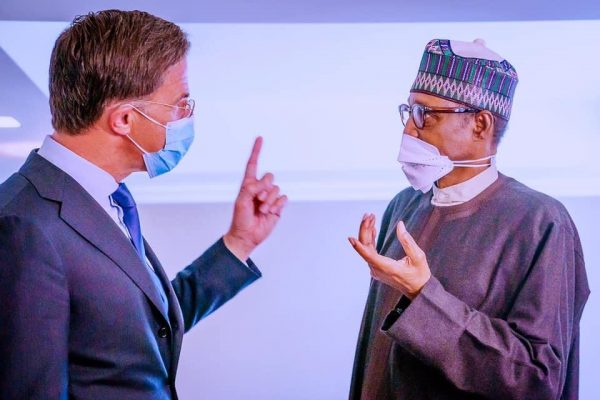 Throughout last week in New York, the United Nations General Assembly – the congress for the world – gathered for its annual re-affirmation of the principles upon which the organisation was founded.


 For the second time this year, an unidentified person has thrown an egg at the 43 year old President, Mr. Emmanuel Macron, during an event to promote the country’s food.

 Vice President Yemi Osinbajo has made it clear to journalists in Nigeria that, like other privileged elites, they owe it a duty to make it impossible for elements that are out to subvert the unity of the country and the democracy being practiced.
 Dangote employees across the Group’s operations in Africa have started a weeklong activities for the implementation of various initiatives aimed at empowering their host communities and ensuring a sustainable present and future for the conglomerate.



INVESTIGATION: Nigeria’s Shea Butter Economy In Kwara, By Tadaferua Ujorha
This investigation examines the impact of Covid-19 on the Shea butter industry in Kaiama, a community in Kwara state. Shea butter is synonymous with health and well-being and many in Kaiama and outlying villages, believe it grants immunity and protects them from the virus. However, science has not confirmed this latter point. Its trees are felled for charcoal, and for the making of mortars and pestles. This threatens the Shea butter industry which is driven by women. If the industry declines the women will be impoverished. Reviving and modernising the industry is, for women, a major act of empowerment. The economy is seen as a ‘woman’s affair’, a ‘woman’s thing’, which may explain why it is undeveloped and why men earn all the profits, rather than the women. A revived Shea butter industry can lift millions of women out of poverty. Here is an investigation with environmental, agricultural, health, gender, economic, and cultural and development angles, emerging from one of the ‘poorest’ regions of West Africa.
“If you are given the vaccination against Covid-19, you will die within the following year.” A lady in Kaiama local government in Kwara state remembers the ominous information that began to circulate in the agrarian community when vaccinations against Covid-19 began sometime in April this year. The idea initially scared her, but she was reassured by a member of the local government health department. This is a form of myth making generated to control the mind as well as human behaviour. Its emphasis on death was bound to scare many in quiet Kaiama. It did.
‘being forced’
Abdullahi Yakub, Monitoring and Evaluation officer, department of health of the local government, opens up on the challenges his office went through in the effort to get locals tested: “We visited institutions. It is as if they were being forced to release samples. They were coming forward reluctantly. One problem we had here is that we don’t have people who will voluntarily go to the hospital and say they want to be tested. We go to institutions and speak with the officials, who compel them to allow samples to be collected and taken for tests.”
Between June and August 2021 one thousand persons were vaccinated in Kaiama, according to statistics provided by the health department during my second visit.
In addition, there were only five confirmed cases of the coronavirus in the community. One hundred and fifty seven individuals were tested for Covid -19 between 2020 and August 2021. Royal wisdom
Ahmad Ibn Mohammed, the Kiwazi of Wazibe, opens up on how he fought stigma and vaccine hesitancy to get his people vaccinated: “I gathered people in my palace. I didn’t tell them we were going to be given the vaccine. I simply told them we had visitors, and they came around. Very soon I was vaccinated.
“Then I asked the group to give the vaccine to all of them. That was the tactic I used. If I had told them about the vaccination in advance, they wouldn’t have accepted because of the traditional way of doing things here. More than forty persons were vaccinated on that day. We still need to do a lot of orientation among the people.
“The old people here do not believe in taking injections. Even in my palace some of my council members told me that they have never taken injections in their lives,” says Mohammed during an interview in Kaiama.
‘strange belief’
“People had the strange belief that if you take the vaccine, then in the following year you will die. That’s the pandemic of lies that scared most of the women, including the Shea butter producers, and prevented them from coming forward for testing and vaccination,” adds Bashir Muhammad, Head of Health department.
He continues: “Some people here don’t believe that Coronavirus exists. They don’t believe it exists. When the pandemic started, there was a testing ground in Kaiama. Later, the government sent medical personnel to the general hospital, and began obtaining samples at the hospital. They trained our laboratory technicians on how to take samples and convey same to Ilorin. Now, all the staff at the primary health care centres have been taught on how to take samples.”
Impact of lockdown
Last year’s Lockdown had varying impact on the Shea butter producers of Kaiama. Zainab Musa, a Shea butter producer in Kaiama, adds: “Lockdown did not affect our work. The main problem was the moment when we wanted to sell the product. We would send a message to the buyers. They will transfer the cost to our accounts, and then they will travel down to collect the Shea butter.” She explains that because of the required protocols which Covid-19 demands, the Shea butter producers had to separate themselves while they worked.
“Covid-19 affected the business because we were asked not to go to the market, and that we should abide by the Covid-19 protocols. We are not used to wearing face masks, and some of us found it difficult to wear it. Before lockdown there were many women involved in the Shea butter industry. The little capital they had was used up during the lockdown. So there was no money left to continue with the trade. There are fewer women today participating in the industry,” says Adama Umar, Vice President of the Kibefandi Shea Producers Cooperative. The lockdown brought a level of impoverishment to the Shea butter producers.
Umar explains that she uses the earnings from the trade to fund the education of her children, and to buy foodstuff for the house. Umar mentions that she has not gone for testing, and that Shea butter alone is enough protection for her from the virus.
Buyers not coming:
At Gwetekuta village lying some distance away from Kaiama, Adama Ibrahim mentions “during the lockdown the marketers were no longer coming. We could not sell and were therefore not earning any money.” This meant that the women were to an extent forced to rely on their husbands and families for the running of their households. There are about a hundred Shea butter producers in the community, and there are several open spots within where Shea butter is processed.
She laments: “The business is too hard. However, we cannot sit idle, and there is no profit. If we had money, we will buy machines. Several machines here in Gwetekuta will make the work easier.”
Adama Mudashir, a resident of Kugizi village opens up “During the lockdown those coming from the big cities such as Ilorin, Ogbomoso and Ibadan to buy Shea butter were no longer coming. The economy declined, but after the lockdown we experienced a revival in the industry.”
Economy flattened
“I didn’t have money during the lockdown. Our economy was completely flattened. If there’s another lockdown we will suffer,” says Mariam Zakari, a housewife and Shea butter producer at Kugizi. She adds that there are no good roads leading to the village, which also lacks pipe borne water.
Aisha Usman comments: “During the lockdown we didn’t have any money. The buyers were no longer coming.
“We began to apply the Shea butter around our nostrils since they said the virus is an airborne disease,” exclaims Hadiza Ibrahim at Banisunlla, another community in the local government.
Ibrahim Igbeki, a farmer comments “If somebody is infected with Covid-19 they will use Shea butter to treat that person. They will mix Shea oil with some herbs and hot water. Even those who go to the city are protected from the Coronavirus. They return safely without being infected.”
Maryam Adamu hails from Bezira village. Hear her “Lockdown affected our business. The price of Shea butter fell because visitors from outside were not coming. Before the lockdown one mould of Shea butter was sold for eight hundred Naira (N800). During the lockdown the cost declined to six hundred Naira (N600). It remained like this for a period of nine months.” One large mould of Shea butter is today sold for N1,200. Terrible event
Aisha Ibrahim, Head Education and Social Services, Kaiama local government, recalls: “Most of the customers at the market had the contact numbers of the Shea butter producers, and they used to call them. Some of them sent money through their bank accounts, and then they will travel down from Ilorin, go to their houses and buy the Shea butter. Covid-19 did not affect the business much, except that the women could not go to the Kibefandi centre to process Shea butter.
“Last year’s lockdown was a terrible event for our market women, especially the Shea butter sellers. It paralysed the whole business. There was no market to go to. Most of us depend on farming. The market women depend on Shea butter for their daily earnings. It was not possible for them to go to the site where they process the nut. The market was closed, and the usual gathering of the women at the market was not taking place. The women couldn’t even make Shea butter. So the overall effect was negative,” adds Mohammed, HOD Health.
‘poorest regions in west africa’
Anthony Asiwaju in his foreword to Hussaini Abdu’s Partitioned Borgu describes Borgu of which Kaiama is a part, as a ‘deplorable, infrastructurally deficit region’(XVIII). Hussaini Abdu writes in the conclusion to the work: “Borgu typifies exclusion, neglect and underdevelopment. It is an example of how colonial devastation and balkanisation have combined with post-colonial state failures and neglect, to produce one of the poorest regions in West Africa” (p.348). The three federal roads that converge on Kaiama illustrate this point. They are all in bad shape with many failed or failing portions, and this has implications for life, livelihoods, the Shea butter trade and economy as a whole.
One of the roads to Kaiama leads from Ilorin, capital of Kwara state. Upon leaving Ilorin, a fairly good road gets the traveller to Igbeti in Oyo state, a town famous for its marble. On the way to Igbeti we pass a colonial style iron bridge. A fellow traveller mentions that the bridge is even better ‘than the so-called bridges being built today all over Nigeria.’ As soon as we pass Kisi, also in Oyo state, the nightmare journey begins. The road is untarred and has numerous potholes and ‘craters’, some of which are filled with rain water at this time of the year making the journey difficult. Very soon the car breaks down.
Every Saturday morning a section of the Kaiama market awakens. It may be called a Shea butter fair. The women sit in the open and there is not much of a shade or cover. Neglect has also caught up with the market. Neatly dressed women of various ages but without face masks, gather in the market as early as 6.30 am, with hundreds of multi-coloured moulds of Shea butter – in basins of varying sizes and colours – to sell to the eager buyers.
They are borne on motor cycles from all the outlying villages which make up the local government. It is a swift convoy of rural women. Saturday morning is always a time of brisk business for the transporters of Kaiama. If business was slow during the week, dawn on Saturday is the time to wake up and make good gains. It is important for the women to get to the market early enough, for the heat of the sun means that the butter may melt and this will not make for good sales. There are no storage facilities for Shea butter, and this is common throughout Nigeria’s Shea butter belt, a major challenge facing the industry. Also, there is no facility to properly store the nuts after they have been picked. A lot of the work is done by hand, a slow laborious process lasting many hours. There are no proper concrete slabs to dry the nuts, and bad in country roads worsen matters.
To the people the Shea nut tree is not just a tree that is found everywhere, it is a special gift from nature’s green, leafy and generous pharmacy.
‘butter on babies’
“Immediately a baby is born and they bath the child, the first thing rubbed on it is Shea butter. Some communities rub Shea butter on the baby, before bathing the child,” explains Dr. Amina Ahamad, a lecturer at the Kwara state University, who hails from Kaiama in Kwara state. Dr. Ahamad grew up learning the basic elements of the trade, and received quality guidance from her grandmother who was active in the industry. Her words: “I was fortunate to be in this sector with my grandmother who used to sell Shea butter, not only within Kaiama, but also in places as far afield as Abeokuta and Onitsha.”
Maanikuu and Peker describe the Shea nut tree in a recent article in the Journal of Biology, Agriculture and Health Care, (2017) as the ‘Tree of Life,’ a powerful spiritual concept which has been given an earthly dimension. ‘Tree of Life’ is a reference to the numerous uses of the Shea nut tree which make it useful to the human being, as well as the pharmaceutical and cosmetic industries where it is much sought after today. It also possesses anti-bacterial, anti-fungal, anti-aging and anti-microbial elements. This means that Shea butter is effective in eliminating germs and in promoting health.
‘increases immunity’
Professor Zainab Mohammed, a professor of Pharmacognosy at the department of Pharmacognosy and Drug Development, Ahmadu bello University, Zaria, opens up on the culture of applying Shea butter on the newly born “The new baby is quickly rubbed all over with the Shea butter, and then cleaned up with a towel or cloth. This helps to clean up the dirt that a baby is born with and also promotes warmth for the baby. Above all, using Shea butter to rub on new born babies helps to increase their immunity to infections, thereby improving quality of health.”
“I know that most knowledge of science from the aspect of medicine comes from the plants we know locally. If you read the history of malaria treatment, it’s from a plant in South America. Chloroquine treatment is derived from a tree. They tested the bark and the roots, and found out if it is useful for the treatment of diseases, and that’s how Chloroquine came into being. It’s not surprising that a lot of their knowledge of medicine comes from traditional knowledge,” explains Dr. Aminu Raji, former Executive Director, Fisheries Research Institute, New Bussa, Niger state, making appoint about traditional knowledge and modern knowledge.
‘I am not aware of it’
Aminat Abdullahi was taught how to produce Shea butter by her grandmother at the age of eleven. She asks “Why must I go for vaccination. I have not gone for vaccination. I am not even aware of it.” She has not been tested for the virus.
Abdullahi compares the old and new methods of processing Shea butter “In the past we used our hands to do everything. Nowadays, the processing is easier than in the past. This is because of the use of machines.”
“When a grandmother can no longer knead the gradually forming Shea butter, it is a form of retirement. Children will then take over and another will supervise the work. Even pregnant women can do the work,” she explains showing the approved levels of transition within the industry.
Abdullahi mentions that the proceeds from the trade have come in useful over the years. Gains have been used to buy foodstuff for the house, to treat the sick, and to purchase items for the occasional wedding ceremony.
Musa has been vaccinated. Her words “I went for testing because it’s good to be tested. The result was negative and I have also been vaccinated.” She is the exception rather than the rule.
She has an interesting story. She used the earnings from the Shea butter trade to fund her education at the School of Legal Education, Ilorin.
‘unaware of Covid-19’
Rahamat Yusuf of Gbanagizin village says that she has heard of Coronavirus, but believes that “Shea butter can protect one from the disease. The oil is a medicine and it protects one. It is very good for the body. This explains why in this community nobody has come down with Coronavirus.” Like many before her, she has not been tested and has also not been vaccinated.
Aisha Usman of Kugizi village stuns the visitors when she adds that she is unaware of Covid -19. Her words “I have not heard of Covid-19, and I have not heard of anyone developing Covid -19 in our community.”
“Shea butter can protect people from Covid-19. I have been using Shea butter for a long time now. Since nobody in our village is infected, it means that Shea butter is working for us,” says Zuliat Mohammed, a resident of Banisunlla, shedding light on the local reaction to Coronavirus in her community.
‘hand sanitizer’
Some of the locals refer to Shea butter as a traditional ‘hand sanitiser’, and so they turned to it in droves with the advent of Covid-19, rubbing it daily on their faces and nostrils. The inhabitants of Kaiama seem to have independently discovered certain truths about the butter, centuries before science reached conclusions about it. In this case science has come to validate a people’s intuitions or traditional knowledge.
“Shea butter is our local hand sanitizer. The main thing with Coronavirus is catarrh. That’s why we rub ourselves with Shea butter. We put it in hot water, mix it and drink it and we are okay. It works for us,” says Musa.
Professor Mohammed, who is also a qualified herbalist, states “Shea butter has scientific validation for use in the treatment of colds related ailments. Because of the anti-inflammatory effects of the butter, it helps alleviate nasal congestion and mucosal damage. For allergic reaction, common cold or sinusitis, the use of Shea butter is significant.”
On Shea butter as a ‘hand sanitizer’, she comments “It is not surprising that Shea butter is considered a hand sanitizer by the locals in Kaiama. In fact, it is a component of many commercially available sanitizers where as much as 99.9% protection against the most common bacteria responsible for infections is obtained. Shea butter, because of the anti-bacterial and anti-fungal effects is capable of reducing germs significantly.”
Professor Rukayat Oyi, of the department of Pharmaceutics and Pharmaceutical Microbiology, at the Ahmadu Bello University, Zaria, adds “In one of our research findings, Shea butter was discovered to have anti-bacterial and anti-fungal activities, though mild.”
Not proven by science
Yakub responds “We believe that Shea butter is medicinal, but not to the level of protection against Covid-19, not to that extent. No one has ever been infected and cured as a result of ingesting Shea butter. Science has not proven it but we believe Shea butter is medicinal. Majority of those that use it say that it makes their skin smooth, and we believe that it boosts immunity.”
“Shea butter is obtained from the seeds of Vitelleria paradoxa , the Shea butter tree. It is indigenous to Africa and has many natural healing properties. In some parts of Nigeria, like Kaiama in Kwara state, new born babies are immediately cleaned up with Shea butter. This is due to the natural healing properties of Shea butter. Unrefined Shea butter is non-toxic or harsh and has moisturizing and healing benefits,” explains Professor Mohammed.
500 year old Shea nut trees
“In those days anyone in a house who is not involved in producing Shea butter, is regarded as a lazy person. It’s a tradition and a business among our people. When we were growing up, we used Shea butter to eat our yams, to prepare stews and to eat. It’s an ancient tradition among our people, and shows how our people have promoted health in their communities,” says the Kiwazi of Wazibe, who plans to set up a one kilometre long plantation of Shea nut trees in his community.
Hear him: “We grew up to see Shea nut trees that are up to five hundred years old. They grew up naturally, and were not planted by anybody. Our Shea butter is quite different. We have the best quality of Shea nuts in Africa.”
‘The Lord has given us more than enough’
“We also rub Shea butter on the newly born here. It makes the skin smooth and produces good strong bones,” says Ibrahim, a housewife in Gwetekuta village. The women stand in a circle beneath numerous trees, at a spot where Shea butter is produced in the community. A little fire burns beneath a large pot in a corner, and women arrive bearing water in buckets from a nearby stream.
According to Rahamat Yusuf, who lives in Gbanagizin village “Shea butter can provide an individual with immunity. If it is rubbed on the body, it can protect the individual from the disease. The oil is a medicine. It protects one, and it is very good for the body. That’s why nobody in this community came down with Corona Virus. We rub it on our hands as well as all over the body.”
Ibrahim, HOD Education and Social Services adds that Shea nut trees are more numerous than the mango trees in Kaiama “The Lord has given us more than enough, so nobody cares to plant Shea nut trees.” Illegal logging
Meanwhile, Shea nut trees are being felled within Kaiama for fire wood, to make mortars and pestles, as well as for charcoal. This is a huge threat to the Shea butter industry, with trees being cut down, and no effort being made to replace them. It is also a huge threat to the environment for the reduction in the number of trees can trigger climate chaos even at the local level, as the world has clearly seen.
Jacob Shekarau, USAID trained Technical Consultant on Shea Products, speaking on Shea butter, says “The major problem we have along the line is the fact that most of the trees are being cut for charcoal that will be exported. Most of the trees are being cut down, because people don’t know the economic value. It is unfortunate that we are not enjoying the export potential of the nut. A lot of its potential has not been utilised. What we utilise is not up to 10% of the 100% deposits that we have in the country.”
“Unfortunately, the Shea trees are being felled. They are being felled anyhow. These are part of the challenges facing the Shea nut tree,” explains Mohammed Kontagora, President, National Shea Producers Association of Nigeria (NASPAN).
Giwa Mukaila, Secretary, Shea Nut Buyers Association, Kaiama, insists “Loggers and makers of charcoal fell the Shea nut trees in the forests. Some farmers wish to expand their farms, and so they cut down the trees as well. Some farmers actually burn the Shea nut trees.”
Form of advertisement
Rudimentary tools are used in the industry, and it is labour intensive activity which lasts many hours from sunrise to sunset. Young girls, middle aged women, as well as grandmothers are involved in the economy. Shea butter holds a very important place in the lives of the people of Kaiama. Many young girls are present at the market selling the Shea butter, or under supervision, learning the ropes of the trade. Within the vicinity of the Kibefandi Shea processing centre can be found numerous houses where Shea nuts are being dried. This is done at the very front of the houses, with the nuts placed on large cement slabs, or put on empty grain bags and spread out on the ground.
During the regular Saturday market, it is common to see a young girl or an elderly lady who will put a single mould of Shea butter on her head, and walk around the busy market. It is recognised as an ancient form of advertisement for the product done mainly by females. The ability to balance the vertically placed mould on her head and calmly walk about advertising the product without it falling off is impressive. Soap, Lamps
Shekarau, who is also a Consultant to UNDP and NEPC, says “Shea butter is mostly found in the rural areas. Rural people know the advantages of Shea butter. The grandparents used it as a source of vegetable oil. They use it for soaps, and they use it to light a traditional lamp. It has multiple uses.” He states “Nigeria accounts for 50% of the Shea nut deposits in the entire world, according to a recent FAO document. Nigeria produces five hundred thousand (500,000) metric tonnes of Shea nuts a year.”
Home based savings
Abdullahi now refers to Kolo, a savings scheme indigenous to the people which looks like a form of empowerment. It refers to a little pot made from clay with an opening at its top into which the locals insert money from time to time. “When they sell Shea butter, the gains made are kept in the Kolo, which is a home grown savings scheme. The Kolo is made of clay and it is circular in shape. When it is full, the women break the Kolo and count the amount saved within. They now plan what to do with the amount saved,” she explains.
Umar explains “The money saved in the Kolo is used by the parents to buy clothes, jewellery and other items for the children. Then another cycle with the Kolo begins, and the makers of local clay pots will always be in business on this account. You cannot put your hand into the Kolo to take any amount. The opening at the top is so small that a human hand cannot retrieve any money.”
She recalls “When I break the Kolo I usually laugh because I never knew that I had saved such a huge amount. Kolo is part of our culture. Young children are trained to learn how to save using the Kolo. They are encouraged not to be extravagant.”
From an early age she was introduced to the various steps in the processing of Shea butter. “I started learning when I was five years old. My grandmother began to train me. This is a common story in most of the houses in Kaiama. It takes three years to become expert in the processing of Shea butter,” she says, as more women bring buckets of water to the Kibefandi Shea processing centre.
‘no fixed price’
“There are more than fifty (50) women working at the Kibefandi processing Centre. Owing to lack of funds to carry on with the business, some of them left. The lack of machines to process the nut is another problem”, says Umar.
She points out “If you have enough capital, something in the range of fifty thousand Naira (N50,000), within a month you can earn One hundred thousand Naira (N100, 000) from the Shea butter trade. It’s hard for us to fix the price of Shea butter. If we decide to sell at a particular price at Kibefandi, people from neighbouring villages may bring theirs and sell at a lower price. This is the reason why we don’t have a fixed price.”
According to her “This business is helping the households here in Kaiama. Most activities in the households are sponsored by the wives. Husbands do just a little. For instance, when children return from school, the fathers say they should go and meet their mother, if there is an item that needs to be purchased.”
Khadijat Ahmad, a grandmother, is already used to the rigours associated with the processing of Shea butter, so that pain has transformed to become something pleasurable to her. Hear her “I don’t see any challenge here as we work. I go to the stream to fetch water. This is not a challenge. I also fetch fire wood from the farm. The money I realise from the trade is used to buy foodstuff for the household. I keep some of the capital to buy Shea nuts.”
‘If it is mechanised’
“When we were young we will see women going into the bush, picking Shea nuts and bringing them home. They will then spread them on flat rocks on the outskirts of the town, while some will take it home. The way they pick it and wash it, in fact the entire process of producing Shea butter is supposed to be mechanised by now. Once they gather the Shea nuts, they clean them and dry them in the sunlight. This can be mechanised. If it is mechanised, the women will be able to produce a lot more. Twenty bags can be done in a day,” says Nasiru Musa, President Kaiama Development Association (KDA).
He comments on the losses suffered by the women “Some people come here and buy the nuts at give-away prices, while some buy the processed ones. The people who actually put in their labour, that is, the women, do not benefit much. The men make a lot of money. They pay the women a paltry amount of money. When you export it what you get is impressive.”
Abdullahi Danbaba, represents Kaiama, Kimanji and Wajibe in the Kwara State House of Assembly. He goes down memory lane detailing various aspects of Shea butter processing “Our mothers basically go with us, and during the season of the Shea nut harvest, they pick it, and gather it at a point in the farm. When they have gathered a huge number, they fix a specific day when they boil the Shea nut and dry it. After serious boiling, the Shea butter will rise up. Three to four hours later it solidifies and becomes Shea butter. In those days it’s the major delicacy we use in cooking.”
‘you will pity them’
Dr. Ahamad describes the infrastructural challenges affecting the industry “The women do not have the facility to preserve the nuts. If they had a cemented place for drying, we would have better quality Shea butter. They use their hands to process the nut and this takes a lot of time. When you see them using their hands, you will pity them. I used to go there to watch them. I find it very interesting. It’s brownish in colour, but by the time they start stirring it with their bare hands, it turns white. The men exploit them. So this exploitation is also there as a challenge. There is no proper pricing, and so the men, rather than the women, make a lot of money.”
It affected harvest
Mohammed explains the impact of the lockdown “It affected everybody. We believed that if the virus entered our community it will affect a lot of people, because the road network is not there. The question was how will we move the person to a hospital? The person may die before we get to the hospital because the roads are bad. We discouraged women going to pick Shea nuts. They always go in groups to pick it. The women in the village pick it, boil it dry it, and remove the shell. They break it into pieces and fry it again. There are so many processes. But if you take it to a machine, within a day you will get your Shea butter. Up to this moment, the women, particularly the elderly women, still believe in the old system. I think that is where the government and traditional rulers need to intervene, to let them know about the advantages of the new system.”
He concludes “If you compare the quantity produced last year, compared to the one produced two years ago, you will see that Covid-19 affected the harvest.”
most threatened tree
“The Shea nut tree is threatened. Shea tree is the tree which charcoal makers use most. They see it as the best tree to produce the best charcoal which makes the Shea tree the most threatened tree in the bush. The Shea tree as a threatened species is the main reason we have our Shea plantation in Kaiama. We observed that the Shea tree is declining in numbers, and no one is looking into it as a means of livelihood for some people. We felt that if this is not looked into now, there may be no Shea tree in Nigeria again. This is the reason we thought of having our own Shea plantation, where we can easily plant and see these trees grow to the stage of fruiting, and no one can just walk into the plantation to cut the trees,” says Oke Joseph Mayowa, Operation Supervisor, AmuGold Global Network. AmuGold is setting up an ultra-modern Shea butter collection and processing hub in Kaiama.
No plan, no budget
Speaking on the state of the Shea sector today, he laments “We have noticed a lack of a deliberate effort by the federal government to ensure sustainability of the Shea sector. There is no specific plan in the national budget for Shea sector development and sustainability right now. There is no plan, no budget and no allocation. We need a deliberate effort in setting up Shea parklands across the Shea belt in Nigeria.”
He refers to the Save the Shea Initiative of his organisation “This initiative was incorporated in 2018 with a vision to save the Shea. The vision is to plant nothing less than two thousand trees within five years. On this plantation in Kaiama we have over two hundred trees planted already, apart from the grown trees that are already fruiting.”
AmuGold has extended support to the Kibefandi centre. According to him “We are the official investor and central coordinator appointed by the federal government, through the Nigeria Export Promotions Council (NEPC). After taking over the centre, we began to support the place technically, financially, also in terms of operations and market expansion. We brought in new machines. We empower the women to produce Shea butter. We buy the product directly from them, without the women taking it to the market.”
Bad roads, snakes, water
Shekarau who is also a consultant to several state governments, comments on infrastructural challenges “There is the lack of good quality water in the villages. In the process of processing Shea nuts, the women need clean water to wash it. Also, there is the lack of access roads. The villages do not have storage facilities. After picking you don’t allow it to stay long, you need to process it. It is not supposed to stay more than three days after picking. We also need government to provide legislation against the cutting of Shea trees.”
‘woman’s thing, woman’s affair’
Kontagora draws attention to the cynical indifference of many towards the industry, who see it as a woman’s thing “If you go to our communities you will find that the women trek a lot. They go picking with their bare hands and stand the risk of being bitten by snakes. When she takes the nuts home, there is no storage facility for her and no clean water. They process the nut under a tree, with no roof above them.”
He laments “We don’t see it as a dignified profession, and we see it as a woman’s thing. We see the activities of Shea butter as mainly a woman’s affair. The men come after all the labour to do the marketing, to collect all the money. The men go to all the villages, collect the nuts from the women. Some of them even advance money to the women, before they produce, before the processing. Thus the women live at the mercy of the local buying agent. The men determine the price, not the women.”
Kontagora reasons: “So, if you have a common facility, for the women, things will be different. For instance, we established a Shea butter village in Niger state in 2011. It is working and the women are trained on group dynamics, how to manage themselves. They are doing value addition in that community. You cannot go to that community and decide the price for them. They are grouped into cooperatives.”
Ten million trees
He opens up on the strategic plan to grow ten million Shea nut trees, a reaction to the depletion which the trees have suffered over the years “The Shea tree is such that it can take a minimum of fifteen years before it starts fruiting. Some can last up to thirty years before fruiting. This is a challenge, but happily, we are working on how to domesticate the Shea trees to reduce the gestation period to between five to seven years. The Niger state government has given us the right to use some of its forests. We are looking at the future, targeting to plant ten million Shea trees in the next ten years. That’s our agenda to ensure that every year we plant at least one million Shea trees, which amounts to ten million trees in ten years. We are starting with Niger, but we want to do it across the Shea belt. “
Lack of data
The Shea butter industry is one fraught with challenges. Hear him “One of the major challenges is collecting data, but according to FAO, Nigeria accounts for 57 % of world Shea trees concentration. It means the larger percentage of the Shea nut in all the world comes from Nigeria. At a time we had a statistic of 3.8 billion dollars ($3.8b) as the worth of the Shea. Imagine 57% of that which is over $2b in a year coming out of Nigeria. We are not known in the international market, because we are not doing things the right way.”
He reasons “People come here take our Shea nuts, and go out and process it in their country. It is captured as their own, and you do not blame them. It is our fault, we do not regulate. The authorities concerned are not doing what they are supposed to do. Shea nut is not on the prohibited list. You can take it out, but is the export being done in the right way? Most of the export is taking place in an informal way. Nobody is capturing data, but we are taking it up.”
Way forward
Dr. Ahamad draws attention to the plight of the producers “Women suffer while processing Shea butter. The process followed is what makes them produce less. If we can have machines, if government can come in, we will have more Shea butter to produce. Every woman in the villages is involved in the business.”
She reasons “Kaiama can satisfy the Shea butter needs of the whole country. If the industry is supported with modern machines, the women Shea butter producers within the belt will earn more and have more time for themselves.”
The government is also making efforts to tackle some of the challenges faced in the Shea industry in Nigeria, in order to aid production with a view to repositioning the Shea industry and taking optimal advantage of Nigeria’s huge potential in production to achieving self –sufficiency in the Shea sub sector of the economy,” says Mr. Niyi Adebayo, Minister of Industry, Trade and Investment, speaking in Abuja recently during a conference on Shea butter organised by the National Shea Producers Association of Nigeria (NASPAN).
He added “Shea is an agricultural commodity with application across virtually all aspects of our lives. The uniqueness and the amazing benefit of Shea have given it some features which stand the commodity tall among other agricultural commodities.”
Speaking in his palace, Mohammed points to contemporary developments in the industry “If the women see the modern way of processing Shea butter, they will be interested. The old way is time consuming and labour intensive. The women do it like a hobby. They don’t see it as work, because Nigeria doesn’t see it as work. ”
Danbaba speaks on an issue afflicting the industry, and suggests a way forward “The problem with the Shea butter industry is that it is primitive, and most of the educated women think it is a business they can no longer carry on with, because of the primitive or rudimentary way of doing it. There is only one processing site in the whole of Kaiama local government. Our plan is to have another site, that is, to have a modern way of processing Shea, so all categories of women will see it as attractive.”
“Shea butter is a woman led activity, but if it is promoted and mechanised, it will be a general activity, not only for women, and everybody will be able to take part. By the time you establish a Shea nut plantation, everybody can go in. Government can encourage business men to go in and do the Shea butter business. We are talking about diversification of the economy. I think government should look at this area. Shea butter is one area where we can earn foreign exchange. The political economy of Kaiama will improve. It will reflect in the state and the national economy, and the GDP will improve,” says Umar, projecting into the future of the industry.
“Women in the Shea butter business need assistance from the government, either in form of a loan or for government to give them machines to make the processing of Shea nuts easier. The population of producers outnumber the engines present. A housewife uses her bare hands to produce fifty moulds of Shea butter, if she has an engine, she will be able to produce more than one thousand moulds in a day,” Yakub indicates during a discussion.
The report was made in partnership with PAGED Initiative as part of the Covid -19 Media response in Africa project funded by the EU.