When President Muhammadu Buhari (PMB) took over the reins of power on May 29, 2015, Nigeria was already, not just a broke state, but sadly a broken state in many respects. It was so bad that it appeared that the exiting PDP government of President Goodluck Jonathan could not wait for his term to officially come to an end before leaving. As a result of many other factors including bad governance and untold level of corruption, government could not live up to its financial obligations to citizens and service providers at both the federal and state levels.
Indeed one of the most official assignments that President Buhari carried out was the approval of billions of Naira in bailout funds to enable state governors pay something as basic as workers’ salaries. Granting those bailout funds was a huge boost to national security because the pressure of arrears of unpaid monthly salaries building dangerously all over the country was a ticking bomb. You know what is said about a hungry man and anger, especially when that anger is about duly-earned income but withheld as a result of the insensitivity of those in power.
Ask the naysayers and they would readily remind you of how long it took President Buhari to appoint his ministers and how that contributed to collapse of the economy as if, without ministers, governance was frozen. But buying that narrative would amount to what a famous Nigerian writer, Chimamanda Adichie, termed “the danger of a single story”. Yet the whole story was that many of our citizens did not know how decrepit a state President Buhari inherited in 2015.
It was therefore necessary for him to take stock against the background of the fact that the departing government did not, reportedly, cooperate full well with the incoming government in terms of leaving workable handover notes. Although President Goodluck Jonathan was gracious in defeat, many of his appointees were still sulking over what they saw as their personal losses and therefore pulled all the stops to make things difficult for the Buhari government.
Even with the obvious and unpatriotic obscurantist behaviour of the PDP appointees and their supporters still in government hell bent on making things difficult for Buhari, the President moved on with his methodical repair of a broken country. The first thing he did was to identify all possible sources of income to the nation and directed that all inflows be paid into one single account in line with the policy of Single Treasury Account (TSA).
The TSA policy, interestingly, was mooted by the PDP government but its penchant for imprudence and lack of accountability denied it the courage of implementing the policy. But for Buhari, a man whose lifestyle can best be defined by asceticism and anti-corruption, the era of reckless handling of public funds was over and gone for good. What the President literally did was to gather all the nation’s money into one box and locked it up with a big padlock and watched for any thief to come close.
Who can blame the President for almost developing paranoia over the safeguard of the national treasury with revelations and reports of mind-boggling looting that took place in the sixteen years of the PDP? With such disclosures of how billions meant for fighting insurgency in the Northeast ended up in the pockets of a few individuals while our gallant soldiers fought with bare hands and on empty stomach, President Buhari was duty bound to bring sanity and accountability back in national spending.
Thus, under President Buhari, the Economic and Financial Crimes Commission (EFCC), which had remained comatose for years, was woken up to resume its duties. Apart from the trillions of Naira of looted funds and property recovered from corrupt politicians by the EFCC, President Buhari by his action has successfully brought back to the public consciousness the need to treat public funds with the highest level of transparency and accountability. In short, President Buhari has returned to public consciousness the consequences of stealing public funds, which were clearly lacking in the PDP years with all its negative implications for national economy and orientation.
After keeping treasury looters on their toes and at bay through the EFCC, particularly, President Buhari moved to curb unnecessary spending habits of the nation on what economists call articles of ostentation. Part of the disclosures of the President’s stock taking was how the country frittered away billions in foreign currency by importing goods, which can be produced at home. One of such items was rice, a major staple among Nigerians. By banning rice importation into the country, the President on one hand had saved the nation billions in foreign currency annually.
And, on the other hand, the President has boosted domestic production of rice and in the process had nudged the country into self sufficiency in food production. He also created millions of jobs for young people in the rice value chain. Today, states like Kebbi, Ebonyi and Lagos are the hub of rice production in the country, and with continuous support in terms of protectionist policies from government and citizens, may in fact become exporters of the commodity to other African countries in the nearest future.
The quiet rice revolution ongoing in the country is completely attributable to the firmness of President Buhari and the commitment of the Central Bank of Nigeria (CBN). It also goes without saying that the Nigeria Customs and Immigration Services have been supportive in this mission by enforcing the border closure ordered by President Buhari to checkmate rice smugglers. Knowing the financial muscles of these trans-border smugglers and their powerful allies in government with whom they form a deadly criminal syndicate, that the President sustained the border closure for the period it lasted was a testament to Buhari’s incorruptibility and single mindedness in repairing his country.
What is most admirable about President Buhari and his government is its frugal management of scarce national resources to attain optimum goals. Recall that since President Buhari stepped in the saddle, oil revenue dropped abysmally as if to sabotage him knowing all the big promises he made to citizens during his campaigns. But with the little resources that trickle in, the President is achieving what governments that received oil windfalls could not dream of.
Today, the trains are up and running daily from Abuja to Kaduna. And from Lagos to Ibadan a brand new rail track was started and completed; citizens are already commuting daily to and fro these two major cities in the country seamlessly as they reap from the dividends of democracy. And with the way this government is going, before 2023 when the President would leave, the entire country would be linked by rail with all of its economic advantages.
And President Buhari is not only doing rails, he is also rehabilitating roads that the PDP left to fail in its sixteen years of rule after spending billions of Naira in budgetary allocations on them in what has become a big scam. For example, is it not a shame that in its entire sixteen years, the PDP government could not deliver the Lagos/Ibadan Expressway to the Nigerian people when crude oil was selling above $120 per barrel?
Let us go to the vexed matter of banditry, President Buhari is now speaking to the bandits and terrorists in the language they understand with the renewed onslaught on these wicked lot by the air force and gallant land troops. Even Boko Haram soldiers have now found surrendering the only safe option for them as the end of insurgency draws near.
Yet, it is regrettable when some opposition politicians who ought to have buried their heads in shame accuse a hard-working President of constantly whining about how past governments underdeveloped the country. Indeed, they should, for once, pretend like patriots and consider the frustrations of opportunities they threw away in the midst of plenty. The PDP particularly should be grateful to a President clearing their mess and quietly repairing the incomprehensible damage they inflicted on their own country, as if they were praetorian armies. That President Buhari is going about bringing back sanity to a bruised nation and quietly repairing Nigeria without drama puts him in the pantheon of great leaders.
▪︎ Mr Ainofenokhai Ojeifo, a social commentator, contributed this piece from Abuja.
President Muhammadu Buhari is scheduled to fly to New York, the United States of America, tomorrow, September 19, to participate in the 76th Session of the United Nations General Assembly (UNGA76), which opened early in the week, September 14.
According to a statement today, September 28 by presidential spokesman, Femi Adesina, the theme for this year’s UNGA is: “Building Resilience Through Hope – To Recover from COVID-19, Rebuild Sustainably, Respond to the Needs of the Planet, Respect the Rights of People and Revitalize the United Nations.”
The statement said that President Buhari will address the Assembly during the General Debates on Friday, September 24 when he will speak on the theme of the conference and other global issues.
It said that in the course of the Assembly, the President and members of the delegation will partake in other significant meetings such as High Level Meeting to Commemorate The Twentieth Anniversary of the Adoption of the Durban Declaration and Programme of Action on the theme “Reparations, Racial Justice and Equality for People of African Descent.”
It said that the delegation will also participate in Food Systems Summit; High Level Dialogue on Energy and The High Level Plenary Meeting to commemorate and promote the International Day for the Total Elimination of Nuclear Weapons.
The statement hinted that President Buhari will also hold bilateral meetings with a number of other leaders of delegations and heads of International Development organisations.
Buhari, according to the statement, will be accompanied to New York by Minister of Foreign Affairs, Geoffrey Onyeama; Attorney General and Minister of Justice Abubakar Malami (SAN); and Minister of State for Environment, Sharon Ikeazor.
Also on the President’s delegation are National Security Adviser, retired Major General Babagana Monguno; Director-General, National Intelligence Agency, Ambassador Ahmed Rufai Abubakar; Chairman, Nigerians in Diaspora Commission, Abike Dabiri-Erewa and the Senior Special Assistant to the President on SDGs, Mrs. Adejoke Orelope-Adefulire.
President Buhari is expected back in the country on Sunday, September 26.
President Muhammadu Buhari has said that a total of 15 projects, spread across the six geo-political zones of the country, will be financed with more than $4 billion loan from multilateral institutions, under the 2018-2021 medium term (rolling) external borrowing plan.
The President had recently requested the Senate to approve sovereign loans of $4.054 billion and €710 million as well as grant components of $125 million for the proposed projects.
According to the letter by the President, the sovereign loans will be sourced from the World Bank, French Development Agency (AFD), China-Exim Bank, International Fund for Agricultural Development (IFAD), Credit Suisse Group and Standard Chartered/China Export and Credit (SINOSURE).
The President’s request to the Senate listed 15 proposed pipeline projects, the objectives, the implementation period, benefiting States, as well as the implementing Ministries, Departments and Agencies (MDAs).
A breakdown of the ‘‘Addendum to the Proposed Pipeline Projects for the 2018-2021 Medium Term (rolling) External Borrowing Plan,’’ shows that the World Bank is expected to finance seven projects including the $125million grant for ‘‘Better Education Services for All’’.
The Global Partnership for Education grant is expected to increase equitable access for out-of-school children and improve literacy in focus states.
The grant, which will be implemented by the Federal Ministry of Education and the Universal Basic Education Commission (UBEC), will strengthen accountability for results in basic Education in Katsina, Oyo and Adamawa States.
Other projects to be financed by the World Bank are, the State Fiscal, Transparency, Accountability and Sustainability Programme for Results as well as the Agro-Processing, Productivity, Enhancement and Livelihood Improvement Support Project.
The benefiting States for the agro-processing project are Kogi, Kaduna, Kano, Cross River, Enugu and Lagos with the Federal Ministry of Agriculture and Rural Development as the implementing ministry.
A statement today, September 18 by a presidential spokesman, Malam Garba Shehu said that the objective of the project is to enhance agricultural productivity of small and medium scale farmers and improve value addition along priority value chains in the participating States.
The statement said that the World Bank is also financing the Nigeria Sustainable Water Supply, Sanitation and Hygiene (WASH) project in Delta, Ekiti, Gombe, Kaduna, Katsina, Imo and Plateau States, for the next five years.
It explained that the project, when completed, is expected to improve rural water supply, sanitation and hygiene nationwide towards achieving Sustainable Development Goals (SDGs) for water supply and sanitation by 2030.
It said that under the external borrowing plan, the World Bank supported projects also include Nigeria’s COVID-19 Preparedness and Response Project (COPREP), under the supervision of the Federal Ministry of Health and Nigeria Centre for Disease Control (NCDC).
The statement said that the project, which has an implementation period of 5 years, will respond to threats posed by COVID-19 through the procurement of vaccines.
“Furthermore, no fewer than 29 States are listed as beneficiaries of the Agro-Climatic Resilience in Arid Zone Landscape project, which is expected to reduce natural resource management conflicts in dry and semi-arid ecosystems in Nigeria.
“The benefiting states for the project to be co-financed by World Bank and European Investment Bank (EIB) are: Akwa Ibom, Borno, Oyo, Sokoto, Kano, Katsina, Edo, Plateau, Abia, Nasarawa, Delta, Niger, Gombe, Imo, Enugu, Kogi, Anambra, Niger, Ebonyi, Cross River, Ondo, Kaduna, Kebbi, Jigawa, Bauchi, Ekiti, Ogun, Benue, Yobe and Kwara.
“The World Bank is also funding the Livestock Productivity and Resilience project in no fewer than 19 States and the Federal Capital Territory (FCT).
“The China EXIM Bank is expected to finance the construction of the branch line of Apapa-TinCan Island Port, under the Lagos-Ibadan Railway modernisation project.
“The French Development Agency will finance two projects, which include the National Digital Identity Management project and the Kaduna Bus Rapid Transport Project.
“The digital identity project will be co- financed with World Bank and EIB.
“The Value Chain Development Programme to be financed by IFAD and implemented in Anambra, Benue, Ebonyi, Niger, Ogun, Taraba, Nasarawa, Enugu and Kogi States will empower 100,000 farmers, including over 6,000 and 3,000 processors and traders respectively.
“The loan facility to be provided by European ECA/KfW/IPEX/APC will be spent on the construction of the Standard Gauge Rail (SGR) linking Nigeria with Niger Republic from Kano-Katsina-Daura-Jibiya-Maradi with branch to Dutse.
“The specific project title, Kano-Maradi SGR with a branch to Dutse, has an implementation period of 30 months and will be implemented by the Federal Ministry of Transport.
“The Chinese African Development Fund through the Bank of China is expected to provide a loan facility of $325 million for the establishment of three power and renewable energy projects including solar cells production facility Phase 1 & II , electric power transformer production, Plants 1, II, III and high voltage testing laboratory.
“The National Agency for Science and Engineering Infrastructure (NASENI) will implement the project aimed at increasing local capacity and capability in the development of power and renewable energy technologies and infrastructure.
“Credit Suisse will finance major industrialisation projects as well as micro, small and medium enterprises schemes to be executed by the Bank of Industry while SINOSURE and Standard Chartered Bank will provide funds for the provision of 17MW Hybrid Solar Power infrastructure for the National Assembly (NASS) complex.
“The project, with an implementation period of five years, is expected to address ‘‘NASS power supply deficit and reduce higher overhead burdensome cost of running and maintaining fossil fuel generators (25MW installed capacity) to power the assembly complex.’’
The Christian Association of Nigeria (CAN) has suspended its Gombe State Caretaker Chairman, Rev. Sunday Congo for sending a letter congratulating the Minister of Communications and Digital Economy, Dr. Isa Pantami, without the approval of the association’s National Executive Committee.
CAN State Secretary in Gombe, Apostle John Adedigba, in a letter on behalf of all the members of the caretaker committee, congratulated Pantami on his recent reported “promotion to the rank of a Professor of Cyber Security” by the Governing Council of Federal University of Technology, Owerri.
They said in the letter that they were “proud” of Pantami as a “son”.
However, CAN in a letter by its General Secretary, Joseph Daramola, dated September 15 2021, titled: ‘Letter of Suspension’, sent to CAN caretaker committee chairman in Gombe, stated that the congratulatory letter was issued without the consent of the mother body.
Part of the letter read: “Following the recent publications of your congratulatory message to the Minister of Communications and Digital Economy, Dr. Isa Pantami, CAN writes to inform you that your action has generated a lot of concerns amongst members of the Christian Association of Nigeria.
“This action of yours in publishing on behalf of the association is tantamount to unilateral decision of you and overzealousness on your part, which was done without authorization and clearance.”
CAN described the letter without its executive’s permission as provocative, adding that he does not represent their position.
“It is not only provocative but undermines the CAN NEC executive. It does not in any way represent their position.
“In view of this, you are hereby directed to relinquish your position in Gombe CAN executive with immediate effect and hand over all CAN’s property to your next in line in your bloc.”
CAN further advised that the body be consulted in future and an approval obtained from the authority of CAN national level in order for everyone to speak with one voice.
Vice President Yemi Osinbajo has reminded people who made it to leadership positions in all fields of human endeavours in life that they owe the society three type of taxes.
The first one, he said, is income taxes, which is personal income tax, “and if you own a company, company, or corporation tax.”
The second tax, Professor Osinbajo said, is a social tax, which is another name for philanthropy: “the obligation of the wealthy to give back to society.”
And the third is a civic tax: “the obligation of the successful to write their stories, to share the histories of the phenomena they have become, in order to instruct, to admonish and to inspire the present and the future.”
The Vice President spoke today, September 17, in Lagos, at the presentation of the biography of the General Superintendent of the Deeper Christian Life Ministry, Pastor W. F. Kumuyi, jointly written by Banji Ojewale, Segun Babatope, Emeka Ezeze and Tunde Opeibi
The Vice President added the fourth tax which he called “the Pentecost Tax,” which he said is for successful preachers of the gospel.
“But for the successful preacher of the gospel of Jesus Christ, there is the fourth tax, this is the Pentecost Tax. The obligation of men and women since the day of Pentecost, the day described in Acts 2 when the Holy Spirit empowered the disciples to preach the gospel, to tell the story of their missionary journeys. The miracles, signs, and wonders that God has wrought on that journey, the deprivations, the fastings, and the persecutions. The victories and failures, the mountains and the valleys.”
According to Osinbajo: “this is a huge responsibility. But the saints before us discharged that responsibility so we are the beneficiaries of the Acts of the Apostles, the stories of the men and women who carried the gospel first to Jerusalem, Judea, and Samaria and to the ends of the earth.
“Their stories have encouraged generations of Christians since, their recorded experiences may seem to make them stars, but they are meant to instruct us in adherence to sound doctrine, to rebuke us and instruct us unto righteousness.”
Prof Osinbajo said that the book: “Kumuyi – the Defender of the Faith,” is the continuation of the baton handed down over to our generation since the day of Pentecost.
He also described the book represents the work of discharging the Pentecostal tax obligation of Pastor Kumuyi.
“The book tells the story of the incredible work of the Holy Spirit in his life and Ministry. How by His grace, he not only preached and continues to preach holiness to a whole generation, but lived and lives it himself daily.”
The season is virtually upon us. The politicians are sharpening their knives for 2023. The sound is becoming jarringly louder. Prayer warriors are being pressed into service just like the eyes and the ears of the gods. It is always good to seek the assurances and the support of God and the gods in the battle for political power in our country. It is a battle no one takes lightly.
But the fate of our country in 2023 is not in the hands of God and the gods. It is in the hands of those who play god, to wit, the party moguls whose bounden duty it is to dispense favours to godsons and god-daughters, even at the expense of peace, unity, a sense of belonging and cohesion in our badly fractured republic. It is our duty as fellow citizens not to allow them to be trapped in their faux pas only for us to blame God and the gods at the end of the day.
This is the time for the rest of us to put our views across on what should be done to set our country back on the path of oneness. Politics, as the wag said, is too serious to be left to politicians. 2023 presents us with some peculiar but critical challenges, not the least of which is that the crass mismanagement of our diversities under the current dispensation has widened our traditional fault lines and opened some other fissures. This is the time to recognise them, appreciate them and factor them into the permutations for the locus of power at the centre in 2023.
The two major political parties, APC and PDP, are beset with internal problems and wrangling. They have fractured national executive committees and both are engaged in patching things up by constituting reconciliation committees to appease their members who feel aggrieved by the endemic problem of our political parties: the absence of internal democracy. The committees will reconcile them and thus help to staunch the toing and froing from one party to another and back again that instantly changes the fortunes of political parties and their members. These movements are merely an opportunistic exploration of accommodation in a rival political with seemingly greener grass under its feet. Its deleterious effect is the inability of the political parties to build themselves into steady and strong parties able to drive, through their policies and programmes, our national development. Weak and unsteady political parties are afflictions on our democracy.
The first order of business for the political parties is the choice of a national chairman in each case. This is no ordinary choice. It is critical to the political parties because everything else rides on the section of the country that produces the national chairman of each party. In their tradition, the section that produces the national chairman cannot produce the party’s presidential candidate – all thing being equal, of course.
The real question is not who but which section of the country, north and south should produce the next president in 2023. The fortunes or the misfortunes of each party will depend on its answer to the question. Perhaps, we should lend them a helping hand in the absence of a guiding principle through which the locus of power at the centre is determined at the regular election intervals. In 1983, NPN mooted the idea of a rotational presidency between the north and the south. Its purpose was to ensure that politics being a game of numbers, number alone would militate against equity, fairness and justice. Its new formula was to be put to the test in 1987. It never was because after four years, the generals returned from the political Siberia to service their political fortunes.
This was later renamed power shift. Different semantics, same primary purpose. It was the rallying cry by the south in Babangida’s transition to civil rule programme; the argument being that the north appeared bent on domiciling the presidency to the permanent disadvantage of the south, given the number of northerners who had held the levers of power since independence. It was no way to build the nation and unite the people. It was time, the south strenuously argued, for power to shift from the north to the south to make the latter an equal partner in the Nigeria project. That would be the right way to build the nation and unite the people.
Quite a bit of water has passed through the River Niger to the creeks. Power shifted to the south in 1999 and 2011. Still, 2023 presents the country with the same unsettled issue and challenges. The late head of state, General Sani Abacha, introduced the geo-political zoning system as the basis for managing our ethno-political and other interests. It is the formula for sharing or allocating elective and appointive political offices at the centre. It has virtually become an important tradition in both the management and mismanagement of our diversities. Can we use this as the basis for inclusive governments in which every part has a chance to both hold and milk the cow?
It still rankles those who, while recognising zoning as necessary in other cases, appear allergic to using it as the basis for choosing a party’s presidential candidate on the grounds that it would be a cynical abbreviation of individual political ambition. I think we are dealing with some sophistry here. Political parties are constitutional creations by tradition and that is why you find neither APC nor PDP in the constitution. By constitutional tradition they are the platforms on which people seek elective political offices. More importantly, political parties determine independent ways and means of managing power and growing the national economy without recourse to the national constitution. Each political party has its own constitution by which it runs its affairs. That zoning is not in the constitution does not prevent a political party from using it as a basis for determining the locus of political power at the centre provided it is satisfied that it makes for equity, fairness and justice and does not offend the letter and the spirit of the supreme law of the land.
It is the constitutional right of a political party to find ways and means of managing the affairs of a nation. That which it chooses to do does not become unconstitutional by reason of its not being in the constitution. Sophistry is a red herring across the path of serious and rational thinking on managing our nation and its myriads of diversities in a manner that makes Nigeria our Nigeria all of the time, not some of the time.
The south sees the north and its so-called greed for power as the nation’s main problem. In the next few months as the debate on the locus of power at the centre heats up, copious evidence would be provided to show that the north has used its sheer number to dominate power in the country since independence to the discomfiture of the south. This evidence cannot be rationally contested. So long as the south feels marginalised by the north, so long will our country continue to be a patch work of ethno-religious interests masquerading as government of the people; so long as the south feels that it is not an equal partner with the north in the Nigeria project, so long will our country remain an atomistic nation in perpetual conflict with itself; and so long as our political leaders are given to the luxury of paying lip service to equity, justice and fairness sans a commitment to those ideals, so long will the simple formula for building a nation and uniting the people elude us.
Let us quit pretending about this. Buhari’s successor will inherit a fractured republic and a divided people. It behoves our political leaders to appreciate this and take steps now that will de-fracture the republic and unite the people and make our country peaceful. It is time for the north to recognise that it has a moral duty to share and share power equally with the south. Political power is not essentially about merit. It is about what is right for a country at a particular point in time. There are potentially great leaders in every part of the country. To recruit them, we must ventilate the system and end power hoarding.
To move forward, we must take two urgent steps. The first is to accept and formalise power rotation or power shift between the north and the south and cast it in marble. Let us ride on what happened in 2019. APC and PDP zoned the presidency to the north. Two northerners slugged it out. We can do the same in 2023. Power must shift to the south and the two political parties must choose their presidential candidates from there and let them slug it out as to who wears the presidential sash.
The second step is to accept the zoning arrangement as a means of perfecting the power shift. It is not enough to broadly rotate power between the north and the south; power must also rotate among the zones in the north and the south so that no zone dominates and leaves other zones in the cold.We can emerge from the current crucibles as an enviable republic and a united people. But we must set aside sentiments and face the challenge of nation building with the courage to use political power as an instrument for the good of the nation and its people. I am not naïve enough to believe that this would be easy but I believe we have enough patriotic Nigerians who wish to see our nation pull itself up from the murk of its failed promises, shed its toga of a potentially great country and put on the new toga as a great nation. Then we can to ourselves what President Barack Obama said to his fellow Americans: yes, we can. Yes, we can unite the people and build a great nation.
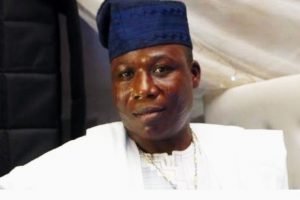
Oyo State High Court sitting in Ibadan has ordered the Department of State Services (DSS) to pay N20 billion to Sunday Adeyemo a.k.a Igboho for raiding his house in Ibadan and destroying his properties on July 1, this year.
The court, today, September 17, declared the invasion of the Yoruba Nation agitator’s home by the DSS-led security forces as illegal.
In his judgment, Justice Ladiran Akintola condemned the DSS for acting based on what he described as arbitrary aggression and prejudices from Igboho’s agitation for Yoruba nation.
Counsel to Ogboho, Yomi Alliyu, had filed the suit asking the court to order the DSS pay N500 billion damages for the invasion of his client’s Soka residence in Ibadan on 1 July.
The secret police announced that they killed two of lgboho’s associates, including his spiritualist (Alfa) and arrested 12 people during the midnight raid.
Ten of the 12 detained people were released about two weeks ago following DSS’ partial compliance to court order.
The two have been charged with terrorism by the DSS.
The DSS had earlier declined to release any of the 12 detained persons it arrested on July 1, despite a ruling of the Federal High Court in Abuja that had on August 4, granted them bail in the aggregate sum of N80million.
Three Senior Advocates of Nigeria had slammed the Attorney General of the Federation and Minister of Justice, Abubakar Malami (SAN), and the Director-General of the Department of State Services, Yusuf Bichi, over the continued detention of the 12 despite meeting all bail conditions.
The trio of Femi Falana, Ebun-Olu Adegboruwa and Ifedayo Adedipe said the DSS is inviting anarchy and lawlessness into the country by not obeying the order of a Federal High Court.
Justice Obiora Egwuatu had signed the Release Order of all the 12 detainees when they fully met their bail conditions including the provision of 24 sureties.
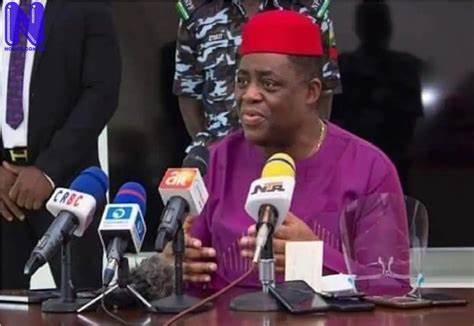
Names of top shots currently in the opposition Peoples Democratic Party (PDP), including serving governors, who are warming up to cross over to the ruling All Progressives Congress (APC) have been unveiled.
Speaking to newsmen today, September 16, shortly after he met with President Muhammadu Buhari to declare his formal defection from the PDP to the APC, former Nigeria’s Aviation minister under the PDP government, Chief Femi Fani Kayode, confirmed that there are many people who would soon join him.
“If you ask my friend and brother, Governor Matawale here, there are many people within the PDP, who really do want to come over to the APC,
I can tell you that, I was there and very instrumental when Governor Umahi joined the APC.
“I was there and very instrumental when Governor Ayade did the same thing. I was there and very instrumental when my friend and brother, governor of Zamfara, Governor Matawale did the same thing.
“There are many others. Some of the most remarkable men in this country are still within the ranks of the PDP; it’s our job to try to win them over. Now, if you don’t mind me mentioning names, somebody like the governor of Enugu State, the governor Oyo State, and of course, my good friend, the governor of Bauchi State, great friends of mine, and I sincerely hope that they too may end up coming in this direction.”
On his defection to the APC, Fani Kayode said: “I believe I have been led by the Spirit of God and I will fight the … and fight for what I believe is right within this party as I would anyways.
“I will never give up on my core values and principles.”
Zamfara State Governor, Alhaji Mutawalle has ruled out the possibility of going on with dialogue with bandits and other criminal elements tormenting the State. “This is because they have deceived us. Some of them did not follow what we agreed with them. We thought it was something we could continue with them, but we later realized that they had deceived us. “So, we had to back out of it and decide to fight them to a logical conclusion.” The governor spoke to newsmen today, September 16, at the Presidential villa in Abuja. He said that while the fighting is ongoing, the state government had taken a lot of measures. “We thank God it is yielding a lot of results. We have recorded a lot of successes from what we have done. “As you are aware, we have a lot of security personnel that were deployed to Zamfara State and they are working seriously.” Governor Mutawalle said that the situation on the ground is calm and that people are going on with their day-to-day activities. According to him, the only thing now is that the government had cut a lot of things, particularly food stuff, animals and selling of petroleum products. “We have imposed a lot of measures and the people are happy with the measures because the people had suffered a lot; people were being killed and kidnapped every day before, but today we have succeeded. We don’t have much of such issues in Zamfara State.
First Lady of Nigeria, Aisha Muhammadu Buhari has called on Nigerian girls to embrace football as a career path.
Aisha Buhari who made the call while receiving the President of FIFA, Gianni Infantino at the State House today, September 16, said that the benefits of football spread across the coaches, officials, and administrators on the one side, and to family members and the society on the other.
She said that with football, we have an opportunity to influence and increase positive attitude towards gender equality and development.
“I collaborated with the NFF to promote women football in Nigeria and worldwide through the Aisha Buhari Football Tournament, to build on the gains achieved so far and to create additional opportunities for the girl-child. I, therefore, call on FIFA, CAF, and NFF to show more support and encouragement to female players both at local and international levels.”
She commended the President of FIFA for his support to women’s football and his participation at the event.
Earlier, the President of FIFA, Gianni Infantino commended the First Lady for the leadership role she is playing on the issue of women empowerment, saying that her energy is unrivaled. He commended the sense of organization in the tournament and expressed his belief that it will achieve its stated objectives.
Infantino further expressed strong conviction that the Aisha Buhari tournament will serve as a shining example of women empowerment worthy of emulation around the world, stating that it will also “unite the world a little bit more.”
The FIFA President was accompanied by the President of Confederation of African Football (CAF) Mr. Patrice Motsepe, the President of Nigeria Football Federation (NFF) Mr. Amaju Pinnick and other officials of FIFA, CAF, and NFF. The meeting was also attended by the wife of the Vice President of Nigeria, Mrs. Dolapo Osinbajo, Honorable Minister of Women Affairs, and that of Sports and Youth Development, Dame Pauline Tallen and Sunday Dare, respectively
We use cookies on our website to give you the most relevant experience by remembering your preferences and repeat visits. By clicking “Accept”, you consent to the use of ALL the cookies.
This website uses cookies to improve your experience while you navigate through the website. Out of these, the cookies that are categorized as necessary are stored on your browser as they are essential for the working of basic functionalities of the website. We also use third-party cookies that help us analyze and understand how you use this website. These cookies will be stored in your browser only with your consent. You also have the option to opt-out of these cookies. But opting out of some of these cookies may affect your browsing experience.
Necessary cookies are absolutely essential for the website to function properly. This category only includes cookies that ensures basic functionalities and security features of the website. These cookies do not store any personal information.
Any cookies that may not be particularly necessary for the website to function and is used specifically to collect user personal data via analytics, ads, other embedded contents are termed as non-necessary cookies. It is mandatory to procure user consent prior to running these cookies on your website.



 President Muhammadu Buhari is scheduled to fly to New York, the United States of America, tomorrow, September 19, to participate in the 76th Session of the United Nations General Assembly (UNGA76), which opened early in the week, September 14.
 President Muhammadu Buhari has said that a total of 15 projects, spread across the six geo-political zones of the country, will be financed with more than $4 billion loan from multilateral institutions, under the 2018-2021 medium term (rolling) external borrowing plan.
 Vice President Yemi Osinbajo has reminded people who made it to leadership positions in all fields of human endeavours in life that they owe the society three type of taxes.
 Names of top shots currently in the opposition Peoples Democratic Party (PDP), including serving governors, who are warming up to cross over to the ruling All Progressives Congress (APC) have been unveiled.
 Zamfara State Governor, Alhaji Mutawalle has ruled out the possibility of going on with dialogue with bandits and other criminal elements tormenting the State.
 First Lady of Nigeria, Aisha Muhammadu Buhari has called on Nigerian girls to embrace football as a career path.

How PMB Is Quietly Repairing Nigeria, By Ainofenokhai Ojeifo