Legendary musician and master guitarist, Sir Victor Uwaifo is dead.
A close family source confirmed that he died today, August 27 after a brief illness.
Professor, Sir Victor Uwaifo was born on March 1, 1941. He was a Nigerian musician, writer, sculptor, and musical instrument inventor, University lecturer.
He was Commissioner for Arts, Culture and Tourism in Edo State and was the winner of the first gold disc in Africa (Joromi), released in 1965 and seven other gold discs in Guitar boy, Arabade, Ekassa series and Akwete music.
He recorded under the name Victor Uwaifo and His TItibitis.
He was recognized as the most educated performing music legend, musical instrument inventor, artist, worldwide with a B.A Honors (first class valedictorian), Masters degree and Ph.D in Architectural Sculpture, (University of Benin, Nigeria).
Hackers have designed the fake digital version of THISDAY newspaper and laced it with fake news, which circulated well on social media yesterday, August 27.
In a statement today, August 28, the Managing Director of the newspaper organization, Eniola Bello, raised eyebrow over a fake news published in the said forged THISDAY with headline: “Shocking: Uzodinma declares Free Marriage Between Fulani Settlers and Imo Ladies.”
He expressed worry that this fake version of the digital edition of the newspaper was well circulated on WhatsApp, Facebook and other social media platforms.
“We wish to state that THISDAY at no time published the said story. Our lead story on Friday, August 27 was, “Buhari Elated as NNPC Breaks Jinx, Declares N287bn Profit, First in 44 Years”.
“Sadly, these merchants of fake news have chosen to leverage on the credibility and integrity of THISDAY to ply their trade.
“We completely reject this poor attempt by some unscrupulous people at impersonating our brand and identity in pursuit of whatever agenda they may have, by seeking to disseminate fake news to members of the public as emanating from THISDAY.
“For the avoidance of doubt, readers can easily verify our Friday publication from the print edition, or online (www.thisdaylive.com). We therefore call on members of the public who may have unwittingly fell for the cloned digital copy to disregard it and treat it with the utmost contempt it deserves.
“We also use this opportunity to call on security agencies to help unmask the counterfeiters behind this forgery and bring them to book.”
Three Americans from Maryland have been arrested and charged by a federal grand jury for conspiracy, violation of the Arms Export Control Act and the Export Reform Control Act, relating to the export of firearms and ammunition from the United States to Nigeria.
According to report by Peoples Gazette, the three that were charged in the indictment, which was returned late yesterday, are: Wilson Nuyila Tita, age 45, of Owings Mills, Maryland; Eric Fru Nji, age 40, of Fort Washington, Maryland; and Wilson Che Fonguh, age 39, of Bowie, Maryland.
The indictment was announced by Acting United States Attorney for the District of Maryland Jonathan F. Lenzner; Special Agent in Charge James R. Mancuso of Homeland Security Investigations (HSI) Baltimore; and Special Agent in Charge Timothy Jones of the Bureau of Alcohol, Tobacco, Firearms and Explosives (ATF) Baltimore Field Division.
According to the four-count indictment, from at least November 2017 through July 19, 2019, the defendants conspired with each other and with others to export from the United States to Nigeria defense articles and items identified on the United States Munitions List (“USML”) and the Commerce Control List (“CCL”) without first obtaining export licenses.
The defendants also allegedly conspired to conceal from the United States that those items were being shipped from the Port of Baltimore in Maryland to Nigeria and at least one other location in Africa.
The defendants and their co-conspirators allegedly contributed funds for the purchase of firearms, ammunition, reloading materials and other equipment for shipping overseas. The indictment alleges that the defendants and their co-conspirators communicated about their efforts and plans to ship weapons and ammunitions using an on-line encrypted messaging application and code words in order to conceal their activities.
As detailed in the indictment, the defendants and other conspirators concealed the firearms, ammunition, rifle scopes, and other items in heavily wrapped packages and duffle bags, and inside sealed compressor units, placing those items into a shipping container destined for Nigeria without obtaining the requisite licenses from the U.S. Department of State and the U.S. Department of Commerce.
Further, as part of the conspiracy, one of the co-conspirators allegedly caused the submission of electronic export information to the U.S. government for the container which listed materially false information as to the identity of the exporter and the intermediate and ultimate consignee, as well as the ultimate destination of the container’s contents.
Specifically, the indictment alleges that on January 17, 2019, the defendants and their co-conspirators exported, attempted to export, or caused to be exported to Nigeria articles on the USML the export of which was controlled under the Arms Export Control Act, without first having obtained the required license or written approval from the U.S. Department of State, specifically: 38 semi-automatic firearms; over 35,000 rounds of ammunition; and 44 magazines.
On that same day, the defendants allegedly exported to Nigeria one Bushnell Trophy Rifle Optic and one Burris AR Rifle Scope, the export of which were controlled under the Commerce Control List, without first having obtained the required license or written approval from the U.S. Department of Commerce. Finally, the indictment alleges that the defendants transported 28 firearms with obliterated serial numbers, including 18 rifles.
If convicted, the defendants each face a mandatory sentence of five years in federal prison for the conspiracy; a maximum of 20 years in federal prison each for violating the Arms Export Control Act and for violating the Export Control Reform Act; and a maximum of five years in federal prison for transportation of a firearm with an obliterated serial number. Actual sentences for federal crimes are typically less than the maximum penalties.A federal district court judge will determine any sentence after taking into account the U.S. Sentencing Guidelines and other statutory factors. The defendants are each expected to have an initial appearance this afternoon in U.S. District Court in Baltimore, before U.S. Magistrate Judge Thomas M. DiGirolamo beginning at 3:00 p.m.
An indictment is not a finding of guilt. An individual charged by indictment is presumed innocent unless and until proven guilty at some later criminal proceedings.
Seven defendants have been charged in related cases and of those, six have pleaded guilty and are awaiting sentencing.
Acting United States Attorney Jonathan F. Lenzner commended HSI and the ATF for their work in the investigation. Mr. Lenzner recognized the U.S. Department of Commerce, Office of Export Enforcement; U.S. Department of State Diplomatic Security Service; Department of Defense Office of Inspector General, Defense Criminal Investigative Service; the Naval Criminal Investigative Service; and the U.S. Postal Inspection Service for their contributions to the investigation. Acting U.S. Attorney Lenzner thanked Assistant U.S. Attorney Kathleen O. Gavin, who is prosecuting the federal case.
Residents of the Federal Capital Territory have been called upon to be vigilant and to communicate with one another as well as to the security agencies, all suspicious people or activities within their vicinity to safe guard lives and property across the Territory.
The Minister of State, Dr. Ramatu Tijjani Aliyu who spoke to newsmen today, August 27 during the monthly Security Committee meeting that was chaired by the minister, Malam Muhammad Musa Bello, said: “security is a collective responsibility, so, we must communicate when we see those we consider as unknown faces around our areas, especially with what we are seeing or hearing across the country.”
She however assured the residents of the safety of their lives and property as the security agencies are very alert to their responsibilities. “We are reassuring the FCT residents that the city is safe and the environment is also good with ease of doing business.
“But by and large, the security apparatus in FCT is very much awake and the information gathering network is very much active.”
On the issue of kidnappings, she said that the crime has reduced in many parts of the Territory, even as she assured that the security agencies are working hard to curb it in areas where it is rampant.
This was even as the FCT Commissioner of Police, Sunday Babaji, called for the cooperation of the residents of the FCT by giving timely and accurate information to the police, assuring them of their security and safety.
The International Committee of All Africa Music Awards (AFRIMA) and the African Union Commission (AUC) have announced that it has received 8,880 entries from no fewer than 50 African countries for the AFRIMA 2021 Awards, at the close of submission of entries on August 20.
A statement by Head of Culture, African Union Commission, Angela Martins today, August 27 said that the large number of entries are coming in spite of the negative impact of COVID-19 on culture and creative industry..
Now in its eighth year, AFRIMA, the ultimate recognition of African music globally honours African artistes, music producers, songwriters, video directors, Disc Jockeys, Choreographers/dancers, and movie/film producers living on the continent or in diaspora as well as International acts with the 23.9 carat gold-plated AFRIMA trophy.
The statement said that this year’s entries were received from 50 African countries across the five regions of Africa and 10 countries from Europe and North America including Spain, United Kingdom (UK), United States of America (USA), France, Portugal, among others.
“The increased interest in the awards is a clear indication that AFRIMA, a platform of bringing Africans together through the instrumentality of music and culture, is growing immensely across Africa and globally, which is a very important goal for us. Also, it is a signal that artists and actors in the music industry are becoming resilient in the face of global challenges.”
It said that entries for the longest-running African continental awards in the last decade, which opened worldwide to Artistes on June 1, 2021 and closed on August 20, 2021, is higher than 2019 submissions of 8,157. It should be recalled that the award could not hold in 2020 due to the COVID-19 pandemic.
Head of Communication and Partnership, AFRIMA, Zineb Seyad, said: “We are encouraged by the number of entries received for the 2021 AFRIMA. Of the 8,880 entries submitted this year; West Africa leads the pack with 30.4% of the total entries followed by Eastern Africa with 28.8%, Southern Africa with 22.9%, Central Africa and North Africa and International acts have 12.3%, 4.9% and 0.7% respectively.”
It can be recalled that The International Jury of AFRIMA, announced additional three new categories for 2021 edition, which included Best Soundtrack in a movie/series/documentary film, Best Global Act, and Breakout Artiste of the Year (Renaming Most Promising Artist).
Following the end of the AFRIMA 2021 entry submission, a 13-man International Jury of AFRIMA would arrive Lagos on August 29, 2021 for the weeklong adjudication process. The AFRIMA Jury’s responsibility involves screening, categorizing, assessing, grading, and selecting the nominees into the 40 different regional and continental awarding categories.
After this process is concluded, the 2021 Nominees’ List would be unveiled during a World Media Conference in the second week of September, 2021, while public voting will follow immediately.
AFRIMA calls on followers and fans of African music to catch up with updates on AFRIMA website, www.afrima.org, its social media platforms, @afrimawards and all broadcast affiliates to know who this year’s Nominees’ finalists will be and for more information about the awards ceremony, which will take place in November 2021.
All Africa Music Awards (AFRIMA), in partnership with the African Union Commission, AUC, is the ultimate recognition of African music globally.
Former President Olusegun Obasanjo has said that many enemies who have been calling for Nigeria’s disintegration will fail.
Obasanjo made it clear that for Nigeria to stay together as a nation is cheaper than the cost of dividing Nigeria.
The former President spoke today, August 27 at the launch of a book in honour of Prelate Sunday Mbang, former President of the Christian Association of Nigeria (CAN), held in Lagos.
A statement by Obasanjo’s media aide, Kehinde Akinyemi, quoted the former President as saying that the many enemies who don’t want to see the country’s continue to co-exist would fail.
The former president eulogized Mbang for his steadfastness, “which had kept their relationship intact over the years”, describing him as a lover of Nigeria.
“We are here to honour somebody we should honour, and learn from him (Mbang), to show that we genuinely love and appreciate him for the service he has rendered to the Christian community in this country and world over. And to assure him that whatever happens, we will continue to work for unity, peace, security and progress of this country.
“I know that these are things that are dear to his heart. We want to assure you that Nigeria will continue to exist because the cost for Nigeria not to continue to exist is much more than the cost for us to make Nigeria to continue to exist.
“There are many people high and low – who can be described as enemies of Nigeria but they will not win over those who are friends of Nigeria,” Mr Obasanjo added.
Nigeria Immigration Service boss, Muhammad Babandede
The Comptroller General of the Nigeria Immigration Service (NIS), Muhammed Babanded has dropped a hint about move being made to stop foreigners coming into Nigeria to take control of businesses and jobs meant for the citizens of the country.
Speaking to newsmen today, August 27 shortly after a private audience with President Muhammadu Buhari at the Presidential villa, Abuja, the Immigration boss said that this was an additional assignment handed to him by the President.
“Mr. President is always concerned about what we, the security people can do to make Nigeria safer, greater and more attractive.
“As we are all aware, NIS is a security agency that is responsible for borders.
“At the same time, it is an agency that contributes to the ease of doing business. So, today, I have been able to brief Mr. President on what we are doing and he has given me additional responsibilities on what we can do to make this country safer and better.
“Nigerians should be happier that the borders will be safer now than before and efforts will be made to make sure there are no counter-crossing across our borders.
“All persons who are in our country, who are non-Nigerians, we must monitor to see what they are doing what are of benefit to this country.
“As you are aware, each person enters Nigeria with a condition, whether to do a business or to establish a business, but not to take the business of Nigerians.
“So, Mr. President has tasked us to make sure we look at this issue deeply to make sure that Nigerian labour is protected; Nigerian economy is protected, not be taken away by foreigners who just come to do business and take away the money and not to invest.”
On the specific issue of the Chinese presence in Nigerian markets, Babandede described it as “even the biggest issue. Even last Monday, I raised this issue in Kano where they are into retail business in textile shops and other businesses.
“We need to be more patriotic. A situation where citizens give protection
to Chinese and allow them into retail businesses is a crime, a serious one for that matter.”
Speaking on the issue of ECOWAS protocols on free movement of African citizens, the Immigration boss said that he had already notified his officers that every member of the ECOWAS must register after staying in the country for 80 days.
“ECOWAS protocols stipulates that you must follow proper routes and you must register and must have valid passport. It is not about unregulated movements.
“We have prosecuted so many people, jailing them two and three years on
illegal ECOWAS movements.”
Babandede said that he would not reveal some of the new tasks President Buhari handed to him to accomplish towards ensuring adequate security for the country, “but we will do our best to keep Nigeria safer through effective border management and control, and after entry to control so that we can control those who enter our territory without doing something else, which they have not agreed to do when they applied for visas.”
Babandede acknowledged the fact that situations in the borders are contributing to insecurity in the country, “especially our borders with Niger, Benin and Cameroun. It has become imperative to man our borders more effectively.”
The Group Managing Director of the Nigerian National Petroleum Corporation (NNPC), Mallam Mele Kyari, has attributed the ₦287 billion profit after tax declared by the Corporation for the 2020 financial year to a number of pragmatic measures, including cost-cutting and none interference from any quarters.
Speaking to newsmen yesterday in Abuja, shortly after President Muhammadu Buhari had unveiled the financial performances of the Corporation and commended it for the feat, the GMD also looked at improved efficiency through business automation and emphasis on commercially-focused investments as other factors that
contributed to the turn-around of the Corporation from a loss of ₦803 billion in 2018 to profit of ₦287 billion in 2020.
Mele Kyari said that the Corporation saved a lot of cost through contract renegotiation by up to 30 percent on the heels of the Covid-19 pandemic, introduction of technology that drastically cut travel cost through reduction in in-person meetings and the general automation of processes that enhanced efficiency across the group’s businesses.
He said that Management’s focus on the prioritization of investment and staff welfare also helped in boosting the Corporation’s overall productivity and bottom line.
Speaking earlier while kick-starting the press conference, the Alternate Chairman of the NNPC Board of Directors and Minister of State for Petroleum Resources, Chief Timipre Sylva, who joined the press conference virtually, congratulated the GMD, Management and staff of the Corporation on the feat of posting profit for the first time since its incorporation in 1977.
He said that NNPC’s emergence from loss into profitability, coming shortly after the signing into law of the Petroleum Industry Bill, was a proud moment for him, adding that this was a season of achievements for the nation’s oil and gas sector.
Members of the NNPC Board, Chief Pius Akinyelure, Mallam Mohammed Lawal, Dr. Tajudeen Umar and Mrs. Lami Onayi Ahmed, who were present at the event, also echoed the Minister and congratulated the Management and staff of the Corporation on the feat.
The attention of the Department of State Services has once again been drawn to a falsehood being circulated in the media that it dispersed doctors attending a Saudi Arabia organised job interview at the Sheraton Hotel, Abuja, yesterday 26th August, 2021. Though this is illogical and does not add up, sections of the media that reported it did not care to verify the news before going to print. No further evidence was also adduced to prove that the DSS carried out such operation at the hotel. It is obvious that the news is only designed to embarrass the Organisation. Journalists and other media practitioners are enjoined to crosscheck their facts and ensure that they do not use their platforms to mislead the public or undermine national security.
Peter Afunanya, Ph.D Public Relations Officer Department of State Services National Headquarters, Abuja 27th August, 2021
The Independent Corrupt Practices and Other Related Offences Commission (ICPC) is now in the process of pruning down to a manageable level 400,000 Nigerians who applied for employment into just less than 200 jobs which the Commission advertised in 2020.
A statement today, August 26 by the spokesman of Commission, Mrs. Azuka Ogugua confirmed that for a recruitment approval for less than 200 officers, the Commission received almost 400,000 applications from Nigerians.
“Subsequent to COVID-19 pandemic, government suspended the process.”
The statement said that in mid 2021, the Commission obtained approval to complete the process, saying that in order to give every applicant a fair chance and at the same time get the best, ICPC decided to apply online tests to prune down the number of applicants, using international best practices. It said that through the service of a recruitment consultant, the Commission has so far conducted a number of rounds of on-line tests, including some repeat tests to accommodate numerous complaints of non-receipt of notification of tests emails, spam of notification emails, complaints of timing-out of test portal, non-submission of fully completed or half completed tests, loss of access to registered email address of applicants, forgotten passwords, and so on.
“Applicants with further complaints are advised to forward them to complaints@dcsl.com.ng. The Commission at extra cost decided to notify applicants by SMS of the dates of tests and advisory that they should check their mails and spam folders for the test email. “Following this step, only successful applicants – including those with specialized skills that are shortlisted will be further invited for follow up tests, which may be virtual or physical with effect from September, 2021. “The pruning down process will continue until the Commission arrives at a manageable number of qualified applicants that may be further processed by one on one interviews, certificate verification, health certification, character profiling and other assessments befitting of a law enforcement agency. “Applicants and the general public are therefore advised to bear with the Commission in this process.” The statement wanted applicants to take note that the entire process is at no cost to them and asked that they should report all requests for money or promises of facilitation to the Commission through info@icpc.gov.ng or call ICPC on toll free line number 0800 2255 4272 or 0803-123-0280, 0803-123-0281, 0705-699-0190 and 0705-699-0191.
We use cookies on our website to give you the most relevant experience by remembering your preferences and repeat visits. By clicking “Accept”, you consent to the use of ALL the cookies.
This website uses cookies to improve your experience while you navigate through the website. Out of these, the cookies that are categorized as necessary are stored on your browser as they are essential for the working of basic functionalities of the website. We also use third-party cookies that help us analyze and understand how you use this website. These cookies will be stored in your browser only with your consent. You also have the option to opt-out of these cookies. But opting out of some of these cookies may affect your browsing experience.
Necessary cookies are absolutely essential for the website to function properly. This category only includes cookies that ensures basic functionalities and security features of the website. These cookies do not store any personal information.
Any cookies that may not be particularly necessary for the website to function and is used specifically to collect user personal data via analytics, ads, other embedded contents are termed as non-necessary cookies. It is mandatory to procure user consent prior to running these cookies on your website.



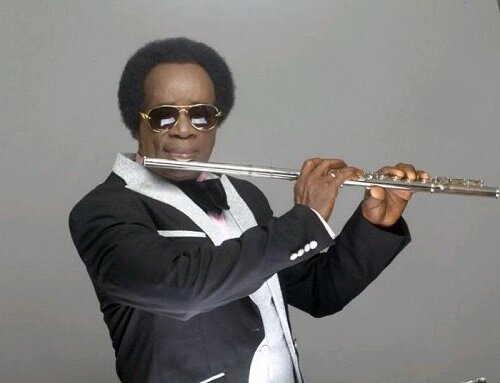 Legendary musician and master guitarist, Sir Victor Uwaifo is dead.

 Three Americans from Maryland have been arrested and charged by a federal grand jury for conspiracy, violation of the Arms Export Control Act and the Export Reform Control Act, relating to the export of firearms and ammunition from the United States to Nigeria.
 Residents of the Federal Capital Territory have been called upon to be vigilant and to communicate with one another as well as to the security agencies, all suspicious people or activities within their vicinity to safe guard lives and property across the Territory.
 The International Committee of All Africa Music Awards (AFRIMA) and the African Union Commission (AUC) have announced that it has received 8,880 entries from no fewer than 50 African countries for the AFRIMA 2021 Awards, at the close of submission of entries on August 20.

 The Group Managing Director of the Nigerian National Petroleum Corporation (NNPC), Mallam Mele Kyari, has attributed the ₦287 billion profit after tax declared by the Corporation for the 2020 financial year to a number of pragmatic measures, including cost-cutting and none interference from any quarters.
 The Independent Corrupt Practices and Other Related Offences Commission (ICPC) is now in the process of pruning down to a manageable level 400,000 Nigerians who applied for employment into just less than 200 jobs which the Commission advertised in 2020.


DSS Did Not Disperse Doctors At Sheraton Hotel, Abuja
The attention of the Department of State Services has once again been drawn to a falsehood being circulated in the media that it dispersed doctors attending a Saudi Arabia organised job interview at the Sheraton Hotel, Abuja, yesterday 26th August, 2021. Though this is illogical and does not add up, sections of the media that reported it did not care to verify the news before going to print. No further evidence was also adduced to prove that the DSS carried out such operation at the hotel. It is obvious that the news is only designed to embarrass the Organisation. Journalists and other media practitioners are enjoined to crosscheck their facts and ensure that they do not use their platforms to mislead the public or undermine national security.
Peter Afunanya, Ph.D
Public Relations Officer
Department of State Services
National Headquarters, Abuja
27th August, 2021