The British High Commissioner to Nigeria, Catriona Laing, has called on the two leading political parties in Nigeria: the All Progressives Congress (APC) and the Peoples Democratic Party (PDP) to present younger candidates with female running mates for the 2023 general elections.
Catriona Laing, who spoke today, May 19 in Port Harcourt, the capital of Rivers state, during her maiden visit, said: “my ideal candidates would be two younger presidential candidates, both with female vice-presidential candidates.”
She asked Governor Nyesom Wike and Minister of Transportation, Rotimi Amaechi, to ensure peaceful elections in Rivers State, warning that the UK would deny visas to Nigerians who disrupt 2023 elections.
“It is essential that there’s a peaceful election in Rivers State. It’s going to be a crucial part of his (Wike) legacy, how the election goes in this state. We’ve been saying the same thing to Amaechi.
“Another thing we will be doing is to remind people that if people do incite violence or act violently, we will be prepared to deny them visas to the UK. We will make that statement clear and say it over again.”
Governor Nasir El-Rufai is fighting a new war that both the Federal and other 35 States and the FCT are shying away to confront, choosing instead to cower in fear of the blackmail of labour.
How much of state resources should be spent on governance, in paying salaries, pensions and other emoluments of civil servants and political appointees? 40%, 60%, 80%, 90% or even all?
Aregbesola confronted this question as governor of Osun, leading to his innovative formula of paying a percentage of workers emoluments as he allocated resources into building roads, schools and other infrastructure. His government was badly cash strapped and he could not even do anything for the people of Ilesha, his hometown, who rewarded him by snubbing his party in the 2018 governorship election.
Despite the efforts by President Buhari to spread state debts over 30 years, giving them a huge financial relief, the states are back with the same problem, unable to pay salaries.
Kwara has refused to pay the minimum wage of N30,000. Gombe also announced a default. Kano recently announced wage cuts. Many states are groaning as the workers demand full payment for their services.
My state of Ogun has a huge bill of N50 billion in pension arrears. I laughed when Gov. Abiodun said he would reduce the bill by N2billion every year, which means in eight years, he would have paid just N16billion, with the bill growing bigger and bigger every year.
No one begrudges workers for demanding full payment for working for government, some spending 35 years in service. They retire, awaiting retirement benefits or the contributory pension, many states are not paying. Their plight is pitiable and we have seen pathetic scenes of retirees dying on the queue, while waiting for payment.
Government must think out a solution. El-Rufai has taken a route that Federal and States avoid, by deciding to rightsize the civil service. The pandemic has been an eye-opener, when workers were ordered to stay at home. It became clear that government does not need the thousands of people on its payroll.
If everyone had taken a rational decision by asking the redundant workers to go, this would have freed money to enable govt provide roads, hospitals, schools and others.
Resources are shrinking for these hugely critical capital heads, a reason, our roads and schools are failing and hospitals have become worse than consulting centres.
The way out is what El-Rufai is saying in Kaduna to striking workers.
“KDSG will not submit its treasury to the entitled minority. We will reform and rightsize our public service to meet the needs and resources of the Kaduna State even if the NLC strikes ad infinitum.
“The government remains committed to using all the resources it can generate to serve the interests of the majority of its citizens, providing social services beyond paying salaries, always putting the interests of the many ahead of the few’.
El-Rufai should not be left to confront this issue alone. Federal, states need an urgent summit on how to strike a balance between paying civil servants and allocating resources to the needs of the majority.
Back to my question: how much percentage of a state resources should go into salaries?
I will say that anything above 30 percent should send the alarms ringing, as it will cause the acute social and economic problems we have today, when government has become a total failure in catering for the masses.
For now, Governor El-Rufai wins my trophy for courage. As Copied.
Governor Nasir El-Rufai of Kaduna State has described the Nigeria Labour Congress’ demonstration as one akin to banditry.
The governor in a statement today, May 18, said: “KDSG (Kaduna State Government) views NLC actions as the mob equivalent of bandits that are kidnapping and menacing our citizens. “Bandits illegally use arms, but the NLC’s mob action is for similar ends: to hold hostage freedoms, economic interests, livelihoods and resources of the people of Kaduna State.
“Efforts to dress up criminal activity as industrial action do not change the reality of lawbreaking that has unfolded, including their persistently ignoring the prohibition against impeding essential services.
“Also, KDSG cannot ignore the illegal pressures brought to disrupt the operations of banks and other private business whose staff and customers do not have any industrial dispute with the state or any other government.”
Kaduna State has been grounded in the last 48 hours as aviation workers, bank workers, rail workers, electricity workers, health workers, teachers, amongst others, down tools in protest against the sacking of some local government workers by the El-Rufai-led government.
The Inspector-General of Police, Usman Alkali Baba, has ordered officers, posted to Southeast as members of a new special operational action plan code-named “OPERATION RP” to be ruthless with members of the Indigenous People of Biafra (IPOB) and its armed wing, the Eastern Security Network (ESN).
The special operation, according to the police boss, in a statement today, May 18 by the Force’s spokesman, Frank Mba, is meant to engender all-inclusive security actions to roll-back the murderous attacks, violence, proliferation of weapons and other threats to law and order occasioned by the separatist agenda being heightened by the IPOB and ESN in the region.
“The ‘Operation’ will be carried out by operatives of the Force in collaboration with the Armed Forces, the intelligence community and other sister security agencies. The personnel deployed have been charged to be civil with the law-abiding citizens, but firm and ruthless with criminal elements operating under any guise whatsoever who may attempt to test the collective will of the people.”
The IGP observed that activities of the group in the region have assumed an armed dimension in which important political and community leaders as well as personnel and assets of the Nigeria Police, Military and other security agencies, critical national infrastructure are being constantly targeted in clearly well-coordinated, premeditated manners. This is in addition to deepening inter-ethnic prejudice and intolerance, unjustifiable inter-ethnic violence and counter-violence, loss of lives and massive destruction of properties.
Usman Bala expressed appreciation to individual and collective efforts of all the South-East Governors and other critical stakeholders in the region towards supporting the Police in restoring security and strengthening national unity, and assured the nation, that in the coming days the special operation will be extended to other parts of the South-East region to confront criminal elements, take the battle to their doorsteps and re-order our cherished national values in the region.
The IGP said that the “Operation RP” will be replicated in other parts of the country, to address peculiar crimes including banditry, kidnapping, armed robbery, cultism, amongst others.
This was even as the Governor of Enugu State, Ifeanyi Ugwuanyi, commended the IGP for initiating the special operation, describing the operation as timely, and will help in rejigging and re-tooling the security architecture of the South-East.
Nigeria’s Vice President, Professor Yemi Osinbajo has assured that 25 million Nigerians will enjoy electricity in the country by 2023.
“We have developed an Economic Sustainability Plan, which includes our flagship Solar Power Naija programme aiming to electrify 5 million households and 25 million people by 2023, leveraging solar mini-grids and stand-alone systems.”
Professor Osinbajo, who spoke today, May 18, at the 7th Annual New York-based Columbia University Global Energy Summit organized by the Columbia Centre on Global Energy Policy, said that Nigeria believe in the potential of off-grid renewables to close the energy deficit even across Africa. “But we also look to developed countries, the private sector, and development agencies to recognise the potential that a just and clean energy transition can bring to the development of our continent and other developing regions. “We hope to work jointly towards common goals including the market and environmental opportunity presented by the financing of clean energy assets in growing energy markets.”
The Vice President stressed the need for equity, adding: “limiting the development of gas projects, poses dire challenges for African nations, while making an insignificant dent in global emissions.” He emphasized the need for justice, social justice, and fairness, even as he said: “what is often not sufficiently considered in thinking through the transition to net-zero emissions is the critical role that energy, in our case, gas plays in catalyzing economic development and supporting people’s health and livelihoods, especially in poorer countries. “Natural gas is currently used for industry, fertilizer manufacturing, and cooking – which are more difficult to transition than power generation.” On the access element of the energy transition, the Vice President explained that “it must be linked with the emission reduction aspect. “Pathways to reaching net-zero by 2050 have to include first ending energy poverty by 2030. If energy access issues are left unaddressed, we will continue to see growing energy demand being addressed with high polluting and deforesting fuels such as diesel, kerosene, and firewood.”
The Progressive Governors Forum (PGF) has appealed to Kaduna State Government and the Nigeria Labour Congress (NLC) to come to a round table to resolve the current industrial crisis rocking the State over the issue of
rightsizing Local Government employees.
In a statement today, May 18, chairman of the Forum and Governor of Kebbi State, Alhaji Abubakar Atiku drew attention to the challenges facing all the states, especially given dwindling revenue.
It therefore appealed to all patriotic Nigerians, including the NLC, to demonstrate more commitment toward engaging governments at all levels to address problems, saying: “this is not the time for muscle flexing.”
The Forum said that countries around the world are affected by the downturn in the global economy and are responding in different ways.
“Nigeria and indeed states within the country are not an exception. At this stage of our democratic journey, there cannot be limits to engagement between all governments and citizens. Every step must be therefore taken to resolve the current face-off between Kaduna State Government and NLC.
“We appeal to both the State Government and NLC to return to the negotiating table.
“In particular, we want to appeal to the NLC leadership to recognise that the burden of leadership at this point is more about responding to challenges based on the honest disposition of correcting past mistakes.
“As Progressive Governors, we appreciate that all states are unique and that is why the labour laws encourages negotiations between state governments and public sector negotiating councils. It is noteworthy that Kaduna is among the first states to pay the new minimum wage.
“At the same time, we want to appeal to Kaduna State Government under the leadership of our colleague, Mallam Nasir El-Rufai to take all the necessary step to ensure the resolution all disagreements in the larger interest of citizens in Kaduna State.
“We are confident that both Kaduna State Government and NLC will resolve all outstanding issues and restore industrial harmony in Kaduna State.”
President Buhari participates at the African Finance Summit in Paris, France on 18th May 2021
Today, leaders from across Africa meet in Paris to discuss plans to recover from the impact of a common enemy – COVID-19. But for African nations from across the Sahel region and beyond, the issues are inseparable from the fight against another common enemy which is terrorism. And like the war against the Coronavirus, it is one we are fully united with France in our strong determination to overcome.
Across the world, conflict and Coronavirus have not been far apart. As governments have struggled to contain COVID, jihadists have taken advantage in the Sahel – the vast arid stretch of territory that lies between the Sahara and Sub-Saharan Africa. Terrorist incidents have become tragically common across Mali, Burkina Faso and Niger. Around the Lake Chad Basin, Boko Haram terrorism have taken advantage of the pandemic and pushed back into my country Nigeria, whilst still launching raids and attacks in Chad, Cameroon, and Niger.
We have seen more than once how Boko Haram – which in French means “l’éducation occidentale est un péché” – can regroup, morphing in form and tactics. A matter of only a few years ago, they were reduced to a territory-less group, where once they had controlled an area in Nigeria three times the size of Lebanon. It has demonstrated why pushing against one front can prove futile if groups can simply migrate to ponds of insecurity across porous borders. Yet as instability has spread, so the networks that sustain it have strengthened – whether that be weapons supply chains from Libya, ideological imports of Al-Qaeda and ISIS from the Middle East, or trafficking networks that take money from those escaping instability and feeds it back into the system that generates it.
Meanwhile the infection is spreading further afield and reaching into the heart of Europe and France is not being spared the malignant, with innocents murdered on its streets. In that context, our fate is linked. Hence Paris has been active in this common fight. The French Operation Barkhane has provided critical boots on the ground in shoring up security across our region. Though challenges remain, it has ensured a wide expanse of territory has not descended into lawless playground where terrorists masquerading as fighting for Islam groups can freely flourish and multiply. That assistance has been profoundly appreciated in the region.
Now Nigeria and France should deepen our anti-terror cooperations if we are to overcome this scourge – particularly in the aftermath of the murder of the late President of Chad. Where for historical ties, support came to Nigeria from the UK, and to the G5 from France, the terrorists do not recognise these border-aligned distinctions. We must be agile and flexible, cooperating cross our borders to cut the head off their groups.
Indeed, we have already done much to strengthen our bond. Intelligence sharing is well developed, along with training against improvised explosives. But there is more we can do in cross-border military exercises and coordinating strategy. At the same time, we know France has borne much of the strain for combating terrorism of the region, and we – the leaders of Sahel countries – must also do more to present a unified front to lobby other Western nations, particularly Great Britain and the United States and the European Union for further military and humanitarian assistance.
However, we know that military gains do not provide the whole solution. Without security, economic opportunity remains fragile. Without economic opportunity, the propensity for conflict grows. The solution must therefore be two pronged. If we do improve those conditions, it leaves our people vulnerable to indoctrination, as one is vulnerable to COVID-19 without a vaccine.
In the Sahel, crises converge. Traditionally, this vast arid land has been poorer than its Mediterranean neighbours to the north and fertile land to its South. Now, climate change and environmental degradation squeeze the region of water sources, draining opportunity and increasing competition amongst various groups for scarce resources. The fallout from Libya has flushed the whole region with weapons, making any disputes and competition far more destructive. And it is upon these conditions, the lies and propaganda of terrorists who falsely claim to be Islamists promising salvation can find an audience. Islam is a religion of peace.
To counteract these, we must focus on initiatives that sustainably spread opportunity far and wide across the Sahel. Transport links across the Sahel have become dilapidated, much of it still the remnants of the colonial era. For the region’s burgeoning young population, reinvigorating these links or building anew is critical. It allows for efficient allocation of labour; the movement of inputs such as seed, fertiliser or equipment to the areas that need it; and freight to take produce or extractives to market or value-add factories.
Now, as the world emerges from the pandemic, we have the chance to build back better. Though we always knew it, COVID-19 underlined how interconnected and interdependent the world is. With that shattering reminder, we can create a world with that idea at its forefront – one that provides security and opportunity for both of us.
Buhari is President of the Federal Republic of Nigeria.
The Central Bank of Nigeria (CBN) Governor, Godwin Emefiele has faulted claims in certain quarters suggesting that the Bank’s targeted interventions in the agricultural sector are tilted in favour of a certain section of the country.
Emefiele made the clarification in Ado-Ekiti, Ekiti State, on Tuesday, May 18, 2021, while unveiling the 2020 wet season harvest aggregation and flag-off of the 2021 wet season input distribution in the South-West geo-political zone under the CBRN Anchor Borrowers’ Programme.
According to him, contrary to views held by some individuals and interest groups, the Bank’s interventions in the Anchor Borrowers’ Programme (ABP) were not only about rice production but had expanded to over 21 crops and were evenly spread across the country.
Describing criticisms against the Bank’s effort at boosting agriculture in Nigeria as unfair, he disclosed that more than N300 billion had been disbursed to companies operating in the southern part of Nigeria, citing companies and farmers across Lagos, Edo, Ondo, Ogun, Osun, Ekiti, Bayelsa, Rivers, Cross River as major beneficiaries of the Bank’s interventions.
Meanwhile, Emefiele charged stakeholders in the various crop value chains in the Nigeria to continually make consistent and positive strides towards attaining food security, noting that attaining self-sufficiency in food production will not come cheap.
While acknowledging the current challenges in attaining food security in Nigeria, he said synergy among stakeholders will surely catalyse the growth process, assuring that the CBN stood ready to offer effective partnership to deliver on this critical national mandate of attaining self-sufficiency in food production.
According to him, the sustainability of Nigeria’s current efforts in agricultural production can only be guaranteed if youths are attracted into agriculture as they remain the future of the Country.
He enjoined Nigerian youths to embrace agriculture, noting that the “They have the talent, energy, enthusiasm, technological adoption capacity and all the right drive to revolutionize agricultural production in Nigeria.
“We must meet them half-way to ensure that we provide the enabling environment to make agriculture attractive to them,” he noted, adding that “the Central Bank of Nigeria stands ready to support youths that are willing to engage in agriculture.”
The CBN Governor disclosed that a total of 3,107,890 farmers had been financed for the cultivation of 3,801,397 hectares across 21 commodities through 23 Participating Financial Institutions in the 36 States of the Federation and FCT, from the inception of the programme till date. He added that under the 2020 wet season CBN-RIFAN partnership, the Bank had also financed 221,450 farmers for the cultivation of 221,450 hectares in 32 States.
Emefiele disclosed that the Bank planned a minimum 1 million hectares of rice through a combination of RIFAN farmers and prime/private anchors for each planting season in 2021. While also unveiling aggressive production plans for maize, wheat, soybeans, cassava, sorghum and cassava, he noted that the Bank’s backward integration drive with rice millers was also gaining momentum as the CBN intends to finance some millers to grow their own paddy during the current wet season.
The CBN Governor also restated the Bank’s resolve to partner with the fiscal authorities to ensure the integration of Nigerian farmers into the Government’s Economic Sustainability Programme aimed at providing five million homes with electricity using solar energy. He also urged famers to repay their loans in order to sustain the Anchor Borrowers’ Programme (ABP).
He explained that, under the programme, every farmer with a good repayment record in the Anchor Borrowers’ Programme would be eligible to get a solar home system that will provide electricity to power their essential home appliances.
According to him, the Bank will develop a repayment framework that will allow farmers to use their farm produce as repayment for the electricity consumed by the beneficiaries of the scheme. This is even as he expressed hope that the incentive would improve the standard of living of farmers in Nigeria, motivate prompt loan repayment and ultimately enhance the sustainability of the programme.
“Loan repayment is the hallmark of every credit cycle and the sustainability of the programme is hinged on farmers’ ability and willingness to repay their loans, and we are constantly engaging with them to enhance their trust in the system,” Emefiele noted.
Unveiling what he described as the first ever grain pyramid in the South-West, Mr. Emefiele also expressed strong optimism that the event would generate the required momentum to catalyse rice cultivation in the region and provide a sustainable source of paddy for the numerous rice mills springing up in the South-West and its environs.
While reiterating the massive potential in Nigeria’s agricultural sector, he stressed the need for more private sector investment in the agricultural value chain, noting that significant improvements in domestic production of staple food items, would help in attaining the country’s price stability goals while reducing its dependence on imported food items.
The CBN Governor further revealed that the revamped Nigeria Commodity Exchange (NCX), into which the Bank and its partners had committed the sum of N50 billion, will commence operation by the fourth quarter of 2021. According to him, “a vibrant commodity exchange will significantly enhance post-harvest handling, guarantee effective pricing for farmers, minimize the adverse effect of middlemen and commodity hoarders and ultimately transfer the gains from primary production to other nodes of the value chain.
In his remarks, Governor of Kebbi State, Senator Abubakar Atiku Bagudu, who represented President Muhammadu Buhari and doubles as the Vice Chairman, National Food Security Council, said the rice pyramids unveiled in Ekiti underscored the clarion call by President Muhammadu Buhari for Nigeria to “produce what we eat and eat what we produce.”
While commending the Ekiti State Governor for cueing into the rice revolution, he said each state in Nigeria had the capacity to produce rice, hence the need for states to compete to develop their respective potential.
Bagudu disclosed that over 50 new rice mills had come on board in Nigeria, signaling that Nigeria was drawing closer to its quest for self-sufficiency in food production. According to him, the recently released data by the National Bureau of Statistics (NBS), indicating a downward trend in inflation, was indicative of the strong performance of the agricultural sector, which he also noted was responsible for the quick exit of Nigeria from two successive recessions.
Also speaking, the host Governor, Dr. Kayode Fayemi noted that the support of President Buhari for local rice production, through the CBN’s Anchor Borrowers’ Programme (ABP), had contributed largely to the investments in agriculture, which in turn had contributed to increased rice production and reduction in rice importation.
While recalling that Ekiti State used to be the leader in rice production in the South-West geo-political zone, Gov. Fayemi declared that the State was determined to reclaim its pride of place as a leading producer of rice through the empowerment of a new generation of farmers in collaboration with the Rice Farmers Association of Nigeria (RIFAN).
He said his administration was determined institutionalize commercial agriculture and make it more profitable to the populace. He added that Ekiti State was committed to changing the narrative by reviving agriculture and transforming subsistence farming to commercial production across different crops with the aim of creating job opportunities for farmers and other sectors of the economy.
In their various remarks, the Governors of Ondo (Rotimi Akeredolu), Jigawa (Mohammed Badaru Abubakar) and Osun (Adegboyega Oyetola) stressed the need for greater attention to be given to agriculture import substitution, even as they commended the CBN Governor for his vision in putting the country first by supporting agriculture.
An umbrella body of nomadic herdsmen in Nigeria, the Miyetti Allah Kautal Hore, has threatened to drag the governors of Southern Nigeria to court over their ban on open grazing in the region.
The group, which described the ban as an empty policy, said: “If you stop our legitimate business, we will challenge you in the court of law.”
Spokesman for the group, Saleh Alhassan, in an interview said: “the ban is an empty policy because it has no basis. You can’t ban our business, we are not criminals, let them go after the bandits and the criminals.
“We can’t comply with an empty policy. If they create ranches and ask us to go there, we will go there but they can’t wake up one day and say they are banning our business.
“If the governors are stopping us from grazing, they are preparing for confrontation. Their action is a declaration of war on the herders.
“We condemn it. It is totally unacceptable to us. You can’t ban our business without providing ranches. Let them create ranches for us, we don’t have the land, we are ready to ranch, we are ready to pay, let them create the enabling environment for us.”
On whether the Miyetti Allah would dialogue with the Southern governors on the issue, Alhassan said: “their colleagues in the North will engage them since it is politics.
“We also have cultural ways of addressing injustice.”
Seventeen Southern Governors had met in Asaba, Delta State last Tuesday, where they resolved to ban open grazing of cattle in the region, among other resolutions, blaming it for causing insecurity.
The Government of Nigeria, through the National Information Technology Development Agency (NITDA) has lamented the introduction of new private policy by owner of a social medium platform, WhatsApp, aimed at subjecting its subscribers in Nigeria to what it called “digital colonialism.”
In a statement today, May 17 by the spokesperson of NITDA, Mrs. Hadiza Umar said: “NITDA is collaborating with stakeholders, to explore all options to ensure that Nigerians do not become victims of digital colonialism.
“Our national security, dignity and individual privacy are cherished considerations we must not lose. Because of this, we shall work with the Federal Ministry of Communications and Digital Economy to organize a hackathon for Nigerians to pitch solutions that can provide services that will provide functional alternatives to existing global social platforms.” The statement said that Whatsapp shared a reviewed Privacy Policy on 4th January 2021, informing its users outside the European Union that it would now share their information with Facebook and its sister companies.
Full text of the statement goes thus:
The National Information Technology Development Agency (NITDA) under Section 6 (f) of the NITDA Act 2007 wishes to provide this advisory to Nigerians to address Nigerian concerns on changes to Whatsapp Terms of Service and Privacy Policy which took effect on 15th May, 2021. Millions of Nigerians use Whatsapp platform for business, social, educational, and other purposes. The platform is the social media platform of choice for many Nigerians.
To understand the issues and give an opportunity to explain its views, NITDA in collaboration with the African Network of Data Protection Authorities engaged Facebook Incorporated, the owners of Whatsapp platform, specifically, its global Policy officials on 9th April, 2021. After the engagement, NITDA, as Nigeria’s data privacy regulator, wishes to advise Nigerians on how Facebook’s business decision affects their privacy rights.
What Has Changed? Facebook acquired Whatsapp in February 2014. Facebook currently has over 2.5 billion users globally, while Whatsapp has over 2 billion users. Whatsapp shared a reviewed Privacy Policy on 4th January 2021, informing its users outside the European Union that it would now share their information with Facebook and its sister companies.
Datasets collected by Whatsapp Whatsapp collects the following information on users: ⮚ account information; ⮚ messages (including undelivered messages, media forwarding); ⮚ connections; ⮚ status information; ⮚ transactions and payments data; ⮚ usage and log information; ⮚ device and connection information; ⮚ location information; ⮚ cookies etc.
Other information collected by Whatsapp include: ⮚ battery level; ⮚ signal strength; ⮚ app version; ⮚ browser information; ⮚ mobile network; ⮚ connection information (including phone number, mobile operator or ISP), language and time zone; ⮚ Internet Protocol address; ⮚ device operations information; ⮚ social media identifiers.
The new policy best renders the platform’s information sharing practices with Facebook and its companies- “As part of the Facebook Companies, WhatsApp receives information from, and shares information with, the other Facebook Companies. We may use the information we receive from them, and they may use the information we share with them, to help operate, provide, improve, understand, customize, support, and market our Services and their offerings, including the Facebook Company Products…”
Whatsapp shares the above listed information and the following with the Facebook company: ⮚ account registration information; ⮚ details on how users interact with others; ⮚ mobile device information; ⮚ Internet Protocol address; ⮚ Location data etc.
The Facebook Team confirmed that private messages shared on WhatsApp consumer version are encrypted and not seen by the company. But the metadata (data about the usage of the service) which is also personal information is shared with other members of the Facebook Group.
Whatsapp users are at liberty to decide on giving consent to the processing of their data based on the new privacy policy. The Nigeria Data Protection Regulation (NDPR) recognizes consent (a clear, unambiguous expression of privacy terms communicated by the controller and accepted by the Data Subject) as one of the lawful basis for data processing. Acceptance of the new privacy policy and terms of use implies that user data would now be shared with Facebook and other third parties. Users will now be subject to the terms and policies of Facebook and other receiving entities with or without being direct subscribers to such services. Advise As a result of the foregoing, NITDA advises as follows:
Nigerians may wish to note that there are other available platforms with similar functionalities which they may wish to explore. Choice of platform should consider data sharing practices, privacy, ease of use among others; and
Limit the sharing of sensitive personal information on private messaging and social media platforms as the initial promise of privacy and security is now being overridden on the bases of business exigency.
Nigeria’s engagement with Facebook continues. We have given them our opinion on areas to improve compliance with the NDPR. We have also raised concerns as to the marked difference between the privacy standard applicable in Europe, under the GDPR and the rest of the world.
Given the foregoing and other emerging issues around international technology companies, NITDA, with stakeholders, is exploring all options to ensure Nigerians do not become victims of digital colonialism. Our national security, dignity and individual privacy are cherished considerations we must not lose. Because of this, we shall work with the Federal Ministry of Communications and Digital Economy to organize a hackathon for Nigerians to pitch solutions that can provide services that will provide functional alternatives to existing global social platforms.
Mrs. Hadiza Umar MNIPR, M.ARPA, MCIPR Head, Corporate Affairs and External Relations Corporate Headquarters, Garki, Abuja
We use cookies on our website to give you the most relevant experience by remembering your preferences and repeat visits. By clicking “Accept”, you consent to the use of ALL the cookies.
This website uses cookies to improve your experience while you navigate through the website. Out of these, the cookies that are categorized as necessary are stored on your browser as they are essential for the working of basic functionalities of the website. We also use third-party cookies that help us analyze and understand how you use this website. These cookies will be stored in your browser only with your consent. You also have the option to opt-out of these cookies. But opting out of some of these cookies may affect your browsing experience.
Necessary cookies are absolutely essential for the website to function properly. This category only includes cookies that ensures basic functionalities and security features of the website. These cookies do not store any personal information.
Any cookies that may not be particularly necessary for the website to function and is used specifically to collect user personal data via analytics, ads, other embedded contents are termed as non-necessary cookies. It is mandatory to procure user consent prior to running these cookies on your website.



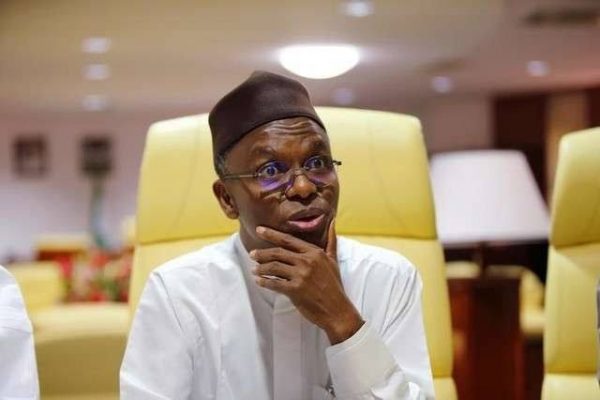 Governor Nasir El-Rufai of Kaduna State has described the Nigeria Labour Congress’ demonstration as one akin to banditry.
 The Inspector-General of Police, Usman Alkali Baba, has ordered officers, posted to Southeast as members of a new special operational action plan code-named “OPERATION RP” to be ruthless with members of the Indigenous People of Biafra (IPOB) and its armed wing, the Eastern Security Network (ESN).
 Nigeria’s Vice President, Professor Yemi Osinbajo has assured that 25 million Nigerians will enjoy electricity in the country by 2023.

 The Central Bank of Nigeria (CBN) Governor, Godwin Emefiele has faulted claims in certain quarters suggesting that the Bank’s targeted interventions in the agricultural sector are tilted in favour of a certain section of the country.
 An umbrella body of nomadic herdsmen in Nigeria, the Miyetti Allah Kautal Hore, has threatened to drag the governors of Southern Nigeria to court over their ban on open grazing in the region.
 The Government of Nigeria, through the National Information Technology Development Agency (NITDA) has lamented the introduction of new private policy by owner of a social medium platform, WhatsApp, aimed at subjecting its subscribers in Nigeria to what it called “digital colonialism.”

Governor Nasir El-Rufai’s Courage, By Bayo Onanuga
Governor Nasir El-Rufai is fighting a new war that both the Federal and other 35 States and the FCT are shying away to confront, choosing instead to cower in fear of the blackmail of labour.
How much of state resources should be spent on governance, in paying salaries, pensions and other emoluments of civil servants and political appointees? 40%, 60%, 80%, 90% or even all?
Aregbesola confronted this question as governor of Osun, leading to his innovative formula of paying a percentage of workers emoluments as he allocated resources into building roads, schools and other infrastructure. His government was badly cash strapped and he could not even do anything for the people of Ilesha, his hometown, who rewarded him by snubbing his party in the 2018 governorship election.
Despite the efforts by President Buhari to spread state debts over 30 years, giving them a huge financial relief, the states are back with the same problem, unable to pay salaries.
Kwara has refused to pay the minimum wage of N30,000. Gombe also announced a default. Kano recently announced wage cuts. Many states are groaning as the workers demand full payment for their services.
My state of Ogun has a huge bill of N50 billion in pension arrears. I laughed when Gov. Abiodun said he would reduce the bill by N2billion every year, which means in eight years, he would have paid just N16billion, with the bill growing bigger and bigger every year.
No one begrudges workers for demanding full payment for working for government, some spending 35 years in service. They retire, awaiting retirement benefits or the contributory pension, many states are not paying. Their plight is pitiable and we have seen pathetic scenes of retirees dying on the queue, while waiting for payment.
Government must think out a solution. El-Rufai has taken a route that Federal and States avoid, by deciding to rightsize the civil service. The pandemic has been an eye-opener, when workers were ordered to stay at home. It became clear that government does not need the thousands of people on its payroll.
If everyone had taken a rational decision by asking the redundant workers to go, this would have freed money to enable govt provide roads, hospitals, schools and others.
Resources are shrinking for these hugely critical capital heads, a reason, our roads and schools are failing and hospitals have become worse than consulting centres.
The way out is what El-Rufai is saying in Kaduna to striking workers.
“KDSG will not submit its treasury to the entitled minority. We will reform and rightsize our public service to meet the needs and resources of the Kaduna State even if the NLC strikes ad infinitum.
“The government remains committed to using all the resources it can generate to serve the interests of the majority of its citizens, providing social services beyond paying salaries, always putting the interests of the many ahead of the few’.
El-Rufai should not be left to confront this issue alone. Federal, states need an urgent summit on how to strike a balance between paying civil servants and allocating resources to the needs of the majority.
Back to my question: how much percentage of a state resources should go into salaries?
I will say that anything above 30 percent should send the alarms ringing, as it will cause the acute social and economic problems we have today, when government has become a total failure in catering for the masses.
For now, Governor El-Rufai wins my trophy for courage.
As Copied.