The Nigerian Institute of Public Relations, (NIPR) today, May 20, in Bauchi, at its Annual General Meeting, conferred the prestigious Fellowship Award on Dr. Kennie Obateru, Group General Manager, Group Public Affairs Division of the Nigerian National Petroleum Corporation.
Obateru, a self-driven and an amiable PR practitioner, joined the NNPC in 1992 as an experienced hire. Through the years he has served in various capacities as: General Manager/Head NNPC London Office, Manager, Public Affairs, National Petroleum Investment Management Services (NAPIMS), Manager, Public Affairs, Port Harcourt Refining Company (PHRC) among other positions.
He is an alumnus of the Nigerian Institute of Journalism, Lagos; University of Ilorin and University of Stirling, Scotland, UK, where he obtained a Certificate in News Reporting, a B.A. (Hons) Performing Arts and an M.Sc. in Public Relations respectively.
In 2012, he was awarded a Doctorate Degree in Management (Honoris Causa) by the Commonwealth University, Belize.
Obateru has attended numerous professional courses and conferences at home and abroad which include International Public Relations Association Conferences,) World Petroleum Congresses (WPCs) and more than a dozen OPEC Ministerial Conferences among others.
In the picture, the President and Chairman of Governing Council, Nigerian Institute of Public Relations (NIPR), Mallam Mukhtar Sirajo (left), has a handshake with Dr. Obateru after inducting him into the Fellowship of the Institute.
Leader of Nigerian militant terrorist group, Boko Haram has reportedly blown himself with bomb in a deadly clash between his men and those of the Islamic State West Africa Province (ISWAP).
Intelligence sources confirmed that ISWAP, a splinter group of Boko Haram, who has grown in power and influence since it started operating from its territorial base on the banks and islands of Lake Chad has now occupies some section of Sambisa Forest following the latest development.
A situation report by one of the intelligence services said that, the notorious terrorist leader must have been killed during struggle for power between the Boko Haram and the ISWAP groups
The reports stated: “On 19th May 2021, about 1829hours, ISWAP top Fighter Baana DUGURI-on this selector – geolocated around sambisa forest Pulka Gwoza LGA BRS, informed ISWAP logistics commander MODU SULUM- geolocated opposite General hospital Konduga LGA Borno state that, they killed ABUBAKAR SHEKAU over all BH leader in Sambisa Forest date.
“DUGURI disclosed that the ISWAP fighters team surrounded the BH leader with his team and shooting ensued between the two factions. DUGURI further added that SHEKAU detonated a bomb and killed himself when he observed that the ISWAP fighters wanted to capture him alive.
“Furthermore, DUGURI informed SULUM that the two sides also lost some fighters during the shooting .He avered that even Yesterday ISWAP was pursuing ABUBAKAR SHEKAU and he SHEKAU discarded his cap and ran but today the pursuit continued and he was finally killed.DUGURI asked MODU SULUM if the other BH members who fled are returning to their houses?
“In his response,, SULUM rejoiced over the death of ABUBAKAR SHEKAU and glorified God over the success.He also said few BH members are returning to their houses.”
Meanwhile, Nigerian military has placed all Borno State Commands of the Nigerian Army and Airforce on Alert. The troops have lately been carrying out discreet bombardments around the Sambisa axis and Lake Chad axis which may have triggered the current crisis and strife between the two hitherto collaborators.
Findings reveal that ISWAP has been in pursuit of Shakau which led to him discarding his camp and running off until he was rounded up yesterday which led to his death.
The clash also resulted to some casualties on the ISWAP side.
When contacted, the spokesersons of the military and intelligence services were reluctant to talk.
Some of the spokespersons are currently attending a capacity building workshop at the Nigerian Army Resources Centre (NARC) Abuja.
The Cross River State Governor, Professor Ben Ayade has dumped the Peoples Democratic Party (PDP) on which platform he was elected and switched over to the opposition All Progressives Congress (APC) in the state.
Seven Governors elected on the platform of the APC had stormed Calabar, the Cross River State capital yesterday, May 19, for a meeting with Ayade.
Among those that met with Ayade over dinner were the Governors of Imo, Ekiti, Plateau and Yobe States, Hope Uzodinma, Dr. Kayode Fayemi, Simon Lalong and Mai Mala Buni respectively. They had arrived Calabar at about 7:30pm.
Confirming the development, Ayade’s spokesman, Christian Ita said: “It is true. It just happened now.”
Source: The Eagle Online.
President Muhammadu Buhari has assured Nigerians that he is committed to multi-party system as well as free and fair elections.
The President believed that the bedrock of democracy remains sustenance of the multi-party structure, with trust from citizens.
The President, who spoke today, May 19, at an interactive session with some Nigerians in Paris, France, said that results from elections since he assumed office had been a mixed bag, with the people’s choice playing out, promising to keep the template that had brought more credibility to the electoral process.
“Free and fair election is a great concern. In the last elections, our party lost in some elections and it reflects our position of non-interference.
“Normally those in power will win by hook or by crook. We believe in free and fair elections. I have respect for Nigerians to choose their leaders. We have shown we respect our citizens by allowing them to choose their leaders.
“We gave instructions to security to deal with anyone who uses thugs to disrupt electoral processes. What I can assure you is that you can walk about and around with your head raised high that this administration is committed to multi-party system.”
President Buhari said he had watched Nigerians spend long hours in campaigns listening to candidates since 2003, 2007, 2011, when he contested elections and lost, and 2015 and 2019 presidential elections, which he won.
“Nigerians deserve respect. I have suffered before, so I know what it means. My duty is to serve Nigeria and Nigerians with all my heart. I assure that in spite of the ill luck, with drop in resources, we will do our best,’’ he added.
The President said investments had been channeled into the agricultural sector, with visible results, explaining that the policy on border closure to neighbouring countries was to protect the economy and improve security.
“The future of Nigeria is in agriculture.”
On security, President Buhari said that all the service chiefs were changed in order to inject new energy and ideas into protecting the country, adding that the security chiefs were also given clear targets and time lines.
“We will educate people to develop our country. Our greatest resources are our people and educating them is a priority,’’ the President added.
In his remarks, Nigerian Ambassador to France, Kayode Ibrahim Laro, appreciated the President for always creating time to interact with Nigerians, describing him as the “most friendly President to Nigerians in diaspora.”
At the meeting, Nigerians in Paris raised issues with the President on security, voting in elections, economy and education.
With the intervention of the federal government, the Nigeria Labour Congress (NLC) has suspended its five days warning strike in Kaduna State.
Announcing the suspension, the NLC President, Ayuba Wabba said the decision is to honour the invitation of the Federal Government on Thursday to mediate in the dispute between labour and the Kaduna State Government.
Earlier today, the Minister of Labour and Employment, Senator Chris Ngige waded into the ongoing face-off between the Kaduna State government and labour unions by inviting both parties to a reconciliation meeting.
The meeting scheduled to hold at the Ministry of Labour and Employment in the Federal Secretariat, Abuja is to be attended by the Kaduna State Governor, Nasir El Rufai and top officials of the State; s well as the President of the Nigeria Labour Congress, Ayuba Wabba and top NLC leaders.
Dr. Ngige had directed the two parties to maintain the status quo ante bellum pending the resolution of the issues in contention.
“I am therefore constrained in the exercise of my powers as the Minister of Labour and Employment, under the Trade Disputes Act, CAP. T8, Laws of Federation of Nigeria (LFN) 2004; to invite you and your top officials to the emergency trade dispute conciliation meeting,” he said.
Ngige’s intervention came three days after the NLC started a protest following the disengagement over the sacking of about seven thousand civil servants at the state and local governments by the Kaduna State government.
The strike paralysed critical sectors of the economy in the state and the state governor, Nasir El-Rufai in reaction, declared the NLC Chairman and other leaders wanted for economic sabotage and attacks on public infrastructure in Kaduna State under the Miscellaneous Offences Act.
The British High Commissioner to Nigeria, Catriona Laing, has called on the two leading political parties in Nigeria: the All Progressives Congress (APC) and the Peoples Democratic Party (PDP) to present younger candidates with female running mates for the 2023 general elections.
Catriona Laing, who spoke today, May 19 in Port Harcourt, the capital of Rivers state, during her maiden visit, said: “my ideal candidates would be two younger presidential candidates, both with female vice-presidential candidates.”
She asked Governor Nyesom Wike and Minister of Transportation, Rotimi Amaechi, to ensure peaceful elections in Rivers State, warning that the UK would deny visas to Nigerians who disrupt 2023 elections.
“It is essential that there’s a peaceful election in Rivers State. It’s going to be a crucial part of his (Wike) legacy, how the election goes in this state. We’ve been saying the same thing to Amaechi.
“Another thing we will be doing is to remind people that if people do incite violence or act violently, we will be prepared to deny them visas to the UK. We will make that statement clear and say it over again.”
Governor Nasir El-Rufai is fighting a new war that both the Federal and other 35 States and the FCT are shying away to confront, choosing instead to cower in fear of the blackmail of labour.
How much of state resources should be spent on governance, in paying salaries, pensions and other emoluments of civil servants and political appointees? 40%, 60%, 80%, 90% or even all?
Aregbesola confronted this question as governor of Osun, leading to his innovative formula of paying a percentage of workers emoluments as he allocated resources into building roads, schools and other infrastructure. His government was badly cash strapped and he could not even do anything for the people of Ilesha, his hometown, who rewarded him by snubbing his party in the 2018 governorship election.
Despite the efforts by President Buhari to spread state debts over 30 years, giving them a huge financial relief, the states are back with the same problem, unable to pay salaries.
Kwara has refused to pay the minimum wage of N30,000. Gombe also announced a default. Kano recently announced wage cuts. Many states are groaning as the workers demand full payment for their services.
My state of Ogun has a huge bill of N50 billion in pension arrears. I laughed when Gov. Abiodun said he would reduce the bill by N2billion every year, which means in eight years, he would have paid just N16billion, with the bill growing bigger and bigger every year.
No one begrudges workers for demanding full payment for working for government, some spending 35 years in service. They retire, awaiting retirement benefits or the contributory pension, many states are not paying. Their plight is pitiable and we have seen pathetic scenes of retirees dying on the queue, while waiting for payment.
Government must think out a solution. El-Rufai has taken a route that Federal and States avoid, by deciding to rightsize the civil service. The pandemic has been an eye-opener, when workers were ordered to stay at home. It became clear that government does not need the thousands of people on its payroll.
If everyone had taken a rational decision by asking the redundant workers to go, this would have freed money to enable govt provide roads, hospitals, schools and others.
Resources are shrinking for these hugely critical capital heads, a reason, our roads and schools are failing and hospitals have become worse than consulting centres.
The way out is what El-Rufai is saying in Kaduna to striking workers.
“KDSG will not submit its treasury to the entitled minority. We will reform and rightsize our public service to meet the needs and resources of the Kaduna State even if the NLC strikes ad infinitum.
“The government remains committed to using all the resources it can generate to serve the interests of the majority of its citizens, providing social services beyond paying salaries, always putting the interests of the many ahead of the few’.
El-Rufai should not be left to confront this issue alone. Federal, states need an urgent summit on how to strike a balance between paying civil servants and allocating resources to the needs of the majority.
Back to my question: how much percentage of a state resources should go into salaries?
I will say that anything above 30 percent should send the alarms ringing, as it will cause the acute social and economic problems we have today, when government has become a total failure in catering for the masses.
For now, Governor El-Rufai wins my trophy for courage.
As Copied.
Governor Nasir El-Rufai of Kaduna State has described the Nigeria Labour Congress’ demonstration as one akin to banditry.
The governor in a statement today, May 18, said: “KDSG (Kaduna State Government) views NLC actions as the mob equivalent of bandits that are kidnapping and menacing our citizens. “Bandits illegally use arms, but the NLC’s mob action is for similar ends: to hold hostage freedoms, economic interests, livelihoods and resources of the people of Kaduna State.
“Efforts to dress up criminal activity as industrial action do not change the reality of lawbreaking that has unfolded, including their persistently ignoring the prohibition against impeding essential services.
“Also, KDSG cannot ignore the illegal pressures brought to disrupt the operations of banks and other private business whose staff and customers do not have any industrial dispute with the state or any other government.”
Kaduna State has been grounded in the last 48 hours as aviation workers, bank workers, rail workers, electricity workers, health workers, teachers, amongst others, down tools in protest against the sacking of some local government workers by the El-Rufai-led government.
The Inspector-General of Police, Usman Alkali Baba, has ordered officers, posted to Southeast as members of a new special operational action plan code-named “OPERATION RP” to be ruthless with members of the Indigenous People of Biafra (IPOB) and its armed wing, the Eastern Security Network (ESN).
The special operation, according to the police boss, in a statement today, May 18 by the Force’s spokesman, Frank Mba, is meant to engender all-inclusive security actions to roll-back the murderous attacks, violence, proliferation of weapons and other threats to law and order occasioned by the separatist agenda being heightened by the IPOB and ESN in the region.
“The ‘Operation’ will be carried out by operatives of the Force in collaboration with the Armed Forces, the intelligence community and other sister security agencies. The personnel deployed have been charged to be civil with the law-abiding citizens, but firm and ruthless with criminal elements operating under any guise whatsoever who may attempt to test the collective will of the people.”
The IGP observed that activities of the group in the region have assumed an armed dimension in which important political and community leaders as well as personnel and assets of the Nigeria Police, Military and other security agencies, critical national infrastructure are being constantly targeted in clearly well-coordinated, premeditated manners. This is in addition to deepening inter-ethnic prejudice and intolerance, unjustifiable inter-ethnic violence and counter-violence, loss of lives and massive destruction of properties.
Usman Bala expressed appreciation to individual and collective efforts of all the South-East Governors and other critical stakeholders in the region towards supporting the Police in restoring security and strengthening national unity, and assured the nation, that in the coming days the special operation will be extended to other parts of the South-East region to confront criminal elements, take the battle to their doorsteps and re-order our cherished national values in the region.
The IGP said that the “Operation RP” will be replicated in other parts of the country, to address peculiar crimes including banditry, kidnapping, armed robbery, cultism, amongst others.
This was even as the Governor of Enugu State, Ifeanyi Ugwuanyi, commended the IGP for initiating the special operation, describing the operation as timely, and will help in rejigging and re-tooling the security architecture of the South-East.
Nigeria’s Vice President, Professor Yemi Osinbajo has assured that 25 million Nigerians will enjoy electricity in the country by 2023.
“We have developed an Economic Sustainability Plan, which includes our flagship Solar Power Naija programme aiming to electrify 5 million households and 25 million people by 2023, leveraging solar mini-grids and stand-alone systems.”
Professor Osinbajo, who spoke today, May 18, at the 7th Annual New York-based Columbia University Global Energy Summit organized by the Columbia Centre on Global Energy Policy, said that Nigeria believe in the potential of off-grid renewables to close the energy deficit even across Africa.
“But we also look to developed countries, the private sector, and development agencies to recognise the potential that a just and clean energy transition can bring to the development of our continent and other developing regions.
“We hope to work jointly towards common goals including the market and environmental opportunity presented by the financing of clean energy assets in growing energy markets.”
The Vice President stressed the need for equity, adding: “limiting the development of gas projects, poses dire challenges for African nations, while making an insignificant dent in global emissions.”
He emphasized the need for justice, social justice, and fairness, even as he said: “what is often not sufficiently considered in thinking through the transition to net-zero emissions is the critical role that energy, in our case, gas plays in catalyzing economic development and supporting people’s health and livelihoods, especially in poorer countries.
“Natural gas is currently used for industry, fertilizer manufacturing, and cooking – which are more difficult to transition than power generation.”
On the access element of the energy transition, the Vice President explained that “it must be linked with the emission reduction aspect.
“Pathways to reaching net-zero by 2050 have to include first ending energy poverty by 2030. If energy access issues are left unaddressed, we will continue to see growing energy demand being addressed with high polluting and deforesting fuels such as diesel, kerosene, and firewood.”
We use cookies on our website to give you the most relevant experience by remembering your preferences and repeat visits. By clicking “Accept”, you consent to the use of ALL the cookies.
This website uses cookies to improve your experience while you navigate through the website. Out of these, the cookies that are categorized as necessary are stored on your browser as they are essential for the working of basic functionalities of the website. We also use third-party cookies that help us analyze and understand how you use this website. These cookies will be stored in your browser only with your consent. You also have the option to opt-out of these cookies. But opting out of some of these cookies may affect your browsing experience.
Necessary cookies are absolutely essential for the website to function properly. This category only includes cookies that ensures basic functionalities and security features of the website. These cookies do not store any personal information.
Any cookies that may not be particularly necessary for the website to function and is used specifically to collect user personal data via analytics, ads, other embedded contents are termed as non-necessary cookies. It is mandatory to procure user consent prior to running these cookies on your website.




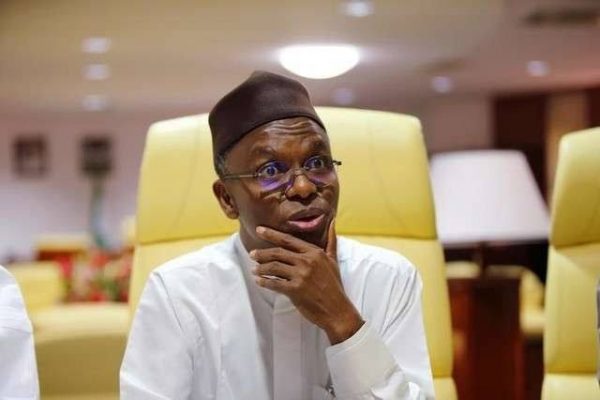 Governor Nasir El-Rufai of Kaduna State has described the Nigeria Labour Congress’ demonstration as one akin to banditry.
 The Inspector-General of Police, Usman Alkali Baba, has ordered officers, posted to Southeast as members of a new special operational action plan code-named “OPERATION RP” to be ruthless with members of the Indigenous People of Biafra (IPOB) and its armed wing, the Eastern Security Network (ESN).
 Nigeria’s Vice President, Professor Yemi Osinbajo has assured that 25 million Nigerians will enjoy electricity in the country by 2023.


Governor Nasir El-Rufai’s Courage, By Bayo Onanuga
Governor Nasir El-Rufai is fighting a new war that both the Federal and other 35 States and the FCT are shying away to confront, choosing instead to cower in fear of the blackmail of labour.
How much of state resources should be spent on governance, in paying salaries, pensions and other emoluments of civil servants and political appointees? 40%, 60%, 80%, 90% or even all?
Aregbesola confronted this question as governor of Osun, leading to his innovative formula of paying a percentage of workers emoluments as he allocated resources into building roads, schools and other infrastructure. His government was badly cash strapped and he could not even do anything for the people of Ilesha, his hometown, who rewarded him by snubbing his party in the 2018 governorship election.
Despite the efforts by President Buhari to spread state debts over 30 years, giving them a huge financial relief, the states are back with the same problem, unable to pay salaries.
Kwara has refused to pay the minimum wage of N30,000. Gombe also announced a default. Kano recently announced wage cuts. Many states are groaning as the workers demand full payment for their services.
My state of Ogun has a huge bill of N50 billion in pension arrears. I laughed when Gov. Abiodun said he would reduce the bill by N2billion every year, which means in eight years, he would have paid just N16billion, with the bill growing bigger and bigger every year.
No one begrudges workers for demanding full payment for working for government, some spending 35 years in service. They retire, awaiting retirement benefits or the contributory pension, many states are not paying. Their plight is pitiable and we have seen pathetic scenes of retirees dying on the queue, while waiting for payment.
Government must think out a solution. El-Rufai has taken a route that Federal and States avoid, by deciding to rightsize the civil service. The pandemic has been an eye-opener, when workers were ordered to stay at home. It became clear that government does not need the thousands of people on its payroll.
If everyone had taken a rational decision by asking the redundant workers to go, this would have freed money to enable govt provide roads, hospitals, schools and others.
Resources are shrinking for these hugely critical capital heads, a reason, our roads and schools are failing and hospitals have become worse than consulting centres.
The way out is what El-Rufai is saying in Kaduna to striking workers.
“KDSG will not submit its treasury to the entitled minority. We will reform and rightsize our public service to meet the needs and resources of the Kaduna State even if the NLC strikes ad infinitum.
“The government remains committed to using all the resources it can generate to serve the interests of the majority of its citizens, providing social services beyond paying salaries, always putting the interests of the many ahead of the few’.
El-Rufai should not be left to confront this issue alone. Federal, states need an urgent summit on how to strike a balance between paying civil servants and allocating resources to the needs of the majority.
Back to my question: how much percentage of a state resources should go into salaries?
I will say that anything above 30 percent should send the alarms ringing, as it will cause the acute social and economic problems we have today, when government has become a total failure in catering for the masses.
For now, Governor El-Rufai wins my trophy for courage.
As Copied.