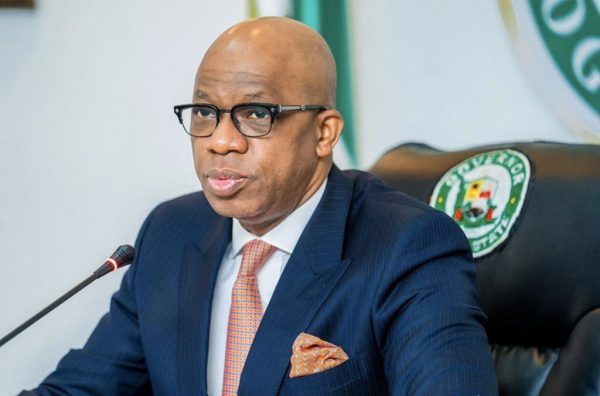
Minister of Information and Culture, Lai Mohammed has confirmed that 40 percent of corruption in Nigeria used to be in business, process and general public service delivery.
“For instance, we realized that following the release of 2019 Transparency International’s corruption perception index, we initiated reforms to improve on ease of doing business indices. “This is because we found that up to 40% of the country’s corruption perception survey indices related to business, process and general public service delivery. So, that is why we are concentrating on the ease of doing business, making sure that people can get to the ports, clear the goods in good time and by the time some of these forms start yielding fruits, I’m sure that perception will improve.”
The minister, who was reacting the latest rating of Nigeria by the Transparency International, in an interview with news men today, March 24, insisted that the rating does not truly reflect the great strides that the administration of President Muhammadu Buhari has made in the area of fighting corruption.
“The government has put in place various reforms in fighting corruption, but some of these reforms will take time to yield the desired results because the matrix used by TI is not just about grafts alone. It includes how transparent or how opaque the services are and you’ll find out that when we scored in the 2018, 2019 transparency reports, we realised that we scored very low in the area of ease of doing business in particular.
“That is why the federal government embarked on reforms, especially at the seaports, because that is one area where we scored very low and you’ll see that in recent times, we’ve embarked on numerous reforms at our seaports so that our rating will improve.
According to the minister, government is putting in place mechanisms that would help prevent corruption and improve transparency in all sectors.
“We are putting more emphasis on the preventive mechanism of corruption rather than prosecution. We believe that it’s more important to put in place preventive mechanism rather than prosecution and this preventive mechanism that we’ve put in place include the programme launched by the ICPC, which is what they called the National Ethics Policy, which addresses integrity issues in all sectors of the polity and is directly linked to the pillar of national anti-corruption strategy.
“Also, the Code of Conduct Bureau has put in place some preventive measures, especially in the area of energising the code of conduct for public officers. The Council for Ease of Doing Business recently launched the Nigerian Ports Process manual which is a kind of manual to help people going to the port to make it easy for them to process goods.
“In addition, we actually also analysed the process that the TI used in the rating that was used recently and we found quite a few discrepancies in the rating process, including some data sources in which Nigeria’s course has remained flat over the past 10 years.
“What we said is that we take these ratings seriously, so we actually went and analysed the ratings and we found that there’ve been some gaps. It’s either we’ve not flooded enough data or they have not revised all data because we found it strange that the country’s rating in certain areas has remained the same for a period of 10 years and we are taking the media measures so that they can get this data in respect of these sectors because we believe that it’s not possible for you not to improve, for you not to lose points for 10 years. So, there’s a bit of discrepancy there.
“So, the federal government, through its Presidential Council on Ease of Doing Business, has embarked on certain reforms at the ports, at the Corporate Affairs Commission, that will make it easier to do business. We saw the rating, but it does not reflect correctly the efforts of this government in trying to curb corruption.”
A former Managing Director of an aviation fuelling company, Star Orient Nigeria Limited, Dare Osamo, a practicing lawyer, Ayoola Olore Abiola and one Hussaina Abdulkadir have been charged in an Ikeja, Lagos Magistrate Court for alleged forgery and theft of one billion naira.
The accused persons were arraigned by the Nigeria Police Force before Magistrate Mrs. A. A. Oshiniyi on four counts bordering on forgery and stealing.
Police prosecutor, Jimoh Joseph said that the accused persons have been under investigation for 18 months before they were arraigned following advice by the Director of Public Prosecution, who said that the accused persons have a case to answer.
The prosecutor read out the charges to the accused person wherein he said that that they, with others at large, sometime between the year 2016 and 2019 at Star Orient Nigeria Limited at JUH12, Murtala Muhammed Airport, Ikeja, Lagos, conspired to commit forgery, obtaining money by false pretences and stealing, thereby committing an offence punishable under section 411 of the Criminal Laws of Lagos State 2015.
He said that the accused persons forged a Star Orient Nigeria Limited Board Resolution dated 31st July, 2018, and 15th December, 2015 with the intent it may be used or acted upon as genuine to the prejudice members of the public, thereby committing an offence punishable under section 365(1) , Criminal Laws of Lagos State of Nigeria, 2015.
The prosecutor further said that the accused persons obtained the sum of N1,605,019,015,01 from Star Orient Nigeria Limited, in the pretence of selling and buying aviation products, “a representation you know to be false and thereby committing an offence punishable under section 314(1) and (3) of the Criminal Laws of Lagos State, 2015,” part of the charges against the defendants read.
The accused persons pleaded not guilty to the charges.
This was even as the Magistrate granted them bail in the sum of five million naira with two responsible sureties in like sum, one of whom must be blood a relative.
She ordered that the sureties must be gainfully employed and provide details of their residential addresses and evidence of tax payments to the state.
“This administration is aware of pessimists and cynics who willfully spread misinformation to create doubts in the minds of the people about the relationship between its leaders and whether the party will remain intact or not.”
Senior Special Assistant to President Muhammadu Buhari on media and publicity, Malam Garba Shehu, who made this observation in a statement today, March 24, reacted to news in some media on a rift between the President and national leader of the ruling All Progressives Congress (APC), Asiwaju Bola Tinubu.
Garba Shehu said that it is quite unfortunate that certain sections of the media feed on birthing controversies, providing a nexus for naysayers who work behind the scenes planting such stories which are absolutely false.
Describing such media outfits as mischief makers, the presidential spokesman swore that there is no rift between President Buhari “and his strong ally, Asiwaju Bola Ahmed Tinubu. The President and Asiwaju have a very strong commitment to the All Progressives Congress, APC towards bringing CHANGE and this is a commitment they have made to the Nigerian people.”
He made it clear that the President and the party are focused on development, peace and security, restructuring of the economy as well as war against corruption in the country and that the government will not be diverted to anything else.
“This desperate attempt to fool the people will not succeed.
“To President Buhari, Asiwaju Bola Tinubu remains one of the most respected political leaders in the country who has stuck to his principles in the face of all adversities. He was instrumental to the formation, growth and development of the APC into a formidable political party and the political alliance is waxing even stronger.
“If the Asiwaju is not a frequent face in the Aso Rock Villa, it is on account of the fact that he is not a cabinet member of this government. The fact that he is not every day around the Villa does not make him less of a friend to the President and this administration.”
Lawyers from the state’s justice ministry and the Solicitor General’s office however disagreed with the judgment.
A High Court sitting in Lokoja, the Kogi State capital has sentenced one Ocholi Edicha to 12 and half years imprisonment for the murder of Peoples Democratic Party (PDP) woman leader’s, Salome Abuh.
The court, presided over by Justice Ajayi, found Edicha guilty of the offences.
Edicha was arraigned before the court on the offences of criminal conspiracy, armed robbery, mischief by fire and culpable homicide.
Justice Ajayi said that he relied on the evidence and testimonies provided by the prosecution and police at the trial.
Lawyers from the state’s justice ministry and the Solicitor General’s office however disagreed with the judgment, describing the courts’ punishment as being not enough for the murder. They vowed to challenge the Court’s ruling.
The PDP women leader, Abuh was burnt alive at her home in Kogi state on November 18, 2019, in the aftermath of the state gubernatorial election. She was buried by her family on December 7, 2019.
The Kogi police command later arrested six suspects in connection with the incident, but Edicha was found guilty of committing the crime by the court.
Police have arrested three Jukun fishermen in connection with last Saturday’s attack on convoy of Benue State Governor, Samuel Ortom along Tyo Mu, Makurdi, the state capital.
The Security Adviser to Governor Ortom, in the person of Col. Paul Hemba, was quoted as having confirmed the arrest today, March 23, as he was conducting newsmen round the scene of the attack.
Paul Hemba was quoted as saying that the police team found the fishermen close to the scene of the attack and are being investigated.
Nigeria’s Vice President, Professor Yemi Osinbajo has listed priorities in the post-Covid 19 economic growth for Nigeria.
The priorities, he said, include restoring economic growth in the immediate term, building resilience in the health sector, and repositioning the economy on a sustainable footing in the medium term while saving jobs and building domestic capacity and local production in critical areas. speaking today, March 23, during a virtual Chatham House interactive session, themed: “Priorities for Nigeria’s Post-COVID Recovery,” Professor Osinbajo discussed the challenges posed to Nigeria by the global COVID-19 pandemic and the Nigerian government’s response aimed at ensuring lasting socio-economic recovery and development. According to him, “the Buhari administration’s first priority was to protect people and their livelihoods in response to the fallout of the pandemic. One of the ways was to support the critical MSMEs sector through the Survival Fund scheme, a component under the ESP.” The Vice President said that one of the specific interventions under the ESP “was what we describe as the Survival Fund, which essentially was a fund to protect jobs and to ensure that during the course of the pandemic and immediately thereafter, informal workers in particular or private sector workers especially those in the informal sector, were at least able to continue to earn some wages.” Osinbajo said that through the Survival Fund scheme, over 300,000 beneficiaries, as well as businesses have been supported during the pandemic “by providing salaries for three months for beneficiaries, which include private school teachers, artisans, road transporters, taxi cab operators, and commercial tricycle operators in the urban areas. “We also sought to protect the most vulnerable, in particular, the urban poor who were also hard hit. What we did was to provide direct cash transfers to the urban poor, many of them who are captured in a social register. In the first phase of that, we are able to benefit about 1 million beneficiaries, and we are now in a position using the same social register to scale up the programme to about 20 million beneficiaries.” The Vice President also highlighted the work being done by government in the areas of improving broadband connectivity and expanding the country’s national identity base, which he stated would help in developing the country’s existing social register and other pro-poor programmes under the Buhari administration’s Social Investment schemes. To stimulate production in the economy, Professor Osinbajo said that the Federal Government is “focused on energising existing value chain in agriculture, construction and renewable energy,” even as he highlighted the impact of the ESP’s agriculture scheme and social housing programme in improving local productivity and creating jobs. “Our agriculture programme (under the ESP) aims at expanding productivity, creating a total of about 5 million jobs. What we have done so far is that we’ve been able to register and geotag about 5 million new farmers to farmland areas. The programme is also supporting smallholder farmers by linking them to extension services and low-interest input financing. “We also have a mass housing programme which is designed to deliver affordable homes through direct intervention in the housing construction sector aimed at creating 1.8 million jobs together with the construction of 300,000 homes in the first phase. At the moment, the programme is ongoing in 12 states which will be expanded to all of the states in the federation.” The Vice President explained that the ESP was developed as a short-term strategy to address the two-fold challenge posed by the pandemic: to both public health and the national economy. He said that in the health sector, a critical area for government in the fallout of the pandemic “is in doing far more with our research institutions and investing far more in these institutions. “Since February 2020 (when Nigeria confirmed its first COVID-19 case), we have significantly ramped up our testing and case management capacity. We have activated from about five molecular laboratories to about 120, most of them public laboratories. “We have expanded the footprint of our sovereign public health response capacity, especially at the sub-national level, and in areas where such capabilities didn’t exist before.” Prof Osinbajo said that government was also focused on promoting a culture of preparedness across all levels of the country’s health care system by building resilience in the health sector. “Going forward, we are committed to building on the exemplary dedication of our health workers and strengthening the capacity of our health systems to withstand shocks created by infectious diseases and pandemics such as we are experiencing. “One reason why we’ve been able to manage this pandemic better than expected is that we did have some existing public sector infrastructure to work with, the Ebola outbreak in 2014, our ongoing battles with Lassa fever, our successes with polio eradication all helped us to tighten our pandemic contingency plans, strengthen our emergency coordination and surveillance capacity and also enhance investments in public health laboratories.” The Vice President highlighted the government’s efforts through the Nigeria Centre for Disease Control (NCDC) in tackling the pandemic, adding that it also prioritized the strengthening of the country’s public health infrastructure. “While it is true that in many respects, our hospital infrastructure still lags behind in standards, especially when compared with richer countries of the world, we’ve been able to draw on the resilience and adaptability of our tried and tested community health system.” The Vice President called for global action in ensuring access to vaccines, especially in poorer countries, noting that, “there are justifiable concerns, in my view, about the certainty of fair and equitable access to vaccines, as well as the likelihood that poorer countries would be left behind if the distribution of these vaccines is determined by the nationalistic sentiments. “As part of our recovery efforts, Nigeria has taken delivery of about 4 million doses of the COVID-19 vaccines under the international COVAX scheme and we have commenced vaccination of our people. This year, we will receive 84 million doses of the Oxford AstraZeneca vaccine under that same scheme, which would be enough to vaccinate about 20 per cent of our population.”
Africa’s largest cement producer, Dangote Cement Plc is set to pay the sum of N97 billion for the financial year ended 31st December 2020, even as it proposed a dividend of N16 per share.
According to the cement group’s audited results released on the floor of the Nigerian Stock Exchange (NSE), the tax charge represents an increase of 95 per cent over the sum of N50 billion recorded in 2019.
Dangote Cement’s Nigerian operations during the period sold 15.9Mt for the full year 2020, compared to 14.1Mt in 2019. This includes both cement and clinker sales, which implies a 12.9 per cent growth for the full year 2020. Looking at the domestic sales alone, Nigerian operations sold 15.6Mt, up by 14.3 per cent year on year and resulting in an increase in market share.
Revenues for the Nigerian operations increased by 18.0% to ₦720.0 billion, owing to demand in the domestic market. This volume growth was enhanced by a successful innovative national consumer promotion “Bag of Goodies – Season 2” and lower rains in the third quarter compared to the previous year.
The Nigerian business recorded a strong Earnings before interest, taxes, depreciation and amortization (EBITDA) of ₦421.4 indicating a margin of 59%.
Dangote Cement posted a record high Pan-African EBITDA of ₦71.3 billion, which went up by 49.0%. Within the period under review, the cement group commissioned its gas power plant in Tanzania. Group earnings per share was up by 36.9% to ₦16.14.
Dangote Cement recorded strong performance not only at the top line but also at the bottom line, owing to cost saving measures. Despite inflationary pressures and foreign exchange volatility, disciplined cost control measures enabled the company to maintain a relatively flat cash cost per tonne. The cost control measures include improved plant efficiency, better fuel mix and general overhead optimization
Chief Executive Officer, Dangote Cement Plc, Michel Puchercos, in his comments on the results, said: “2020 was a good year for Dangote Cement across board. Several firsts made 2020 a productive year such as our maiden clinker shipment, maiden bond issuance and successful buyback programme. We increased our capacity by 3Mt in Nigeria, commissioned our two export terminals and commissioned our gas power plant in Tanzania. All these were achieved whilst we focused on protecting our people, customers and communities from the impact of the pandemic.
“Dangote Cement recorded strong top-line growth supported by strong cement demand. Profitability was further bolstered by our disciplined cost control measures in what we believed to have been a highly inflationary and volatile year. These measures resulted in a 37.7% increase in profit after tax to ₦276.1 billion.
“I am delighted to report that Dangote Cement experienced its strongest year in terms of EBITDA and strongest year in terms of volumes. Despite a challenging environment, Group volumes for the year were up 8.6% and Group EBITDA was up 20.9%.
“Looking ahead, we have strengthened our Alternative Fuel initiative which focuses on leveraging the circular economy business model and reducing exposure of our cost base to foreign currencies fluctuations. We continue to embed Dangote Cement’s 7 sustainability pillars into every aspect of our operation and culture.
“We remain committed to keeping safe our staff and communities by being fully compliant with health and safety measures in all our territories of operation. We are focused on adapting to the rapidly evolving markets in which we operate.”
Dangote Cement Plc is sub-Saharan Africa’s largest cement producer with an installed capacity of 45.6Mta across 10 African countries and operates a fully integrated “quarry-to-customer” business with activities covering manufacturing, sales and distribution of cement.
Dangote Cement has a long-term credit rating of AA+ by GCR and Aa2.ng by Moody’s due to its market leading position, significant operational scale and strong financial profile evidenced by the company’s robust operating and net profit margins relative to regional and global peers, adequate working capital, satisfactory cash flow and low leverage.
Dangote Cement is a subsidiary of Dangote Industries Limited, a diversified and fully integrated conglomerate as well as a leading brand across Africa in businesses such as cement, sugar, salt, beverages, and real estate, with new multi-billion dollar projects underway in the oil and gas, petrochemical, fertiliser and agricultural sectors.
The Monetary Policy Committee (MPC) of the Central Bank of Nigeria (CBN) has expressed concern over continued rise in inflationary pressure for the 18-consecutive month.
The Committee said that the inflation has continued on an upward trend, to 17.33 per cent at the end of February 2021 from 16.47 per cent in January 2021.
In a Communiqué at the end of its meeting today, March 23, the Committee said that the increased inflation continued to be attributed to the increase in both the food and core components of inflation which rose to 21.79 and 12.38 per cent in February 2021, respectively, from 20.57 and 11.85 per cent in January 2021.
“This persisting uptick in food inflation, however, was the major driving factor to the uptick in headline inflation. This was due to the worsening security situation in many parts of the country, particularly, the food producing areas, where farmers face frequent attacks by herdsmen and bandits in their farms.” The Communiqué said that while the Bank is intervening significantly in the agricultural sector, the rising insecurity in some food producing areas, is limiting the expected outcomes in terms of supply to the market, thus contributing to the rise in food prices.
It noted that the key drivers of the increase in core inflation included the hike in the price of Premium Motor Spirit (PMS), upward adjustment in electricity tariffs and the depreciation of the domestic currency (naira).
The full text of the Communiqué is reproduced here:
The Monetary Policy Committee (MPC) met on the 22nd and 23rd of March 2021 confronted with downside risks to the optimism for significant improvement in global output recovery in 2021. The risks stem largely from the uncertainty surrounding the efficacy of the COVID-19 vaccines in surmounting the new variants of the novel coronavirus, as well as speedy deployment of the vaccines across the globe. In the domestic economy, the exit from recession in the fourth quarter of 2020 brought about a renewed hope for full recovery in 2021, notwithstanding the obvious downside risks to the entire global economy. The Committee appraised the developments in both the global and domestic economic and financial environments in the first quarter of 2021 and the outlook for the rest of the year.
Nine (9) members of the Committee were in attendance.
Global Economic Developments
The Committee noted that while vaccination against COVID-19 had gained significant grounds in major advanced economies, some emerging market and developing economies were yet to commence any form of vaccination. This development portends an uneven recovery to global growth, as barriers to trade and the global supply chain are likely to remain in place much longer than anticipated to prevent re-infection in countries that have achieved significant vaccination and some form of herd immunity. The growing concerns associated with the efficacy of these vaccines, especially in the face of new variants of the virus, however, pose a significant threat to the overall recovery of the global economy. The broad direction of the expected rebound in global output recovery, therefore, varies across countries depending on the headwinds confronting individual economies.
Consequently, the International Monetary Fund (IMF) projects a growth rate of 4.3 per cent for the advanced economies and 6.3 per cent for the emerging and developing economies, with a global growth rate of 5.5 per cent in 2021. The downside risks to this projection are associated with concerns that the existing vaccines being deployed may not effectively subdue the new and existing variants of the virus and thus, restrictions may remain in place which may hamper the speed of the expected recovery globally.
Price developments across major advanced economies remain subdued alongside the expectation that output gaps will remain negative into the medium term. In the Emerging Market and Developing Economies (EMDEs), price development was, on average, mixed, with some economies recording inflation rates that were significantly higher than those seen in the Advanced Economies. This was mostly due to continued capital outflows, poor accretion to reserves and exchange rate depreciation, which has a pass-through effect to domestic prices.
In the global financial markets, conditions remain relatively stable, as central banks continue to maintain expansionary monetary policy and sizeable stimulus packages. The huge level of monetary and fiscal injections may heighten the risk of financial instability, especially when central banks commence adjustment of policy rates.
Domestic Economic Developments
Real Gross Domestic Product (GDP), according to the National Bureau of Statistics (NBS), recorded a growth rate of 0.11 per cent (year-on-year) in the fourth quarter of 2020, in contrast to -3.62 per cent in Q3 2020 and 2.55 per cent in the corresponding period of 2019. The Q4 2020 performance, was a sharp rebound in contrast to the two previous quarters of negative growth (-3.62 per cent in the third quarter and -6.10 per cent in the second quarter). The improved performance was driven by the non-oil sector, which grew by 1.69 per cent in Q4 2020 from -2.51 and -6.05 per cent in Q3 and Q2 2020, respectively. The major drivers were Quarrying and Other Minerals, which grew by 48.42 per cent and the ICT subsector, which grew by 17.64 per cent. The oil sector, however, contracted further by -19.76 per cent in Q4 2020, from -13.89 and -6.63 per cent in Q3 and Q2 2020, respectively. This was attributed largely to the decrease in oil production in compliance with the OPEC+ production cut agreement.
The Committee noted the moderation in the Manufacturing, and Non-manufacturing Purchasing Managers’ Indices (PMI), which, however, remained below the 50 index points in February 2021, but improved to 48.70 index points apiece, compared with 44.9 and 43.3 index points, respectively, in January 2021. The GDP growth in the fourth quarter of 2020 and expected recovery in Q1 2021, were signposted by this observed improvement in the PMIs.
The employment level index component of the manufacturing and non-manufacturing PMIs also improved moderately in February 2021 to 45.6 and 48.0 index points, compared with 44.2 and 45.0 index points, respectively, in the previous month. The Committee, however, expressed some optimism that the legacy growth headwinds, attributed largely to the resurgence in infection rate of COVID-19 pandemic, may likely recede in the short-to-medium term, as the successful deployment of the COVID-19 vaccines and the various stimulus packages to revamp the domestic economy are sustained.
The Committee noted with concerns the continued uptick in inflationary pressure for the eighteenth-consecutive month, as headline inflation (year-on-year) continued on an upward trend, to 17.33 per cent at end-February 2021 from 16.47 per cent in January 2021. This increase continued to be attributed to the increase in both the food and core components of inflation which rose to 21.79 and 12.38 per cent in February 2021, respectively, from 20.57 and 11.85 per cent in January 2021. This persisting uptick in food inflation, however, was the major driving factor to the uptick in headline inflation. This was due to the worsening security situation in many parts of the country, particularly, the food producing areas, where farmers face frequent attacks by herdsmen and bandits in their farms. While the Bank is intervening significantly in the agricultural sector, the rising insecurity in some food producing areas, is limiting the expected outcomes in terms of supply to the market, thus contributing to the rise in food prices. The Committee further noted that the key drivers of the increase in core inflation included, the hike in the price of Premium Motor Spirit (PMS), upward adjustment in electricity tariffs and the depreciation of the domestic currency (naira).
The Committee observed that broad money supply (M3) grew marginally by 0.30 per cent in February 2021, following a substantial growth of 13.54 per cent in December 2020. This was driven largely by the contraction in Net Foreign Assets (NFA). The Committee also noted that Net Domestic Assets (NDA) grew by 3.02 per cent in February 2021, from 2.22 per cent in December 2020.
Provisional data showed that banking system credit to the economy increased by 1.75 per cent to N43.67 trillion in February 2021 from N42.92 trillion in January 2021, reflecting the ongoing broad-based monetary and fiscal stimulus to various sectors of the economy. The Committee thus, enjoined the Bank to maintain its current drive to improve access to credit to the private sector, while exploring other initiatives with the fiscal authorities to improve funding to critical sectors of the economy.
Conscious of the persisting inflationary pressure fuelled largely by continued uptick in food prices, the Committee noted the Bank’s interventions to boost food production particularly through its various Agricultural programmes. Other complementary measures included, increase in disbursement for the dry season agricultural programme to increase output, the adoption of high yield seeds to improve productivity and the adoption of harvested produce as a means of loan repayment, which has stemmed hoarding and the activities of middlemen and rent seekers. The establishment of the strategic grain reserves for staple crops has also helped in addressing seasonality of agricultural commodities.
In terms of funding, the Committee noted that the Bank has disbursed funds under its various agricultural interventions towards improving food supply in Nigeira. The Committee noted the disbursement of ₦107.60 billion to 548,109 farmers cultivating 703,619 hectares of land between Q4 2020 and Q1 2021 to boost dry season output in support of agricultural value chain development. Total disbursements as at end-February 2021 amounted to ₦1.487 trillion under the various agricultural programmes, of which N686.59 billion was disbursed under the Commercial Agricultural Credit Scheme (CACS) and ₦601.75 billion under the Anchor Borrowers Programmes (ABP) to 3,038,649 farmers to support food supply and dampen inflationary pressures.
Under the Targeted Credit Facility, the Bank has disbursed N218.16 billion to 475,376 beneficiaries, of which 34 per cent of beneficiaries are SMEs. Under AGSMEIS, N111.62 billion has been disbursed to 28,961 beneficiaries, 70 percent of which are in the agricultural sector. Under the Creative Industry Financing Initiatives mainly targeted at youths, N3.19 billion has been disbursed to 341 beneficiaries, of which 53 percent is to the movie industry.
Under the National Mass Metering Programme, N33.45 billion has been disbursed to 9 distribution companies for the procurement of 605,852 meters, while N89.89 billion has been disbursed under the Nigeria Electricity Market Stabilisation Facility (NEMSF 2) to 11 distribution companies to improve the electricity supply industry in Nigeria.
Under the N100 billion Health Care intervention Fund, the Bank has disbursed N94.34 billion, and is willing to expand the facility, to 85 projects in the pharmaceutical industry, hospitals and State governments for both brown field and green field projects, mostly to expand pharmaceutical drug lines, acquire MRI and other equipment and upgrade laboratories and other hospital services.
Under the N1.0 trillion Manufacturing Intervention Stimulus, the total of N803.36 billion has been disbursed to 228 projects across various sectors in agro-allied, mining, steel production and packaging industries, amongst others.
The monthly weighted average Inter-bank call and Open Buy Back (OBB) rates fell to 1.80 and 1.50 per cent in February 2021 from 3.50 and 2.30 per cent in January 2020, respectively, reflecting the continued liquidity surfeit in the banking system.
The Committee noted the weak performance in the equities market despite the recent increased patronage by domestic investors. The All-Share Index (ASI) and Market Capitalization (MC) continued to decline due to portfolio switching from equities to fixed income securities, reflecting the perception of improved yields at the long end of the yield curve.
All-Share Index (ASI) decreased by 1.17 per cent to 39,799.89 points on February 26, 2021 from 40,270.72 on December 31, 2020.Similarly, Market Capitalization (MC) fell by 1.11 per cent to N20.82 trillion on February 26, 2021 from N21.06 trillion on December 31, 2020. This was attributed largely to investor sell-off, which continued to cause price depreciation of large and medium capitalized stocks.
The MPC noted the performance of the Financial Soundness Indicators (FSIs) of the DMBs which showed a Capital Adequacy Ratio (CAR) of 15.2 per cent, Non-Performing Loans (NPL) ratio of 6.3 per cent and Liquidity Ratio (LR) of 40.5 per cent, as at February 2020. On non-performing loans (NPLs), the MPC noted that the ratio remained above the prudential benchmark of 5.0 per cent and urged the Bank to sustain its regulatory measures to bring it below the prudential benchmark.
The Committee noted with satisfaction the improvement in the level of external reserves, which stood at US$36.46 billion at end-February 2021, compared with US$34.94 billion at end-January 2021. This reflects the recent upsurge in crude oil prices on the backdrop of the renewed optimism on the successful deployment of COVID-19 vaccines across the globe.
Outlook
The medium-term outlook for both the domestic and global economies indicates cautious optimism. This is premised on the expectation of sustained policy support and successful deployment of the COVID-19 vaccines around the globe and its effectiveness in ensuring herd immunity.
Available data and forecasts for key macroeconomic variables for the Nigerian economy suggest further rebound in output growth for the rest of 2021. This is predicated on the sustained, as well as additional interventions by the monetary and fiscal authorities to keep up the recovery momentum in the economy, favourable upsurge in crude oil prices, foreign exchange market stability and successful deployment of the new COVID-19 vaccines that could further stimulate economic activities and ultimately boost output growth. Given the potential rebound in output growth, bolstered by the resumption of economic activities post COVID-19, inflationary pressure in the economy is projected to moderate in short-to-medium term. The underlying risks of the efficacy of the COVID-19 vaccines against known and newly emerging strains of the virus, the uncertainty that the existing vaccines could lead to herd immunity and unequal access to COVID-19 vaccine, however, are some of the headwinds that could undermine this forecast.
The Committee’s Considerations
The Committee noted the moderate recovery in output growth in the fourth quarter of 2020, associated mainly to the positive impacts of the several monetary and fiscal measures implemented to reflate the economy, following the negative consequences of the Covid-19 pandemic. This, in the Committee’s consideration, provides an opportunity for further consolidation as most projections suggest substantial recovery in several economies across the globe. However, the Committee was not oblivious of the downside risks to the broad outlook for recovery in 2021, as efforts to achieve herd immunity continued to face significant headwinds.
The Committee welcomed the current efforts by the government and other support agencies in procuring vaccines and thus, urged the quick and efficient deployment of the vaccines to support ongoing monetary and fiscal stimulus towards full recovery of the economy in 2021 and into 2022.
Members expressed concerns about the unabated rising trend of domestic prices and re-emphasized the exigency for monetary and fiscal policy collaboration to finance productive ventures, improve aggregate supply and push down prices.
The MPC reiterated its concerns on the activities of persons and groups causing security challenges in the food producing areas of the country, as this has contributed to the major uptick in food prices across the country. The Committee, thus called for a collaborative and coordinated efforts by all the relevant agencies and stakeholders towards addressing the prevailing insecurity issues and social challenges. The Committee also called on the government to explore the option of effective partnership with the private sector to improve funding sources necessary to address the huge infrastructural financing deficit.
Considering the foregoing, the MPC noted that fiscal headroom remained constrained and fragile, following the twin shocks of the pandemic and oil price volatility and the continued build-up of public debt.
The MPC noted the Bank’s innovative efforts towards maintaining exchange rate stability. It also impressed on the Management to remain focused on its drive to increase accretion to reserves, especially in its recent incentives to attract diaspora remittances into the country.
The Committee welcomed the relative strengthening of the money market compared from its position at the end of the lockdown. Mindful of the risks confronting the economy, it emphasised the need for the fiscal authority to improve the investment climate towards attracting sustainable Foreign Direct Investment (FDI).
The Committee commended the Bank for maintaining a robust regulatory environment despite these challenging times by ensuring that non-performing loans (NPL) ratio is driven down to prudential level, even as aggregate credit continue to grow in a market confronted with relative uncertainties.
In summary, the MPC noted the overarching need to address the twin major challenges of taming the rising inflation and sustaining growth recovery in the economy, while focusing on the downside risks associated with the injections.
The Committee’s Decision
At this meeting, the dilemma that confronted the MPC relates to whether to continue to focus on efforts to stimulate outputs or whether to focus on reining in inflation, which(at 17.33 per cent) is almost attaining the January 2017 inflation level of 18.72 per cent. MPC was also worried that the level of unemployment must be addressed swiftly to moderate the restiveness among the populace. Again, members were generally of the view that given that the exit from recession is fragile, any decision to tighten or rein-in inflation, may reverse the fragile recovery and return the economy into recession.
In the light of the foregoing, the consensus among MPC members was that, given that inflation is substantially a supply side phenomenon, there is need to continue to focus on consolidation o the recovery process, by taking those actions that would continue to stimulate output growth, create employment, but at the same time have an eye on effort to moderate the inflationary pressure; using the current administrative measures being adopted by the Bank in controlling monetary aggregates in the banking system.
In its consideration of whether to tighten, hold or loosen, therefore, the Committee felt that with inflation at a 3-year high and price stability being the Bank’s core mandate, a contractionary policy stance may be required to tame the rising trend. It nevertheless feels that tightening will hike the cost of capital and hamper investments required to create employment and continue to boost recovery.
On the other hand, MPC thinks that whereas loosening would lower rate and improve access to credit which will drive investment, reduce unemployment and stimulate aggregate demand, it feels that loosening will create excess liquidity, which will intensify demand pressure on the foreign exchange market, thereby leading to further depreciation in the currency.
It, therefore, feels that a hold position which encourages Management to continue to use its various intervention mechanisms to deploy liquidity into employment generation and output stimulating sectors of the economy would be desirable as this would help consolidate the country’s recovery process.
The Committee, therefore, decided by a vote of 3 members to increase MPR by 50, 75 and 50 basis points respectively, and 6 members voted to hold all parameters constant.
In summary, the MPC voted to:
I. Retain the MPR at 11.5 per cent;
II. Retain the asymmetric corridor of +100/-700 basis points around the MPR;
The Group Managing Director of the Nigeria National Petroleum Corporation (NNPC), Mele Kyari has described as ignorants and liars, those who have spoken against the Federal Government’s proposed $1.5 Billion spending for the rehabilitation of Port Harcourt refinery.
He dismissed the contention by critics that the $1.5 billion approved for the rehabilitation of the Port Harcourt Refinery is enough to build a brand new refinery.
He explained that a new refinery would cost the nation between $7billion and $12 billion, and that such funds are not available now.
Speaking to news men at the NNPC Towers, Abuja, Kyari said that having learnt from the failure of previous models, NNPC would adopt the Operate & Maintain (O&M) Model as a strategy in the execution of the rehabilitation project, which is also one of the key requirements by the lender.
The NNPC boss described the approved rehabilitation exercise of the 210,000 barrels per day capacity as a worthy undertaking embarked upon after diligent consideration and in strict adherence to industry best standards.
He said that in arriving at the decision to award the Engineering, Procurement, and Construction (EPC) contract to Tecnimont spA. of Milan, Italy, after a competitive bidding process, the Corporation observed an unprecedented level of transparency and due diligence which consists of a governance structure and tender process that included key independent external stakeholders: Ministry of Finance, Nigeria Extractive Industry Transparency Initiative (NEITI), Infrastructure Concession Regulatory Commission (ICRC), Petroleum and Natural Gas Senior Staff Association of Nigeria (PENGASSAN) and Nigeria Union of Petroleum and Natural Gas Workers (NUPENG).
He explained that in terms of outlook and job scoping, the rehabilitation project is different from the routine Turn-Around Maintenance which was last carried out on the Port Harcourt Refinery 21 years ago.
Kyari explained that unlike TAM which should normally be executed every two years but was neglected for many years, the rehabilitation project would involve comprehensive repairs of the plant with significant replacement of critical equipment and long lead items to ensure the integrity of the plant on the long term.
On the financing for the project, the NNPC helmsman said that African Export-Import Bank (Afreximbank), as a reliable lender, has agreed to raise $1billion towards the rehabilitation project. He argued that a credible and capable lender like Afreximbank would never agree to put such huge amount of money where there would be no value.
On the choice of Tecnimont SpA as the contractor to handle the project, he explained that the company is a representative of the Original Refinery Builder (ORB) and is one of the top 10 global Engineering, Procurement, Construction, Installation and Commissioning (EPCIC) Contractor in refineries, adding that it has requisite experience in similar jobs across the globe.
He said that the National Engineering and Technical Company (NETCO) and Kellogg, Brown & Root (KBR) and are acting as NNPC Engineering Consultants to the project with support from Wood Mackenzie to ensure that the project is delivered on schedule, within budget and at the right quality.
Commenting on the propriety of spending so much to repair an old refinery when it could easily be sold off, the GMD explained that the refinery is a strategic national asset which should not be sold off just like that.
Nigerian soldiers have ambushed and killed scores of Boko Haram/ISWAP elements who were reported to be on looting spree at Magumeri axis of Borno State. This is coming as soldiers from another sector burst Boko Haram elements who were collecting taxes and levies from Villagers and herdsmen in Geidam area of Yobe State. Sources said that following a tip off, soldiers led by Lt Col Ibrahim Bunu, sighted scores of terrorists around 5pm on about 10 motorcycles heading towards Ngowala ward in Magumeri Local Government Area, laid ambush and eliminated them. The soldiers, who were accompanied by civilian joint task force members, captured sophisticated weapons from the neutralized terrorists including AK 47 Rifles, Barreta assault rifles, hand grenade and Bandolier. Also recovered from them include 5.56mm ammo, MCs Burnt ammo, mobile phones, food items and provisions they extorted from residents. Meanwhile, some suspected terrorists who were collecting taxes and levies from villagers and herdsmen in Geidam, Yobe State fled on sighting advancing troops. The terrorists had been extorting residents and herdsmen at Abari, Dawayya, Gonisaleri and Tattukuttu Villages in Geidam Local Government Area. A villager said that terrorists collected one cow for every 40 cows as tax and issued receipt to the hapless herdsmen, showing the number of cattle collected so far and the next collection date. The villager who was full of praises to the troops for coming to their rescue hoped that with their arrival, the terrorists will give them a breather. The troops have dominated some of the general area and they are also in hot pursuit of the fleeing terrorists. source: PRNigeria..
We use cookies on our website to give you the most relevant experience by remembering your preferences and repeat visits. By clicking “Accept”, you consent to the use of ALL the cookies.
This website uses cookies to improve your experience while you navigate through the website. Out of these, the cookies that are categorized as necessary are stored on your browser as they are essential for the working of basic functionalities of the website. We also use third-party cookies that help us analyze and understand how you use this website. These cookies will be stored in your browser only with your consent. You also have the option to opt-out of these cookies. But opting out of some of these cookies may affect your browsing experience.
Necessary cookies are absolutely essential for the website to function properly. This category only includes cookies that ensures basic functionalities and security features of the website. These cookies do not store any personal information.
Any cookies that may not be particularly necessary for the website to function and is used specifically to collect user personal data via analytics, ads, other embedded contents are termed as non-necessary cookies. It is mandatory to procure user consent prior to running these cookies on your website.