Home Blog Page 689

Progressive Gov Forum Boss Decribes Strike By NLC As Outdated

Salihu Mohammed Lukman

Director-General of the Progressive Governors’ Forum , Salihu Mohammed Lukman has described incessant strikes by the Nigeria Labour Congress and other organized labour union as outdated.

Speaking at a new conference against the background of protest to the National Assembly by organized labour against decentralizing the minimum wage structure, Salihu, a onetime top official of the NLC, advised the labour unions to perfect their negotiation skills instead of strike actions all the times.

According to him, the protest will not stop the National Assembly from considering bills that have to do with decentralizing the minimum wage structure.

Salihu Lukman who said he was speaking in his personal capacity and not on behalf of the APC governors said: “we are not saying they should not protest but this protest is needless. I can guarantee that it is not going to stop the process in the National Assembly.

“It is not also going to take away the issue. We need to work with them to develop this democracy and we can only do that if every constituent unit and citizens in those units can negotiate with the constituent governments and get results. As it is, we are all frustrated and that is what we should be addressing.

“This ‘we against them’ that labour is creating does not exist. We should be applying ourselves to resolving the problems of this democracy. There are fundamental problems bigger than we can imagine”.

Salihu Lukman said that a structure that imposes the same minimum wage on a state as buoyant as Lagos and a state that is less buoyant like Zamfara or Yobe would impact negatively on productivity as workers in Lagos would feel shortchanged and therefore not give their total commitment to their job.

According to him, even all states commence paying the N30, 000 minimum wage, the problems of Nigeria’s workforce would still remain unresolved.

“I want to be able to engage labour even though some of them continue to accuse me of being sponsored by a governor. But it is not just a governor. I have 20 governors sponsoring me. I am happy to have the knowledge that would attract all the consideration of being sponsored.

“I believe the future of this country is about negotiating these issues. I have respect for the NLC and TUC leadership but my advice to them is that they have better capacity in getting things done.

“In fact, this country is where it is because they are not really applying themselves in the right direction.

“The total number of membership of NLC, and I am being generous, is not more than 20, 000 for the whole country. I left NLC in 2006 and at that time, the total membership was about 4,000, but I am giving it to them because they have organised new sectors. There are new areas and so it is possible they have risen to 20,000. That is a very critical mass but they need to be guided and led properly.

“Assuming every government pays N30,000, will that solve the problem of workers? So, nobody should deceive anybody. We all have a lot to do in this country. It is not about dancing on the streets, but they should develop their capacity.

“I am saying they have lied by saying that people proposing that minimum wage and labour issues should be moved to the Concurrent List, that they do not want the National Minimum Wage.

“I heard the NLC President, which is a disappointment, arguing that when it is not negotiated at the national level, it means it is not a ‘National’ Minimum Wage. I am saying you can still negotiate it at the national level but the methodology is important because you are looking for a benchmark which everybody should be able to pay.

“It is not about coming to the federal government. I am worried at the situation where anything that appears contrary to what labour wants, the next thing is to go on strike.

“My belief is that the main business of labour is negotiation and negotiation is about applying knowledge and information that you have”

A member of the House of Representatives, representing Sabon Gari Federal Constituency of Kaduna State, Mohammed Garba Datti had recently sponsored a bill to move minimum wage from the Exclusive Legislative List to the Concurrent Legislative List in the 1999 Constitution in line with recommendations of the report of the All Progressives Congress APC Committee on True Federalism.

But the organized labour attached a protest to the National Assembly, armed with placards carrying various inscriptions like ‘On national minimum wage we stand’ , ‘No to relocation of minimum Wage to Concurrent List’, ‘Yes to minimum wage on exclusive list’.

We Suspend International Flights To Kano Airport On Health Ground – Minister

Minister of state for aviation, Hadi Sirika

Minister of Aviation, Senator Hadi Sirika has said that the continuous suspension of international flights from the Mallam Aminu Kano International Airport, Kano is for health reasons despite the desire of the Ministry of Aviation to open it.

The Minister, who spoke today, March when he received a high powered delegation from Kano State, led by Governor Abdullahi Umar Ganduje in his office, acknowledged however that it does not make economic sense for government to spend so much money, as it has done in the airport, and just decide to leave it inoperative with the attendant degeneration on infrastructure, redundancy amongst operational staff,  revenue losses, hardship to travellers, amongst others.

Hadi Sirika told the delegation that the decision to suspend international flights to and from the airport, like the ones in Enugu and Port Harcourt, were for health and security reasons.

The Minister acknowledged the hardship to the users of the airport, passengers and service providers alike, even as he promised that all that are necessary for the resumption of international flight operations at the airport would be fast-tracked to ensure that it resumes soon.

He challenged Kano indigenes to create activities that will make the airport more viable through increased passenger traffic.

Governor Ganduje had told the Minister that he was in the Ministry for two reasons, first to show appreciation to the Federal Government led by President Muhammadu Buhari for the completion of the International wing of the Mallam Aminu Kano International Airport, and secondly to appeal for the resumption of international flight operations at the airport.

The governor expressed great concern over the effect of the continued suspension of international flights to and from the airport by passengers and service providers.

According to him: ” the Kano State government has put in place all that was necessary to make the state healthy for flights, including mobilisation of the populace for the COVID-19 vaccinations.”

The delegation comprised members of the Kano State House of Assembly, representatives of the Emir of Kano, Alhaji Aminu Ado Bayero and members of the Kano Chamber of Commerce,

Reflections On China ‘2 Sessions’ And Lessons For Nigeria, By Mukhtar Imam

The watershed events of March 1985 opened up a new vista of discussions between the sub and super structure of the entity known as China. The august event which came to be dubbed the “two sessions” has transcended decades and with time left its mark and imprints around social discussions within and outside China. The two sessions is a practical platform that engenders robust parliamentary activities essentially galvanizing members of the Chinese parliament to brainstorm and debate on issues of national interest and ensure that the impact of leadership is felt on the downtrodden, which is a clear indication of the prevalence of good governance. The China two sessions is a crucial gathering of the National People’s Congress (NPC), which is the Chinese Parliament and the Chinese People’s Political Consultative Conference (CPPCC), to deliberate on matters of national interest and the overall development of the citizenry, exhibiting the hallmark of its democracy. This event not only draws on issues ranging from the political to economic and social concerns of the Chinese state and its people it also beams its searchlight on the reassessment and plausible re-evaluation of the national security concerns and foreign policy of the state.

To showcase the efficacy of the democratic socialism embedded in the Chinese state, these two aforementioned revered bodies which constitutes the highest legislative authorities come together to deliberate and pass major state laws, take decisions on major state issues, and further supervise and oversee the activities and performances of the state councils, the Supreme People’s court and the Supreme People’s Protectorates. These bodies not only appear to be democratic in principle but have an architecture that is democratically construed in its configuration. The body consists of 3000 NPC deputies, and as we may know these deputies across the breadth of the country are elected either by those at the next lower level or directly by the voters, allowing for inclusivity. It is also gender sensitive as women account for over one-third of the entire proportion of the elected population. There is also consideration for ethnic representation and the CPPCC being a conglomerate of multi-party institutions cooperate and consult under the leadership of the CPC. As a national committee, the CPC has more than 2000 membership drawn across board and across several political parties and together the NPC and CPPCC represent the position, interest and needs of the various groups and regions within the state. The session is therefore indicative of purposeful leadership within the context of a practical democratic socialism.

This year’s sessions focus on an array of areas as its predecessors have, particularly on the global pandemic which has threatened the annihilation of the human species but has been meet by our collective resilience. However, worthy of reflection is the five year plan of President Xi, which hopes to drive the economy of China to even greater heights. The five year plan is consistent with the goals set by the state to attain the strategically planned economic growth and prosperity plan set in motion from its early days of 1949, these plans consist of what is now the goal of achieving total eradication of poverty from China and creating a moderately prosperous economy for all which sits at the heart and core of Xi’s five year plan and constitutes an integral part of China’s reform and opening up policy.

This ambitious drive began to manifest as early as 2020 where according to various reports over 700million people have been lifted from extreme poverty and this is despite the downturn economies world over have faced as a result of the pandemic. However, China was able to surmount the challenges posed by the pandemic and while other economies grew at a negative in the year 2020 China came out on a surer footing with a 2.3% growth record. This feat of pulling an entire population out of poverty was realized through strategic and coordinated planning by the central government under the able leadership of His Excellency, President Xi and his team of economic experts who have proven to understand the impact of social intervention programs, causing China to spend billions of dollars on deliberate social intervention programs that will stimulate the economy through dedicated cash transfers to the poorest and also handouts of cash. This no doubt is why and how President Xi through his five-year plan initiative has conquered the poverty in china. While some would question the extent of poverty eradication in china by trying to throw up the technicalities in etymological distinction between relative and absolute standards of poverty, it remains clear that the poverty index used as a standard for measuring poverty levels world over which is $1.90 dollars have been met by the Chinese government. This is a clear indication of the purposeful will of government to attain the ‘common prosperity’ goal thereby replacing the old order of some Chinese getting rich first, and in this is a lesson for all serious-minded societies. Under the rural revitalization plan of the government, it seeks to bridge the gap in income inequality and disparity in wealth distribution between rural and urban distributions, all of which is in line with the desires and aspiration of the administration to double the size of its economy and become a high-income country by the year 2035, and in doing this it will tour the path of  wealth creation and income generation through the provision of jobs focusing on agriculture, manufacturing, industry and tech, social intervention programs, infrastructural development and the availability of capital to rural areas. The passion exhibited by the President Xi led administration is exactly what is driving this to a logical high end.

Sequel to the above, it is glaring to see that the composition of President Xi’s economic team is profound as shown in their robust understanding of the workings of the Chinese economy that they have created an elaborate model for spatial distribution of growth hence development in china. This model seeks to allow high spending by the local authorities, independent of the central government thereby boosting consumer spending, it also includes the plan to ensure aggressive consumer support, which will also form part of the discussions in this year’s two-session, it also includes the scaling up of the domestic demand alongside export demand which will, in turn, drive growth and warrant the survival and sustainability of indigenous innovation as enshrined in the ‘dual circulation’ strategy of the government. This plan will guarantee that going forward china’s supply chain is made more resilient through its independence and non-reliance on external markets. As much as this seems to pose a concern to countries particularly those in the west, the Chinese hope to attain this through a carefully thought-out process and with consideration of the overall interdependence of the global market. It is also worthy of note that this year marks the 20th anniversary of China’s accession to the World Trade Organization (WTO). Over the past 20 years, China has contributed an average of nearly 30 percent to global growth annually. Its overall tariff rate is down substantially from 15.3 percent to below 7.5 percent, much lower than the 10 percent pledged upon WTO accession and far lower than other major emerging economies. Imports in goods have been growing at a double-digit annual rate on average. Over one million foreign companies have presence in China. These numbers show how China’s WTO membership means that both China and the world have come out as winners.

The Chinese economy has also done tremendously well in the area of fintech, with specific reference to e-commerce and the incredible efforts of Alibaba and its ilk’s, which has in turn brought about a pace in the credit facilities given to small and micro businesses. This is one of the major drivers of an economy and China is doing well to leverage on this and certify that it gives a boost to the development of SMEs so as to attain the overall growth in its economy. China has been able to achieve all this even in the face of adversaries from Washington, and has gone a step further to close ties with the European Union in its recently signed deals with the EU on trade and investments which will be of critical importance to the development of not just the economy of China but the protection of the economic interest of Europe.  In the final analysis, there are countless issues on the economic outlook of China predicated on the five-year plan as is being discussed in this year’s two sessions’ that can be of significant importance to Nigeria and other emerging economies, chiefly amongst which is the need for a robust and well-articulated national policy which should reflect our national interest especially in this age and time. It’s been said that yesterday belongs to the Mediterranean (Europe), today belongs to the Asian-Pacific (China) and tomorrow belongs to the Atlantic (Africa), well, that tomorrow started yesterday and we must awaken to that realization, while wishing China well in its 2021 edition of the ‘two sessions’.

  • Dr. Mukhtar Imam, Lecturer, Baze University and Lead Research Consultant, Centre for China Studies and member of Young Sinologist, June/July 2018, Shanghai Academy of Social Sciences.

CBN Presents N253.4 Million To Beneficiaries Of Health Research Intervention Scheme

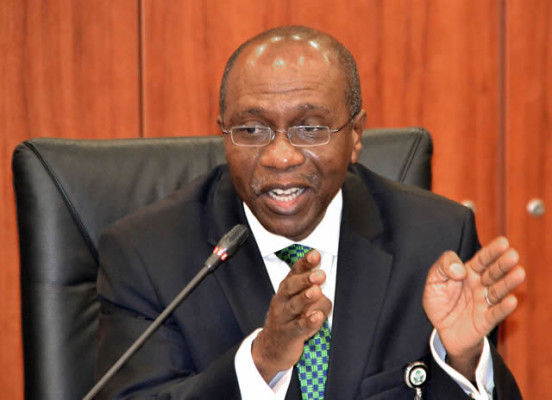
Governor of Central Bank of Nigeria (CBN), Godwin Emefiele, has presented N253.54 million to 68 successful beneficiaries of the Health Sector Research and Development Intervention Scheme.

Emefiele, who presented the grants today, March 9, in Abuja, insisted that a vibrant and innovative healthcare system is vital for the country’s national security,hence the need to encourage research and innovation in the treatment of health conditions for the Nigerian citizens.

He explained that 68 proposals out of the 286 submissions received by the Body of Experts, had been reviewed and evaluated with five proposals with significant merits valued at N253.54 million recommended by the experts for financing. He added that the recommended proposals also have the potential to enable the development of the Nigerian vaccine for COVID-19.

The apex bank Governor said that the grant award is a testimony to the significant role research and development in healthcare could play in supporting economic growth, particularly as growth is highly dependent on a strong and healthy workforce.

Emefiele said that the outbreak of the coronavirus pandemic, which had an unprecedented effect on world economy,underscored the fact that a healthy and safe workforce remained critical for a continued economic growth as well as the stability of the financial system.

He emphasized that the need to move from a consumer-based economy to a more productive economy necessitated the CBN’s development of intervention programmes and schemes across various sectors including the health sector.

The CBN Governor said that the Bank introduced the Healthcare Sector Research and Development Intervention Scheme (HSRDIS), as part of measures to support the growth of the Nigerian healthcare sector.

According to him, the facility aimed at strengthening the sector’s capacity to meet the increasing demand for healthcare products and services, particularly pharmaceutical companies and other healthcare value chain players intending to build or expand capacity.

The CBN Governor said that 82 projects, valued at N85.89-billion, comprising 26 pharmaceutical and 56 medical projects across the country had been financed through the HSRDIS.

He congratulated the recipients of the grant award and advised them to judiciously utilize the opportunity offered to them by the CBN and strive to achieve the purpose of their research by ensuring that their projects meet the set targets.

He expressed optimism that the CBN HSRDIS grant will offer an average Nigerian access to the much-needed vaccines and drugs for not just COVID-19, but other communicable or non-communicable diseases.

In his remarks, the Secretary to the Government of the Federation (SGF) and Chairman of the Presidential Task Force on COVID-19, Boss Mustapha commended the CBN for what he described as the modest efforts of the Bank at helping future generations to combat any outbreak of health pandemic.

He gave assurance of President Muhammadu Buhari’s support to HSRDIS as the President had supported similar responses to curb the current COVID-19 pandemic.

Boss Mustapha said that the coronavirus pandemic had exposed the fragilities of different sectors of the economy and governance but called for a collective resolve to overcome the challenges posed by the pandemic.

The SGF who disclosed that the COVID-19 vaccines were safe and efficacious, and therefore urged members of the public to avail themselves the opportunity when the time arose to be vaccinated.

Also speaking, the Minister of State for Health, Dr. Sen.Adeleke Olorunnimbe Mamora and Director-General of the National Agency for Food and Drug Administration and Control (NAFDAC), Prof. Mojisola Christiana Adeyeye, both commended the CBN for the initiative and reiterated that the HSRDIS was a step in the right direction in ensuring the vibrant and functional healthcare system as well as the socio-economic well-being of Nigerians.

Recipients of the CBN HSRDIS grant award were Prof. Olufemi Emmanuel Dokun-Babalola, Prof. Okoli Ikechukwu, Dr. John Ogedengbe, Dr. Garba Uba and Dr. O’tega Ejofodomi.

Kaduna Gov, El-Rufai, Bans Almajiri Schools, Asks Them To Relocate To Other States

Governor Nasiru El-Rufai of Kaduna State has banned Almajiri schools in the state, advising them to relocate to other states.

Governor El-Rufai, who spoke today, March 9, during the inauguration of the Kaduna State Child Protection and Welfare Committee in Kaduna, said: “we are working on the Almajiri system and many people do not agree with what we are doing, but we are very confident and sure of the rightness of our actions.

”So, my message to all those that have Almajiris in Kaduna state, you have a choice to relocate otherwise sooner or later we will get you.”

According to him, the government developed and approved the social protection policy so as to have clear legislation that would be targeted directly to support only the most vulnerable and poorest in the state.

“We want the poorest people to benefit. Politicians often get involved with their ‘slot mentality’, and when we give them those slots they don’t give them to the poorest.

“So we must find a way to identify who is poor and who is vulnerable and target these kinds of assistance to this kind of households.”

The governor said that the state social investment office has been working across the 24 local government areas to have a comprehensive social register of the poorest and most vulnerable in the society.

He said that the social register has so far more than one million households, and assured that every government intervention would be channeled to those on the social register.

He thanked all those contributing to the protection and welfare of children in Kaduna state.

This was even as the state Commissioner for Human Services and Social Development, Hafsat Baba, said that the committee has legal backing and would be set up at the state and local government levels.

Hafsat Baba said that the 20 members of the committee inaugurated were from various sectors and agencies, identified and trained by UNICEF.

The commissioner said that her Ministry has data of over 10,817 Almajiris, who will be enrolled into formal schools.

“Planning has reached advance stage between the ministry and Ministry of Education and SUBEB to enroll the ten thousand eight hundred and seventeen Almajiri children in schools.”

She said that the government had constructed a women’s centre in Kaduna, which will be a centre of excellence for child protection and victims of gender-based violence.

She said that a philanthropist, Musa Bello of Aman Foundation, has pledged to support the government with N300 million for the improvement of the 10 model Tsangaya schools in the state.

Hafsat Baba said that the state government would also provide a similar amount to ensure “child protection and best example of a seamless integration of Quranic education, literacy and numeracy and skills development.”

Source: NAN.

Zamfara Govt Accuses Politicians Of Sabotaging Efforts At Defeating Bandits

The government of Zamfara State has accused faceless politicians and other elements of sabotaging the efforts of the government at defeating bandits that have been tormenting the state for sometimes now.

“Government has equally observed that there is sabotage by some unscrupulous elements, both within and outside the state. It was also observed that informants are becoming rampant and their callous activities undetected due to some people’s attitude of indifference.

The state Governor, Bello Mattawale, in a statewide broadcast today, March 9, said: “all political actors are hereby advised to desist from any acts capable of endangering the state’s security, as security agencies have been directed to monitor the activities of all the political actors and take appropriate action against the violators.”

He said that this is one of the measures to further push to bring to an end, the activities of the recalcitrant bandits so as to bring lasting peace to the state, saying that the government also decided to take other measures, even as the “recalcitrant bandits have been given two months from today within which to embrace the peace process and surrender their weapons to the government.”

The governor listed such measures to include directing traditional rulers and local government councils’ sole administrators to always remain in their respective domains to monitor the people in their areas.

“Carrying of more than two persons on a motorbike is hereby banned with immediate effect. Security agents are directed to arrest and arraign the violators of this order for prosecution.

“Government also prohibits the movements of a large number of motorbikes in all the nooks and crannies of the state. Security forces are hereby directed to ensure total compliance.

“Government observed, with dismay, the persistence of the activities of some Yansakai despite the banning of such vigilante groups. This order still remains in force.”

We Love Meghan, Prince Harry As Family Members, Queen Elizabeth Debunks Racism

Photo credit: thenews

Queen Elizabeth has responded to the issues raised by Prince Harry and Meghan Markle in their explosive interview with Oprah, accusing the royal family of racism within the palace.

Meghan had said that she attempted suicide and her son’s skin colour was a concern in the palace.

However, the palace, in a statement on behalf of Queen Elizabeth, described the issues raced concerning race as concerning and saddening.

The statement reads: “The whole family is saddened to learn the full extent of how challenging the last few years have been for Harry and Meghan.

“The issues raised, particularly that of race, are concerning. While some recollections may vary, they are taken very seriously and will be addressed by the family privately.

“Harry, Meghan and Archie will always be much loved family members.”

Investors Lose N371 Billion On Stock Exchange In One Trading Session

Investors on the Nigerian Stock Exchange (NSE) today, March 9, lost N317 billion in a trading session amid sell pressure on bellwethers. Specifically, the market capitalisation which opened at N20.612 trillion shed N371 billion or 1.80 per cent to close at N20.241 trillion.

Also, the All-Share Index dipped 709.72 points or 1.80 per cent to close at 38,686.85 from 39,396.57 achieved on Monday.

Accordingly, the month-to-date and year-to-date losses increased to 2.8 per cent and 3.9 per cent respectively.

The downturn was impacted by losses recorded in medium and large capitalised stocks, amongst which are Lafarge Africa, United Bank for Africa, Greif Nigeria, Northern Nigeria Flour Mills and Zenith Bank.

Market sentiment remained negative with 21 losers compared with 15 gainers.

UBA led the losers’ chart in percentage terms, dropping by 10 per cent to close at N7.20 per share.

Caverton Offshore followed with a loss of 9.55 per cent to close at N1.80, while NNFM lost 9.52 per cent to close at N5.70 per share.

Greif lost 9.46 per cent to close at N6.70, while AXA Mansard Insurance shed 9.09 per cent to close at 90k per share.

On the other hand, Champion Breweries recorded the highest price gain of 9.78 per cent to close at N2.02 per share.

Neimeth International Pharmaceuticals followed with 9.71 per cent to close at N1.92, while Mutual Benefits Assurance gained 8.11 per cent to close at 40k per share.

Dangote Sugar Refinery gained 7.99 per cent to close at N18.25 per share, while Associated Bus Company appreciated by 7.14 per cent to close at 30k per share.

In spite of the drop in market indices, the total volume of shares traded rose by 64.8 per cent with an exchange of 545.92 million shares worth N9.59 billion achieved in 5,307 deals.

This was in contrast with a turnover of 297.23 million shares valued at N3.15 billion transacted in 4,655 deals on Monday.

Transactions in the shares of UBA topped the activity chart with 123.27 million shares worth N887.63 million.

Notore Chemical Industries followed with 74.07 million shares valued at N3.67 billion, while Mutual Benefits Assurance traded 58.04 million shares worth N23.19 million.

FBN Holdings sold 48.94 million shares valued at N352.08 million, while Access Bank transacted 42.74 million shares worth N324.22 million.

Source: NAN.

To Media Wakili Is Fulani Warlord, Igboho An Activist, By Fredrick Nwabufo

The media possesses near-celestial powers. It calls into existence what must be and what must not be. It can actuate change and mobilise consciences to a cause. It can destroy, it can build; it can hurt and it can heal. Yes, it can call into existence ‘’the things that do not exist’’, – the power of god.

I must say, the power of the media is also its burden. The ‘’omnipotence’’ of this public institution straps on it great responsibility. After all, ‘’with great power comes great responsibility’’. The media exists to serve public interest. And there should be no higher interest other than that which promotes peace, justice, unity and security.

It is my view that the Nigerian media is a patriotic institution, but I will be papering over a lie if I do not admit that there is a tinge of ethnic prejudice in some media reports. The osmotic ethnic and religious poisons somehow find their way into the newsroom. But this does not obviate the commitment of the media to the country’s unity. That Nigeria still stands as an entity is largely because of the media which rises to the occasion when need be, deploying its omnipotence to redeem the country from collapse.

But I think now is another occasion for the media to rise and pull our nose-diving country from a plunge to certain death. With great power comes great responsibility.

The insecurity assailing the country has afflicted the national psyche. Brothers are suspicious of brothers, and neighbours are wary of neighbours. Tempers are rising and emotions are running wild. Fingers are pointed at mutual directions. But we cannot discount the truth that this perilous ecosystem was created as a result of leadership failure.

Owing to the cumulus of fear and uncertainty, there is a tendency for the Baader-Meinhof phenomenon – when you believe something that is not actually the case. The mass hysteria and ethnic targeting underpin this phenomenon.

On Saturday, I watched the video clip of a sickly old man, Iskilu Wakili, who has been infamously described as a Fulani warlord. He is accused of leading attacks on communities in Ibarapa area of Oyo state. He is also alleged to be behind many murders and kidnappings in the state.

But the man I saw in the video could barely walk. He looks incredibly frail, and has been said to be partially blind. He was also reported to have been captured because he could not run. I have cogitated on the possibility of an ailing old man leading armed groups on onslaughts against citizens in Oyo, and could only stew in doubts.

Some media reports have described Wakili as ‘’Fulani warlord’’. But on what is this framing grounded? Has he been held culpable for leading armed attacks? Is there any evidence to prove he is a warlord? Has it been confirmed – in any way — he is behind the attacks in parts of Oyo? And how many ‘’wars’’ has he led?

Wakili has detailed his own side of the story. The Fulani leader said he is a victim of kidnapping, and denied leading attacks on Oyo communities.

His own words: “Sometime last year, two of my children were kidnapped and I paid millions of naira as ransom before they were released. I am not a kidnapper. Two days after my return from hospital (in Cotonou, Republic of Benin), I was lying down because I was ill and suddenly some women came and started shouting that armed OPC men had come looking for me.

“I asked them to flee but I could not run because I was sick. Two men later came and picked me from where I was lying down, they threw me in their vehicle naked. I fainted many times before they drove me to the police station in Igbo Ora. From there we were taken to SCID, Ibadan. I am not a criminal, my children are not criminals. I don’t know anything about kidnapping or any crime. I have many cows and I know they stray into farms at times but I don’t have criminal records anywhere and this can be investigated. After they took me away from my home, a woman, Tande, was killed.”

The court will decide.

But why are some of us in the media swift in tagging him as ‘’Fulani warlord’’. If there is any evidence to substantiate this label, I will apologise for being presumptuous.

Really, I wonder why the same lexical sculpturing was not applied in the case of Sunday Igboho who was famously described as an ‘’activist and youth leader’’ in the media – even after he broke the law by asking the Fulani to leave Ibarapa?

Again, the media holds a principal place in Nigeria. In fact, the survival of this country rests on us as much as it rests on the leadership. If the media by any design lends itself to accenting ethnic prejudices, then we should just say Nunc Dimittis.

May we not write Nigeria into oblivion.

Fredrick Nwabufo is a writer and journalist.

Twitter @FredrickNwabufo

Mind Your Language, Nigerian Army Warns Sheikh Gumi

Sheikh Gumi met with bandits in the forest

The Nigerian Army has warned a Nigerian Islamic scholar, Sheikh Ahmed Gumi, to mind his language by dragging the image of the Service to disrepute.

The Director of Army Public Relations, Brigadier General Mohammed Yerima, in a statement today, March 8, further warned Gumi to show restraint on the way he maligns the image of the Nigerian Army.

“The attention of the Nigerian Army has been drawn to a viral video-clip showing the renowned and respected Islamic scholar, Sheikh Ahmed Gumi alleging that non-Muslim soldiers were responsible for the attacks against bandits.

“In the video clip, the Islamic scholar was seen telling the bandits that the soldiers involved in most attacks against them were non-Muslims. He further stated that they should be aware that soldiers are divided into Muslims and non- Muslims.

“While the Nigerian Army would not want to join issues with the the respected Sheik Ahmed Gumi, it is however important to restate that the Nigerian Army as national institution does not deploy its troops along ethnic or religious lines.

“Therefore Sheikh Ahmed Gumi and other opinion merchants are please enjoined to exercise restraint not to drag the image and reputation of one of the most reliable national institutions to disrepute.

“The Nigerian Army remains the pride of the nation and has continually defended the territorial integrity of this great nation.

“Comments suggesting to mudslide the image and reputation of the Nigerian Army are not only inimical but tended towards creating bad blood amongst Nigerians.

“Furthermore, most operations conducted by the Nigerian Army were done in strict adherence to rules of engagement, code of conduct and respect for the fundamental human rights of the citizenry without any exception.

“It is therefore, disturbing that an opinion leader would deliberately want to disparage the Nigeria Army to portray it in bad light.

“The Nigerian Army wishes to seize this opportunity to advise opinion leaders to be more courteous while expressing their views, taking into cognisance the imperative for national security, particularly at these difficult times when our gallant troops have redoubled their efforts to tackle the myriads of security challenges facing our dear nation.

“What our troops need now is public support to discharge their responsibility effectively and in the most professional manner.”

Advertisement ADVERTORIAL
WP2Social Auto Publish Powered By : XYZScripts.com